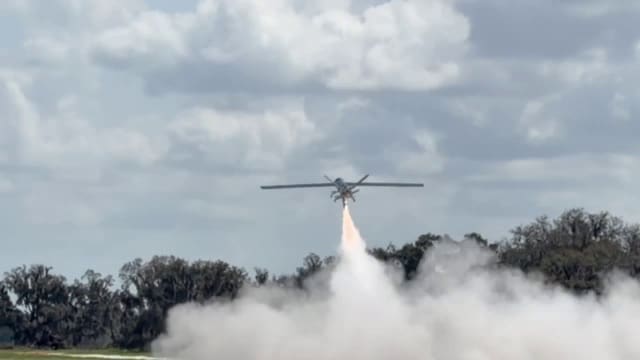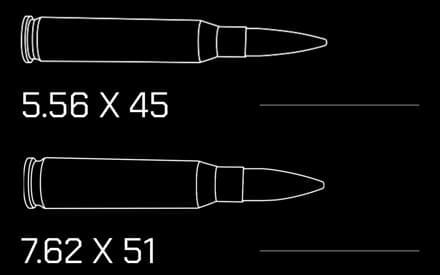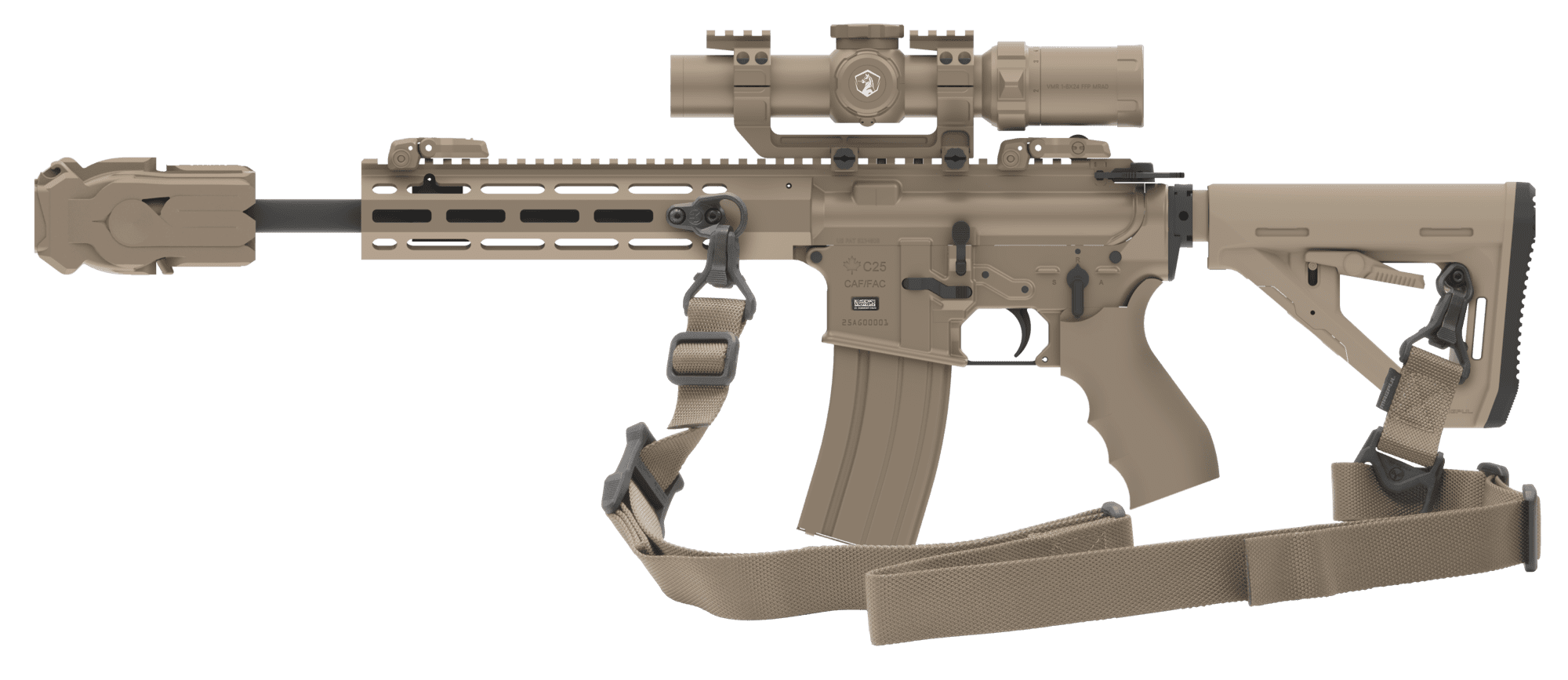
It is not often that a revolution in the conduct of warfare occurs, however the introduction of inexpensive, commercially available unmanned aerial systems (UAS), or drones, to the battlefield is just that. Recent global conflicts have demonstrated the vulnerability of large, armored formations and the threat posed by small UAS. The maneuverability of large, armored formations has always been a challenge when breaching defensive lines, but the current vulnerability to the formation is the inability to effectively counter the rapidly growing UAS threat. This new threat set is causing commanders to re-think the employment of armored formations, underscoring a fundamental shift in modern combat dynamics.
Historically, drones and other UAS were limited to technologically-advanced militaries employing multi-million-dollar platforms for persistent surveillance and strikes. Recent conflicts, both globally and within terrorist organizations, have revealed a new paradigm: UASs are no longer limited to technologically advanced militaries, but rather, the new improvised explosive device of this generation’s war. Similarly, UASs are now employed through inexpensive, commercially available and even 3D-printed material that can include modified payloads capable of devastating expensive platforms that lack adequate defenses. The ease of manufacturing and deployment will only lead to further proliferation and evolution in future conflicts, demanding the development of diverse solutions quickly to protect U.S. forces and strengthen homeland security. While threats are becoming cheaper and more accessible on the battlefield, a crucial element of defense must include low-cost kinetic effectors empowering crews to protect themselves and their formations.
THE EVER-EVOLVING UAS THREAT AND CURRENT C-UAS GAPS
The UAS threat is dynamic and exacerbated by a continuous cycle of countermeasure development and UAS reengineering. Historically, drones could be jammed through various electronic warfare technologies by disrupting drone communications, resulting in a communication severance and ultimately a failed mission. As technology evolves, UAS threats will begin to move away from networked communication systems to fiber optic drones, becoming impervious to jammers. This rapid evolution necessitates a diverse suite of effectors to address the changing threat landscape.
Current air defense solutions are often expensive, limited in number and usually at echelons above brigades. The cost-benefit ratio of employing a several-hundred-thousand-dollar missile to defeat hobbyist drones is questionable and poses a readiness issue for more high valued threats. An adversary could potentially exhaust an opponent’s monetary and munition stockpile by employing swarms of cheap, easily produced UAS. While these missiles are effective against individual targets, their use should be reserved for more critical threats. A few small UASs or worse, a swarm, can overwhelm these expensive, limited defenses. A more cost-effective engagement method is essential for the entire battlefield.
Effective kinetic counter-UAS (C-UAS) capability hinges on two critical components: detection and effects. The Army solution cannot include putting exquisite radars onto every platform, not only due to budgetary constraints, but also radars tend to emit electromagnetic signatures, which will be exploitable for enemy targeting. The Army also cannot count on dedicated Air Defense assets down to the brigade and below. Legacy ammunition, while extremely lethal, requires a direct hit to the threat to be effective. Traditional targets have been slow moving vehicles, stationary personnel in the open, or within defilade position. As the threat changes to small, fast-moving aerial threats, it becomes incredibly difficult to get a direct hit on target, even for dedicated air defense systems with skilled crews. Some of the latest ammunition innovations include programmable airburst rounds, where the weapon system communicates to the round to detonate at a pre-determined distance, creating fragmentation above targets, increasing lethality without having to directly hit the target for effects. This is a great capability to increase the lethality of crews in a variety of situations, providing a bigger lethal footprint over stationary targets in the open, in a trench or in a building. However, the key to this technology is knowing the pre-determined distance (which assumes it remains stationary), which is ineffective in combatting small, moving UAS threats. Getting an accurate range on a fast, moving target is difficult.
While reminiscing of his time on the Bradley platform, Maj. Kenneth Welch, Medium Caliber Assistant Product Manager stated, “During Bradley gunnery training, I remember having to use my laser range finder several times to ensure accurate range against certain stationary targets. I don’t know how it would be physically possible to engage a highly dynamic, constantly moving small target with the current system.” As with defeating any threat, munition placement is critical, whether a direct hit or within proximity, to ensure that the fragmentation from detonation is providing lethality. Traditional programmable airburst significantly increases the lethal footprint versus point detonation, but lasing a target cannot be relied on to determine an accurate pre-programmed bursting distance for the round; there is too much human factor interference. The XM1228 Bradley Aerial Defeat Ground Enhanced Round (BADGER) is the C-UAS solution that armored brigades need to overcome human programming error and increase lethality. This innovation at the round is key to increasing the number of potential kills per vehicle, without adding a new weapon system.
XM1228 BADGER
The operational environment is changing quickly, and that means getting new capabilities to our Soldiers, at the speed of relevance, is more critical than ever. Every decision is made with the goal of rapidly enhancing their capabilities. Portfolio Acquisition Executive (PAE) Agile Sustainment and Ammunition has developed proximity fuze technology for 30mm that has been fielded to mobile low, slow, small unmanned aerial integrated defeat system, Marine Air Defense Integrated System and partner countries, which has been deemed a “game-changer” for kinetic C-UAS solutions for the joint force. Proximity fuze ammunition eliminates the need for a direct hit, or pre-determined detonation, to achieve an effect. The fuze utilizes a small RADAR to detect threats and detonates within lethal distance, increasing probability of kill significantly. This provides the gunner with no additional burden, no modifications to the weapon or fire control and allows him to lase targets traditionally, firing within the ‘proximity’ of the target for successful kills. Because this technology is government owned (developed by Department of Army civilians) it allows for the ability to implement it across multiple ammunition calibers and applications.
The conflict in eastern Europe has demonstrated the effectiveness of the Bradley Fighting Vehicle, but also the vulnerability to the UAS threat for all platforms, formations and Soldiers. It’s apparent that our current armored brigade combat teams (ABCT) will share the same vulnerabilities in any future conflict. Project Manager Maneuver Ammunition System, in collaboration with Project Manager Mounted Armor Vehicles, leveraged the capability that has been fielded in 30mm and designed a 25mm solution to serve as a unit common C-UAS solution for ABCTs. The 25mm XM1228 BADGER provides organic C-UAS capabilities to the M2 Bradley Infantry Fighting Vehicle with no additional vehicle or weapon modification required. Being employed no differently than the legacy 25mm M792 High Explosive Incendiary with Tracer, the gunner can utilize the M242 weapon system to engage UAS threats with the pull of the trigger. The XM1228 BADGER empowers crews to effectively counter these lethal threats with a low-cost solution, increasing probability of kill and increasing total vehicle stowed kills, resulting in an increased magazine depth. The XM1228 BADGER is utilizing the miniaturized RADAR technology and are able to sense targets within its flight path. Once the bullet detects the target, it detonates, utilizing the fragmentation of the warhead to defeat aerial threats.
Traditional targeting and round placement are a gunner’s biggest challenge for lethality. Introduce moving targets and the challenge grows, resulting in spent ammunition, shorter engagement times and platform vulnerability. The proximity fuzing within BADGER enables a fire and forget application, as a gunner just needs to get ‘close enough,’ which results in highly effective lethal engagements and cost benefits. Integrating this round into the Bradley increases the crew’s ability to engage targets, enhancing survivability and reducing logistical burden by increasing the number of potential kills stowed on the vehicle.
TACTICAL EMPLOYMENT AND DOCTRINE IMPLICATIONS
The Bradley was originally developed to destroy Russian vehicles in the 1970s and 1980s. A new chapter was written in the 2020s with its recent deployment to eastern European conflicts. While it’s been decades since Bradley’s inception, and many attempts at its replacement, the vehicle has exceeded expectations against near peer adversaries, providing a basis for continued service and continue investment in its readiness and survivability.
With all the platforms’ success, UAS with lethal payloads have highlighted a glaring weakness for not only Bradley but all current and future platforms. A disturbing amount of reported vehicle damage is attributed to these UAS, leaving a large capability gap for armored formations; but this will change.
Insert BADGER; currently in production for safety testing for next year, then expected to be in formation in 2027. Whether equipped on a designated vehicle or across the entire formation, crews can engage the threat and continue their assault. By suppressing the sUAS threat and reducing casualties, the attacking force can close with the enemy and leverage their superior firepower to overwhelm the defenders.
CONCLUSION
The XM1228 BADGER provides a mid-to-close range countermeasure for the Bradley. It complements longer and shorter-range countermeasures, creating a layered defense incorporating both kinetic and non-kinetic means. This layered approach extends beyond the platform level; integrating brigade assets within the division creates a holistic capability to counter the UAS threat currently plaguing armored formations in Eastern Europe.
For more information, go to jpeoaa.army.mil/Project-Offices/PM-MAS.
By Maj. Kenneth Welch and Kaitlyn Tani for Behind the Frontlines
MAJ. KENNETH WELCH is the assistant product manager Medium Caliber Ammunition, C-UAS. He holds an MBA from Arkansas State University and a B.A. in psychology from the University of New Mexico.
KAITLYN TANI is the deputy product manager Medium Caliber Ammunition. She holds a Master of Engineering in mechanical engineering from Stevens Institute of Technology and a B.S. in chemical engineering from Rowan University.