FirstSpear

Blade Tech Introduces iPhone Holster

April 10th, 2012

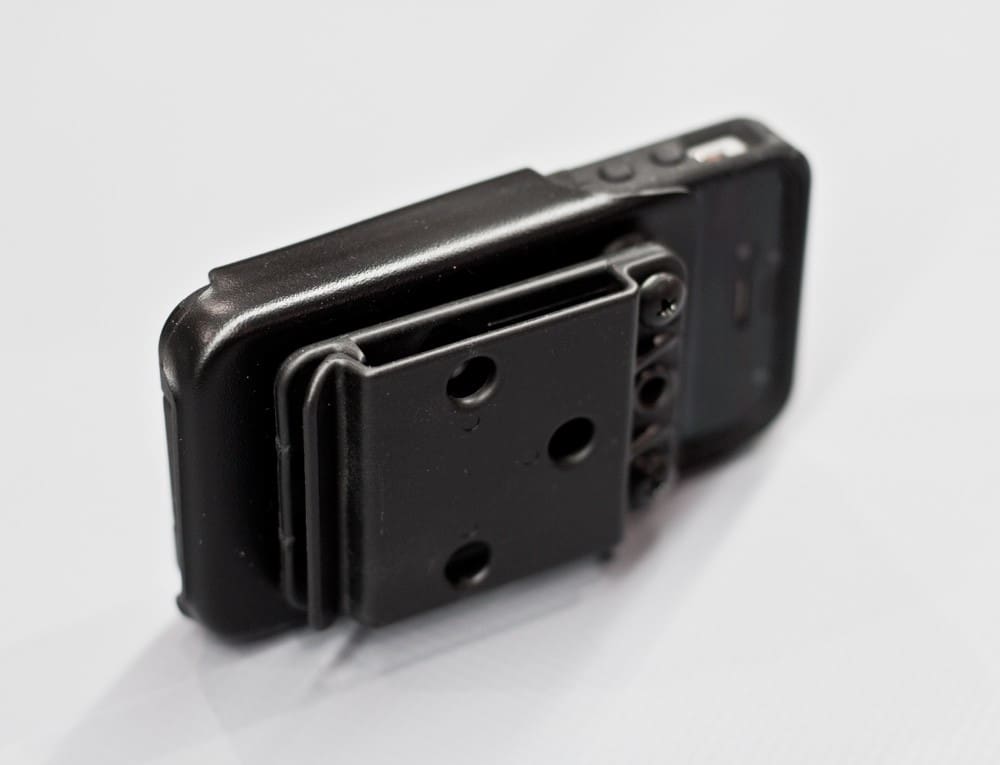
Many iPhone users use iPhone covers from Magpul, Otter Box and Strike Industries to protect their investment. Unfortunately, these covers aren’t designed to be worn on the belt and commercially available holsters won’t accommodate these covers. Blade Tech saw what was going on and introduced the smartphone holster. It accepts your iPhone, case and all.

You get a customized holster based on your selection of belt loop width or Tek-Lock alternative and type of iPhone case. To order visit www.blade-tech.com.

US Army Seeking Sources for Protective Over Garment

April 10th, 2012

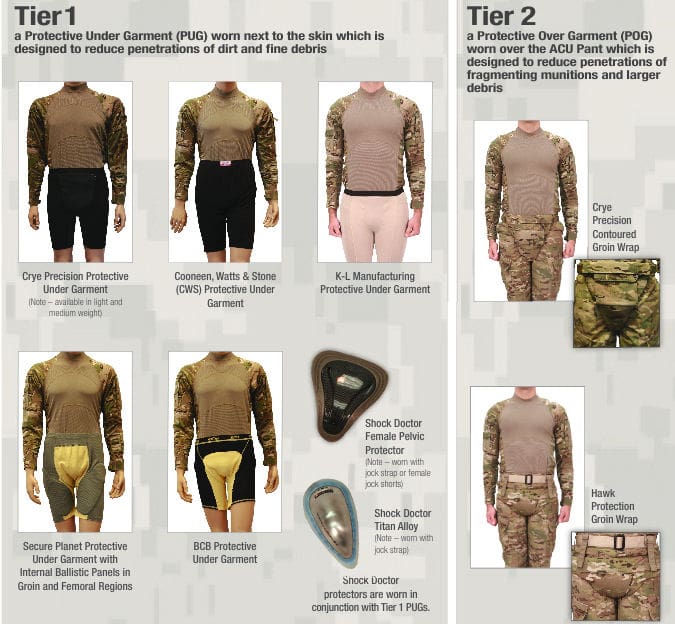
Product Manager – Soldier Protective Equipment (PM SPE) has issued a Sources Sought Notice for companies capable of producing the Tier II – Protective Over Garment (POG). Actually, this name is some what of a misnomer as it envisions a CBRNE garment rather than what it truly is; the outer component to the Pelvic Protection System which is used in conjunction with the Tier 1 Protective Under Garment (PUG).
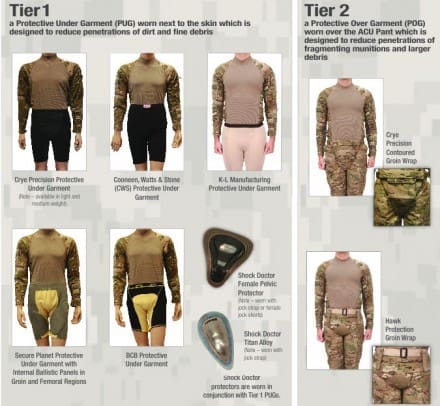
According to the RFI, “The POG is worn over the Army Combat Uniform trousers and provides protection of the pelvis, femoral arteries, and lower abdominal organs in a blast or fragmentation event. The POG will also reduce the penetration of dirt and fine debris into a wound area to prevent infections.”

For those of you unfamiliar with PPS, there are several variants currently in use from a variety of manufacturers.

At a minimum, the Tier II Protective Over Garment (POG):

– Shall consist of three (3) distinct areas of ballistic protection to provide an optimum balance of protection and mobility. The front section shall provide at least 69 in2 of ballistic protection, the center section shall fit between the legs and provide at least 50 in2 of ballistic protection, and rear section shall provide at least 52 in2 of ballistic protection for a size medium system.

– Front and rear sections shall provide ballistic protection which conforms to the base vest requirements of FQ/PD 07-05E. Center section shall provide ballistic resistance (V50) of at least 1120 ft/s against 17gr Fragment Simulating Projectile (FSP). Wherever there is no continuous ballistic material, a minimum 1 in. overlap shall be maintained to prevent gaps in coverage.

– Front, center, and rear ballistic materials shall be removable/replaceable.

– Ballistic filler areal density of front and rear sections shall not exceed 1.10 lb/ft2 with a maximum 0.30 in. thickness. Ballistic filler weight of center section shall not exceed 0.40 lb/ft2 with a maximum 0.10 in. thickness.

– Shall provide a secure fastening mechanism to prevent flapping or shifting during use. The system shall be compatible with currently fielded personal protective equipment and combat uniform and shall attach either to the body armor and/or the belt loops of the trousers.

– Front section shall be capable of being disconnected from the center/rear section and worn as a standalone item, with the option of fastening to the belt or Improved Outer Tactical Vest. Shall provide a secure fastening mechanism to prevent flapping or shifting during use.

– Attachment point(s) connecting the front section to center section must be able to withstand a peak load of 150 lbs break strength in accordance with ASTM D-5043

– Attachment points/seams connecting the rear panel to center section must be able to withstand a peak load of 600 lbs break strength in accordance with ASTM D-5043

– Shall be capable of donning and doffing without removing the belt from the Army Combat Uniform trousers

– Must be available in multiple sizes to fit 5th percentile female through 95th percentile male waist circumference.

– Outer facing cloth shall be constructed with the following camouflage pattern: US Army Operational Enduring Freedom Camouflage Pattern (OCP)

This is a short turn around on this Request for Information. Interested parties must reply no later than 4:00 pm eastern standard time on Wednesday, April 11 2012.


PWS Triad Video

April 10th, 2012

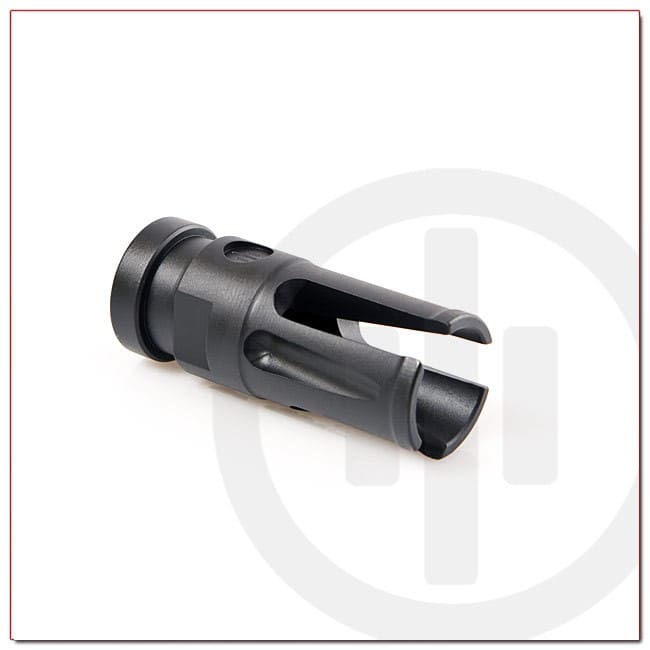
Primary Weapons Systems produced this video highlighting their Triad compensator designed for use with 5.56mm weapons. A lot of folks are claiming that they have developed compensators that also reduce muzzle flash. Conventional wisdom says that you can do one or the other well.

After seeing this video what do you think?

primaryweapons.com

Redback One

April 10th, 2012

Spartan Village‘s PrairiefirePhoto produced this rockstar video for Redback One.

What do you think?

Natick Purchases Alexium Cleanshell CB Treated Fabric for Testing

April 10th, 2012

Natick has purchased 600 yards of Cleanshell CB treated fabrics from International Group Limited. The order consists of several types of fabrics for testing. All have been treated with latest version of the Cleanshell CB treatment, which has been developed over the last nine months and optimized to provide water and oil repellency as well as improved repellency of Chemical Warfare Agent (CWA) simulants. In fact, this new treatment offers days of protection versus minutes for earlier Cleanshell treatments or conventional fluorocarbon repellency finishes.

www.alexiuminternational.com

Kryptek Belt Buckles

April 10th, 2012

Kryptek is adding some mighty fancy belt buckles to their selection of swag. Check it out. As you can see it incorporates the elements of their logo as well as their motto, “Battlefield to Backcountry.”

www.ptxstore.com/kryptek

Size Comparison – SureFire HellFighter 4 & Mini Hellfighter

April 10th, 2012

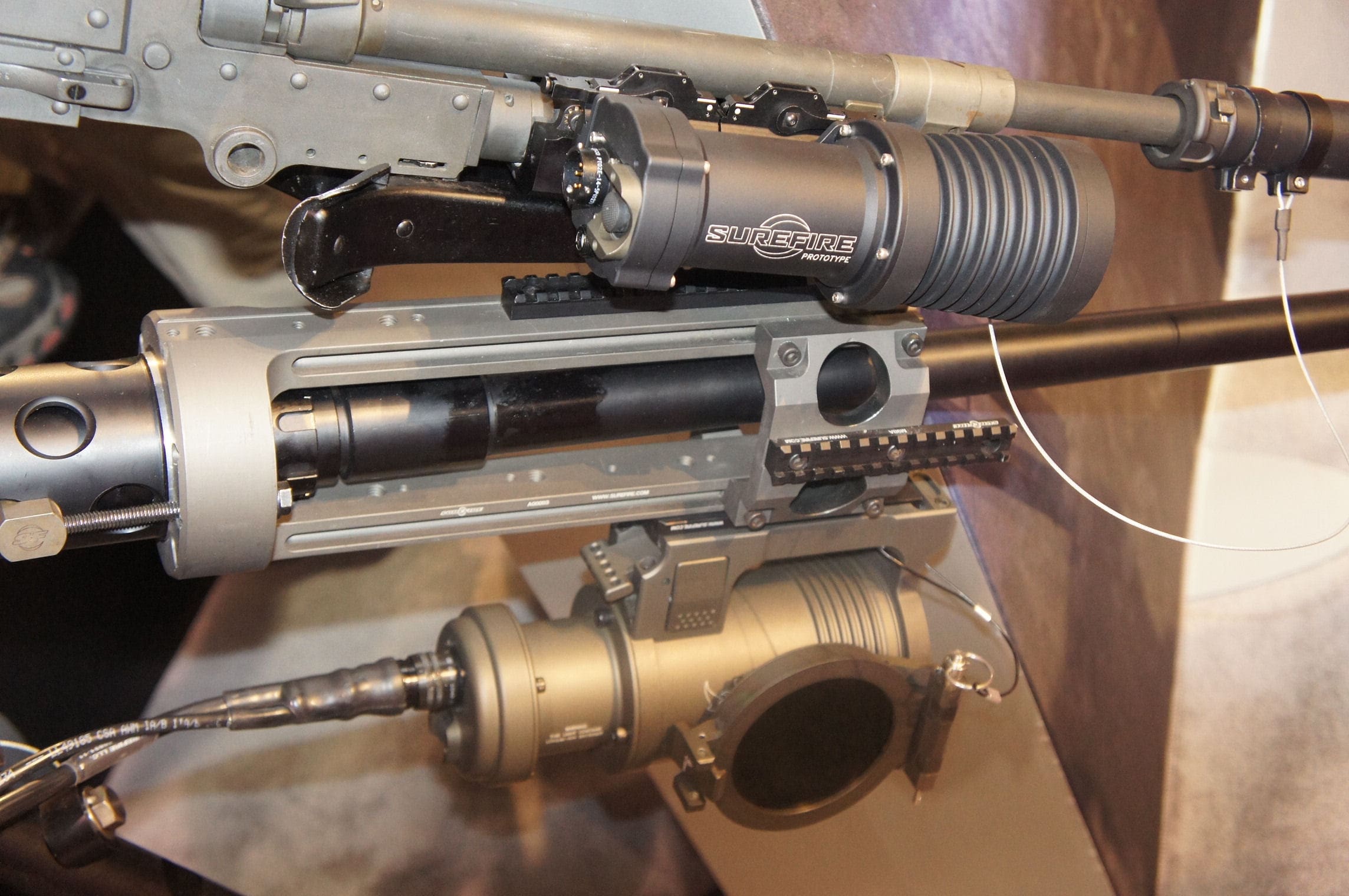
We took this photo at SHOT Show which should give you a good idea of the difference in size between Surefire’s HellFighter 4 and the ‘Mini HellFighter”. According to SureFire it’s LED based rather than HID and produces 2000 lumens versus the 3000 lumens of the HF1 and HF4. No word on when or if it will hit the street.

For more information on the SureFire HellFighter heavy weapon lights visit www.SureFire.com.

Georgia Health Sciences University Testing Brains to Find Camo Busters

April 9th, 2012

Georgia Health Sciences University is conducting magnetic imaging testing of the human brain to identify those who can ‘see’ items concealed by camouflage. According to a recent report on Georgia TV station WDRW the research is being funded by the Office of Army Research who is providing more than $500,000 over three years.

Dr Jay Hegde, the principal investigator and GHSU Postdoctoral Fellow Dr Xing Chen are using a relatively simple technique they developed to teach civilian volunteers to detect camouflage. In testing, they flash a series of camouflage pictures on a computer screen, providing about a half second after each to spot, for instance, a face in a sea of mushrooms. Test subjects receive instant feedback on their progress.

They use the magnetic imaging suite to monitor the brain as it detects the item of interest. Dr Hegde says a simple brain scan may identify Soldiers with a natural aptitude for identifying things that are out of place. They also think this skill could extend to precision shooting. However, as in most things, subjects get better with training. An hour of daily training over as little as two weeks results in 60% proficiency in test subjects.