TYR Tactical

Jacobs Engineering Group Awarded PEO Soldier SETA Contract

April 9th, 2012

Jacobs Engineering Group Inc was recently awarded a contract with a ceiling of $157 million for Systems Engineering and Technical Assistance ( SETA ) support to PEO Soldier. The contract has a one base year and two one-year extension options.

SETA contracts are the life blood of many beltway contracting firms as well as their Government (primarily DoD) clients. Much of the day-to-day work in R&D and acquisition organizations which does not require decision making is accomplished by SETA contractors. Additionally, many SETA primes provide specialized expertise or rely on other subcontractors for this service.

The system may seem bloated and wasteful to some but it allows a Government organization to bring in experts for short periods of time to complete projects without bringing them on the payroll full time or letting a new contract each time a new project begins. Rather, a task order is issued to the SETA contractor and they work out the details with the Government client and line up the proper support team for the project. It’s actually both quick and efficient and allows the team to change dynamically as situations arise. Such Government-SETA contracts have allowed organizations such as the Rapid Equipping Force and PEO Soldier to deal so swiftly with ad hoc requirements from the field.

However, the relationship with SETA contractors has changed along with the current defense budget environment and they have become more streamlined. Take for example PEO Soldier itself. Working with Army Material Command, PEO Soldier was able to identify redundancies in support and with little fanfare transitioned to a smaller contractor footprint. Gone are the days of the Haymarket building filled with contractors. Yet, support to the Soldier hasn’t suffered.

PEO Soldier and other DoD organizations will continue to rely on SETA and other types of contractors. Remember, they offer a cost effective means for the Government to dynamically grow and shrink the work force without growing the size of the Government payroll itself.
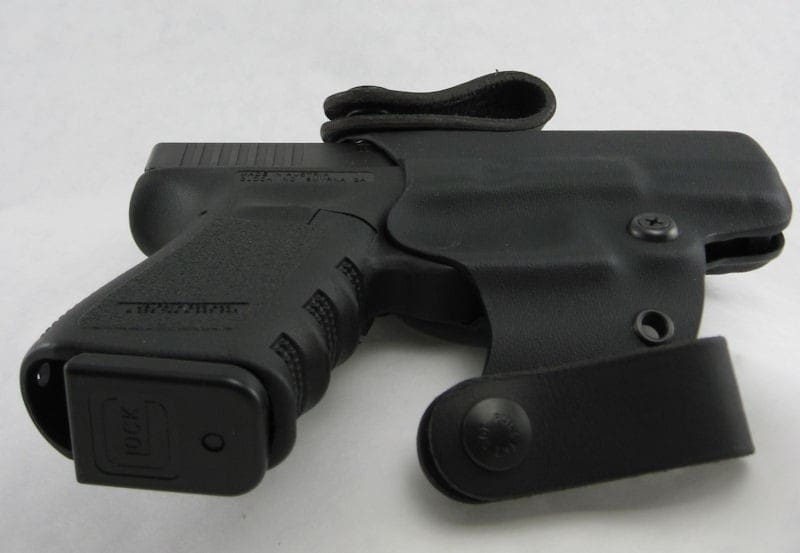
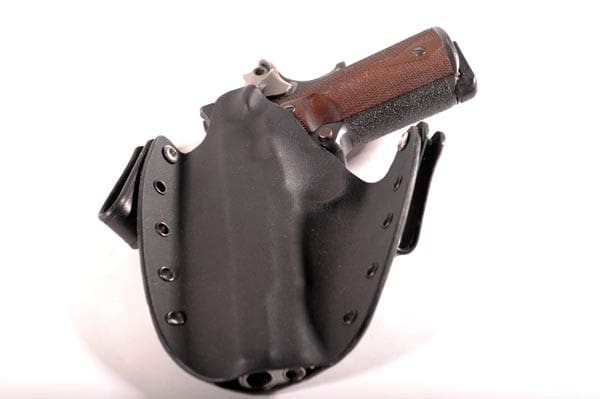
JM Custom Kydex

April 9th, 2012

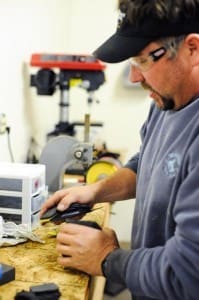
Reno-based JM Custom is owned by Tony Mayer. We were introduced about two months ago by a mutual industry friend who had been running Tony’s rigs for awhile and thought I should take a look. I’m glad he did.

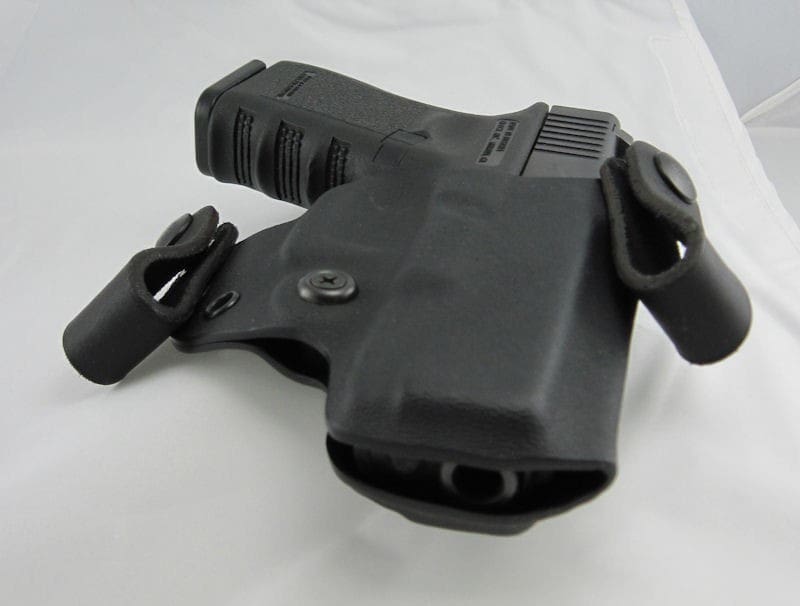
I’ve been using their IWB model with my G19 for about a month now and I really like it. It’s comfortable with no sharp edges and rides well. Additionally, the holster is fairly thin but still stiff and features a good curve in order to conform to the body. The curve is important since the holster is quite wide in order stabilize the weapon. There’s also an adjustable retention screw that allows you to control the amount of retention. I keep mine fairly tight since I don’t plan on removing the gun from the holster a lot when I am wearing it. Don’t get me wrong. It’s not cranked down so hard that it won’t come out but conversely, I don’t want it coming out at the wrong time, especially if I am moving around a lot.

But I think that some of what is going on here is in the ordering process. They offer several options including degree of cant and this not only aids with presentation but also carry. Additionally, they will customize the body shield which can be Full, Mid length, none, or anything in between.

The one little complaint I have isn’t really a complaint. Rather than fixed loops featured on some holsters, Tony’s loops include lift-the-dot snaps so you can remove it without taking your belt off. As you know, lift-the-dots are tough and monkeying with them while the holster on can be awkward. Not to worry. I can easily remove my belt. I also have to say that the loops are leather and don’t irritate or chafe.



JM Custom Kydex is a straight forward business and their warranty policy reflects this.

“Our warranty is simple. If you are not happy with your product for any reason in the first two weeks, return it for a full refund. If your product breaks during normal use(be straight with me about normal use) and I will replace it at no charge, forever. If you would like to increase or decrease retention on your holster send it back to me and I will adjust it per your instructions until your happy with it. Be straight with me and I will be straight with you.”

I love the IWB holster and suggest you check them out. Current lead times are 3-4 weeks.

www.jmcustomkydex.com

Specialized Tactical Systems

April 9th, 2012

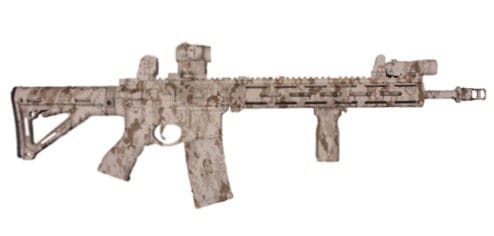
We were initially introduced to Specialized Tactical Systems at SHOT Show 2011 by Crye. For the past several years STS has produced weapons that are literally functional works of art on both engineering and aesthetic levels for Crye Precision sponsored fundraisers. This year’s gun (see below) with the desert digital finish raised $16,000 for the Wounded Warrior Foundation, Unit Scholarship Fund, and Navy Seal Fund.

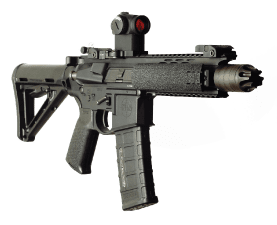
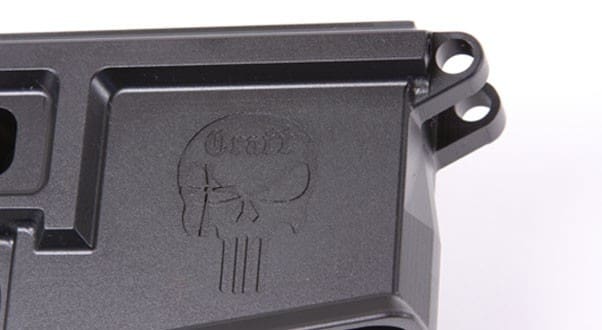
At this year’s SHOT Show we renewed our acquaintance with STS and got a chance to take a closer look at their wares. We gotta tell you, Specialized Tactical Systems can build a gun. And you want to know how we know? We didn’t just take a look at what they are doing, but also at their customers. Turns out, they hand build rifles for several high end outfits including Craft International. In fact, they’ve been Craft International’s exclusive OEM manufacturer of AR15 and M16 weapons for a few years now.

Craft approached STS in 2009 at TTPOA in San Antonio looking for a high end manufacturer of weapons to do some OEM rifles for them. They didn’t want the standard “builder” of weapons but rather were looking for a Tier 1 weapons manufactured by a company with a record. Since then STS OEMs almost every Piston rifle they offer for Craft to include: Titan E, Titan SF, Titan 300, Titan I and Titan B.

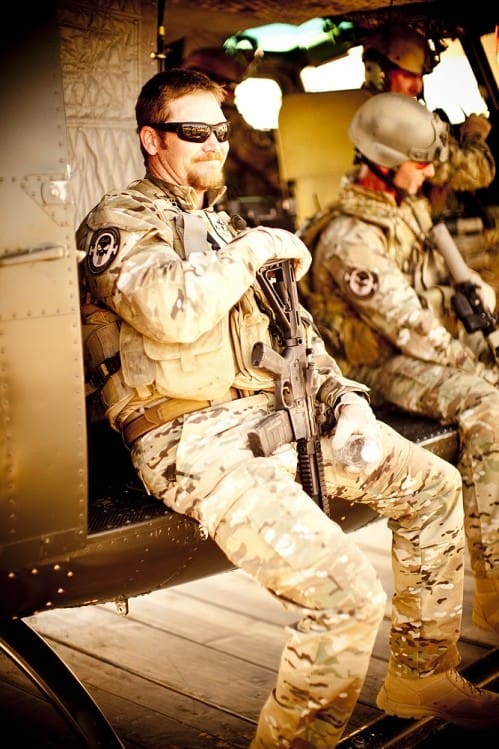
You may have seen photos of Craft’s Chris Kyle carrying a black rifle in the press or in his book, “American Sniper.” That’s right. It’s a Specialized Tactical Systems carbine.

STS also produces custom lowers for certain customers. For more information on the full line of STS TiTAN weapons visit www.specializedtactical.com.

The Official ARRSE Guide to the British Army

April 9th, 2012

As you probably already know, here at SSD we love ARRSE. The British Army Rumour Service (ARRSE) is a favored web destination when one of us wants a bit of a laugh.

In ‘The Official ARRSE Guide to the British Army’ Major Des Astor explores those questions about the British Army that keep you up at night. Some sections are factual while others poke a little irreverent fun at one of the world’s oldest professional armies.

Get yours from Amazon.com or amazon.co.uk.

PrimaLoft at Open Range Service Group’s MM&CW Workshop

April 9th, 2012

We’ve written about PrimaLoft before but we thought that the slides from their presentation at Open Range Service Group’s Military Mountain and Cold Weather Workshop was worth sharing to our readers. I don’t think we can say enough good things about that conference.

Originally developed by Albany International during the 1980s, PrimaLoft was originally intended as a water resistant synthetic alternative to down. Tim Cashell did a great job of explaining how it works and the impact it has had on military clothing programs, particularly USSOCOM’s Protective Combat Uniform.

PrimaLoft Military Workshop

www.primaloft.com

XVIII Airborne Corps Jumping T-11 Parachute Again

April 8th, 2012

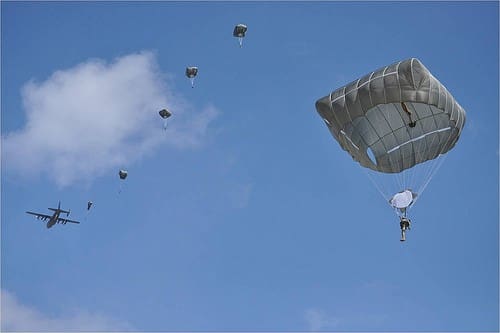
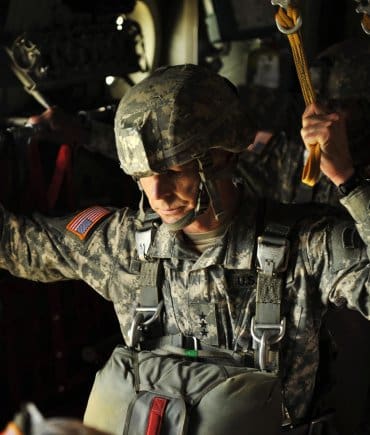
The US Army’s XVIII Airborne Corps is once again jumping the T-11 advanced tactical parachute system after a parachute related fatality in June of last year caused a suspension of use. As you can see, The T-11 is cruciform in shape, as opposed to a circle like the T-10. This means a larger surface area and diameter and a greater weight limit (400 lbs). This new canopy also results in a slower rate of descent to 19 feet per second vice the 22 feet of the T-10. Combine these features and you get a lower risk of jump-related injuries.

To signal its return to operational use, on March 22nd, Corps leadership, including commander LTG Frank Helmick conducted an airborne operation on Fort Bragg’s Normandy Drop Zone. Prior to the jump, all jumpers received New Equipment Training on the chute.

“It is important for the leadership to jump this parachute first,” said LTG Helmick. “We know that this is a safe parachute. Most of us have jumped this parachute before. As leaders, we are supposed to lead the way, and as such, we have been training to ensure that we transition our parachuting capabilities in a very deliberate manner.”

While conventional forces at Bragg had stopped using the T-11, the US Army Airborne school at Fort Benning had continued to train students in its use.

“The T-11 parachute is the first revolutionary change in tactical parachutes in more than 51 years,” said LTC John Ring, director of operations, XVIII Abn Corps. “It’s the first static line parachute where you actually experience freefall for a period of time. [With] every other static line parachute that we jump, you are tied to the airplane all the way until the parachute is completely deployed.”

Not only did the jumpers receive additional training but so did Jumpmasters and Riggers. For example, Rigger training lasted up to eight days.

“There has been a lot of preparation for this jump,” said CW4 Kelvin Thompson, senior airdrop systems technician, 82nd Sustainment Brigade, XVIII Abn Corps. “Riggers have been training and packing this system since February.” LTG Helmick commented, “There is no room for error in the parachute rigger community and I am confident that each of them live by their motto: ‘I will be sure always.'”

Fear the Beard

April 8th, 2012

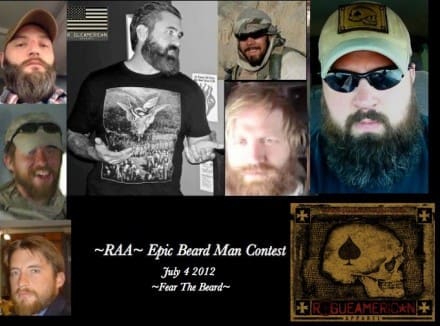
Rogue American Apparel advises: ~Fear The Beard~ RAA Epic Beard Man Contest. Date – July 4, 2012. Stand By for details and get those Beards a growing.

All call signs wait, out…


Australians Conduct Multispectral Camouflage Assessment

April 8th, 2012

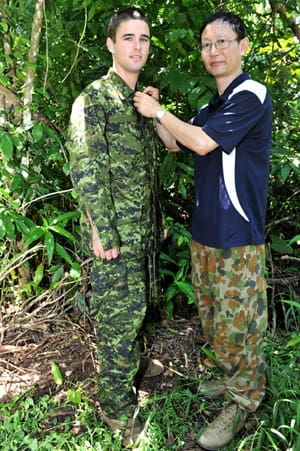
Private Taylor Gleeson has a Canadian uniform checked by Dr Bin Lee from the DSTO during the NATO camouflage effectiveness field trial at the Jungle Training Centre in Tully, Australia

Australia’s Defence Science and Technology Organisation recently conducted an assessment of 18 camouflage patterns in north Queensland along with seven NATO partners.

In a DSTO press release, Chief of DSTO’s Human Protection and Performance Division Dr Simon Oldfield said, “The trial, and our membership of the NATO task group looking at camouflage, enables Australia to have access to knowledge, tools and methodologies that will inform future camouflage requirements.”

He went on to explain, “We will also be able to gather a more realistic threat assessment of hot and humid environments that will help us develop assessment methods for camouflage.”

Data on current issue and experiential patterns was collected using multispectral image recording and panoramic photography techniques to measure their effectiveness. Ten volunteers from the Australian Army’s 3rd Brigade wore the uniforms during the event.

As they did not disclose which patterns (other than CADPAT) they are assessing we are unsure how this may, if at all, affect the fielding of the Australian MultiCam Pattern developed by Crye Precision.