GORE-TEX Professional

10th Mountain Division Activates Cutting Edge UAS and Launched Effects Company

December 30th, 2025

FORT DRUM, N.Y. — Fox Company, 1-10 Attack Battalion, a new company dedicated to achieving “drone dominance” on the modern battlefield, was formally established Dec. 16, 2025 under the 10th Combat Aviation Brigade, 10th Mountain Division (LI). The activation of the unit, a first-of-its-kind tactical unmanned aircraft systems and launched effects company, marks a significant milestone in the brigade’s ongoing efforts to provide the 10th Mountain Division with the most advanced aviation capabilities.

“Today’s activation of Fox Company marks a historic chapter for the Dragon Battalion and for the exceptional Soldiers standing before you,” said Lt. Col. Chris Stoinoff, the commander of 1st Battalion, 10th Aviation Regiment. “Current conflicts have proven that the modern battlefield is more lethal than ever before, primarily due to the potent combination of Unmanned Aerial Vehicles and long-range fires.”

Stoinoff elaborated on the Army’s dual approach to this new era of warfare. “The U.S. Army is currently investing in counter-UAS systems to protect our forces from this threat. But at the same time, we are developing a robust offensive launched effects and UAS capability to take the fight to our enemies,” said Stoinoff. “These robots can be equipped for a multitude of missions: to conduct reconnaissance, to act as decoys, to jam enemy communications or to deliver lethal strikes. That’s what Fox Company provides to the Falcon Brigade, a group of highly trained professionals who will hunt and kill our enemies in the division’s deep area. By integrating Fox Company’s recon forces with the overwhelming firepower of three Apache companies, 1st Battalion, 10th Aviation Regiment will decisively win battles for the 10th Mountain Division.”

To pioneer these new capabilities, the Soldiers of Fox Company, 1st Battalion, 10th Aviation Regiment are working hand-in-hand with the 10th Mountain Division’s innovation cell to develop, produce and disseminate UAS components in house. This partnership allows faster creation, adaptation, and integration of new technology directly into the unit placing the company at the forefront of the Army’s efforts to integrate unmanned systems, ensuring the division is equipped with the advanced tools needed to out-see, out-reach, and out-maneuver any adversary on the battlefields of today and tomorrow.

The establishment of Fox Company, 1st Battalion, 10th Aviation Regiment aligns with the Army’s broader strategy to equip every division with launched effects capabilities by 2026, creating a more dynamic and lethal force capable of penetrating and disintegrating enemy anti-access/area denial systems. The lessons learned by this new company at Fort Drum will pave the way for future UAS formations across the force.

By CPT Daniel Andrews

Dedrone by Axon’s 10th Annual Airspace Security Report 2026

December 29th, 2025

As the global leader in airspace security, Dedrone by Axon is at the cutting edge of how drone technology is reshaping public safety, enterprise operations, and defense. The sky is becoming one of the most dynamic and contested domains in modern life, that now demands continuous awareness and coordination. 

The coming years will redefine who protects our airspace and how, as drones become inseparable from daily operations and security missions. The line between “drone use” and “drone defense” is disappearing. 

This 10th Annual Report includes Dedrone by Axon’s predictions for how this new era of airspace will evolve — and how agencies, enterprises, and nations will adapt to a world where awareness and control of the sky defines safety and security.  Airspace is the new front line.

We have examined both counter-drone (AKA counter uncrewed aircraft systems or CUAS) trends as well as positive drone usage across public safety and defense sectors.

Public Safety & Enterprise CUAS

Prediction 1: Exponential Increase in CUAS Adoption Across Public Safety Agencies

From stadiums to state fairs: airspace defense becomes part of every security plan.

Counter-drone systems will expand far beyond airports and stadiums into every major public venue—from outdoor concerts to parades, sports arenas, and civic gatherings. The World Cup in 2026 and 2028 Los Angeles Olympics will be the catalysts that normalize counter-drone as part of every large-scale security posture. Expect state and local agencies to begin mandating airspace security audits for any event over a specified attendance threshold.

Prediction 2: Airspace Security Becomes an Enterprise Compliance Standard

In 2026, airspace security will move from emerging technology to corporate requirement. Major facilities—especially those related to energy, logistics, and technology—will begin including drone detection and tracking in routine physical security audits. Insurance providers and risk assessors will start requiring proof of airspace monitoring, just as they do for cybersecurity today. Airspace intelligence will become a built-in layer of enterprise security infrastructure. Counter-drone sensors will integrate into real-time awareness systems that unify land, air, and perimeter data into a single operational picture. Building automation, access control, and video analytics platforms will all ingest airspace telemetry as a standard data stream, giving enterprises continuous visibility from the ground to the sky.

What changes inside the enterprise:

• Airspace security added to compliance checklists for insurance and risk audits.

• Integration into real-time awareness systems connecting land, air, and perimeter monitoring.

• APIs and interoperability standards emerging across physical security, building automation, and video analytics platforms.

Prediction 3: The Great Convergence of Positive and Protective Airspace

Public safety agencies and enterprises will no longer separate “drone use” from “drone defense.” DFR fleets, delivery operators, and counter-UAS systems will operate within a shared airspace layer where detection, authorization, and deconfliction happen automatically. Airspace awareness will evolve into a common operating picture, connecting public safety, commercial, and enterprise users through shared data and trust protocols. This will blur the line between response and protection—enabling legitimate missions while automatically isolating unknown or unsafe flights.

Prediction 4: The Sky Gets Low Altitude Highways

Governments and industry will begin establishing structured drone corridors — fixed routes in the low-altitude airspace that function like highways for autonomous flight. The first versions will appear near major metro areas and logistics hubs, coordinated between the FAA, state authorities, and major operators like Amazon, Wing, and Zipline. Each corridor will rely on integrated UTM and counter-UAS technology to manage traffic and prevent incursions.

Over time, these drone highways will form a national low-altitude transportation grid, complete with right-of-way rules, altitude tiers, and enforcement mechanisms — the foundation for safe, scalable drone operations in shared airspace.

Drone Usage: Drone as First Responder, Delivery, Inspection and More

Prediction 5: Drones Become Standard Equipment for Law Enforcement

Drones will evolve from a specialized resource into standard patrol gear. Every officer or patrol vehicle will have a small, easily deployable drone for close-quarters and indoor operations—giving officers immediate eyes on a scene during building searches and other confined-space incidents. At the same time, dock-based patrol drones will handle the majority of calls for service and situational awareness. These highly automated systems will launch, recharge, and redeploy on their own, providing continuous overwatch and rapid response across an agency’s coverage area. Together, they will deliver layered aerial support that shortens response times and extends visibility without adding personnel.

Prediction 6: Shared Air Support Across Agencies

Public safety agencies will begin pooling Drone as First Responder (DFR) resources into local airspace networks. Cloud-based tasking, shared flight zones, and unified command dashboards will let police, fire, and EMS access the same docked drone fleets across neighboring jurisdictions. AI-based flight management will enable one operator to supervise multiple drones simultaneously across active incidents, extending real-time coverage citywide without adding staff. Expect the first public-private DFR consortiums to emerge, delivering local mutual-aid coverage for emergencies, pursuits, and natural disasters.

Prediction 7: Part 108 Opens the Skies and Drives the Need for Integrated Airspace Management

In 2026, the US FAA will finalize Part 108, unlocking routine BVLOS operations and fuelling mass drone adoption across delivery, inspection, and DFR programs. The rule will clarify right-of-way responsibilities and legitimize autonomous flight at scale. Yet as more authorized drones take flight, airspace deconfliction and counter-UAS will become more critical than ever. Part 108 will expand the need for integrated airspace management, blending drone operations, UTM, and counter-UAS into one connected ecosystem. Additionally, these new standards in the US will encourage other countries to follow suit. The EU, UK, and Australia will begin harmonizing around similar right-of-way and BVLOS standards to enable commercial drone corridors. Global companies like Amazon, UPS, and Zipline will demand consistent counter-UAS frameworks at the same time, creating new opportunities for exportable airspace-security tech.

Defense CUAS

Prediction 8: UAS Types & Usage Shifts

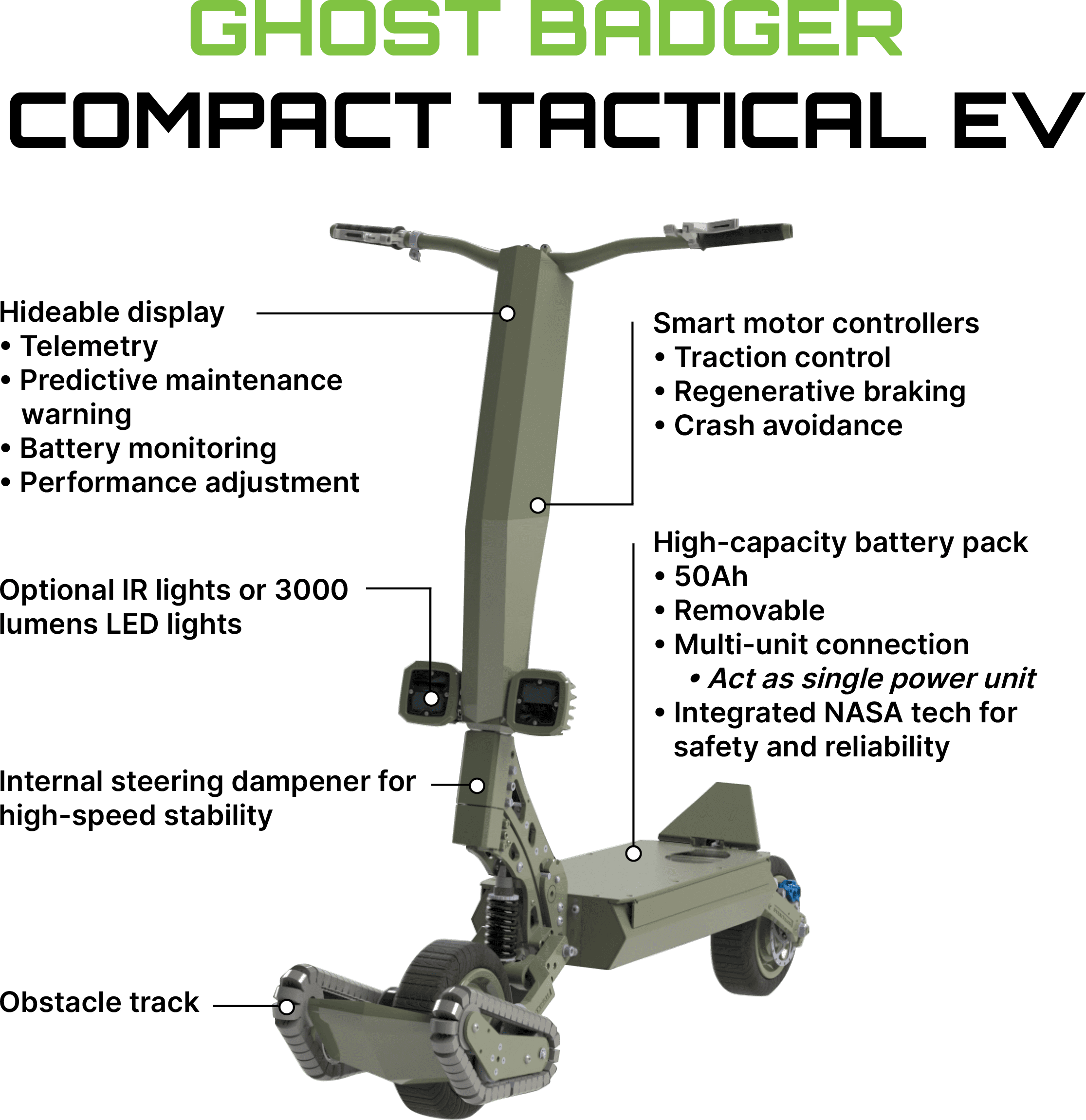
In 2026, the concept of “airspace defense” will expand into multi-domain defense of uncrewed systems, transforming how militaries and public safety agencies think about threat detection and response. Expect increased operational use of Uncrewed Underwater Vehicles (UUVs), Uncrewed Surface Vehicles (USVs) and Uncrewed Ground Vehicles (UGVs), all of which are capable of intelligence, surveillance and reconnaissance (ISR) and payload delivery missions within their respective operational environments. Micro-sized drones, including insect-like “cybugs” and bio-hybrid platforms, will move from prototype to field testing, offering near-undetectable capabilities for espionage, sabotage, or facility infiltration. Simultaneously, nations will accelerate investment in autonomous or semi-autonomous interceptor drones designed to disable or capture hostile drones in midair, bridging the gap between electronic warfare that disrupts signals and traditional kinetic countermeasures. These will include net-based, kinetic, and energy-based systems, purpose-built to operate safely over populated or sensitive areas. As RF-based defenses become ubiquitous, adversaries will shift toward RF-silent and fully autonomous drones, rendering legacy RF-controlled systems obsolete. 

Prediction 9: Defense Primes Will Begin to Operate with More of a Startup Mindset 

Long development  timelines and proprietary hardware / software will become increasingly unacceptable to defense customers.  With speed to field becoming a procurement requirement, traditional defense primes will begin to operate more like startups, leveraging open architecture designs and making decisions to buy versus build more often. 

Prediction 10: Shift from CUAS “Air Walls” to Fully Networked & Integrated CUAS Systems

Air walls which exist only at the border are no longer sufficient. We have seen that drones can be smuggled into a country while powered off and then take off once they are well past the air wall – in depth – conducting devastatingly effective missions. These incidents will not only push nations to expand their internal detection networks but also to form multi-country CUAS collaborations, beginning in Europe and later extending through NATO and Indo-Pacific partnerships.  These networks will expand on the initial air wall concept by establishing comprehensive networked CUAS systems which exist not only at the border, but also deep within each country.  These CUAS coalitions will leverage shared airspace intelligence protocols, enabling the exchange of drone signatures, RF telemetry, and incident data in real time.

Prediction 11: AI-Mediated Engagement Decisions

The next evolution of counter-UAS systems will pair AI decision-support with human oversight, mirroring missile-defense frameworks. Automated sensors and targeting algorithms will evaluate speed, flight path, and threat behavior to generate real-time “shoot/no-shoot” recommendations, placing humans on the loop rather than fully in control. This model will enable faster, safer responses in complex airspace and reduce the cognitive burden on operators managing multiple threats at once. Ethical and policy debates will intensify as militaries test the balance between automation and accountability in kinetic engagements.



This year’s predictions highlight the rapid convergence of drone operations and airspace security. Public safety agencies are integrating drones into daily response. Enterprises are expanding their use of aerial data. Governments are redefining airspace policy while preparing for new classes of threats.

Drones now serve every mission — and challenge every boundary. The next phase of airspace security is about managing coexistence and countering threats across defense, public safety, and enterprise domains.

Boneyard

Prediction 8: Airspace Defense Becomes Multi-Domain Defense

The counter-drone mission will no longer be isolated to the air. In 2026, we’ll see increased use of underwater, surface, ground-based and micro-sized uncrewed systems, requiring integrated command and sensor layers across domains.

• Uncrewed Underwater Vehicles (UUVs) used to surveil or conduct attacks on maritime vessels or infrastructure.

• Uncrewed Ground Vehicles (UGVs) adapted for intelligence, surveillance and reconnaissance (ISR) and payload delivery missions.  

• Uncrewed Surface Vehicles (USVs) used for surveillance or to conduct attacks on maritime vessels or critical infrastructure.

• Micro Uncrewed Vehicles such as Insect-sized “cybugs” and bio-hybrid drones will move from experimental to operational testing.  Their small size, low heat output, and biological camouflage will make them nearly undetectable to conventional sensors, enabling new forms of espionage, sabotage, and infiltration inside secure facilities

Prediction 9: Rise of ‘Drone-on-Drone’ Interceptors

Expect an explosion of interceptor drone programs — autonomous or semi-autonomous UAS designed to physically disable or capture hostile drones midair. They will bridge the gap between “soft kill” electronic measures and conventional firepower. Methods will include net-based, kinetic, and energy-based interceptors that can operate safely over populated areas.

Prediction 10: Radio Frequency (RF) Controlled Drones Will Become Obsolete on the Battlefield

As RF-based counter-drone technology is fully integrated at the tactical edge, adversaries will all but abandon traditional RF controlled drones, instead focusing on RF-silent, autonomous technology.

O/LINK Modular Trauma Panel (MTP)

December 29th, 2025

This is a pretty cool concept from IG-based maker @justohl who designs from a cyberpunk perspective. I initially started following him for his Cyberdeck builds but took on a real appreciation for his ability to repurpose items into smart garments.

Often criticized for his destruction of perfectly good Pelican cases, he has developed a Modular Trauma Panel.

Evan Ohl has this to say regarding the design, “I designed the MTP to attach directly to MOLLE webbing without the use of any hardware, keeping it extremely low profile and flexible for a wide range of applications. It can be attached to chest rigs, plate carriers, harnesses, drop leg rigs, and anything else with 4 columns of webbing.”

Made from Tegris it’s rigid yet lightweight. The MTP comes equipped with a hank of 1/8” shock cord and a single cord lock.

www.evanohl.com/store/p/olink-panel-02r1

Sneak Peek – Shaw Concepts ARC Helmet Cover

December 29th, 2025

After years of teasing, the ARC Helmet Cover will launch soon.

The ARC Helmet Cover will launch in MARPAT Woodland, MARPAT Desert, MultiCam, Ranger Green, M81, MC Tropic and MC Arid.

It will fit OpsCore SF Fasts (both Next Gen and the Gen prior) as well as USMC ECHs.

Coming soon from shaw-concepts.com.

Soileater T10-V2 Insert for Taser 10

December 29th, 2025

The new T10-V2 Insert from Soileater is a fully ambidextrous Insert designed to securely hold your Taser 10® inside of your chest-rig or plate carrier.

Features:

Out of the box Level-I friction retention with the option to add Level-II Retention by installing the included Retention Kit straps. 

Comes with 2x Hook & 2x Loop adhesive Velcro® strips that allows you as the end-user to match the Velcro® inside your chest-rig or plate-carrier. This means that the T10-V2 can be inserted into any chest-rig or plate carrier that is lined in Hook or Loop fastener. 

Equipped with an Internal magnet inside, to work with the Axon® Signal system for BWC.

The T10-V2 completely covers the ambi-safety on the Taser 10®, reducing the risk of the safety accidently being deactivated, and the light and activation sound being emitted. 

The T10-V2 is equipped with a safety ramp that places your Taser 10® from fire to safe in case you accidently attempt to holster your Taser while on fire. (Always place your Taser on safe prior to attempting to re-holster).

www.soileater.com/product-page/t10-v2-insert

The owner of Soileater is a fulltime LEO /SWAT guy, who strives to bring innovative solutions to problems frequently encountered by law enforcement and SWAT team members.

Orqa Scales Global Production Capacity to 1m Drones

December 29th, 2025

Orqa’s New Global Manufacturing Program Expands Proprietary Drone Production to 1 Million Units Annually

Osijek, Croatia / California, US — December 2025: Orqa, Europe’s leading developer of FPV (first-person view) and unmanned aerial systems (UAS), today announced the launch of its Global Manufacturing Partnership Program, a strategic initiative that will expand Orqa’s production capacity to more than one million drones per year through collaborations with the US Army and with trusted partners worldwide.  This game-changing move will create, for the first time, a resilient global supply chain for the industry, wholly independent of China.

Building on its proven ability to produce 280,000 drones annually at its European headquarters in Osijek, Croatia, Orqa is now extending this robust production model globally through a decentralised network of strategic manufacturing partners. 

Partnerships are already established across key territories in North America, Europe, the Middle East, and the Indo-Pacific, with additional agreements in progress to further expand Orqa’s global footprint. Together, these facilities will form a distributed and resilient production network that meets rising global demand for defence-grade UAS platforms while supporting re-industrialisation and creating high-value manufacturing jobs in local markets. 

“We are a rapidly growing business with the capacity to produce 280,000 drones at our headquarters alone,” said Srdjan Kovacevic, CEO of Orqa. “Our Global Manufacturing Partnership Program extends this capability by enabling allied markets to produce the same high-performance systems using Orqa’s standardized components. The agreements we’ve already secured put us on track to achieve our target capacity of one million drones per year, a significant milestone at a time when global security challenges are evolving rapidly.”

Through this model, Orqa combines world-leading engineering with localized manufacturing agility, ensuring that each manufacturing partner can deliver drones and components to the highest standards while reducing lead times, logistics complexity, and regulatory barriers. By increasing global production to 1 million per year, allied territories will have the means to level up their defence tech capabilities significantly.

orqafpv.com

Guardians Wear New Space Force Dress Uniforms for First-Time at Basic Training Graduation Ceremony

December 29th, 2025

PHILADELPHIA  –  

The U.S. Space Force’s newest Guardians were the first trainees to wear the new service dress uniform for a basic military training graduation ceremony at Joint Base San Antonio-Lackland, Texas, Dec. 18, thanks to the Defense Logistics Agency Troop Support Clothing and Textiles supply chain.

“I feel an incredible sense of pride in our DLA team and in the new Guardians beginning their service today,” said Christopher Gaudio, C&T’s recruit training center and clothing sales stores division chief.

Gaudio represented DLA at the graduation with Angela Maragni, a C&T product specialist.

“To witness the first-ever graduating class wearing these uniforms, which are a direct result of the dedicated partnership between the Space Force, DLA, and our industry partners, is incredibly rewarding,” Gaudio said. “It’s a powerful, visible reminder of our core mission: ensuring our nation’s defenders are equipped for success and respected for their service.”

The C&T team collaborated with its internal contracting, technical and customer teams, the Space Force, the Air Force Uniform Office and domestic fabric and clothing vendors from initial concept and design to production and delivery.

C&T is supporting the Space Force’s fielding of the new dress uniform to approximately 11,000 Guardians and new recruits annually, with nearly 600,000 items in more than 400 sizes, Gaudio said.

The Space Force dress uniform ensemble includes men’s and women’s dark blue dress coats, caps, lightweight jackets, belts, enlisted rank and color insignia, as well as men’s trousers, shirts and ties, and women’s slacks, skirts, cravats and overblouses.

Uraina Gray-Scully, C&T’s product services and technical support chief, described the uniform as modern with unique features, including a semi-fitted coat with an asymmetrical six-button front closure, and a military standup collar with cording.

Considering the Space Force is a smaller and newer military service, C&T was intentional in working with vendors to establish the right support structure for smaller fabric and end-item quantities compared to other services, said Arlett R. Hartie, integrated supply team chief for C&T’s accessories team. Hartie and team lead acquisitions for the Space Force dress uniform accessories and was instrumental in fielding the Space Force’s first physical training uniform’s last year.

“We had a lot of collaboration even prior to award so that we could be ready to hit the ground running with the acquisition,” Hartie said.

Gray-Scully and the dress clothing team ensured vendors met uniform specifications from pre-production to testing and provided on-site support at cloth and garment manufacturers, including shade evaluation for Space Form dress uniform items.

“It really is a collaborative effort when we are at the production facilities,” Gray-Scully said. “The specifications allow for minor adjustments, since all garment manufacturing facilities operate differently.”

For example, while C&T personnel visited a coat manufacturer with customer representatives, slight adjustments were made to the coat’s button placement and collar.

Lisa Vivino, C&T’s contracting division chief for dress clothing, described this as a common challenge with new items being produced for the first time.

“Once the contracts were in place, as with anytime with a brand new item, you think everything is good, the specification, the shade [evaluation], all that stuff, and then as the vendors begin to produce as the experts in the field, they begin to notice things that are challenges and make recommendations of things we might want to consider,” Vivino said.

Vivino led contracting oversight for the high-visibility roll-out, as her team executed acquisitions to meet the Space Force’s roll-out deadlines.

“It was complex, a lot of communications, a lot of collaborations across C&T, industry, and the Space Force,” Vivino said. “We’re proud of [our work] and glad it was successful.”

With about 16 contracts in place since late 2024 and earlier this year, C&T provided initial quantities to Guardians for the service’s Oct. 1 and Dec. 1 initial implementation deadlines, Vivino said.

“All of the items have been in production, and all of the deliveries have been underway for several months now,” Vivino said.

The Space Force started pre-orders for some Guardians including recruiters, training instructors, December ROTC graduates, and senior leaders in November, according to its website. Pre-ordered uniforms are scheduled for delivery by June 2026.

“Going forward, we’ll continue to use the forecast to continue the sustainment support for the Space Force,” David Cortes, C&T’s dress clothing planning chief, said.

By Mikia Muhammad, DLA Troop Support Public Affairs

Schiebel Successfully Concludes Initial Camcopter S-300 Flights in France

December 28th, 2025

Vienna, 18 December 2025: Schiebel has successfully completed the first CAMCOPTER® S-300 flight test campaign in France, marking an important milestone in the programme’s progression. The flights were conducted at the CESA Drones test site in Sainte-Hélène near Bordeaux, where the S-300 further expanded the operational envelope, reaching a total of 100 flight hours.

The flight activities in France build on previous experience gained with the CAMCOPTER® S-300 and represent a further step in expanding the aircraft’s operational flight envelope. Conducted in a military environment, the flights focused on verifying key flight characteristics and overall system performance.

“France has been a trusted partner for Schiebel for many years, making it a natural location for the next phase of CAMCOPTER® S-300 flight activities,” said Hans Georg Schiebel, Chairman of the Schiebel Group. “Our long-standing relationship with the French Navy and our local presence through Schiebel Aéronaval SAS reflect our deep roots in France, while the S-300 is being developed to meet the requirements of international military and government users worldwide, building on Schiebel’s global experience in unmanned aviation.”

During the flights, the CAMCOPTER® S-300 demonstrated stable and controlled behaviour while undergoing typical evaluations for an unmanned air system at this stage, including handling qualities, flight control response and overall aircraft performance.

The CAMCOPTER® S-300 builds directly on Schiebel’s extensive experience with the CAMCOPTER® S-100, a maritime-proven unmanned helicopter with several hundred thousand flight hours accumulated worldwide. Drawing on this operational heritage, the S-300 is designed to deliver increased payload capacity, extended endurance and enhanced mission flexibility for demanding military and government applications.