FirstSpear

Stroup Knives x Ferro Concepts Collaboration Knife

January 29th, 2024

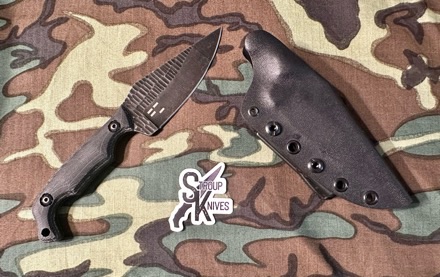
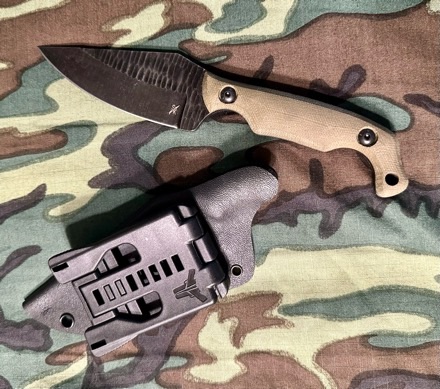
This collaboration between Stroup Knives and Ferro Concepts debuted at SHOT Show.

It features G10 scales with one side Black and the other OD along with a full tang blade made from 1095 carbon steel, rock tumbled and acid etched with both company’s logos.

SHOT Show 24 – MATBOCK Update

January 29th, 2024

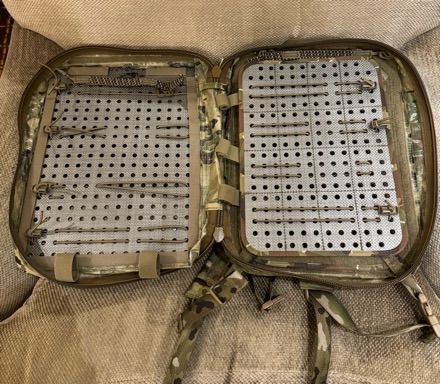
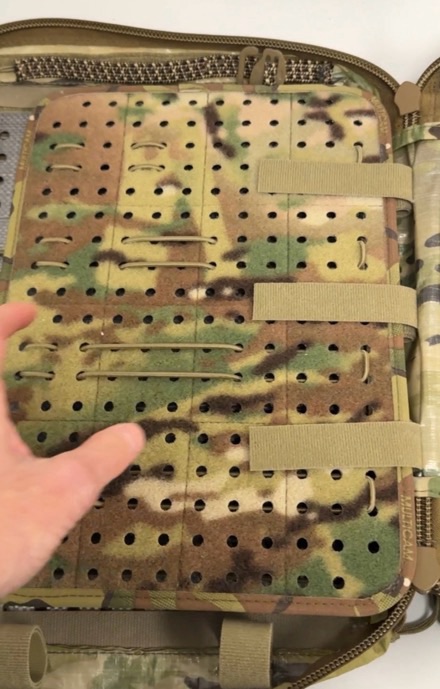
MATBOCK showcased updated panels for their Graverobber series. Since its inception, operators have loved the ability to adjust these panels, but as one operator said, “I know when I need to make another adjustment to the panel, I would grab a beer, turn on a movie, and get ready to do surgery.” He continued, “This is a game changer, and we will be looking forward to buying the panels.” 

The pictures are from their Graverobber Assault Medic (GRAM), but all the panels will be getting this upgrade. MATBOCK also said that they will be offering just the panels for sale so you can upgrade your existing packs. The first production run of these is scheduled for February / March 2024. 

To learn more about their Graverobber series check: www.matbock.com/collections/grave-robber

Eye of the Tiger

January 29th, 2024

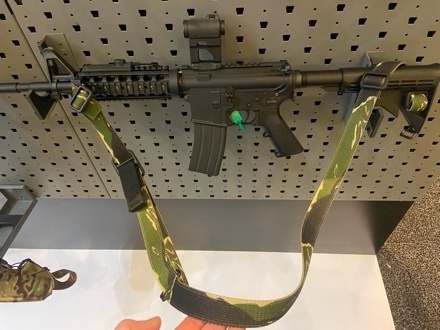
At SHOT Show Blue Force Gear unveiled their limited collaboration with The Firearm Blog.

The Tigerstripe webbing will be limited to two VCAS models, the standard version and the version with sewn-in QD attachments. Launching February 26, there are only 500 of each.

Sign up for the BFG newsletter to learn more.

Varusteleka – Särmä TST L5 Thermal Patrol Coverall

January 29th, 2024

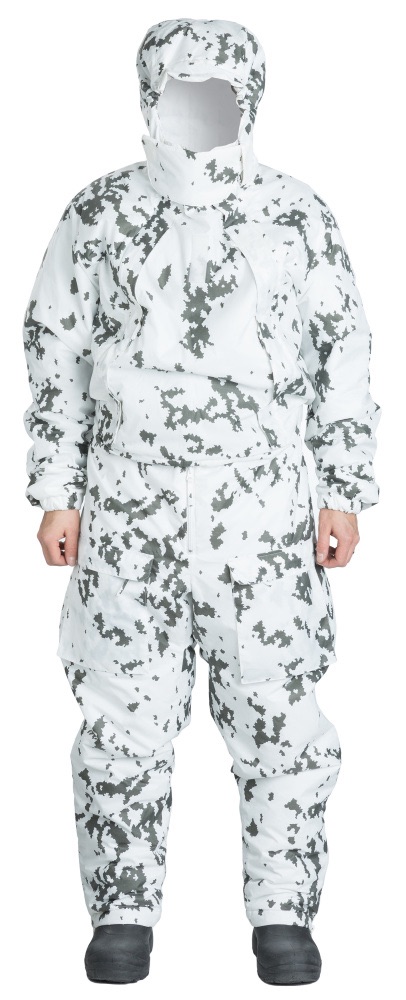
During a meeting over coffee with Varusteleka, they showed me the Särmä TST L5 Thermal Patrol Coverall.

It is an update to a popular Finnish Army issue item which was designed in the mid-80s and used when in static positions like guard duty and lying up in an OP.

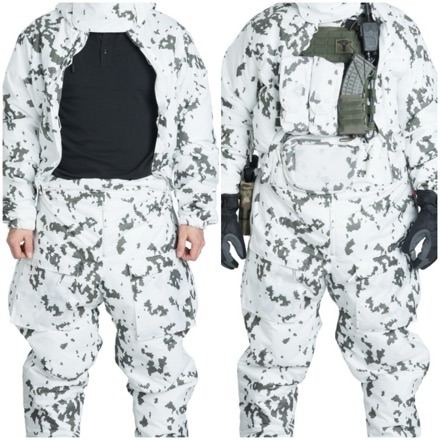
It features dual front zippers and two side leg zips for easy donning and doffing. The front zippers also allow venting and integration with plate carriers and chest rigs.

It is made from 100% polyamide ripstop (70g/m2) with a non-fluorinated water-repellent treatment in the Finnish M05 winter camo print. The coverall is also insulated with 67g/m2 Climashield Apex which allows you to remain comfortable in temperatures as low as -35°C / -31°F.

Features:

• Helmet-compatible hood with a short visor

? Adjustable face opening and head circumference

? Hanging loop

? Removable neck flap

? The entire coverall can be packed into the hood

• Two front zippers

? Wind flaps with hook-and-loop closure

? The wind flap can be closed out of the way with its own hook-and-loop

? Wind flaps have loops for various attachment methods (see usage methods)

• 2-way ventilation zippers in the armpits

• Adjustable waist with elastic band

• Internal suspender loops

• Separate zippered fly for field relief

• NIR-compliant, M05 Snow Pattern color

This coverall is made in Slovakia by Koutny and comes in three sizes.

www.varusteleka.com/en/product/sarma-tst-l5-thermal-patrol-coverall

Washington, Oregon National Guard Soldiers Test New Weapons

January 29th, 2024

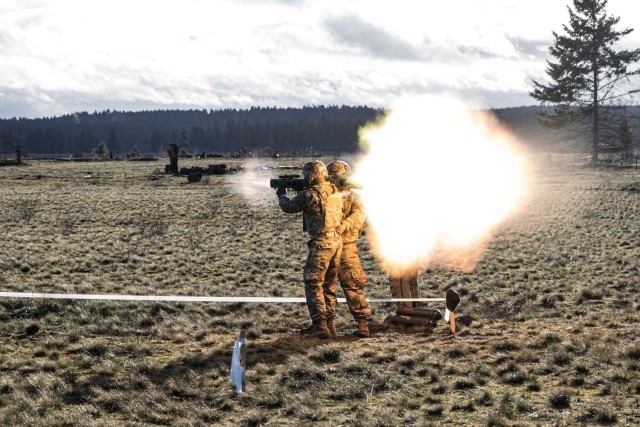
JOINT BASE LEWIS MCHORD, Wash. — Washington and Oregon National Guard Soldiers with the 81st Stryker Brigade Combat Team and 96th Troop Command started the new year with a bang by conducting new weapons training and fielding on Camp Murray and Joint Base Lewis-McChord Jan. 16-17.

The training began with classroom instruction on Camp Murray. The weapons being introduced were the M110A1 Squad Designated Marksman Rifle, MK22 Precision Sniper Rifle and the M3 Multi-Role Anti-Armor Anti-Personnel Weapon System.
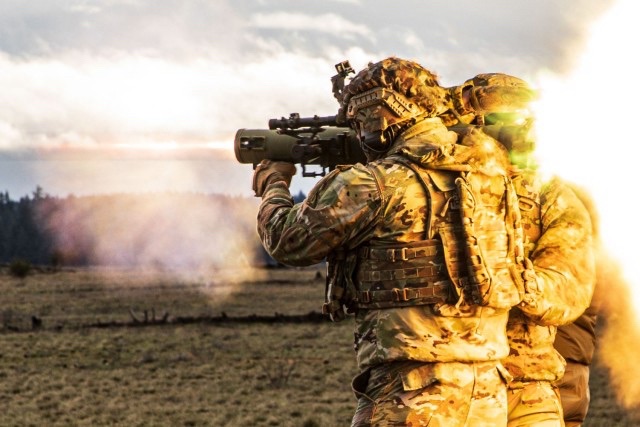
Soldiers focused on the weapons systems’ functions, safety and maintenance. The next day, they brought their weapons to the rainy ranges of JBLM for some hands-on training.

The M110A1 SDMR enables infantry, scout and engineer squads to engage enemies as far as 600 meters away.
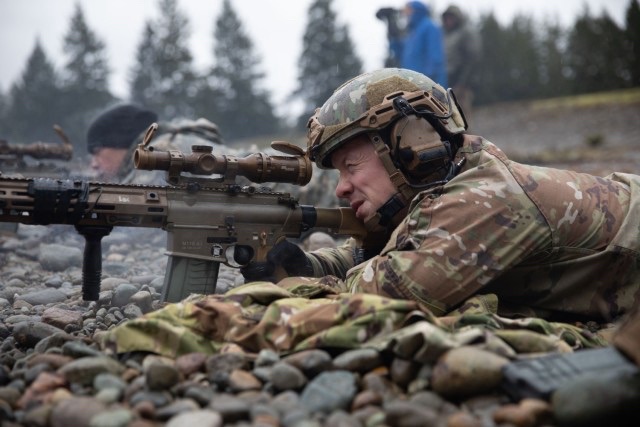
“One thing I have done with the M110A1 in my platoon is assigned it as a primary weapon system for my weapons squad leader,” said Sgt. 1st Class Tylor Anderson, an infantry platoon sergeant with Alpha Company, 1st Battalion, 161st Infantry Regiment, 81st Stryker Brigade Combat Team, Washington National Guard. “This means that he is utilizing the same caliber as his machine gun teams, forcing him to ‘think’ in 7.62 more consistently when planning for enemy engagements.”

The MK22 PSR, set to replace the Army’s existing M2010 and M107 sniper rifles, is outfitted with a modular, multi-barrel design, providing sniper teams with more diversity than its predecessors.
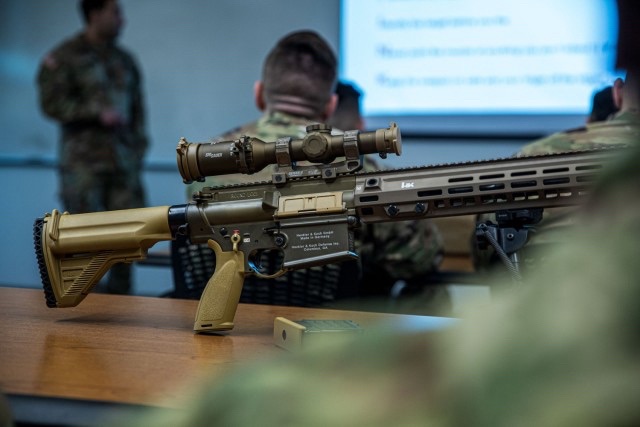
“It definitely improves our versatility when it comes to bringing the right tool for the job when we’re preparing for a mission,” explained Sgt. Remi Milslagle, a sniper with Headquarters and Headquarters Company, 3rd Battalion, 161st Infantry Regiment, 81st Stryker Brigade Combat Team. “We need to out-range enemy snipers, and we need ammunition that’s going to put holes through newer and stronger armor at those ranges.”
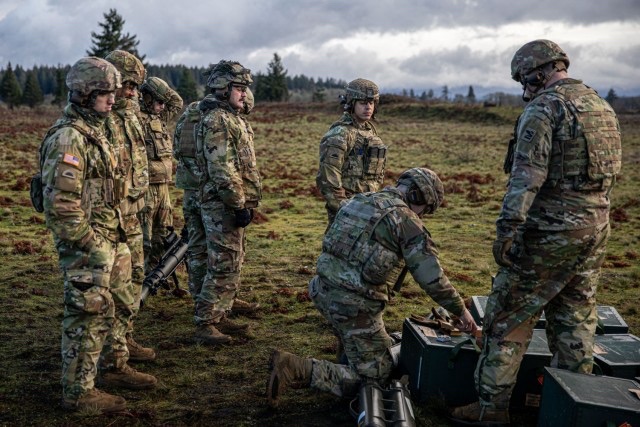
The M3E1 MAAWS, sometimes referred to as the “Carl Gustaf,” is an 84 mm lightweight, man-portable, direct-fire recoilless rifle, which is an upgrade from the AT4. It can fire a wide range of munitions effective against light and medium armor, personnel in open bunkers, and structural targets up to 1,300 meters.

“The AT4 with its ‘one-and-done’ loadout is not as adaptable as the M3,” said Staff Sgt. Dustin Davis, a section sergeant with Bravo Company, 1st Squadron, 82nd Cavalry Regiment, 81st Stryker Brigade Combat Team, Oregon National Guard. “The variety of munitions the M3 has proves it to be a very adaptable weapon.”
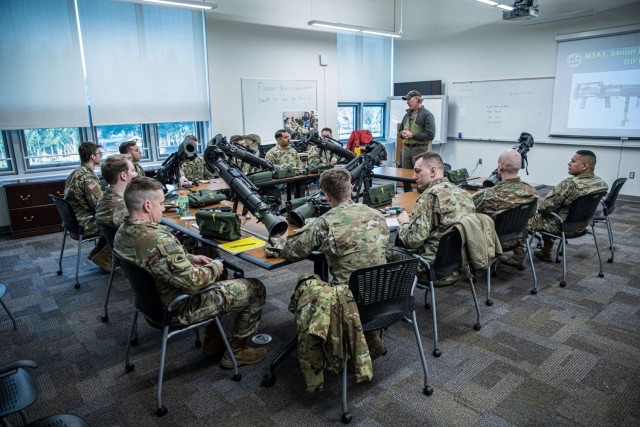
Fielding new weapons allows team leaders to gain knowledge and experience. It enables them to develop as weapons experts and take their newly honed skills back to their organization to train other Soldiers on operating and maintaining their new weapons systems effectively and safely.

As they become more familiar with the new weapons, they can develop and implement standard operating procedures for the additions to their arsenal.
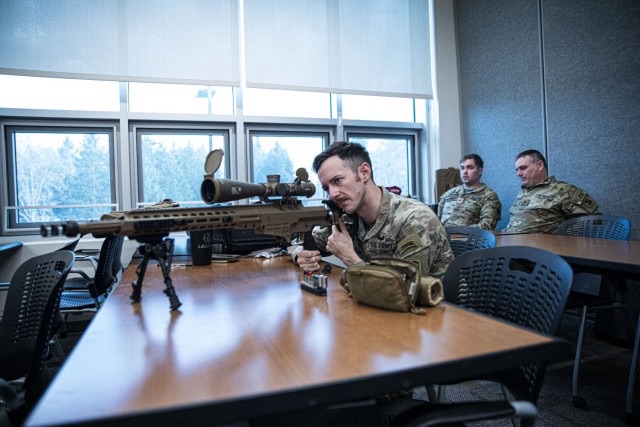
“Soldiers can look forward to getting experience with these platforms and developing unit-level SOPs on how they are employed,” said Anderson. “Training is paramount when it comes to staying ahead of potential adversaries in combat. By adding newer and more capable tools to our arsenal, we allow technology to help us consistently maintain that edge on the battlefield.”

By SFC Nicolas A. Cloward, 122nd Theater Public Affairs Support Element

The Communication Platform TACTICAL CORE by blackned has Passed Functional Tests Under Combat-Like Conditions

January 28th, 2024

It is a milestone for the implementation of the program “Digitalization of Land-based Operations” (Digitalisierung Landbasierte Operationen, D-LBO): Following laboratory tests, the digital communication platform TACTICAL CORE by military IT provider blackned has now also completed the final testing phase under combat-like conditions – and is now considered operational.

The digitalization of armed forces is developing at a high rate. As part of the program “Digitalization of Land-based operations” (D-LBO), the military IT provider blackned, based in Heimertingen in Swabia, was awarded a contract by the German Armed Forces in 2021 to develop a software for an effective network that connects all units involved on the battlefield. TACTICAL CORE, which consists of several software components, has now passed the final tests under combat-like conditions. Even after the first laboratory tests, feedback by the developer and the German Armed Forces was positive throughout. Thanks to its core feature, TACTICAL CORE is a significant part of the D-LBO program. “TACTICAL CORE therefore meets all the requirements to be put into operation”, says Timo Haas. The CEO of blackned is proud of his team that reliably developed the TACTICAL CORE communication system in such a short time span. “The software architects, the product managers, the project leaders, and the development team have all completed their tasks in a target-oriented, effective, and passionate manner. I would like to thank them.”

The superiority of armed forces is increasingly dependent on the availability of centrally hosted digital services that ensure the optimal exchange of data between all systems within the operation. “Software and artificial intelligence (AI) are critical enablers of modern military operations, lead the evolution towards multi-domain operations, enhance interoperability among allied forces, and support the achievement of information superiority and decision-advantage against adversaries”, the International Institute for Strategic Studies (IISS) writes in its report “Software-defined Defence: Algorithms at War” (February 2023). With a background in high-tech software and specialized military IT systems, Blackned GmbH is a leader in the development of communication and control systems that make Software-defined Defense (SDD) possible. TACTICAL CORE combines three software components. XONITOR is a monitoring and management tool, RIDUX ensures a reliable and efficient data and communication infrastructure, while the patented MeshFLOW system enables seamless connectivity, even when soldiers dynamically move across the battlefield. The Federal Office for Security in Information Technology (Bundesamt für Sicherheit in der Informationstechnik, BSI) has certified TACTICAL CORE’s data transfer for the highest security level “NATO Restricted” – proof of safe and authorized communication.





During the final functional tests, blackned and the Military Technical Center examined the operability in simulated deployment scenarios. During the tests, units consisting of vehicles and personnel used TACTICAL CORE in combat-like conditions. “The collaboration with the Military Technical Center and the German Armed Forces was a success, and the results of these tests are an important step forwards for the D-LBO program”, comments Haas.

The main challenge during the development of TACTICAL CORE was the multitude of systems that are deployed on the battlefield, the outermost tactical regions, and in operational command centers. The interaction and exchange of data, or the communication between analog radios with digital devices such as smartphones, is only possible with the help of an interoperable IT network. Similarly, joint operations between different units and armed forces, as well as the use of an increasing amount of digital equipment, technologies, and systems, has created an IT complexity that necessitates effective interoperability to exchange data in an expedient and safe manner. This is what TACTICAL CORE is capable of.   



Sneak Peek – Limited Edition Platatac MK5 Peacekeeper Rigs

January 28th, 2024

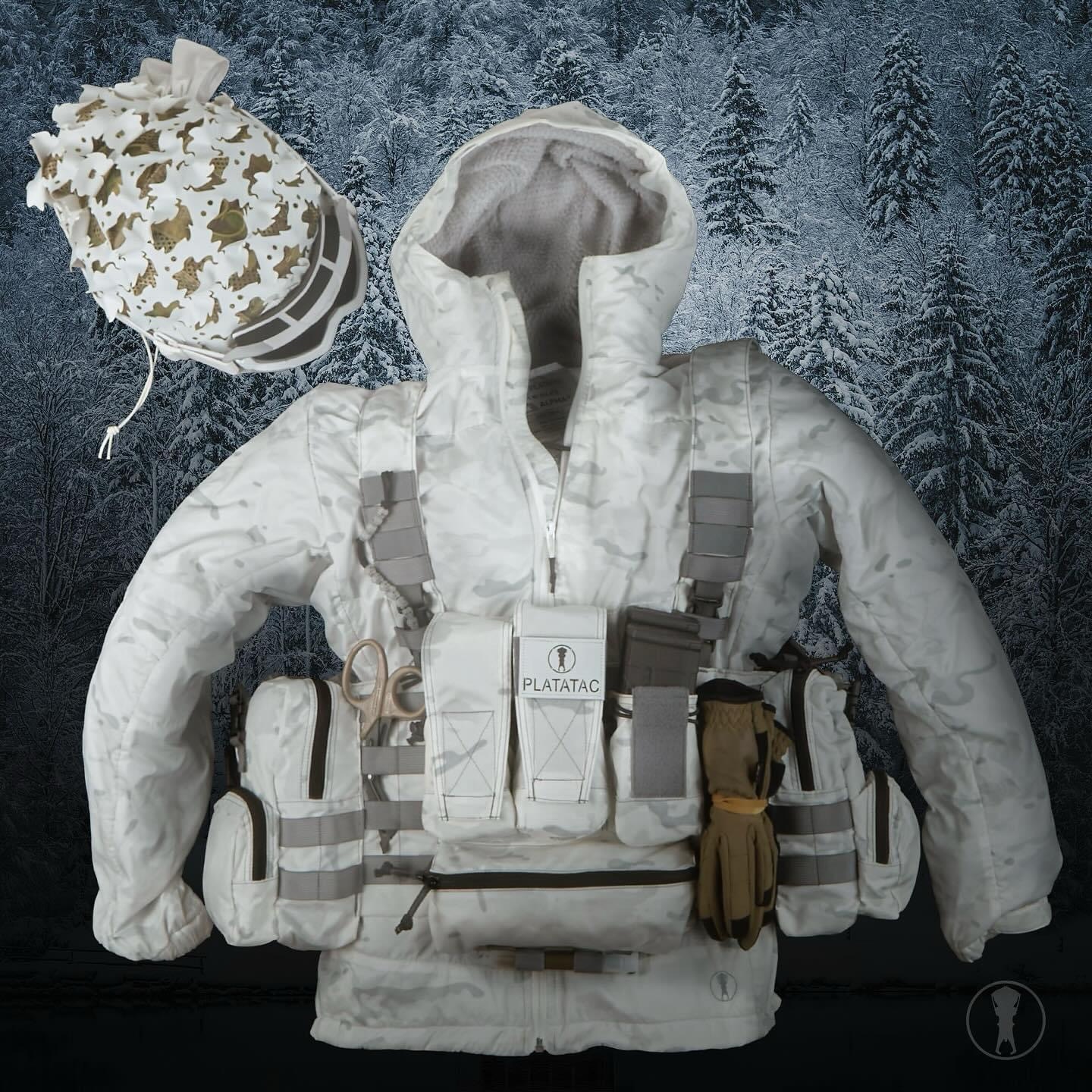
Some special projects from the Platatac skunkworks do see the light of day…although in very small numbers.

25 x Platatac Peacekeeper MK5’s in limited overrun MultiCam Alpine will be offered in mid-February if you’re quick enough.

Features:

• Can carry up to six 30 Round AR/M4 style magazines (Each pouch will also accommodate 2 x AK mags, or a single 20rnd. 417/.308 mag)

• 2 x Accessories/Water bottle/GP/ANPRC 152 pouches with front zip admin pockets  

• 1 x Large Velcro mesh pocket with included Velcro in zip

• 2 x Tweave 4 way stretch pockets at the flanks

• 1 x Horizontal zippered pocket with webbing loops to attach elastic loop inserts to carry a TQ, Plasti Cuffs or Cyalume 

• PALS areas between pouches and on the sides of the GP pouches to attach additional MOLLE-compatible pouches

• Velcro sandwich for sub load pouches to boost carrying capacity

• Colour matched velcro loop for IFF, C/S or Flag patch with embroidered Platatac logo

• Sewn drainage holes in all pouches

Platatac Silks Alpha restock in MultiCam & MultiCam Tropic also available mid-February (MultiCam Alpine coming mid-year).

Army Developing First Arctic Doctrine in More Than 50 Years

January 28th, 2024

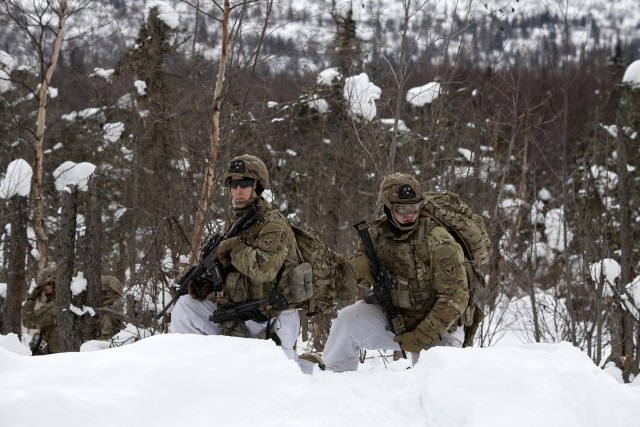
FORT LEAVENWORTH, Kan. — The U.S. Army has begun development on the first Arctic-focused doctrine in more than 50 years, Army Techniques Publication 3-90.96, Arctic and Extreme Cold Weather Operations. The manual, slated for release in mid-2024, will provide Soldiers and leaders with the knowledge and techniques necessary to overcome the Arctic environment and succeed in temperatures as cold as minus 40 degrees Fahrenheit.

“Arctic and extreme cold weather operations are about more than being able to survive, you have to be able to thrive,” said Capt. Edward A. Garibay, the lead doctrine author for the publication with the Combined Arms Doctrine Directorate. “As the Arctic warms from climate change, it’s going to become more and more accessible in the coming decades and take on new importance. We have to be ready to accomplish the mission in such an environment. This doctrine will help our Soldiers do that.”

The publication will be tactically focused and will help Soldiers use the concepts and experience they already know and adapt them for the Arctic and Subarctic. It will explain many of the unique and sometimes counterintuitive aspects of the region and the considerations Soldiers must take to adjust operations. For instance, the sun may never rise during the month of December; GPS and satellites can be unreliable due to solar storms; metals and plastics become brittle and can break; and batteries have significantly shorter life.

“One of the problems we face now is that we have a lot of localized knowledge that isn’t easily shared across the Army,” said Garibay. “We have pockets of individuals and units that are experts, but their knowledge is only available in local [standard operating procedures] and only passed down from one command to the next. We’re consolidating all that knowledge in one place and providing a foundation for everyone to build on.”

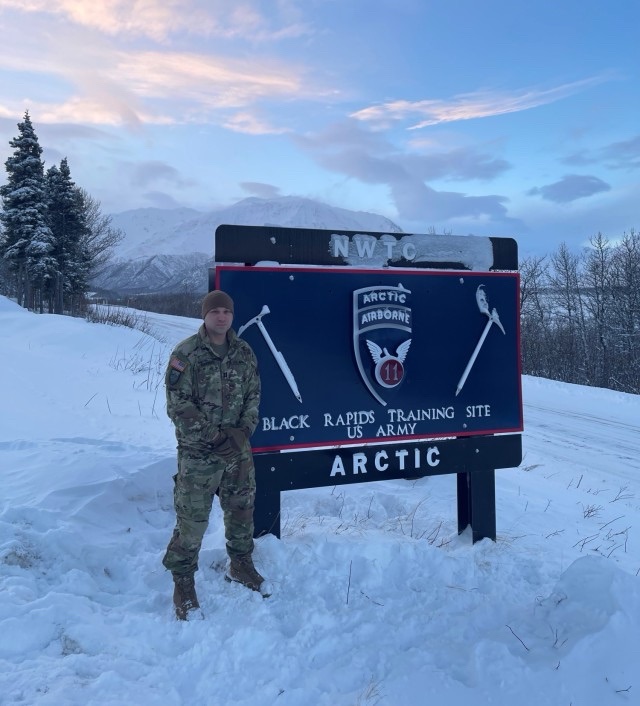
The CADD Special Doctrine Division, the doctrinal proponent for cold weather, has been extensively researching Arctic and extreme cold weather operations for more than a year. Their efforts include training at the Northern Warfare Training Center, referencing historical records, and consultation with other Arctic nations such as Canada, Norway, Finland, Sweden and Denmark. One of their primary resources is the 11th Airborne Division in Alaska, which has played a critical role in developing doctrine. According to Garibay, their continued innovation and expertise has been invaluable. They have taken an active role in writing Arctic doctrine, staffing revisions, and providing subject matter experts.

“The U.S. Army has to be ready to fight and win in extreme cold and mountainous environments in order to deter conflict, and the 11th Airborne Division is the foundation of that capability,” said Maj. Gen. Brian Eifler, commander, 11th Airborne Division. “To build sustained Arctic readiness, we need to follow the example of Alaska native communities who have thrived here successfully for millennia, sharing best practices and lessons learned.”

Another milestone in the doctrine’s development will occur during the 11th Airborne Division’s upcoming Joint Pacific Multinational Readiness Center exercise this winter. During the exercise, which will replicate large-scale combat conditions, the division will also be validating concepts for the doctrine and providing immediate feedback to CADD.

To learn more about Army doctrine and access doctrinal resources, visit the CADD public website.

By Combined Arms Doctrine Directorate staff