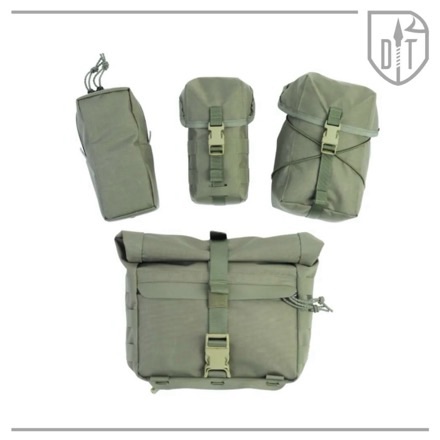
Germany’s DEFTEX has some new pouches coming in 2024.


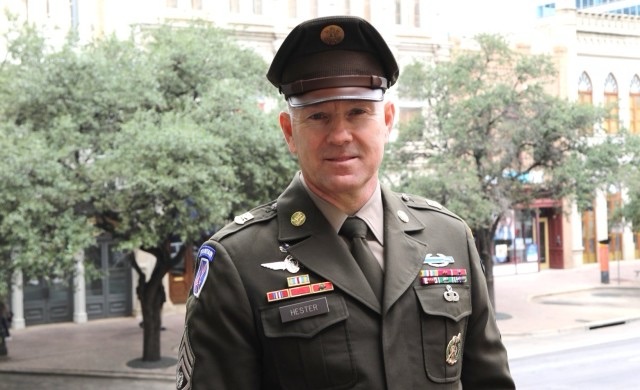
AUSTIN, Texas — As the senior ranking non-commissioned officer at U.S. Army Futures Command (AFC), Command Sgt. Maj. Brian A. Hester has dedicated his career to being people-focused and people-motivated.
“People matter, and our Army has the best people,” Hester asserted.
Responsible for advising the AFC commanding general and other senior leaders on the activities, needs and support requirements of Soldiers and their families, Hester often applies his informed experiences and personal insights to his work for the command.
“My responsibility is to take my experiences as a Soldier over the last 33 years and make sure we’re looking through that lens as we’re trying to modernize and transform the Army,” he said.
His day-to-day tasks include assessing how to best solidify systems, processes, interactions and relationships inside and outside of the organization – efforts that benefit from his disposition as a “people person.”
Hester is also an integral member of a broader AFC team that is continuously evaluating whether new equipment and approaches will “make Soldiers more lethal and more protected on the battlefield” from “both a deterrence perspective and a combat operations perspective.”
“Our responsibility is to transform the Army so that we have future war-winning readiness.” Hester said.
He highlighted how AFC activities help ensure that the Army has “the right equipment, the right training, the right organizations to be able to maintain that land force dominance” and that new materiel and methods are “effective, safe, reliable, efficient and hardened against the threat.”
“I know that the Army of the future is going to continue to be the best Army in the world. It’s going to continue to be able to take care of its people, be absolutely proficient at warfighting. It’s going to be ready when the nation needs it.”
Hester’s skill in analyzing and influencing Soldier-centric planning efforts stems not only from his own career as a Soldier, but also from a deep appreciation for the value of teamwork and hard work.
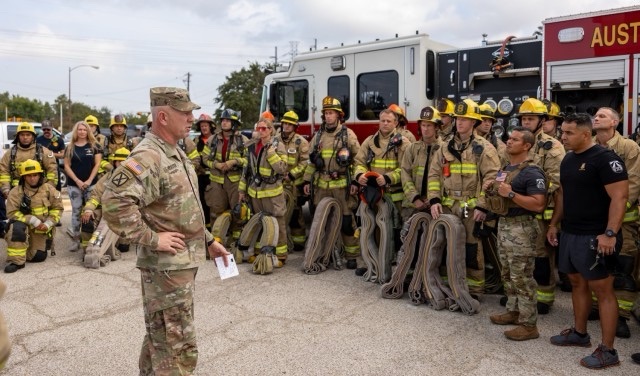
“People often talk about luck. I think that luck is the intersection of preparation and seizing opportunity,” Hester said.
When he decided to enlist in the Army in 1990, shortly after graduating high school, he began a journey that embodied that mantra.
“I grew up in a little town, Mt. Sterling, Illinois, on the Midwest side of the state, in the farm belt,” Hester said.
His community of 1,500 people offered limited opportunities beyond farming and construction, and he was eager to find a way to continue fueling his passion for teamwork, which he discovered while playing high school football, basketball and baseball.
“I wanted to be able to continue to be part of a team, which is one of the things I learned as an athlete, and also do something that I thought was meaningful for me and my family and my country,” Hester explained.
He opted to join the infantry specifically because he was inspired by the unique opportunities it offered, like learning how to jump out of an airplane.
“The infantry platoon is really like an athletic team, and if each person plays their position well, then the whole team is successful,” Hester said.
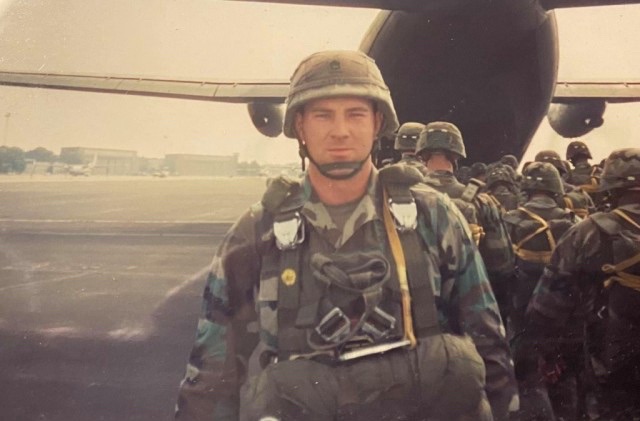
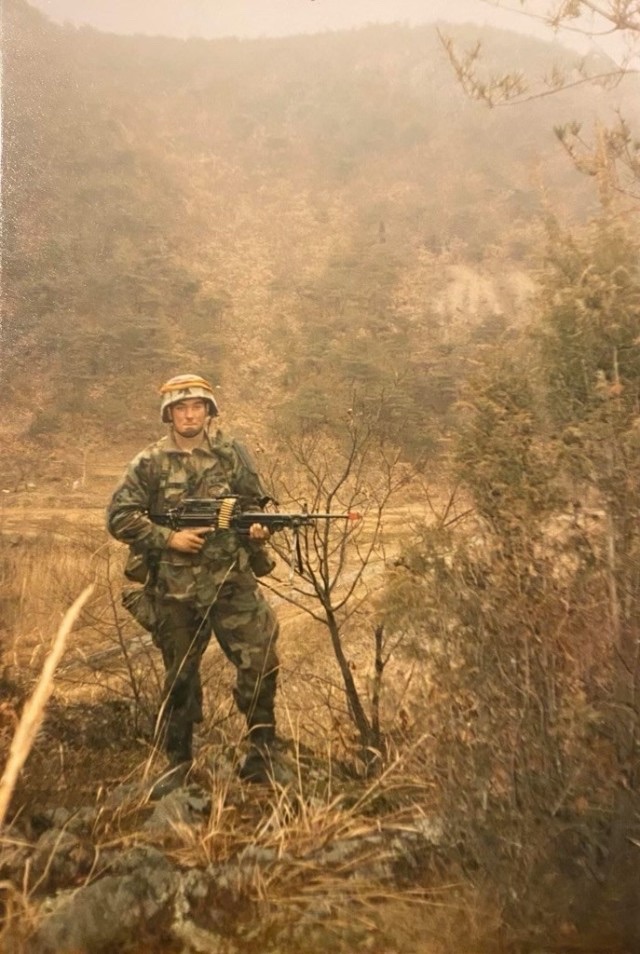
Once in the Army, Hester enjoyed the camaraderie and taking on leadership roles. He remembers thinking to himself, “wow, this is something I could do for 20 years.”
“It just kept getting better,” he said. “It kept being more meaningful to me, and it provided a good opportunity for my family.”
To date, Hester’s Army career has taken him to domestic assignments in Hawaii, Louisiana, Maryland, North Carolina and Texas, as well as international posts in Afghanistan Iraq, Kosovo and South Korea.
His service has additionally afforded him time and support to obtain a bachelor’s degree in liberal arts and complete several military education courses, including Ranger School and the Joint Special Operations Forces Senior Enlisted Academy.
More than three decades later, Hester still enjoys “being around Soldiers, having something really meaningful to do each and every day.”
“That has given me a lot of personal purpose and personal satisfaction,” he said.
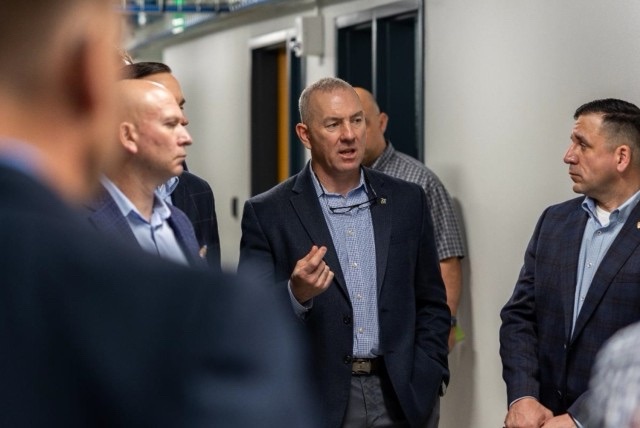
The chance to solve complex problems and inspire others is also a great motivator.
“I don’t think that there’s anything better than the opportunity to figure out how to inspire other people around you to get after a common challenge, a common goal, and I think that’s one of the things the Army does best.”
Hester’s service has enabled his wife of 28 years and their two sons to live in locations around the country, making multiple friendships, encountering new experiences and building resilience along the way.
“For my family, it’s been a good thing,” Hester said of Army life.
His son decided to pursue military service as well, joining the generations of his family – including Hester’s father, grandfather and great-grandfather – who served before him.
“I am super proud of my family heritage, and super proud of my son for serving also,” Hester said.
Hester encourages individuals who may just be starting out in their careers to consider “serving something larger than yourself – as a service member or as a teacher or as a doctor or as a youth coach or a pastor – or finding a way to give back to your community in a meaningful way.”
He sees the Army as an ideal path for many, given the multitude of opportunities, career pathways and experiences it offers.
“I think it’s a great way to start as a young person; even if you’re 30 years old, I consider that to be a young person,” Hester said. “I think that there’s also those folks out there that are looking for a change in their life; the Army’s a great place to make a change, to find something new.”
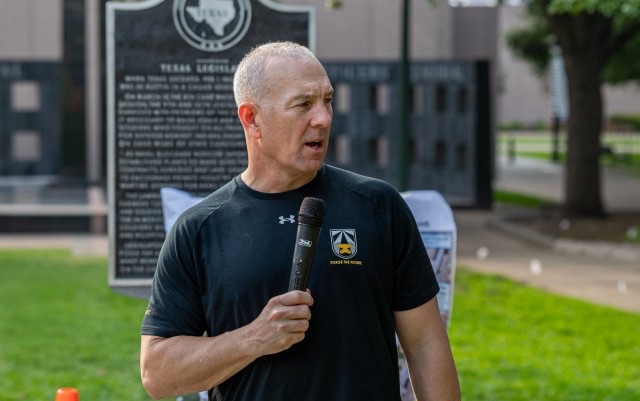
“If you come into the Army with the thought that ‘I’m going to make this opportunity for me the best that I can make it,’ I am 100% sure that your time serving in the Army will be meaningful to you and your family.”
“If you don’t know if the Army is the right place for you, you should talk to a recruiter,” he added.
“I’d almost guarantee you that there’s going to be a fantastic opportunity, should you choose to join the Army and be part of our team.”
By Maureena Thompson, Army Futures Command
Recce mag pouches are now available from Carcajou Tactical.
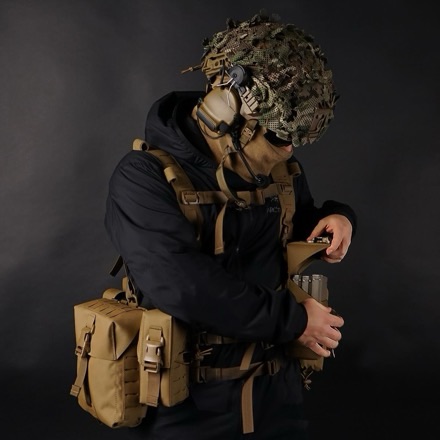
This is for everyone that asked for a closed top and buckle closure. They also added a d-ring to give more attachment options on belt kits.
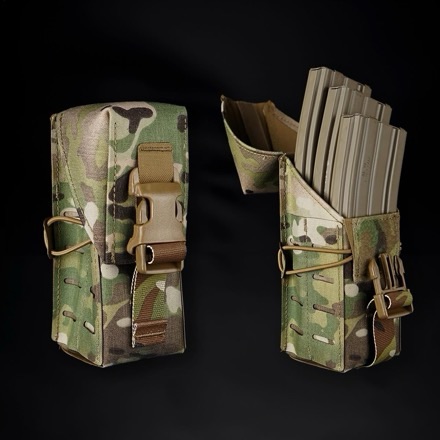
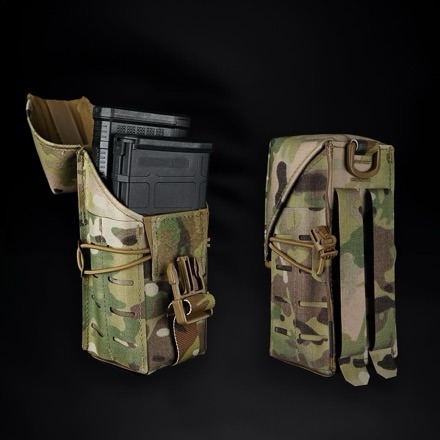
Made in Canada.
carcajoutactical.com/products/recce-mag-pouch
Want to go to Ranger School?
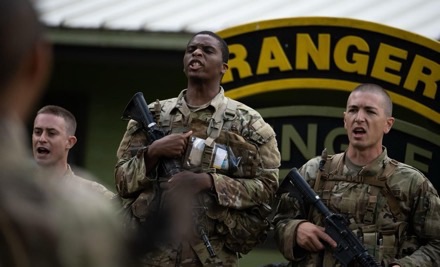
JOINT BASE SAN ANTONIO-LACKLAND, Texas (AFNS) —
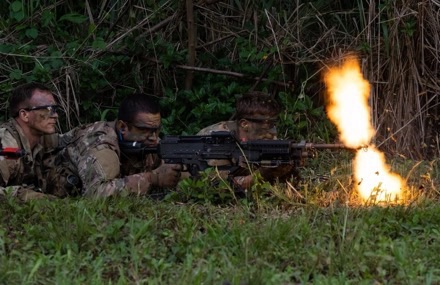
It’s been called “a laboratory of human endurance,” testing the physical, mental and spiritual grit of the officer and enlisted leaders who undertake it. It’s the Army Ranger School and the Department of the Air Force is looking for Airmen and Guardians who are ready for the challenge.
Through the Air Force Security Forces Center’s Ranger Assessment Course, DAF candidates are taught, coached, tested and evaluated for nomination to the grueling 62-day Ranger School experience.
“The Air Force RAC delivers dynamic leadership evaluation and training, mirroring what a candidate will face at Ranger School, which helps drive increased success rates at Army Ranger School. Attendance to both courses ties directly into the Air Force chief of staff’s priority of strengthening joint leaders and teams by directly placing them in joint leadership school and roles which have proven to build military leaders,” said Gabriel Rodriguez, readiness training and RAC program manager at the AFSFC.
The next RAC, about a third of the length of Ranger School, is set for early spring at Joint Base San Antonio-Camp Bullis. Anyone from any Air Force or Space Force career field can attend.
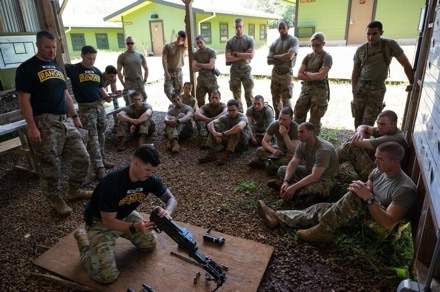
“While the majority of Ranger School attendees come from combat arms career fields, individuals from other Air Force specialty codes can also attend if they meet the necessary prerequisites and requirements,” Rodriguez said. “Ranger School can provide valuable leadership and tactical skills, regardless of the individual’s primary AFSC.”
One of the many misconceptions of the RAC and Ranger School is “that you must be 100% ready before you even attend the course – but that’s where most people are wrong,” said Master Sgt. Keegan Donnelly, RAC instructor with the AFSFC.
The RAC curriculum has undergone an intense review and rewrite to craft a leadership laboratory, he said, designed to teach and coach students before assessing their abilities.
Capt. Daniel Reynolds, assistant director of operations for the 4th Test and Evaluation Squadron, Peterson Space Force Base, Colorado, is the only Space Force Ranger School graduate to date. In his position, he interacts with tactical joint force warfighters on a daily basis to develop more resilient satellite communications toolkits. That warfighter-centric focus in his day-to-day job is what led him to the RAC and ultimately Ranger School.
“Ranger School, as the world’s premiere combat leadership course, expertly teaches resilience, grit and perseverance in the face of overwhelming odds,” Reynolds said. “It teaches leaders how to break down complex problems and craft decisive solutions to dynamic combat scenarios. This is incredibly relevant to any career field in any branch of military service.”
According to its website, Ranger School is a small unit tactics and leadership course that develops functional skills directly related to missions that engage the enemy in close combat and direct fire battles. It’s held at various locations in Georgia and Florida and is open to U.S. military members from all branches, as well as selected students from U.S. allied nations.
With less than 40% of those who attempt Ranger School succeeding, the Air Force developed a form of RAC, or pre-Ranger training, in the mid-1980s to send more competitive candidates forward to increase the odds of success.
Ranger students train to exhaustion, pushing the limits of their minds and bodies during three phases – Darby, Mountain and Swamp – which follow the crawl, walk, run training methodology, Rodriguez said.
With the punishing nature of Ranger School, preparation and an understanding of what attendees will encounter before they get to both the RAC and Ranger School is extremely important, he said.
“Candidates can increase their success at both RAC and Ranger School by focusing pre-training on being successful during the weeklong Ranger Assessment Phase,” Rodriguez said. “At RAC, we hone in on tasks that could hinder a candidate from being successful at Ranger School. This includes strictly executing push-ups, sustaining the mental and physical toughness to meet the time standard on the 12-mile foot march, and honing the basic navigation skills required to pass the land navigation test on the first attempt.
“A proven method to increase success at Ranger School is to take advantage of local training and attending RAC, then followed by Ranger School,” he added.
“The bar to gain acceptance to Ranger School is high, and rightfully so,” Reynolds said. “RAC allows prospective students to understand what will be expected of them if they accept the challenge to attend Ranger School. It also provides them with the tactical skillset necessary to be successful there, both in the assessment phase and in the course’s three patrolling phases.
“Developing Ranger-qualified leaders within the Space Force is critical to our continued defense of the contested warfighting regime of space,” Reynolds said.
“Every career field has a need for decisive, brave, tough and purpose-driven leaders of character. To put it simply, learning how to lead is something that Ranger School does on a world-class level. This is an invaluable resource to have for any service member in any career field,” Reynolds said.
“The RAC and Ranger School were the catalysts for some of my life’s greatest transformations,” the captain said. “The experience transformed me into a much more confident, capable and purpose-driven human being and that has affected every aspect of my leadership development for the better.”
Airmen and Guardians who qualify to attend RAC, and ultimately the Army’s Ranger Course, should be prepared for the monumental experience, Reynolds added, with “feeling drawn to attend” being the most important component to possess in preparation for it.
“A significant proportion of people who fail the course do so because they arrived without deciding that the experience was something that their life needed,” the captain said. “Take the time to decide for yourself what your reasons for Ranger School are, and how important joining the community is to you. When you’re more cold, wet, tired and hungry than you’ve ever been in your life, those reasons will be what you will lean on to carry you through.”
“Regardless of their recommendation to move onto Ranger School or not, [RAC attendees] are still returning to their units better trained, more lethal and adaptable leaders in the joint arena,” Donnelly said.
To apply for RAC attendance or more information on the program, go to the Air Force Portal under Air Force Forces Generation Connect or email AFSFC.S3T.AFSFC_RAC_Program@us.af.mil.
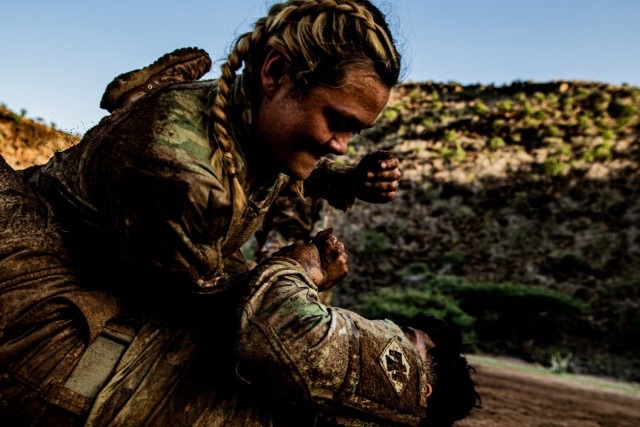
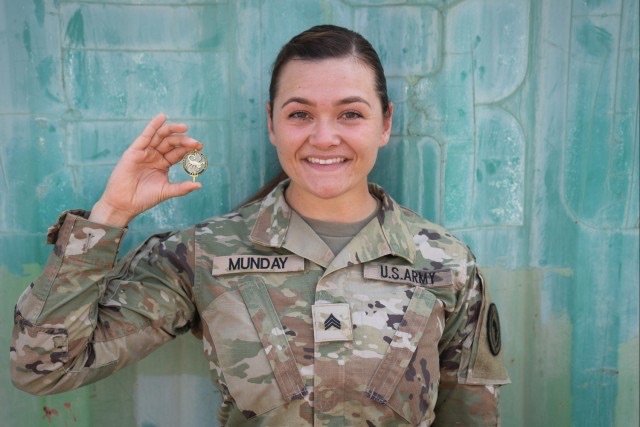
For nearly 50 years, French soldiers stationed in Djibouti have made their way to Arta Mountains for the French Desert Commando course, a grueling five-day course designed to test soldiers’ physical, emotional and mental limits. This year 40 U.S. service members signed up for the challenge, among them was U.S. Army Sgt. Liliana Munday.
Growing up, Munday, a Soldier with the 218th Maneuver Enhancement Brigade, South Carolina National Guard, gravitated toward physical activities that kept her outdoors as often as possible. She was immediately interested in the French Desert Commando Course but hearing about the physical demands of the course brought on feelings of doubt.
“I didn’t think I was ready for it,” she said. “But Staff Sgt. (Samuel) Perez kept pushing me to try out because he saw that I wanted to do it and he had faith in me that I could do it.”
The FDCC has two phases, the pre-assessment and commando phase. The first phase ensured service members met the basic physical requirements and evolved into a preparation program over several weeks. During this period service members consistently trained to earn a spot in the commando phase. The second phase took them out to the field where they faced numerous courses including a night obstacle course, a ropes course and a swimming course incorporated with various combative and desert survival skills.
With the paperwork submitted the next step was to prepare. Her training regimen began in September and included rucks and runs around the installation before dawn, weight lifting, and dynamic, high-intensity exercises nearly every day. At the peak of her training, she fit in three workouts each day while balancing her regular work schedule.
After three months of training Munday remembers the nerves she felt on the drive out to Arta Mountains where her hard work was put to the test immediately.
“I almost had an aneurysm, I was so scared,” she said. “On the way out there I kept thinking, ‘Am I ready? Am I gonna do this? These guys are gonna smoke me, I’m just gonna be out here stranded and be sent home on day one’.”
Day one consisted of a five kilometer ruck-run with a full kit, followed by a PT test and rope climbs.
“I was nervous because rope climbs are very hard for me and in training, I could only do one,” she recalled.
Her training partner, U.S. Army Staff Sgt. Samuel Perez, was there to support and encourage her, watching as she steadily made her way to the top.
“I could see she was nervous because we saw the other competitors struggling with this climb,” Perez said. “I was there telling her she could do it; I knew she could. She got up there and when she came back down she had a big smile beaming from her face she was so excited and she ran over and gave me a big hug.”
With the first big hurdle behind her, Munday moved forward in the course with a newfound confidence.
“For some reason, after completing that first day I was good. I started to feel like I could do this thing and I proved to my squad that I was here to work and I deserved to be here,” she said.
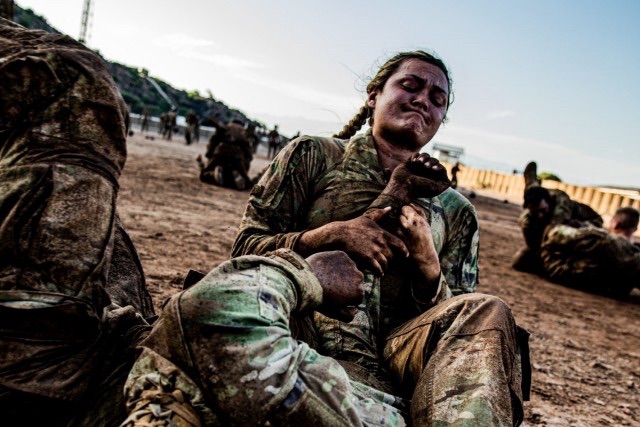
Each day and night Munday and her squad faced a new obstacle, the most difficult for her she says was the mountain obstacle course.
Positioned 200 meters above the ground, participants were required to jump across five platforms spaced several meters apart, jump and grab on to a steel pole and slide down to the ground.
“When you’re doing that mountain obstacle course you don’t realize how far each platform is from one another and there are points when you’re not clipped in,” she explained. “I thought, if I missed even a little bit, I’m going down.”
On day three, after pushing herself through numerous challenges and rucking non-stop from one training location to another, she thought she had reached her breaking point and seriously considered quitting.
“Your joints just start to scream. It’s painful,” she confessed. “I kept thinking I cannot take this pain anymore. I’m almost done but I cannot do it anymore.”
Through the dirt, mud, sweat and pain, it was Munday’s spirit and drive within her that helped her push through. That spirit and drive, she said, comes from two of the strongest people she knows.
“My mom and my grandma—they’re such strong women and they never let me quit when I was younger. They have strong personalities and it’s within me,” she said. “It was very nice to tell them that I did this. They were like, ‘No way, that’s awesome!’ and when I told them I was the only female they said, ‘You’re kicking ass!’.”
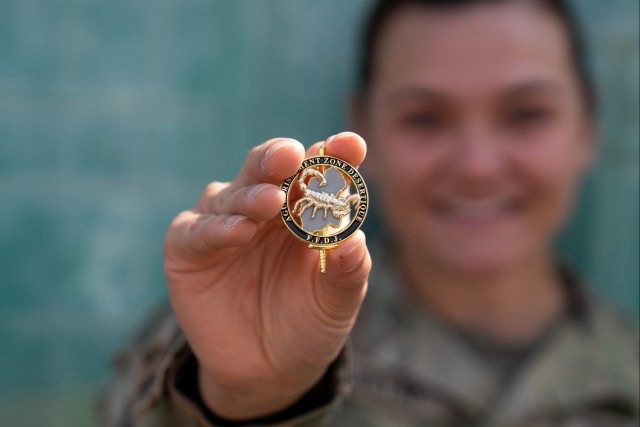
At the end of it all, the feeling of accomplishment came when she received the French Desert Commando pin at graduation. Black and gold in color, the pin prominently features a scorpion resting on the outline of the country of Djibouti. Along the rim are the words “Aguerrissement Zone Desertique” which translates to “Desert Zone Hardening”.
“I’m now able to look back and say, I did that. We did that,” she said with a smile. “Completing something and not giving up even though you may want to … it sticks with you forever. I use this as fuel to my fire when I feel like I can’t do something. I think to myself, ‘You can, because you have already’.”
Beyond the support she received from her family and teammates, Munday’s success is a testament to the old adage ‘preparation is the key to success.’ It’s a message she’s taken to heart and shared with her fellow soldiers since completing the course.
“Someone I work with said he wanted to do the FDCC but he didn’t think he was ready,” she said. “I said, ‘Sir, you’re never going to be ready.’ I didn’t think I was ready. But I got ready. So if you truly think or know that you want to do something no matter the current status that you’re in, if you want to pursue it you’re just gonna have to train and do what it takes to get to that point. There is no other way.”
By MSG Jerilyn Quintanilla
SAN DIEGO – 03 January 2024 – On Dec. 5, 2023, General Atomics Aeronautical Systems, Inc. (GA-ASI) completed a major milestone with the full-scale fatigue testing of an MQ-9B Remotely Piloted Aircraft (RPA). The team completed the “first lifetime” of fatigue testing – which is equivalent to 40,000 operating hours – and represents an important step in validating the design of the airframe system. The testing is part of the aircraft certification to the NATO standard STANAG 4671, where the aircraft will be ultimately be tested through three lifetimes, thereby proving the 40,000 hour lifetime of the airframe.
The full-scale fatigue test simulates the aircraft’s design service through the application of repeated structural loading on the assembled airframe. The testing identifies any potential structural deficiencies ahead of fleet usage and assists in developing inspection and maintenance schedules for the airframe. The results of the test will be used as a part of the documentation for certification, as well as form the basis for in-service inspections of structural components.
MQ-9B is GA-ASI’s most advanced RPA and includes the SkyGuardian® and SeaGuardian® models, as well as the new Protector RG Mk 1 that is currently being delivered to the U.K. Royal Air Force.
“Full-scale fatigue testing is an integral part of validating the airframe design and a key input to the certification of the airframe prior to going into service,” said Chris Dusseault, Vice President of MQ-9B in Europe. “The completion of the fatigue test builds confidence for our MQ-9B customers that the SkyGuardian/SeaGuardian airframe meets the stringent design rigor and is a mature system at Entry into Service.”
The testing is the validation of years of design and analysis efforts. This is the first of three lifetimes of testing for the airframe. Two of the lifetimes simulate the operation of an aircraft under normal conditions, and the third lifetime has intentional damage inflicted on the airframe’s critical components to demonstrate its resistance to operational damage that may occur in the lifetime of the air vehicle.
Testing was conducted Dec. 13, 2022-Dec. 5, 2023, at Wichita State University’s National Institute for Aviation Research in Wichita, Kan. The airframe tested is a production airframe purpose-built to support the test campaign.

Ocean State Innovations is excited to welcome you to our SHOT Show Suppliers Showcase Booth 52240, at The Venetian 5th Floor, Palazzo Ballroom, Las Vegas, Nevada on January 22 – 23, 2024. We have the following products to review with you and your production team:
• CORDURA® TrueLock™ Solution Dyed Fabrics – 500D & 1000D.
• Curv® Tactical – Innovative Curv® Thermoplastic Composite Technology
• ITW® Military Products & Hardware
• Velcro® Brand Hook 89 & Loop 1100
• Velcro® Brand Loop in MultiCam®
• OSI Printing Services – Woven Fabrics & Velcro® Brand Loop
• Innovative Textile Developments
Stop by and say hello to the OSI Team members or reach out to make an appointment:
Peter Raneri – peter@osinnovate.com
Geoff Senko – geoff@osinnovate.com
Nick Boulis – nick@osinnovate.com
January 4, 2023, Castle Rock, CO – Vets Tactical, a leading innovator in firearm accessories, is excited to introduce its patent-pending Cupolster® vehicle cup holder holster at their inaugural exhibit during the 2024 NSSF® SHOT Show in Las Vegas, NV, from January 21 to 26 in booth #43952. Precisely engineered with an ergonomic cant, the innovative Cupolster BRAVO SERIES by Vets Tactical vehicle holster raises the bar for swift firearm access and user comfort within a vehicle.

Vets Tactical CEO Craig Washburn describes Cupolster’s transformative potential. “Its design, positioning, and angle create a strategic staging area for your handgun, facilitating swift and efficient retrieval from your vehicle’s existing cup holder. When seconds matter most, your sidearm is easily accessible without hindering your field of view. Say goodbye to awkward bending or reaching—your firearm is right at your fingertips, ready to defend you and your loved ones.”
Washburn explained the convenience of customization without the need for adhesives or screws, “Customize your vehicle’s cup holder with our sizing tools. No need to worry about permanent alterations to your car’s interior—pop it in, and it securely stays in place. Plus, it’s easily transferable between vehicles,” he said. To address in-vehicle safety, the ambidextrous Cupolster BRAVO SERIES features a fully covered trigger guard allowing cross-draw positioning adapted to right or left-handed drivers and front-seat passengers.
Acknowledging the discomfort of driving with traditional holsters, Washburn added, “Whether IWB or OWB, driving with a holstered firearm can be uncomfortable. The Cupolster addresses that issue, providing a seamless and efficient solution for firearm carry within vehicles.”
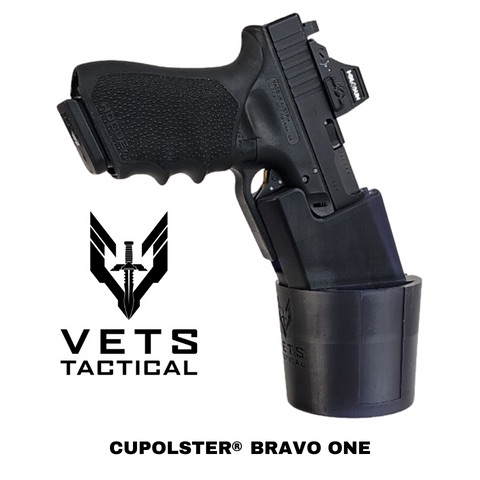
Cupolster BRAVO SERIES Vehicle Holster Features
• Swift and ergonomic access: The 20-degree cant optimizes the holster’s position in vehicle cup holsters, providing unparalleled accessibility and an ergonomic fit for swift handgun access.
• Universal compatibility: The BRAVO SERIES offers versatility for a wide range of firearm sizes.
• Customized fit: Each Cupolster includes a magnet and sizing accessories, allowing users to tailor the fit to their specific cup holder.
• Easy installation: No tools, screws, or glue required.
• Adaptable: Enhance compatibility with smaller vehicle cup holders using the CHARLIE ALPHA Cup Adapter (sold separately), expanding the Cupolster’s adaptability across many vehicles.
• Ambidextrous: Can be configured for cross-draw positioning, catering to right and left-handed users.
• Four options: Different sizes ensure the perfect fit for specific handguns.
• BRAVO ONE: Fits most large to medium-framed semi-auto handguns with slide widths up to 1.05”
• BRAVO ONE LIMA: Designed for handguns with attached Streamlight TLR-1, TLR-7, Surefire 300x, Olight Valkyrie, and similar structured lights with slide widths up to 1.05”
• BRAVO ONE MICRO: For smaller framed semi-auto, micro, compact, and subcompact handguns with slide widths up to .88”
• BRAVO ONE XL: Ideal for extra-large-framed handguns with slide widths from 1.06” to 1.25”
• MSRP: $69.95
Check your local and state laws for vehicle firearms transport regulations.
Click here to make an appointment with Vets Tactical CEO Craig Washburn during the 2024 SHOT Show. To see the entire Cupolster assortment, visit SHOT Show booth #43952 or the New Product Center on Level 1 of the Venetian Expo to see the Cupolster BRAVO SERIES by Vets Tactical.