Phantom Lights

Reptilia Introduces the AGS 34MM 20 MOA Mount for Extended-Range Precision Shooting

August 27th, 2026

A purpose-built, low-profile optic mount combining a 1.34-inch height, 20 MOA of forward elevation, and the strength of billet 7075-T6 aluminum.
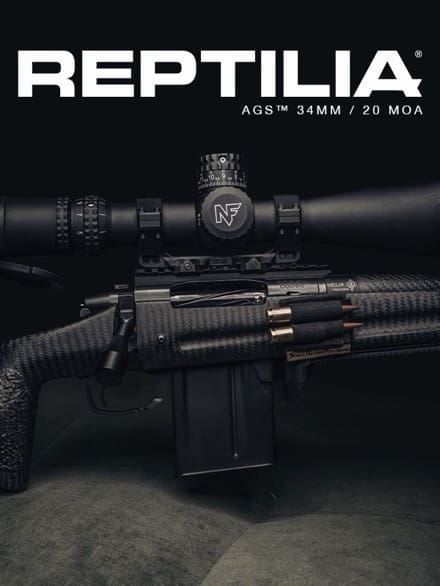
Reptilia is proud to introduce the AGS™ Mount in 34mm with 20 MOA elevation, a precision optic mounting solution engineered specifically for modern bolt-action rifles and shooters pushing their capabilities at extended distances.

Built around a 1.34-inch optical centerline height over rail, the AGS places the scope lower and closer to the bore than many conventional precision rifle mounts. The result is a more natural shooting position, improved cheek weld, and a streamlined interface between the shooter, rifle, and optic.

SYMMETRIC, NON-CANTILEVER DESIGN
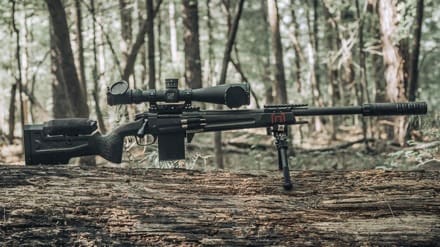
Unlike cantilever mounts that extend the optic forward of the mounting surface, the AGS features a symmetric, non-cantilever design that keeps the scope centered over the rifle’s receiver and mounting interface. This configuration is particularly well suited to bolt-action and precision rifles, where extended forward offset is typically unnecessary. By keeping the scope and rings balanced directly over the action, the AGS delivers a compact, streamlined mounting solution while maximizing rigidity and maintaining a clean, low-profile footprint.

The 34mm 20 MOA configuration is designed for precision rifles equipped with modern 34mm optics and shooters who require additional elevation adjustment for long-range applications. By incorporating 20 MOA of forward cant, the mount helps preserve valuable internal elevation travel for engaging targets at greater distances.

The AGS is machined from a single piece of billet 7075-T6 aluminum, providing the rigidity required for demanding precision applications while maintaining a weight of just 148 grams. Its one-piece design is paired with Reptilia’s proven mounting system, utilizing a spring-loaded, nitrided steel clamp and flush-fit hardware for secure, repeatable attachment to M1913 Picatinny rails.

Finished with MIL-STD Type III hardcoat anodizing, the AGS is built for hard use in the field, whether mounted to a dedicated long-range rifle, precision hunting rifle, or competition-focused bolt gun.

The Reptilia AGS 34mm 20 MOA Mount represents a purpose-driven approach to precision rifle mounting: lower where it matters, stronger where it counts, and configured to give shooters more usable elevation when the distance starts to stretch.
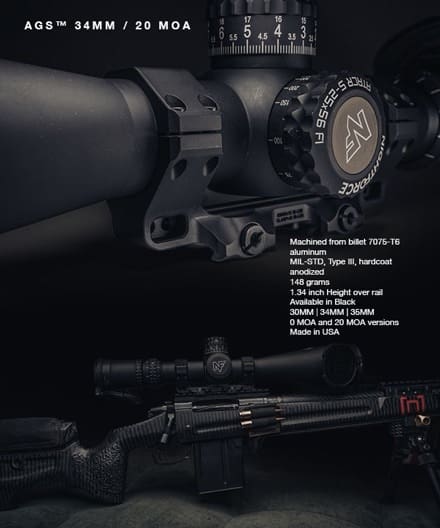
The 34mm / 20 MOA AGS is the first of several configurations planned for the product line. Additional versions will include:

  • 30mm / 0 MOA
  • 30mm / 20 MOA
  • 34mm / 0 MOA
  • 35mm / 0 MOA
  • 35mm / 20 MOA

Features:

  • 34mm scope ring diameter
  • 20 MOA forward elevation
  • 1.34-inch optical centerline height over rail
  • Symmetric, non-cantilever design
  • Machined from billet 7075-T6 aluminum
  • One-piece construction for exceptional rigidity
  • Spring-loaded, nitrided steel clamp
  • Flush-fit, anti-snag mounting hardware
  • MIL-STD Type III hardcoat anodized
  • 148 grams
  • Compatible with M1913 Picatinny rails
  • Made in the USA

The AGS Mount is purpose-built for the modern bolt-action rifle.

MSRP: $349.95

For more information and to get your own AGS 34mm / 20 MOA, head over to the Reptilia AGS™ Mount – 1.34″ Height product page.

‘Final Denial’: Air Force Leaders Lean in to the Future of Drone Defense

August 27th, 2026

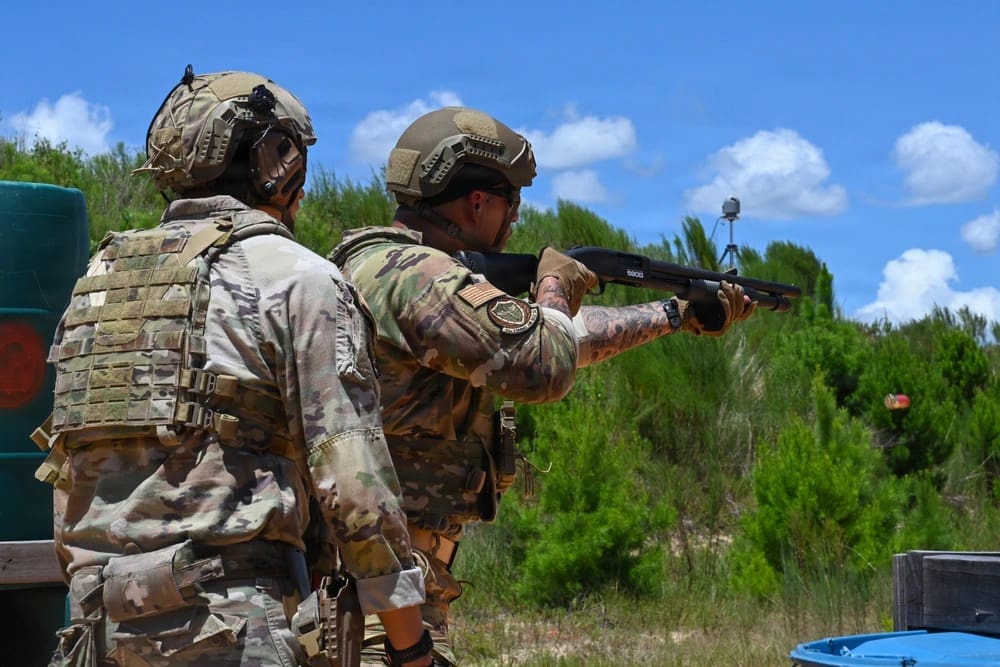
HURLBURT FIELD, Fla. — The 31st Air Task Force sharpened and refined a layered counter-small unmanned aerial system defense capability, culminating in a kinetic “final denial” live-fire demonstration, August 3-7, 2026.

The week-long training event built on counter-sUAS initiatives first employed during the ATF’s February field exercise and increased knowledge among Airmen from Hurlburt Field and Nellis Air Force Base, Nevada, assigned to the 31st ATF.

“Through a crawl, walk, run approach, Airmen gained practical knowledge of a full spectrum of layered counter-sUAS capabilities,” said the 31st ATF’s force protection superintendent. “The ATF is posturing to provide tiered defense through detection, electronic warfare defeat, and physical interception of hostile drones.”

Throughout the week, Airmen trained on AI-powered systems that detect, track, and filter aerial objects from planes and drones to birds. They also improved real-time data sharing across multiple levels of command and control from an expeditionary base defense operations center.

The 31st ATF hosted leaders from Air Force Special Operations Command and the 1st Special Operations Wing, joining experts on drone warfare, precision munitions, and unmanned threat detection and mitigation. They explored the latest ways to protect the warfighter and counter emergent UAS threats.

“It’s inspiring to see a unit at this level proactively tackling a problem-set that is top of mind for leaders across the Air Force and the Department of War,” said 1st SOW Deputy Commander, Col. Clayton Schuety. “The blend of entrepreneurial foresight, AI surveillance, and human-directed targeting will no doubt create positive impacts for the warfighter. We look forward to seeing how this effort continues to mature and receiving the lessons learned which will benefit Air Commandos and the larger force.”

By teaming with top industry partners and using existing Air Force equipment, the 31st ATF trained Airmen on weapons designed to defend against hostile drones and safeguard against electromagnetic warfare threats. Airmen practiced organic reconnaissance and denial of high-speed sUAS targets mimicking hostile flight patterns.

“The team successfully executed a capstone event that validated new tactics, techniques, and procedures across force protection and distributed communications,” said 31st ATF commander, Col. Brad Dvorak. “Our mission is to enable airpower operations, anytime, anywhere. By establishing a sUAS instructor cadre, we trained our personnel on counter-sUAS architecture and employed unique solutions for Airmen to track, jam, and kinetically defeat sUAS threats.”

The 31st ATF is a combat-ready unit of action bringing competitive advantage to meet pacing challenges. The wing, commanded by an Air Force colonel, consists of a command-and-control element and a combat air base squadron with up to 2,500 Airmen across more than 60 Air Force specialty codes. The team can provide base operating support for deployed flying units, also known as mission generation force elements, and the necessary logistics to execute agile combat employment.

Story by 2nd Lt Daniel White 

Air Force Special Operations Command

AV Receives $51 Million US Army Order for Switchblade 600 Loitering Munitions

August 26th, 2026

Award under Lethal Unmanned Systems IDIQ reflects growing demand for AV’s next-generation, long-range precision loitering munitions and proven Switchblade 600 performance. 

ARLINGTON, Va., August 26, 2026 – AeroVironment, Inc. (“AV”) (NASDAQ: AVAV), a global leader in defense technology, autonomous systems and precision strike solutions, today announced receipt of a $51 million delivery order from the United States Army for additional Switchblade® 600 Block 2 loitering munition systems. The order also includes Switchblade 600 Block 1 systems in support of a Foreign Military Sale to a key United States ally. 

The order was awarded under the Army’s existing five-year, $990 million Indefinite Delivery, Indefinite Quantity (IDIQ) contract for Lethal Unmanned Systems (LUS), originally issued in August 2024.  

This latest award represents a follow-on procurement to the Army’s initial order for the next-generation Switchblade product line and underscores the strong, sustained demand for AV’s battle-proven long-range, precision loitering munitions. 

“Continued investment by the U.S. Army in Switchblade 600 Block 2 reflects both the growing demand for long-range, precision loitering munitions and the proven reliability of the Switchblade family in demanding operational environments,” said Brian Young, Senior Vice President of Loitering Munitions at AV. “Building on the success of Switchblade 600 Block 1, Block 2 continues to deliver the meaningful upgrades in autonomy, resilience, and lethality tailored to the Army’s needs in contested, multi-domain operations.” 

This order also reflects AV’s expanding production capacity and performance on prior Switchblade 600 deliveries.  

“This new delivery order under the LUS IDIQ further validates Switchblade 600 Block 2 as a next-generation, scalable fires solution for the Army,” said Young. “As we expand our manufacturing capacity and accelerate delivery timelines, we’re ensuring that U.S. soldiers have reliable, combat-proven loitering munitions that deliver precision effects at range while keeping them out of harm’s way.” 

Since 2025, Switchblade 600 has been fielded across more than 20 brigade combat teams while hundreds of U.S. soldiers have been trained on the system’s operation and employment. 

Switchblade 600 Block 2 is designed for multi-domain operations and ruggedized for maritime and highly contested environments. Developed in collaboration with United States Special Operations Command (SOCOM), the system incorporates upgraded avionics and advanced automatic target recognition including SPOTR AiTR, to enable faster detection, identification, and engagement of threats.  

Integrated resilient communications, including Silvus MANET radios, support distributed operations and extended handoff ranges, while improved navigation and mission resilience allow effective employment in GPS-challenged environments. These enhancements provide commanders with increased reach, flexibility, and confidence against armored and other high-value targets. 

Beretta Introduces the APX A1 Ported, Delivering Flatter Performance and Faster Follow-up Shots

August 26th, 2026

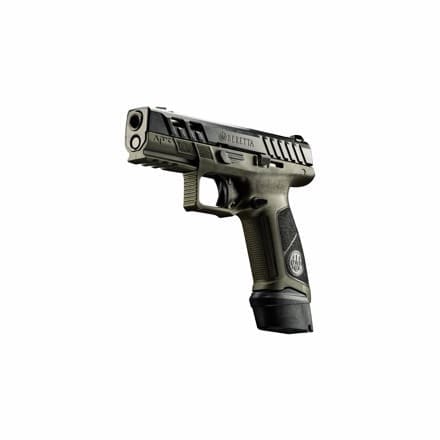
Accokeek, MD (August 26, 2026) – Beretta expands its proven APX A1 family with the introduction of the APX A1 Ported, a new model engineered to provide enhanced control, faster follow-up shots and confident manipulation. Featuring a precision ported barrel and slide system, oversized controls and a factory optics-ready slide, and available in FDE and OD Green, the APX A1 Ported is built for shooters who demand speed and performance on the range, in competition or for personal defense.

At the heart of the APX A1 Ported is its precision porting system, featuring a single angled port in the barrel paired with seven ports in the slide. Designed to redirect gas upward, the system helps reduce muzzle rise and felt recoil, keeping the pistol flatter and allowing shooters to return to target faster for more controlled follow-up shots. The APX A1 Ported also introduces oversized controls, including an enlarged magazine release and ambidextrous slide release, providing enhanced ergonomics and faster manipulation. Both controls can be configured for right- or left-handed shooters, giving users the flexibility to set up the pistol to fit their preferred operation.

For running a red dot, the APX A1 Ported comes equipped with a factory optics-ready slide designed to accept many of today’s most popular pistol optics. A compatible mounting plate is required and is not included with the pistol. Combined with the pistol’s proven ergonomics, the optics-ready platform gives shooters the flexibility to configure the APX A1 Ported for a variety of applications, from training and competition to personal defense. Deep, aggressive slide serrations provide a secure grip for racking and press checks, while Beretta’s Aquatech Shield coating enhances durability and resistance to corrosion and chemicals.

Key Features:

Precision Ported Barrel and Slide: A single angled barrel port and seven slide ports redirect gas upward to help reduce muzzle rise and felt recoil for flatter, faster shooting.

Oversized Controls: Enlarged magazine and ambidextrous slide releases provide enhanced ergonomics and quicker manipulation.

Red Dot Optic-Ready Slide: Factory optics-ready configuration accommodates many popular pistol red dot optics.

Aggressive Slide Serrations: Deep serrations provide confident slide manipulation, while the Aquatech Shield coating enhances durability and resistance to corrosion and chemicals.

Ambidextrous Controls: Magazine and slide releases can be configured for right- or left-handed operation.

Three Magazines Included: Each APX A1 Ported ships with three magazines.

“The APX A1 Ported brings a new level of speed and control to the APX A1 family,” said Logan Killam, Sr. Product Manager for Beretta USA. “The combination of the ported barrel and slide, enhanced controls and optics-ready configuration offer a platform designed to help them stay on target and make faster, more controlled follow-up shots.”

The Beretta APX A1 Ported will be available through Beretta authorized dealers nationwide with an MSRP of $629.

USSOCOM Seeks Battery Bottles

August 26th, 2026

SOFWERX, in collaboration with USSOCOM Program Executive Office Maritime, Undersea (PEO-M-U), will host a virtual Assessment Event on 30 September 2026.

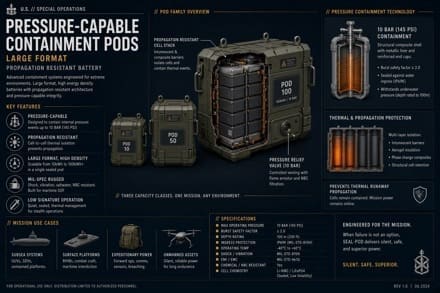
The PEO-M-U Program Office is engaging industry to determine the readiness of the manufacturing base to evaluate, fabricate, provide Objective Quality Evidence (OQE), and deliver an initial quantity of pressure-capable containment pods for the command’s Large Format, Propagation Resistant battery design.

The PEO-M-U develops and supports a family of manned submersibles that support the operation of our Warfighters. These manned submersibles are powered by large-format, propagation-resistant battery systems.  The Battery Systems require a watertight, pressure-resistant,and shock-resistant design to transport and protect the integrity and function of the batteries.

The Government is seeking cost and schedule estimates and technical (primarily manufacturability) review of several designs (to be provided as part of this solicitation).  The objective is to accumulate input from industry and select one or more vendors to manufacture and deliver one or more of the government-provided designs. The vendor will be responsible for reviewing the design(s) for manufacturability, assuming the Government will maintain Design Authority and perform applicable testing of the delivered pods.

U.S. Citizens Only

Submit NLT 08 September 2026 11:59 PM ET. Learn more at events.sofwerx.org/peo-m-battery-bottle.

Your Guide to the My Army Post App: The New Digital Hub for Army Life

August 26th, 2026

Navigating daily life on an Army installation just got easier. Whether you’re a Soldier, family member, civilian employee, retiree or contractor, keeping track of base resources, gate traffic and community updates can be a challenge. Enter the My Army Post App, or MAPA, the official mobile information center designed specifically for Army garrisons worldwide.


Replacing the older Digital Garrison app and various local legacy apps, MAPA is a centralized, user-friendly portal designed to streamline your daily activities on post. Here is everything you need to know about the Army’s newest mobile hub.

What Can the My Army Post App Do for You?

MAPA consolidates vital installation resources into a single digital platform, bringing the garrison directly to your fingertips with several key capabilities:

  • Installation Navigation & Information:Never get lost looking for a specific building again. MAPA provides quick access to operating hours, contact details and directions for on-post resources like housing, dining facilities, fitness centers, health care clinics and youth services.
  • Administrative & Facility Tools: Need to schedule a Common Access Card appointment or submit a maintenance work order? You can initiate these tasks right from the app. It also offers helpful resources for reviewing in-processing or permanent change of station information.
  • Real-Time Updates: Stay in the know with live updates on gate traffic conditions, important community announcements, and urgent push notifications sent directly from garrison leadership.
  • Seamless Customization: Once you download the app, simply select your specific installation and save your localized information for rapid, customized access.

Things to Keep in Mind

While MAPA is a massive upgrade to Army digital resources, there are a couple of transition details to note:

  • Make Sure You Have the Right App: Because MAPA is officially replacing legacy apps like Digital Garrison, many historical local base applications are currently sunsetting. Ensure you search for and download the “My Army Post” app rather than older, outdated installation apps.
  • Feature Variance: The core framework of the app is standardized across the Army, but specific features may vary slightly. This depends on how fully your specific garrison has integrated its local services into the MAPA platform.

How to Get Connected

The My Army Post App is completely free and publicly available for download on mobile devices and tablets. You can find it on:

Simply install the application and select your respective garrison from the menu to customize your feed today!

By HQDA Emergency Management Branch

DoW Drone OTA Consortium Seeks Candidate Unmanned Ground Vehicles (UGV) for GroundBreaker 1 Demonstration

August 26th, 2026

In an effort to field Unmanned Ground Vehicles (UGV) to the joint force, the Department of War Other Transactional Authority Consortium has asked industry for white papers for complete UGV systems to enable employment by Warfighters in both tactical and non-tactical environments.

Based on what they learn , they will invite select technologies to participate in a Joint Unmanned Ground Vehicle (UGV) demonstration exercise titled “GroundBreaker 1” at Camp Grafton, North Dakota, in mid-October 2026.

There, the systems will support physical operational assessments, iterative technology enhancements, and direct integration with current DoW systems.

A Ghost Robotics Vision 60 Q-UGV ground robot does a simulated route mission at Holloman Air Force Base, New Mexico, April 17, 2023. (U.S. Air Force photo by Airman 1st Class Isaiah Pedrazzini)

The Government is specifically seeking UGVs which can perform one or more of the following core mission profiles:

Reconnaissance and Surveillance (RSTA)

Transport of Supplies and Equipment (Tactical Logistics)

Explosive Ordnance Disposal (EOD) & Route Clearance

Search and Rescue (SAR) Operations

Force Protection & Perimeter Security

Casualty Evacuation (CASEVAC)

Other Support / Multi-Domain Operations: Other capabilities are welcome with the provision that a concept of employment is included in the submission packet that describes the operational gap the demonstrated capability will fill for the DoW.

Furthermore, systems must have these capabilities, at a minimum:

Navigation & Autonomy: The ability for manual or autonomous obstacle avoidance.

Range, Endurance & Mobility: All-terrain mobility.

Interoperability: Open-system, hardware-agnostic software architectures (e.g., Robot Operating System-Military (ROS-M) compatible) that seamlessly integrate with DoW networks and Command and Control (C2) systems.

The use of the OTA framework bypasses traditional, lengthy acquisition cycles, ensuring that these advanced technologies reach the warfighter at the speed of relevance.

However, because they are using the OTA consortium, this effort is limited solely to consortium members only. While most everyone who is in that business has already jumped through the hoops required to be legible, you can still apply by submitting an application to DMConsortium@army.mil.

Vendors have until Sep 04, 2026 5:00 PM CDT to submit their white papers. See full details at sam.gov.

Armaments Center Partners with Industry to Explore Concepts for Integrating Lethal Payloads to Unmanned Ground Vehicles

August 26th, 2026

PICATINNY ARSENAL, N.J. — Tomorrow’s battlefield is expected to pair automated vehicles and artificial intelligence with human Soldiers, and the U.S. Army Combat Capabilities Development Command Armaments Center helping explore what that future might look like through controlled experimentation with industry partners.

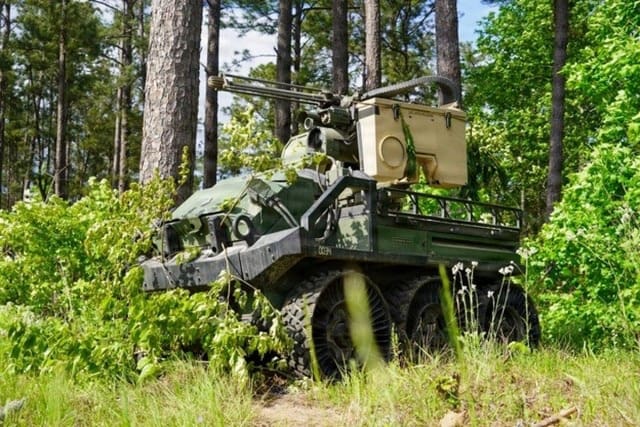
Via a cooperative research and development agreement with HDT Robotics, LLC, doing business as BLADE, the Armaments Center supported the successful delivery of an armed Hunter WOLF unmanned ground vehicle to the 3rd Mobile Brigade of the 101st Airborne Division for a technical demonstration. The Autonomous Weapons Architectures & Controls Branch Chief Andrew Wilson noted that this highlights both the Armaments Center’s teamwork with an established partner, expertise in its field and ability to swiftly deliver a product to the Soldier.

Originally designed for logistics and supply transport, the Hunter WOLF UGV was experimented with as an active tactical asset. It is equipped with a remotely operated .50-caliber machine gun on a wireless Common Remotely Operated Weapon Station, known as CROWS, enabling a rapid response weapons system that does not need an operator physically present and in the line of fire.

The Armaments Center’s Strategic Advisor to Project Acquisition Executive Layered Protection Josiah Fay, said this came together as a perfect storm — the 101st was “hungry for robots” for logistical matters. Separately, the Armaments Center was pre-positioned to demonstrate CROWS with wireless control ready for Soldier operation and reached out to industry.

BLADE responded and within a few weeks Soldiers were being trained on the system. BLADE provided the platform and its associated training while the Armaments Center provided its experience in weaponry, armaments integration, and lethality training to jointly provide the complete capability.

By deploying an armed, wirelessly controlled UGV, Soldiers can maintain a dominant battlefield presence while remaining safely out of harm’s way, granting commanders significant tactical flexibility. The platform’s integrated electronics significantly enhance situational awareness, battlefield planning, foresight, and mission execution, and its transport capabilities relieve Soldiers of the burdens of carrying heavy weaponry.

The 101st Airborne Division experimented with the Hunter WOLF in April at the Joint Readiness Training Center at Fort Polk, Louisiana. The Armaments Center has reached out to the division to obtain Soldier feedback and operational performance, which will allow for the center to improve its future performance.

According to Fay, the Armaments Center continues its efforts to reduce Soldier cognitive load by adding autonomous features while ensuring combatants remain on the loop, rather than in the loop. Though such weaponry can remain effective even without a Soldier physically piloting it, a Soldier is still fully preoccupied staring at the screen with today’s technology. By moving them on the loop instead, a Soldier is less likely to suffer from cognitive overload and may instead take more of a supervisory role over partially automated weapons systems, increasing their effective combat power and area of influence while retaining positive control of lethal decisions.

By Tyler Barth