Over the weekend, an image of Kel-Tec’s R50 hit social media.

This SBR version of the P50 features a side-folding stock. It still offers 50 rounds of 5.7mm and a threaded barrel. Available now.
www.keltecweapons.com/firearm/rifles/r50


Over the weekend, an image of Kel-Tec’s R50 hit social media.
This SBR version of the P50 features a side-folding stock. It still offers 50 rounds of 5.7mm and a threaded barrel. Available now.
www.keltecweapons.com/firearm/rifles/r50

The Raider Field Pant was originally inspired by the classic USMC Dungaree and reimagined as what it might be as made today with updated sensibilities, features and fit.
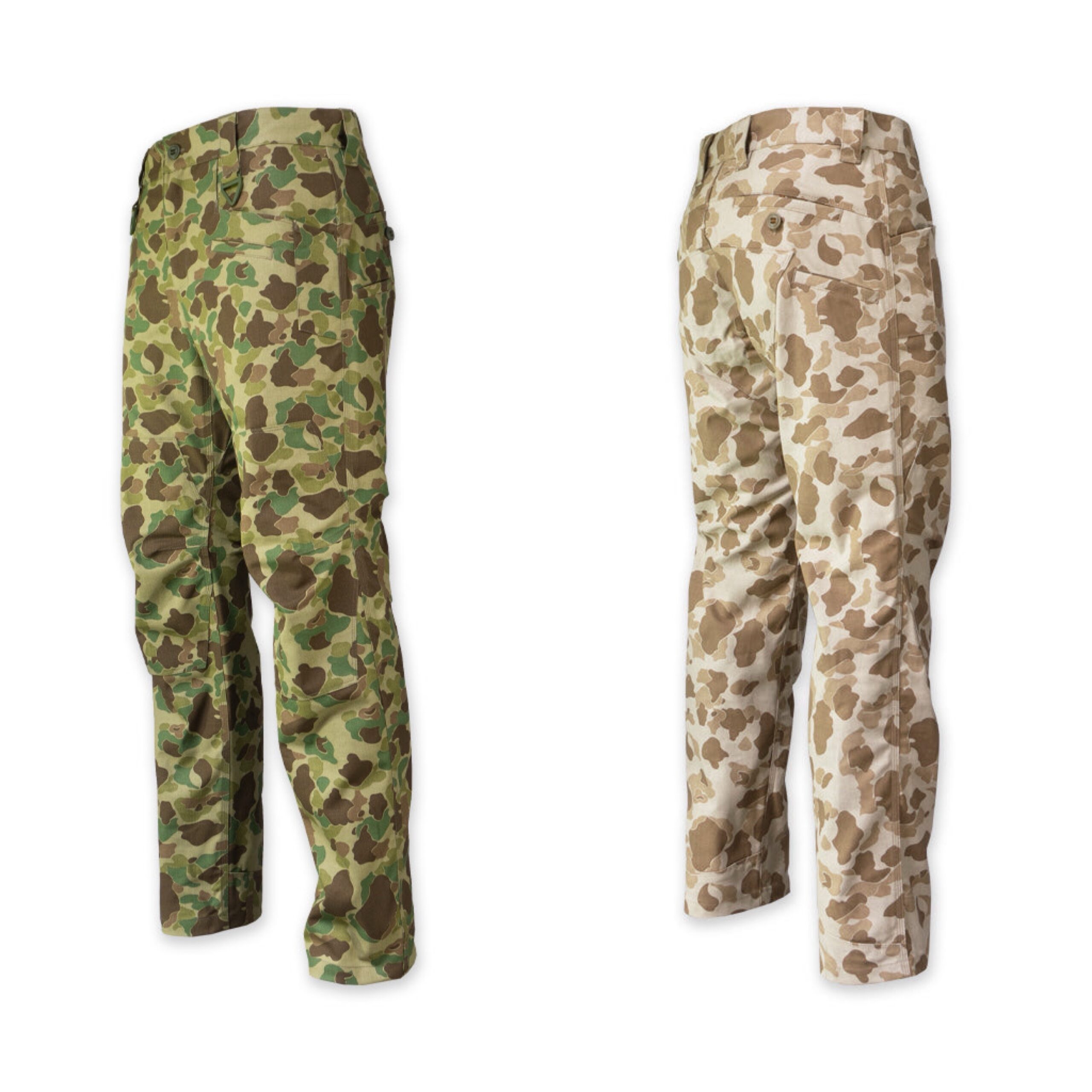
Coming full circle the SPD Edition Raider Field Pant HBT uses America’s original camouflage pattern issued during WWII.
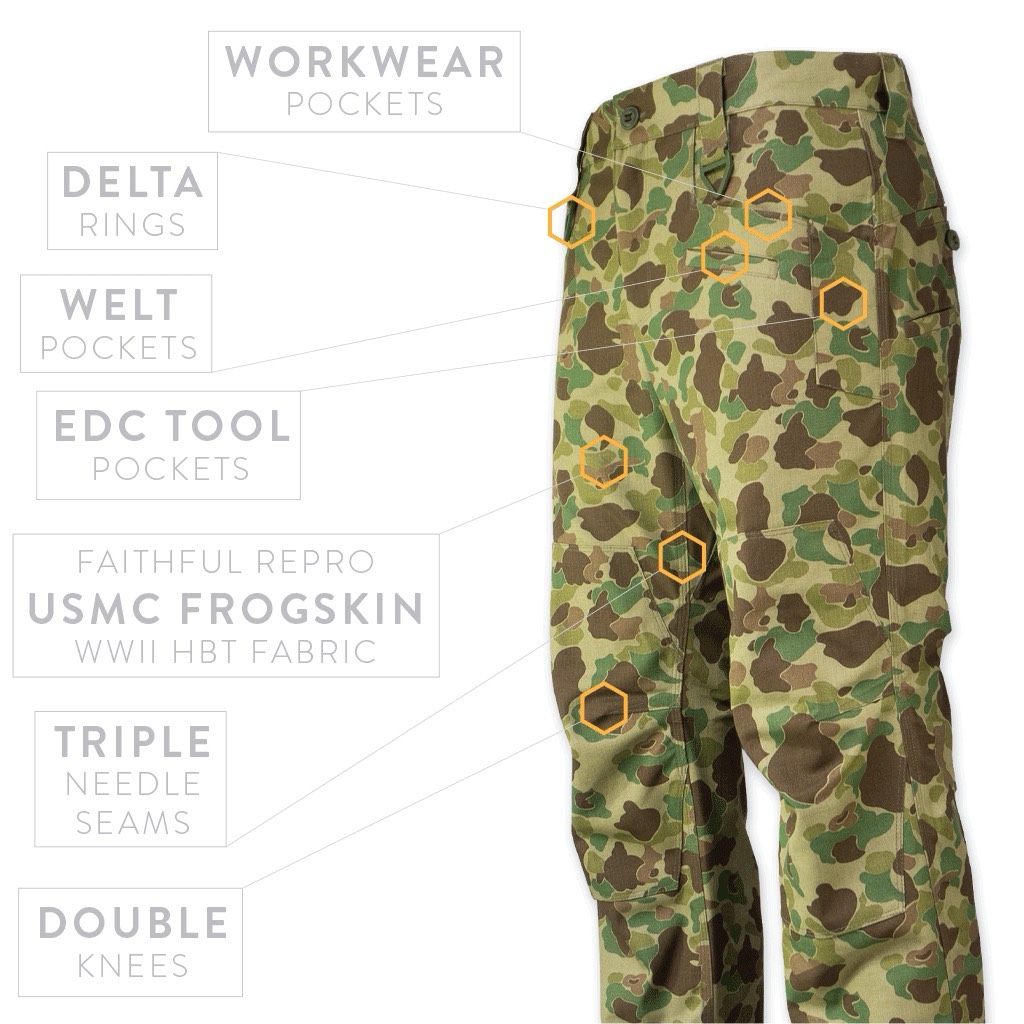
Made in a rugged, durable, 9oz, 100% cotton herringbone twill fabric that was custom milled to faithfully follow the original P42 Frogskin pattern.
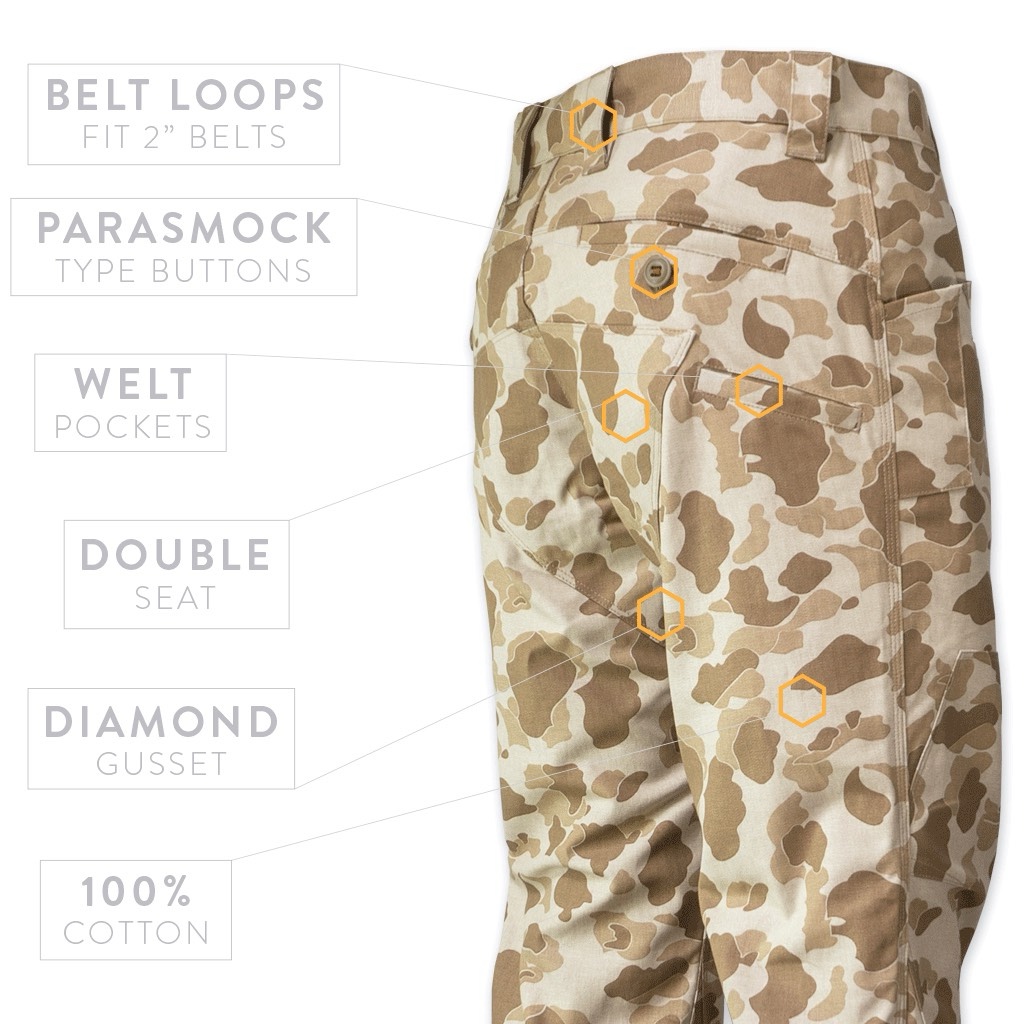
With many considerations for today’s user, there are ample pockets without creating a cluttered or bulky design.
Like most of our designs, we use industrial grade construction methods such as heavy duty nylon thread, triple needle stitching on major seams, and more bar-tacks to reinforce stress points than any other pant in its class.
This limited edition run of the Raider Pant will be available only on the PDW website November 1st at 1200 PDT.

Paris, 16th October 2023 – In the rapidly evolving landscape of global security threats, the nature of modern warfare has shifted dramatically. Unconventional tactics, rising terrorism, and advancements in enemy arsenals pose unprecedented challenges to those tasked with safeguarding our communities. The necessity for uncompromised ballistic protection has never been more pronounced. Thoughtful innovation in defence can be the critical difference-maker.
More a decade ago, MKU Limited, a premier global defence manufacturing company, revolutionized the industry with the launch of ‘Instavest’. This product showcased their patented ‘quick release’ technology, fundamentally altering the safety standards for soldiers worldwide forever. Fast forward to 2023, MKU is on the brink of revealing another groundbreaking innovation on its 10th participation anniversary at Milipol, promising a product that will redefine the benchmark for “uncompromised protection”. This announcement is a significant milestone for the defence sector, pointing towards a new era of safety and resilience.
A source from within the company has revealed, “This is something the world has been eagerly anticipating. Previously, the technologies and materials needed to develop such a solution simply did not exist. We’ve invested over 5 years of relentless R&D efforts to perfect it, and frankly, we believe no soldier would want to be without it once they are aware of it!”
This highly anticipated innovation is scheduled to be unveiled globally at Milipol Paris on the 15th of November 2023, at MKU’s booth H025, Hall 5, precisely at 10:30 AM UTC. Mr. Neeraj Gupta, Managing Director of MKU, expressed, “At MKU, pushing boundaries is in our DNA. We listen to our heroes and embrace challenges head-on for them. Why? It’s simple. Just as they dedicate their lives to protect us, we have dedicated ourselves to empowering them.”

MKU, a key player in global defence and homeland security for over three decades, boasts a rich history of impactful contributions. Their portfolio of innovations includes the Kavro Body Armour System, a modular, mission-configurable combination of components that seamlessly integrate onto a body armour platform. Additionally, the Netro NB-3100 Aviation Night Vision Goggles, designed to enable aircraft and helicopter pilots to navigate effectively in low-altitude, high-threat environments, showcase their commitment to cutting-edge solutions. Furthermore, MKU’s Netro MW-5000, a smart sighting and aiming system for Grenade Launchers and Large-Calibre Weapons, significantly enhances operational efficiency and target acquisition for operators of crew-served weapons.
The company has consistently proven its mettle as a leading defence equipment manufacturer, significantly contributing to various armies and defence agencies globally. Notably, its past contributions include safeguarding German Army containers from severe firing by terrorists and providing critical ballistic shields to the police forces of Norway and Sweden, supplying ballistic armour plates to the Spain border police to delivering over body armours to the Estonian police force. MKU’s reach encompasses nations such as Brazil, Egypt, Philippines, and Chile, underlining the global demand for their cutting-edge solutions. Just 2 months ago, the company was chosen to supply ballistic helmets for Lithuania’s border security enhancement. MKU has also collaborated with several technology giants like Thales and Dassault Aviation over the years to explore innovation in defence for soldiers, police and platforms.
The anticipation for Milipol Paris 2023 is palpable, and MKU is at the heart of this excitement. While specific details about this innovation remain undisclosed, team MKU has invited significant stalwarts from the industry, including soldiers, police, professionals, academia, and enthusiasts, to witness this historic launch at Milipol Paris 2023 on the 15th of November 2023, preceding an exclusive preview on the evening of 14th November 2023 for their closed partner network.
To know more, and keep track, follow MKU’s:
• Website: https://www.mku.com/
• Facebook: @MKU.LTD
• Twitter: @MKUofficial
• Instagram: @mku_official
• YouTube: MKU Official
• LinkedIn: MKU
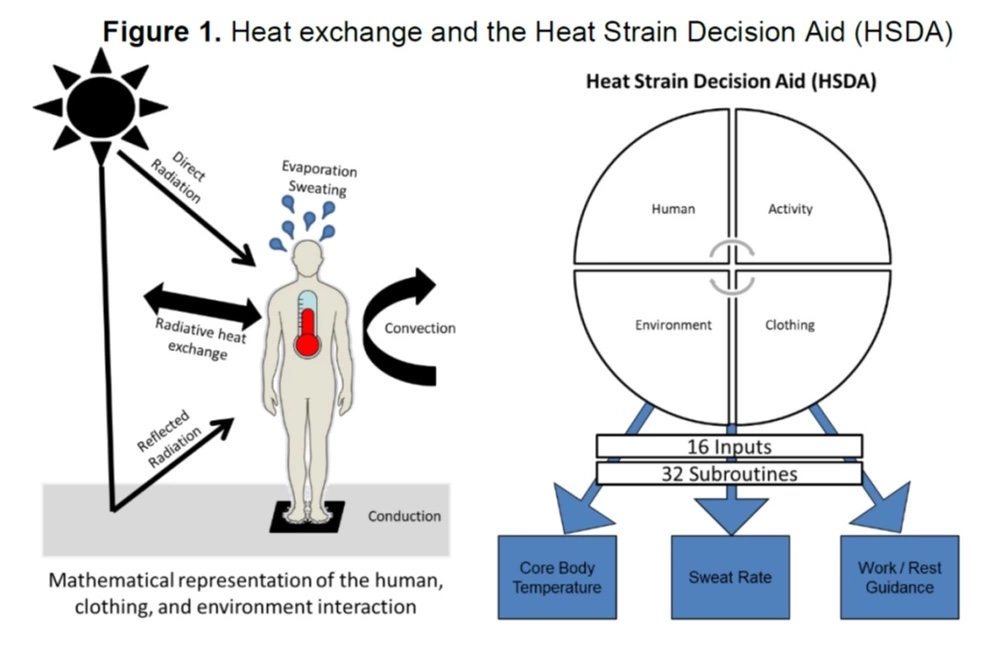
Rivulets of sweat dripped down the Soldiers’ flushed faces as they marched across the arid land mid-summer. As temperatures rise to over 100°F, the humid air becomes oppressive and heat-related illnesses become an increasingly real threat to Warfighters. Extreme temperatures and intensifying weather, influenced by a warming climate, continue to get worse or at best sustained, becoming a perfect recipe for noncombat-related injuries.
Climate change is not a new phenomenon but is one that continues to not only affect the ecosystem–plants, animals and resources–but also Army operations. Like a pendulum, temperatures oscillate between hot and cold, which is normal, but can be amplified to more extreme levels.
“It is hard to ignore climate change when it has real world effects, as it directly impedes how we conduct military operations or training,” said Dr. Adam Potter, Research Physiologist in the Thermal & Mountain Medicine Division (TMMD) at the U.S. Army Research Institute of Environmental Medicine (USARIEM). “It poses increasing risks to the health of Service Members and has the potential to jeopardize our missions.”
Heat-related illnesses and injuries can take a Warfighter out of operations during both training and in real-world military activities, such as combat, security operations and humanitarian missions. With increasing environmental temperatures, Warfighters might find themselves facing exertional heat illness that can range from heat exhaustion to life-threatening heat stroke. This risk increases during strenuous operations such as foot marches, running activities or when carrying heavy loads.
“When carrying out military-specific tasks, such as the 2-mile run or 12-mile foot march, often carrying heavy packs, the chances for an individual to reach a dangerous level of body core temperature, or hyperthermia, increases greatly in higher ambient temperatures, especially if clothing or high humidity prevent the evaporation of sweat,” said Dr. Nisha Charkoudian, Chief of TMMD. “In a practical sense, standard military training becomes progressively more thermally stressful compared with just a few decades ago.”
To predict the potential impacts from environmental exposures, such as increased temperature or humidity, the Army has developed sophisticated biophysical mathematical models. “Typically, we need to consider a minimum of four factors in our modeling, including the environment, the human – fitness, body size, etc. – their activity level and the clothing they are wearing,” Potter says. “We can put quantifiable numbers to each of these elements and mathematically describe or predict likely changes to occur in a given scenario to a human and their physiological and/or thermal responses.”
These models enable Potter and other researchers to calculate the differences in exposure risks between individuals based on their size, acclimation status and health status. If there are shifts in the environment, these models allow for data-informed comparisons to suggest how sudden changes can impact the individuals or groups. The relative risk of heat stress of a Service Member could be assessed based on the combination of conditions and their specific clothing. For example, a full combat uniform could be removed, or items worn could be adjusted to decrease the thermal burden on the individual.
Some environmental conditions the model accounts for include elements such as solar radiation, wind velocity, humidity and temperature. These factors can drastically change and may force Soldiers to adjust their training. For example, conditions could be shifted to nighttime when there is little to no solar radiation compared to during the day.
“With an increase in a temperature alone, there becomes an increased risk to individuals that may shorten the amount of time they may safely work in a given condition. While individual differences can also be modeled; where, for example, in some conditions, a person of a smaller size will be better off in one condition than another and vice versa. The models provide us with powerful tools, as they allow us to assess the complex interactions of all these different variables,” Potter said.
The military has procedures for training, tactics and operations, but the climate can be an additional adversary or ally depending on the Army’s approach. Charkoudian and Potter suggest that the military implement creative or “outside the box” methods to adapting to a changing climate.
“One approach may be to investigate potential impacts of a reversal of sleep-wake cycles during basic training during the hot months of the year, to minimize the usual increase in heat-related injuries, and to enhance the capacity for physical training and combat performance,” Charkoudian said. “Switching day and night could decrease both heat-related illness/injury and lost training days over the course of the basic training program. However, this approach would have multiple ramifications regarding Soldier health and logistics of training, so the feasibility remains to be determined.”
“It can be difficult to implement a systemic shift, but it could be necessary if the risks of heat injuries are so high that they result in heat casualties,” Potter said. “It could even be a tactical advantage to doing operations at night.”
This kind of shift in structure could provide us with both physiological and tactical advantages but may result in unconventional alterations.
“We recognize that there would be multiple effects of such a modification and data collection would be necessary to evaluate the effects of these types of changes, such as inverted sleep-wake schedule on physical and mental health and on physiological and cognitive performance,” Charkoudian said.
Solutions for a warming climate will not be found overnight, but in the meantime, the Army is finding revolutionary ways to adapt to an unpredictable and modifiable environment.
“Climate change is a threat, but we can also use it to our advantage by changing traditional military operations for new recruits and mitigating health threats that reduce military readiness,” Potter said.
USARIEM is a subordinate command of the U.S. Army Medical Research and Development Command under the Army Futures Command. USARIEM is internationally recognized as the DOD’s premier laboratory for Warfighter health and performance research and focuses on environmental medicine, physiology, physical and cognitive performance, and nutrition research. Located at the Natick Soldier Systems Center in Natick, Massachusetts, USARIEM’s mission is to optimize Warfighter health and performance through biomedical research.
By Maddi Langweil, USARIEM Public Affairs
OVERLAND PARK, Kan. – October 26, 2023 – Bushnell®, an industry leader in performance optics, along with Hoppe’s®, the No. 1 name in gun care products, would like to congratulate sponsored shooter Jessie Harrison for winning three major USPSA championship titles over the last two months. During her recent string of major USPSA wins, Harrison relied on products from both Bushnell and Hoppe’s to reach the podium.
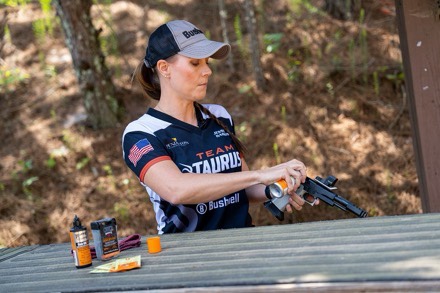
One of the key pieces of equipment used by Harrison during her championship run was the Bushnell RXM-300 Reflex Sight. Harrison utilized the reflex sight on her pistol in all three matches. Harrison, along with other members of the brand’s shooting team, contributed to the development of the RXM-300. The reflex sight’s large window, robust construction, and ability to hold zero after the tens of thousands of rounds fired during a competitive season, were all key features requested by the shooting team.
Harrison’s last three victories give her a record-setting mark of 25 major USPSA wins. This tremendous accomplishment makes her one of the most decorated competitors in the history of the shooting sports and a highly valued member of both the Bushnell and Hoppe’s shooting teams.
Harrison claimed her first of the three victories by winning the Ladies Open title at the USPSA Area 8 match. Two weeks later, she won the Ladies Open Championship. Her most recent win was the Ladies Limited Optics National title at the championship match held in Ohio.
“I think everyone who competed in the Limited Optics National would agree that this was the most difficult match we’ve seen in a long time,” Harrison said. “This was the inaugural national championship for the new division. Cold weather plus moving targets and more shots at extended distances certainly proved quite the challenge. But once again, the Bushnell RXM-300 was up to the task, allowing me to make the precise hits needed to win in such a tough environment.”
Harrison went on to say, “Winning my 25th USPSA National title is such an incredible milestone in my career. And I wouldn’t have been able to do this without my incredible sponsors supporting me every step of the way.”
Harrison switched her optic to the new Bushnell RXM-300 reflex sight earlier in the 2023 season. Since then, Harrison along with teammate KC Eusebio have been on a streak of major wins using the new reflex sight.
Harrison is also a long-time sponsored shooter for Hoppe’s. Each year—before, during and after each competition—Harrison depends on cleaning products like Hoppe’s Black to keep her guns running smoothly. The brand’s trusted line of gun cleaning products and accessories has helped save Harrison valued time by reducing maintenance needs and simplifying the entire process.
To learn more about Harrison, along with her favorite Bushnell and Hoppe’s products, visit Bushnell.com
On Friday, 27 October, 2023, the Commerce Department’s Bureau of Industry and Security which controls the export of commercial firearms from the United States issued a notice stating that it was halting the approval of export licenses for “certain firearms, related components, and ammunition under its jurisdiction” for “approximately 90 days.”
The notice goes on to state:
During this “pause” period, the Department will further assess current firearm export control review policies to determine whether any changes are warranted to advance U.S. national security and foreign policy interests. The review will be conducted with urgency and will enable the Department to more effectively assess and mitigate risk of firearms being diverted to entities or activities that promote regional instability, violate human rights, or fuel criminal activities.
Specifically, the halt relates to ECCN 0A501, ECCN 0A502, ECCN 0A504, and ECCN 0A505, that are destined for non-governmental end users worldwide apart from those located in Ukraine, Israel, or a country in Country Group A:1 (Wassenaar Arrangement Participating States), Supp. No. 1 to part 740 of the EAR.
The notice does state that this does not affect previously issued/received export licenses and that exporters may continue to submit license applications to BIS regardless of whether the items on the application are subject to the pause. Applications subject to the pause, however, will be placed on “Hold Without Action” (HWA) and will not be processed until the end of the pause. Furthermore, applications currently in process are affected by the pause. BIS will contact exporters when the pause is lifted.
It’s interesting to note that this action comes on the heels of calls from Congress for the Biden Administration to explain how Hamas terrorists used US weapons during the attacks on Israel earlier this month. Still no acknowledgement of whether any of those arms were from the $7 billion in weapons and equipment abandoned in Afghanistan. We know they have shown up in the Kashmir conflict.
Jacksonville, Florida – Bianchi®, a brand of The Safariland Group, a leading global provider of safety products designed for the public safety, military, professional and outdoor markets and one of Cadre Holdings, Inc.’s (NYSE: CDRE) (“Cadre”) has introduced the newest edition to the Bianchi holster brand. The Old Tuscany Italian Leather line introduces four exceptional holsters, each with its own unique features and benefits.
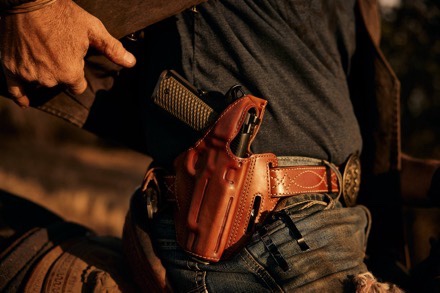
“In keeping with the innovation and quality that Safariland and Bianchi products are known for, we are thrilled to offer our customers new IWB and OWB holsters crafted from fine Italian leather,” said Eric Gasvoda, GM of Duty Gear for Safariland. “The Old Tuscany line is the perfect blend of quality, craftsmanship, and style.”
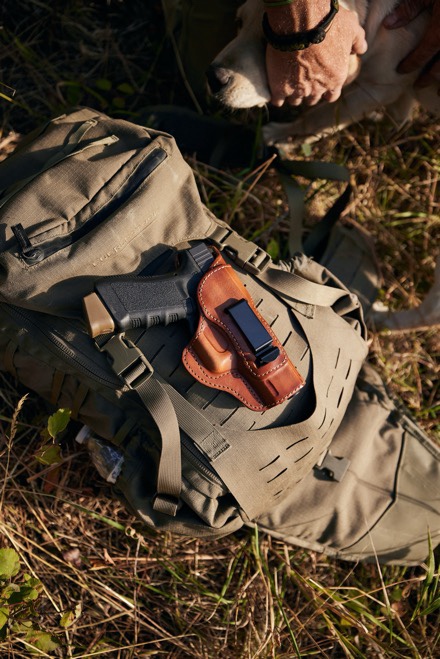
Bianchi, established in 1958 by John Bianchi, is a brand of The Safariland Group and has a rich history of handcrafted workmanship and functional design. Its holsters and gun accessories have stood the test of time, earning the trust of professionals around the globe. From premier leather products to the durable AccuMold® line for law enforcement, Bianchi continues to deliver time-proven designs that are built to last.
The Cortona™, a refined in-waistband design, offers durability and aesthetic sophistication. Crafted with full-grain leather, it is the perfect complement for large semi-automatics. Key features include red dot sight compatibility, premium grade leather, a rugged spring steel belt clip, and sturdy single-piece construction.
For small-of-back concealment, the Fucecchio™ provides a deep cant angle in full-grain leather outside the waistband holster. Its open-top design allows for a fast time-to-target, making it an ideal choice for everyday carry. The Fucecchio features a flat rear profile for a close body fit, adjustable tension, premium grade leather construction, and a 30-degree built-in cant.
The Lajatico™, an outside-the-waistband holster, offers secure thumb-strap retention in a classic full-grain leather design. Dual front belt loop options allow for a range of cant angles, ensuring an efficient draw. The Lajatico boasts a flat rear profile for a close body fit, premium grade leather, and versatility to be worn on the left or right for cross-draw.
Lastly, the Vicopisano™ provides secure thumb-strap retention in full-grain leather outside the waistband holster. Its refined aesthetic, highlighted by contrast stitching accents, makes it as visually appealing as it is functional. The Vicopisano offers dual front belt loop options for various cant angles and features a front cross stitch detail, flat rear profile for a close body fit, and premium grade leather construction. It can be worn on the right or left for cross-draw.
For more information about the Bianchi Old Tuscany Italian Leather line and new holsters for popular firearms, visit bianchileather.com.
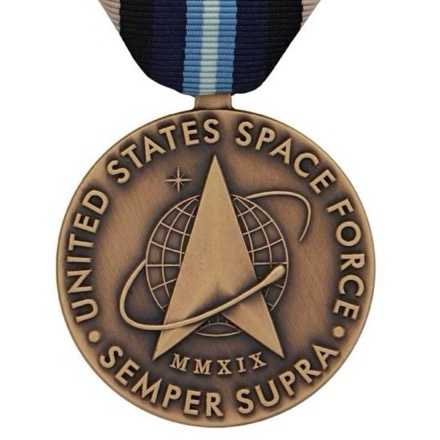
U.S. Space Force Guardians are now eligible to receive the Space Force Good Conduct Medal (SFGCM) if eligibility criteria are met, effective immediately.
This medal recognizes “exemplary behavior, efficiency, and fidelity of enlisted members of the United States Space Force,” according to a memo signed by Secretary of the Air Force Frank Kendall Aug. 30, 2023.
The memo also outlined award eligibility for the SFGCM will be retroactive to the date the U.S. Space Force was established by law, Dec. 20, 2019.
Eligibility for the award includes members demonstrating the Space Force core values of Character, Connection, Commitment, and Courage; members will receive the SFGCM after serving in the Space Force for three years.
Award of the SFGCM is automatic unless denied by the unit commander.
This new medal comes after Executive Order 8809, Good Conduct Medal, was amended by Executive Order 14085, Expanding Eligibility for Certain Military Decorations and Awards, dated Oct 3. 2022, and will be reflected in the next revision to DAFMAN 36-2806, Military Awards: Criteria and Procedures, Attachment 14.
By Secretary of the Air Force Public Affairs