Based in the commercial Attica Universal boot, the Crispi AT4 GTX (Attiva Tactical 4 GORE-TEX) features the Gore-Tex Extended Comfort membrane.

Word is, a non-GORE-TEX version is also in the works.


Based in the commercial Attica Universal boot, the Crispi AT4 GTX (Attiva Tactical 4 GORE-TEX) features the Gore-Tex Extended Comfort membrane.

Word is, a non-GORE-TEX version is also in the works.

Field hygiene can be challenging and we all know how important it can be to maintaining a healthy force. That’s why I was pleased to see the Lavase Mobile Hygiene system from BWMK on display at Enforce Tac.

This self-contained wash basin requires no batteries or shore power as it is pressurized via an integral pump mechanism. It also features an 8.5 liter clean water tank and a separate waste water tank. Finally, there is a shower spigot attachment.

Austria’s Carinthia continues to introduce new products including the Carinthia Poncho System, consisting of two components (Poncho PRO-C and Poncho PRO-R) which can be used alone or in concert with one another.

The PRO-R offers rain protection while the PRO-C is for cold protection. In addition to use as a poncho and tarp, the ponchos can be configured as a sleeping bag, with or without bivy. There is a zip-on hood for the Poncho PRO-C which incorporates mosquito netting.

Seen above is a new proprietary camouflage pattern developed by Carinthia.

Coming Autumn 2023.
US Elite has begun to bring Carinthia products into the US. Hopefully, they’ll include CPS.
Helikon-Tex offered an awesome display at the IWA Outdoor Classics. Here is a sneak peek of a few items coming in 2023.

Striding into the booth, you are greeted by a mannequin kitted out head-to-toe in Rhodesian Brushstroke, equipped with the Raid Shirt, Urban Tactical Shorts, Claymore Bag, Chicom Chest Rig, and Mirage Carbine Sling.

Here’s a focus on the CHICOM Chest Rig mentioned above.

Next are a couple of new paint jobs on classic Helikon-Tex products. From Top Left, Clockwise: Raid Shirt in Tigerstripe, Patriot Jacket Mk II in Tigerstripe, Reversible Swagmen Roll in PenCott patterns, and Reversible Swagmen Roll in Mitchell camouflage.

Finally, we have the Traveler folding chair which features the highest quality aluminum poles from suppliers in Korea. The Traveler includes a storage case. Expect these in several colors.


This is by no means complete and I’ll dive more extensively into their upcoming items later this week.

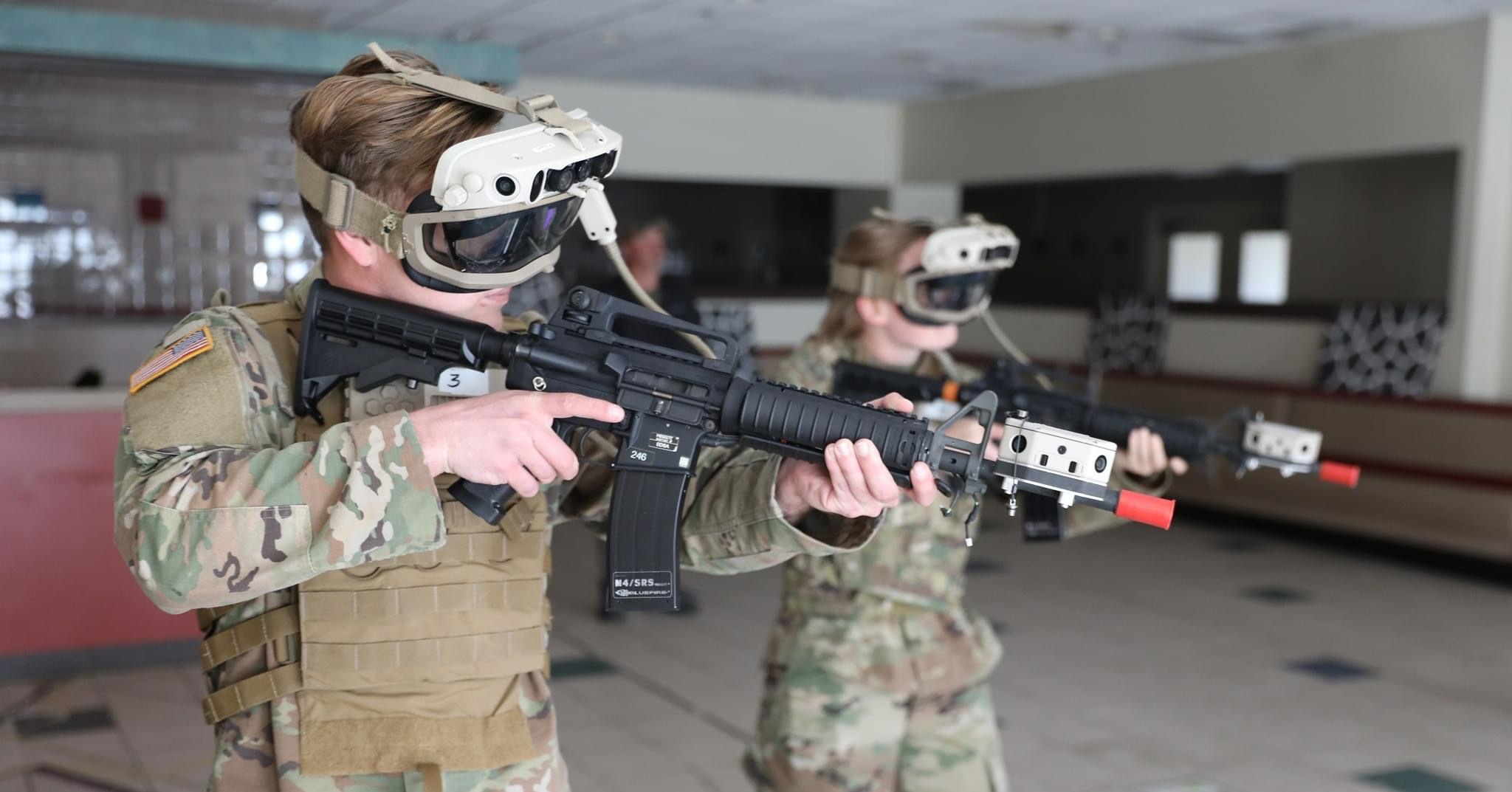
HOHENFELS, Germany — As the geopolitical landscape in Europe continues to draw attention, one U.S. Army regiment stationed in Germany is leading the force with new on-the-move communications from inside the hull of a Stryker.
The 2nd Cavalry Regiment recently completed its annual Dragoon Ready exercise at the Joint Multinational Readiness Center in Hohenfels, Germany. This exercise helps to ensure readiness and train the regiment in its mission essential tasks in support of unified land operations, enhancing proficiency and improving interoperability with NATO Allies.
The exercise also served as the Army’s second Integrated Tactical Network (ITN) operational testing event (Ops Demo Phase II) for Capability Set (CS) 23, which demonstrated the latest version of networked communications between the command post, integrated Stryker vehicle platforms and dismounted troops.

Several weather events, including freezing temperatures and pounding snowfalls, provided a real-world backdrop to ensure the 2CR learned to operate and stress the ITN equipment in all environments.
As part of the U.S. Army V Corps, the 2CR provides a lethal and agile force capable of rapid deployment throughout the European theater. The “Dragoons” are the first mechanized unit to receive CS23 for evaluation and operational testing, with CS23 officially fielding in 2023. Last June, the Army conducted Ops Demo Phase I with the regiment’s 3rd Squadron, while Phase II two incorporated the entire regiment, making this the largest ITN test to date.
“The regiment has taken on a tremendous responsibility to help the Army continue to mature the Capability Set,” said Matthew Maier, Project Manager for Interoperability, Integration and Services, Program Executive Office for Command, Control, Communications-Tactical (PEO C3T). “From the earliest collaborations deciding how components will fit into mounted formations like 2CR’s Stryker squadrons, to this week’s full-regimental networked communications as part of Dragoon Ready, we could not be more thankful for their feedback on CS23 capabilities.”
The ITN’s flexible capabilities are comprised of both military and commercial technologies and include several varieties of software-defined tactical radios, including both single channel radios and two-channel Leader and Manpack Radios, commercial phone technology and small satellite terminals. ITN radios deliver applications through the Nett Warrior end-user device (EUD) to consolidate the air, ground and fires pictures onto a single common operating picture.
New ITN capabilities are being developed as part of the Army’s capability set process, which incrementally delivers new capabilities every two years informed by Soldier feedback and industry advancements. With this approach, the Army can leverage the best of commercial technology to ensure it stays current in the fight with peer and near-peer adversaries.
The CS23 Ops Demo Phase II is a critical precursor to CS25, which will integrate the ITN capabilities on other mounted platforms for Armored Brigade Combat Teams. This exercise will also provide data and lessons learned on how to meet the Army’s shift from brigade to division as a unit of action, leading up to informing network solutions for Army 2030 priority units.

“We have been brigade-centric since the late 2000s, but as we now focus ourselves as a division as unit of uction, we have to think about the architecture and how we bring this vision to the network to support the fight,” said Maj. Gen. Tony Potts, program executive officer for C3T.
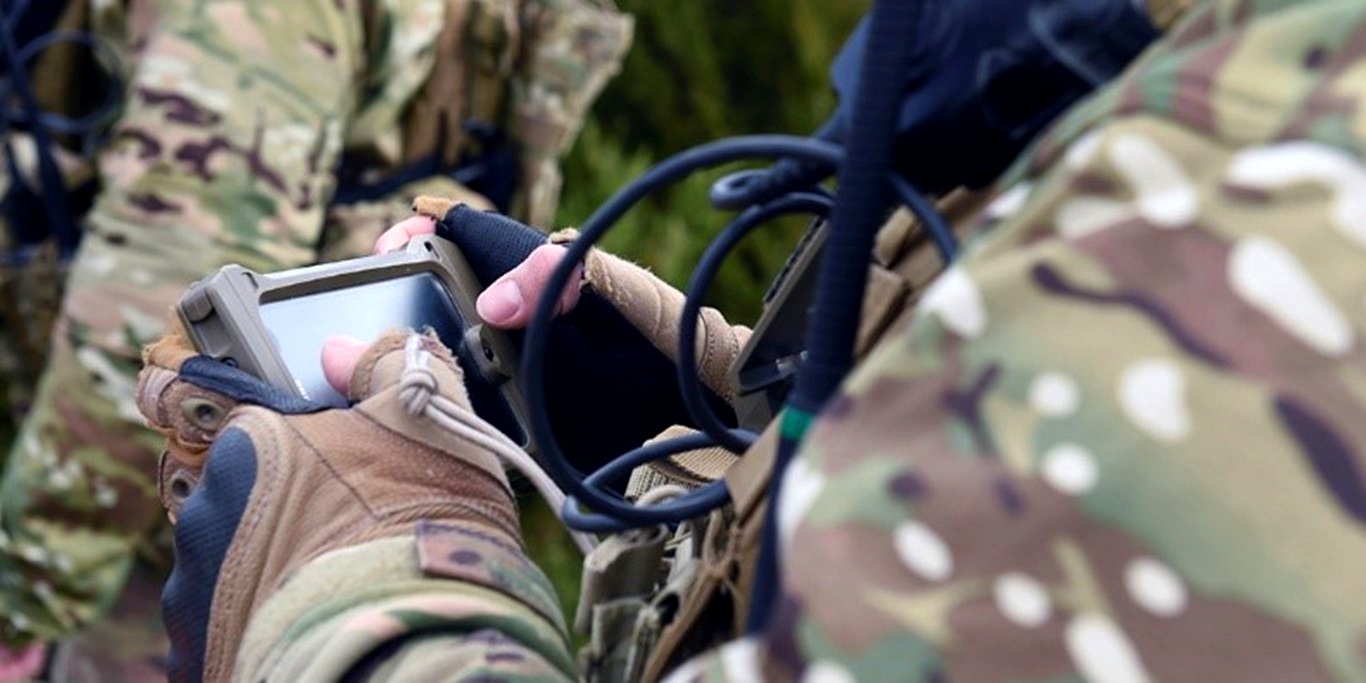
Radios are the key capability used for ITN communications across the echelons, and for this exercise, the unit operated Leader radios and single channel radios for dismounted operations and Manpack radios for both dismounts and inside the vehicles. The radios are connected to the Nett Warrior EUD, which is a commercial cell phone with hardware and software ruggedization for military use. The Nett Warrior EUDs provide the dismounts with real-time, map-based position location information (PLI) and provides mission essential data to and from command posts.
The primary waveform used with ITN is the TSM waveform — a commercial mesh waveform that provides line-of-sight voice, data and PLI communications using a multi-node relay, where every radio is a repeater for all network traffic. The TSM operates in the secure but unclassified-encrypted network environment, which enables encrypted data to be transmitted over military or commercial networks, the Internet, cellular networks or compatible but non-military waveforms.
“The TSM is very clear as opposed to [the single channel ground and airborne radio system],” said Pfc. Liam Croson, radio telephone operator in charge of communications from inside the hull to the command post and squad-level commanders. “It’s self-healing and performs well even in shaded areas.”

Reconnaissance missions also benefited from ITN’s capabilities.
“The whole suite of ITN allows us to be fast, flat and accurate,” said Lt. Col. Joseph Byerly, 4th Squadron, 2CR commander.
Byerly’s Soldiers report from the frontline back to the analysts in the command post, who collect information to make informed battlefield decisions. They incorporated the Mobile User Objective System (MUOS) satellite communications system, which has been a pivotal reach-back capability, especially as Army operations in Europe and INDOPACOM require beyond line-of-sight, point-to-point communications across the services.
“At one point we had an analyst on a cell talking to the commander at the front of the formation 20k away using MUOS,” Byerly said. “I’ve never had the capability before.”
The analyst looked at a UAV feed to observe a vehicle, type the intelligence into the chat using the EUD to the commander on the ground, who was able to simulate the ‘kill’ of the vehicle, Byerly said.
“With ITN, we had connectivity between different elements of the organization that aren’t normally connected,” Byerly said. “Every day we used the ITN we learned more and were able to incorporate it into our exercise.”

The breadth of the test brought together multiple organizations to assess and measure the operational effectiveness, suitability, and survivability of CS23’s ITN, including the Network Cross-Functional Team, U.S. Army Combat Capabilities Development Command C5ISR Center, PEO Intelligence, Electronic Warfare and Sensors for the Electronic Warfare stress test; PEO Soldier for NET Warrior and Dismounted EUDs; and the Army Test and Evaluation Command (ATEC), which has the critical role of collecting all network performance data, Soldier surveys, first-hand observations and instrumentation data from the various ITN components.
Presented with the opportunity to test an entire European-based Army regiment tasked with multiple priorities required flexibility and teamwork from the unit and testers.
“We were faced with achieving our test and evaluation objectives while simultaneously adhering to unit training objectives,” said Maj. Greg Stueve, test officer for the Army’s Operational Test Command, under ATEC. “With the many competing priorities facing the unit, they worked with the test team to ensure we had opportunities needed to collect sufficient data.”
Preliminary reports will identify system successes and key priorities for improvements to further enhance ITN capabilities throughout the regiment, which will also be used to iterate development for future capability sets.
“The speed and accuracy at which we continue to field capabilities across the force is due to our ability to participate in major operational exercises such as Dragoon Ready and implement our capability set process,” Maier said. “For now, we will review the data points collected, and most importantly, continue to support the critical mission of the 2CR as they take on current and future deployments throughout the European Command’s area of responsibility.”
By Kathryn Bailey, PEO C3T Public Affairs

Paul The History Dude shared this excerpt from a cookbook produced by the McIlhenny company for troops in Vietnam. The cookbook came as part of a set that could be purchased for $1 and mailed to a service member in Vietnam. The kit came in a cardboard tube and contained a two ounce bottle of classic Tabasco sauce, several P-38 can openers, and the cookbook.

Designed to help troops break up the monotony of C-Ration meals, the cookbook contains recipes for soups, various entrées, and even desserts. The recipes made use of standard C-Ration components, sometimes supplemented by ingredients that could be begged, traded for, or “liberated” for combat cuisine. Recipes included “foxhole dinner for two”, “guard relief eggs benedict”, and “cease fire casserole”.

Walter McIlhenny, then the CEO of the McIlhenny company, was well familiar with how monotonous canned rations could be, having served as a Marine in the Pacific theater during the Second World War. The care packages were put together at his request to give fighting men a taste of home. Though some of the recipes were overly ambitious, troops generally appreciated the care packages.

Tabasco always seemed to brighten up bland cold canned rations. This started a love affair between the military and Tabasco for making rations palatable. Tabasco became so integral to the fighting man’s diet that small bottles began being included with MRE’s in 1992 and still make appearances in standard issue rations to this day.


While the ATF’s recent Pistol Brace ruling sends shockwaves (no pun intended) throughout the industry, and seeks to make millions of legally-purchased weapons illegal with the stroke of a pen, industry is doing what industry does best: adapting. Such is one case with LWRC’s SMG Pistol End Plate.

Designed specifically for pistol brace variants of LWRC’s own SMG 45, this end cap plate converts the SMG 45 to a “fully operational SMG Pistol”, complete with a built-in QD sling mount. The End Cap Plate is made of 6065-T6 aluminum with a Type III hard coat anodized finish.
www.lwrci.com/smg-pistol-end-plate-w-qd-socket

GRINNELL, Iowa (March 6, 2023) – Brownells unveiled the BRN-180SH complete upper – the newest addition to the popular BRN-180 line – announcing it at the IWA Outdoor Classics show in Nuremberg, Germany.
Chambered in 300 Blackout, the BRN-180SH has 10.5” barrel with 5/8-24 muzzle threads, and a gas system with three settings –unsuppressed, suppressed, and off.
The BRN-180SH retails for $999.
With the gas system turned completely off, the upper is converted into “single shot” mode, virtually eliminating sound produced by gases escaping through the ejection port or by the bolt carrier group cycling.
When fired with a suppressor attached and the gas system turned off, the BRN-180SH in single-shot is even more quiet than a BRN-180S.
The BRN-180SH comes with an adjustable charging handle that can be turned downward to help transform the upper into a straight-pull action, allowing for fast follow-up shots when set for the quietest possible operation.
The upper can be quickly converted back to unsuppressed shooting with a simple twist of the gas adjustment and by turning the charging handle back to its upward position.
Like the rest of the BRN-180 line of uppers, the BRN-180SH fits onto any standard AR-15 or BRN-180 lower, and requires no buffer tube assembly. It readily operates with a folding stock, or no stock at all.
To see the new BRN-180SH, and the rest of the BRN-180 line of uppers, lowers and parts, visit www.Brownells.com