The New iTWB

TRADOC and the Release of FM 3-24, Counterinsurgency

July 15th, 2023

The Sept. 11, 2001, terrorist attacks on the United States were a watershed in U.S. history. Though terrorist attacks on the American homeland and its global assets were not unique, they were neither common nor large scale.

The 9/11 attacks prompted a U.S. counterattack in fall 2001 against Afghanistan, which was the haven and training ground for the 19 Al Qaeda terrorists who had hijacked the four commercial airliners that claimed nearly 3,000 lives. Then, in spring 2003, came the invasion of Iraq for numerous reasons, most of all for allegedly developing and possessing weapons of mass destruction.

Though U.S.-led international military operations against Afghanistan and Iraq were initially successful and generally conventional in nature, occupation of both countries without full conquest of either one quickly inspired insurgency, often supported by international terrorist organizations. This shift led the American military to formulate counterinsurgency (COIN) doctrine to guide its ground forces primarily.

COIN required complex and nuanced operations directed at defeating the insurgents while rebuilding both countries as independent and secure states. TRADOC’s role in the roughly twenty years of the Global War on Terrorism involved training Soldiers for duty, principally in Southwest Asia and the Middle East, and convening the experts who produced the first formal Army doctrinal manual for conducting counterinsurgency operations since the Vietnam War.

After Vietnam and TRADOC’s establishment in July 1973, the U.S. Army largely abandoned its traditional experience with insurgency and counterinsurgency, dating all the way back to the American War of Independence. After the 1973 Arab-Israeli War, the Army focused instead on the activities and programs associated with the Europe-focused AirLand Battle and the Big 5 materiel developments.

Now faced with the need from 2003 onward to defeat robust insurgencies, the Army, with TRADOC leading and with significant contributions from the U.S. Marine Corps, began to resurrect, revise, and reissue counterinsurgency doctrine.

Along the way as a stopgap measure, the Ft. Leavenworth, Kansas-based U.S. Army Combined Arms Center published Field Manual-Interim 3-07.22, Counterinsurgency Operations, in October 2004, with a scheduled expiration two years hence.

Then-Lieutenant General William S. Wallace, later the 12th TRADOC Commanding General, commanded CAC, which oversaw most of the Army’s service schools and wrote the bulk of the service’s doctrine. The changes initiated by the new counterinsurgency manual ultimately resulted in a cascade of updated doctrinal publications, including capstone doctrine, all reflecting the experiences of recent combat operations.
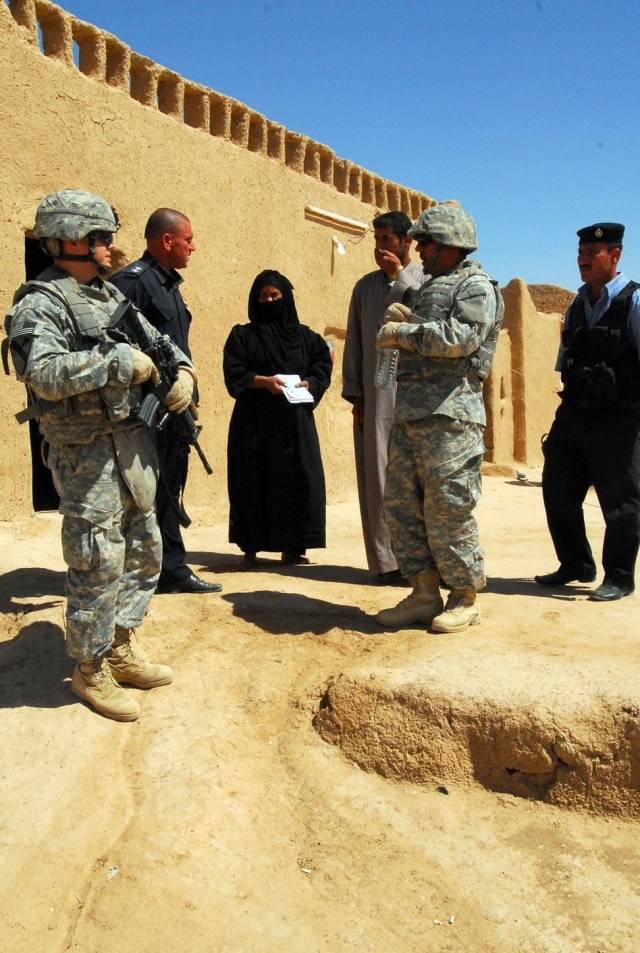
In September 2005, then-Lieutenant General David H. Petraeus assumed the duties of CAC Commanding General. Petraeus possessed extensive counter-terrorism experience in Bosnia about the time of the 9/11 attacks and later while commanding the 101st Airborne Division during and after the Iraq invasion.

Right away, Petraeus engaged both his USMC GWOT colleague, then-Lieutenant General James N. Mattis, commanding the Marine Corps Combat Development Command, and his West Point classmate, retired Army Lieutenant Colonel Dr. Conrad C. Crane, then-Senior Historian at the U.S. Army War College’s Strategic Studies Institute.

Starting in mid-February 2006 in a conference at CAC, Dr. Crane led the writing team composed of experts from the military, academia, and the private sector and served as the principal author for the Army’s effort quickly to research, write, publish, and distribute the seminal December 2006 joint Army-USMC FM 3-24/Marine Corps Warfighting Publication 3-33.5, Counterinsurgency. The manual served for the next eight years as the Army’s guidepost for conducting GWOT counterinsurgencies.

Rooted in both historical study and contemporary experience, the manual drew immediate worldwide attention for many reasons, including its counterintuitive yet utilitarian “Paradoxes of Counterinsurgency Operations,” which included such strictures as “Sometimes Doing Nothing Is the Best Reaction,” “Many Important Decisions Are Not Made by Generals,” and numerous others.

In May 2014, the Army and USMC released the next and still current joint edition of FM 3-24/MCWP 3-33.5, now retitled Insurgencies and Countering Insurgencies, which builds on the 2006 version and casts counterinsurgency within the larger context of a range of military operations.

By TRADOC Military History and Heritage Office
Blast From The Past – Follow Through Consulting: Weapon Grip For Rapid Movement

July 15th, 2023

Recently, I saw someone on Instagram bring up Buck Doyle’s technique for carrying a carbine in combat. As I had written something in this back in 2016, I thought it was worth sharing again.

This week I got to spend some time out in Utah with Buck Doyle, owner of Follow Through Consulting. Buck is very well known and respected in the Marine Reconnaissance and MARSOC communities, as well as industry. I expected to learn a lot from him and he did not disappoint.

One quick takeaway I picked up during the scoped carbine course he presented for hosts Proof Research, Erathr3, Leupold and Surefire, was this weapon grip for fast movement. I thought it was a great, quick share because anyone can easily adopt it on their own.

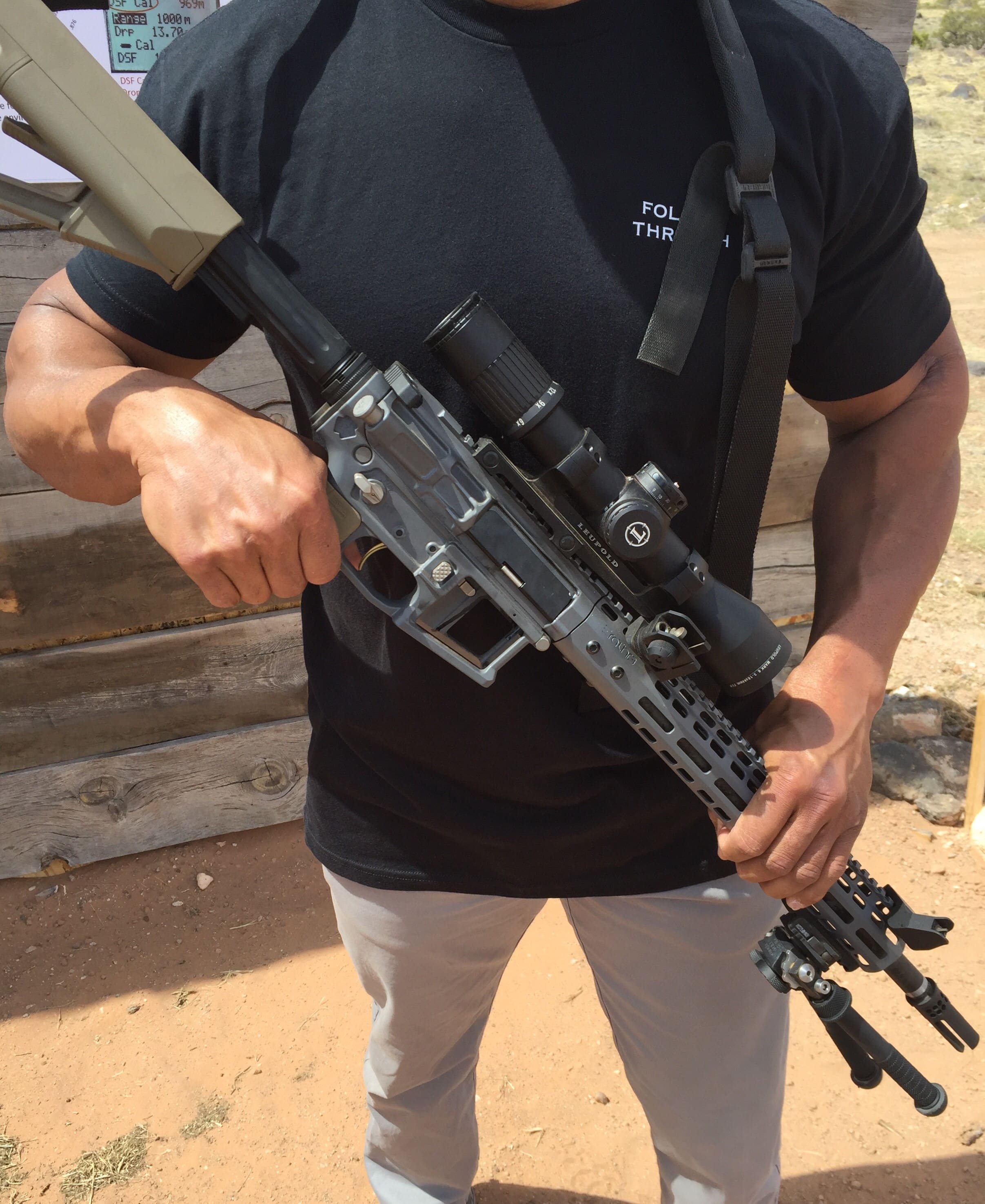
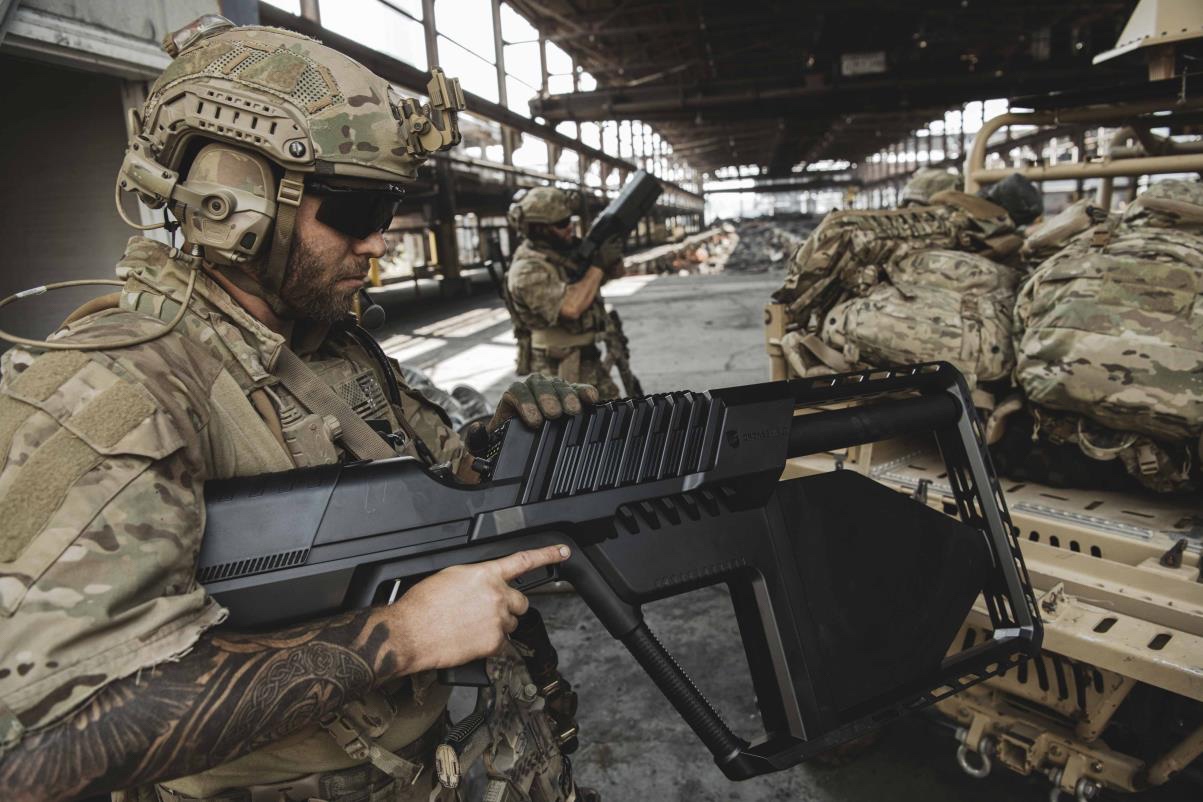
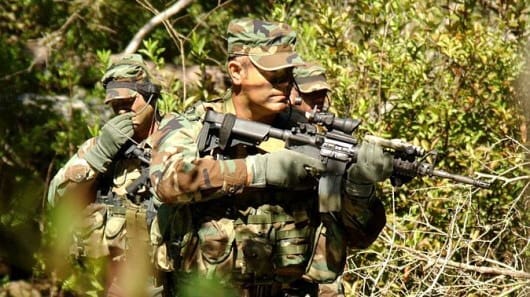
In the Army, I was taught to carry my rifle in a modified port arms by wrapping the fingers of my firing hand around the pistol grip with my trigger finger extended along the lower receiver above the trigger. Alternatively, I’ve seen guys extend their finger across the trigger with their fingertip resting on the magwell, as seen above. Additionally, I was taught to position my support hand under the forearm with my finger and thumb holding it securely.

Buck was taught the same thing in the Marine Corps. But the realities of combat taught him to modify this grip. Twice, he injured his trigger finger during falls in combat while rushing from one position to another. The first time he dislocated his finger and on the second, he sprained it. He said the sprain was worse because it took longer to heal. Once Buck started wrapping all of his fingers around the pistol grip, he didn’t injure it again.

I told Buck, “That makes sense for the firing hand, but what gives with the upside down grip on the support hand?” He told me that this method of carry served two functions. First, it serves the four rules of firearms safery quite well. It forces the muzzle down in a safe direction during movements. If you stumble, you won’t bring your muzzle up in the air like you would with the more tradtional port-style carry. Second, you can more naturally pull the weapon down into yourself in a full fall.

An important note. Buck adopted this technique for moving rapidly (ie running) while in combat. He fully acknowledges that you will have to transition your grip to shoot your weapon.

One of the things I find most refreshing about Buck Doyle is that there’s no BS. I talked to him about the grip and asked him what he called it. Unlike many tactical trainers, he didn’t have some fancy, trademarked name for it. For Buck, this wasn’t some theory-based technique he had dreamed up, but was based on years of actual combat as a Marine. It’s just an adaptation of a long-standing technique for use in certain circumstances. That’s the kind of thing you take away.

For those curious, the rifle is by Erathr3 with a PROOF Research barrel. The scope is Leupold and furniture by Magpul. More on all of that soon, but yes, I was hitting steel at 1164 meters with this 5.56mm package.

If you’re interested in learning more about Follow Through Consulting, visit www.followthroughconsulting.com.

The Field of the Future: PEO Soldier Demos New Equipment at 25th ID

July 15th, 2023

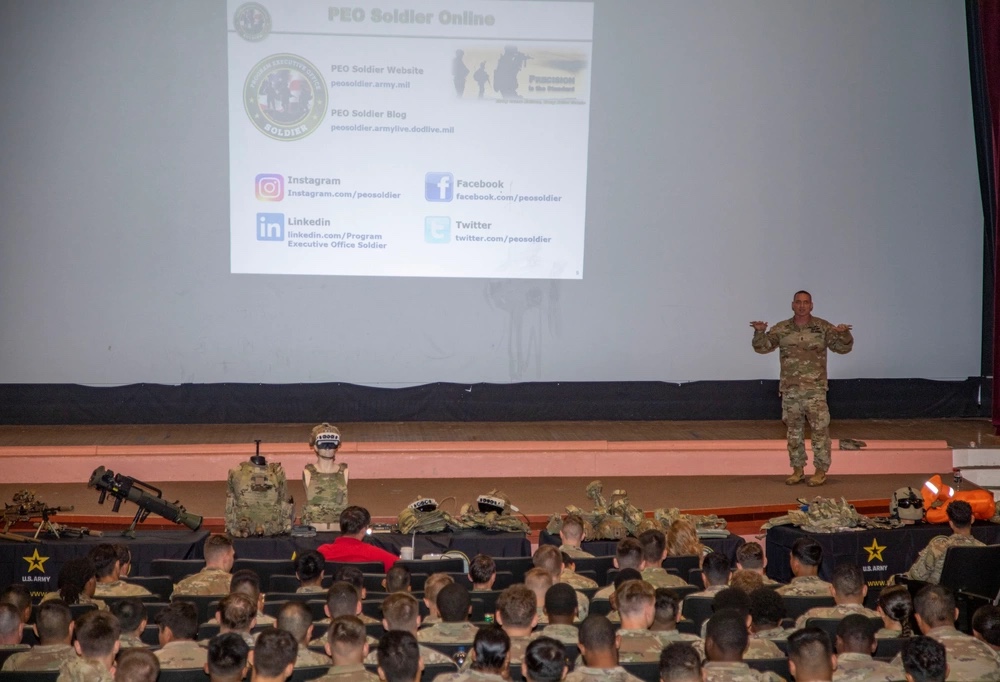
SCHOFIELD BARRACKS, Hawaii – The 25th Infantry Division hosted a Program Executive Office (PEO) Soldier portfolio overview/demo town hall and operational kit analysis overview, July 11-13, 2023.

The two-part multiday event was held for PEO Soldier to gather holistic data and receive feedback from Soldiers about innovative solutions and for 25th Inf. Div. Soldiers to gain a better understanding of products that are being developed and fielded to the force.

PEO Soldier is one of the Army’s leading producers of capabilities such as body armor, helmets, legacy weapon systems, sensors and lasers.

“We’re the acquisition organization that deals with everything the individual Soldier wears, shoots and uses,” said U.S. Army Sgt. Maj. Daniel Rose, the PEO Soldier sergeant major. “What we’re doing is making sure Army Soldiers have overmatch over the enemy by increasing capabilities, lethality, situational awareness and protective equipment.”

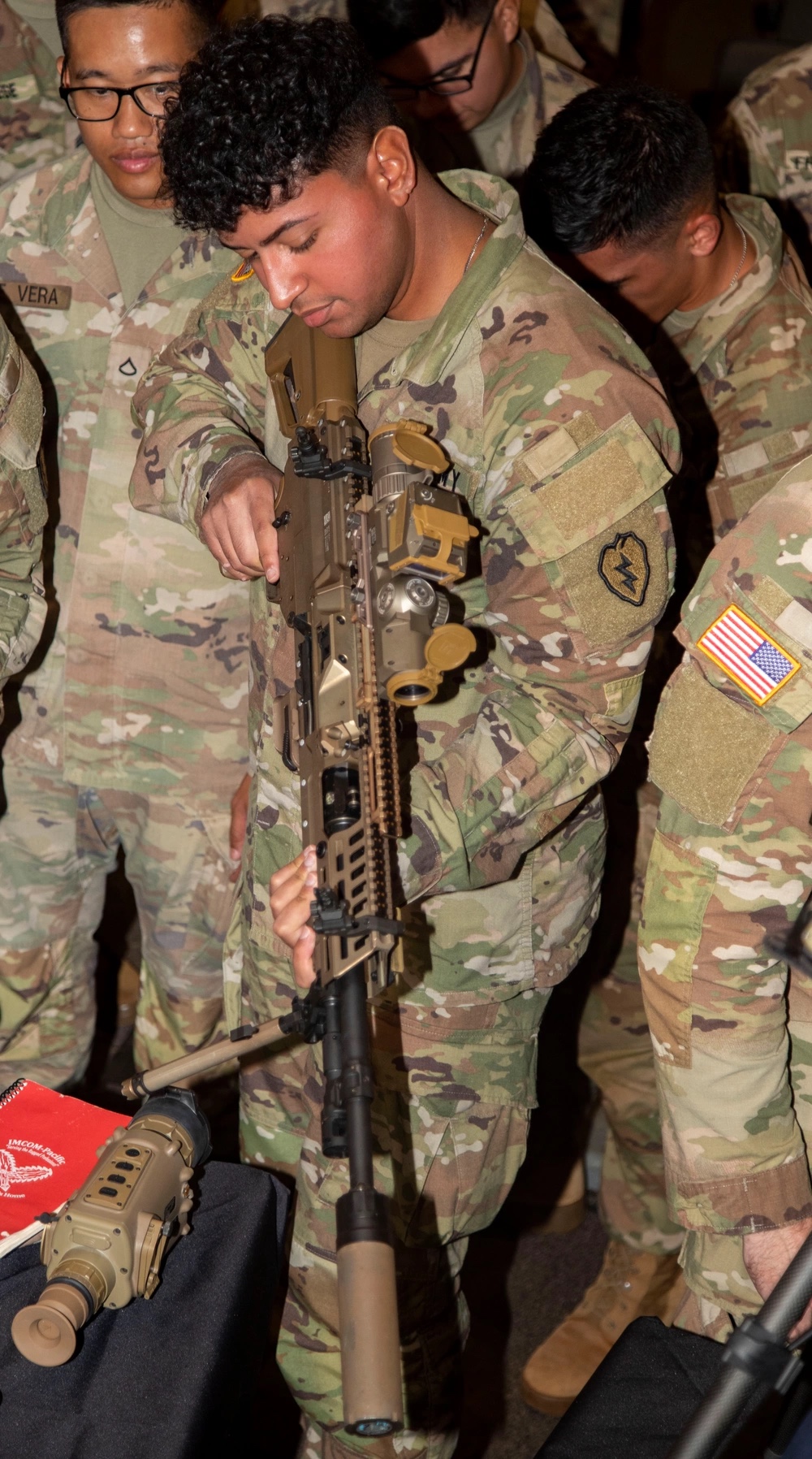
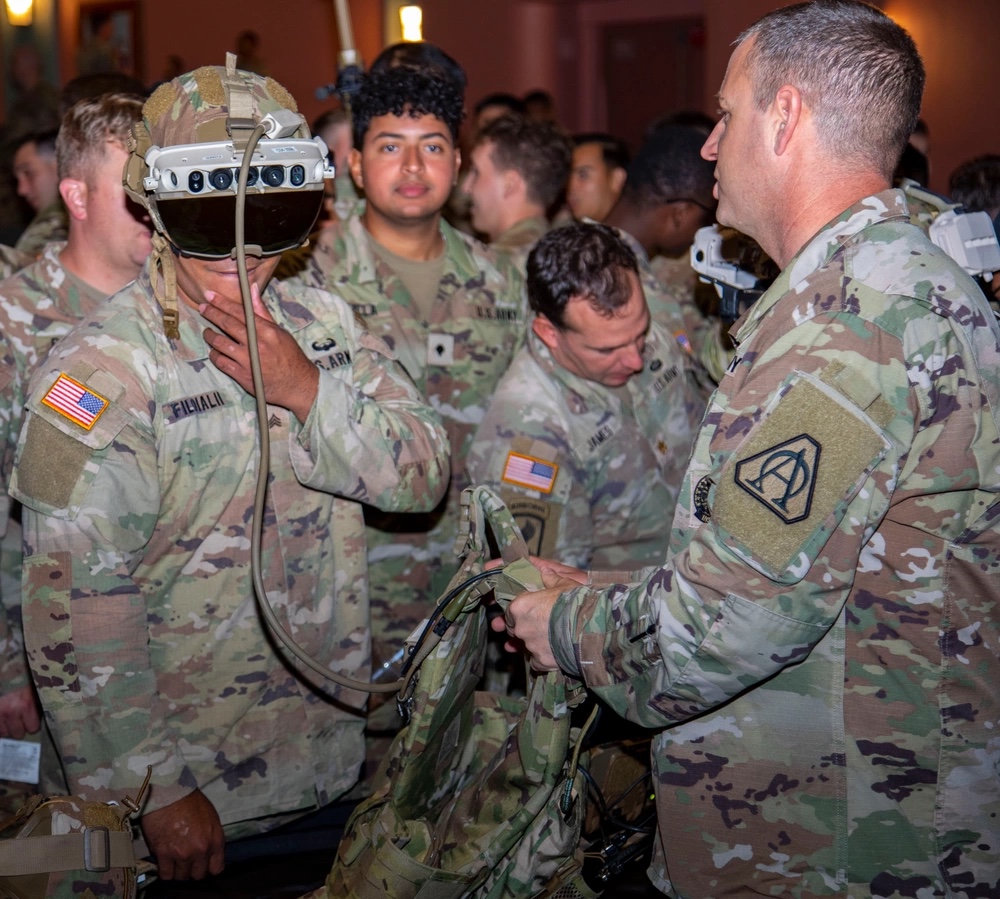
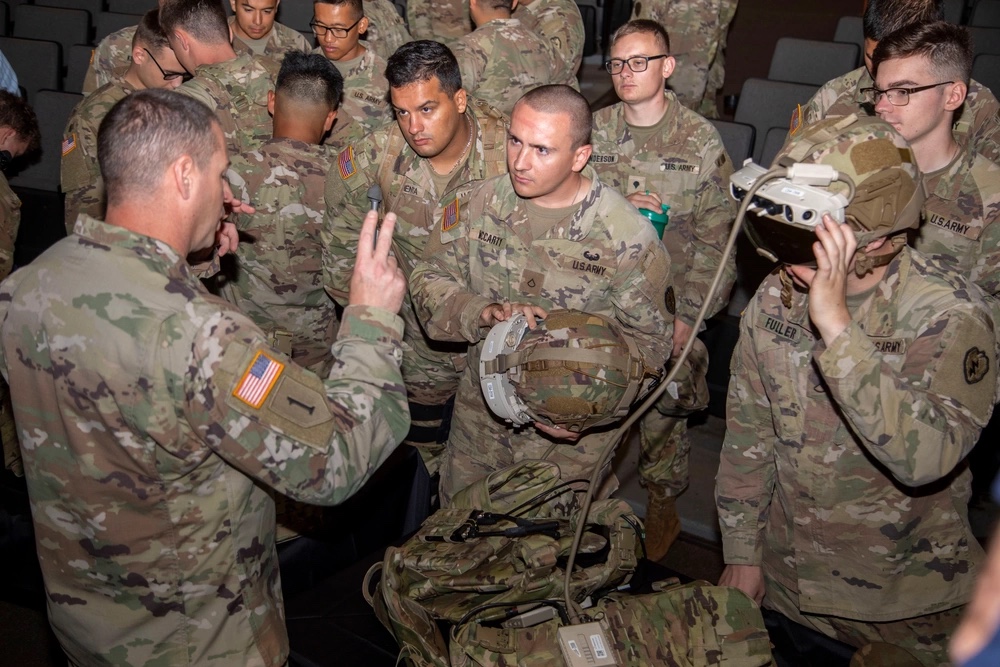
During the analysis, PEO Soldier representatives gathered equipment inventories, conducted targeted questionnaires and interviews, and received Soldier feedback, while during the demo, 25th Inf. Div. leaders and Soldiers gained insight and were provided a firsthand look at future technology and equipment set to be implemented within the Army.

“It was a great feeling to pick up and grab the new systems and gear that I can potentially use in the future,” said U.S. Army Pvt. Jeremiah James, an indirect fire infantryman assigned to 2nd Squadron, 14th Cavalry Regiment, 2nd Infantry Brigade Combat Team, 25th Inf. Div. “I think it improves unit morale and sparks excitement amongst Soldiers, especially infantrymen, when we have something cool to look forward to learning and using.”

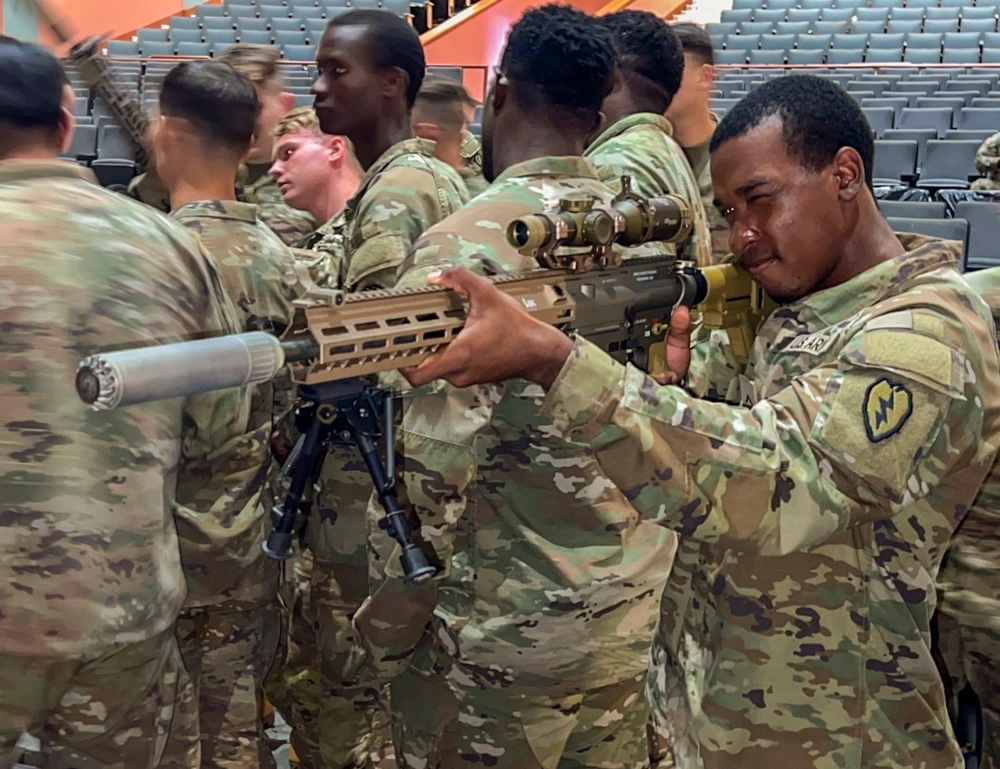
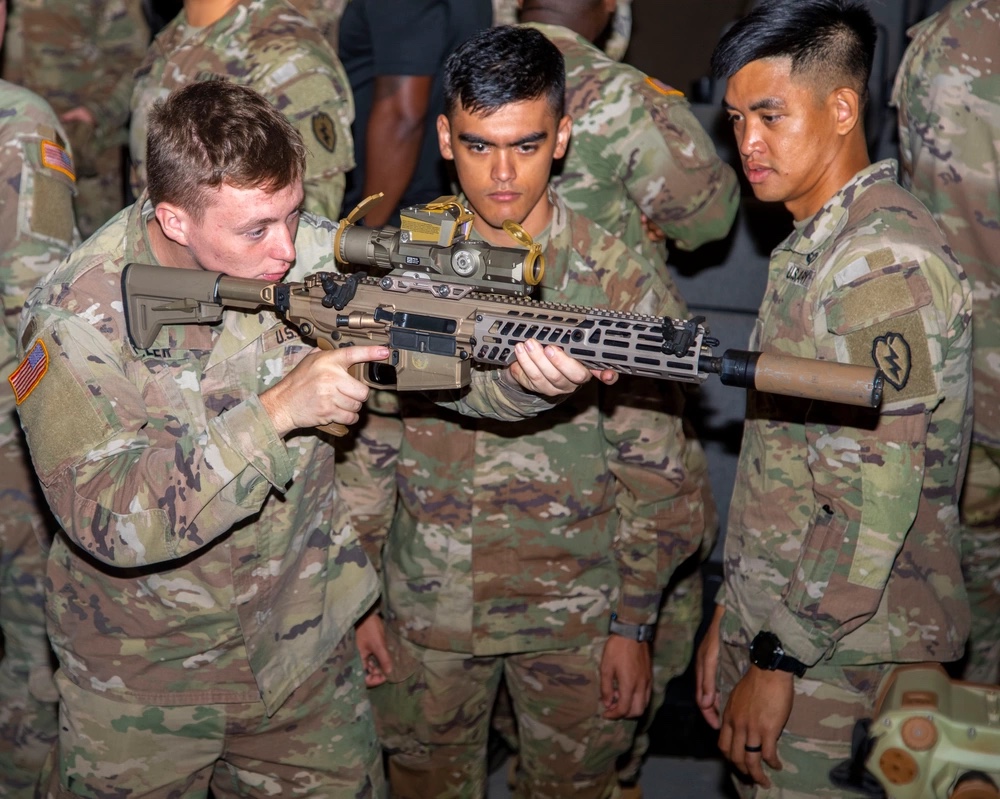
Throughout the demo, PEO Soldier showcased an array of updated equipment, to include the Next-Generation Squad Weapon (NSGW) rifle and automatic rifle, the Integrated Visual Augmentation System (IVAS) headset, the new integrated head protection system, and the Aircrew Combat Equipment (ACE) vest — one that 25th Inf. Div. Combat Aviation Brigade Soldiers are currently the only Army unit to train with.

“It’s good to see that the Army is constantly improving our equipment, and that PEO Soldier is here to help us as jungle Soldiers,” said James. “Hopefully, PEO Soldier continues the demo, so we can always have a vision of what’s to come in the future.”

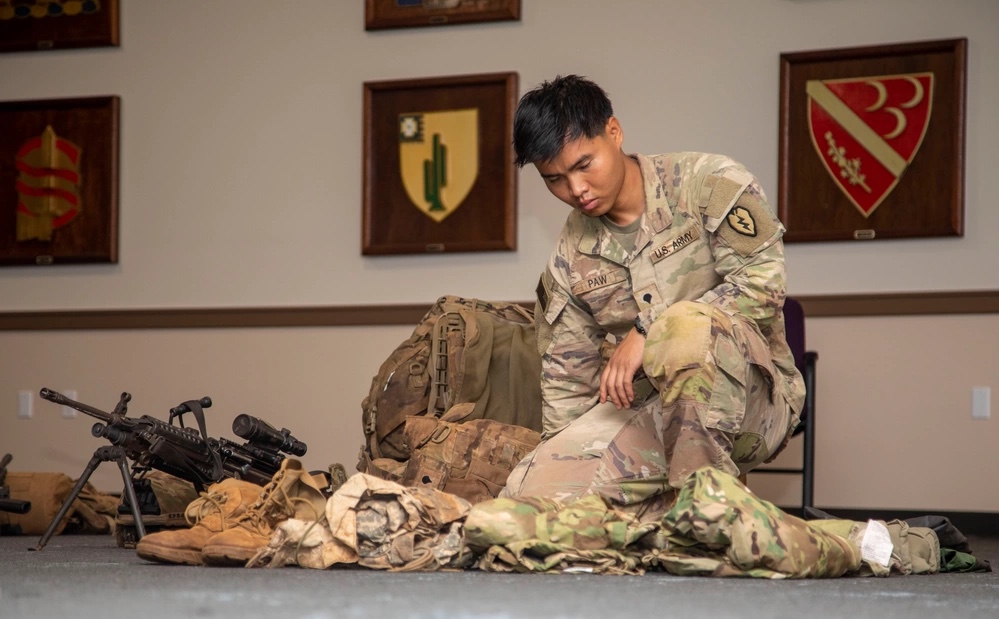
The Operational Kit Analysis portion consisted of Soldiers from both the 2nd and 3rd IBCT’s conducting a squad-level organizational clothing and individual equipment (OCIE) layout, where PEO Soldier examined what equipment 25th Inf. Div. Soldiers would bring into a 72-hour jungle operational environment.

“As we look to build the Soldier of 2030 and 2040, we’re here trying to collect information on what the current jungle Soldier looks like and what they may need,” said Rose. “Operational testing is super important to us. We want to make sure we’re informing the Soldiers and leaders of how important those touch points within the organization are, and how valuable it’ll be for them to have overmatch on the battlefield in the future.”

The nine-Soldier squads from each brigade completed an observational day of layouts, and also had the opportunity to speak with PEO Soldier representatives one-on-one about their thoughts on current equipment, and what may be needed in the future.

“I’m definitely happy that [PEO Soldier] is coming straight to the Soldiers using the equipment and asking us what it’s like,” said U.S. Army Spc. Carson Frantz, an infantryman assigned to the 2nd Battalion, 35th Infantry Regiment, 3rd IBCT, 25th Inf. Div. “It’s important to get feedback from us. I hope they continue the analysis because there’s always going to be new weapon systems, new problems, and different environments, so making the equipment better makes the Soldier better.”

Story by SGT Alvin Conley, 25th Infantry Division

DroneShield Assigned NATO Stock Numbers

July 14th, 2023

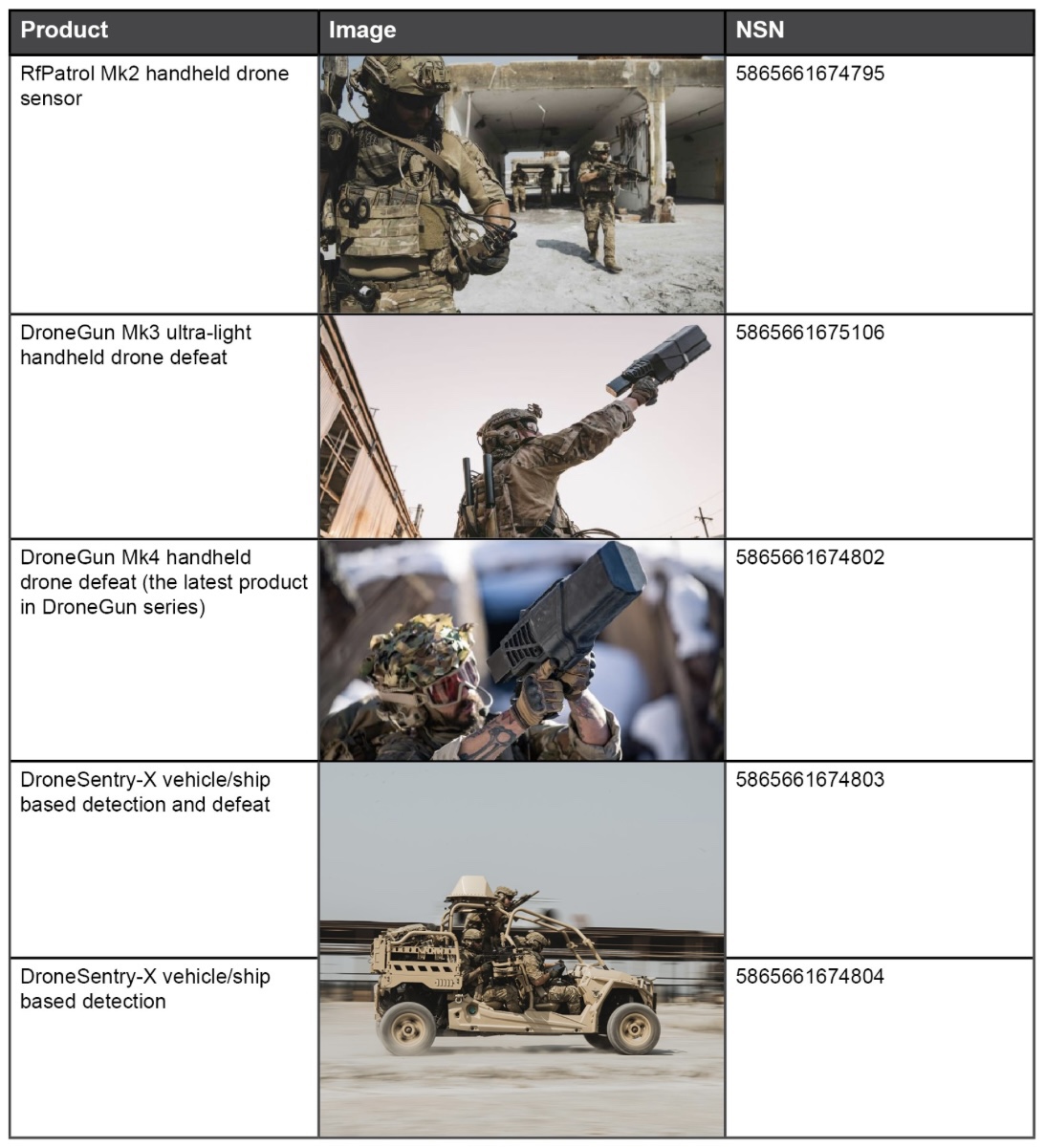
• DroneShield assigned with NATO Stock Numbers (NSNs) for RfPatrol Mk2, DroneGun Mk3, DroneGun Mk4, and DroneSentry-X.

• This follows up on the earlier assignment of NSN for DroneGun Tactical.

• NATO militaries, which are the largest existing customer segment for DroneShield, now able to purchase these additionally listed products “off the shelf”.

DroneShield Ltd (ASX:DRO) (“DroneShield” or the “Company”) is pleased to announce that several of its products have been assigned a NATO Stock Number (NSN) as follows:

This follows up on the earlier NSN assignment for DroneGun Tactical (5865661650137) in February 2019, which significantly contributed, and continues to contribute, towards that product becoming one of DroneShield’s best-selling items.

An NSN is a 13-digit numeric code, identifying all the “standardised material items of supply” as they have been recognised by all NATO countries including United States Department of Defense, and allows for any of the 31 NATO militaries to purchase the items on a “military catalogue” basis, significantly simplifying the procurement process.

The assignment of an NSN is also relevant to non-NATO customers in that it is considered to signify that the product has achieved a certain level of acceptance by the world’s most discerning military customers, the members of NATO and NATO’s allies.

The Company expects that the receipt of these additional NSNs for will assist its sales efforts in both NATO and non-NATO countries.

Red Arrow Weapons Debuts 350 Legend

July 14th, 2023

Fork Union, VA – Red Arrow Weapons is adding to its lineup of high-quality yet affordable firearms with its new 350 Legend.

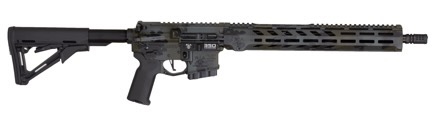
Built on the AR-15 platform, the 350 Legend features a pistol-length black nitride barrel and Magpul CTR stock with a 7075 T-6 aluminum upper and lower.

Tipping the scales at just over 6.4 pounds, it comes equipped with a 2.5-pound drop-in trigger and RAW 15-inch M-lok hand rail.  

With high-quality options at an affordable price point, Red Arrow Weapons has created its own category in the firearms market.


To learn more about Red Arrow Weapons and browse the full lineup of products, visit redarrowweapons.com.

Helikon-Tex – Foxhole Bag

July 14th, 2023

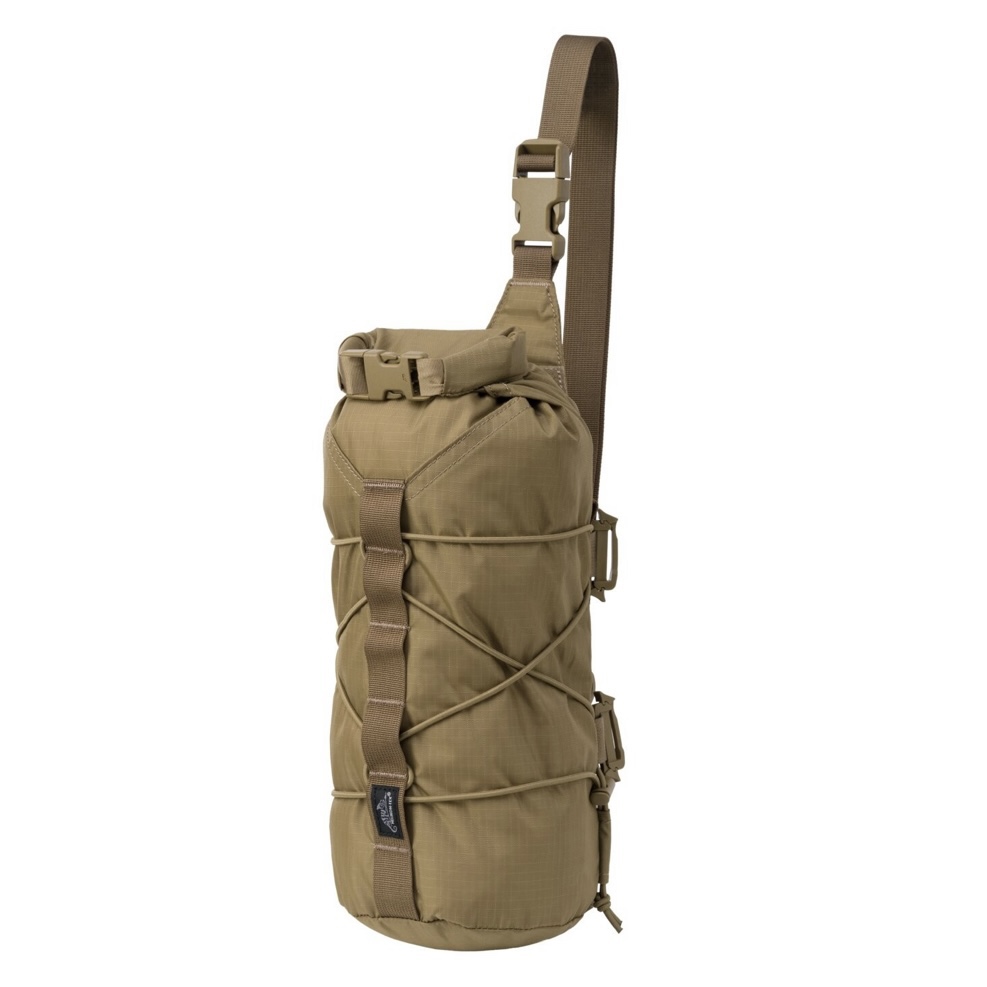
The new Foxhole bag from Helikon-Tex kind of reminds me of an update to the old USGI NBC Bag for carrying your MOPP suit.

Although this isn’t quite as big, it’s more versatile and includes a roll top and compression bungees. You can also wear it as a bag or waist pack and is compatible with MOLLE/PALS.

www.helikon-tex.com/pl_pln/tb-foh-nl-torba-foxhole

Reptilia RECC·E A5/SR25 Carbine Stock Now Shipping!

July 14th, 2023

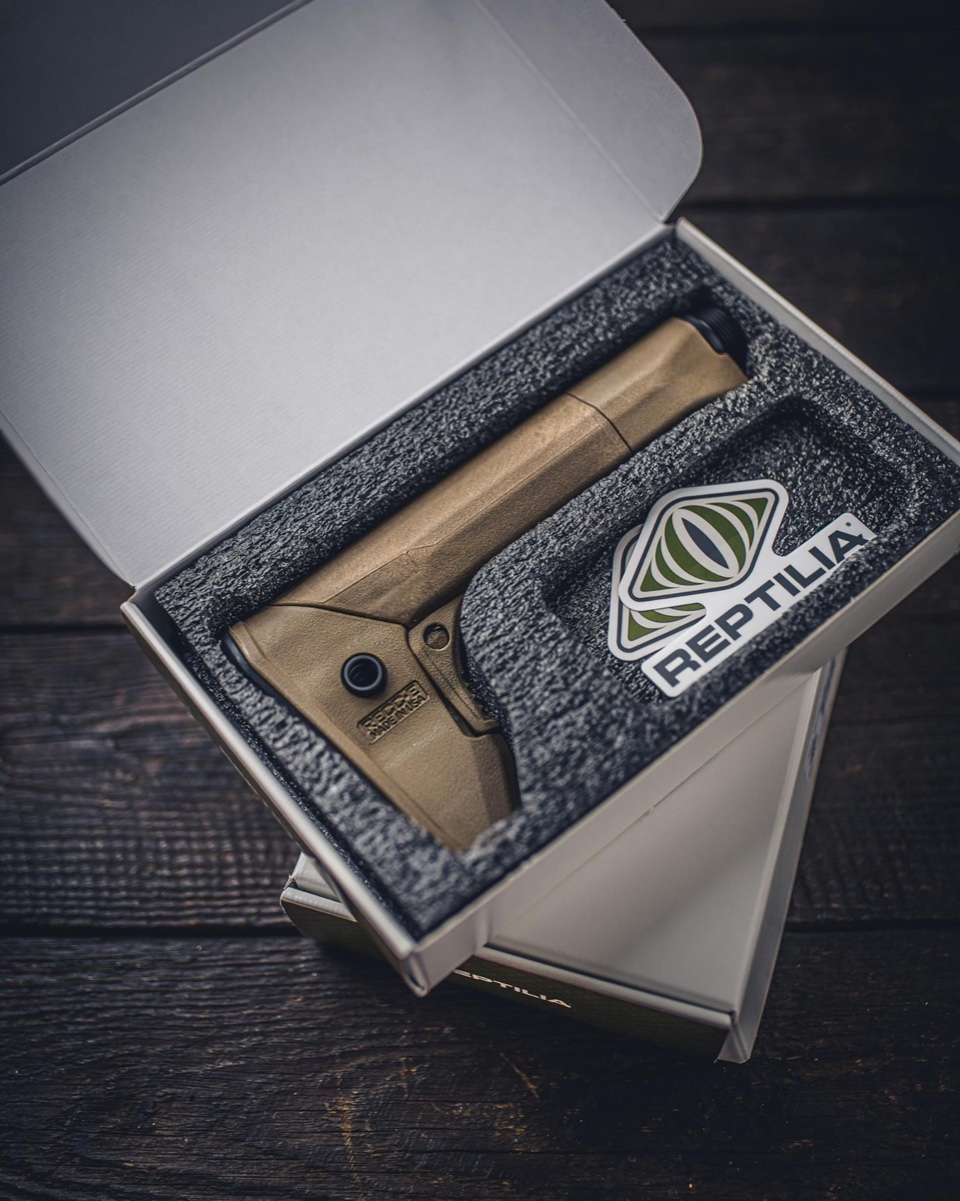
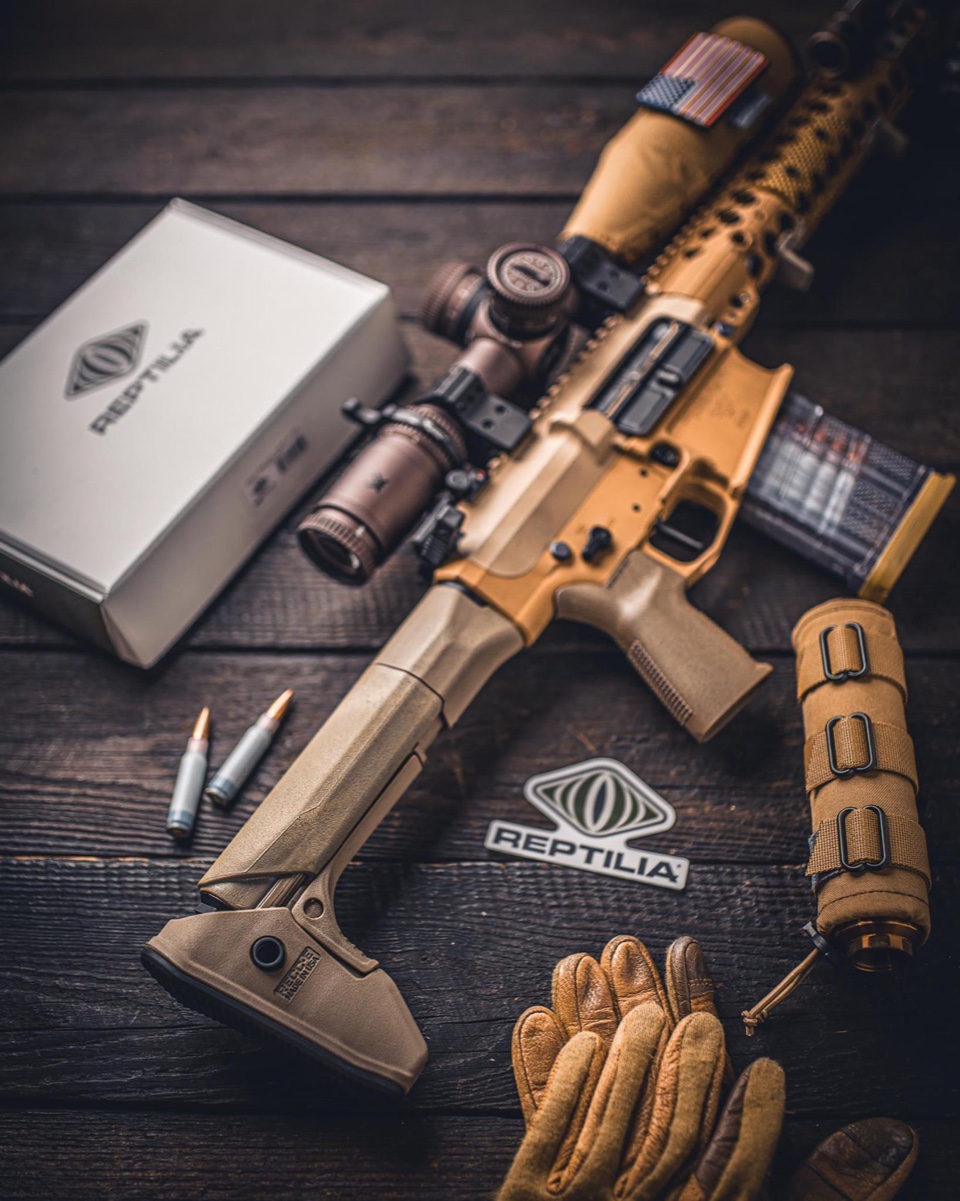
It’s finally here: the Reptilia RECC•E Carbine Stock for A5/SR25 buffer systems!

The RECC•E Stock for A5/SR25 is now shipping to all dealers, distributors, and direct to customers on our website. Inventory is limited, so make sure to sign up for our email notifications if you miss the drop and we’ll shoot you a reminder next time these and our most popular products are back in stock!

As with all Reptilia products, the RECC•E is 100% designed and manufactured in the USA, and features a full lifetime warranty against manufacturer defects.

Product Description:

Designed at the request of a military end user, the RECC·E Stock features a constant cheek weld, ambidextrous QD sling attachment points, rubber buttpad, and a modular design that allows usage of a standard AR15 carbine buffer system, or A5/SR25 carbine buffer system by replacing the receiver extension (buffer tube) and forward portion of the stock. Weighing only 12.0 ounces including the proprietary AR15-length receiver extension, the RECC·E stock is the ideal lightweight solution for the entire spectrum of AR-pattern guns from compact to precision.

Technical Specifications:

• Receiver Extension: 7075-T6 Aluminum, Type III Milspec Anodized Finish

• Materials: Impact Modified Glass-Filled Nylon Polymer, 7075 Type III anodized aluminum, Nitrided alloy steel hardware

• Weight (A5/SR25): 12.8 oz.

• Length of Pull (A5/SR25): 12.375 in. – 15.0 in.

• Patents Pending

• MADE IN USA

Click here to buy now.

Arctic Technical Gear – MODSAW Pouch

July 14th, 2023

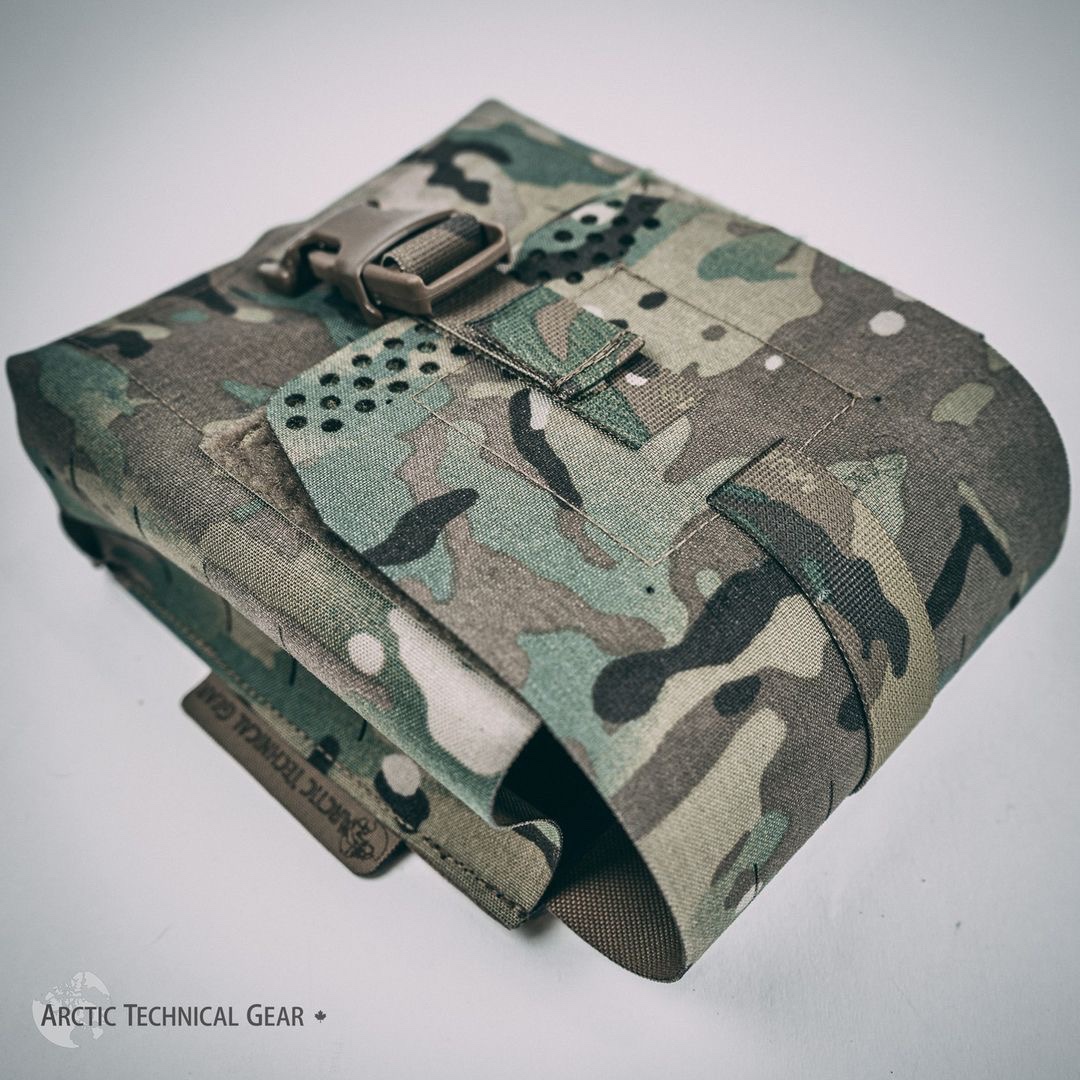
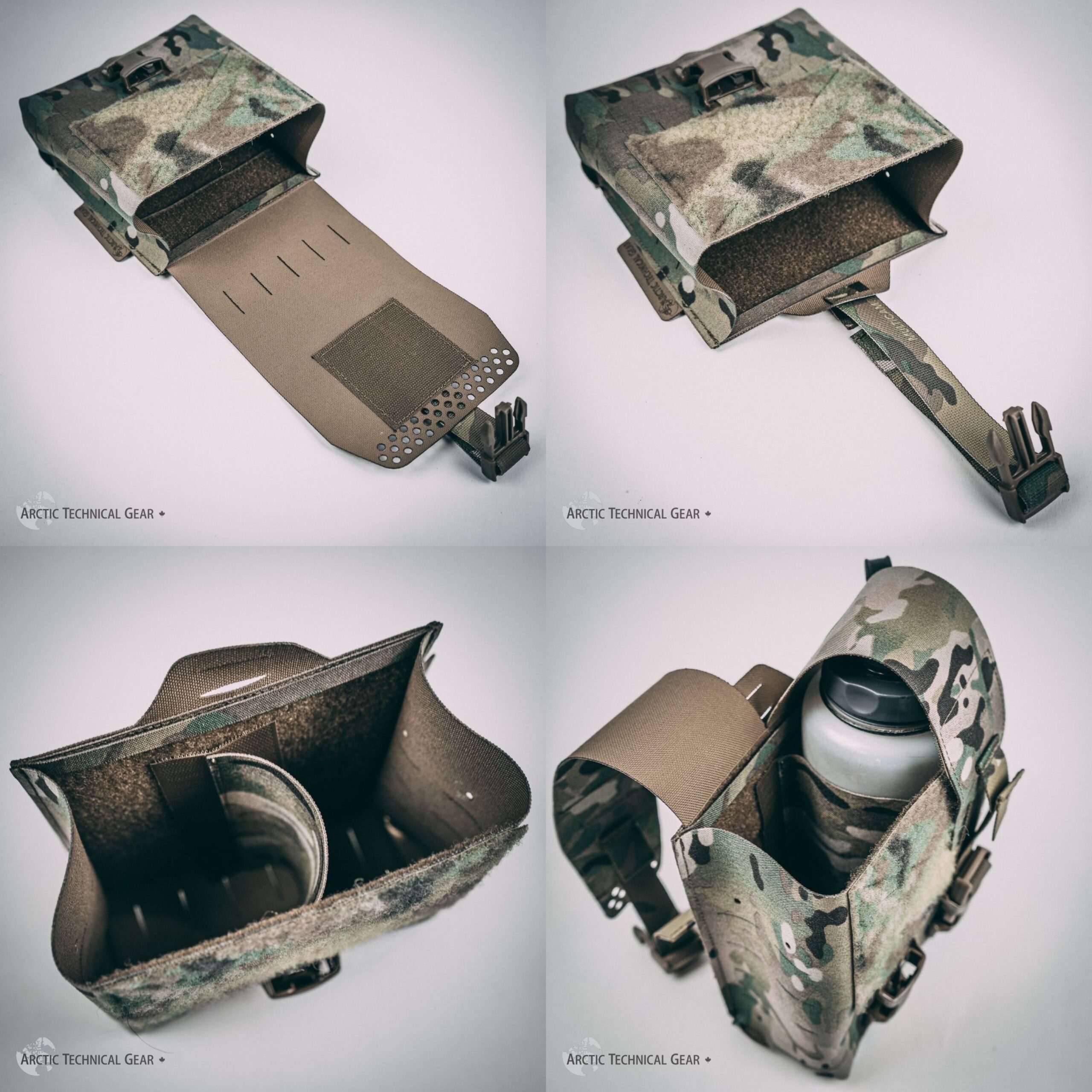
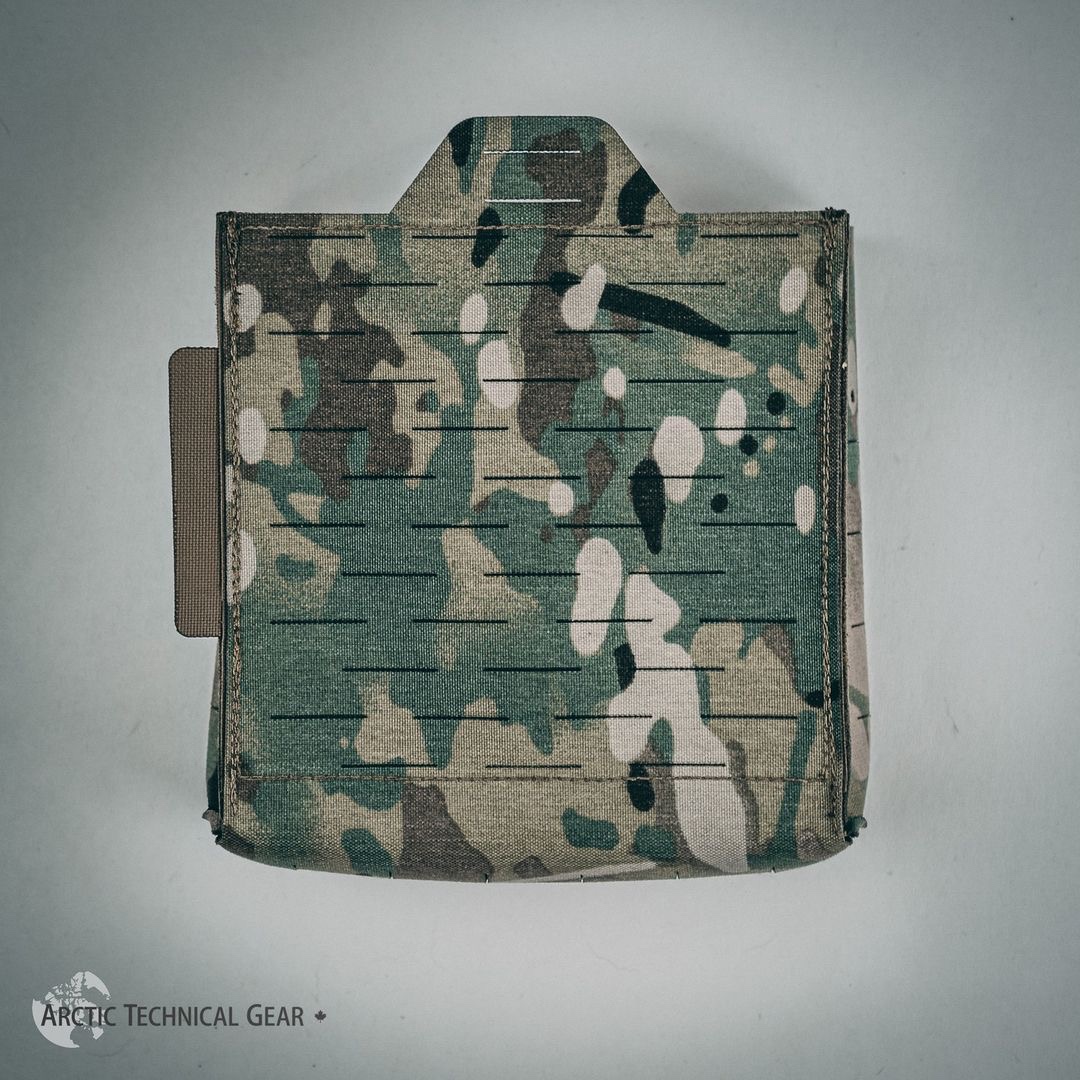
From the great white north comes Arctic Technical Gear and their newly MODSAW Pouch.

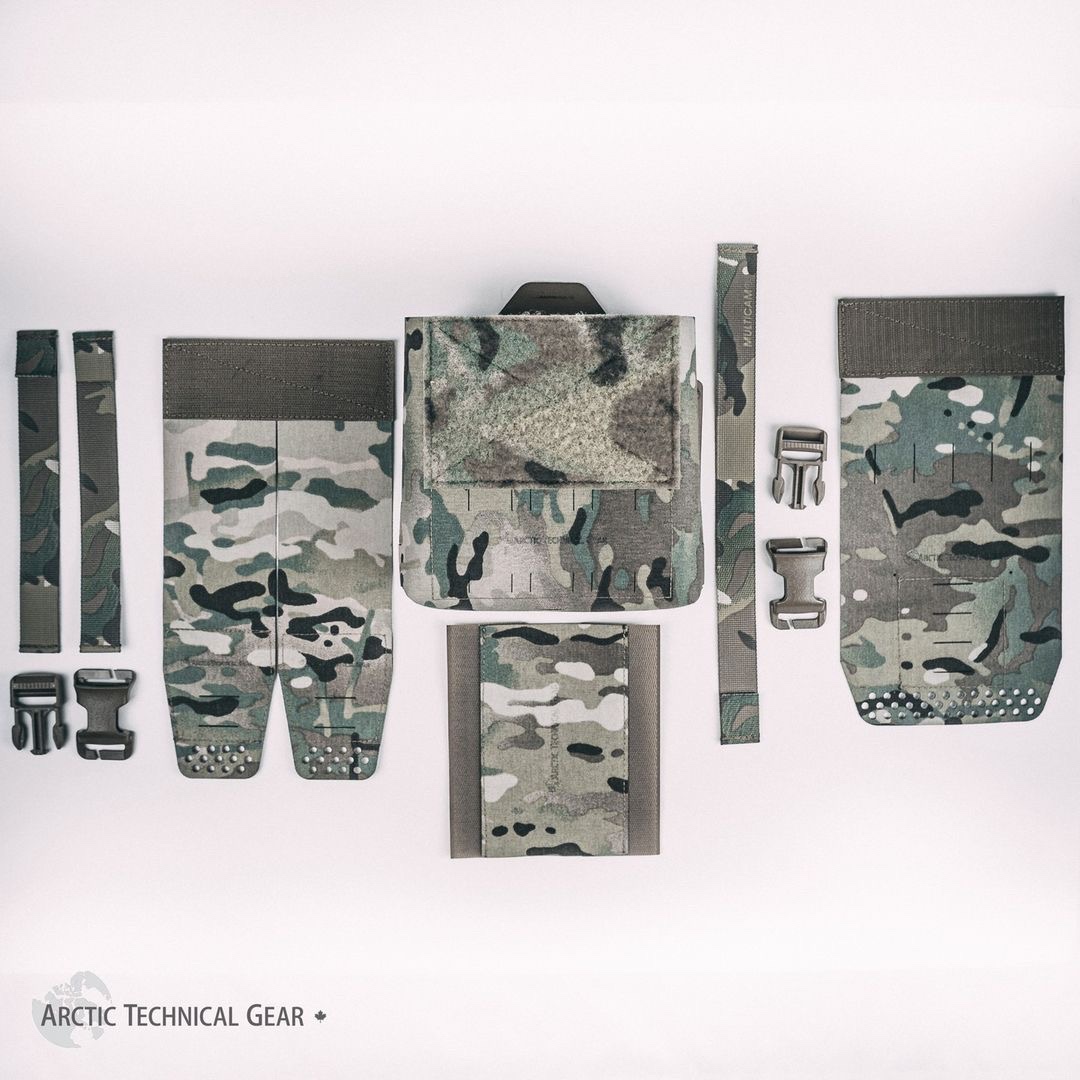
Featuring interchangeable flaps, four or three molle column mounting and internal velcro internal divider. Both flaps feature velcro or ITW QASM buckles. Molle/PALS slots on sides and bottom. Fits a 200rnd M249/C9 box, a 2 qt soft canteen or two 1L Nalgene bottles.

$65 USD: Modified SAW Pouch including webbing strap and QASM.

$20 USD: Full width flap

$25 USD Split flap w/ add on QASM

$10 USD: Velcro Divider

Available in MC, RG, CB and Black.

All components are Berry compliant including Squadron laminate and ITW buckles. However, these are made in Canada making them TAA compliant.

www.arctictechnicalgear.com