TYR Tactical

Archive for September, 2025

Wrap Enters U.S. Army xTechCounter Strike C-UAS Competition with Project MERLIN Innovation

Thursday, September 18th, 2025

The patent pending Merlin platform and Wide Area Kinetic Anti-Drone Cassette are anticipated to meet or exceed DOD and U.S. Army requirements by providing scalable, low-cost, and rapidly deployable defense against unmanned aerial threats, reinforcing Wrap’s long-term growth strategy in military and allied markets.

MIAMI, Sept. 17, 2025 — Wrap Technologies, Inc. (NASDAQ: WRAP) (“Wrap” or the “Company”), a global leader in innovative public safety and defense solutions, today announced the successful submission of its C-UAS as a technology solution for the U.S. Army’s xTechCounter Strike1competition.

The U.S. Army initiative seeks innovative C-UAS technologies to help protect U.S. and allied forces against the rapid proliferation of small drones on the battlefield. Selected participants may be eligible for cash prizes, invitations to live experimentation events, and potential follow-on contracting opportunities with the Department of Defense and NATO partners.
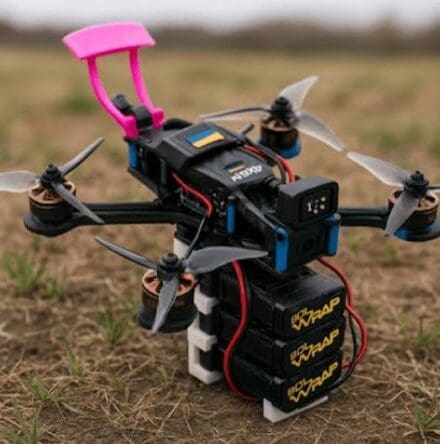
Wrap’s submission, Project Merlin-1KC, introduces our patent pending modular, platform-agnostic defeat solution designed to physically disable hostile Group 1 drones. The system deploys lightweight, tethered projectiles that entangle drone rotors, with the goal of neutralizing threats without reliance on electronic warfare or directed energy. We believe these capabilities are particularly valuable in contested environments where traditional countermeasures are less effective.

The Merlin-1KC system is engineered for rapid integration across multiple platforms, including unmanned aerial and ground vehicles, turrets, vehicle mounts, and soldier-worn launchers. Demonstrations have shown cost-effective multi-shot capabilities, enabling multi-shot ratios of up to 6:1 against low-cost hostile drones. Supported by an 85% U.S.-based supply chain today with a desirable DOD goal of 100% Made-In-USA roadmap, Wrap’s current production capacity can deliver up to 18,000–20,000 units, with a surge potential to 75,000 units monthly.

“We believe our MERLIN system represents a breakthrough in C-UAS offensive and defensive battlefield capacity,” said President and Chief Operating Officer of Wrap, Jared Novick. “It is designed to flip the cost curve by providing the Army and allied forces with a sustainable and scalable solution against the growing threat of unmanned systems. We believe our entry in the xTechCounter Strike aligns with our long-term strategy to expand Wrap’s technology portfolio beyond law enforcement, potentially creating new opportunities in defense while leveraging our proven cartridge manufacturing expertise.”

Key Highlights of Project Merlin-1KC:

Scalable, Low-Cost Defense: With an anticipated retail cost of less than $60 per shot, 1KC sets a roadmap to reverse the current cost imbalance of drone warfare.

Proven Manufacturing Capacity – Backed by Wrap’s track record of producing over 150,000 BolaWrap® cartridges worldwide.

Flexible Deployment – MERLIN system integrates across drones, vehicles, turrets, and soldier-worn systems with a simple plug-and-play architecture.

Rapid Scalability – Surge potential of up to 75,000 monthly units within 90 days of award.

Operational Effectiveness – Projected multi-kill capability, providing 6:1 or greater effects ratios in testing.

Participation in the xTechCounter Strike competition underscores Wrap’s broader vision to support domestic and international defense markets while securing R&D funding partnerships and programs. By adapting our cassette-based technology to counter-UAS applications, we believe Wrap is uniquely positioned to deliver innovative and mission-ready solutions for today’s contested environments.

“We intend for this submission to be the first step in extending Wrap’s proven technology ecosystem into defense,” added Novick. “Our goal is to provide the Army with a reliable, scalable counter-UAS solution while continuing to drive long-term value for our shareholders.”

RTX’s Collins Aerospace Awarded NATO Contract for Electromagnetic Warfare Command and Control System

Thursday, September 18th, 2025

Software solution to provide common operating picture of electronic warfare threats

ARLINGTON, Va., Sept. 16, 2025 — Collins Aerospace, an RTX (NYSE: RTX) business, has been awarded a contract by the NATO Communications and Information Agency (NCIA) to provide its Electronic Warfare Planning and Battle Management (EWPBM) solution to NATO. This integrated software tool is designed to plan, direct, coordinate, synchronize, and assess electromagnetic warfare activities.

The EWPBM solution will deliver a Recognized Electromagnetic Picture, combining data from operations, intelligence systems, and other sources, as well as an Electronic Order of Battle, detailing the location and function of electronic devices. This comprehensive overview will enhance the understanding of both friendly and enemy electromagnetic warfare capabilities.

“We’re equipping commanders with a critical tool to visualize electronic warfare threats and automate the use of jammers and sensors,” said Ryan Bunge, vice president and general manager for Command, Control, Communications, Computers, Intelligence & Autonomy at Collins Aerospace. “This system will enhance joint operations’ effectiveness, interoperability, scalability, and resilience.”

EWPBM advances traditional battle management by incorporating situational awareness of the electromagnetic environment, aiding commanders in navigating complex multi-domain warfare. The software solution creates an electromagnetic operating picture, manages electronic warfare tactics, processes data for action plans, and monitors sensors and jammers.

Collins Aerospace will collaborate closely with NATO to rigorously test, validate, and integrate the system, significantly boosting NATO’s electromagnetic warfare capabilities and contributing to the collective defense and security of member nations.

US Army OCIE Items with No Economic Value to be Removed from Records

Thursday, September 18th, 2025

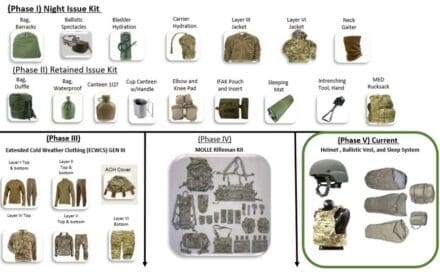
Earlier this year, the US Army released ALARACT 056/2025, providing updated guidance on the disposition and disposal of Organizational Clothing and Individual Equipment (OCIE) items determined to have no economic value (NEV).

ALARACT 056/2025 outlines the process for removing legacy and end-of-life (EOL) OCIE items from Soldier OCIE records.

Central Issue Facilities (CIF) will remove listed NEV OCIE items from Soldier records during appointments. A new system, Soldier Equipment and Asset Management (SEAM), will automate this process in the future.

Soldiers will be authorized to dispose of certain items and other items will be collected for demilitarization. Patches/insignia will need to be removed, and IR tabs destroyed before disposal.

HQDA, DCS, G-4 will be updating AR 700-84 and CTA 50-900 to reflect EOL processes.

The attached photo depicts OCIE items retained by the Soldier. Helmets, Armor and Sleep Systems will be turned in to CIF upon PCS/ETS.

AV Expands Tomahawk Line with Future-Ready Grip TA5 Tactical Controller

Thursday, September 18th, 2025

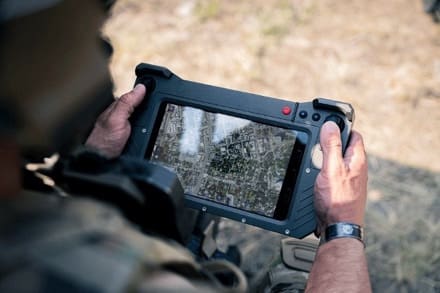
The Grip TA5 was selected as the Dismounted Common Controller (DCC) as part of the $5.1M U.S. Army RCCTO Human-Machine Integrated Formations (HMIF) rapid prototyping project.

ARLINGTON, Va., [September 12, 2025] — AeroVironment, Inc. (“AV”) (NASDAQ: AVAV), a global leader in all-domain defense technologies, today unveiled its Tomahawk Grip TA5. The Grip TA5 is an 8-inch tactical controller designed to deliver enhanced situational awareness, precision strike capabilities, and seamless scalability across mission sets for today’s modern warfighter.

Built to integrate with the military-grade Samsung Tab Active5 Tactical Edition, the Grip TA5 turns off-the-shelf tablets into mobile command centers. It’s modular architecture and multi-platform compatibility offers operators command and control of multiple robotic assets in real-time – enhancing mission adaptability and response speed. The system enables intelligence, surveillance and reconnaissance (ISR) missions, target acquisition and tracking, situational command and control (C2), and fire control functions–enabling direct operation of lethal payloads, loitering munitions, and direct-fire weapons. At just 2.5 pounds, the compact, rugged controller meets MIL-STD-810 and adds enhanced software security, advanced networking, and hot-swapping flexibility—positioning AV as the permanent control layer regardless of the underlying device model.

“Our ability to deliver effective, next-generation solutions at mission scale and speed positions AV as a top developer and manufacturer in the defense industry,” said Trace Stevenson, President of Autonomous Systems for AV. “The Grip TA5 is more than a controller. It’s a force multiplier that brings speed, interoperability, and future-ready capabilities to the modern warfighter.”

In May, AV announced that its Tomahawk Ground Control Station (GCS) product line was awarded a $5.1 million contract by the U.S. Army Rapid Capabilities and Critical Technologies Office (RCCTO) in support of the Human-Machine Integrated Formations (HMIF) rapid prototyping project. The Grip TA5 was officially selected as the Dismounted Common Controller (DCC) to advance human-machine teaming and strengthen battlefield command and control.

AV previously developed and delivered multiple iterations of prototypes based on the previous Samsung Tab Active3 as part of the United States Marine Corps’ Force Design 2030. The Grip TA5 leverages lessons learned from this work, adding the interoperability and multi-mission capabilities needed to meet requirements for the U.S. Army’s Low Altitude Stalking and Strike Ordinance (LASSO), Long Range Reconnaissance (LRR), and Launched Effects (LE) programs while still maintaining operability with USMC programs, like Marine Air-Ground Tablet (MAGTAB).

The Grip TA5 expands AV’s Tomahawk Ground Control Station product line, which also includes the Grip S20 designed around the Samsung Galaxy S20 Tactical Edition smart phone. Responding to operator feedback for larger screen sizes, the Grip TA5 offers a ruggedized and streamlined, cost-effective solution with an expandable port for dual 8-inch displays to boost visibility and efficiency. The controller will begin shipping as a standard catalog configuration or as an alternative option with AV platforms starting in late 2025.

“Developed for warfighters from warfighter feedback, the Grip TA5 highlights our focus on rapidly turning feedback into real, fielded innovation,” said John Bolen, AV’s Tomahawk GCS Product Line Manager. “By expanding screen size, enhancing networking, and offering scalability across clients, vehicles, and operations, we are giving soldiers a tactical edge on the battlefield.”

Reptilia Launches the Reptilia Handguard: Setting a New Standard in Handguard Design

Thursday, September 18th, 2025

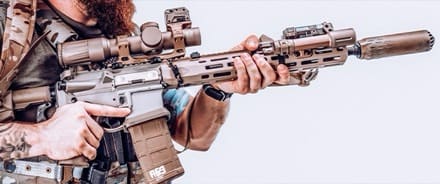
HILLSBOROUGH, NC – September 12, 2025 – Reptilia, a leading manufacturer of precision firearm accessories, is proud to announce the official release of the Reptilia Handguard—a purpose-built solution engineered for professional shooters, law enforcement, and military applications.

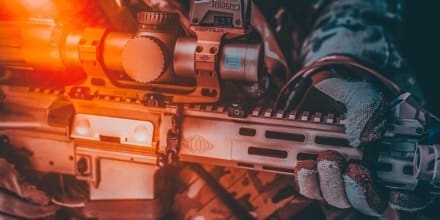
CNC-machined from 6061-T6 aluminum and finished with MIL-STD Type III hardcoat anodizing, the Reptilia Handguard raises the bar for strength, rigidity, and performance. Its proprietary barrel nut and turnbuckle system delivers a rock-solid lockup and consistent alignment under the harshest conditions. Whether zeroing a laser or running sustained fire, users can count on this system for uncompromising stability—no flex, no shift.

“Every aspect of the Reptilia Handguard is designed with intent,” said The Reptilia Team. “We set out to create a handguard that delivers absolute stability while maintaining a slim, lightweight profile for serious end users.”

Unlike traditional wedge or clamp-style systems, this innovative design minimizes bulk without sacrificing durability. The low-profile profile, full-length M-LOK slots, and anti-rotation tabs ensure a secure, long-term fit, making it ideal for mission-critical accessories such as lasers, thermals, and optics.

The Reptilia Handguard is available in four lengths – 9.4″, 10.5″, 13″, and 15″ – and comes in Black or Flat Dark Earth (FDE) finishes, offering users flexibility to build the perfect setup for their AR-platform rifle.

The handguard is complemented by the Barrel Nut & Turnbuckle Wrench, a dedicated installation tool machined from 304 stainless steel and laser-engraved with torque specifications. This tool streamlines the installation process and ensures every build meets precise, repeatable standards.

Key Specifications:

  • Material: 6061-T6 Aluminum
  • Finish: MIL-STD Type III Hardcoat Anodizing
  • Lengths: 9.4″, 10.5″, 13″, 15″
  • Colors: Black, Flat Dark Earth (FDE)
  • Barrel Nut Torque: 50 ft-lbs
  • Turnbuckle Nut Torque: Hand-tight with red thread locker
  • Tool: 1-1/4″ drive (barrel nut), 1/4″ drive (turnbuckle), 3/8″ socket drive (torque wrench)

The Reptilia Handguard is available now at reptiliacorp.com.


M230 McDonnell Douglas Chain Gun in the Heckler & Koch Stand at DSEI?

Thursday, September 18th, 2025

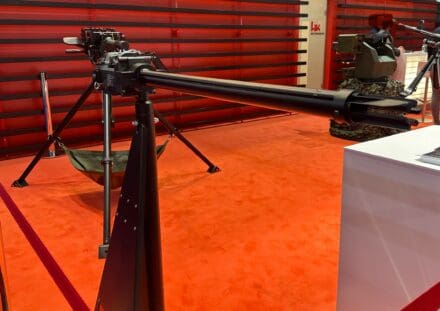
During last week’s DSEI in London I had the opportunity to check out a few oddities which show up due to sovereign armaments agreements, such as this M230 McDonnell Douglas Chain Gun which was in the Heckler & Koch stand.

The M230 is used in the AgustaWestland AH1 Apache (AH-64D in the US and now AH-64E in UK service) which is in UK service. As you can see from the receiver markings below, it was manufactured in co-operation with McDonnell Douglas Helicopter Co. by Royal Ordnance PLC. Royal Ordnance in turn, is owned by Heckler & Koch.

Why this circuitous process? Because many nations, including the UK require their arms be supplied and maintained by sovereign suppliers, or as we would say in the US, domestic suppliers. This requires original manufacturers to work closely with national firms and in some cases license their designs.

This situation also led me to see a GPMG FN Herstal MAG 58 variant in the H&K booth along with others, including this beauty which is currently manufactured in the US by Northrop Grumman Innovation Systems.

Experimenting with Technology: Soldiers and Innovators Strengthen National Defense

Thursday, September 18th, 2025

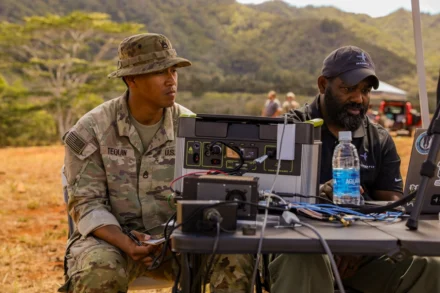
Schofield Barracks, HAWAII – Soldiers from the 25th Infantry Division are testing innovative electromagnetic support systems to strengthen the Army’s ability to adapt and operate in the Pacific Theater. Partnering with industry experts through the Army’s X-Tech program, Tropic Lightning Soldiers are experimenting with emerging technology that promises to enhance battlefield awareness, reduce risks to troops, and advance multi-domain operations.

Staff Sgt. Clark J. Tequin, an electromagnetic warfare specialist assigned to the Multifunctional Reconnaissance Company, 2nd Brigade, 25th Infantry Division, emphasized the importance of this technology for future operations.

“The Army functions in multi-domain operations, and this is part of the cyberspace and electromagnetic spectrum,” Tequin said. “This allows us to fight in multiple domains throughout the battlefield. As we move forward in the Pacific, we need these types of technologies to help troops understand and have better situational awareness of the overall battlefield.”

This focus on adaptability demonstrates how the division is preparing for the challenges of modern warfare in a dynamic environment.

The tested system enables Soldiers to detect enemy activity without direct contact—giving commanders an edge in planning and protecting their forces.

“Systems like this allow us to create a baseline on the spectrum and understand what type of signatures might be out on the battlefield—what our enemies are using and how we can exploit those signatures,” Tequin explained. “For example, if our opponents use radios, we might be able to detect those specific radios and exploit their communication and other equipment.”

By developing the ability to see, sense and exploit adversary activity, the division strengthens its Lethality across multiple domains.

Working with industry partners is a key element of the division’s modernization efforts.

“It’s a good way forward as 25th Infantry Division continues to experiment with different technologies and really push the envelope on adapting to modern warfare,” Tequin said. “This is part of that multi-domain operation.”

This partnership reflects how we connect, communicate, and integrate partners as members of one team, showcasing how Soldiers and civilians can collaborate to develop solutions that directly enhance the warfighter.

That collaboration highlighted by Jessica Stillman, an X-Tech program manager, who explained the value of putting technology directly into Soldiers’ hands during first stages of development.

“It means that we are getting technology into the hands of the Soldiers early on and giving companies an opportunity to get feedback on the technology they’re developing,” Stillman said. “That way, they can iterate on it and ensure that it’s ready for field testing and ready for when it’s needed.”

Stillman noted that events like this bring both Soldiers and technical experts together, providing balanced insight.

“It brings together not only Soldiers, but also the technologists to really look at how the technology performs,” Stillman said. “It’s valuable to see what it looks like when the Soldier is using it in the field, and what it looks like from a technical or scientific perspective to ensure that the technology is actually going to work.”

Stillman’s comments reinforce the division’s value in partnerships —bridging industry and military expertise to accelerate innovation.

Sgt. Brock A. Gossling added that adaptability remains at the core of these efforts.

“Testing capabilities like this reflect that mindset because systems like these have to be adaptable and go after whatever the 25th Infantry Division has in front of them,” Gossling said. “We have to be able to use these systems and go after any targets in any area.”

Beyond adaptability, one of the fundamentals focuses on protecting Soldiers while accomplishing the mission. Gossling explained how electronic support systems enhance safety.

“Electronic support systems like these are important because they provide commanders with early warning and threat detection, so they have a better understanding of their awareness,” he said. “It also allows commanders to understand their income levels and limit the signature they output.”

This speaks directly to managing risk, ensuring that commanders can make informed decisions while minimizing risks to their troops, people, and mission.

Stillman emphasized that this is just the beginning of the Army’s partnership with X-Tech.

“This is the first experimentation that X-Tech is doing—not the last,” she said. “We have several more coming up, and Army senior leaders continue to ask how we can rapidly identify technology and get it into the hands of Soldiers. That is exactly what we will be doing in the months ahead.”

Tropic Lightning Soldiers are testing new electromagnetic support systems to sharpen Lightning Discipline and keep the division lethal and ready. By working with industry partners, leaders show Initiative and Agility to adapt faster than adversaries in the Pacific. And by connecting Soldiers with civilian experts, the division Strengthens Soldiers and Community, ensuring trust and readiness remain at the core.

PDW Awarded $20 Million Army Contract for ‘Transformation in Contact’ Initiative

Wednesday, September 17th, 2025

PDW to supply the U.S. Army with C100 quadcopters to demonstrate the system’s multi-mission capabilities with various payloads

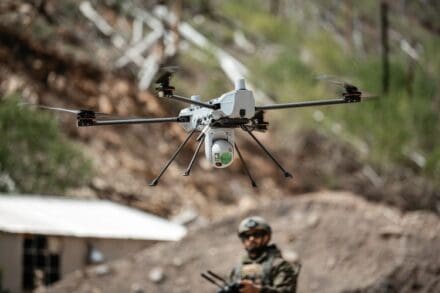
HUNTSVILLE, Ala., Sept. 16, 2025 — As the Army continues to invest in agile and emergent UAS cutting edge technologies to accelerate Transformation in Contact initiatives, PDW has responded with time sensitive delivery, support and escalating capabilities. “In order to maintain a competitive edge in the current unpredictable state of war, the U.S. must embrace technological advancements as they are introduced to adapt faster than our opponents are,” stated PDW co-founder Ryan Gury. “Right now, the advancement that can truly transform the battlefield is small, multi-mission drones like the C100, and PDW is ready to rapidly deliver these critical assets at scale.”

PDW received a $20.9 million award from the U.S. Army to supply C100 UAS and Multi-Mission Payloads (MMP) in support of the Army’s ‘Transformation in Contact’ (TiC) initiative. This is the third C100 contract for the TiC initiative, part of the Army’s Company Direct Requirement for Medium Range Reconnaissance (MRR). The goal of TiC is to rapidly move cutting-edge commercial systems and products from concept to production through real-time fielding and evaluation. The C100 was fielded to seven Army PM UAS units under the first two contracts. This next iteration of C100 systems and MMPs will support units within both 18th Airborne Corps and U.S. Army Special Operations Command (USASOC).

“Selection of PDW for another round of TiC support is a testament to the reliability, affordability and modularity of the C100,” said PDW CEO and co-founder Ryan Gury. “At a lower cost per system than comparable platforms, PDW can supply the Army with increased operational capabilities at greater reach with a true multi-mission platform.”

The MMP program delivers unprecedented organic edge capability to ground force commanders through the integration of three purpose-built payloads onto the C100. These modular integrations enable GPS-denied operation, extend peer-to-peer and BLOS communications, and detect and attack adversary signals of interest. All three payloads have demonstrated operational effectiveness in theater and now significantly elevate the C100’s mission impact—enhancing situational awareness, electronic warfare capabilities, and freedom of maneuver for the modern battlefield.

“While rapid response is critical, it is equally essential to respond equipped with the appropriate support capability,” continued Gury. “This is why the C100 is the ultimate force multiplier; It can provide varying levels of support to operators in the field with immediacy through employment of a variety of payloads.”

Under the $15 million TiC 2.0 contract PDW received in Dec. 2024, C100s were deployed across multiple high-profile theaters, including Indo-Pacific Command (INDOPACOM), European Command (EUCOM), and Central Command (CENTCOM), to enhance the capabilities of U.S. forces in critical regions across the globe. This new contract will build upon previous performance by further demonstrating the bounds and functionality of the C100 as a multi-mission platform.