GORE-TEX WINDSTOPPER

Archive for December, 2025

The Army’s C2 Transformation Effort Surges Across the Pacific

Saturday, December 27th, 2025

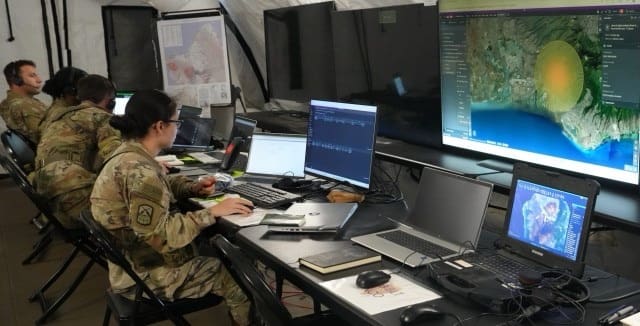
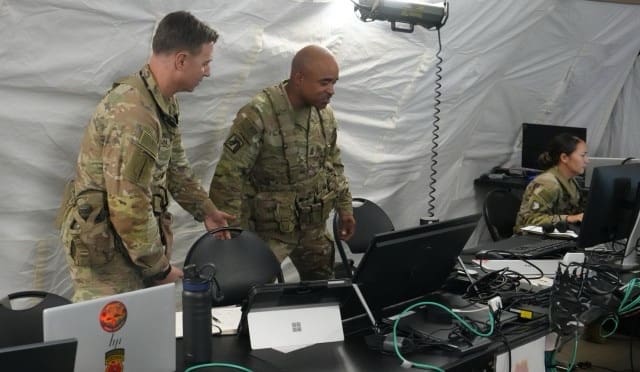
SCHOFIELD BARRACKS, Hawaii — A new theater, a new set of industry partners and a new approach are on deck for the next series of operational exercises helping the Army to prototype its transformational Next Generation Command and Control, or NGC2.

The 25th Infantry “Lightning” Division, recently coming off its Joint Pacific Multinational Readiness Center rotation, is the next formation preparing to evaluate and shape NGC2 to scale it for the broader Army.

NGC2 replaces legacy systems and technologies siloed by warfighting function and instead leverages rapid progress in commercial technology to introduce an integrated “full stack” capability ecosystem. At the top of the stack, applications ingest and share C2 data across all the warfighting functions for the commander’s decision overmatch — while the bottom layers provide transport and infrastructure capabilities to move data around the battlefield.

This fundamentally new approach is rapidly progressing through iterative, Soldier-driven experimentation supported by the 4th Infantry Division, and now the 25ID will also contribute its expertise to the effort, ahead of Army decisions on fielding NGC2 capabilities across the force.
The unit’s upcoming string of exercises, called “Lightning Surge,” begins in January 2026, and will be conducted in tandem with the 4 ID “Ivy” Division’s Ivy Sting exercise series for NGC2 prototype experimentation, which kicked off in September 2025 at Fort Carson, Colorado.

“Instrumental to sustaining peace through strength is our Next Generation Command and Control, complementing the 25th Infantry Division’s continuous transformation,” said Maj. Gen. Jay Bartholomees, commanding general, 25th ID. “We’re learning from 4th Infantry Division’s Ivy Sting series and look forward to quickly implementing their best practices and applications into our Lightning Surge events.”

At the heart of the NGC2 prototyping effort are multifaceted teams-of-teams that include numerous industry partners, working with the government through non-traditional acquisition pathways. This construct — designed to reduce the time between requirements, validation and capability delivery as part of the Army’s acquisition reform — puts Army transformation organizations and industry partners onsite with 4ID and 25ID Soldiers to rapidly prioritize capabilities and iteratively address challenges. This prototyping stage is informing the Army not only on NGC2 technology and operational use, but also on the construct for government-industry partnerships to maintain a competitive ecosystem that can continuously evolve capabilities.

Unlike the 4ID, which is prototyping NGC2’s full stack of capabilities, the 25ID will predominantly focus experimentation on the recently fielded apps and data layer software.
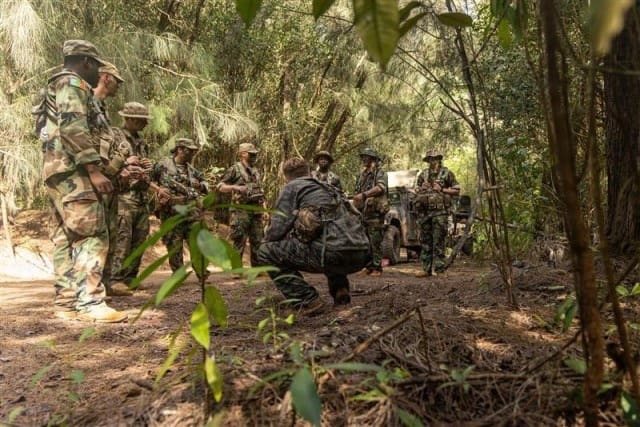
“The 25th Infantry Division recently received the Army’s more modern C2 Fix infrastructure and network transport capabilities, so we can focus our integration and Soldier feedback on NGC2 data and apps capabilities, contributed by a different industry team,” said Brig. Gen. Jack “Shane” Taylor, capability program executive for Command, Control, Communications, and Network. “Since no two divisions fight alike, it’s critical for the Army to diversify its NGC2 prototype efforts.”

To ensure best-of-breed capabilities, the Army intends to continue to competitively onboard vendors and teams for current and future NGC2 divisions, Taylor said.

The 25ID Lightning Surge exercises will first address data layer integration, followed by exercises focused on warfighting apps. Each exercise will address different pillars of capability, prioritized by the division’s commanding general, which are critical to its unique geography and area of operations.

“We’re setting conditions for Lightning Surge so we can start doing those data connections we know we’re going to need,” said Lt. Col. Adam Brinkman, who serves as both the 25ID’s Division’s G6 and Commander for its newly reactivated Signal Battalion. “This will be a great framework to organize, think around and apply to the vast area we have to fight in.”

Lightning Surge experimentation will enable the division to utilize its common operating picture connections and introduce NGC2 capabilities to improve data integration, said Maj. Rebecca Borrebach, 25ID G6 data officer, who is working closely with the industry team prototyping NGC2 for 25ID.

“We believe NGC2 will improve on our current data visualization to correlate data from multiple sources,” Borrebach said. “It’s critical to get the data right first.”
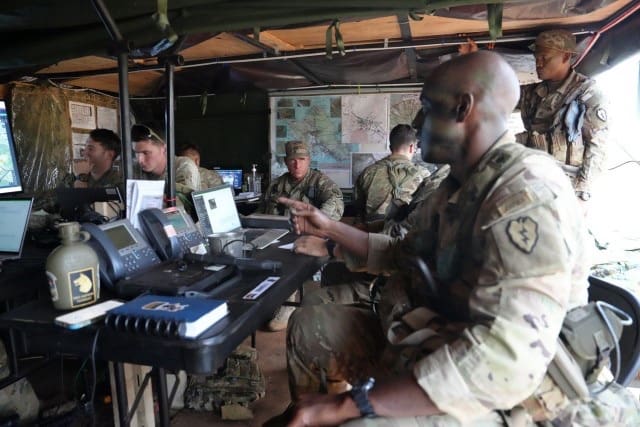
The division — a High Mobility Artillery Rocket System unit — will also focus on integrating data to enhance the fires digital kill chain. The fires commander’s access to data and artificial intelligence capabilities are critical to establishing an effective kill chain, which will increase lethality from initial sensor detection to final sensor observation, and include data on battle damage and effectiveness, Brinkman said. Future Lighting Surge events will also include AI-enabled airspace deconfliction capabilities, utilizing NGC2 to reduce the cognitive burden on operators.

“As we bring on small Unmanned Aerial Systems and understand swarms and drones, we need to understand how to create an accurate air picture for the division,” Brinkman said.

The Lightning Surge series will expand beyond data to software apps integration, with focus on logistics, AI and culminating in joint/multinational interoperability.

“If you look at the grand scheme, we’ve been fielded a lot of [capabilities],” Brinkman said, noting the Army’s increased speed to field is both necessary and desired. “As we increase our survivability, that’s really what it comes down to at the end of the day, to fight and win our nation’s wars.”

By Kathryn Bailey, CPE C3N Public Affairs Directorate

Xenith Solutions Secures Position on Missile Defense Agency SHIELD Contract, Advancing Role in National Missile Defense Modernization

Friday, December 26th, 2025

LEESBURG, Va., Dec. 22, 2025 — Xenith Solutions, a mission-driven government contractor supporting national defense and homeland security priorities, today announced it has been selected as an awardee under the Missile Defense Agency’s (MDA) Scalable Homeland Innovative Enterprise Layered Defense (SHIELD) multiple-award contract vehicle.

The SHIELD contract establishes a long-term acquisition framework to accelerate the development, integration, and sustainment of advanced layered homeland missile defense capabilities. Through this vehicle, Xenith Solutions will compete for task orders supporting research and development, systems engineering, prototyping, experimentation, modernization, and sustainment efforts, including the application of artificial intelligence and machine learning-enabled technologies where appropriate.

SHIELD supports the administration’s Golden Dome missile defense initiative and is structured to enable rapid innovation and scalable execution across geographically distributed mission environments. Work performed under the contract may occur nationwide, with an ordering period that could extend through December 2035 if all options are exercised.

“Being selected for the SHIELD contract vehicle meaningfully expands Xenith’s role in the missile defense ecosystem and accelerates our progression into larger, more complex mission environments,” said Lee Shabe, Chief Executive Officer of Xenith Solutions. “This award positions Xenith to compete, scale, and deliver across high-impact defense programs where speed, integration, and mission outcomes matter most. We see SHIELD as a platform for sustained growth and long-term partnership with the Missile Defense Agency.”

“SHIELD represents the type of opportunity which supports Xenith’s evolution into a recognized mid-tier defense partner where deep mission understanding, technical rigor, and speed of execution matter,” stated Mark Coleman, Chief Growth Officer at Xenith Solutions. “Our growth strategy is focused on delivering differentiated, cutting-edge solutions that solve our customers’ most complex challenges, not just responding to requirements. This contract vehicle positions Xenith to scale thoughtfully while continuing to lead with innovation and mission outcomes.”

Participation in SHIELD aligns with Xenith’s broader growth strategy to deepen its presence across the defense market while scaling delivery capabilities in enterprise IT, cybersecurity, data engineering, and systems integration. The award further reinforces the company’s ability to support mission owners with agile, resilient solutions designed to meet evolving threat landscapes and operational demands.

www.xenithsolutions.com

DroneShield Secures $6.2M Asia Pacific Contract

Friday, December 26th, 2025


Image: DroneShield DroneSentry-X Mk2 as part of NATO Exercise Bold Machina 25 in the Netherlands

  • DroneShield has received a $6.2 million contract for an Asia Pacific military end-customer.
  • Delivery and cash payment is expected in 2026.

DroneShield Limited (ASX:DRO) (DroneShield of the Company) is pleased to announce it has received a standalone contract for $6.2 million from an in-country reseller for delivery to a military end-customer in an Asia Pacific country. The reseller is a wholly-owned subsidiary of a multi-billion dollar, global, publicly listed customer that is contractually required to distribute solutions to a major Asia Pacific military government department. The solutions include selected 3rd party hardware, interoperable with DroneShield’s command-and-control software platform, DroneSentry-C2. DroneShield expects to complete the delivery and receive payment in 2026.

Cutting-edge Drone Defence Technology: Italy Receives Its First Skynex Air Defence System from Rheinmetall

Friday, December 26th, 2025

Handover to the Italian Army at the Sabaudia base has been completed

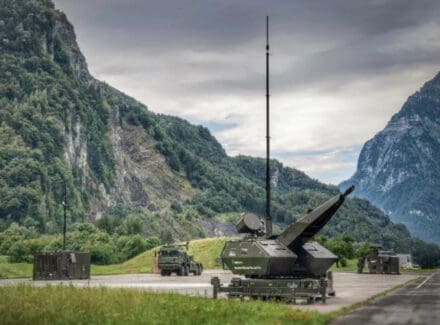
The Italian Army has received its first Skynex air defence system from Rheinmetall. On 18 December 2025, the first Skynex battery was handed over to the Italian Army at the Comando Artiglieria Controaeri (Air Defence Artillery Command) in Sabaudia. This gives the Italian Army the capability to defend against air attacks at close and very close range. In particular, it will enable effective countermeasures against drones, which – as seen in the war in Ukraine – are playing an increasingly important role in current and future conflicts and are bringing warfare into cities.

It was only in January 2025 that Rheinmetall Italia S.p.A., Rome, received the order to deliver the first system with a total value of €73 million. The contract also includes an option for three additional systems.

Italy is the first NATO member state to introduce Rheinmetall’s Skynex technology Skynex technology including the Revolver Gun Mk3 35mm. The order is thus an important corner stone in Rheinmetall’s strategy of establishing a new standard in the field of cannon-based air defence for international armed forces. NATO member Romania also recently opted for Skynex in combination with another type of gun already in service there (GDF-009 twin guns). Skynex air defence systems are already proving their quality to the Ukrainian armed forces in the harsh conditions of war, protecting people and property from airborne threats.

The Skynex Air Defence System

Skynex is a cannon-based air defence system and is therefore especially suitable for close-range protection where guided weapons cannot operate effectively. The 35mm Revolver Gun Mk3 cannons have a cadence of 1,000 rounds per minute and a range of up to 4 kilometres. The system uses programmable Ahead ammunition that is resistant to electronic countermeasures and ensures precise target engagement. In terms of cost-effectiveness, the ammunition is significantly more efficient than comparable missile-based systems.


Operational successes in the Ukraine underline the efficiency with which the cannon-based air defence system can defend against air targets – especially cruise missiles and drones.

Skynex is based on the concept of separating the airspace surveillance from the effectors. Italy has opted for the configuration with the XTAR 3D radar from Rheinmetall, which can monitor the airspace in a radius of up to 50 km.

Thanks to its existing modularity, the required resources can be connected to the command-and-control network depending on the mission. Skynex offers great autonomy in terms of sensors and effectors, as to integrating a wide range of modern air defence systems into the system. The only requirement is the presence of a dedicated tracking unit.

In addition to individual sensors and effectors, existing air defence systems such as Rheinmetall’s Skyshield and Skyguard families can also be integrated into the new architecture as firing units. The detected air situation is displayed in a remote command-and-control centre on a map with the sensors and effectors positioned in the field, thus easing a target assignment to the air defence assets connected to the system. 

Mehler Systems’ 2025 Year in Review

Friday, December 26th, 2025

FULDA, GERMANY (22.12.2025)

As 2025 draws to a close, Mehler Systems reflects on a year defined by structural strengthening, continued innovation, and the delivery of large-scale protection programmes across global markets. Throughout the year, the group focused on expanding its capabilities, increasing production capacity, and reinforcing long-term partnerships with defence and security organisations worldwide.

During the year, Mehler Systems expanded its technological base through the acquisition of a majority stake in Stilmotor Extra Protection Srl (SXP), adding specialised expertise in body armour and riot protection. The group now comprises eight companies with more than 1,600 employees across Europe.

Production capacity was further increased through infrastructure investments, including a new production hall in Zrenjanin and upgrades to sewing operations. These investments supported higher output while maintaining consistent quality standards across product categories. Testing and validation remained a core focus, with extensive internal ballistic testing and certification activities conducted in cooperation with specialised laboratories.

Product development continued at high intensity, resulting in the introduction of hundreds of new solutions across ballistic protection, load-bearing systems, and tactical clothing. A key milestone was reached as more than one million Mehler Systems protective vest systems entered operational use worldwide, reflecting long-term programme continuity.

Several major programmes underscored the group’s ability to deliver at scale. The MOBAST programme for the German Armed Forces was completed fully on time with zero rejected units, requiring rapid scaling of production capacity and close coordination across the group.

Alongside operational achievements, Mehler Systems invested in leadership development and talent, with key management appointments and continued workforce growth across the group. The company also maintained an active international presence through trade shows, partner engagement, and professional exchange.

Looking ahead, Mehler Systems remains focused on strengthening its foundations, advancing development, and delivering reliable protection solutions for defence and security professionals operating in demanding environments.

For further details, visit the Mehler Systems 2025 Yearly Review.

FirstSpear Friday Focus: Hooded Field Shirt V2 – ACM Base 150

Friday, December 26th, 2025

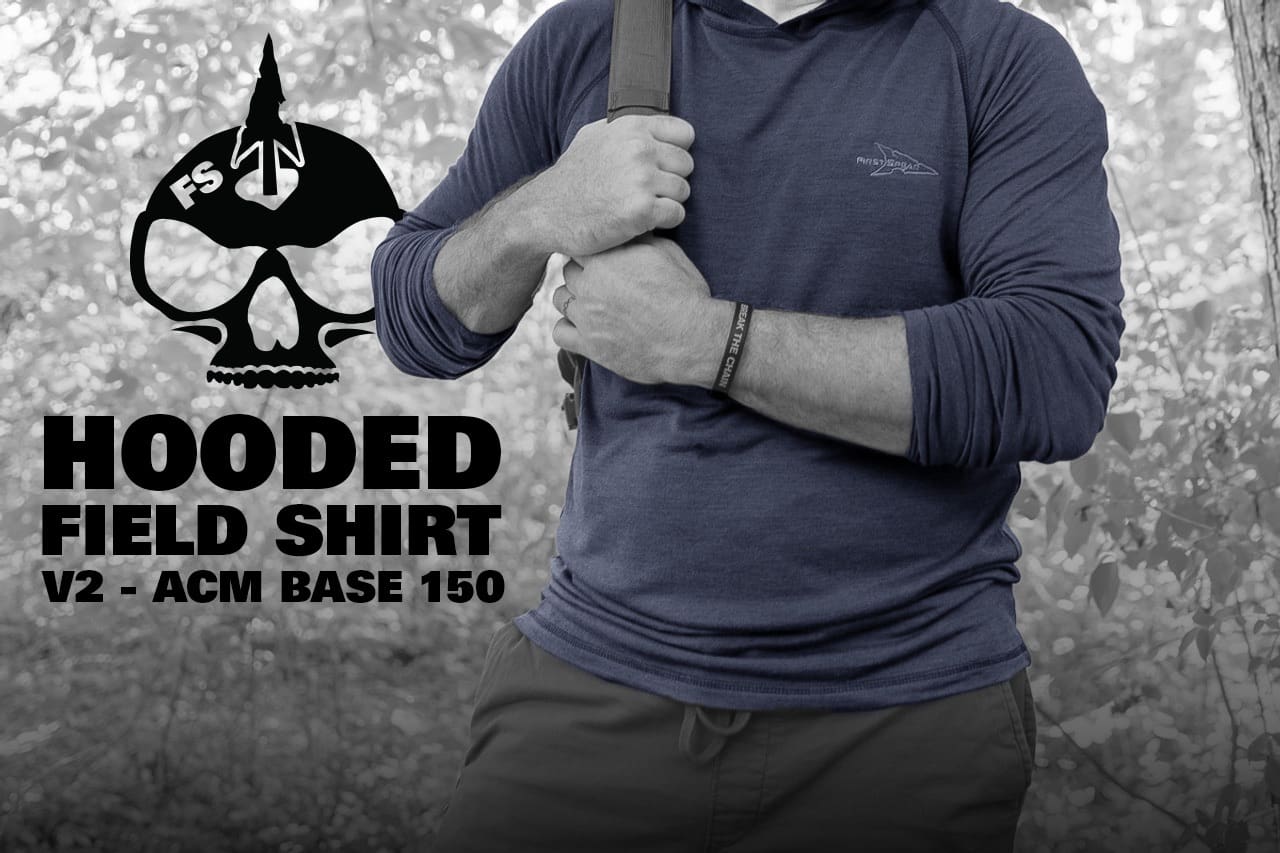
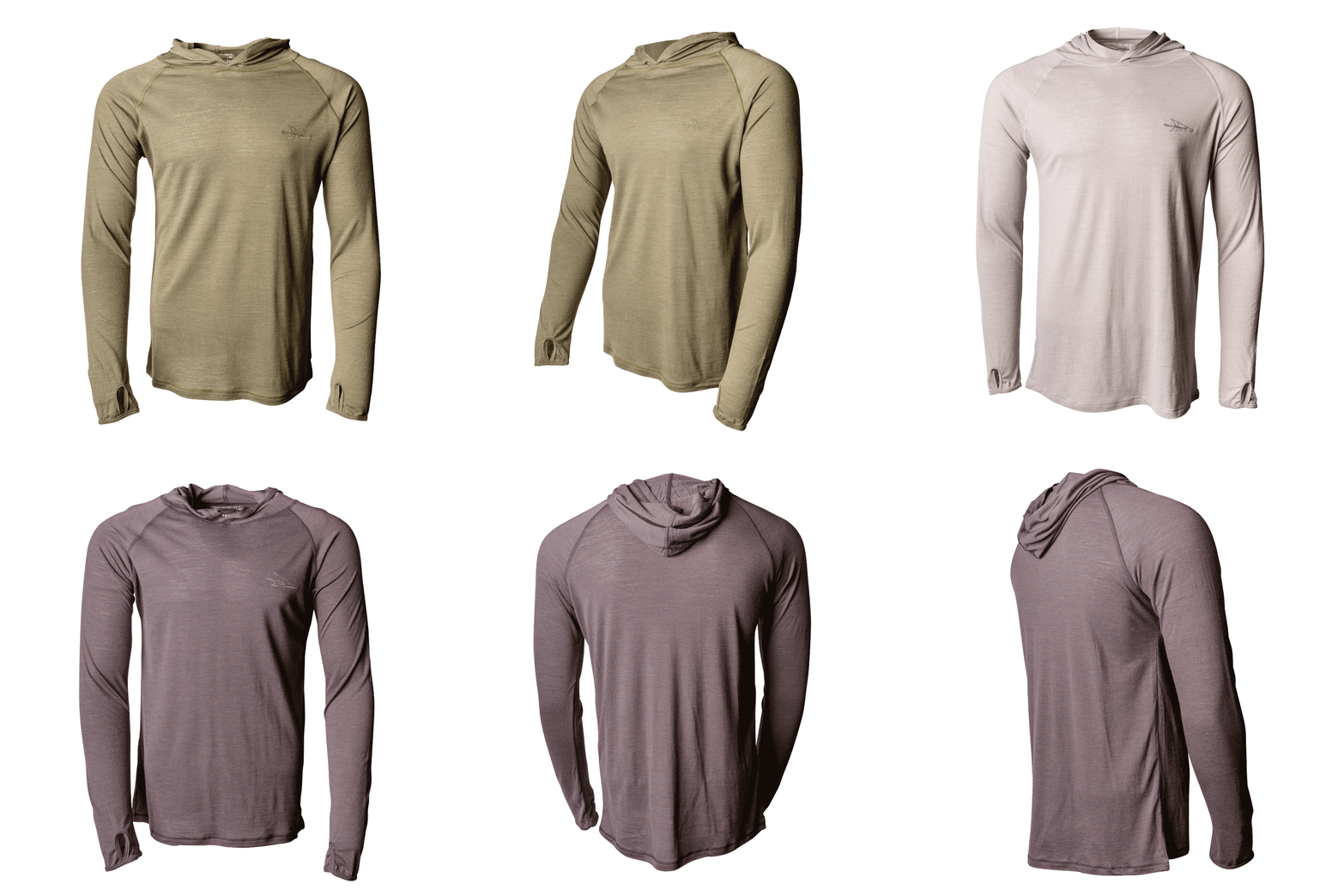
The FirstSpear HOODED FIELD SHIRT V2 – ACM™ BASE 150 is built for professionals who demand uncompromising performance. Made in the USA from American-sourced wool, this shirt delivers mission-ready reliability with no unnecessary frills. 

The 4.3oz ACM Base 150 fabric blends 55% Lenzing FR, 33% wool, and 12% nylon to provide a durable, lightweight layer that performs under pressure. American wool offers proven moisture-wicking and temperature-regulating properties suited for sustained operations.

This shirt excels across all climates, providing sun protection in hot environments and effective layering capability in cold or wet conditions. The fabric’s antimicrobial properties help manage odor during extended wear and long movements. A generous cut allows full range of motion whether worn as a base layer or as a standalone top. 

The oversized hood provides added coverage without interfering with helmets or gear. Low-profile cuffs minimize bulk and snag hazards. Integrated thumb holes keep sleeves locked in place during movement and weapons manipulation. Built to endure hard use, the ACM Base 150 fabric delivers increased durability over standard wool garments.

Every feature serves a purpose, supporting the operator in dynamic environments. The Hooded Field Shirt v2 is a no-nonsense layer designed for those who operate forward and expect their gear to perform without fail.

To request an estimate click image above or visit First-Spear.com/Request-For-Estimate. FirstSpear is the premier source for cutting-edge tactical gear for military, law enforcement and those who train.

For more information visit First-Spear.com.

Marines Visualize Electronic Signature with Electromagnetic Spectrum Signature (EMSS) called the All-domain Electromagnetic Radio Operator Trainer (AERO-T)

Friday, December 26th, 2025

MCTSSA, MCSWF, NPS Join Forces for AERO-T

CAMP PENDLETON, Calif. – The Marine Corps Software Factory (MCSWF) is creating a training tool to provide Marines the ability to visualize their Electromagnetic Spectrum Signature (EMSS) called the All-domain Electromagnetic Radio Operator Trainer (AERO-T) and are collaborating with Marine Corps Tactical Systems Support Activity (MCTSSA) to bring the solution to the Fleet Marine Force (FMF).

AERO-T began as the subject of Naval Postgraduate School (NPS) thesis work by Marine Corps Maj Will Oblak and Capt Niles Moffat. This research identified a need across the service for improved EMSS training at the tactical level. In addition, it identified a technological solution which detects the radio frequencies produced by Marines training in the field and uses simulated enemy electronic warfare assets to show Marines their EMSS use. It trains Marines how to operate and manage their EMSS within a live, virtual, constructive training environment (LVC-TE).


“Once we understood the nature of the EMSS environment, we could place synthetic enemy receivers across the landscape and show Marines how far their EMSS will travel in a given environment,” said GySgt Patrick Sherlund, MCSWF’s AERO-T product manager and lead software engineer. “All of this is done through a simple web interface that is easy for any Marine to understand. It’s a level of training that we have never been able to produce before this.”

Oblak started his NPS Thesis in the spring of 2024. His goal was to enhance EMSS training at the tactical level in the Marine Corps.

“The current method of training our Marines on their EMSS use involves specialized equipment, deploying at a tremendously expensive cost, that trains the leadership, but not always the front-line operator,” said Oblak. “We needed something that can teach Marines to treat their communication equipment with the same respect they treat their rifle.”

Over the last nine months MCSWF took the idea generated by this research and developed the system into an actual capability. They did this in-house with their uniformed developers, led by Sherlund.

MCTSSA has been an integral partner and stakeholder alongside MCSWF in the implementation of Oblak’s thesis. Over the past six years, MCTSSA’s Electromagnetic Spectrum Operations (EMSO) team has been providing EMSO support to the FMF as a service using exquisite commercial equipment. “MCTSSA’s unique experience has ideally positioned them to provide the subject matter expertise and direct connection to the fleet,” said Oblak. “These relationships highlight what is capable when academia, software development, and fleet expertise are fused together.”

MCTSSA’s EMSO team noted the challenges associated with this type of training and applied their expertise to help generate a combined solution with MCSWF.

“There isn’t an organic solution for Marine Corps units to view their EMSS that exists today,” said Mark Bawroski, MCTSSA Warfighter Support Officer. “AERO-T allows us to seek out EMS emissions in real time, with the software created by MCSWF, and show those emissions to units in training in a small and affordable form factor.”

To best integrate this information into tools that Marine units are currently utilizing, MCSWF developed AERO-T Android Tactical Assault Kit (ATAK)plugin and AERO-T Command Terminal that will allow units to view the data collected by the AERO-T systems.

“AERO-T gives our communications Marines something we’ve never had before,” said CWO2 Kevin Porter, strategic electromagnetic spectrum officer, assigned to 1st Marine Expeditionary Force (I MEF). “An equity that delivers blue force sensing and spectrum monitoring in a small, adaptable package. What makes this different is that it wasn’t handed to us by contractors. It was built at the MCSWF, by Marines who understand the fight, for Marines who will use it. That’s the real achievement.”

In addition to support from the MCSWF, MCTSSA has added another level of support to AERO-T.

“MCTSSA has been nothing but supportive of the vision since day one,” said Capt Matt Robinson, deputy director, MCSWF. “Their subject matter expertise has been instrumental in completing this project.”

AERO-T utilizes Commercial Off-The-Shelf (COTS) technology to scan the EMSS in real time and provide that information to training audience in easy-to-understand visual format.

“We developed software that utilizes inexpensive, adaptable COTS hardware in order to track the EMSS,” said Robinson. “The COTS hardware we pair with our AERO-T simulation software mimic the capabilities of our near-peer adversaries. We’re able to adapt, both our hardware and software, to see in a smaller scale, what our adversaries would see with their exquisite and exorbitantly expensive EW equipment.”

According to Robinson, we’re seeing front line troops in current conflicts located, targeted, and killed due to their EMS use.

“The size, scope, and abilities of our near-peer competitors is constantly changing,” said Oblak. “It’s important to recognize that future combat operations will occur in contested EMS environments and our units need to understand how to blend their EMS signatures into their environment.”

Story by Joseph Vincent 

Marine Corps Tactical Systems Support Activity

Blast from the Past – First Earth Battalion Manual

Thursday, December 25th, 2025

This article hails from November of 2009 and references a topic which was still poignant at the time. I’ve been fascinated by Jim Channon since I first learned about him decades ago and occasionally I reference the document mentioned below. I hope you go down the rabbit hole that is the human potential movement and see some of the promise I do and some of the danger.

For those of you who have read the book or seen the movie, “The Men Who Stare at Goats”, you will be familiar with the First Earth Battalion Manual. It’s real and so is its author LTC Jim Channon. There was a time when the Army was looking into a variety of ways to do things differently after our nation’s experience in Viet Nam.

First Earth Battalion Manual

The manual is really a blueprint for such thought and is worth reading if for no other reason than for its historical value or as an intellectual exercise. You can access it here.

As for the movie. Find it and watch it. It is entertaining but witness it with an open mind. Names have been changed and characters (I mean this both in the real and figurative sense) have been created in many cases from an amalgamation of those in the book. Additionally, the screen writers took a great deal of poetic license in the creation of the “New Earth Army Battalion”. It is a mishmash of intelligence organizations, the DoD remote viewing program, and the short-lived Trojan Warrior program conducted at Fort Devens. While I wouldn’t call it an anti-war movie as it is much more slapstick than poignant, it is in the vein of “Catch 22” or “M*A*S*H”, exposing the goodness of men in uniform surrounded by the insanity of war.