Phantom Lights

Archive for March, 2026

UK Ministry of Defense Selects TrellisWare Technologies – Leading Waveform Developer To Deliver More Than 5,000 Radios

Friday, March 20th, 2026

The project will see the British Army deploying TrellisWare’s tactical radios utilizing the company’s industry-best TSM® and optional Katana™ NB waveforms, providing the Army with the latest and most advanced, resilient, and interoperable MANET (Mobile Ad Hoc Networking) systems available.
San Diego, CA, March 10, 2026 – TrellisWare Technologies, Inc., the global leader in resilient waveforms and interoperable tactical radios, today announced that the company, through its UK partner Blacktree Technologies, has been selected by the UK Ministry of Defense (MoD) to provide TrellisWare tactical radios.

The extensive evaluation and specific selection of TrellisWare’s radios and waveforms aligns perfectly with the emerging MoD waveform strategy and further demonstrates its concerted approach to affordably, yet best, modernize UK defense networks at the pace and level of scrutiny demanded by current global threats.

The technological advantages of the TrellisWare product suite, coupled with the fact that the solutions are mission-proven and fully interoperable with other NATO nations’ communications systems, played a significant role in the decision for the MoD to work with TrellisWare.

“We are honored to work with the Ministry of Defense and British Army to fortify their communications infrastructure and help ensure mission success going forward,” says Metin Bayram, CEO of TrellisWare Technologies.  “The strategic utilization of TrellisWare waveforms will provide the resiliency and extended coverage needed to maintain clear and consistent communications across the contested and congested spectrum environments they will surely encounter on the battlefields of today andtomorrow.”

The TrellisWare systems deliver voice, data and position location information via unique Barrage™ Relay Networking, providing the ability to scale to many hundreds of nodes in a single Radio Frequency channel, allowing extremely efficient use of very limited spectrum.  This has the potential to give many more individual users the benefit of access to battlefield situational services versus other solutions offered in the tactical communications market today.

New from Hill People – The Traveler Duffel

Friday, March 20th, 2026

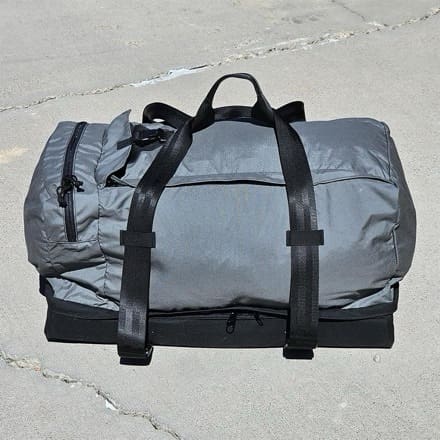
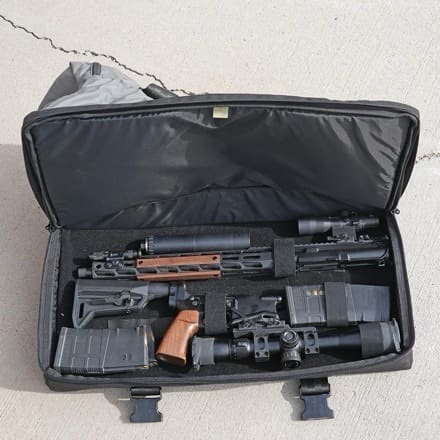
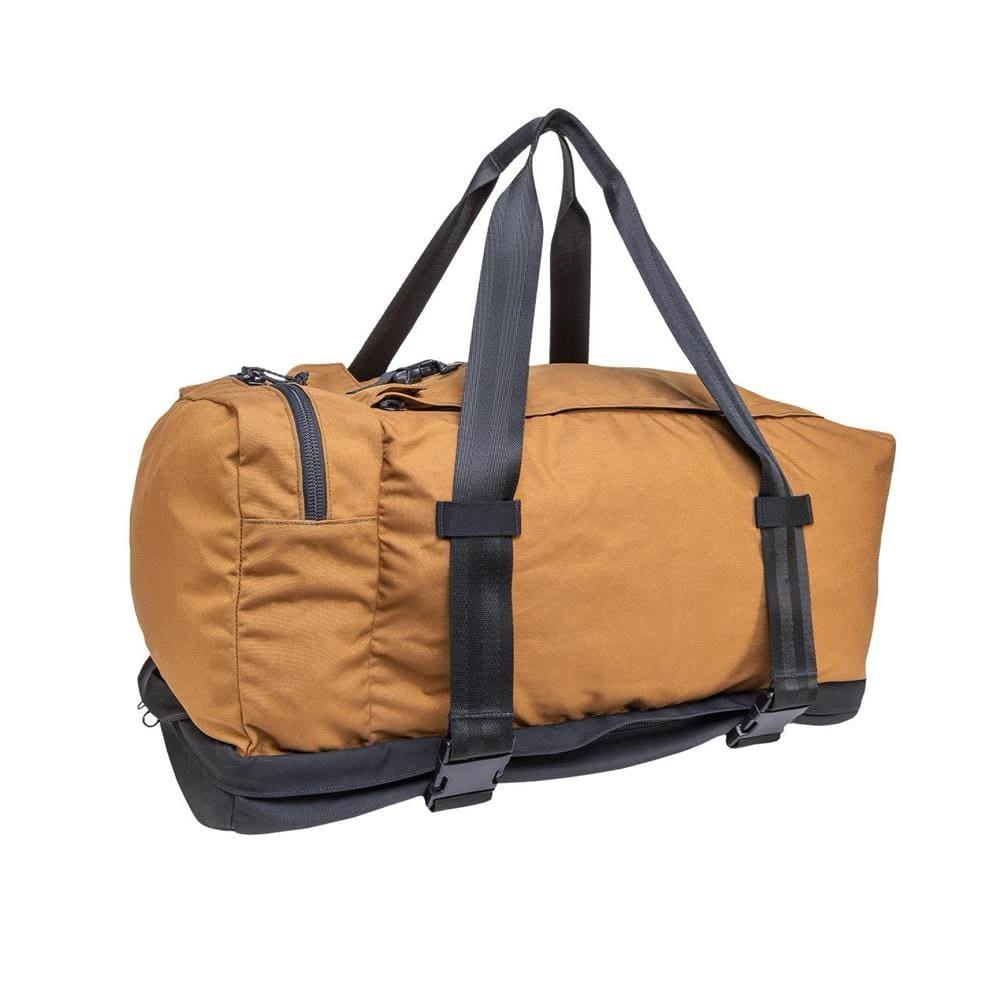
Hill Pople Gear just released the Traveler Duffel and it is cool. It combines a duffel with a compartment for separate compartment for sensitive items. Designed to accept a broken down AR-15, its use is as limited as your imagination.

Compartments:

Fully padded 25″x12.5″x4″ 1000d Cordura bottom compartment – velcro loop lined, two daisy chains for securing items, 4 velcro onewrap straps, plastic insert in very bottom, dual locking zipper pulls. Will fit up to a 16″ AR with LAW folder horizontally. 

4″x12.5″x10.5″ zippered end compartment – dual zipper pull accessible

21″x12.5″x10.5″ main compartment – dual zipper panel opening secured with side release buckle

9″x21″ mesh slot pocket – located inside top panel with zippered closure

Dimensions:

Weight: 4.5 lb
Length: 25 in
Width: 12.5 in
Height: 14.5 in
Dimensional Volume: 4531.25 in3

Comparative Volume: 4850ci / 80L
Chassis Capacity: 200lbs

Offered in Black, Elk / black, and Manatee / black.

X1aQf4LUuyY

Order yours at hillpeoplegear.com.

TacJobs – Tomahawk Performance Seeks Commercial & Government Sales Manager

Friday, March 20th, 2026

LOCATION: Nashville, TN (Hybrid)

POSITION TYPE: Full Time

Tomahawk Performance is seeking a Commercial & Government Sales Manager to lead sales strategy across commercial and government sectors. The ideal candidate brings a strong background in technical apparel along with hands?on experience navigating MIL?GOV?LE procurement environments. This role will shape market expansion, build critical partnerships, and strengthen our presence across both B2B and B2G channels.

RESPONSIBILITIES:

Commercial Strategy & Growth

• Develop and execute a comprehensive commercial strategy aligned with company objectives.

• Identify and capitalize on new market opportunities within MIL-GOV-LE sectors.

• Integrate multi-year market and consumer insights from MIL-GOV-LE channels into strategic planning.

Sales Leadership

• Oversee B2B, B2G, government procurement, international, and e-commerce channels.

• Act as internal subject matter expert on MIL-GOV-LE procurement pathways and contracting processes.

• Develop domestic and international sales leads across commercial and MIL-GOV-LE markets, assessing fulfillment feasibility.

• Build and maintain relationships with key accounts, distributors, channel partners, and military procurement officers.

Pricing & Margin Optimization

• Establish pricing strategies that balance profitability with market competitiveness across commercial and B2G channels.

• Produce competitive pricing schedules and commercial documentation for government bids.

Market Intelligence

• Analyze industry trends, competitor positioning, and customer insights across SOCOM, tactical, performance wear, and MIL-GOV-LE sectors.

• Monitor requirements specifications, terms, and conditions from solicitations and translate them into clear internal briefs.

Cross-Functional Collaboration

• Partner with Product Development and Design to ensure product solutions meet both commercial and MIL-GOV-LE operational needs.

• Join cross-functional contract bid teams and support development of technical data sheets, compliance records, testing reports, and bid packages.

• Identify gaps or areas of opportunity across processes to drive continuous improvement and risk mitigation.

Business Development

• Negotiate partnerships, licensing agreements, and distribution deals across commercial and government channels.

• Support both B2B and B2G business development initiatives alongside CEO and COO.

QUALIFICATIONS:

• 8+ years in commercial leadership roles within technical apparel, outdoor gear, or performance wear.

• Proven track record across B2B and government sales, including MIL-GOV-LE complex procurement.

• Strong understanding of technical fabrics (e.g., GORE-TEX, Polartec) and performance standards.

• 10+ years of MIL-GOV-LE experience (preferred specialist background such as SOF, HRT, or ERT).

• Exceptional negotiation, leadership, analytical, and strategic planning skills.

• Bachelor’s degree required; MBA preferred.

Technical & Professional Skills:

• Proficiency in Microsoft Office Suite, Apple iWork, Adobe Acrobat Pro, and project management tools (Basecamp, Smartsheet, MS Project).

• Familiarity with ERP and CRM systems.

• Ability to travel regionally and internationally for trade shows, account visits, and business development activities.

HOW TO APPLY:

If you wish to be considered for the role, please apply directly at careers@tomahawkperformance.com.

Dunnagan Global Armor Strategies, LLC Is Open For Business

Friday, March 20th, 2026

Dunnagan Global Armor Strategies, LLC is proud to announce its official launch.

We are a defense-market advisory firm focused on the global commercialization of advanced armor and personal protection technologies. Our work centers on helping innovators expand into international defense markets through targeted sales strategy, market development, and competitive positioning across allied nations.
We partner with manufacturers, integrators, and technology developers to ensure their protection solutions reach the programs, procurement channels, and end-users where they can make the greatest impact.

For inquiries, collaboration opportunities, or support entering new defense markets, we welcome you to connect with us.

Email Todd@dunnaganglobal.com.

From Silk to Systems — How a 19th Century Textile Mill Became a Global Leader in Modern Protection

Friday, March 20th, 2026

What do silk threads and next-generation combat helmets have in common?

The answer starts in 1894, inside a small Pennsylvania silk mill that would eventually become one of the most influential protective equipment manufacturers in the world.

Gentex Corporation began as the Klots Throwing Company, producing silk fibers for different use cases. After a devastating factory fire, the company relocated to Carbondale, Pennsylvania — a move that set the stage for more than a century of reinvention.

During World War I, then operating as General Silk, the company became one of the world’s largest processors of silk, manufacturing cartridge bags for the U.S. military. In World War II, it pivoted again, producing cargo parachutes and protective containers, and experimenting with early composite materials that would shape its future.

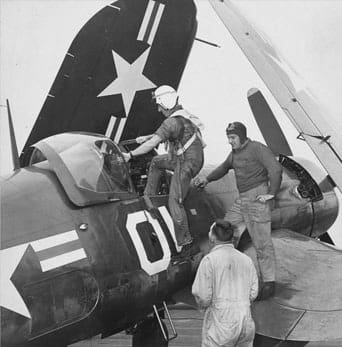
In 1948, leveraging those materials innovations, the company produced its first hard-shell pilot helmet for the U.S. Navy. That moment marked a defining shift from textiles to protection systems. By 1958, the company adopted the name Gentex and began building what would become a global portfolio of advanced helmet systems.

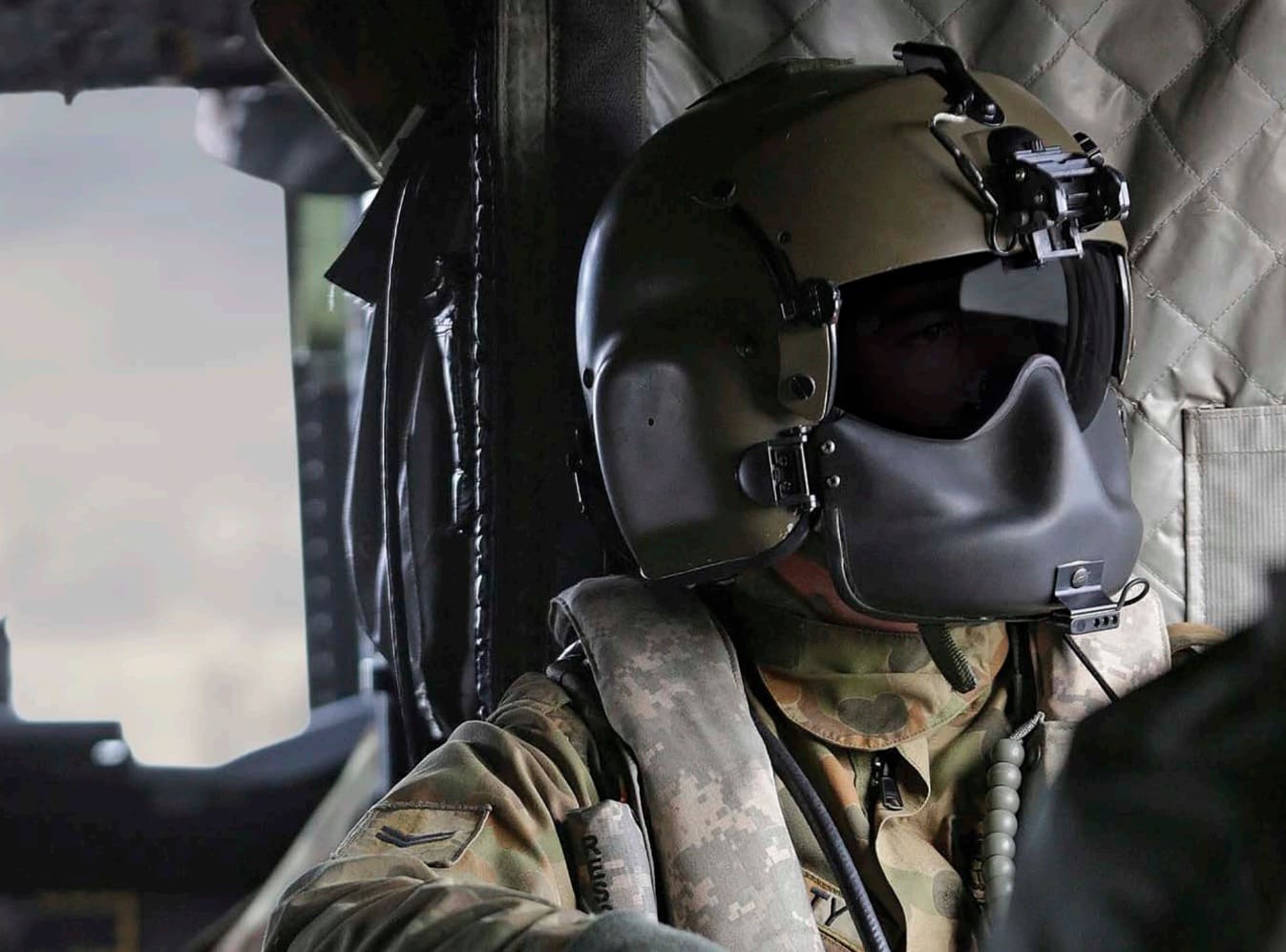
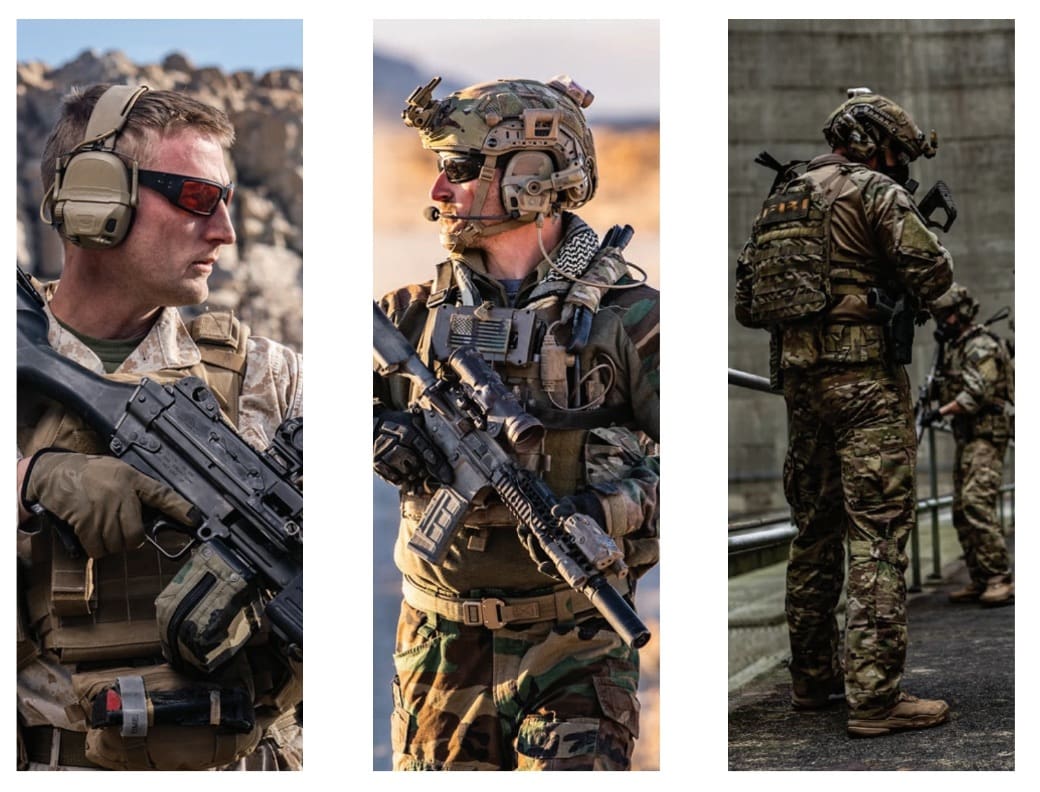
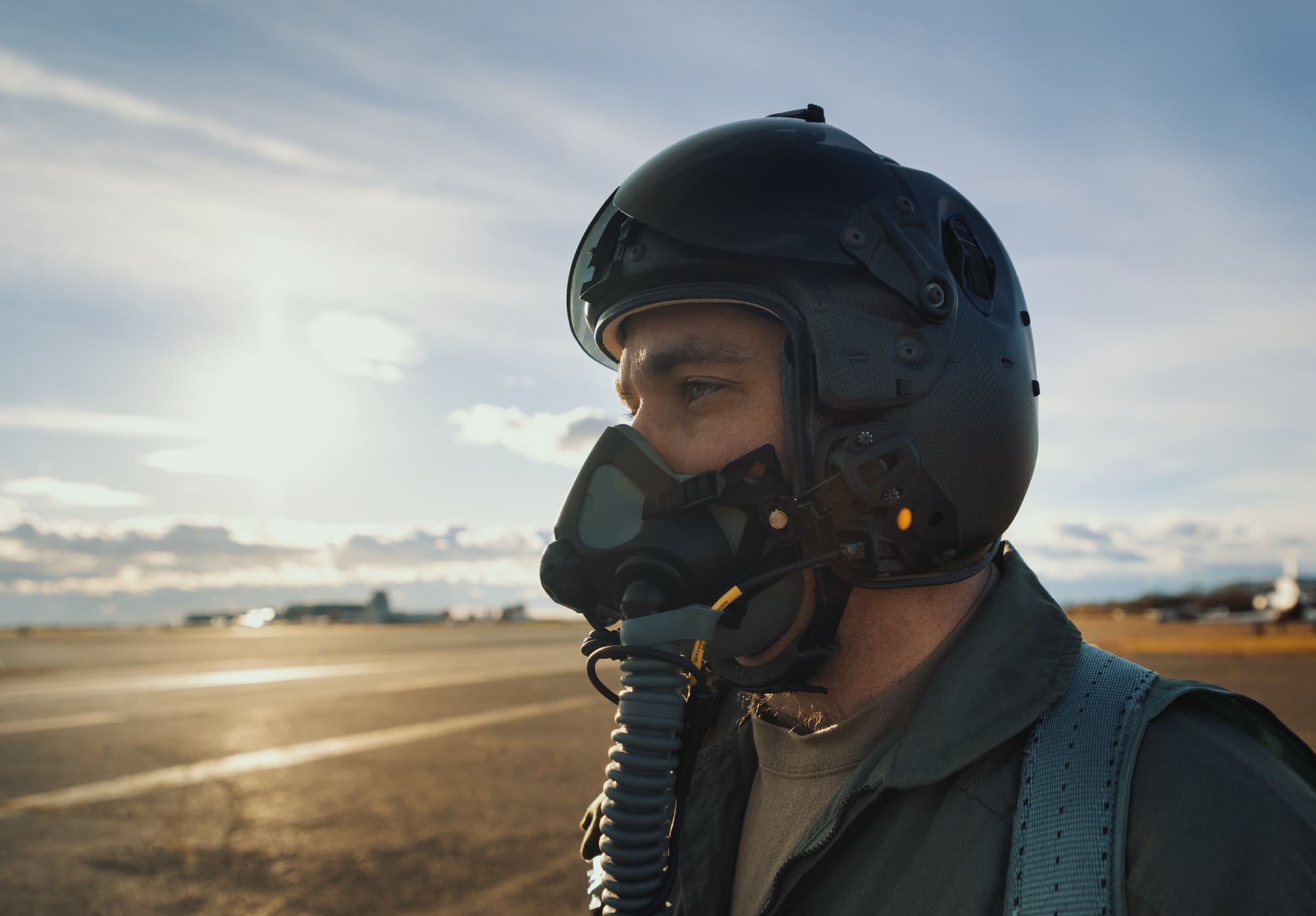
Over the decades, Gentex has helped transform the helmet from simple head protection into an integrated platform for situational awareness, combining communications, vision systems, respiratory protection, acoustics, optics, and advanced materials into mission-critical equipment used by military forces, emergency responders, and industrial professionals worldwide.

Today, the company’s products support global defense forces and aerospace programs, including advanced aircrew helmet systems and integrated soldier protection platforms, all engineered from the same Pennsylvania roots.

Why this story matters now

At a time when supply chains, domestic manufacturing, and defense innovation are under renewed scrutiny, Gentex represents a rare example of continuous American manufacturing evolution, a company that has reinvented itself across two world wars, the jet age, the space era, and today’s multi-domain battlefield.

From silk fibers to next-generation protective systems, it’s a 130-year story of material science, military partnership, and industrial resilience.

Learn more at Gentexcorp.com

FirstSpear Friday Focus: General Purpose Pockets: Small, Medium, & Large

Friday, March 20th, 2026

FirstSpear’s SMALL, MEDIUM, & LARGE GENERAL PURPOSE POCKETS deliver durable, mission-ready storage designed to organize essential equipment without adding unnecessary bulk. Available in three sizes, these pouches provide scalable capacity to support a wide range of operational requirements. Each pocket integrates seamlessly using FirstSpear’s 6/9 and 6/12 attachment technologies for secure mounting on plate carriers, chest rigs, and packs. Built from rugged materials and manufactured in the USA, our General Purpose Pockets are engineered for demanding military and law enforcement environments.

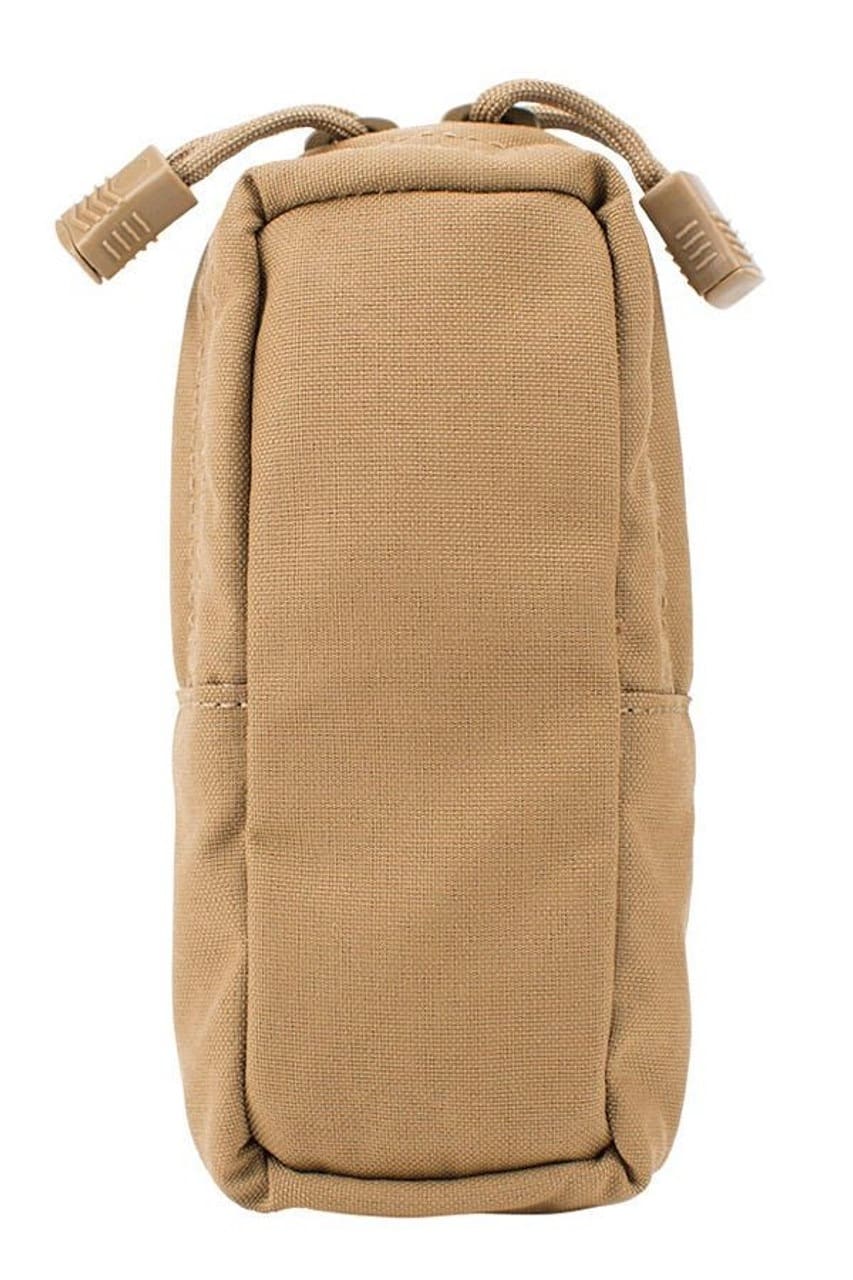
The GENERAL PURPOSE POCKET, SMALL offers a compact storage solution ideal for items such as cell phones, GPS units, or other small mission-essential tools. Its streamlined footprint maintains a low profile while providing rapid access through a durable dual-zipper closure.

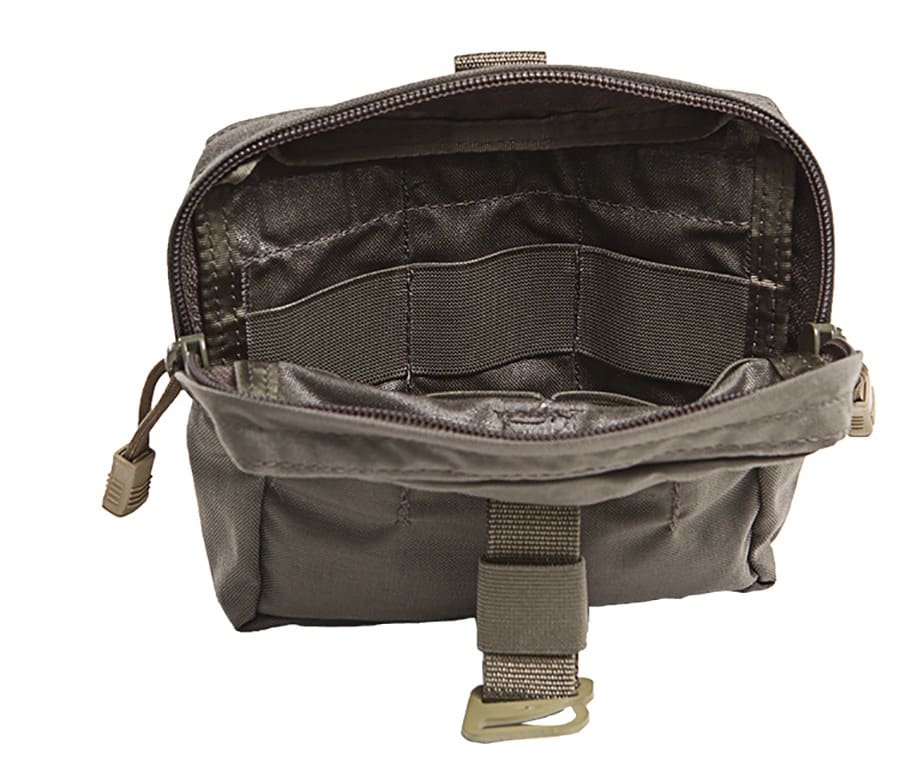
The GENERAL PURPOSE POCKET, MEDIUM increases carrying capacity while maintaining a flat, efficient design. Internal elastic retention and loop-lined pockets allow users to organize gear and keep critical items secure and accessible. A dual-zipper closure with an integrated G-Hook provides additional retention when required.

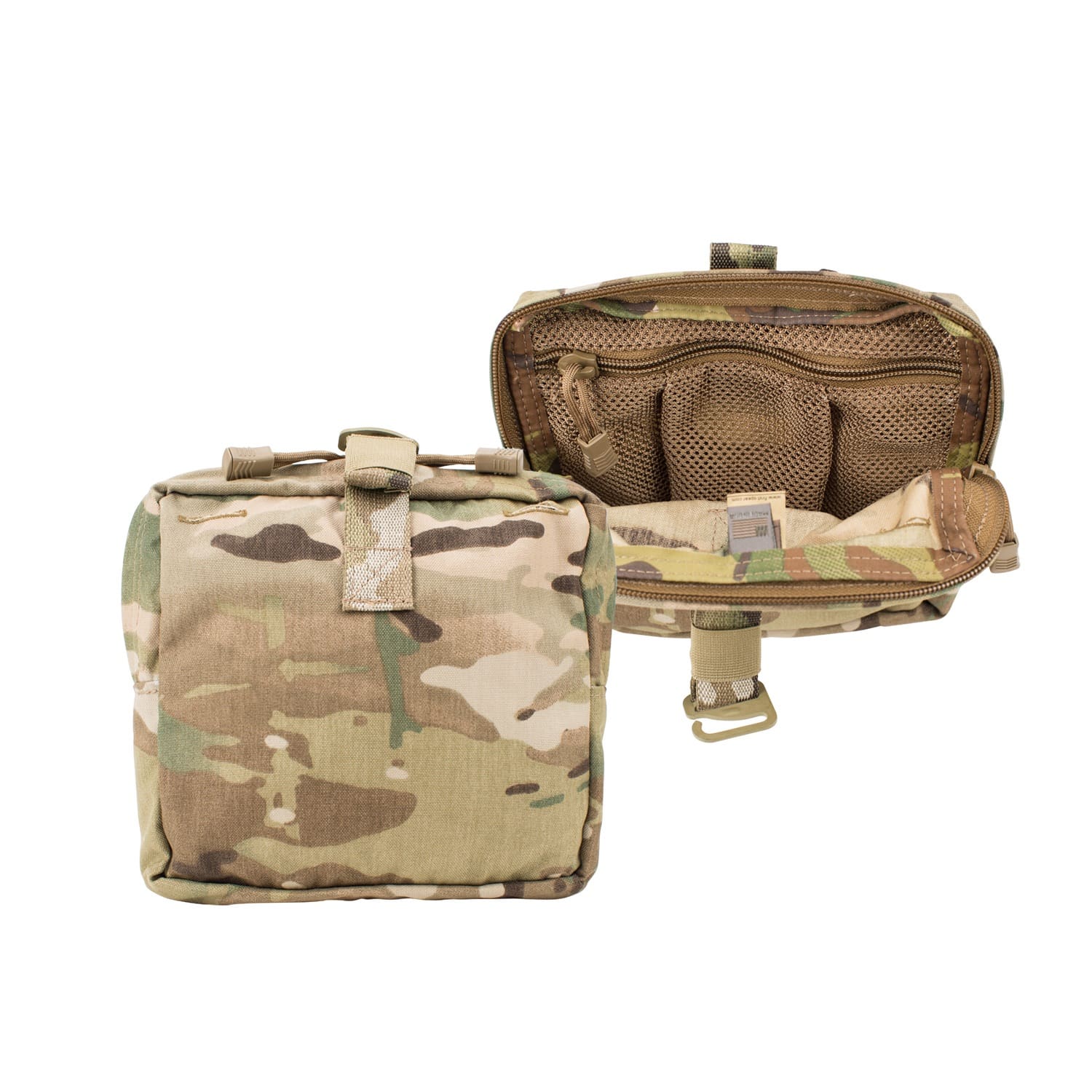
The GENERAL PURPOSE POCKET, LARGE provides maximum storage in the series and is built to manage larger equipment or multiple items. Internal organization, including a zippered mesh compartment, improves visibility and equipment management in the field. Dual-zipper access and a G-Hook closure ensure gear stays secure during movement.

Choose the size that fits your mission and upgrade your kit with reliable, purpose-built storage today at First-Spear.com.

To request an estimate click image above or visit First-Spear.com/Request-For-Estimate. FirstSpear is the premier source for cutting-edge tactical gear for military, law enforcement and those who train. For more information visit First-Spear.com.

Senior Special Warfare Leaders Highlight Community’s Capabilities, Define Its Challenges

Friday, March 20th, 2026

The principal civilian advisor to the U.S. secretary of war for all matters related to special operations forces and the most senior military SOF leader provided testimony at a House Armed Services Committee hearing on Capitol Hill today on the SOF community’s capabilities and challenges it faces ahead.
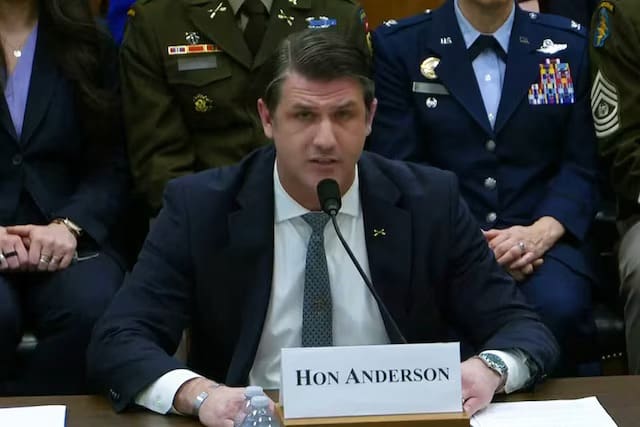
During the hearing, Derrick M. Anderson, assistant secretary of war for special operations and low-intensity conflict, and Navy Adm. Frank M. Bradley, head of U.S. Special Operations Command, explained how special operations forces are successfully countering U.S. adversaries overseas while comprising just 3% of the joint force and 2% of the War Department’s budget.  

“Today’s environment rewards forces that can operate persistently and decisively, often below the threshold of armed conflict, generating irregular effects by, through and with our allies and partners in order to produce a whole effect that is much greater than the sum of its parts — your special operations forces provide that capability,” Bradley explained during his remarks. 

As an example of this, Anderson pointed out that every major U.S. military operation has a SOF component to it. 

“From the Western Hemisphere, across the Indo-Pacific, to the Middle East, Africa, Europe and beyond, SOF has been decisive in defending the homeland, deterring China and enabling our partners and allies,” Anderson said. 

Bradley concurred with that statement, adding that the mission is not accomplished by technology and equipment alone. 

“[Rather,] it is executed by the most decisive advantage that we have: our people,” he said. 

Bradley added that the SOF community is strong and getting stronger, empowered by a culture of meritocracy and supported by programs committed to the preservation of SOF personnel and their families.  

During testimony, both leaders explained how building strong partnerships — both between the SOF community and the branches of the joint force and partners and allies around the world — are key to SOF success. 

“When we talk about the military department-to-department relationships, Adm. Bradley and I are 100% working with the other departments not only to give our lessons learned to the Army, the Navy [and] the Air Force, so that their acquisition processes get better, but to learn where [SOF] can get better,” Anderson told committee members. 

Bradley said there are presently 6,500 U.S. SOF operators and enablers deployed in about 80 different countries working to build, maintain and sustain generational partnerships and relationships.
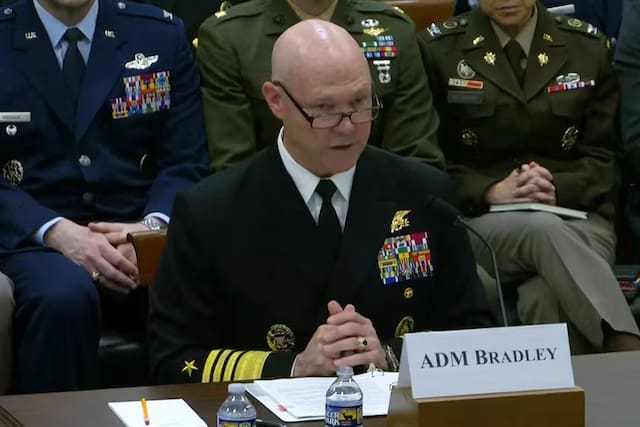
He further explained that such relationships are key to countering influence operations that our adversaries are conducting to prey upon our allies and partners with malign behavior designed to gain unwarned access and leverage over them. 

“Our ability to illuminate that malign behavior, and then to pass it and make our partners aware of it — many times through diplomatic channels, but sometimes directly, mil[itary]-to-mil[itary], security service-to-security service — is a critical way to be able to help undermine our adversaries’ actions [overseas],” Bradley said. 

When asked about the top three challenges Socom currently faces this fiscal year, Bradley said that the ability to project force into increasingly contested environment, where our adversaries pose threats to the U.S., is at the top of the list. 

“Our first priority is always to maintain readiness for the current threats that are out there. Crisis response is that top priority for us being able to respond agilely to wherever [the crisis] might present,” Bradley said, adding that demands for SOF crisis response have increased 300% over the last five years. 

The second challenge, he said, is to take advantage of the cyber and virtual domain, which he said are critical maneuver spaces. 

“Another aspect of the rapidly evolving, changing character of warfare is the emergence of abundant, lethal autonomy. And yes, that is a threat that we will have to contend with, but it’s also one we can leverage,” Bradley said. 

“And finally … our people must continue to be our foundation, ensuring they are trained, ready, supported and educated for the future,” he said of the third challenge Socom is most focused on this year. 

Looking ahead, Anderson and Bradley said that SOF’s transformation and modernization are key to future success. 

“SOF needs sustained partnership, predictable resourcing and continued modernization,” Anderson told the committee, adding that congressional support of the SOF community is greatly appreciated. 

“SOF was purpose built for this era of competition, and we can provide an instant, indispensable asymmetric advantage for the joint force and the nation,” Bradley told the committee.

“And with your continued support, we will meet today’s missions while transforming to ensure that we are ready for the challenges of tomorrow,” he added.  

Watch the video of the testimony here.

By Matthew Olay, Pentagon News

DroneShield Expands Radar Interoperability with Robin Radar Systems


Thursday, March 19th, 2026

Sydney, Australia – 18 March 2026DroneShield (ASX:DRO), a global leader in counter-drone technology, today announced a partnership with Robin Radar Systems, strengthening advanced radar technologies to DroneShield’s growing sensor ecosystem. The interoperability expands radar options available to customers, strengthening layered airspace awareness across defense, critical infrastructure, and public safety environments.

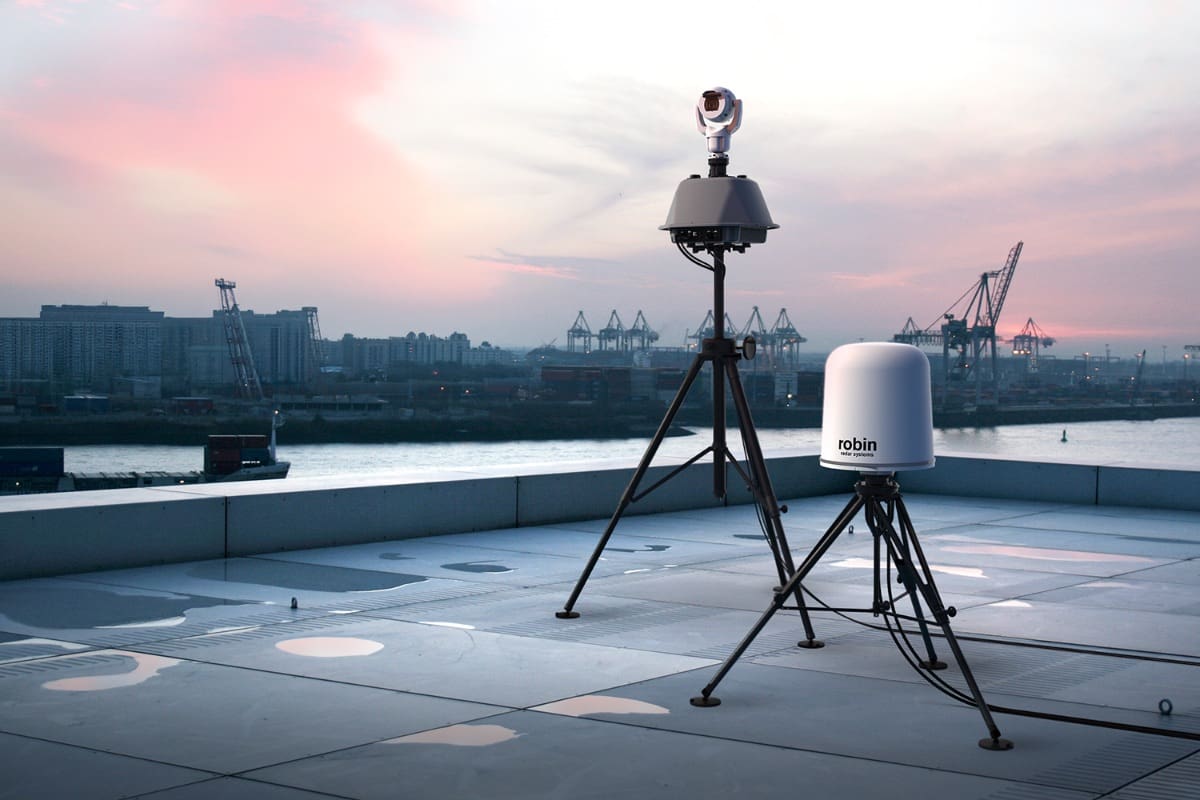
Robin Radar Systems is recognized for its 360°, 3D radar technology designed to detect and track small airborne objects, including drones. Its radars are engineered to deliver reliable detection and classification performance across complex environments.

Image: Sample configuration of DroneShield’s DroneSentry layered defense with Robin Radar Systems

Expanding the Sensor Marketplace for Operators
DroneShield’s approach to counter-UAS is intentionally ecosystem-led. Rather than offering a closed or static solution, the company has invested in building a scalable marketplace of interoperable third-party sensors. This model gives operators the flexibility to select the right sensing technologies for their specific environment, threat profile, and operational constraints, both today and as requirements evolve.

By adding Robin Radar Systems to its ecosystem, DroneShield continues to expand the options available to customers seeking radar-based detection as part of a layered CUAS deployment. Radar can play a critical role in detecting and tracking airborne objects across wide areas and in challenging conditions, supporting persistent awareness and resilience.

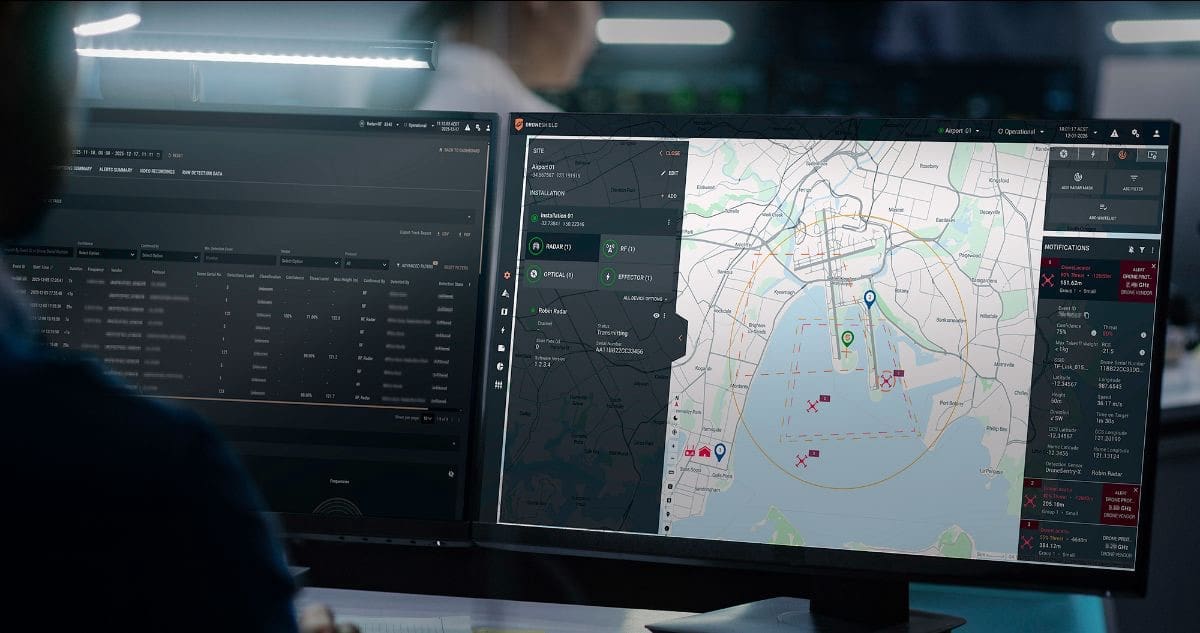
At the center of this ecosystem is DroneShield’s DroneSentry-C2 powered by SensorFusionAI, which combines inputs from multiple sensor types to create a consolidated operational picture that reduces ambiguity and enhances decision confidence.

“Operators need systems that adapt to their mission, not the other way around,” said Angus Bean, DroneShield’s Chief Product Officer. “By partnering with Robin Radar Systems and expanding our sensor marketplace, we give customers more freedom to design their airspace security architecture, while SensorFusionAI ensures that all sensor inputs are fused into insights that support decisive action.”

Image: DroneShield’s DroneSentry-C2 brings together multiple sensors for a clear, single operating picture

Designed for Real-World Operations
“At Robin, we see ourselves as a new generation radar company – fast, adaptive, and built for integration. Our technology is designed to deliver seamless performance within broader security architectures. We’re pleased to be partnering with DroneShield to combine our market-leading IRIS 3D radar with their CUAS platform, enabling smarter, layered airspace protection worldwide,” said Marcel Verdonk, Robin Radar’s Chief Commercial Officer.

Robin Radar Systems brings decades of radar science and innovation to this partnership, delivering systems that are engineered for accuracy and optimized for modern CUAS challenges. This partnership ensures that operators no longer need to trade coverage for clarity. By combining complementary sensing technologies into a single, AI-enhanced platform, organizations can achieve both scale and understanding without increasing complexity.