Phantom Lights

Archive for June, 2026

Rocket Lab to Acquire Iridium in Historic Deal, Creating A Fully Vertically Integrated Space Powerhouse Primed for Growth

Tuesday, June 30th, 2026

Unites Rocket Lab’s leading launch and satellite manufacturing capabilities with Iridium’s global network, spectrum, and experience to unlock critical space applications.

Adds material revenue scale and is significantly accretive to Rocket Lab’s cash flow generation and profitability.

Long Beach, California and McLean, Virginia. 29 June 2026 – Rocket Lab Corporation (Nasdaq: RKLB) (“Rocket Lab”), a global leader in launch and space systems and Iridium Communications Inc. (Nasdaq: IRDM) (“Iridium”), a leading provider of global voice, data, and positioning, navigation, and timing (PNT) satellite services, today announced they have entered into a definitive agreement under which Rocket Lab will acquire Iridium. Rocket Lab will acquire all the outstanding shares of Iridium common stock for $54 per share in a cash and stock transaction. This represents an enterprise value for Iridium of approximately $8.0 billion.

The acquisition will be one of the most transformative deals in the space industry, joining together two innovative American companies to play a leading role in the U.S. space economy. It merges Rocket Lab’s leading launch capabilities and satellite manufacturing with Iridium’s global satellite communications network, spectrum, and 500-plus strong partner ecosystem to create a competitive, vertically-integrated space company that designs, builds, launches, and operates its own constellations, delivering critical communications capability to millions of users worldwide.

The transaction will give Rocket Lab an immediate foothold in space-based applications, including both proprietary and standards-based satellite Internet of Things (IoT) and direct-to-device (D2D), PNT, and critical safety-of-life services, creating a formidable challenger in the global telecom market. Rather than simply continuing the Iridium network, Rocket Lab will build upon it to scale into untapped markets and pioneer new space-based services to the benefit of global customers.

Iridium’s globally harmonized L-band spectrum and low Earth orbit (LEO) satellite network provide a secure, resilient foundation for reliable satellite communications and PNT services across government, defense, aviation, maritime, and commercial markets. Supporting more than 2.55 million active subscribers worldwide, Iridium delivers highly reliable, weather-resilient connectivity and an alternative PNT architecture for applications where Global Positioning Systema (GPS) and other Global Navigation Satellite Systema (GNSS) are degraded or unavailable. Combining Rocket Lab’s launch, spacecraft manufacturing, and space systems expertise with Iridium’s global network and L-band spectrum will accelerate innovation, positioning the combined company to support the development and deployment of Iridium’s next-generation constellation. This includes direct-to-device (D2D/Iridium NTN DirectSM) services, which will grow into an important new capability for U.S. national security and emergency response, helping to ensure reliable, resilient communications when and where they are needed most, particularly where traditional networks are unavailable or compromised.

“This is a defining moment for the space industry and the start of a new era of strategic, accelerated growth for Rocket Lab and Iridium,” said Sir Peter Beck, founder and CEO of Rocket Lab. “Iridium has built the gold standard in secure, safety critical global satellite connectivity. It is relied upon by maritime fleets, the aviation industry, governments, and heavy industrial organizations who operate in the most remote off-the-grid locations. By marrying Iridium’s deep heritage, trusted infrastructure, and highly sought-after spectrum with Rocket Lab’s extensive and proven launch and manufacturing capabilities, we have the capability to unlock entirely new markets. We will go far beyond maintaining a legacy; we are going to build upon it to pioneer next-generation space applications and deliver sought-after capabilities to existing and new customers.”

“As the worlds of space and terrestrial communications continue to converge, more critical services will depend on space-based capabilities,” said Matt Desch, CEO, Iridium. “Success will come from those who can bring new innovations to space quickly and sustain them over time as efficiently as possible. We’re excited about being able to accelerate the next generation of IoT, aviation, maritime, PNT, and national security capabilities, and pursue new innovative applications as part of Rocket Lab – a fully integrated, end-to-end space company. That’s an incredible opportunity for our customers, partners, employees, and stockholders.”

Transaction Highlights:

Strengthens Rocket Lab’s Strategic Vertical Integration: Creates an end-to-end space company spanning launch, spacecraft, spectrum, and on-orbit communications services through a proprietary network. Expected to eliminate third-party launch costs for constellation deployment and replenishment and captures launch margin internally while guaranteeing orbital access as launch capacity tightens, ensuring continuity of service to customers.

Unlocks Entry to Space Applications Market: Provides Rocket Lab with immediate access to a proven constellation of LEO satellites and an established global communications customer base, realizing the company’s long-term strategic vision to expand beyond launch services and spacecraft manufacturing into a vertically-integrated space applications company with recurring revenue from satellite services.

Provides Access to Globally-Coordinated Spectrum: Adds globally-coordinated L-band spectrum that enables reliable user communications.

Unifies Two Trusted Government Partners: The transaction combines two deeply trusted, long-standing defense partners, combining their specialized strengths to deliver highly resilient, next-generation capabilities directly to the warfighter across denied, degraded, and disadvantaged environments.

Accelerates Growth and New Market Opportunities: Positions the combined entity to deliver next-generation satellite communications, resilient PNT, and emerging defense and commercial space services.

Diversifies Financial Profile with Recurring Cash Flow Streams:  In 2025, Iridium delivered $871.7M revenue1, $495M OEBITDA[1] or 57% OEBITDA margin1, providing substantial recurring cash flow to fund growth.

Transaction Details

Under the terms of the transaction, Iridium stockholders will receive $27.00 in cash and a number of shares of Rocket Lab common stock calculated pursuant to an exchange ratio (subject to a collar) for each share of Iridium common stock outstanding at the closing. The collar is banded from $67.50 to $112.50. The transaction has a notional value of $54.00 per share of Iridium common stock, implying an enterprise value for Iridium of approximately $8.0 billion.

Complete details on the calculation of the exchange ratio will be in the transaction agreement, which will be filed with the Securities and Exchange Commission.

The transaction is expected to be completed in mid-2027, subject to the satisfaction of customary closing conditions, including approval of Iridium stockholders and required regulatory approvals.

The transaction has been unanimously approved by the boards of directors of Iridium and Rocket Lab. Moreover, each director of Iridium holding shares of Iridium common stock has entered into a voting agreement to support the transaction.

As part of the transaction, Rocket Lab has received commitments for a $3.6 billion 364-day senior secured bridge term loan facility from Deutsche Bank and Wells Fargo. Rocket Lab intends to fund the cash component of the transaction through a combination of cash from its balance sheet and other debt and equity financing sources.

Advisors

Deutsche Bank Securities is serving as lead financial advisor and Wells Fargo and PJT Partners as financial advisors, Wilson Sonsini Goodrich & Rosati, P.C. is serving as legal counsel, Goodwin Procter LLP as financing counsel and DLA Piper LLP as regulatory counsel to Rocket Lab. Evercore is serving as exclusive financial advisor, Davis Polk & Wardwell LLP is serving as legal counsel, Wilkinson Barker Knauer LLP is serving as regulatory counsel, and Joele Frank, Wilkinson Brimmer Katcher is serving as strategic communications advisor to Iridium.

Investor Presentation

An investor presentation discussing the transaction is hosted on Rocket Lab’s investor relations website at investors.rocketlabcorp.com.
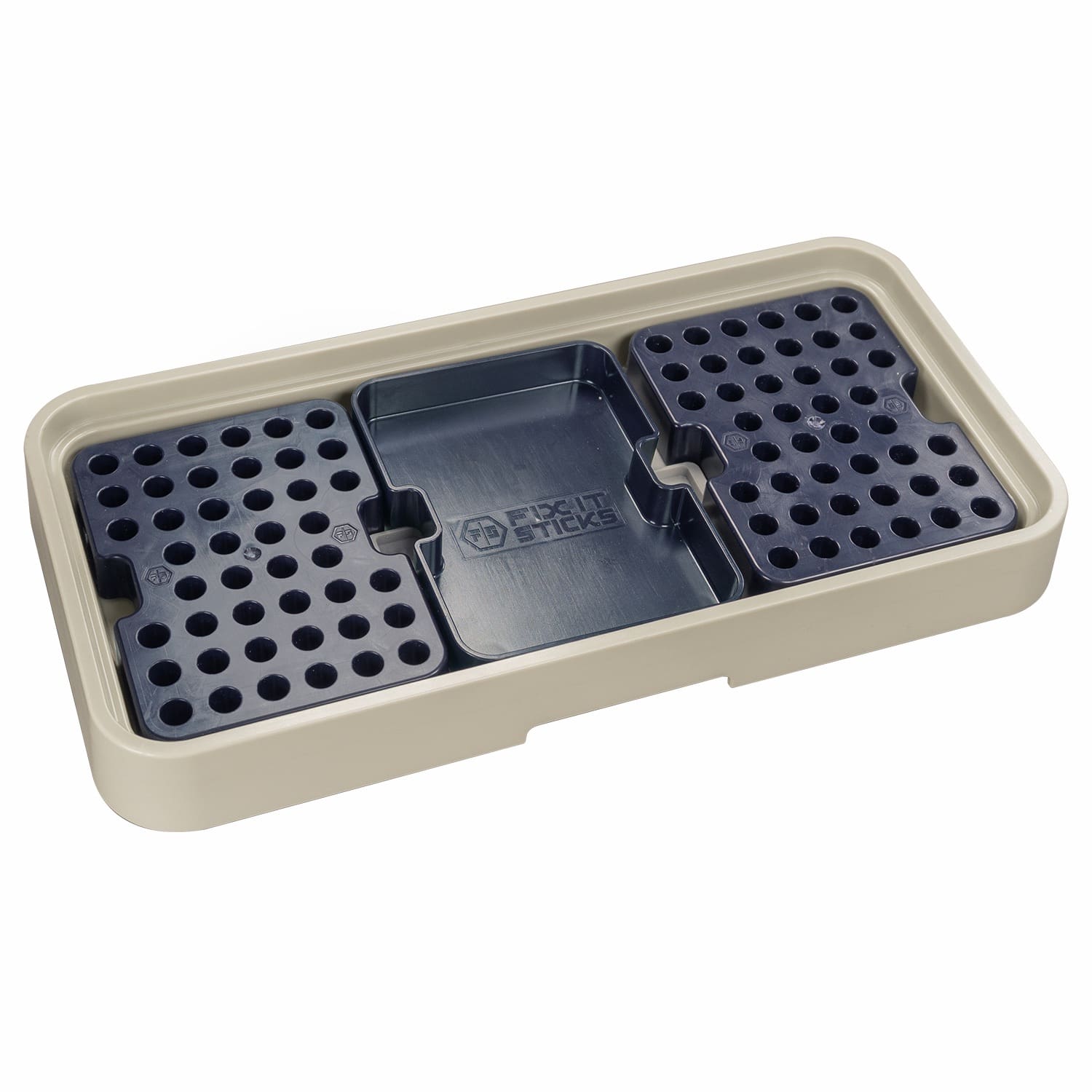
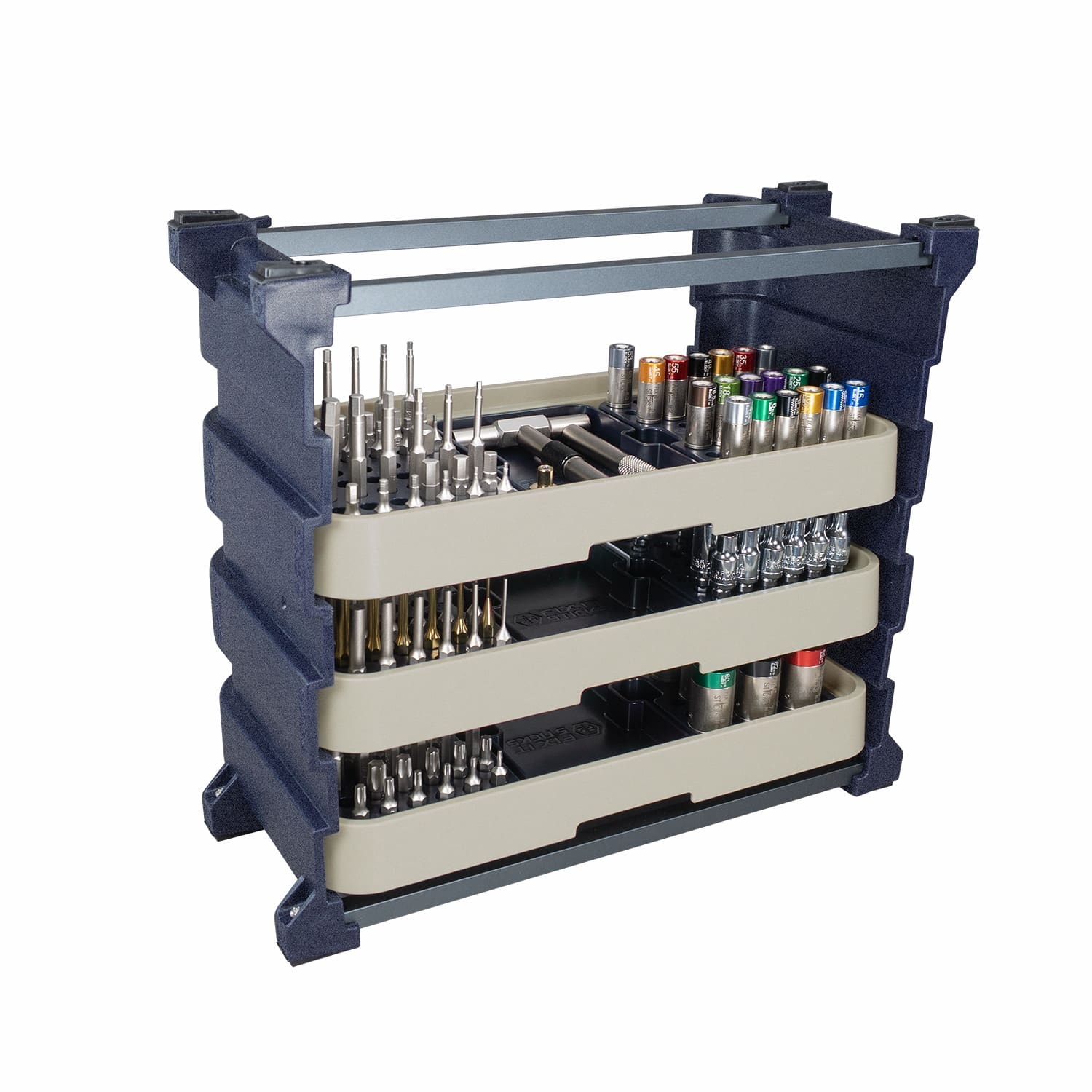
Fix It Sticks Benchtop Tool Tray System Now Available

Tuesday, June 30th, 2026

Fix It Sticks Introduces Superior Tray Organizers and Benchtop Tool Tray System to Maximize Gunsmithing Efficiency
Chicago, IL- Fix It Sticks, the industry innovator of modular firearms maintenance tools and torque limiters has introduced an innovative and efficient line of Tray Organizers and a Benchtop Tool Tray System for organizing, accessing, and using gunsmithing bits and tools. Having the right tools in hand is necessary for correctly torquing rifle actions, optics mounts, scope rings, sights, and other accessories. Properly torquing the rifle action and other components is critical for consistency, accuracy, and reliability.

The Fix It Sticks Benchtop Tool Tray System is designed to bring efficiency to any work bench, in particular for firearms related building, setup, and maintenance setups. The system features a four-slot storage rack to store the new Fix It Sticks Tray Organizers. The trays are modular, allowing the user to customize the access and workflow. This also lets users easily keep essential tools and parts accessible and organized with six dedicated bit trays—each featuring 44 1/4” slots for an extensive bit and tool selection—alongside three open parts trays perfect for keeping small hardware and components sorted. The Benchtop Tray System is made from sturdy, chemical resistant ABS polymer and aluminum for strength and durability while also keeping weight to a minimum.

Each Fix It Sticks Tray Organizer comes with the Tray, a pair of Bit Trays, and a Parts Tray. These can be used individually or with the Benchtop Tool Tray System. These are also made with chemical resistant ABS polymer.

The Benchtop Tray System and individual Tray Organizers are perfect for any gunsmithing task and will dramatically increase organization, efficiency and prevent the loss of small yet critical components. The Benchtop Tray System is now available with an MSRP of $152.00 and the individual trays are now available with an MSRP of $30.00.

store.fixitsticks.com

Dates Announced for 2027 Canadian National Counter-UAS Conference

Tuesday, June 30th, 2026

Save the date for the 2027 Canadian National Counter-UAS Conference, taking place April 8–9, 2027 in Ottawa, Ontario. Building on the success of this year’s event, which brought together over 200 participants from 83 organizations across Canada and the United States, we are excited to continue fostering the strong national and international collaboration that emerged. With broad representation from policing, intelligence, military, government, critical infrastructure, academia, and industry, the conference has become a key platform for advancing a unified approach to counter-UAS challenges. In advance of the conference, we are pleased to welcome Retired U.S. Army Colonel Bill Edwards, a recognized leader in C-UAS operations and training, who will deliver specialized training sessions on April 6–7.

We look forward to welcoming partners back to further strengthen relationships, share expertise, and drive coordinated strategies to address the evolving threat landscape in 2027.

www.kingstonpolice.ca/news-and-community/2027-canadian-national-cuas-conference

5.11 Expands Professional Services Line with Premium, Performance-Driven Scrubs Designed for Healthcare Professionals

Tuesday, June 30th, 2026

Costa Mesa, Calif. (June 30, 2026) – For healthcare professionals, every shift brings responsibility. Long hours. Constant movement. Critical decisions. Moments where performance, comfort, and reliability matter more than ever.

To support the demands of that work, 5.11, the global innovator of purpose-built apparel, footwear, and gear, is proud to announce the launch of its new line of high-performance medical scrubs designed specifically for nurses and frontline healthcare professionals.

Built on decades of experience designing apparel for professionals whose work demands durability, mobility, and reliability, the new collection brings that same commitment to healthcare settings nationwide. The launch marks another major expansion of 5.11’s growing Professional Services category, enabling hospitals and healthcare systems to outfit a wide range of roles—from security teams and EMS personnel to environmental services staff, administrators, and now frontline medical professionals.

“Healthcare professionals don’t choose the easy path. They choose a profession built on service and showing up for others when it matters most. At 5.11, we believe growth lives on the other side of challenge. That’s what Challenge Possible™ means. It’s why we’re proud to build purpose-built gear for healthcare professionals who live that belief every single day.”  Troy Brown, CEO of 5.11

Created for professionals who move toward responsibility when others need them most, the collection is designed to support movement, endurance, and confidence when the work becomes difficult. 5.11’s new medical apparel system was developed alongside healthcare professionals whose firsthand experiences helped shape a collection built to meet the demands of modern healthcare—long shifts, constant movement, and the need for comfort, confidence, and durability throughout the workday.

Designed to support long shifts and high-movement workflows without sacrificing comfort or professionalism, the collection features lightweight stretch fabrics, moisture-wicking technology, antimicrobial properties, and ripstop durability engineered to extend garment life. Thoughtfully designed for everyday wear, the garments help reduce wrinkling and maintain a polished appearance throughout demanding shifts. The line includes short-sleeve tops and both regular and jogger-fit pant options for men and women across six hospital-approved colorways, including Pacific Navy, Black, Ciel Blue, Royal Blue, Storm, and Burgundy.

The new 5.11 scrubs line is available now through participating hospital partners, select wholesale distributors, and online at www.511tactical.com/511-scrubs.

HRT Tactical Gear Introduces the Quarter Belt: A Modular Quarter-Section Belt System Built for Real-World Versatility

Tuesday, June 30th, 2026

Most tactical belt systems force a binary choice: either you’re fully rigged or you’re not. HRT Tactical Gear’s new Quarter Belt — or “QTR” — throws that logic out the window.

The Quarter Belt is a modular belt system built around swappable “quarter sections” that attach directly to a standard 1.5″ inner or EDC-style belt via an included quick-clip system. Instead of rebuilding your entire loadout when your mission changes, you pre-configure sections for specific roles, medical, duty, range day, less-lethal and simply clip in what you need. No belt removal required. No reweaving MOLLE. Just swap and go.

The Setup

Each QTR section is available in 4-column or 6-column MOLLE configurations. Included 3″ HRT MMS attachment strips let you mount pouches securely, while the Velcro® loop-lined backside opens up a second layer of real estate for TQ pouches, Wing expansions, or any hook backed hangers without adding bulk to the top layer.

Sections can be used independently or combined to form a full belt system, giving users a genuinely scalable platform rather than a fixed-size commitment.

Who It’s For

The QTR was designed with flexibility as the core feature, not an afterthought. Law enforcement and military users can pre-stage mission-specific kits, less-lethal one day, a medical section the next. Range shooters can keep a loaded section in their bag and clip it on in seconds. Off-duty or plain-clothes carry gets a fast, low-profile way to add capability without going full overt. Hunters and outdoors users get a grab-and-go gear platform that travels light and adapts on the fly.

The Value Angle

Traditional belt systems require you to commit: buy the whole belt, build the whole setup, wear the whole thing. The QTR’s modular approach lets you build only what you need, stage multiple purpose-driven sections at a fraction of the cost of a fully outfitted dedicated rig, and scale up or strip down without starting over.

Made in the USA. Backed by a Lifetime Warranty.

The QTR Belt ships with the quick-clip hardware, mounting hardware, and 3″ MMS strips. Belt, pouches, and accessories are sold separately.

Available now at HRTTACTICALGEAR.COM.

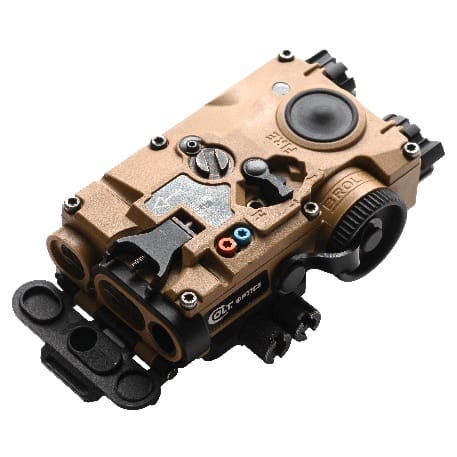
Colt Optics Launches LP5X-P Laser Aiming Device

Tuesday, June 30th, 2026

Michigan (July 6, 2026) – Colt Electro Optics LLC (“Colt Optics”) today announced the launch of the LP5X-P Laser Aiming Device.

Modern weapon systems continue to demand more capability from every accessory mounted to the rail. Professional users need visible and infrared aiming capability, effective illumination, and reliable performance, but they also need to minimize weight, preserve rail space, and avoid unnecessary complexity.

The LP5X-P was developed around a simple objective: deliver maximum capability in the smallest package possible.

Offered by Colt Optics in partnership with Brolis Defense, the LP5X-P is based on a proven laser platform fielded by NATO and allied defense organizations. Colt Optics partnered with Brolis Defense to bring this proven capability to U.S. professional customers, delivering advanced aiming and illumination performance in a remarkably compact, lightweight package.

“At Colt Optics, we focus on products that solve real-world problems for professional users,” said Dennis Finnegan, Chief Operating Officer of Colt Optics. “The LP5X-P delivers an exceptional amount of capability without adding unnecessary size, weight, or complexity to the weapon system. Through our partnership with Brolis Defense, we are able to bring a proven solution to U.S. customers who demand performance, reliability, and versatility.”

LP5X-P High-Power Laser Aiming Device
Measuring just 3.7 inches in length and weighing only 5.9 ounces, the LP5X-P was engineered to require minimum rail mounting space and reduce overall weapon system weight without sacrificing capability.

At the heart of the LP5X-P are four independent emitters: a green visible aiming laser, an infrared aiming laser, a focusable infrared illuminator, and a speckle-free VCSEL infrared flood illuminator. Together, these systems provide users with the flexibility to adapt to a wide range of operational environments and lighting conditions.

The LP5X-P’s illumination system was designed to simplify operation in the field. As the illuminator is adjusted from a focused beam to a wider pattern, the system automatically transitions to the VCSEL flood illuminator at its widest setting, providing broad, speckle-free illumination optimized for close-range observation and situational awareness. As the illuminator is narrowed, the system automatically returns to the focusable infrared illuminator, ensuring the appropriate illumination solution is always available when needed.

The LP5X-P also features Training, Low, and High output modes, allowing users to tailor system performance to a variety of training and operational requirements.

One of the system’s most valuable features is its fully co-aligned laser architecture. Once the aiming laser is zeroed, all laser and illumination systems remain aligned, eliminating the need to independently zero multiple emitters and simplifying setup for the end user.

An integrated flip-up front sight is incorporated directly into the housing, providing additional capability without increasing overall system size or complexity.

Built around a rugged glass fiber-reinforced polymer housing, the LP5X-P is engineered to withstand demanding real-world environments while maintaining an exceptionally lightweight profile. It is waterproof, shock resistant, and designed to operate reliably in temperatures ranging from -32°F to 159°F.

The result is a laser aiming and illumination device that delivers exceptional capability, intelligent illumination management, and professional-grade performance in an incredibly compact package.

As a true high-power laser system, the LP5X-P is available through authorized channels in accordance with applicable regulations.

For more information, visit www.coltoptics.com.

Soldiers Test Drone-Delivered Breach Capability

Tuesday, June 30th, 2026

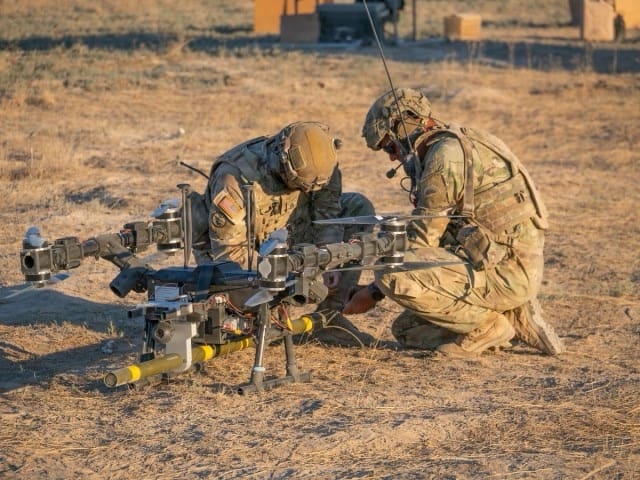
ORCHARD COMBAT TRAINING CENTER, Idaho — A heavy-lift drone climbed into 25 mph gusts above the high desert June 22, carrying a live Bangalore torpedo toward a wire obstacle.

For combat engineers, breaching that kind of obstacle is one of the most dangerous missions on the battlefield. Army doctrine accounts for that risk with a 50 percent casualty planning factor for a deliberate breach.

This time, no Soldier had to sprint forward to place the charge.

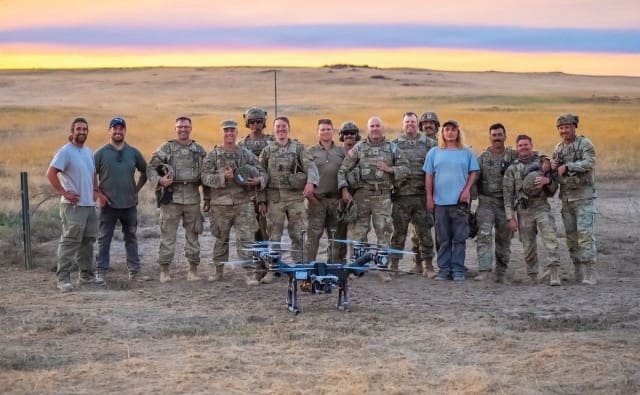
Soldiers from Bravo Company, 741st Brigade Engineer Battalion, 41st Infantry Brigade Combat Team, Oregon Army National Guard, used a drone-delivered Bangalore torpedo to breach the wire obstacle on Range 22. The drone released the charge, shock tube unspooled behind it and the Soldiers took cover before the Bangalore detonated, opening a lane through the wire.

The proof of concept marked the close of a months-long innovation effort by the 741st BEB’s drone working group. Battalion commander Lt. Col. Eric Zimmerman established the group with a directive to defeat a wire obstacle using a commercial off-the-shelf or similar drone during the battalion’s annual training. The working group’s research found no precedent for the tactic in the U.S. Army.

“Mostly Ukraine,” Zimmerman said when asked what drove the concept. “Watching what was going on in Ukraine, and how innovative they are, it inspires you to get better and think bigger.”

The doctrinal cost of a breach added urgency to the effort.

“The most casualty-producing thing that Army engineers do is the breach,” said 1st Lt. Andrew Lucas, who co-led the working group from the battalion S-3 operations section. “Expect 50 percent casualties. If you can deliver something to clear the breach with a $40,000 drone, instead of putting Soldiers in harm’s way, that’s worth experimenting with.”

Innovation surrounded by doctrine

Zimmerman said his intent was to apply emerging technology to a problem engineers already know how to solve.

“I want us to talk about drones around something we already do really well, which is defeating obstacles,” he said. “So let’s do this non-doctrinal thing, but surround it with doctrine.”

The working group was led by Lucas and Capt. Samuel Cushing, the battalion’s plans officer, with input from senior noncommissioned officers, including 1st Sgt. Joshua Martin. The team first studied commercially available drones priced from $2,000 to $40,000.

After funding for a commercial purchase did not come through, the team turned to the Oregon Army National Guard’s 249th Regional Training Institute. The RTI’s existing drone-build program could not produce an airframe with the lift capacity required by the mission. Lt. Col. Mark Timmons, the 249th RTI commander, told the working group his program could not meet the requirement within the available timeline.

Rather than abandon the effort, the battalion operations section continued pursuing alternatives. Working from specifications developed by the drone working group, Maj. Harvey, the battalion S-3, and Martin, the battalion operations noncommissioned officer, vetted industry partners before determining Lorica Technologies could meet the requirement.

When Lucas arrived for annual training, he believed the search had come up short.

“We’d been told no, it’s not going to happen, we’re not going to get a drone,” he said. “And that’s when Maj. Harvey said, ‘Oh, we actually got a drone.’ So, full speed ahead.”

The Mule 28

Lorica’s contribution was the Mule 28, a heavy-lift, multi-mission unmanned aerial system designed and built in-house at the company’s Ashland facility.

The airframe weighs about 45 pounds, can lift about 200 pounds and is powered by eight motors turning eight 28-inch bi-blade propellers. It carries onboard artificial intelligence processing, software-defined radios and a sensor package designed to support recognition and targeting functions. The drone can also derive coordinates from its camera using trigonometry and focal length, allowing it to mark drop points on objects it identifies.

Lorica founder and CEO Christopher Dye said the company’s software, including a swarm-control system called Hive, is what makes the platform distinct.

“It doesn’t matter what the vehicle is, as long as we understand the capabilities and the parameters of the vehicle,” Dye said. “We can task the swarm based on what the job needs to get done. Right now, we’re working on natural language control, so that you can just talk to the bird and tell it, ‘Hey, I want a reconnaissance around this building. I need to know how big that ditch is before we get there, how many steps, how high the windows are.'”

Lorica currently fields three Mule 28 prototypes. The company had about six weeks to develop the airframe for the Oregon project.

Cushing said working with a domestic manufacturer to build to specification, rather than buying a commercial drone with Chinese components, was a deliberate choice that helped reduce electronic warfare and supply chain vulnerabilities.

“It’s been helpful to have contractors that can meet every specification we’re asking for and produce a drone that also meets the Army’s intent for any sort of technology that we integrate,” he said.

Soldiers with Bravo Company, 741st Brigade Engineer Battalion, 41st Infantry Brigade Combat Team, conducted a proof-of-concept drone-delivered breach against a wire obstacle June 22, 2026, on Range 22 at Orchard Combat Training Center, Idaho. U.S. Army video by Maj. W. Chris Clyne, Oregon National Guard Public Affairs.

Building the safety case

The team built safety into the project by increasing risk in stages. The drone first carried an inert training aid identical in size and weight to the M1A3 Bangalore. Once the platform could reliably deliver an inert charge on target, the team progressed through limited live-fire iterations before flying a live, two-section M1A3 Bangalore torpedo.

Every iteration involving live explosives was initiated using a shock tube spooled from the drone to the obstacle. The team deliberately avoided an electronic trigger that could be jammed or prematurely activated.

“Ideally, you would love to be able to remote-detonate this without having to have a spool of shock tube,” Lucas said. “But in the LSCO environment, we’ve seen so many other systems jammed that if you have the ability to, it’s not a detriment that we’re doing it this way.”

The M1A3 Bangalore torpedo demolition kit consists of 10 tube sections, each 2.5 feet long and containing a 5-pound composition B4 main explosive charge. Doctrine permits up to four sections joined together for a single shot. The working group used two-section assemblies June 22 and made one small adjustment to prevent the blasting cap junction from pulling loose in flight.

“We’re trying to introduce a new TTP here anyway,” Cushing said. “We want to see if we can deliver a Bangalore remotely and defeat a wire obstacle. Everything beyond that is something we’ll take into consideration as the project evolves.”

Both working group officers said the broader value of the project is giving engineers a tool tailored to their core mission rather than relying only on infantry-focused drone applications that have dominated the field.

“Mobility, counter-mobility is the bread and butter of the engineers, so we should focus on leaning into that versus infantry tasks,” Lucas said.

Cushing said the Bangalore breach could become a foundation for broader experimentation.

“The platform they’ve built, if we got an entire annual training with plenty of explosives, range time, and the ability to make modifications as we go, I think we could be defeating 10, 20 times more obstacles than we’re talking about today.”

Lucas said the next conceptual step is autonomy.

“We’re not that far technologically from a drone that has an AI processor on it that could identify where concertina wire is. And you could put in a rough coordinate of, ‘Hey, I know the obstacle’s there,’ and you could send it to autonomously deploy the Bangalore on the wire with near-perfect precision, where there’s no possibility of it being jammed, because it’s all running off of internal direction.”

Dye said the next iteration of the Mule 28 will refine flight controls, dropping mechanisms and safety systems, with the goal of integrating AI-driven obstacle recognition that could allow the drone to identify a wire obstacle, position itself and release the charge autonomously. Lorica plans to return to additional inert drops in the coming weeks and is preparing for follow-on demonstrations.

Zimmerman said the successful demonstration reflected more than a new capability. It showed collaboration across the battalion.

“I’m really proud. We have a true group project that highlights innovation across everything we do is possible,” he said. “The Soldiers of Bravo Company took an idea from the battalion staff and applied their expertise to make that idea functional and effective.”

For Dye, watching the live Bangalore release and detonate as planned was, in a word, “relief.”

“It’s been very nerve-wracking the last few days,” he said.

The 741st BEB plans to capture lessons learned in a battalion white paper and forward the concept to the engineer community.

By MAJ Wayne Clyne

Surge Capacity: How Anduril Delivered a Month of Production in a Week

Monday, June 29th, 2026

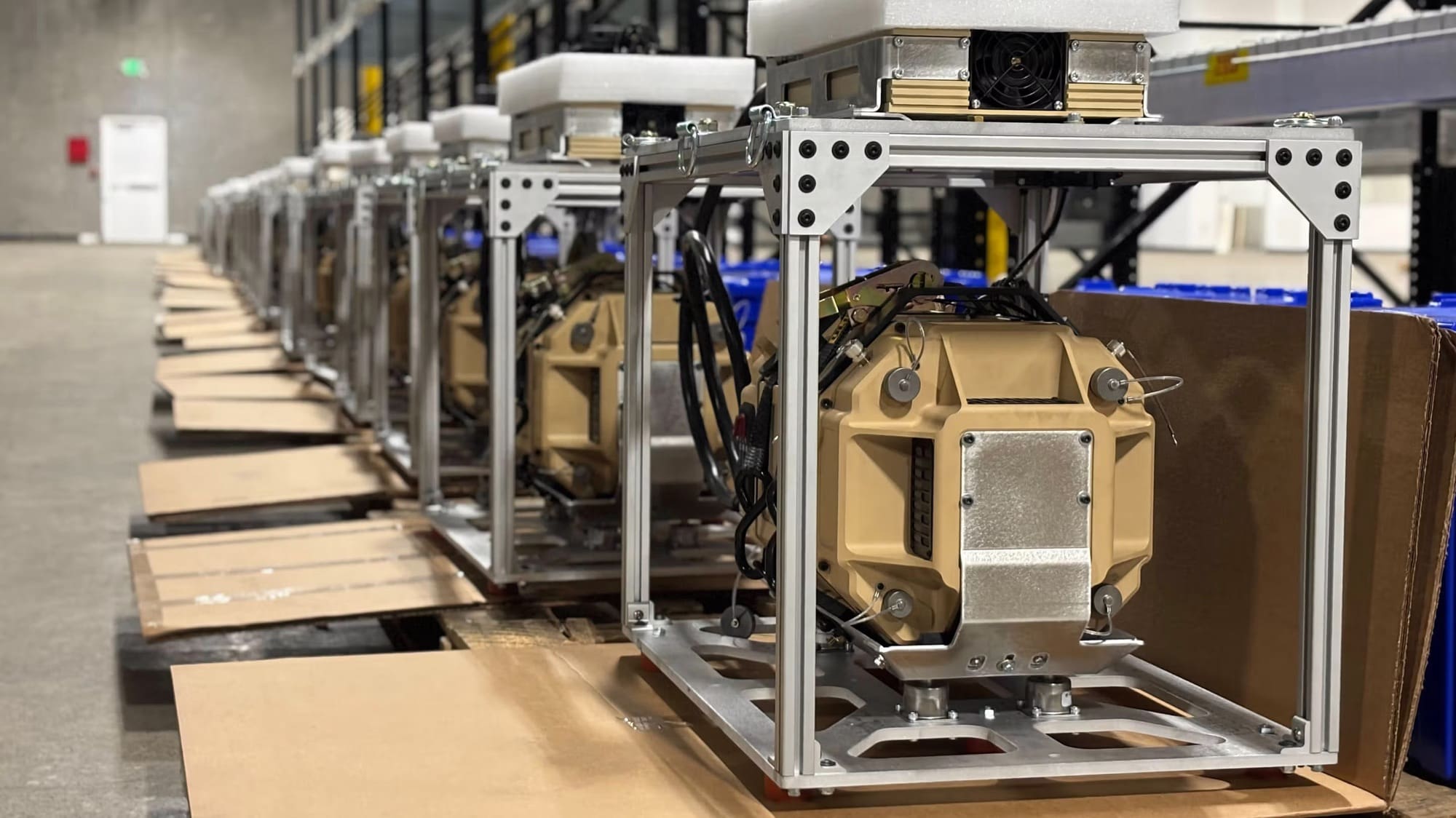
In under a week in March 2026, Anduril delivered more than a full month’s of Pulsar production output off the shelf and directly into active operations for two U.S. government customers. These systems were immediately installed for fixed-site EW protection and aircraft survivability. While the surge was underway, Anduril was already doubling its EW production capacity — a line that once delivered 500 Pulsars per year now delivers 1000.

Anduril built Pulsar to interrogate a wider range of the electromagnetic spectrum autonomously, deploy software updates in hours rather than months, and network multiple EW systems across distributed operations to optimize coverage, locate points of interest, and deliver coordinated effects. That architecture is a force multiplier. Conflicts in Ukraine and the Middle East have validated the approach — drone-saturation tactics in both theaters have exposed how quickly EW countermeasures need to adapt, and how rapidly traditional systems fall behind when they cannot update in the field. Electronic warfare is increasingly key to either enabling their success on the offensive, or defeating them on the defensive. Since 2022, the Pulsar family has been deployed with operational users across multiple continents in fixed-site, mounted, and airborne configurations — all variants proven in combat and updated continuously based on user feedback.

Anduril built its manufacturing infrastructure with the assumption that demand would not announce itself in advance, and that when it arrived, achieving throughput in weeks, not quarters, would be necessary. A production line that can absorb a massive surge mid-scale-up while simultaneously doubling annual output is not the kind of capacity traditionally available within the defense industrial base.

Deterrence is ultimately a production problem. Anduril will solve it by focusing on the factory.