FirstSpear

Archive for June, 2026

New DroneShield Report Reveals Serious Gaps in Airport, Critical Infrastructure Counter-Drone Security

Monday, June 29th, 2026

1 in 10 Have No Plan

New DroneShield Report Reveals Serious Gaps in Airport, Critical Infrastructure Counter-Drone Security
29 June 2026 – New research released today finds that unauthorized drone activity has moved well beyond a theoretical threat, according to international airports, aviation authorities, correctional facilities, and port operators across North America, Europe, Africa, Asia, and the Middle East.

DroneShield, a global leader in advanced counter-drone technology, released the findings of Airspace Under Pressure: A Global Assessment of Counter-UAS Readiness Across Airports and Critical Infrastructure, a new industry report drawing on direct survey responses from more than twenty airport and critical infrastructure operators worldwide.

The report finds:

Detection gaps are systemic and severe: 70% of respondents identified detection capability gaps as a barrier to effective counter-UAS operations.

Regulatory, legal constraints also hamper counter-UAS: 6 in 10 (60%) of respondents also indicated that they lack the legal authority to take direct mitigation action against unauthorized drones, even when the threat to safety is clear and immediate. Other reasons cited as barriers to effective counter-UAS operations include integration complexity (at 48%) and training and preparedness (35%).

Respondents were also asked to describe their organization’s counter-UAS operational objectives:

Full combination (Awareness + Detection + Tracking + Response): 57%

Detection-focused (Partial): 13%

Awareness only: 13%

Undefined / No formal plan: 17%

The responses reveal a critical structural problem: the gap between what organizations intend and what they have built.

In particular, the 17% of respondents with no formalized counter-UAS plan represent a specific and acute risk: organizations that will be managing a drone incident for the first time during the incident itself, with no established procedures, no clear escalation pathway, and no baseline situational awareness from which to act.

New Report: Airspace Under Pressure: A Global Assessment of Counter-UAS Readiness

“The primary Counter-UAS challenge in 2025 is not awareness of the threat; it is the capacity to convert awareness into authorized, coordinated, real-time action,” said Tom Adams, Director of Public Safety at DroneShield. “Technology investment alone will not close this gap. Regulatory reform and operational integration must advance simultaneously.”

The Readiness Maturity Gap
The report introduces a readiness maturity framework mapping respondents across two dimensions: objective maturity and operational capability.
 
The majority of surveys operators cluster in two quadrants:

Prepared quadrant: 13 organizations had defined operational objectives and moderate counter-UAS capabilities.

These are typically larger airports and critical infrastructure operators who have invested in the problem and have structured frameworks in place. But even within this group, capability gaps remain. The Prepared quadrant describes a relative position, not an adequate one.

Partial quadrant: 5 organizations had operational objectives in place, but capability has not kept pace with the realities they face.

These operators face a specific risk: they have plans that they cannot execute with their current tools and authority.

Exposed quadrant: A meaningful minority (of 3 organizations) sit in the exposed quadrant: undefined objectives, minimal capability, and no formalized framework.

These organizations are at the greatest risk of managing a serious drone incident reactively, without established procedures, and with outcomes that are difficult to predict or control. 

Overall, this report argues that the defining differentiator in the years ahead will be whether organizations address these gaps systematically, before an incident forces an unplanned response; or reactively, under pressure, with consequences that cannot be fully controlled.

Report Availability
Airspace Under Pressure is available for download here. The full report includes operator survey data, thematic analysis across five key capability dimensions, and a readiness maturity framework for self-assessment.
Colt Optics Launches New Family of Red Dot Sights and Magnifier

Monday, June 29th, 2026

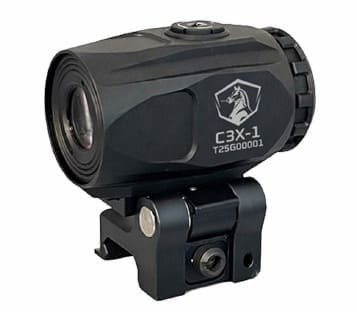
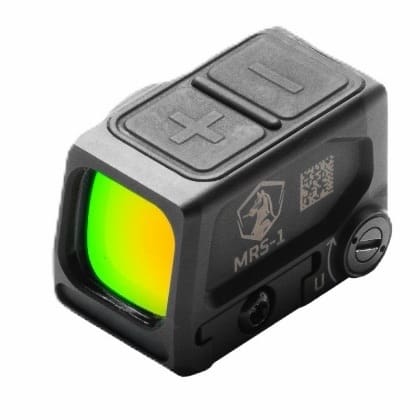
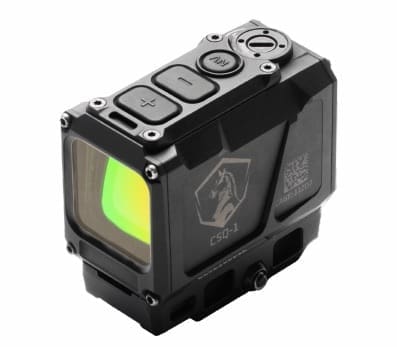
Colt Michigan (June 29, 2026) – Colt Electro Optics LLC (“Colt Optics”) today announced the launch of its first family of red dot optics, including the MRS-1 enclosed-emitter pistol red dot, the CSQ-1 rifle red dot, and the C3X-1 3x magnifier.

Modern shooters demand speed, reliability, and confidence in their equipment. Whether mounted on a duty pistol, patrol rifle, or personal-defense firearm, an optic should help the shooter focus on the target, not fight the limitations of the sight itself.

The MRS-1, CSQ-1, and C3X-1 were developed around a common philosophy: help shooters acquire targets faster, maintain awareness, and perform with confidence in demanding real-world environments. These products also represent the first optics in the Colt Optics lineup to be Designed, Engineered, and Assembled in Michigan, USA.

“At Colt Optics, we believe professional users deserve equipment they can trust when performance matters most,” said Dennis Finnegan, Chief Operating Officer of Colt Optics. “Every design decision behind these products was driven by real-world shooter needs. For the MRS-1, CSQ-1, and C3X-1, we are proud to say they are Designed, Engineered, and Assembled in the USA by our team in Michigan. We didn’t set out to build products that simply check boxes on a specification sheet. We set out to build optics that help shooters perform better.”

MRS-1 Closed Emitter Pistol Red Dot

Designed, Engineered, and Assembled in Michigan, USA, the MRS-1 was developed to deliver the reliability advantages of a closed-emitter optic without compromising the size, weight, and handling characteristics shooters expect from a modern handgun.

Built around a rugged 7075-T6 aluminum housing, the MRS-1 protects critical optical components from environmental contamination while maintaining a compact footprint of just 1.85 inches and a weight of only 2 ounces. A generously sized viewing window provides an expansive sight picture, helping shooters quickly acquire the dot while maintaining awareness of the target and surrounding environment.

The optic utilizes the popular ACRO footprint, features motion-activated illumination, and incorporates a crisp 3 MOA aiming dot designed to balance speed and precision. The low-profile design also allows co-witnessing with many standard-height iron sights, providing an additional layer of confidence and redundancy.

CSQ-1 Full Size Square Red Dot

Designed, Engineered, and Assembled in Michigan, USA, the CSQ-1 was built around a simple question: how do we help shooters get on target faster?

The answer begins with the sight picture.

Featuring one of the largest square viewing windows available on the market, the CSQ-1 was designed to maximize field of view and situational awareness. The expansive sight picture helps shooters acquire and stay on targets more quickly while maintaining awareness of everything happening around them.

An advanced aspheric lens design minimizes distortion while a multi-coated optical system delivers exceptional clarity across a wide range of lighting conditions. The optic also features motion-activated illumination, dedicated night vision settings with a dedicated NV button, and a multi-reticle system designed to support both close-range and extended-distance engagements.

Built around a rugged 7075-T6 aluminum housing, the CSQ-1 was engineered to withstand demanding environments while delivering the performance professional users expect.

C3X-1 3x magnifier

The C3X-1 was developed to extend the capability of a red dot sight without sacrificing the speed and simplicity that make red dots so effective.

At just 2.72 inches in length, the C3X-1 is one of the shortest 3x magnifiers available on the market. Its compact footprint helps preserve valuable rail space while reducing overall system bulk. Despite its compact size, the C3X-1 provides an industry leading 85mm of eye relief that helps shooters get behind the optic quickly and maintain a comfortable, forgiving shooting position.

An ambidextrous flip-to-side mount allows rapid transitions between magnified and non-magnified viewing, while an adjustable diopter and included riser plate provide flexibility for a wide variety of rifle configurations and shooting applications.

When paired with the CSQ-1, the C3X-1 allows shooters to transition seamlessly between close-range speed and target identification at distance.

“Throughout development, we focused on how these products would actually be used in the real world,” said Jon Meyer, Vice President of Product Development for Colt Optics. “Every feature had to earn its place. Whether it improved speed, awareness, durability, or ease of use, the goal was to create optics that help shooters perform better under real-world conditions.”

The MRS-1, CSQ-1, and C3X-1 will be available through authorized retailers in the coming weeks.

For more information, visit www.coltoptics.com.

Lackawanna Police Department Visits Gentex Corporation to Take Delivery of Ops-Core FAST Helmet Systems

Monday, June 29th, 2026

CARBONDALE, PA, June 29, 2026Gentex Corporation, a global leader in personal protection and situational awareness solutions for defense forces and emergency responders, recently welcomed the Lackawanna Police Department at its headquarters in Carbondale, Pennsylvania. During the visit,officers took delivery of Ops-Core® FAST® helmet systems and participated in product familiarization and feedback sessions with the Gentex team.

“The Lackawanna County SWAT Team is extremely grateful to Gentex Corporation for their generous support over the years,” said Guy Salerno, Blakely Borough Police Chief, President of Lackawanna County Chiefs of Police Association, Lackawanna County SWAT team member. “They directly support the safety and readiness of our team. We sincerely appreciate their investment in the protection of our operators and the community we serve.”

The visit marks another step in Gentex’s ongoing commitment to supporting law enforcement agencies through direct partnership, product innovation, and engagement with the officers who rely on their equipment on the job. It also highlighted the company’s connection to the local community, where many Gentex employees live and work alongside officers who serve the region every day.

“Supporting the officers who protect our communities is something we take great pride in at Gentex,” said Fred Grimm, VP of Commercial Sales Americas at Gentex Corporation. “Hosting the Lackawanna Police Department at our facility gave us the opportunity to not only deliver and train on their new helmet systems but also hear directly from the officers about the challenges they face in the field every day. Those conversations are critical to ensuring we continue developing solutions that meet the evolving needs of law enforcement.”

The Ops-Core FAST helmet systems being fielded are designed to provide advanced ballistic protection, comfort, and modularity for a wide range of law enforcement missions. Built on a legacy of proven performance, these systems integrate features that support extended wear, communications equipment, and mission-specific accessories, helping officers operate effectively in dynamic and high-risk environments.

SIG SAUER Advanced Concepts Update

Monday, June 29th, 2026

I caught up with SIG SAUER Advanced Concepts at SOF Week where they were showing some new developments.

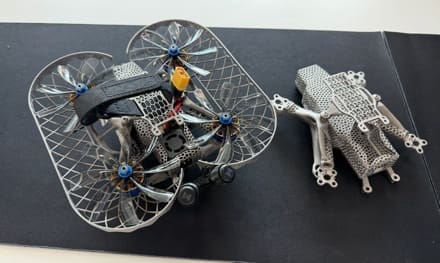
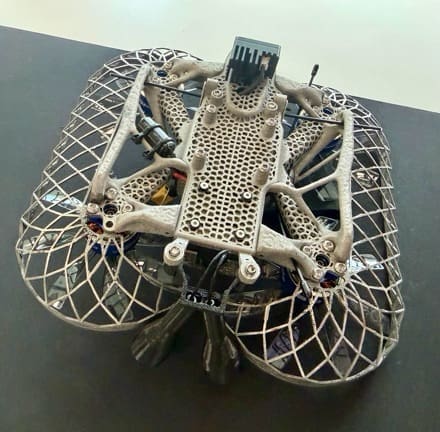
Up until recently they had been concentrating on Elite Training for drones and capability integration with existing systems. However, behind the scenes they were prototyping both new payloads as well as complete drones. They currently have a quad copter design called the R3 Saber with 3.5 propellers as well as the fixed wing Scythe.

As you ca. see, the body is 3D printed and the Saber offers a 1300 gram payload capacity.

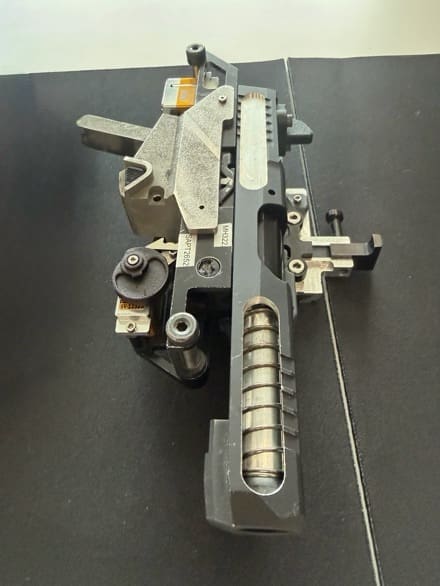
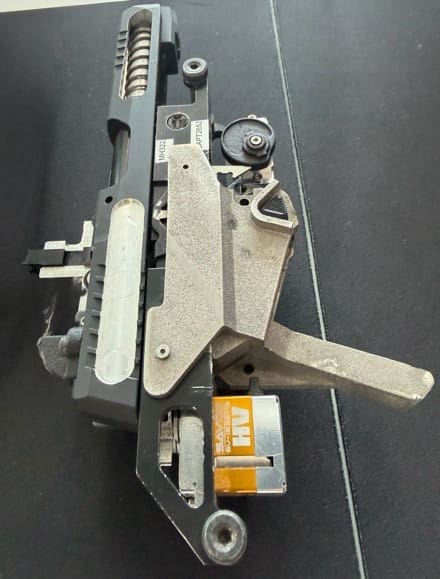
As for payloads, they have developed the MH322, MH365, MHTASER, P320 SimFX/UTM and P365 airsoft end effectors which feature SIG’s SENTRY electronic and safety board, for control and reliability. Calibers include .22, .380, and 9mm as well as Taser and UTM capabilities.

Seen here is the MH322 which weighs in under 600 grams. It offers a 25-round payload, precision laser targeting, and advanced tracking via remote operations.

www.sigsauer.com/defense-products

BFG Monday: Choosing the Right Belt System for the Mission

Monday, June 29th, 2026

Not every mission requires the same equipment setup.

The belt system that works well for a patrol officer, infantryman, range instructor, or prepared citizen may not be the right answer for someone working around helicopters, elevated structures, maritime environments, or vertical access operations.

That is why belt selection should start with the job itself.

Modern warfighters and armed professionals ask a lot from their equipment. A combat belt may need to support holsters, ammunition, medical gear, communications equipment, breaching tools, retention equipment, or climbing capability, all while remaining stable and comfortable during extended wear.

The challenge is that not every user needs the same level of capability.

Some users need a streamlined battle belt optimized for load carriage and daily operational use. Others require a more specialized system that integrates climbing or restraint functionality directly into their equipment setup.

Those are two very different requirements.

That distinction matters when discussing the BFG CHLK Belt and the Integrated Stealth Harness (“ISH®”).

The CHLK® Belt Was Built for Modern Load Carriage

For many users, a dedicated combat belt remains the right answer.

The BFG® CHLK® Belt was designed as a lightweight load carriage platform built to support modern combat equipment without unnecessary bulk. Built around the MOLLEminus®platform and BFG’s ergonomic curved belt design, the CHLK helps distribute weight more naturally while maintaining stability during movement.

That matters over long periods of wear.

A poorly designed belt can create pressure points, shift under load, restrict movement, or become increasingly uncomfortable once ammunition, medical equipment, radios, and other gear are added. The problem becomes even more noticeable during vehicle operations, long movements, or repeated transitions between standing, kneeling, and prone positions.

The CHLK Belt was designed to address those realities while maintaining a low-profile footprint that supports a wide range of operational roles.

For many military, law enforcement, and prepared citizen applications, that is exactly what is needed. A stable, lightweight gun belt capable of supporting essential equipment without adding unnecessary complexity.

Sometimes simpler is better.

The ISH® Was Developed for Specialized Operational Requirements

Some environments demand additional capability.

The BFG Integrated Stealth Harness (“ISH”) was developed for users who require the functionality of a combat belt along with integrated vertical, restraint, or climbing capability within a single adaptable platform.

Rather than functioning as a standalone belt, the ISH integrates harness functionality directly into the overall equipment system. The platform combines elements of a tactical climbing harness, gun belt, and travel restraint into one lightweight solution designed for specialized mission sets.

That integration allows the user to transition from weapons handling and movement to climbing or restraint operations without stopping to don separate equipment.

For certain operational roles, that matters significantly.

Helicopter work, maritime environments, elevated structures, confined access points, and other specialized tasks can quickly complicate equipment management. Carrying separate harness systems adds bulk, increases complexity, and may interfere with weapon access or mobility.

The ISH was designed to reduce that burden by integrating those capabilities into a single streamlined platform.

Just as importantly, it was built around the same ergonomic curve design and MOLLEminus architecture found in the CHLK system, helping maintain consistency across equipment setups.

Capability Should Match the Mission

Modern tactical equipment discussions often push users toward the most feature-heavy setup available. More capability is often assumed to mean better capability.

That is not always true.

The best equipment setup is usually the one that matches the actual mission requirement without adding unnecessary weight, complexity, or bulk.

For many users, a dedicated combat or battle belt like the CHLK is the right tool for the job. It provides stability, scalability, and comfort in a streamlined package designed for daily operational use.

For users operating in environments where vertical access, restraint capability, or climbing integration becomes necessary, the ISH provides a specialized solution designed around those realities.

Both systems solve problems. They simply solve different ones.

That distinction matters.

The goal is not to choose the most equipment. The goal is to choose the right equipment for the mission at hand.

For units seeking to increase survivability and operational performance through reduced load carriage by upgrading to Helium Whisper, contact the Blue Force Gear Military Department or visit BlueForceGear.com.

Army Armaments Center Develops New Counter-UAS Capability

Monday, June 29th, 2026

PICATINNY ARSENAL, N.J. — A new effort led by the U.S. Army Combat Capabilities Development Command Armaments Center demonstrated advancements developed for fire control, enabling the ability to engage and defeat drones with a common remotely operated weapon station while shooting on the move.

The fire control project is a Science and Technology Integration Office software effort that is designing, developing and demonstrating advanced counter-drone fire control capabilities. The project underwent testing in April at the Aberdeen Proving Ground in Aberdeen, Maryland.

According to Nick Cascia, project officer, the initiative began as a mission-driven response to the emerging small unmanned aerial system threat after leadership directed the team to pursue an advanced fire control capability to defeat small drones.

The effort integrated the Armaments Center’s Gunslinger fire control, originally developed under the Future Attack Reconnaissance Aircraft program, and adapted it for ground-to-air targeting. The remote weapon station is able to defeat small moving targets while the vehicle is in motion by using the Gunslinger’s fire control, as well as various vehicle sensor feeds, to provide real-time data, ensuring the weapon is accurately aimed at the target drone.

This fire control solution uses a modular open system approach, so the developed software as well as any future enhancements can be shared across the Army. Once matured, the software will improve system accuracy against drones, reducing the number of rounds needed to defeat the threat.

According to James Little, deputy project lead, the development team received promising results from their April tests and will iterate and build upon these results in subsequent tests to improve system performance. With these tests, developers will continue to increase the speed of both the vehicle and drone.

“It’s a great start to the effort,” Cascia explained. “The [project] team has put considerable time and effort into developing our advanced fire control algorithms and preparing for this test. Once we started destroying drones, it showed the hard work was paying off.”

By Tyler Barth

Rheinmetall Battlesuite – The Digital Foundation for the Reconnaissance and Strike Network

Sunday, June 28th, 2026

Multidomain operations require advanced approaches to effectively coordinate and integrate each domain. As an all-domain system house, Rheinmetall offers platforms, systems, and services on land, in the air, in space, at sea, and in the cyber and information domains.

Furthermore, Rheinmetall acts as a digital systems integrator that orchestrates multidomain operations via a software-defined battlesuite.

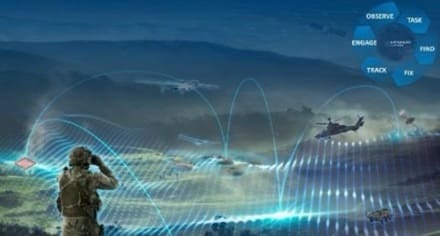
With the combination of the FV-014 Loitering Munition System, the Containerized Missile Launcher (CML) being demonstrated for the first time, and the Battlesuite, along with additional sensors, effectors, and platforms, this system integrates reconnaissance, command, and engagement into a single architecture.

Rheinmetall’s reconnaissance and strike network is an innovative solution for maximum transparency in the operational area, minimizes response times, and thus ensures a decisive advantage in protecting friendly forces, from the first signal in space to the impact on the ground. The Rheinmetall Battlesuite serves as the digital foundation of this combat network. It provides the framework for the digitalization of platforms, sensors, and weapons systems and, through open and standardized interfaces, enables the seamless networking of existing and future systems. This allows information to be made available more quickly, reduces integration efforts, and enables the utilization of existing capabilities from different manufacturers within a common command and information environment.

For Rheinmetall, the sensor-effector chain begins in space and orchestrates a nearly seamless situational picture with scalable effectors. This comprehensive situational picture forms the basis for applying rapid command and control processes to any threat quickly and appropriately. Unmanned systems are playing an increasingly important role in this context. The diversity of systems, from satellites and drones to armored vehicles, poses a risk: complexity and fragmentation. If systems are not networked with one another and do not implement coordinated, effective data exchange, the time advantage is quickly lost. This is where the Rheinmetall Battlesuite comes in.

The Battlesuite is not a traditional standalone product, but a revolutionary software architecture concept. It is based on standardized middleware, the Tactical Core, enabling a wide variety of applications and hardware platforms to be securely and interoperably networked and operated.

The Battlesuite is defined by the following three pillars:

• Openness: Moving away from vendor-locked siloed solutions toward non-proprietary standards.

• Interoperability: Seamless communication between partners, military branches, nations, and different hardware generations.

• Future-proofing: New AI-enabled capabilities can be seamlessly integrated into the existing system without requiring the entire infrastructure to be recertified.

Information flows from the orbital sensor through the Tactical Core to the effectors on the ground, at sea, or in the air. In this way, the Battlesuite creates the infrastructural foundation for Software Defined Defense.

In a world where the threat landscape is becoming increasingly unpredictable, Rheinmetall provides the answer: an integrated ecosystem that combines reconnaissance, command, and effect into a single unit.

ThayerMahan’s Outpost Acoustic Intelligence Payloads Selected for Large-Scale Deployment

Sunday, June 28th, 2026

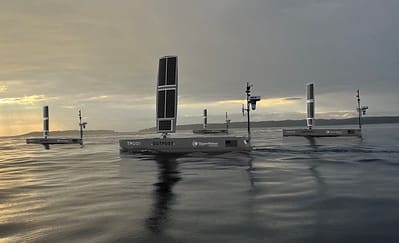
GROTON, Conn., June 25, 2026 — ThayerMahan, Inc. has been awarded a contract to deliver dozens of Outpost® acoustic intelligence payloads, along with TransparenSea® processing software, to an international defense customer. The award represents one of the largest fielded deployments of unmanned acoustic sensing systems supporting persistent undersea surveillance and USW (Undersea Warfare) missions.

ThayerMahan to deliver dozens of Outpost acoustic intelligence payloads to international defense customer.

The selection followed a rigorous, multi-phase evaluation that included controlled validation, extended at-sea deployments, and head-to-head comparative trials against multiple payloads under representative mission conditions. Testing focused on detection performance, tracking reliability, system endurance, power efficiency, and integration with unmanned platforms.

During multi-month deployments, Outpost® and TransparenSea® demonstrated continuous wide-area acoustic surveillance, detecting, classifying, and tracking targets of interest at operationally relevant ranges, with near-real-time delivery of actionable acoustic intelligence to shore-based Maritime Operations Centers. The systems met or exceeded performance expectations for both surveillance and USW missions while operating within constrained power and size profiles typical of small, unmanned platforms.

Key factors supporting selection included:

  • Persistent coverage: Continuous operation over extended deployment periods
  • Detection and tracking performance: Reliable target hold and classification at range
  • Low power consumption: Enabling long-duration unmanned operations
  • Ease of integration: Minimal platform modification required
  • Near-real-time data delivery: Actionable data landed in shore-based Maritime Operations Centers for rapid decision making
  • Analyst usability: Intuitive interface reducing operator workload and training burden

“Persistent, wide area acoustic sensing requires consistent performance over time, which is why we spent the last decade perfecting our capability,” said Mike Varney, President Products & Engineering, ThayerMahan. “ThayerMahan sets the global benchmark for unmanned acoustic intelligence. Outpost and TransparenSea have been repeatedly validated under operational conditions, which was a key factor in this selection.”

The contract reflects increasing demand for scalable, unmanned acoustic sensing solutions that can rapidly be deployed to extend maritime domain awareness without reliance on traditional crewed assets.

“This award aligns with the need for operationally relevant, fielded capability that delivers consistent surveillance and USW performance,” said Mike Connor, Chairman and CEO. “The focus is on systems that work as deployed – reliably, at scale, and with immediate mission impact.”

The awarded systems are exportable and production-ready, supporting rapid fielding timelines and broader adoption of distributed, unmanned sensing architectures for undersea domain awareness.