FirstSpear

Archive for July, 2026

Ghostworks Unveils MRLN, the Multirole Remote Littoral Node

Wednesday, July 15th, 2026

Developed with General Atomics Aeronautical Systems, Inc. and Mercury Marine, MRLN enables Ghostworks’ M-Hull and powercat vessels to perform multiple missions from a single platform, without trading off speed, range, or payload.

CARLISLE, PA — July 14, 2026 — At the 2026 Pennsylvania Defense and Innovation Summit, hosted by U.S. Senator Dave McCormick at the U.S. Army War College, Ghostworks today unveiled MRLN (Multirole Remote Littoral Node), a remote-pilot autonomy system that equips a single vessel to take on multiple mission types under human-in-the-loop command and control. MRLN is not a vessel; it is the mission systems layer that deploys across Ghostworks’ proprietary M-Hull and powercat hull forms, turning each vessel into a multirole platform.
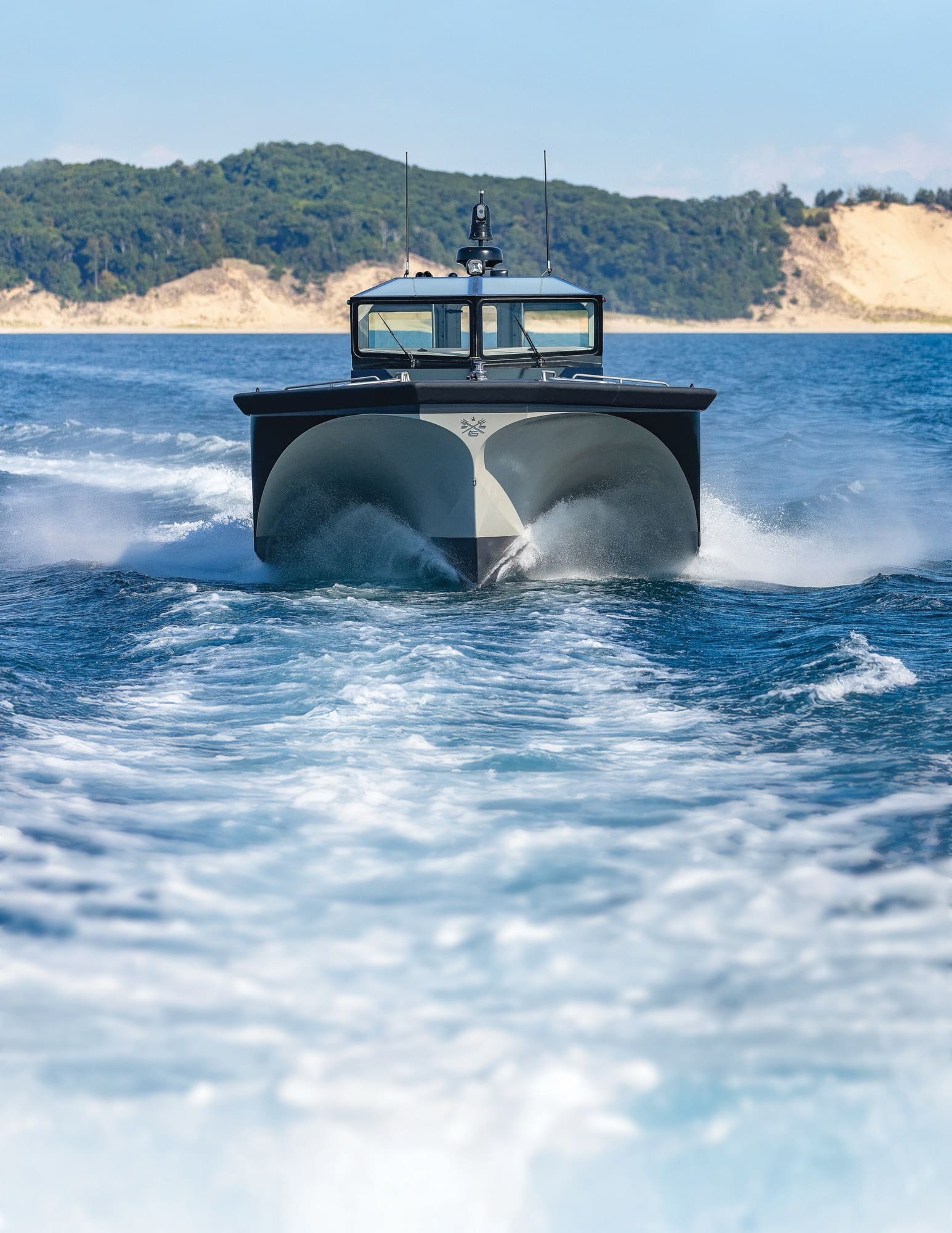
Minerva, Ghostworks’ 40-foot carbon fiber M-Hull, under way. Minerva carries MRLN, the Multirole Remote Logistics Node, a remote-pilot autonomy system developed with General Atomics Aeronautical Systems and Mercury Marine and unveiled July 14 at the 2026 Pennsylvania Defense and Innovation Summit.

MRLN was developed with three partners, each contributing a core piece of the system:

  • Ghostworks designed, engineered, and built a 40′ carbon fiber Minerva-class M-Hull, with speed, range, and payload currently unrivaled in the industry.
  • General Atomics Aeronautical Systems, Inc. (GA-ASI) brought decades of autonomy and sensor experience from remotely piloted aircraft and adapted it to the maritime domain.
  • Mercury Marine contributed its drive-by-wire propulsion technology and Command Gateway product, giving MRLN the endurance to transit contested and congested environments and to maintain station for extended periods in demanding conditions.

Command of the iron triangle: the long-standing tradeoff between speed, range, and payload has quietly dictated naval procurement for a generation. Rather than optimizing for one at the expense of the others, Ghostworks designs its vessels to maximize performance across all three metrics. Ghostworks’ Minerva-class vessel can carry 17,500 lbs at a cruise speed of 30 knots and handles sea state 4. Minerva is the first to employ MRLN, allowing operators to control the craft remotely, mission to mission, whether delivering fuel to an isolated craft, carrying a high-value load, or racing to conduct a rescue. Deployed across Ghostworks’ proprietary hull forms, MRLN provides granular control over that performance tradeoff for the first time.

MRLN pairs its modular, subsystem-agnostic architecture with a proven, serious payload capacity. The system is human-in-the-loop: a human operator retains situational awareness even as the vessel runs autonomously and can take control of the craft at any time. Operators can reconfigure mission profiles in the field, giving commanders a platform that adapts to the fight instead of forcing the fight to adapt to the platform. That freedom is the point. MRLN was built to function anywhere, anytime with its own connectivity.

“For decades, naval planners have had to accept that speed, range, and payload pull against each other. Optimize for one and you sacrifice the others,” said Brooke Kerschbaumer, CEO, Ghostworks. “Our vessels were architected to break that constraint. MRLN gives operators human-in-the-loop command and control over that tradeoff space, mission to mission, without changing platforms.”

“Leveraging our development of world-leading autonomy for air-vehicles into the maritime domain is a natural progression,” said Jeff Hettick, vice president of GA-ASI’s Agile Mission Systems. “This partnership really highlights how bringing together the best in the defense industry can yield exciting new capabilities for our warfighters in a timescale that is relevant.”

“Our role was to prove that MRLN could meet the control and reliability demands of sustained surface operations,” said Carl Greiner, Director of Government & Advanced Maritime Systems, Mercury Marine. “This integration expands what’s achievable in a remote-piloted maritime system.”

Five Missions, One Platform

MRLN-equipped vessels are designed to support:

  • ISR: persistent, low-signature surveillance in contested littoral zones
  • Logistics resupply: autonomous delivery of materiel to forward-deployed forces
  • Mine countermeasures: detection and neutralization without placing crews at risk
  • Communications relay: extending network connectivity across dispersed operating areas
  • Littoral combat support: direct integration into combat operations in shallow, contested waters

Summary

MRLN is a remote-pilot autonomy system, developed with GA-ASI and Mercury Marine, that equips Ghostworks’ M-Hull and powercat vessels to perform five distinct missions from one platform. By letting commanders reconfigure mission profiles in the field, MRLN breaks the traditional tradeoff between speed, range, and payload, delivering flexibility that the littoral battlespace has not had before.
www.ghostworksmarine.com

Rangers Assess Bumblebee V2 at Fort Benning for Homeland Defense

Wednesday, July 15th, 2026

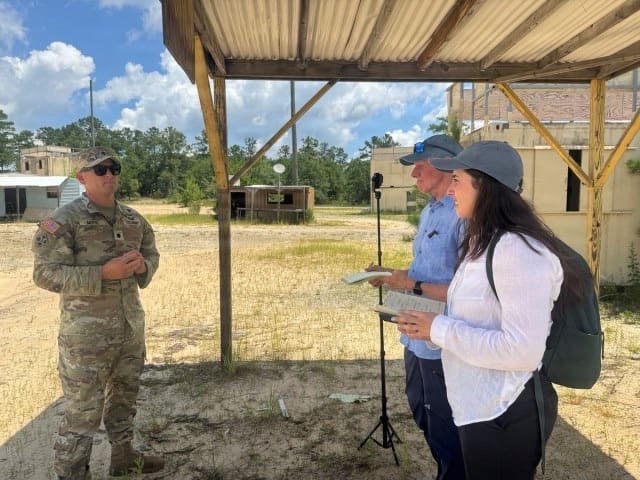
FORT BENNING, Ga. — Joint Interagency Task Force 401 and the 3rd Battalion, 75th Ranger Regiment, completed a comprehensive five-day operational training exercise July 6-10, 2026, at Fort Benning to evaluate and employ the Bumblebee V2 counter-drone system in defense of military installations and domestic critical infrastructure. This training represents the latest tactical integration of low-cost, low-collateral air-to-air interceptors designed to secure domestic airspace and installations from drone threats.

The training at Fort Benning marks a major step forward in transitioning cutting-edge, artificial intelligence-enabled drone technology into the hands of elite rapid-response warfighters. Developed under an initial $5.2 million agreement in early 2026 and scaled under a landmark three-year, $500 million contract awarded in May 2026, the Bumblebee V2 is a next-generation, first-person-view multi-rotor drone designed specifically to hunt and neutralize hostile small unmanned aircraft systems.

“Our Rangers train to deploy rapidly and operate under the most challenging, high-stakes conditions in the world,” said Lt. Col. Jon Peterson, commander of the 3rd Battalion, 75th Ranger Regiment. “The Ranger Regiment has a long history of pioneering the integration of advanced technologies and operational concepts that can then be rapidly proliferated across the Army and the joint force. Developing top-tier counter-UAS is a priority that requires our immediate action.”

Unlike traditional battlefield kinetic effectors that utilize energetic or explosive payloads, the Bumblebee V2 operates via a pure physical-collision mechanism. The system uses high-speed, direct kinetic energy upon physical contact to render both the interceptor and the threat inoperable, providing a safe, low-collateral solution. This precision-impact capability is optimized for domestic homeland defense under Title 10, Section 130i authorities, allowing commanders to protect critical military installations and national infrastructure without risking lives or property on the ground.

The Bumblebee V2 features an advanced three-camera array with improved gimbal rotation and artificial intelligence-driven automated target recognition. This feature reduces the cognitive load on operators, allowing soldiers to maintain full situational awareness while the drone autonomously tracks and executes hard-kill intercepts in mid-air with operator oversight.

“Securing our domestic airspaces and safeguarding critical infrastructure is both a modern battlefield reality and a vital homeland defense imperative,” said Army Brig. Gen. Matthew Ross, director of JIATF-401. “The Bumblebee V2 gives installation commanders a cost-effective, reliable interceptor that can neutralize threats without endangering our own forces or surrounding infrastructure. As the threat of drones continues to evolve, having a low-collateral kinetic option is essential for homeland defense.”

This training exercise builds directly on earlier operational assessments. These include tests conducted by paratroopers of the 82nd Airborne Division at Fort Bragg in April 2026.

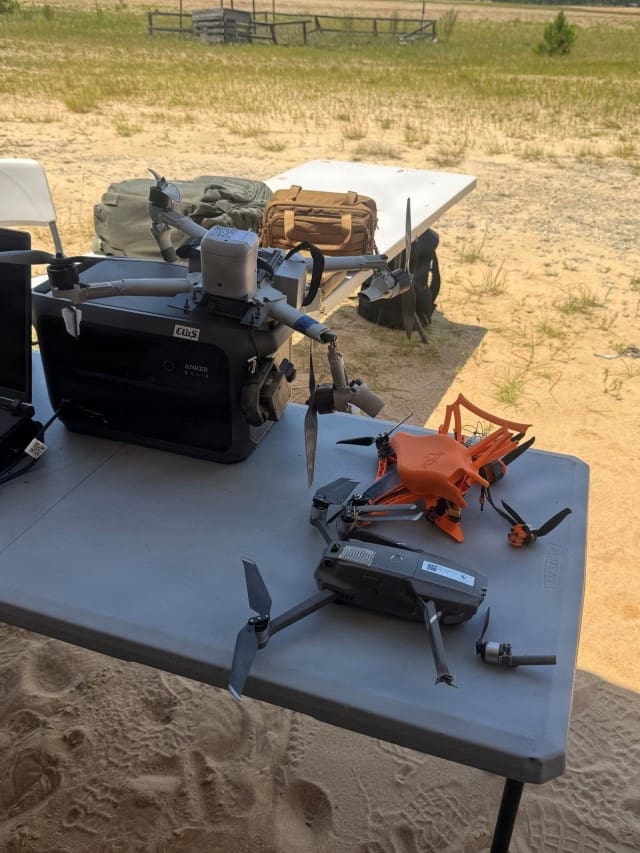
As part of the evaluation event, JIATF-401 assessed a UAS target management capability from DRACOE. Based in North Carolina, DRACOE is a veteran-owned and operated business providing low-cost UAS components paired with a flight software management system that automates representative targets for counter-UAS training. Reducing the training cost and time is a pivotal aspect of JIATF-401’s approach to delivering state-of-the-art counter-UAS capability to warfighters.

By partnering with the 3rd Battalion, 75th Ranger Regiment, JIATF-401 leverages a formation uniquely suited to rapidly evaluate emerging technologies under realistic operational conditions. The Ranger Regiment’s ability to integrate, refine and validate new capabilities helps accelerate the transition of promising technologies into operational use across the Army and the broader joint force. Through this collaboration, JIATF-401 continues to systematically expand the joint force’s capacity to employ layered, non-explosive kinetic defenses against evolving drone threats at home and abroad.


By LTC Adam Scher

Kopin Achieves Three Critical Milestones Advancing US Army Color MicroLED Technology for Ground Soldier Vision Applications

Tuesday, July 14th, 2026

New bonding capability, breakthrough brightness performance, and rapid progress toward full?color MicroLED integration mark major steps toward future programs such as Soldier Borne Mission Command (SBMC)

WESTBOROUGH, Mass., July 14, 2026–Kopin Corporation (NASDAQ: KOPN), a leading provider of application-specific optical systems and high-performance microdisplays for defense, training, enterprise, industrial, consumer and medical products, today announced three major milestone achievements in its color MicroLED development program for the U.S. Government’s Industrial Base Analysis and Sustainment (IBAS) program. These accomplishments represent significant progress toward establishing a fully U.S.?based MicroLED manufacturing capability and advancing next?generation soldier vision systems.

Milestone 1: Breakthrough MicroLED Performance Achieved

Kopin achieved a significant performance milestone, reaching over 150,000 nits of single-panel, full-color brightness—exceeding the program’s threshold target. This early performance result demonstrates strong initial capability, with planned improvements expected to push brightness even higher over time.

These results represent a major step forward in the development of high?brightness, defense?ready MicroLED displays suitable for advanced vision systems, augmented reality, and other mission?critical applications.

Milestone 2: Progress Toward Full?Color MicroLED Integration for Ground Soldier Integrated Vision Systems

Kopin has reached a second crucial milestone: successful early integration progress of its color MicroLED technology for U.S. Army ground soldier vision applications. This advancement brings Kopin closer to enabling future soldier?borne systems such as the SBMC solution, where lightweight, high?brightness, full?color MicroLED displays are essential for real?time situational awareness, digital overlays, and mission execution.

This milestone reflects Kopin’s ability to translate MicroLED performance gains into application?specific optical solutions designed for rugged, field?ready soldier systems.

Milestone 3: U.S. Bonding Equipment Delivered and Installed

Kopin has received and begun installation of its new MicroLED bonding equipment, a key asset supporting the IBAS program and Kopin’s broader effort to onshore critical MicroLED manufacturing processes. The equipment shipped in June and is scheduled to be fully installed by the end of July at Kopin’s U.S. headquarters.

This advanced bonding system enables the precise attachment of the backplane to the MicroLED array, creating a fully bonded display assembly—an essential step in MicroLED production. With this installation, Kopin will have U.S.?based bonding capability, a foundational requirement for scaling domestic MicroLED manufacturing.

Kopin expects to transition to manufacturing product in mid?2027, positioning the company as a key U.S. supplier of next?generation MicroLED display technology.

Management Commentary

“Our team has delivered three major achievements that accelerate our path toward U.S.?based MicroLED manufacturing, and next?generation display performance,” said Michael Murray, CEO of Kopin Corporation. “Receiving and installing our bonding equipment is a foundational step in onshoring MicroLED production, surpassing 150,000 nits of single-panel, full-color brightness demonstrates the strength of our technology roadmap, and our integration progress for Kopin’s support of the IBAS initiative and moves us closer to enabling future programs like SBMC which could enable hundreds of millions in revenues for Kopin over the life of the program. These milestones reinforce Kopin’s commitment to building advanced display capabilities here in the United States and leading the future of high?performance MicroLED systems.”

Forward Looking Statements

This press release includes statements that constitute forward looking statements made pursuant to the safe harbor provisions of the Private Securities Litigation Reform Act of 1995. Forward looking statements may be identified by the use of words such as “forecast,” “guidance,” “plan,” “estimate,” “will,” “would,” “project,” “maintain,” “intend,” “expect,” “anticipate,” “prospect,” “strategy,” “future,” “likely,” “may,” “should,” “believe,” “continue,” “opportunity,” “potential,” and other similar expressions that predict or indicate future events or trends or that are not statements of historical matters.

Forward looking statements are only predictions and are subject to risks, uncertainties, and assumptions that are difficult to predict and, in many cases, outside of our control. Actual results may differ materially from those expressed or implied in any forward looking statements. All forward looking statements are qualified in their entirety by these cautionary statements. We undertake no obligation to update forward looking statements except as required by law. Important factors that could cause actual results to differ materially from those described in forward looking statements are detailed in the Company’s most recent Form 10-K and other filings with the Securities and Exchange Commission.

This press release includes forward looking statements regarding Kopin’s breakthrough Micro-LED, our ability to turn these gains into field?ready soldier systems and our ability to enable hundreds of millions in revenues for Kopin over the life of the program. These statements also reflect anticipated strategic benefits associated with Kopin’s investment in bringing OLED display manufacturing processes in house. Forward looking statements are based on current assumptions and expectations and are subject to risks and uncertainties that could cause actual results to differ materially, including changes in customer demand, program schedules, manufacturing performance, and broader conditions in the defense market.

For more information, please visit Kopin’s website at www.kopin.com.

Exiger’s Pennsylvania Defense & Innovation Summit Report Released at US Army War College

Tuesday, July 14th, 2026

AI Platform Looks Deep into Supply Chains Offering National Security and Economic Insights for Sen. McCormick’s Event with President Trump and the Nation’s Defense and Tech Leaders
WASHINGTON, July 14, 2026Exiger, the market-leading supply chain AI company and largest provider of supply chain risk technology to the U.S. Government, today unveiled its report, The Defense Industrial Base in Pennsylvania, at the 2026 Pennsylvania Defense & Innovation Summit in Carlisle, Pennsylvania. Held at the U.S. Army War College on July 14th and 15th, the event convenes President Trump and leading defense and tech companies, including Anduril, Exiger, General Dynamics, Lockheed Martin, and Palantir.

Hosted by Senator Dave McCormick, the summit brings together military commanders, CEOs, investors, and entrepreneurs, like JPMorgan Chase CEO Jamie Dimon and Chairman of the Joint Chiefs of Staff General Dan Caine, to accelerate innovation and strengthen America’s defense industrial base using insights into the Commonwealth’s supply chains. Exiger’s summit report, developed using the company’s proprietary AI, reveals Pennsylvania’s central role in national defense readiness.

Exiger’s AI-powered analysis uncovers new insights into the Commonwealth’s defense economy and supply chains, which span 190K+ defense workforce and 8,900+ DIB companies, including 465k+ DIB-related parts manufactured, about 113k parts that are essential to weapon-system function, 288k parts for which Commonwealth suppliers are the single source, and some 2k weapon systems that rely on those single source providers. Exiger’s analysis identifies strategic opportunities for the Commonwealth in defense tech, defense production, space, and raw materials.

In a statement to New York Post, Senator McCormick said: “The comprehensive report compiled by Exiger underscores the indispensable role Pennsylvania’s defense industrial base plays in our nation’s security. The data speaks for itself. Pennsylvania is home to one of the strongest and most diverse defense industrial bases in the country,” adding that the summit “will showcase Pennsylvania’s profound role in ensuring America’s military remains the most formidable fighting force the world has ever seen.”

“Exiger’s AI can map supply chains in ways nobody else can,” said Exiger CEO Brandon Daniels. “Our report gives leaders convening at the U.S. Army War College deep visibility into the Commonwealth’s supply chain and into the role it plays in the larger defense industrial base while providing a blueprint to protect and grow Pennsylvania’s defense economy and the more than 8,000 businesses it sustains.”

Daniels is a speaker at the livestreamed event headlined by President Trump. On Day 2 of the summit, he will join Small Business Administration Administrator Kelly Loeffler and United Nations Ambassador Mike Waltz for a fireside chat on The Intersection of Foreign Policy and American Prosperity at 10:15 a.m.

To download a copy of the full report, visit: www.exiger.com/penn

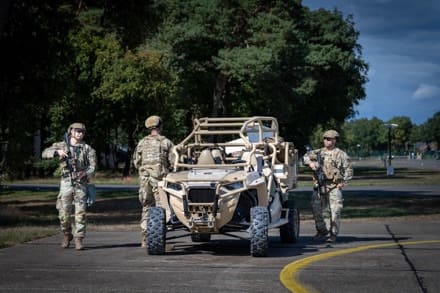
Belgium Places First Order of Polaris MRZR D Tactical Off-Road Vehicles Through NATO Contract

Tuesday, July 14th, 2026

MINNEAPOLIS – July 13, 2026Polaris Government and Defense, a division of Polaris Inc. (NYSE: PII), has secured an order for MRZR D4 vehicles from the Belgium Ministry of Defence, leveraging the NATO Support and Procurement Agency (NSPA) framework contract. The contract is valued at $10.6 million and is the first call order from the NSPA framework contract, which was first awarded to Polaris in September 2025. This procurement approach fulfills competition requirements, streamlines the acquisition process and eliminates the need for additional, time-consuming and costly trials and competitions. In addition to bulk pricing benefits and expedited acquisition, NSPA enables interoperability, standardization and a reduced logistics footprint across NATO members and partners.

“The Belgium Ministry of Defence helped establish the MRZR D on the framework contract, with additional partner countries including the United Kingdom,” said Steve Canner, senior manager, EMEIA, Polaris Government and Defense. “The vehicle’s capabilities and commonality with other NATO nations will serve Belgium forces very well and we’re proud to support them.”

The Belgium MoD managed the acquisition of Polaris ATVs through the NATO Logistics Stock Exchange (NLSE) platform, considered as a secured, web-based marketplace application allowing the users to directly explore and order the purchase of systems and mission related configurable items. The NLSE platform provides NATO National Ministries of Defence access to validated and quality assured products easily, including cargo and transportation kits, parts and service kits and maintenance and operator training courses.

“With these new vehicles, we are significantly increasing our mobility and operational capabilities,” said Colonel Kristof Van Poecke, Commander, Belgium Special Operations Regiment. “They enable our operators to respond more quickly and flexibly in challenging conditions, where speed and manoeuvrability make the difference. This is an important step to maintain our operational capacity at the highest level.”

Belgium joins more than 50 other military and security forces worldwide who field MRZR D tactical off-road vehicles from Polaris to support expeditionary, rapid response and special operations missions. The MRZR D’s modular payload design, diesel powertrain, air and sea transportability make it a trusted platform for tactical mobility in complex terrain and contested zones. The acquisition of the MRZR D4 will support the replacement of Belgium’s aging Groundhog vehicle fleet which have been in service since 2009.

Polaris first introduced the MRZR platform in 2012 and has continued to enhance the vehicle to meet the mission demands of the U.S. military, delivering gas and diesel variants to more than 50 allied forces worldwide. MRZRs feature a mission-flexible modular design, collapsible roll cage for internal tactical air transport, one meter fording capability, greater payload and extended range over commercial platforms. The MRZR D is combat-proven and transportable inside AW101 Merlin, CH-47 Chinook, V-22 Osprey and most in-service fixed wing aircraft, as well as maritime vessels, enabling rapid deployment and dispersal of forces from aircraft or ship-to-shore platforms into theater. It is a highly configurable platform that supports personnel transport, casualty evacuation, command and control and light cargo roles — all with a focus on speed, versatility and off-road capability.

Since their introduction, MRZRs have been outfitted with counter unmanned aerial systems (C-UAS), weapons and high-energy laser systems, intelligence, surveillance and reconnaissance (ISR) systems, expeditionary command and control systems, autonomy packages, litters for medical and casualty evacuation, aircraft refueling systems and communication equipment.

The MRZR D is part of Polaris Government and Defense’s broader portfolio of off-road mobility solutions that include the MRZR Alpha, MV 850, DAGOR and militarized snowmobiles. 

SureFire Flash Test: Suppressors, Muzzle Devices & Ammo

Tuesday, July 14th, 2026

In this video, SureFire conducts a comprehensive demonstration of flash performance with various suppressors and muzzle devices, shooting both M193 and Mk262 ammunition to show flash performance in best-case and worst-case scenarios.

www.surefire.com

T.REX ARMS Names Dave Rhoden Chief Growth Officer

Tuesday, July 14th, 2026

*Industry Veteran with Proven Track Record in Tactical Product Development, Sales, and Brand Growth Joins Leading Holster Manufacturer*

**CENTERVILLE, TN. – July 11, 2026** – T.REX ARMS, a premier manufacturer of innovative holsters and tactical gear, today announced the appointment of Dave Rhoden as its new Chief Growth Officer. In this role, Rhoden will lead strategic initiatives to expand the company’s market presence, drive product innovation, strengthen dealer and end-user relationships, and accelerate revenue growth across public safety, military, and civilian markets. Rhoden brings more than two decades of high-impact leadership in the tactical and law enforcement apparel and equipment sectors. Most recently, he served as Director of Sales – Public Safety for Vertx (Fechheimer Brothers, Inc., owned by Berkshire Hathaway) where he oversaw sales and training initiatives for Vertx-branded products. From 2016 to 2022, he led product development and helped re-establish the Vertx brand.

Earlier in his career at 5.11 Tactical, Rhoden served as Director, Strategic Business Unit for Packs, Bags, Belts, Holsters, and Breaching Tools. Under his leadership, his nylon category grew dramatically from $9.8 million to $34 million in annual sales and achieved the highest GMROI in the company. He introduced product demonstration videos as a standard practice, restructured the product development team, and oversaw go-to-market strategies from ideation through distribution.

“Dave Rhoden is exactly the leader we need to take T.REX ARMS to the next level,” said David Noor, T.REX ARMS Interim CEO. “His deep relationships across Tier 1 units, federal agencies, and the broader tactical community, combined with his proven ability to grow categories, launch successful products, and build brands, make him the ideal fit as we expand our holster and gear lineup.”

Rhoden is a highly regarded subject matter expert, having delivered presentations and product training to all Tier 1 teams as well as Langley, Pentagon Police, Capitol Police, FBI HRT, DEA, and others.

“I am absolutely driven to see T.REX succeed,” said Rhoden. “T.REX has earned a reputation for quality, innovation, and understanding what operators and serious users actually need. I look forward to leveraging my experience in product development, sales, training, and strategic partnerships to help the company continue its upward trajectory and deliver even more exceptional solutions to the market.”

**About T.REX ARMS**

T.REX ARMS designs and manufactures premium holsters, belts, targets, and other defense of life equipment engineered for real-world performance. Innovation, durability, and user feedback drive a brand that’s made in America by Americans, with a lifetime warranty and best customer service, for all who carry in defense of life.

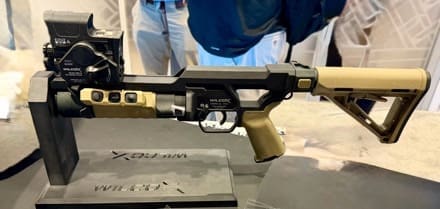
Wilcox Industries Mini-GL40

Tuesday, July 14th, 2026

At SOF Week I got my first look at the Mini-GL40 from Wilcox Industries. Their RAAM GSS (Rapid Acquisition Aiming Module Grenade Sighting System) is highly successful and been adopted by the US military as well as some of our allies as an effective fire control solution for 40mm Grenade Launchers.

During its development and fielding the team at Wilcox Ind had a lot of interaction with grenadiers and took what they had learned to develop the Mini-GL40.

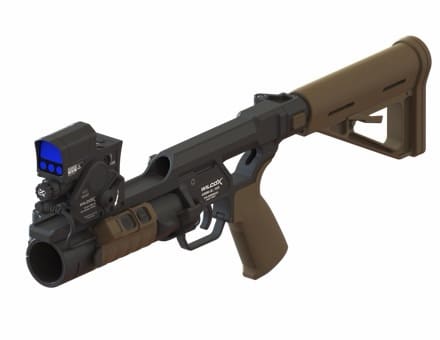
First and foremost, the Mini-GL40 is intended to be used at all times with the RAAM GSS M (Modified) and the two integrate seamlessly with one another.

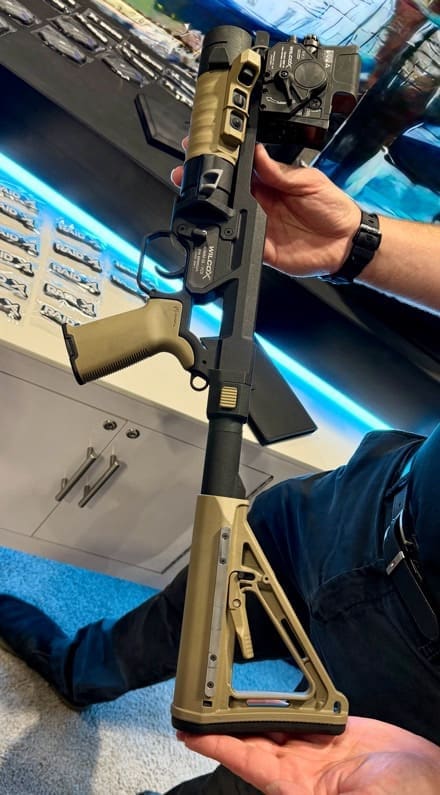
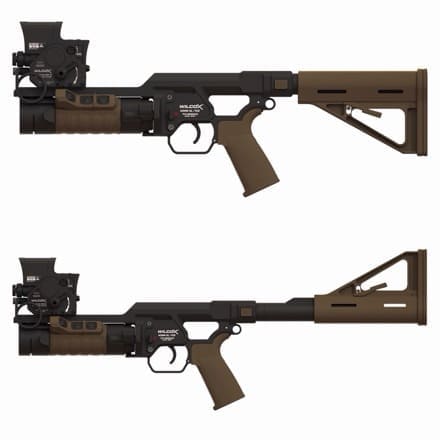
Designed from the ground up as a stand-alone launcher, it cannot be attached to a rifle like others on the market. Instead, this streamlined design eliminates excess weight and bulk as well as cable complexity.

A major selling point is the Steyr steel lined barrel. Most 40mm GLs have aluminum lined barrels. Wilcox Ind went with a steel lined barrel to maximize barrel life as it is more resistant to wear to the lands and grooves. In fact, they’ve got over 4,600 rounds through one of their prototype launchers.

Accessible with an enlarged breach lock locking lever, the side opening barrel will also accommodate any length, low-velocity 40mm round. The two position safety is ambidextrous and the weapon doesn’t have to be recocked in order to pull the trigger (also made by Steyr) in the event of a misfire.

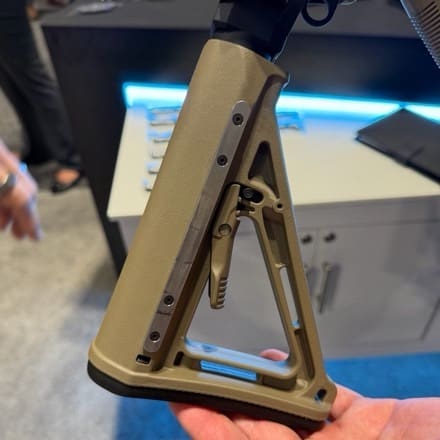
Both adjustable and collapsible, the “ON THE FLY” buttstock can lock into two positions: 6 O’Clock for ranges from 50 to 300 meters and 12 O’Clock for 300 meters and beyond.

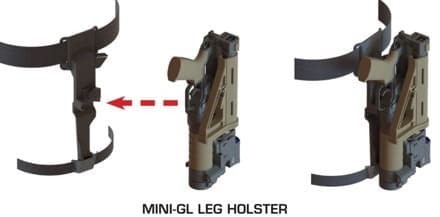
It will also collapse to the side and incorporates a steel insert which interfaces with magnet-based belt mounted weapon catches and the launcher is compatible with a “Quick-Draw” leg holster.

Both the stock and pistol grip come from Magpul due to their reliability and popularity. However, both can be replaced with other models by the user.

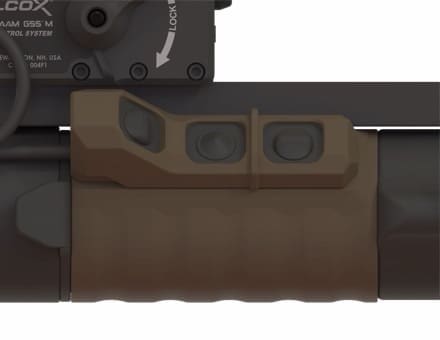
The GSS M is attached to the Mini-LG40’s three control buttons via a cable. With the buttons integrated into the weapon there’s no need for the grenadier to break his grip meaning quicker follow up shots. Additionally, the sight remembers the last input so the grenadier doesn’t have to program each round independently.

Powered by single AA battery, the sight provides Day/Night Capability complete with Red Dot Sight with BUIS, NIR aiming laser, NIR illuminator, and on-board ballistic computer with 2 pre-programmed ballistic solutions and quick ammo select. The reticle offers easy to read OLED Display in meter increments with aiming references to correspond to ballistic range. The system is also waterproof to 1 meter for 30 minutes.

Specs:

Barrel Length: 18 cm (7.09”)

Total Length:

With Buttstock Collapsed and Folded: 35.9 cm (14.13”)

With Buttstock Collapsed and Unfolded: 55.9 cm (22”)

With Buttstock Extended and Unfolded: 65 cm (25.6”)

Weight:

Standalone: 2.06 kg (4.54 lbs)

With RAAM GSS M: 2.27 kg (5 lbs)

Although Wilcox Ind is selling the Mini-GL40 with RAAM GSS M as a package, they know there are already a lot of their sights out there. There is an opportunity for those who already have a RAAM GSS to retrofit their optic to a MINI-GL40. Essentially, if you already have the Wilcox grenade launcher sight, they will sell you the GL à la carte.

www.wilcoxind.com/MINI-GL40