SIG SAUER - Never Settle

Archive for August, 2026

Army Leaders: Next Generation Command and Control ‘Ready to Scale’

Monday, August 3rd, 2026

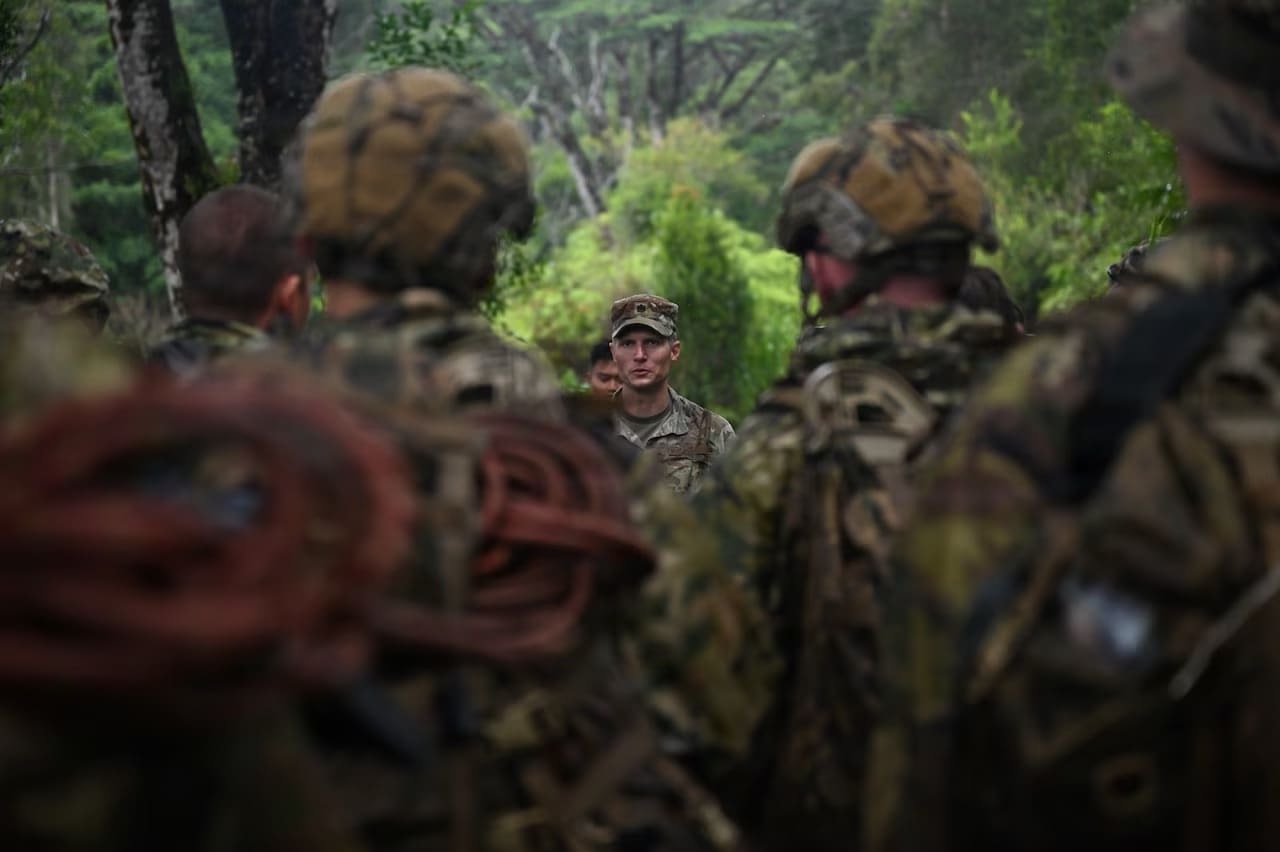
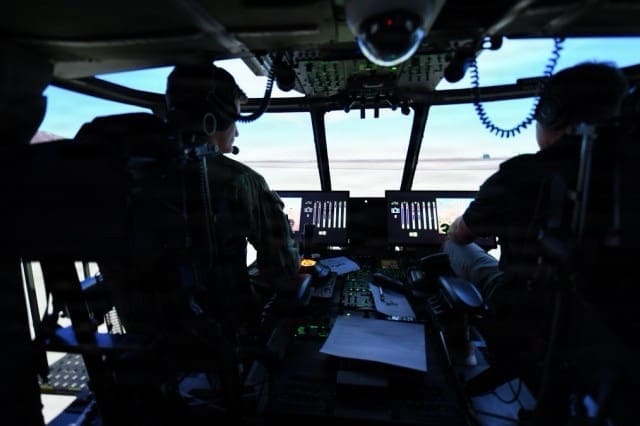
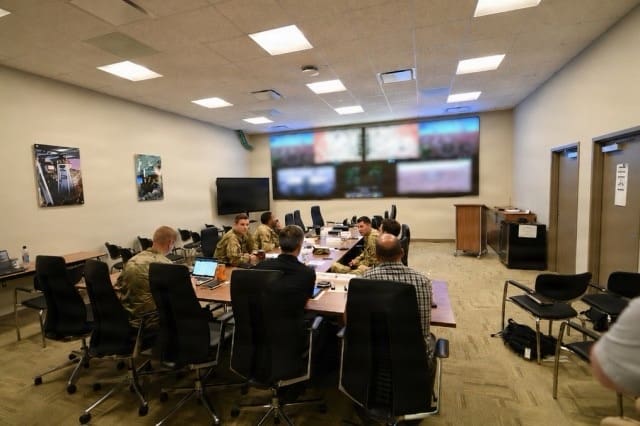
WASHINGTON – The U.S. Army announced July 29 it is ready to scale Next Generation Command and Control (NGC2) across the force during a media roundtable at the end of Project Convergence-Capstone 6 at Fort Irwin, California.

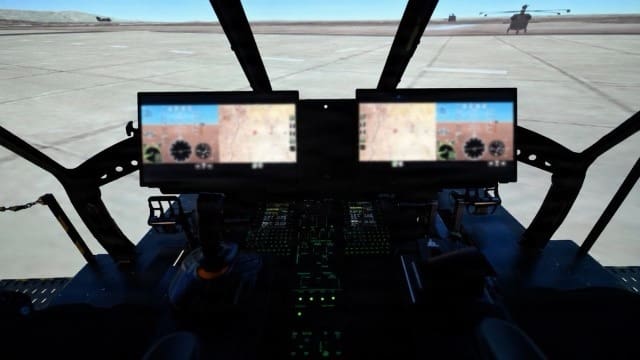
NGC2 replaces legacy, fragmented Army C2 systems – which focused on single functions like fires, logistics, or airspace management – with unified data across all functions to vastly increase the speed of commanders’ decision-making and operational maneuver. It enables every echelon from Soldier to Corps to run modern warfighting apps and artificial intelligence to support their mission, while providing resilient communications across vast distances for greater dispersion and survivability.

“The speed of the fight has changed. The fundamentals have not,” said Gen. Christopher C. LaNeve, vice chief of staff of the Army. “Command and control is still about a commander understanding the fight and acting on it — NGC2 is helping us close the gap between the two. That is what we are testing here: decision speed at the operational level, at scale.”

The Army has rapidly scaled the NGC2 prototype since September 2025, executing a series of operational training events and hands-on development with the 4th and 25th Infantry Divisions to continuously expand and improve the capabilities NGC2 provides at echelon and by warfighting function. These Ivy Sting, Ivy Mass and Lightning Surge events allowed commanders and Soldiers to employ and stress-test NGC2 hardware and software in realistic operations and contested environments, and provide feedback to industry partners to make in-stride improvements.

“We know the biggest risk to our national security and our national defense is not moving too fast. It’s not moving fast enough,” said Dan Driscoll, secretary of the Army. “The side that can sense a target, process the data, and deliver a kinetic effect the fastest, wins. That is the decisive advantage this capability provides.”

At PC-C6, which wrapped up this week, the Army continued to validating NGC2, scaling to a division level, in intense desert heat and against a relentless opposing force. Leaders said the execution of PC-C6 marks the end of the 10-month NGC2 prototyping effort, and the start of rapid and continuous delivery across Army formations, beginning with I Corps headquarters later this year.

“Events like Project Convergence are important because our Soldiers and units are able to use prospective technologies in a realistic and harsh environment, over challenging terrain and at scale,” said Lt. Gen. Michael McCurry, commanding general of the Army’s Futures and Concepts Command and PC-C6 director. “This reinforces that technology speeds decision-making but does not change how we fight. The speed of modern warfare has changed; the fundamentals have not.”

Operational benefits

NGC2 increases lethality and decision advantage by eliminating disconnected systems and providing integrated data across all warfighting functions. It has been demonstrated to shorten the digital kill chain – increasing the number of targets Soldiers and systems can prosecute in less time – and enhance operational effectiveness.

To support the rapid flow of information on the modern battlefield, NGC2 provides diverse and resilient communications options such as private 5G, satellite communications, and terrestrial links, increasing survivability.

“NGC2 is functional but not optimized.” said Maj. Gen. Patrick Ellis, commanding general of the 4th Infantry Division. “The dedicated opposing force and the unrelenting Fort Irwin conditions afforded us a great opportunity to stress the full NGC2 stack at PC-C6. The Ivy Division is proud to have delivered a prototype at the division scale, and we’ll spend the next year refining how we fight using the technology to share our lessons learned across the Army.”

Rapid acquisition

The Army’s approach for NGC2 also has been a model for acquisition reform, aligning requirements, resourcing, and contracting to change legacy processes, break down stovepipes and provide best-of-breed capabilities.

“NGC2 is aligned with the need to act with speed and acceptable risk to keep pace with emerging technologies and evolving threats,” said Brent Ingraham, assistant secretary of the Army for acquisition, logistics and technology. “The Army got here in less than a year by leveraging commercial-first technology, Soldier-driven design and teaming across the industrial base to move at the speed of relevance.”

There are currently more than 60 companies contributing to the NGC2 ecosystem, and the Army will continue to on and off ramp vendors and provide additional industry opportunities as NGC2 scales to additional formations.

“The marketplace is continually changing, so our message to industry is: if you show up, integrate, and your capability delivers value – and continues to deliver value as we move through iterations – then you’re going to do well,” said Joe Welch, portfolio acquisition executive for

C2 and Counter C2. “The ecosystem environment we have created enables companies to solve problems collectively rather than individually and improve the quality and speed of product delivery to our formations.”

Next steps

Looking ahead, the Army will move to continuous delivery of NGC2 capabilities, enabled by the recent establishment of a common data layer baseline with industry to support rapid scaling. The data layer is the heart of NGC2, and it allows the Army to continue to tailor and refine other elements – including applications, infrastructure and transport – by formation.

The next units slated to receive the capability will include I Corps headquarters, enablers and several downtrace units. The Army NGC2 team is already working closely with I Corps leaders to align software and hardware deliveries to key training events, technical priorities, and operational needs, leveraging lessons learned from the 4th and 25th Infantry Divisions.

By U.S. Army Public Affairs

RoGO Communications Showcases New DropBlock and Mobile App at APCO 2026 Annual Conference

Sunday, August 2nd, 2026

GPS Location for Wildland Firefighters and First Responders
SAN ANTONIO (Aug. 3, 2026) – RoGO Communications, a company founded to develop lifesaving technology for firefighters and first responders, is showcasing the DropBlock 2.0 with a new mobile phone app to track the location of firefighters and equipment in locations where cellular service is not available.  

RoGO is exhibiting in booth 618 at the APCO Annual Conference Aug. 2-5 in San Antonio, Texas. The Association for Public Safety Communications Officials (APCO) is the world’s oldest and largest organization of public safety communications professionals who manage, operate, build and support public safety communications systems for law enforcement, fire, emergency medical and other public safety agencies.

RoGO Communications Chief Executive Officer Rod Goossen, along with his brother Derek, who served on teams fighting more than 100 wildfires, founded the company to develop technology that will save lives of wildland firefighters following the tragic deaths of 19 firefighters in the 2013 Yarnell Hill fire in Arizona. The launch of the DropBlock 2.0 and new mobile phone app on June 30 was the 13th anniversary of the memorial to honor the fallen firefighters and their families.

The satellite-enabled DropBlocks are now smaller in size and weight to be carried by wildland firefighters. The new RoGO mobile phone app enables point-to-point communications and displays the GPS location of firefighting assets along with fire weather data on mobile phones in austere, remote or cellular-denied areas when paired to a DropBlock.

The Arizona Department of Forestry and Fire Management field tested DropBlocks with six wildland fire handcrews, suggesting the smaller size and adding point-to-point data communications to send messages to targeted teams.

Immediate tactical coordination and lifesaving situational awareness is enabled by tracking the location of crews, equipment and resources including bulldozers, water tenders, fire engines, high-value structures, medical evacuation rescue sites and makeshift water resources. DropBlocks also share hyper-local weather information and serve as portable weather stations, including wind speed, direction, temperature, humidity and other IoT sensor data.

Initially engineered to save lives of wildland firefighters to avoid being trapped by the spread of the fire, DropBlocks also support first responders in other all hazards emergencies including disaster responses for hurricanes, earthquakes and floods.

The new DropBlock 2.0 and mobile phone are being field tested now with a commercial launch nationwide anticipated in Q4 2026. Field testing began in Red, White & Blue Fire Protection District in Breckenridge, Colo., where RoGO’s Chief Strategy Officer Derek Goossen serves as a training and safety captain.

“Having accurate and timely accountability for our people and equipment on a large incident is important. Wildfire incidents often occur where we don’t have good radio and/or cellular coverage, so communication becomes challenging to say the least,” said Mathew Benedict, the Division Chief of Wildfire and Community Preparedness for Red, White and Blue Fire Protection District. “The DropBlock gives us a simple way to track our resources and provides communications where we may not have any. It can also provide and transmit critical weather intel back to the incident command post which is great.”

For more information, please visit www.rogocom.com.

Still Available, SOFFE Silkies

Sunday, August 2nd, 2026

I’ll show my age here and call them Silkies even though I know folks love to call them Ranger panties these days. Also, I don’t want to get caught with a “unsafe for work” tag if I title this entry with the p word.

At any rate, no matter what you call them, the iconic SOFFE nylon shorts are still available and offered in a variety of colors.

Silkies were unit issued PT gear in Army and Air Force units I was assigned to. Back in my day we wore them as underwear under our BDUs and would take our BDU pants off in the summer and just wear a Brown T-shirt and Black silkies with jungle boots or running shoes around the team room. If you had to get a uniform on quickly it was easy and this ensemble could be used if you ended up doing some impromptu PT during the day. You can even swim in them.


www.soffe.com/products/original-ranger-panty

Soldier Pushes Limits for Hard-Earned Skippy Badge

Sunday, August 2nd, 2026

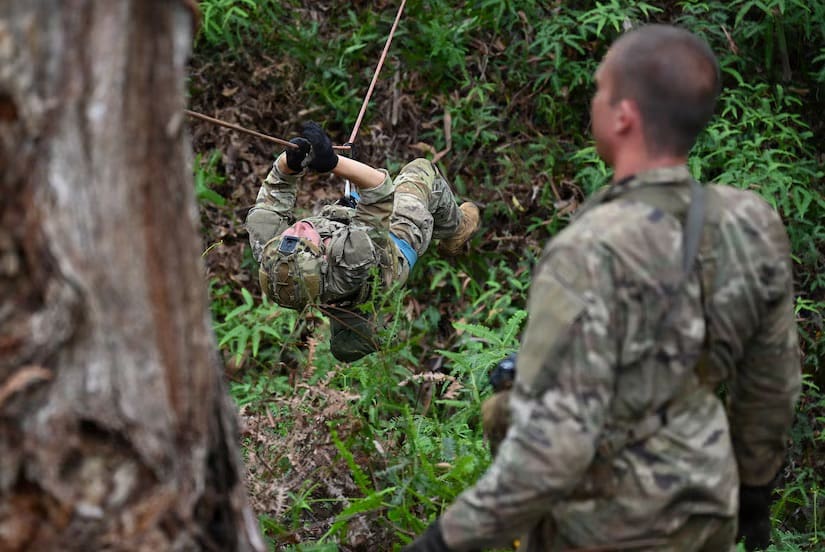
It was just before midnight as Private Ryan Doyle quietly prepared his gear for the final test to become a fully fledged rifleman.

Clouds smothered what little light the stars could provide, so he watched his breath fog in the air through night optics as he waited.

“I was more excited than anything, to be honest. We didn’t quite know what was in store, they didn’t really give us a brief, so I was in anticipation of what was coming,” Private Doyle said.

The signal finally came from the platoon commander and the section stepped off, carrying stores and heavy packs.

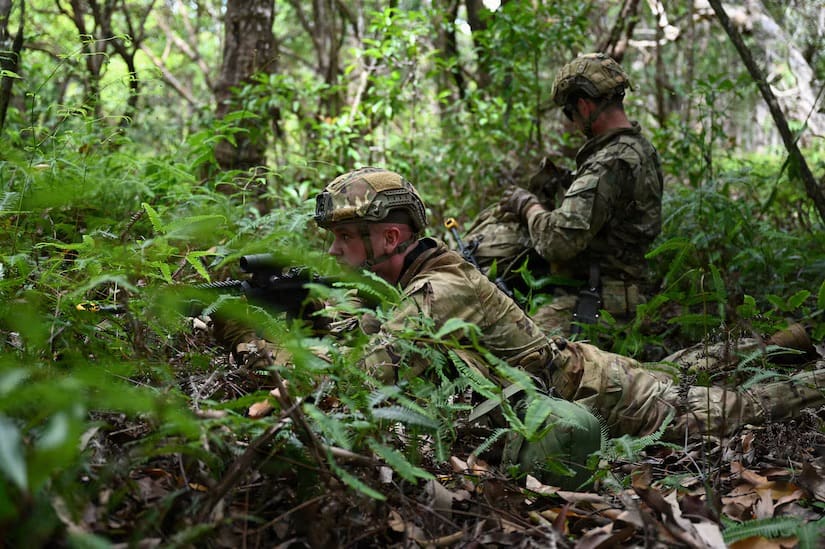
It wasn’t long before enemy engaged from the darkness.

Under direction of their section commander, they fought back with bursts of gunfire lighting up the night, and a soldier was wounded in the ambush.

After applying tactical care to the combat casualty, the section carried their teammate on a stretcher, the hardest part for Private Doyle.

“We had just come off 10 days of digging defensive positions, so my grip was quite gone. I wasn’t expecting that,” he said.

As they marched, Private Doyle reflected on the past 17 weeks of intense training at the Australian Army’s School of Infantry.

He learned to use multiple weapon systems, from pistols to 84mm Carl Gustaf recoilless rifles.

He dug defensive positions, fought in hand-to-hand combat, set barbed wire and trip flares, and negated those threats when he encountered them.

‘I wanted a challenge and to do things that you don’t get to do as an ordinary person. The equipment you use, the lifestyle, it stood out to me.’

With his section, he breached and cleared buildings or conducted patrols through the scrub to seek out, close with and destroy the enemy, regardless of weather or terrain – as the role of the infantry goes.

Now, he had to prove it on Exercise HardCorps, the final test before posting to a battalion of the Royal Australian Regiment.

The stretcher carry ended at the tunnels leading from Singleton Range to Lone Pine Barracks and the sun had started to rise.

The section cleared an urban facility before making their way through the obstacle and bayonet assault course one last time.

Their final stand was at the 25-metre range, with a live-fire shoot to finish the test.

After clearing off the range, they headed back to their lines – with broad smiles and laughter in contrast to the determined stoicism a few hours earlier.

A quick shower, cleaned rifles and fresh uniforms got them ready for the most anticipated event of the day: the Skippy Badge presentation.

With the mark of a qualified rifleman cradled in his hand, Private Doyle was excited for the next stage of his career in the Royal Australian Infantry.

“I wanted a challenge and to do things that you don’t get to do as an ordinary person. The equipment you use, the lifestyle, it stood out to me,” he said.

“I’m looking forward to learning what it’s like to be a soldier. We’ve completed this training and now we move on to learn and develop more. That will be really interesting.”

– Via Australia Department of Defence

Charter Arms Introduces the New Walker Revolver Series  

Saturday, August 1st, 2026

Ultra-Compact Rimfire Revolver

Shelton, CT.  (July 10th, 2026) Charter Arms®, manufacturers of affordable, 100% American-made revolvers for more than 60 years, is proud to announce the introduction of the new WalkerSeries of revolvers. The Walker is an ultra-compact, rimfire revolver designed for concealed carry. It is available with either a .22 LR or .22 WMR chambering; both have eight-round capacities.

“We couldn’t be happier to offer this .22 caliber revolver series,” said Nick Ecker, Owner, President and CEO of Charter Arms. “Customers have praised its concealability, accuracy, and design. This new series offers the ultimate in dependable performance.”

The new .22 Walker Series from Charter Arms delivers lightweight confidence in a sleek, modern concealed-carry platform built for everyday reliability. Designed for shooters who value simplicity, comfort, and dependable performance, the Walker combines an ultra-compact profile with eight-shot capacity in either .22 LR or .22 WMR. Featuring a snag-free concealed hammer design, smooth double-action trigger, lightweight aluminum frame, and durable steel components, the Walker is purpose-built for discreet carry and comfortable shooting. Whether carried as a personal protection revolver, trail companion, or easy-to-shoot everyday option, the Walker is built to be dependable when it matters most.

The Walker is an ultra-compact rimfire revolver built with an aluminum frame and steel barrel and cylinder. It features a concealed hammer for double-action only operation. Aiming sights consist of a fixed front ramp and rear notch in the top strap of the frame. It comes standard with compact rubber gripsand weighs in at just 15 ounces. Charter Arms is known for their high-quality finish options. The Walker is available with either a black anodized frame and black passivate finished stainless steel components, or with a pink or blue anodized frame and high polished stainless-steel components.

Available models include:

• 12221 – .22 LR Black/Black Passivate – MSRP: $461.72

• 12311 – .22 Mag. Black/ Black Passivate – MSRP: $467.15

• 52251 – .22 LR Pink Hi-polished – MSRP: $479.37

• 52351 – .22 Mag. Pink Hi-Polished – MSRP: $486.16

• 52271 – .22 LR Blue Hi-Polished – MSRP: $479.37

• 52371 – .22 Mag. Blue Hi-Polished – MSRP: $486.16

Specifications:

• Calibers: .22 LR & .22 Mag.

• Capacity: 8 rd. capacity

• Barrel Length: 2 inches

• Grips: Compact rubber

• Sights: Trenched sighting system

• Safety: Concealed hammer

www.charterarmsmanufacturing.com

BC Customs Selected for US Army ISV-H Prototype Agreement

Saturday, August 1st, 2026

Honeyville Utah – July 30th 2026BC Customs (BCC) in association with Raglan, has been selected for the U.S. Army Other Transaction Agreement (OTA) [W912CH-26-9-A061] to build prototypes for the Infantry Squad Vehicle-Heavy (ISV-H). The program has an approved Army Acquisition Objective of 606 platforms and is intended to provide critical operational capabilities, including exportable power to support tactical operations and onboard power to enable mission command while maneuvering.

Army Contracting Command-Detroit Arsenal selected the BCC-Raglan team as one of the participants in the competitive, multi-phase Commercial Solutions Opening [W912CH-26-S-C005]. Under the solicitation, the Government anticipated the award of up to three OTA agreements and/or FAR-based contracts. As part of the agreement, BCC will manufacture and deliver three (3) ISV-H vehicles’ utilizing Raglan electronic control and export power systems for Government evaluation as the competition advances toward a potential follow-on production award.

“BC Customs was built around one simple idea: build vehicles that perform when the mission demands it. Our success has come from understanding the operator, investing in our capabilities, and never compromising on the quality of the vehicle we deliver. We look forward to working with Raglan to deliver the best vehicle solution possible to the Warfighter” said Brandon Johnson, CEO at BC Customs.

Army-Industry Collaboration Advances Counter-UAS Technology

Saturday, August 1st, 2026

FORT A.P. Hill, Va. — As the war in Ukraine and ongoing global conflicts demonstrate, the rapid proliferation of agile, armed unmanned aircraft systems has fundamentally transformed modern warfare.

In direct alignment with the Secretary of War’s guiding principles of urgency, speed, efficiency, competition and lethality, the U.S. Army Command, Control, Communications, Computers, Cyber, Intelligence, Surveillance, and Reconnaissance Center is taking a leading role in ensuring our forces maintain absolute battlefield overmatch. By driving collaboration with defense technology developers, the center is rapidly delivering next-generation capabilities that will protect warfighters against these evolving lethal threats.

In May the Center executed its first-ever counter-small unmanned aircraft systems event, known as Warden, a collaborative government and industry assessment held at Fort A.P. Hill. It served as a venue for data collection, demonstration and evaluation of non-kinetic drone defeat technologies. Over the course of a week and half, a team of C5ISR Center counter-UAS experts collected data and performed field assessments of systems in development against various UASs flying mock attack runs.

For the 17 industry partners in attendance, Warden presented a unique opportunity to test their C-UAS systems against multiple types of aerial threats in real-world scenarios. They pitted their lasers, radio frequency jammers and an intercept UAS against more than a dozen types of UASs using a variety of realistic attack patterns, including a swarm of drones. During these challenges industry was constantly collecting performance data to refine and improve the systems and underlying algorithms.

Once the data was collected, each industry participant submitted their findings to the center for comparison to the actual UAS flight paths for ground truthing. By comparing this data against a verified baseline, C5ISR Center experts can assess each system’s performance against newly established performance criteria recently established by the Department of War and the Committee on Homeland and National Security of the National Science and Technology Council.

Called “The Standard Guidelines for Test and Evaluation of Counter-Unmanned Aircraft Systems Technologies,” it establishes an apples-to-apples comparison for the industry participants to further refine their systems.

Improvements made as a result of Warden include detecting and identifying incoming UAS threats from longer standoff distances for better force protection; updated sensor algorithms to create more resilient C-UAS solutions; and enhancements to make it easier to share data between the sensors, warfighters in the field and command and control.

Other improvements aim to make sensor and laser effector systems easier for dismounted squads to use. These enhancements will deliver low size, weight and power systems that can be rifle-mounted or paired with wearable sensors to keep Soldiers’ hands free while jamming.

The C5ISR Center organizers fully appreciated the value of collaboration, which combined with a sense of friendly competition to find the best-of-breed solutions for protecting America’s warfighters.

And it was not only industry that reaped benefits of the Warden event. The event’s project manager, Clint Farrell said, “As an honest broker assessing these technologies, the C5ISR Center is able to learn, transparently, which systems are mature and where there are still gaps that industry needs to apply future investments.”

C5ISR Center Director Beth Ferry agreed. “Working together with industry, we are finding the best C-UAS technology for our Soldiers: high performance, low weight, easy data sharing. There are no failures for our industry partners, just opportunities to improve and ensure they meet Soldiers’ needs.”

By Brian Feeney, DEVCOM C5ISR Center Public Affairs