SIG SAUER - Never Settle

Archive for August, 2026

Watch the Story of Pyrodex

Saturday, August 8th, 2026

Pyrodex is a black powder alternative which dates back to 1947 in a homemade lab outside Seattle. In 1976 Hodgdon Powder Co began producing this flammable solid, changing the game for black order enthusiasts. This is their story.

To learn more, visit hodgdonpowderco.com/articles/pyrodex-50th-anniversary-legacy.

Giving Time Back to the Rifle Company

Saturday, August 8th, 2026

By First Lieutenant Max Steinbach and First Lieutenant Collin Bergstrom, United States Marine Corps

First Lieutenant Max Steinbach is a Marine infantry officer serving as the company executive officer for Echo Company, 2d Battalion, 4th Marines. First Lieutenant Collin Bergstrom is a Marine infantry officer and a rifle platoon commander in the same company. The two of them built Scheme O, a planning tool for small-unit leaders, and they disclose that interest at the end of this article.

Abstract

Over the past two years the United States and its allies have pushed artificial intelligence into the planning and targeting work of combatant commands and alliance headquarters. Four echelons down, in the company office where plans become action, most leaders are still working with tools that were never built for the job. This article argues that what slows planning at that level is not a shortage of decision making but hours of mechanical labor.

To set the scene, it is late in the company office the night before an order is due. One platoon commander has a map, a protractor, and a fine-tip pen. Another is losing in a battle with a general-purpose mapping website, like CalTopo. A third is rebuilding the same concept-of-operations slide for the third time tonight, because the scheme of maneuver has changed again and the screenshot on slide four is now wrong.

Elsewhere in the same profession, planning looks nothing like that. In 2025 the Marine Corps licensed Palantir’s Maven Smart System for the entire service. NATO fielded its own variant across Allied Command Operations and declared it fully operational in June 2026. During Operation Epic Fury in March 2026, the commander of United States (US) Central Command, Admiral Brad Cooper, told reporters that advanced artificial intelligence tools were turning work that once took “hours and sometimes even days into seconds.” In January 2026 the Department of War (DOW) directed the services to become an “AI-first” force, front to back.

None of this investment is misplaced, nor should advanced capabilities be distributed evenly across every echelon. But at the bottom of the curve, the problem is not simply a smaller version of the one facing higher headquarters; it is a different problem altogether. Company and platoon commanders do not need artificial intelligence to choose a support-by-fire position. They need the repetitive mechanics of planning to stop consuming the time that they should be giving back to theirplatoons—and, most importantly, to the Staff NCOs, NCOs, and junior Marines and soldiers responsible for carrying out the plan.

The Friction Tax

The one-third, two-thirds rule is meant to protect preparation time: leaders use no more than one-third of the time available to develop the plan and leave the rest to those responsible for executing it. That time is taken from the platoon receiving the order late, the squad leader who must translate it into action, and the Marines left with fewer hours to rehearse, inspect their equipment, understand their roles, and prepare for the mission ahead.

At the company and platoon level, that time is rarely lost because the tactical problem is unusually difficult. It is lost due to mechanics. Building a scheme of maneuver by hand or in general-purpose software requires plotting dozens of grid coordinates, calculating grid and magnetic azimuths, accounting for declination, tracing weapon ranges and lines of sight, and drawing the battlespace geometries that keep supporting fires away from friendly forces. Then the plan changes—as plans always do—and much of that work must be repeated. One of our own planning sessions consumed nearly eight hours across two days in a general-purpose mapping tool. The result, shown below, was an overlay that was harder to brief than the plan it was trying to convey.
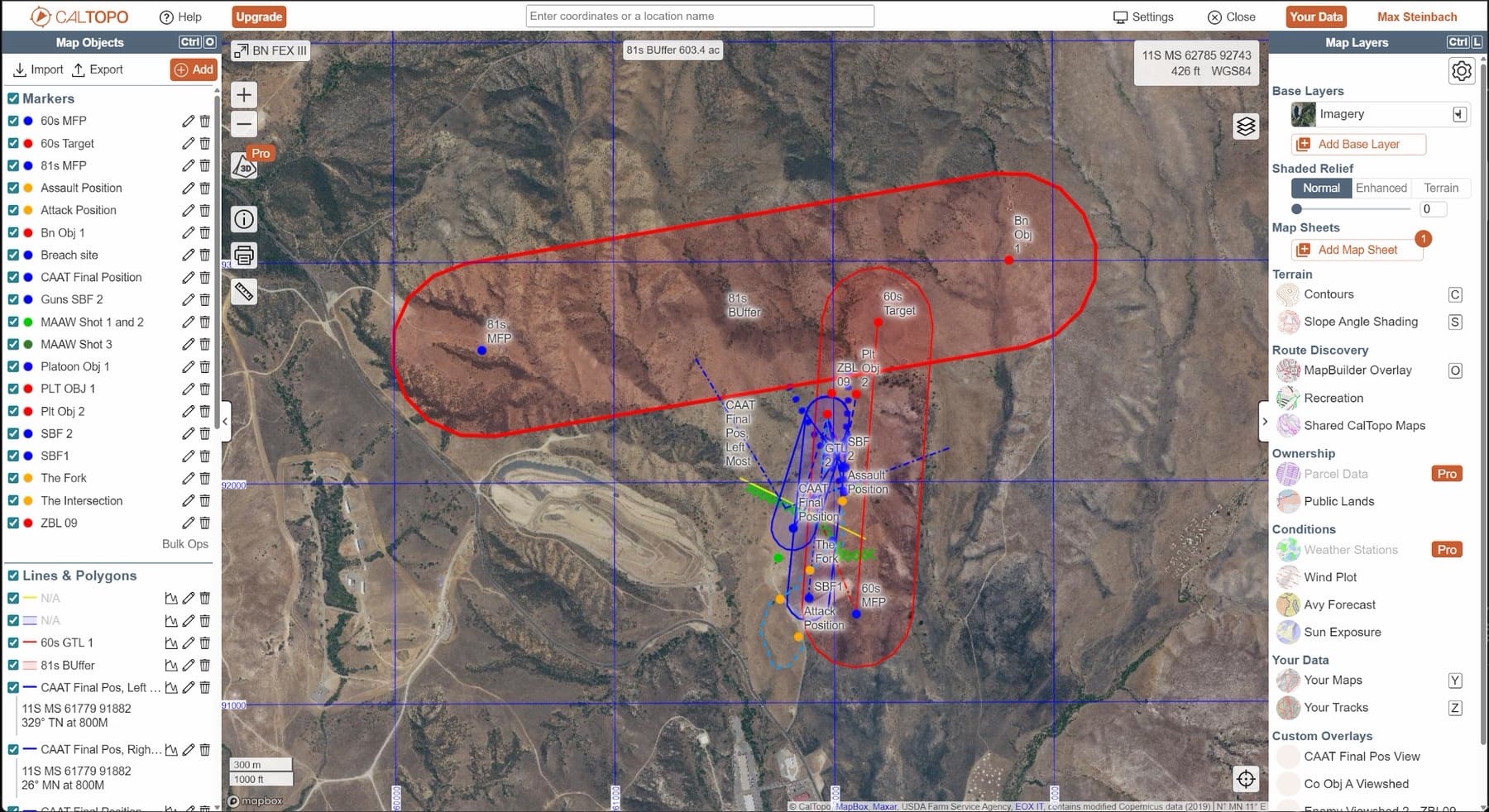
Figure 1. A company plan built over two days in a general-purpose mapping platform. Every marker, line, and polygon was placed and labeled by hand. Authors’ screenshot.

That is not a skill problem. Small-unit leaders analyze a mission, read terrain, and turn intent into action, and they are good at it. The friction lives in the tooling.

Learn It by Hand First

None of this is an argument against analog planning, and we want to be blunt about that before going further. Map pens, protractors, compasses, and acetate are not quaint traditions. They are fundamentals. A leader who cannot read a map, plot a grid, shoot an azimuth, account for declination, and build an overlay by hand has no business using software that does those things for him, because he cannot tell when the output is wrong and he cannot function when the battery dies, the screen cracks, or the network drops. Degraded operations are not a thought experiment, and a fallback only works if somebody trained it.

The comparison we keep coming back to is basic math and the calculator. We make students do math by hand not because calculators are scarce, but because someone who does not understand the arithmetic itself cannot spot a wrong answer. Once that understanding is there, nobody asks an engineer to do long division on paper as a character-building exercise. Learn the map, plot the grids, and measure the azimuths until it is second nature. Then stop spending three hours a night on work that purpose-built software can finish in ten minutes.

General-Purpose Tools, Purpose-Built Problems

Most leaders who move past hand-drawing end up in a general-purpose mapping platform like CalTopo, which is a reasonable landing spot and no knock on those products. They are very good at what they were built for: recreation, land management, search and rescue. What they were not built around is gun-target lines, minimum safe lines, the MIL-STD-2525 military symbol set, or the production cycle of an operation order. So, the infantry leader does translation work, and the friction stays, because the tool has no idea what its user is trying to produce.

Closing the Gap with Scheme O

We are two infantry officers, and after enough nights redrawing the same graphics, we built the tool we wanted. Scheme O is organized around the small-unit planning cycle rather than around a map. It makes no tactical decisions, on purpose. It does not choose the support-by-fire position, sequence an assault, or decide where the casualty collection point goes. It measures, plots, draws, redraws, and formats outputs, which is exactly the work that was taking our time.

Battlespace Geometries from Three Inputs

The foundation of the platform is its ability to generate battlespace geometries from three inputs: a friendly position, an enemy position, and the gun-target line between them. Select the weapon system, and Scheme O calculates the required azimuths, builds the minimum safe lines, and places the geometry directly on the map. The underlying logic for the platform’s default geometries is derived from the weapons-safety standards and surface-danger-zone criteria contained in Army Regulation 385–63 and Marine Corps Order 3570.1D. Users can also build custom geometries tailored to specific range regulations, ordnance, or unit procedures, then save and reuse them across future plans rather than rebuilding them from scratch. Declination between grid and magnetic north is handled automatically for the unit’s location, and every azimuth and boundary updates continuously as positions move.
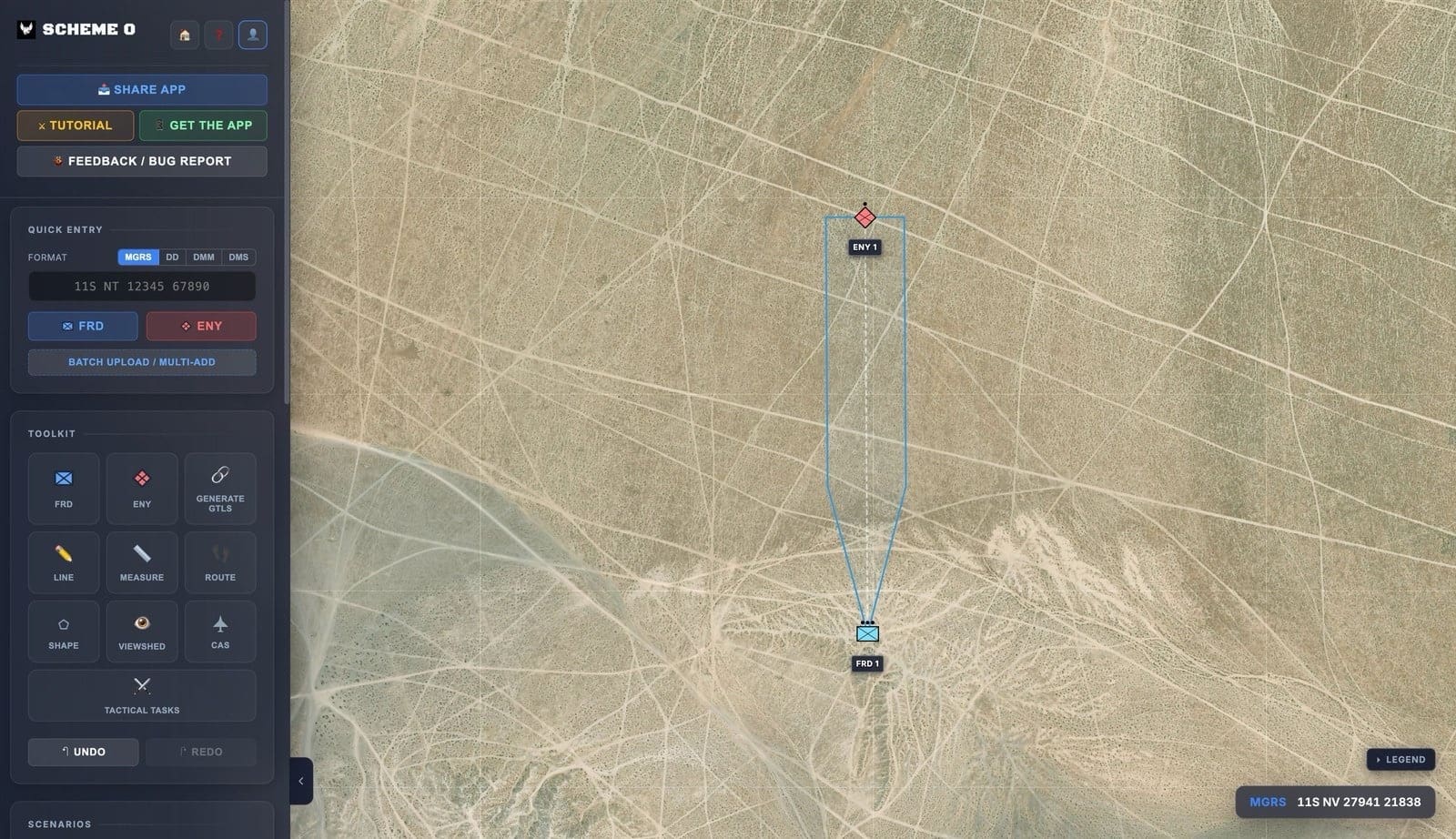
Figure 2. A battlespace geometry generated from three inputs: friendly position, enemy position, and the gun-target line between them. Authors’ screenshot.

Symbology That Reads Correctly

The operational terms and graphics catalog is drawn from exact MIL-STD-2525 assets rather than from shapes improvised to look close enough, so every friendly, enemy, weapon-system, and control-measure symbol carries the right frame, affiliation, and echelon. Nobody should be hunting for a symbol or building one out of triangles at 2200.
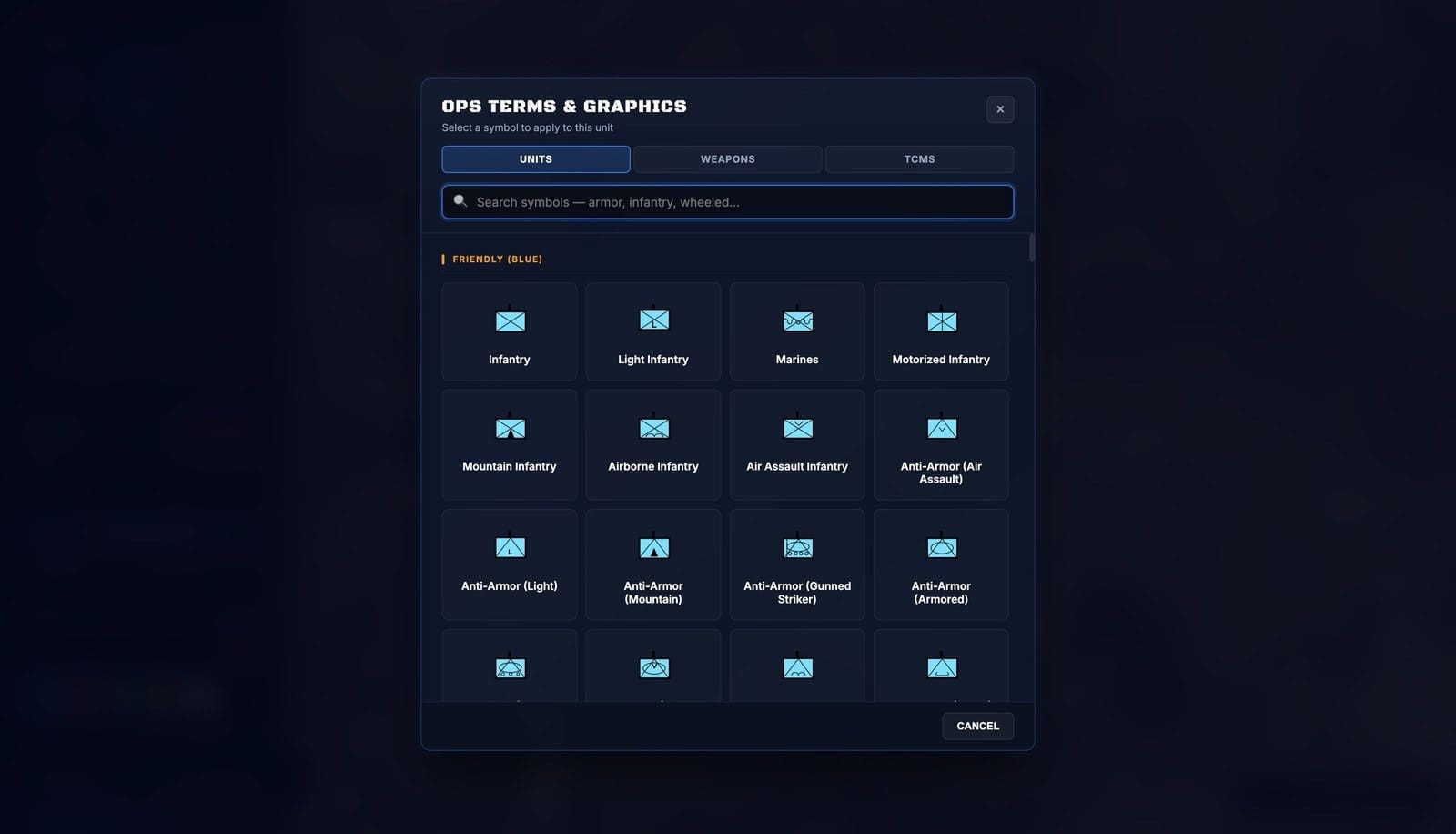
Figure 3. The operational terms and graphics catalog, built on exact MIL-STD-2525 symbology. Authors’ screenshot.

Lines, Control Measures, and a Tape Measure

Phase lines generate off a northing or snap to exact grids when they must match guidance from higher. Boundaries, multi-point lines for enemy obstacles, and shapes that define engagement areas or range limits take a few clicks and produce grids for every point, which makes them easy to read back during a confirmation brief. To quickly measure, hit the measure tool, select any two points and the tool returns distance and direction without anyone reaching for a protractor.
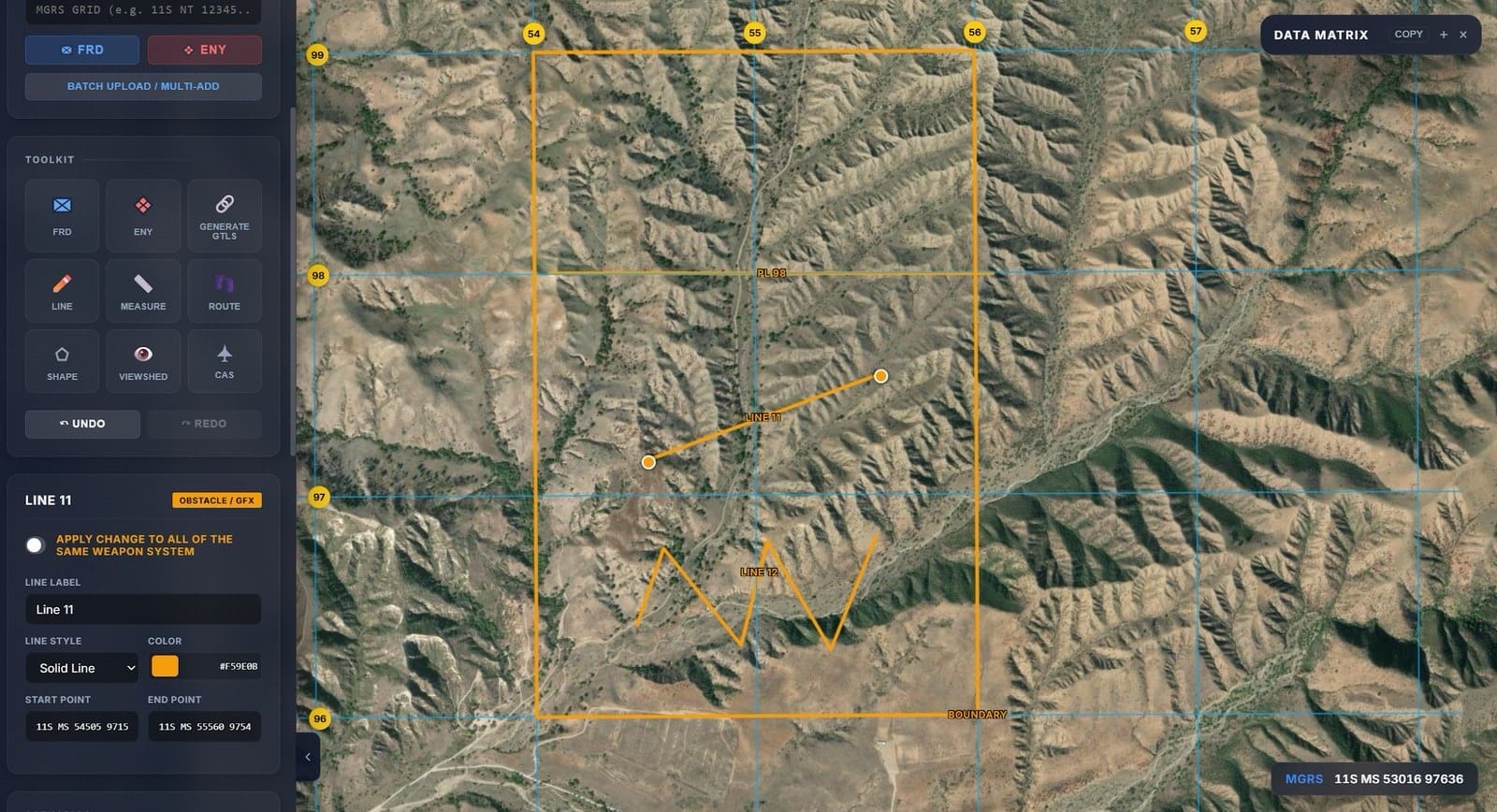
Figure 4. Lines, boundaries, and shapes, drawn quickly or snapped to exact grids. Authors’ screenshot.

Routes and Time-Space Analysis

Trace a route by clicking along the desired path and Scheme O assembles it in real time: waypoints land on their own, checkpoints take a single click, and the numbering sequences itself. Every leg reports grid and magnetic azimuths and distance in meters, feet, kilometers, or miles. Enter a pace and a start time and the tool returns total movement time and an ETA at every checkpoint. Or work the problem backward: give it a no-later-than time and Scheme O calculates the pace required to make the timeline, with a departure time to match.
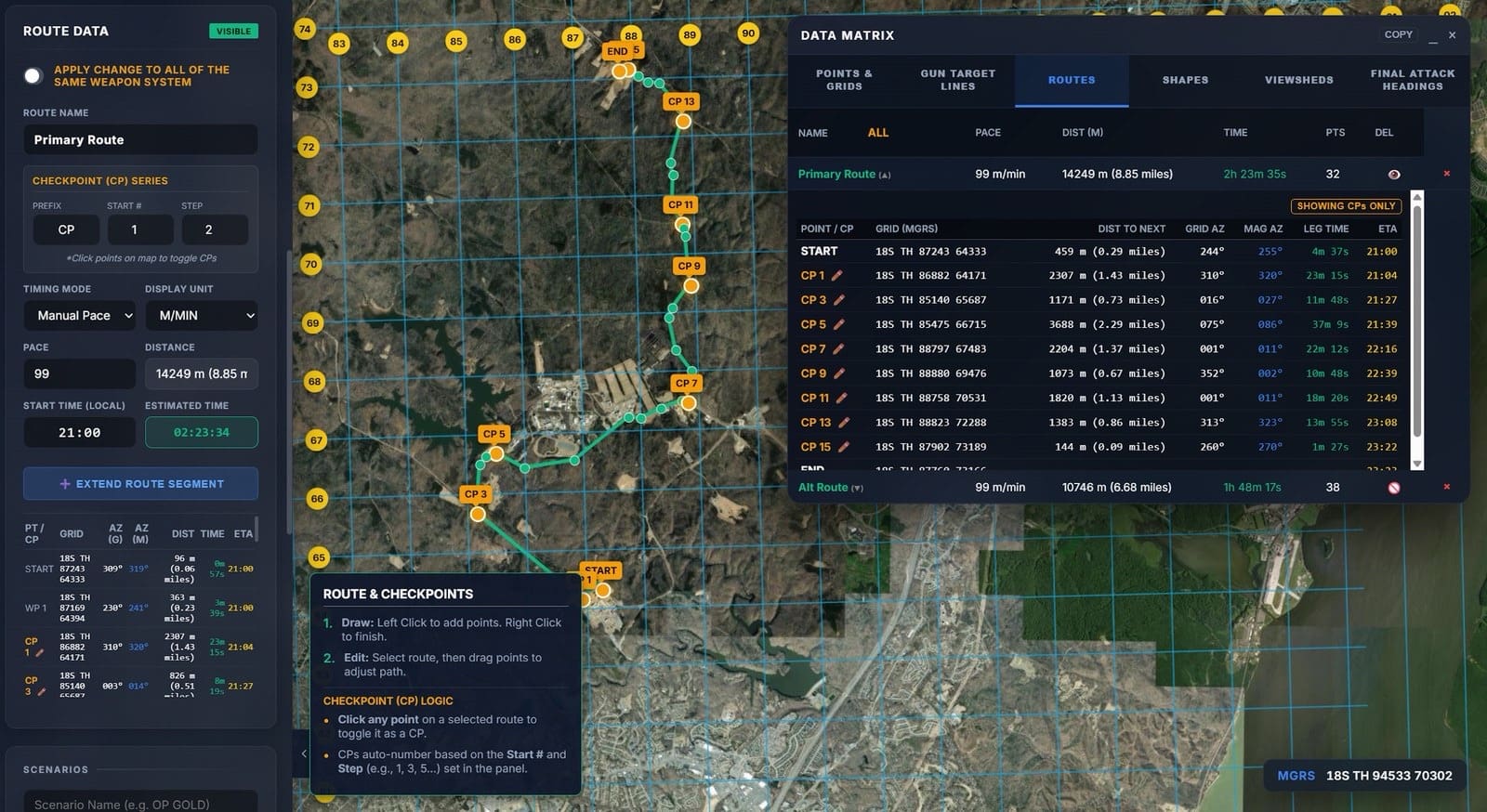
Figure 5. Route planning with automatic checkpoint sequencing, per-leg grid and magnetic azimuths, and time-space analysis. Authors’ screenshot.

Seeing the Terrain Before You Walk It

Viewshed analysis runs from any position at a specified observation height and returns what that position can see and what it cannot. Range rings tie to a symbol on the map, so the threat’s observation and fields of fire appears the moment the enemy picture does, and engagement areas stop being a matter of argument.
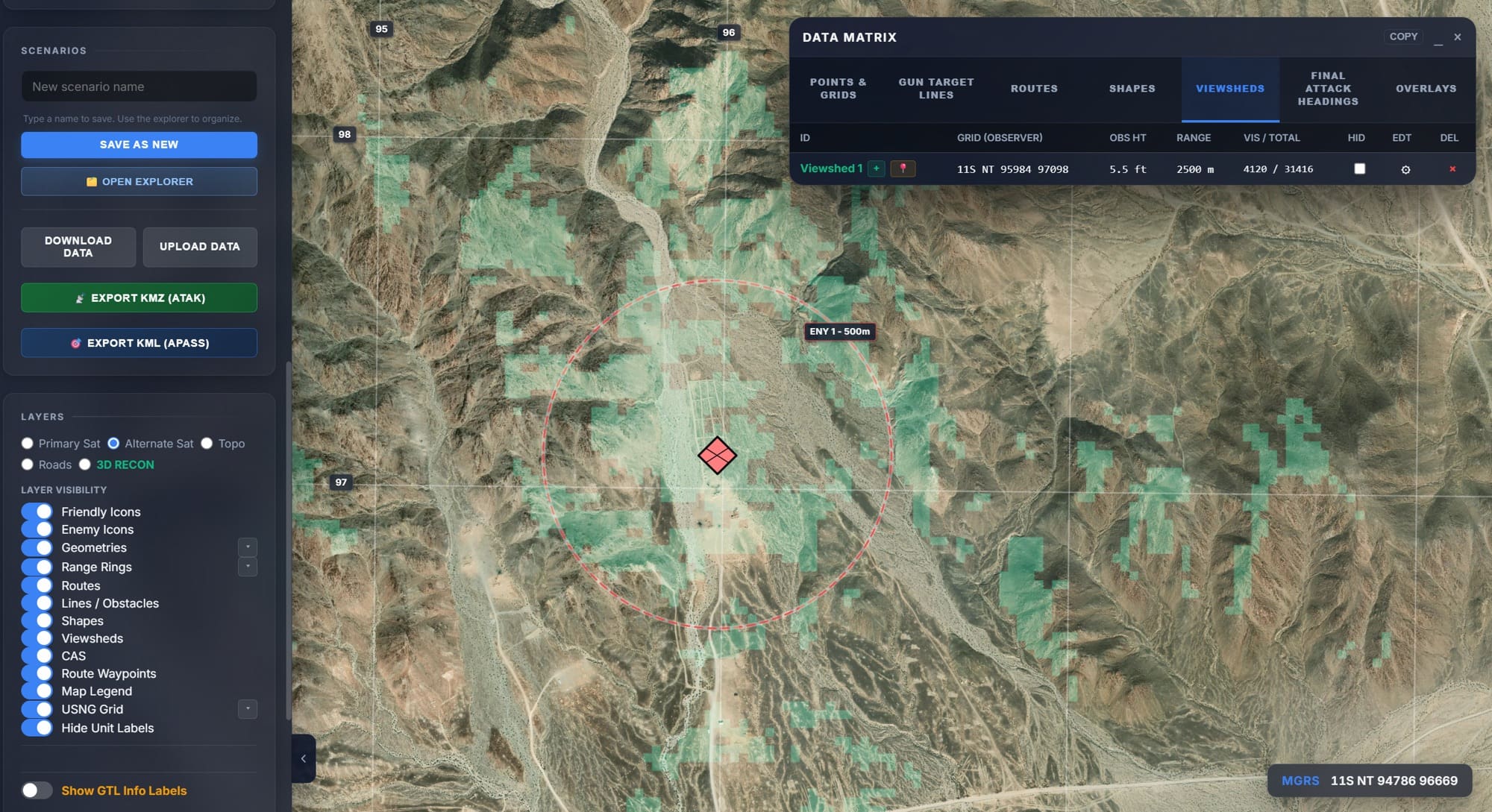
Figure 6. Viewshed analysis and a range ring generated from an enemy position, showing observation and dead space. Authors’ screenshot.

There is also a three-dimensional terrain mode, which is the feature our platoon commanders use most for a rehearsal.
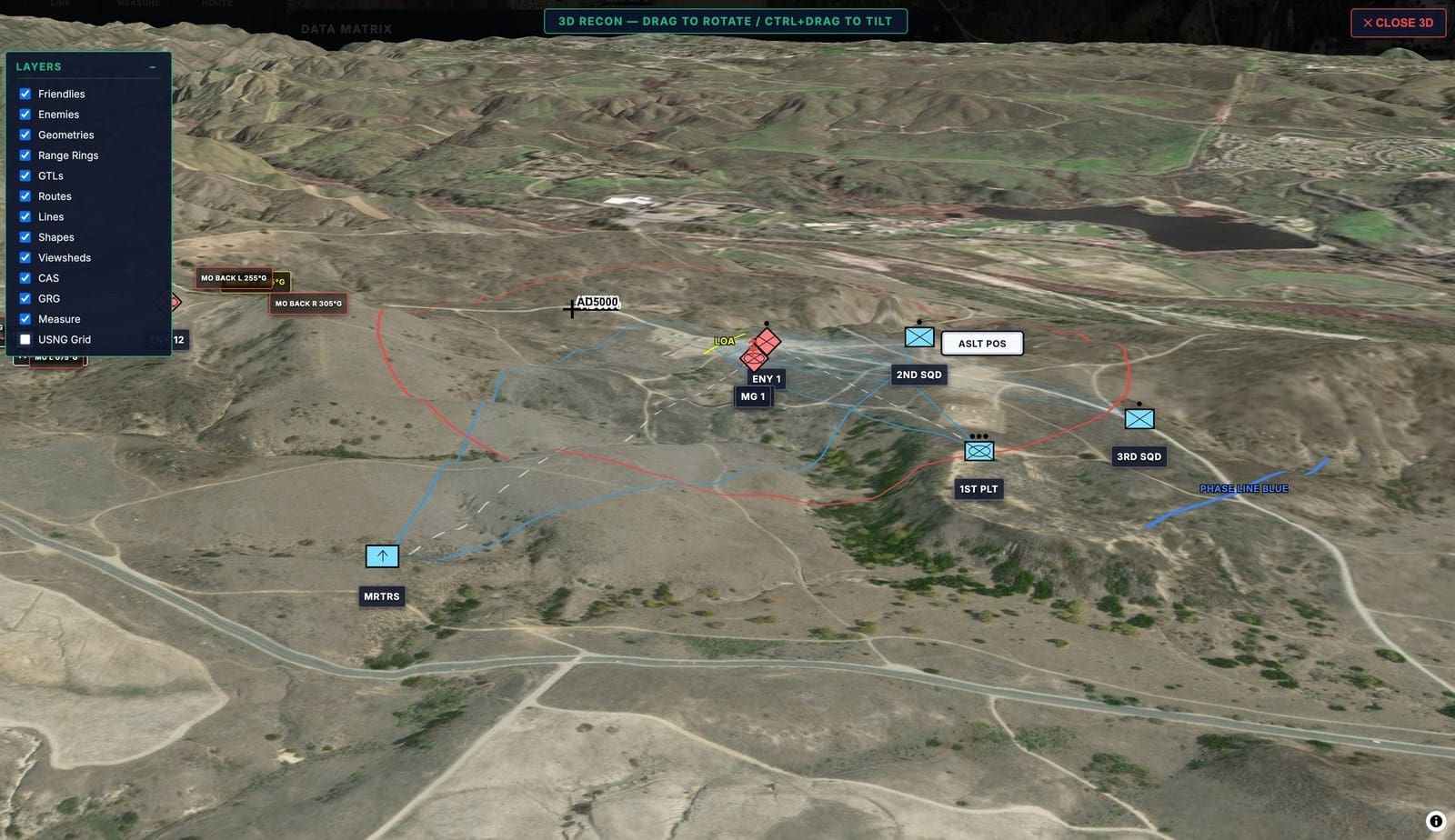
Figure 7. Three-dimensional terrain mode, used to study how a plan sits on the ground before anyone steps off. Authors’ screenshot.

Fires and Close Air Support

Select an enemy position and the tool generates final attack headings, their reciprocals, maneuver buffers, and minimum safe distance rings. All of it is adjustable in length and visual weight.
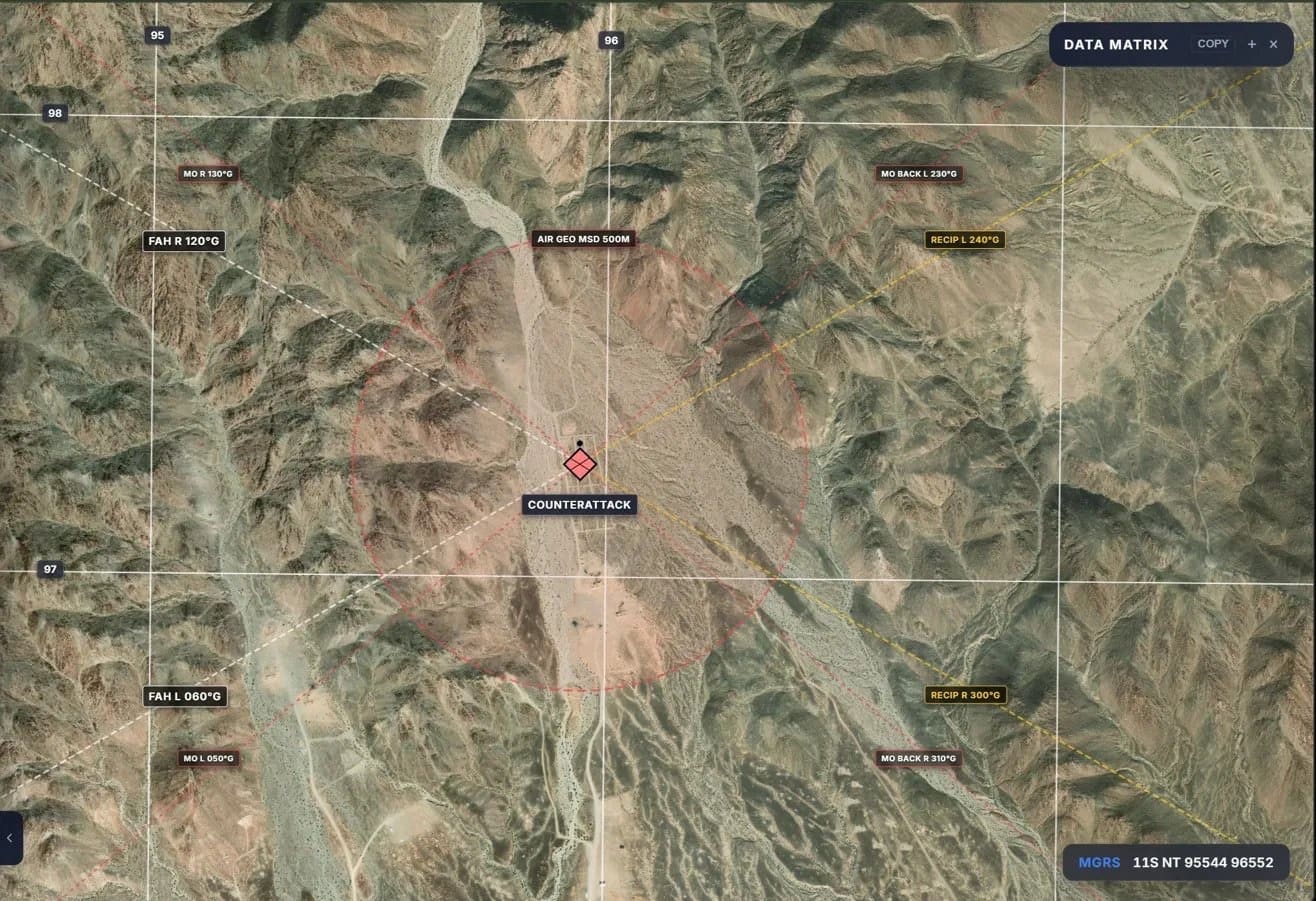
Figure 8. Final attack headings, reciprocals, and a minimum safe distance ring generated off an enemy position. Authors’ screenshot.

From the Map to the Order

A data matrix consolidates every position, grid, route, and geometry in the plan into text that can be pasted directly into an operation order or PowerPoint brief. Instead of spending hours on meticulous manual measurements and transcription, platoon commanders can focus on whether their tactical decisions are sound. A growing set of templates also pulls weather, illumination, first and last light, etc., into a format that drops directly into the orientation paragraph.
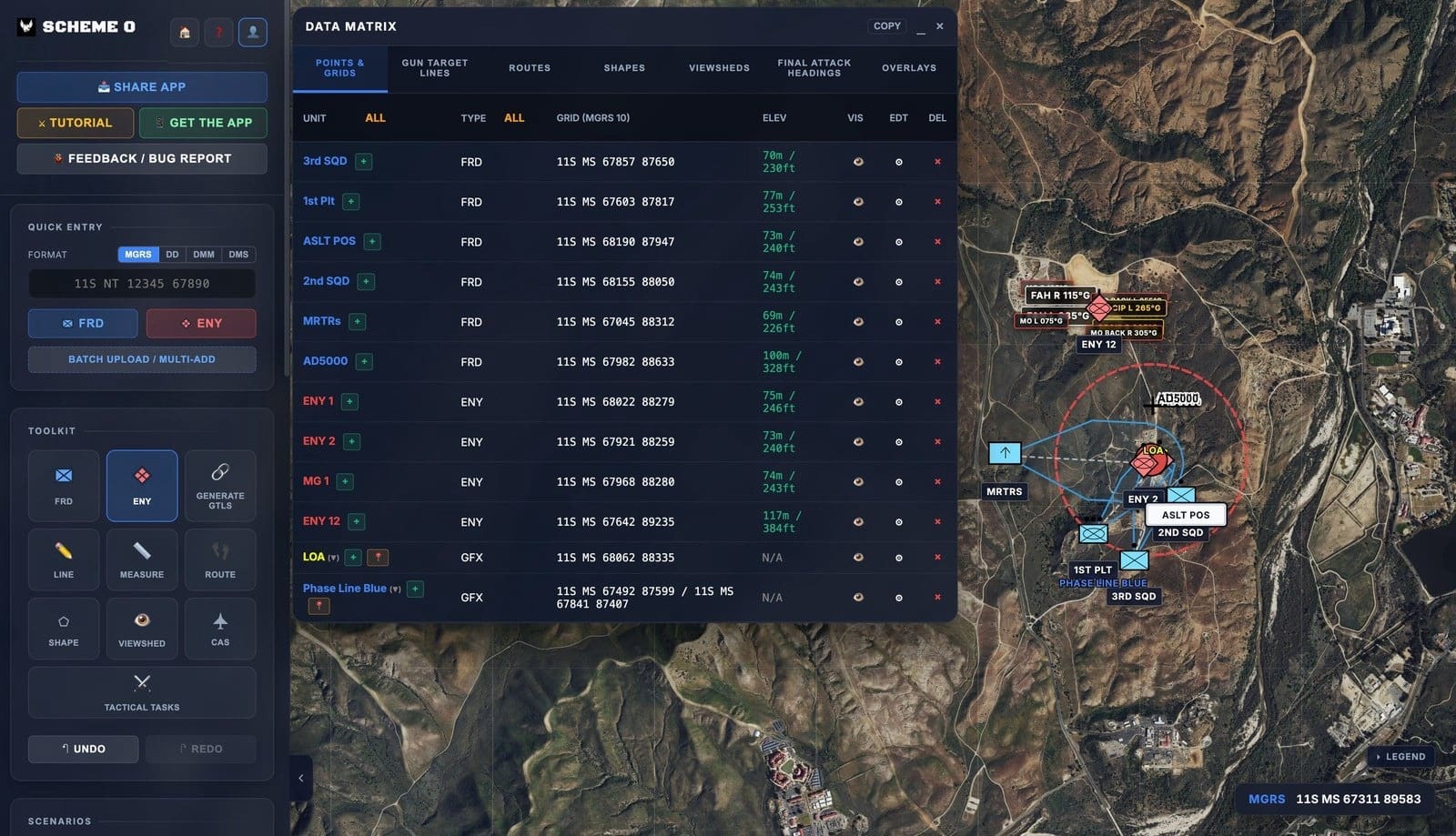
Figure 9. The data matrix, which collects every position, grid, route, and geometry into text that can be pasted into an operation order. Authors’ screenshot.

Products That Survive a Change of Plan

The plan can also be exported to PowerPoint as individually movable objects rather than a single flat screenshot. We built this feature after Lt Bergstrom and I spent far too many hours rebuilding slide after slide for briefs to the MEU whenever the plan changed.
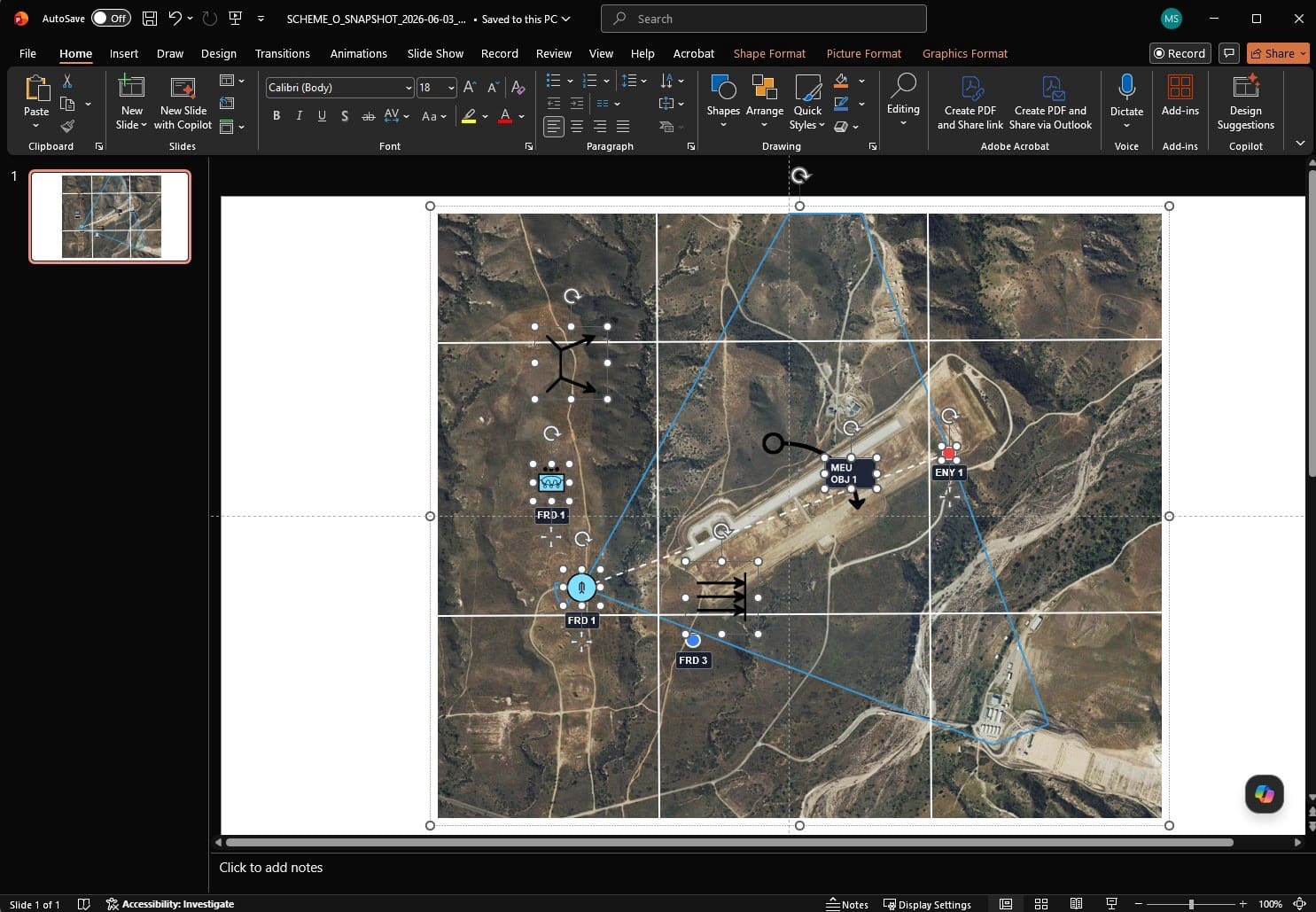
Figure 10. The same plan exported to presentation software, where each symbol, route, and control measure remains a separate movable object. Authors’ screenshot.

Two Evolutions, Reported Honestly

We first used Scheme O as a company during PHIBRON-MEU Integration Training, where compressed shipboard timelines made it an honest test of the workflow. In previous evolutions, company- and platoon-level planning required hours of manual measurements, handwritten grids, individually constructed geometries, and slides rebuilt whenever the plan changed.

With Scheme O, the company and platoons worked from the same planning picture. Geometries were generated, grids populated, and briefing products exported rather than rebuilt. Both levels recovered several hours for enemy analysis, tactical refinement, rehearsal, and—most importantly—preparing the Marines who would execute the plan.

We used the platform again during the Amphibious Ready Group/Marine Expeditionary Unit Exercise, and the result held. The company and platoons again recovered several hours, while receiving updated planning products earlier and avoiding the need to recreate work already completed at another level.

The exercise also revealed two uses we had not anticipated. Amphibious Combat Vehicle sections used Scheme O to coordinate a boat lane with the ship through a shared picture with headings and distances already calculated. We also used its overlays for an interactive tactical decision game, allowing leaders to build, share, and compare schemes of maneuver on the same terrain.

Conclusion

The joint force is right to invest in speed and advantage at its highest levels. But modernization should also reach the company and platoon leaders who translate those decisions into action. At their level, the greatest opportunity may be better tools for the routine frictions of planning—the measurements, graphics, calculations, and products that consume time.

The fundamentals must remain. Leaders should know how to plan with a map, compass, and protractor when conditions require it. But the mastery of those skills should provide a foundation, not impose a permanent workflow. The next step is to measure where time is being lost, listen to the practitioners closest to the problem, and give them the freedom to adopt better tools. Every hour recovered from the friction which the current mechanics of planning produce is another hour returned to analysis, rehearsal, and most important, the Marines and Soldiers preparing to execute the mission.

Disclosure and Disclaimer

Conflict of interest: the authors created Scheme O and hold a financial interest in the company that develops it. They received no compensation for this article, and no government entity has endorsed, procured, or sponsored the platform.

The opinions expressed here are the authors’ alone and do not reflect the views of the Department of War, the United States Marine Corps, the United States Army, or any other government entity. Scheme O is a privately developed tool and is not an official system of, endorsed by, or affiliated with any government entity. All figures are the authors’ own screenshots of software they built, taken on unclassified training data, and contain no controlled unclassified information.


Space Delta 7 Activates 77th Surveillance Squadron, Ushering in New Era of Space-Based Target Tracking

Saturday, August 8th, 2026

GRAND FORKS AIR FORCE BASE, N.D. —  

On July 31, 2026, the U.S. Space Force’s Space Delta 7 officially activated the 77th Surveillance Squadron (77 SURS), marking a critical advancement in the Department of War’s ability to track global threats from space, the ultimate high ground.

Serving as the tip of the spear for the Space-based Moving Target Indication (SB-MTI) mission, 77 SURS will manage and deliver intelligence essential to the joint warfighter across every DoW service branch and combatant command. This activation serves as a cornerstone of the USSF Objective Force 2040 vision, which emphasizes moving toward distributed, hybrid space architectures to achieve persistent vigilance in contested domains.

“The activation of the 77th Surveillance Squadron is a watershed moment for joint warfighting,” said Col. Nathaniel Peace, Space Delta 7 commander. “We are establishing an unblinking, persistent eye in space that directly feeds critical tracking data to our forces on the ground, in the air, and at sea. This capability immediately enhances our global combatant commands, giving them the vital battlespace awareness needed to make decisions at speed and hold any adversary at risk.”

Powered by the Space-Based Sensing and Targeting (SBST) program, SB-MTI will utilize a constellation of hundreds of reconnaissance, surveillance, and target acquisition satellites to provide continuous, real-time surveillance of ground, air, and maritime threats worldwide. This global space vantage point unlocks persistent terrestrial battlespace awareness in denied or contested environments where traditional sensors cannot reach. It equips the joint warfighter with unmatched operational flexibility and serves as a critical pillar of modern national defense.

The 77 SURS is uniquely postured as an “employed-in-place” squadron with a global mission. Currently operating out of a temporary location at Grand Forks Air Force Base, North Dakota—pending formal basing approval—the squadron provides continuous target tracking and battle management from its home station under the High-Capacity F2T2EA program. Crucially, the unit also maintains the capability to deploy personnel forward to directly augment combatant commands during a crisis.

To expedite this cradle-to-grave kill chain process, the squadron is cultivating a highly specialized culture. The 77 SURS integrates a 50/50 mix of intelligence and space operations personnel into multi-domain crews that operate as a single, coherent unit of action. Pending FY27 budget approvals, the squadron is slated to grow to 45 billets in 2027 and 61 billets in 2028.

“We are building a completely new type of warfighting team,” Peace noted regarding the unit’s construct. “By placing our space operators side-by-side with our intelligence analysts, we are tearing down traditional silos. This operational fusion is exactly what allows us to move from simply seeing a target to providing actionable data to the Joint Force at the speed of modern conflict.”

By John E. Ayre, USSF Combat Forces Command public affairs

Gilat Demonstrates Breakthrough AI-Based Interference Detection and Cancellation Technology for Satellite Links

Friday, August 7th, 2026

Patent-pending AI technology delivers up to 10x improvement in interference detection and cancellation performance ensuring resilient satellite communications in highly contested spectrum environments

Petah Tikva, Israel, August 6, 2026 – Gilat Satellite Networks Ltd. (NASDAQ: GILT, TASE: GILT), a worldwide leader in satellite networking technology, solutions, and services, today announced the successful demonstration of a breakthrough AI-based interference detection and cancellation technology for satellite communication links.

The patent-pending solution leverages advanced AI-based signal processing designed to run on standard AI for edge NPU and has demonstrated exceptional performance across a wide range of non-cooperative and non-static interference scenarios.

The preliminary demonstration results showed up to a 10x improvement in interference detection and cancellation performance compared to conventional interference mitigation techniques, enabling the detection and cancellation of challenging interference conditions while maintaining compatibility with modern satellite communication systems. The results further demonstrated that the signal of interest remained virtually unaffected after interference cancellation, with only negligible degradation in signal quality.

As satellite communications face increasingly complex interference and jamming threats, the technology offers a powerful new approach to maintaining reliable connectivity and service continuity in highly contested spectrum environments.

“This achievement demonstrates Gilat’s technological leadership in enabling service continuity under severe interference and jamming scenarios, helping ensure robust and resilient satellite communications in highly contested spectrum environments,” said Aharon Mullokandov, Chief R&D Officer at Gilat. “In an environment where spectrum is becoming a crucial resource for both defense and commercial applications, this technology opens new opportunities that were not possible before. Building on this success, Gilat plans to demonstrate the technology on dedicated AI accelerator hardware, paving the way for a low-power edge solution suitable for deployment in operational satellite communication terminals.”

The successful demonstration represents another milestone in Gilat’s ongoing innovation in advanced satellite communications technologies and reinforces the Company’s commitment to developing solutions that address the evolving challenges faced by satellite network operators, government agencies, and defense organizations worldwide.

OTB Boots Launches the Reengineered T-KOOL 2.0, Expanding Its Lineup of Tactical Footwear

Friday, August 7th, 2026

The updated design delivers enhanced durability, comfort, and performance while maintaining the low-profile appearance that has made the T-KOOL a favorite among elite military operators and law enforcement officers.

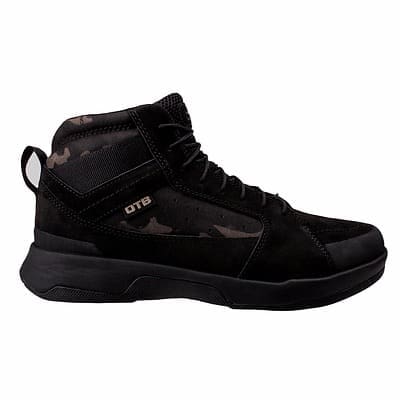
BOSTON, Aug. 7, 2026 — OTB Boots today announced the launch of the T-KOOL 2.0, a redesigned version of its low-profile tactical boot that combines skate shoe-inspired style, athletic comfort, and mission-ready performance. The new model introduces meaningful upgrades while preserving the understated styling that allows it to transition seamlessly between operational environments and everyday wear.

The T-KOOL 2.0 was engineered for users who need technical footwear without the appearance of a traditional tactical boot. While its casual silhouette blends naturally into urban settings, every component was designed to perform under demanding conditions.

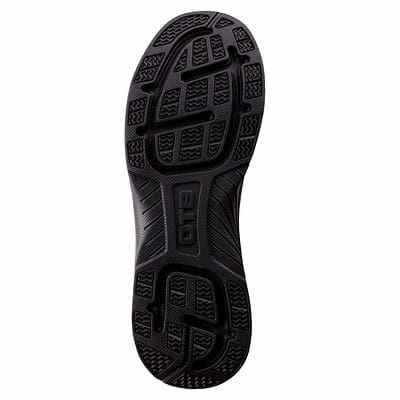
The 2.0 version features an all-new outsole with a reinforced fast-rope guard that improves abrasion resistance during repeated roping operations. Additionally, the outsole features reverse herringbone lugs that provide traction across varied terrain while maintaining flexibility for dynamic movement and a full-length stability plate enhances support when carrying heavy loads or navigating uneven surfaces. More than one inch of premium Future Foam EVA cushioning delivers lasting comfort throughout extended periods of wear.

Additional features include a waterproof suede upper, climbing rubber toe and heel protection, and a lightweight construction that supports a wide range of training, operational, and everyday applications.

“The T-KOOL has always occupied a unique place in our lineup because it challenges what people expect from tactical footwear,” said Dan Ellis, Founder of OTB Boots. “With the T-KOOL 2.0, we focused on improving the performance where it matters most. The result is a boot that offers greater durability, cushioning, and increased capability while staying true to the low-profile design.”

The introduction of the T-KOOL 2.0 continues OTB Boots’ commitment to developing footwear for military personnel, law enforcement officers, first responders, and outdoor professionals who demand technical performance without unnecessary weight or bulk. The launch follows a series of product introductions that have expanded the company’s portfolio across tactical, maritime, and specialized operational footwear.

The T-KOOL 2.0 is available immediately in a Mid height configuration in brown and black suede through the OTB Boots online store

See the Radical CS5 MOD1 Compact Suppressor at Next Week’s Marine Gunner Association Industry Day

Friday, August 7th, 2026

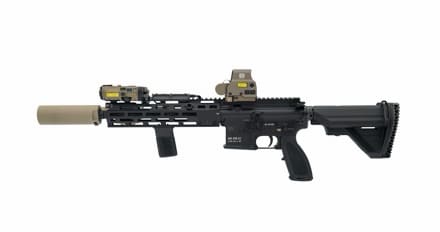
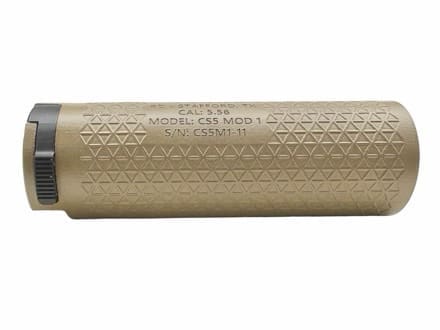
The CS5 MOD1 is a next-generation, compact suppressor engineered for peak performance with minimal footprint. Designed with a focus on low backpressure, it reduces the load on the operator while providing superior signature reduction.

Improvements to CS5 Mod 1 are based on years of customer feedback from the previous generation of CS5. While overall performance of CS5 was favorable, the team concentrated on factors like weight, secondary retention, and kinematics enhancements.

CS5 Mod 1’s streamlined profile improves muzzle balance and handling without compromising weapon kinematics, all while featuring a rugged quick-disconnect system for rapid deployment. The CS5 Mod 1 introduces Radical Defense’s new TLR² Mounting Interface: Taper-Lock Ratcheting Retention keeps OAL short and maintains sub-MOA POI shift repeatability. Recessed engagement teeth on the redesigned Flash Hider Mount, the KFMR prevents premature wear and impact damage.

Featuring a rear biased Center of Gravity (CG), the CS5 Mod 1 improves muzzle balance, aiding control and reducing muzzle flip. Its forward-venting design significantly reduces back pressure reducing bolt speed, increasing reliability, and reducing the amount of toxic blowback introduced to the operator. Additionally, CS5 Mod 1 optimizes flash and sound suppression with integrated Blast Over Pressure (BOP) mitigation with a dB rating of 138.74dB at the Shooter’s Ear was recorded on an 11.5-inch 5.56 Carbine.

The full CS5 Mod 1 ecosystem includes the 5.56 carbine suppressor, a Blank Safety Device (BSD) capable of catching three live rounds of M855A1, and a Sim Training Suppressor.

CS5 Mod 1 will be on display next week at the USMC Marine Gunner Association Industry Day in King George, VA.

For more information, visit rdusa.com.

B.E. Meyers & Co. Invited to Present at APFIT Event on Capitol Hill

Friday, August 7th, 2026

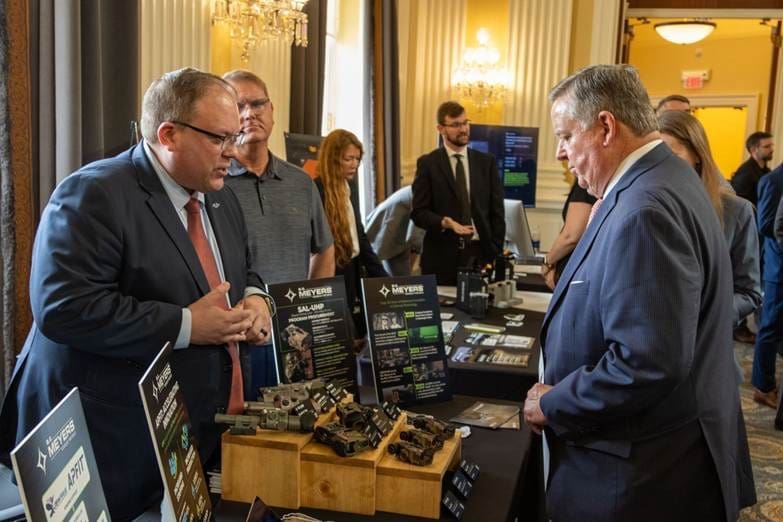
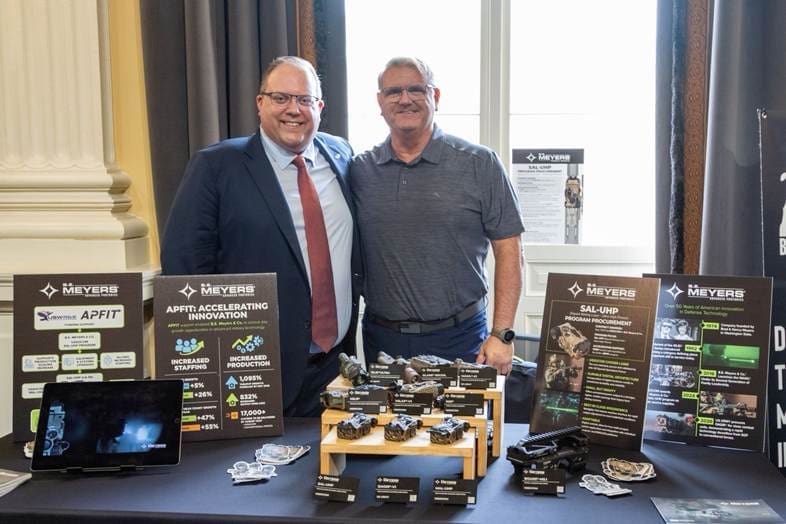
AUGUST 6, 2026 (Redmond, WA) – B.E. Meyers & Co., Inc.™ was invited to present the successful results of its APFIT award (Accelerate the Procurement and Fielding of Innovative Technologies) to APFIT program stakeholders in Congress and the Department of War at the Cannon House Office Building on July 21, 2026. Funding from APFIT was used to accelerate production of the Squad Aiming Laser – Ultra High Power (SAL-UHP), a multi-function, multi-platform aiming laser. This support enabled significant increases in manufacturing throughput and contributed to the successful adoption of the SAL?UHP by United States Special Operations Command (USSOCOM).

Established in fiscal year 2022, APFIT provides procurement funding for innovative projects that have completed development and are ready to transition into operational use. The B.E. Meyers & Co.™ SAL-UHP is a variant of the DAGIR®?V1, which was tested, validated, and ultimately adopted by USSOCOM as the LA-30, thanks in part to APFIT support. B.E. Meyers & Co.™ and the SAL-UHP were ideal fits for the APFIT program, which is specifically designed to help small businesses and non-traditional defense contractors bridge the “valley of death” between completion of development and large-scale production.

At the APFIT event, Senior Business Development Manager and U.S. Army veteran Chris Austin, along with CEO Matthew Meyers, showcased the SAL-UHP and highlighted the program’s success. Meyers, representing the second generation of family ownership, was joined by third?generation member Jack Meyers, who assisted with the presentation.

The DAGIR® series represents a major advancement in multi-function aiming and illumination technology. It combines a Near-Infrared illuminator with both NIR and visible aiming lasers in a compact, ruggedized system. Engineered with advanced optical design, the DAGIR® series delivers exceptional illumination quality, intuitive ergonomics, and a refined form factor. USSOCOM previously selected the DAGIR®?V1 under the SAL-UHP program, designating it the LA-30 (NSN 5855-01-724-3043). The DAGIR®-V2, which includes an additional visual laser override button, has also been adopted by USSOCOM under the Miniature Aiming Laser – Ultra High Power (MAL-UHP) contract.

The DAGIR®’s advanced capabilities align closely with the U.S. Department of War’s efforts to maintain and expand U.S. warfighter advantages in night-fighting technology. As a veteran/operated company, B.E. Meyers & Co. is proud to support the enhancement of warfighter night-fighting capability and remains committed to delivering the highest-quality advanced photonics systems for those who serve.

Third generation Meyers family member Jack Meyers with House Defense Appropriations Subcommittee Chairman, Representative Ken Calvert (R-CA)

CEO and second-generation Meyers family member Matthew Meyers briefing Rep Ken Calbert (R-CA)

U.S. Army Veterans Matthew Meyers and Senior Business Development Manager, Chris Austin

Who We Are:

B.E. Meyers & Co., Inc.™ is a Defense Technology Manufacturer located in Redmond, Washington. As a privately held, Veteran-operated, second-generation US Small Business in our 52nd year, we are a global leader in tactical laser systems for combat applications, as well as optoelectronic systems for rotary wing aircraft, fixed wing platforms, and UAVs, along with other integrated systems. We are a true “Made in America” operation, with design, development, production, and final assembly occurring in our Redmond, Washington headquarters.  We are proud of our work and who we serve as we evolve critical defense technology and reenergize American Manufacturing.

Who We Support:

Our customers include all branches of US Department of War, US Federal and State Law Enforcement agencies, select US consumer channel partners, international allies in over 50+ countries, as well as defense primes both in the US and internationally.  Our key product brands in these spaces include VSLAP®, IZLID®, GLARE®, MAWL®, DAGIR®, BOARS®, MILR®, KIJI®, and others.

Made in America:

B.E. Meyers & Co.™ operates in multiple market segments as a defense-centric Original Equipment Manufacturer (OEM) at our core. Our business and our products are:

§     US based

§     US owned

§     Certified SBA Small Business

§     ITAR compliant

§     ISO 9001:2015

§     Made in America

§     Buy American Act compliant

§     Berry Amendment compliant

Strategic Sourcing:
With respect to strategic sourcing amid the U.S.-China trade war, B.E. Meyers & Co.™ is dedicated to an, “Anywhere But China” supply chain policy wherever possible, and especially for key components.

We continually promote efforts to diversify our supply chain, and we also invest in ensuring critical components are stocked to avoid disruptions.

Product Lines:
The DAGIR® series is currently under contract with various US DoW and other entities.
Please see Chuck Pressburg of Presscheck Consulting’s overview of the DAGIR® series here, as well as Steele Industries overview here.

For sales information on the DAGIR®, and other innovative laser solutions from B.E. Meyers & Co., please visit bemeyers.com or connect with us at info@bemeyers.com.

“DAGIR”, “IZLID”, “MAWL”, “MILR”, “KIJI”, “GLARE”, “DIAL”, and “BOARS” are federally registered trademarks of B.E. Meyers & Co., Inc.

US Air Force Supplemental Inspection of M18 Modular Handguns Found Zero Evidence of Conditions Which Would Allow “Uncommanded Discharge”

Friday, August 7th, 2026

Last July Amn Brayden Lovan was tragically killed in a shooting which occurred in the Weapons Storage Area of FE Warren AFB, Wyoming. It is alleged he was shot by another member of his squadron, Amn Marcus White-Allen who was charged with involuntary manslaughter as well as making a false official statement. That Airman was later found dead in his dorm room when his command failed to hold him in pre-trial confinement.

But that’s not the story most people heard for many months after the shooting. The Air Force failed to address the death in a timely fashion which gave opportunity for false accounts of the shooting to infest the internet. Even after lies about the M18 MHS “going off on its own” the Air Force allowed the issue to fester while Air Force Global Strike Command Commanding General Gen Thomas Bussiere removed the weapon from service so that the command’s inventory could be inspected for defects, despite knowing almost immediately that the assailant had lied about his role in the death.

While General Bussiere (who is now retired) remained on leave and failed to address the issue, a paranoid firestorm led to calls to remove MHS from service across the entire Department of War (as well as other agencies at all levels of government) based on unfounded rumors that were circulating the internet. Although the pistols were returned to service with AFGSC by late August, the command did not fully set the record straight as to how AMN Lovat died for over three months.

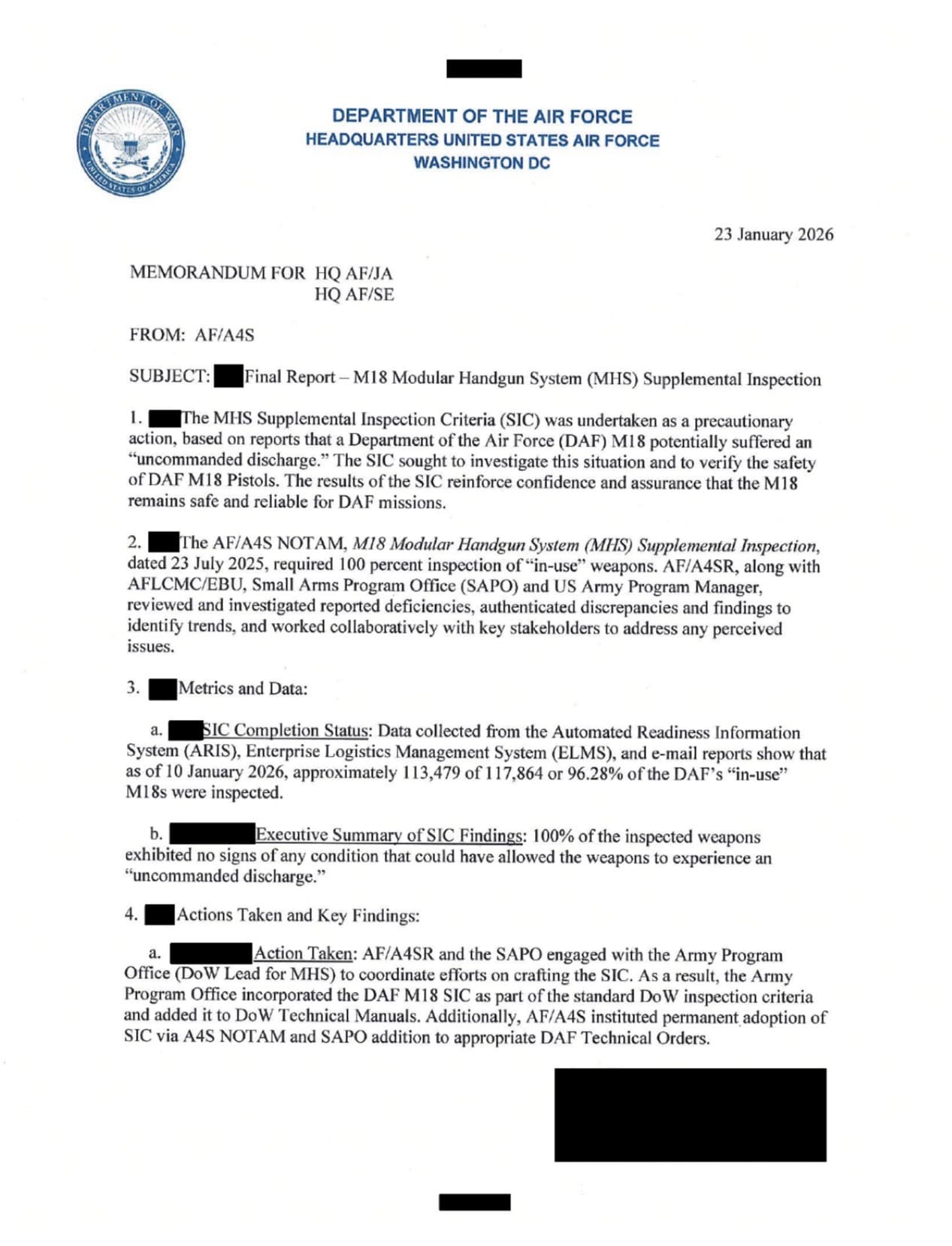
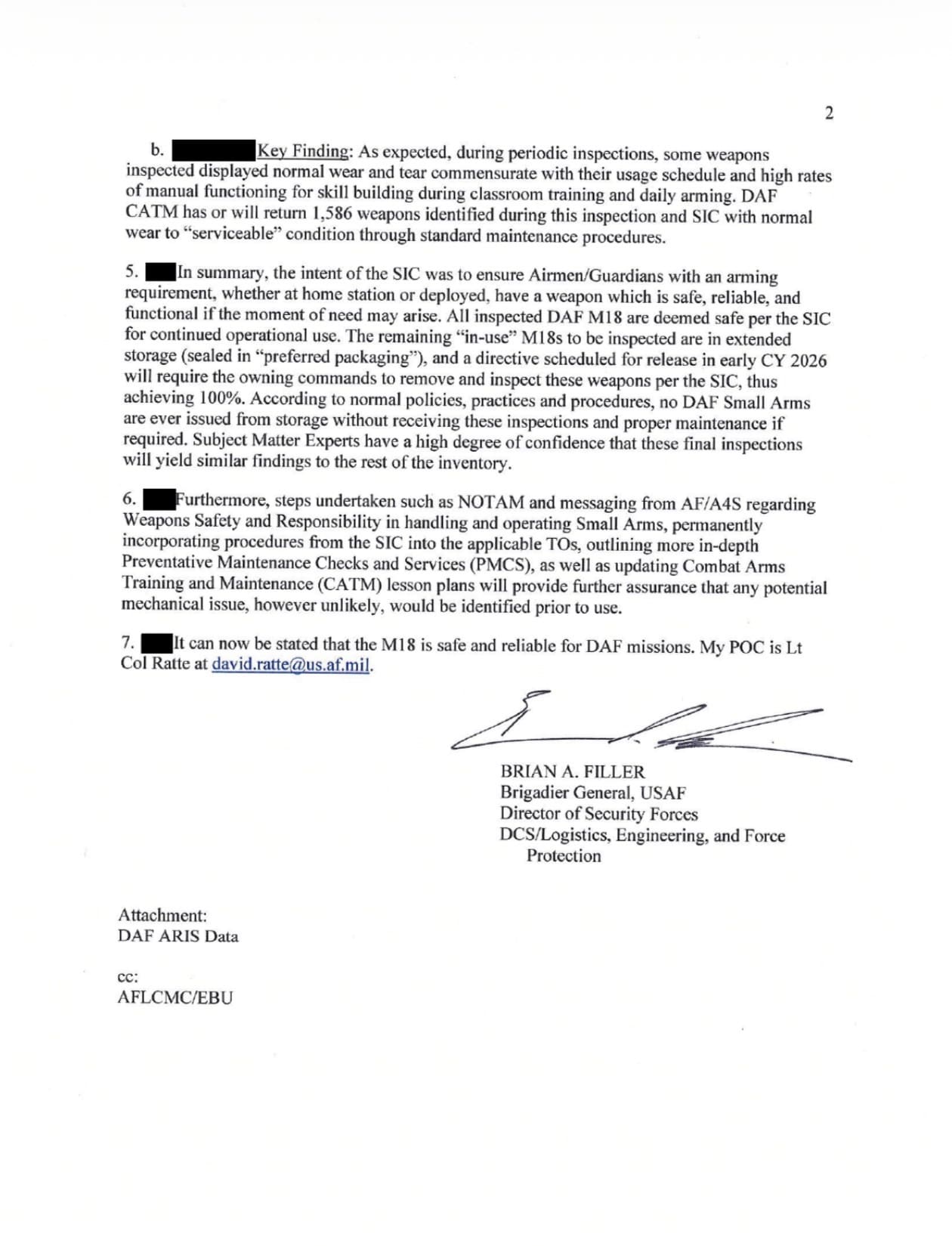
Eventually, the Air Force directed a complete “Supplemental Inspection” of the service’s entire inventory of MHS. This was “to ensure Airmen/Guardians with an arming requirement, whether at home station or deployed, have a weapon which is safe, reliable, and functional if the moment of need may arise.” The Supplemental Inspection Criteria went above and beyond the requirements of the Technical Order at the time and have since been incorporated into the TO.

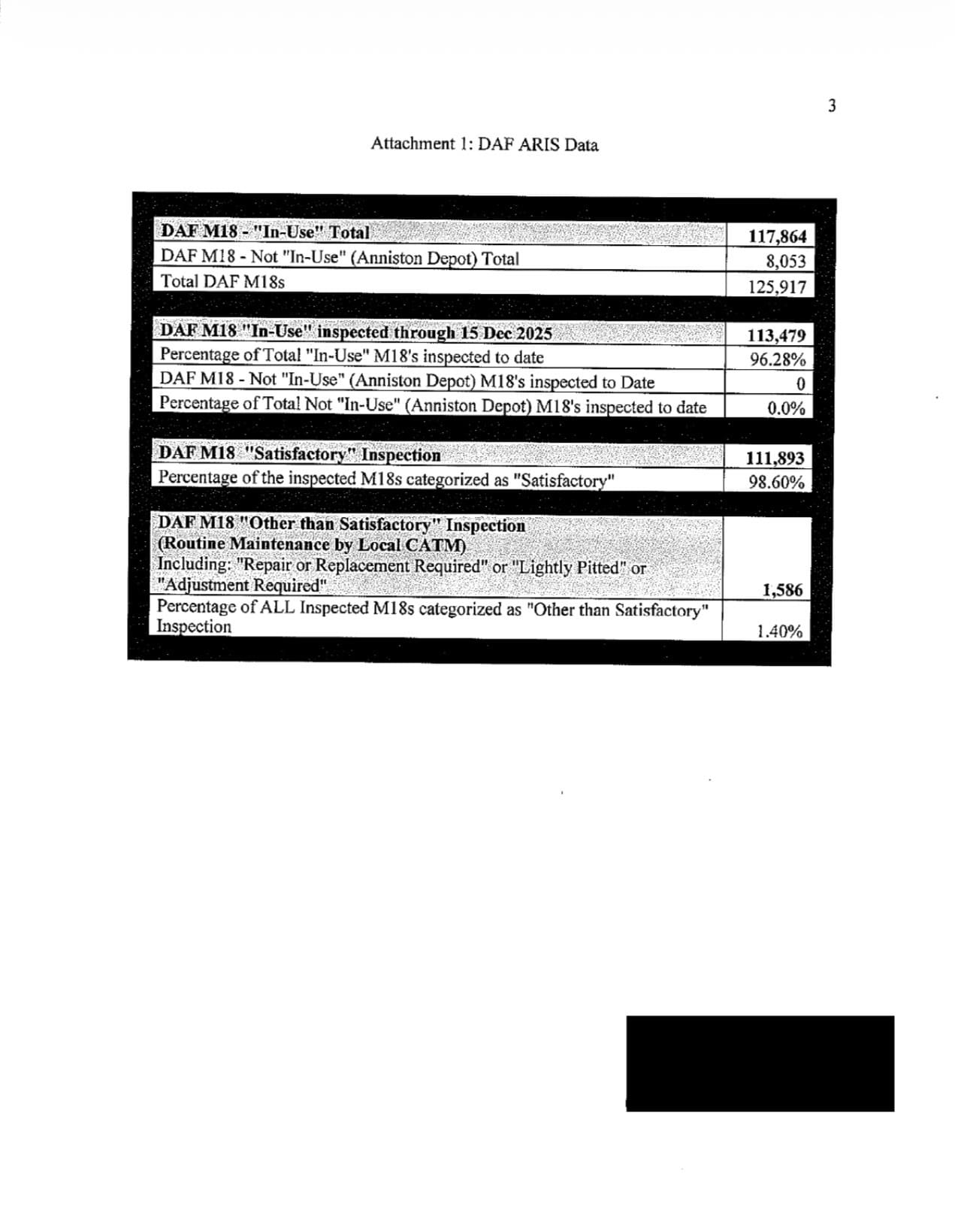
Despite consisting of nearly 126,000 pistols, the AF inspection was completed last year and the report was signed on 23 January, 2026 by Brig Gen Brian Filler, Director of Security Forces.

Unfortunately, it has taken over six months for us to obtain a redacted version of the Final Report. At only three pages it is succinct and to the point.

The executive summary tells the story:

“100% of the inspected weapons exhibited no signs of any condition that could have allowed the weapons to experience an “uncommanded discharge.”

Rather than just telling you what is in it, we are sharing the report for you to read every detail yourself. This revelation should put further rumors to bed that the Air Force inventory of sidearms is not safe. To the contrary, MHS is both safe and reliable and this has been attested to time and again. As you can see, no weapon exhibited anything beyond normal wear and tear and those deficiencies have been addressed by maintenance.


Adopted in 2017, there are currently around 500,00 MHS in the US military’s inventory consisting of the M17 and M18 pistols. They are based on the SIG SAUER P320 pistol which is also issued to militaries and law enforcement agencies worldwide. Combined with civilian owned versions of the pistol, they number in the millions.