The New iTWB

Archive for September, 2026

American Rheinmetall Selected to Support US Marine Corps with Advanced Mission Master SP Autonomous Unmanned Ground Vehicles

Sunday, September 13th, 2026

Auburn Hills, MI — American Rheinmetall has been awarded a $7.28M contract to support the U.S. Marine Corps through the manufacture and delivery of Mission Master SP Autonomous Unmanned Ground Vehicles (A-UGVs), associated Marine Kits, and supporting equipment. The procurement is being executed through the Defense Logistics Agency (DLA) with ADS Inc. serving as the prime contractor in support of the U.S. Marine Corps Warfighting Laboratory (MCWL). 
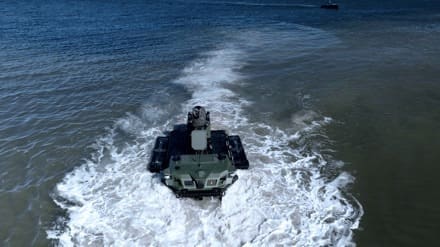
The effort includes the delivery of 12 Mission Master SP A-UGVs and five amphibious kits, marking the most advanced Mission Master configuration developed by Rheinmetall to date. The vehicles will support continued operational evaluation, experimentation, and capability development as the Marine Corps expands its autonomous logistics and expeditionary mobility initiatives.

“This award represents a significant milestone in our long-standing partnership with the United States Marine Corps,” said Matt Warnick, CEO, American Rheinmetall. “For more than four years, we have worked side-by-side with Marines to mature, refine, and advance autonomous ground capabilities. The Mission Master SP captures the full breadth of those lessons learned and showcases Rheinmetall’s commitment to delivering cutting-edge, reliable, and mission-ready autonomous systems.” 

President and CEO of Rheinmetall Canada Pietro Mazzei said, “This collaboration between Rheinmetall colleagues enables the U.S. Marine Corps to deploy the Mission Master SP in multi-domain environments and continue to push boundaries of Canadian innovation”.

A New Phase in Marine Corps Autonomous Capability Development

The new Mission Master SPvehicles incorporate Rheinmetall’s PATH autonomy architecture, expanded vehicle characterization, and modular payload integration. The systems also feature the Marine Kit—an upgrade enabling reliable, extended amphibious operations in littoral environments. The combined enhancements represent the latest evolution of the Mission Master family, driven by extensive user feedback, developmental testing, live-fire events, and operational experimentation.

The procurement includes a comprehensive suite of program management, engineering support, logistics coordination, technical documentation, operator training, and acceptance testing. Work will be led by American Rheinmetall in the United States with engineering and production support from Rheinmetall Canada, the original equipment manufacturer and technical partner.

Supporting Strategic U.S. Autonomy Initiatives

This effort aligns closely with American Rheinmetall’s strategy to expand U.S.-based autonomous ground vehicle capabilities and advance long-term technology transfer. It also supports the ongoing development of American Rheinmetall’s Maine facility as a future U.S. Advanced Land Autonomy Center of Excellence (ALACOE) focused on PATH integration, production, sustainment, and lifecycle support.

While this procurement does not immediately require facility expansion, it represents an important step toward future U.S. manufacturing, workforce growth, and long-term sustainment activities.

Strengthening Marine Corps Readiness and Modernization

The Mission Master SP systems will contribute to the Marine Corps’ efforts to enhance autonomous logistics, enable distributed operations, and extend operational reach while reducing personnel exposure to risk. The vehicles are designed to support emerging concepts related to expeditionary advanced base operations and multi-domain operations.

This effort builds on several major milestones, including:

•    More than four years of collaboration with the U.S. Marine Corps

•    Successful fielding of twelve Mission Master systems supporting Fleet Marine Force operations

•    Development and integration of the Marine Kit for amphibious tasks

•    Integration and fielding of the Fieldranger Remote Weapon Station

•    Ongoing expansion of PATH autonomous capability development

•    Future establishment of American Rheinmetall’s ALACOE initiative

This award reflects the deep collaboration between American Rheinmetall, Rheinmetall Canada, and the U.S. Marine Corps, and underscores the collective commitment to advancing autonomous ground technologies that empower Marines in the field. With the Mission Master SP, American Rheinmetall is poised to continue supporting the Corps’ modernization objectives with proven, mission?ready systems.

www.rheinmetall.com/americanrheinmetall
Sailors Shape the Future of Navy Uniforms

Sunday, September 13th, 2026

Scientists, designers, engineers and textile experts from the Navy Exchange Service Command’s Navy Clothing and Textile Research Facility worked with nearly 80 female Sailors during a five-day fit evaluation Aug 17-21, 2026, onboard Joint Expeditionary Base Little Creek-Fort Story and at NEX Norfolk, Virginia. The research team collected measurement data and used cutting-edge technologies and methodologies to evaluate prototype uniforms for concept of fit, functional design and accuracy of the size prediction.

“I feel like I’m drowning when I wear men’s sizes,” said Cmdr. Jennifer Lo, who has served in the Navy for 30 years. For Lo and other female Sailors, finding a uniform that fits is about more than appearance. It is about confidence and functional readiness so Sailors show up equipped to do the job.

Scientists, designers, engineers and textile experts from the Navy Exchange Service Command’s Navy Clothing and Textile Research Facility worked with nearly 80 female Sailors during a five-day fit evaluation Aug 17-21, 2026, onboard Joint Expeditionary Base Little Creek-Fort Story and at NEX Norfolk, Virginia. The research team collected measurement data and used cutting-edge technologies and methodologies to evaluate prototype uniforms for concept of fit, functional design and accuracy of the size prediction.

Sailors tried on several prototype uniforms and provided immediate feedback while experts conducted the assessments. Fit Clinic participants’ input is helping the Navy identify acceptability of new fit types and update patterns to build uniforms around the people who wear them.

“We learned from our Fit Clinics in 2022 that we needed to expand our current ‘Alpha’ and “Bravo’ modernized fit types to add ‘Charlie’ and ‘Delta’ as well to ensure we captured all body types,” said Dr. Brianna Plummer, Group Leader, Design & Testing Laboratories at NCTRF. “The data collected from the latest fit evaluation will help determine whether the additional fit categories are needed and whether they align with existing body types.”



Lo, assigned to Navy Medicine Readiness and Training Unit, Joint Expeditionary Base Little Creek – Fort Story, has attended the three Fit Clinics held in Virginia since 2022. She said decades of uniform challenges have made the need for Navy’s newer numeric sizing system for the Navy Working Uniform Type III a welcome change. “I appreciate the women’s modernized fit as the numeric sizing fits better,” said Lo.

Fire Controlman 1st Class Ariana Friedrichs, assigned to the Transient Personnel Unit at Naval Station Norfolk, Virginia, came for two reasons – to help solve her own uniform fit challenges and to make things better for the Sailors who come after her. “My mom helped me, so I want to help future Sailors have better fitting uniforms,” said Friedrichs.

Inside the Fit Clinic, researchers took measurements and fitted Sailors in prototype slacks, shirts and jumper tops. The team compared how each garment fit against the Navy’s modernized sizing system, while Sailors learned which sizes may work best for them.  

Once the clinic was wrapped up, the research team’s next step is to analyze the measurements and Sailor feedback and use the findings to guide future sizing recommendations. “We are committed to providing certified, high-quality Navy uniforms so that Sailors are comfortable and professional looking so that they can focus on their mission,” Plummer said.

The modernization effort replaces an outdated, restrictive sizing system with a more consistent fit across a Sailor’s uniform wardrobe, giving Sailors the confidence they can select the right size the first time and reduce the need for costly alterations. Results are already reaching the fleet. Service Khaki slacks with back pockets, and the Summer and Dress White female overblouses in both short-sleeve and long-sleeve, are now available at select NEX Uniform Shops and online at myNavyExchange.com.

NCTRF is currently focused on modernizing the size and fit of female uniforms plans to evaluate male uniform sizing in the coming years. The goal is simple: Uniforms should fit the Sailors wearing them and Sailors should have a say in how the Navy gets there.

From Navy Exchange Service Command Public Affairs

New York Guardsmen Earn Danish Military March Ribbon

Sunday, September 13th, 2026

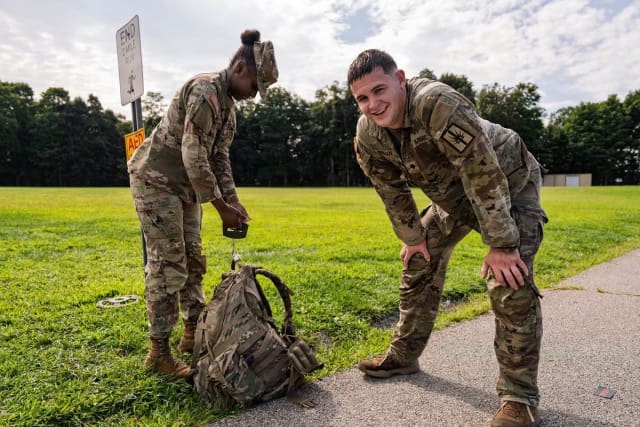
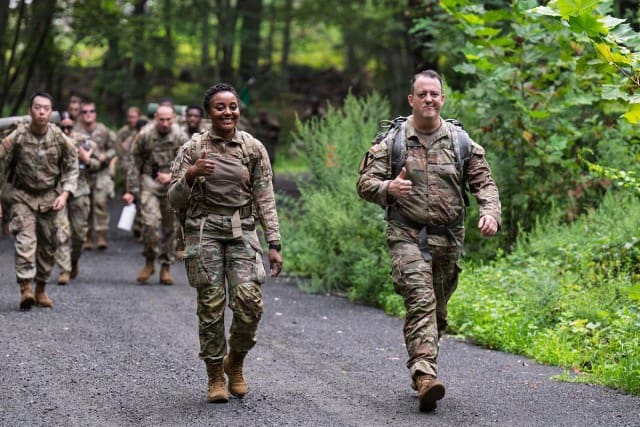
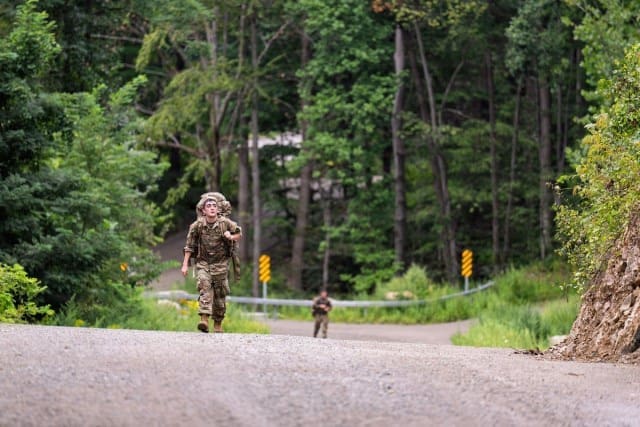
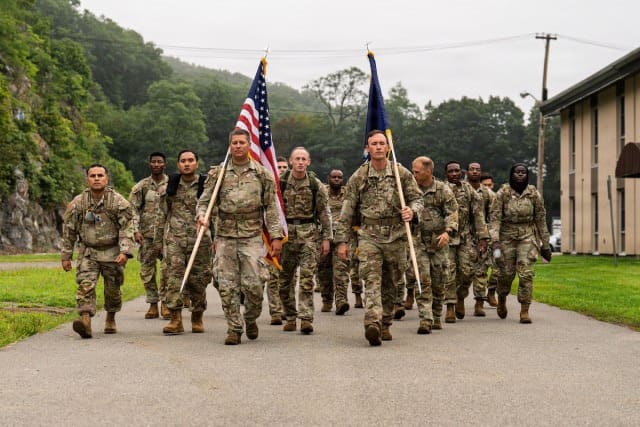
CAMP SMITH TRAINING SITE, Cortlandt Manor, N.Y. — Two hundred and eleven New York National Guard Soldiers and Airmen tackled the rugged trails of the Hudson Highlands Aug. 28 to earn the Royal Danish Air Force March ribbon.

The event, hosted by the 53rd Troop Command, required participants to carry a 23-pound pack on a 20-kilometer (12.4-mile) course.

The march was sanctioned by the Royal Danish Air Force’s A7 Training and Exercises Office as a decentralized host site for its annual endurance trial, known as the Flyver March.

According to the Danish Air Force, more than 45,000 American service members took part in the event in 47 states and 27 countries, Stars and Stripes reported.

First established in 2021 at Karup Air Base in Denmark as an initiative to build camaraderie across military branches, the march has since expanded to international partner military host sites. Under Danish regulations, remote host installations must field at least 50 military participants to conduct an official iteration.

The New York turnout of 211 actively serving Army and Air National Guard members far exceeded that standard.

A smaller contingent of New York service members completed the march the following day at Hancock Field Air National Guard Base in Syracuse.

Camp Smith Training Site serves as the New York National Guard’s primary military training installation in the Hudson Valley.

Its firing ranges and tactical facilities support combat marksmanship, officer candidate schooling and pre-mobilization exercises year-round. The event used the post’s steep road and trail network to test operational stamina under load.

Marchers reported for initial weigh-ins at 6 a.m., verifying each rucksack met the mandatory 10-kilogram (23-pound) dry baseline. Completing the 12.4-mile course with the certified weight qualifies personnel to wear the Danish Flyver March medal and ribbon on Army and Air Force service uniforms under Army Regulation 600-8-22.

The formation stepped off shortly after 7 a.m.

Among the ranks was Brig. Gen. Jason Lefton, commander of the 53rd Troop Command and the senior officer participating, who completed the march alongside his brother, Lt. Col. Aaron Lefton, commander of the 2nd Battalion, 106th Regiment (Regional Training Institute).

While the Danish endurance trial has no official completion time cutoff, several service members used the event to gauge individual fitness against Camp Smith’s demanding elevation.

Maj. Dennis Tierney, an operations officer with the 53rd Troop Command, was the first across the finish line with an estimated time in the low two-hour, 20-minute range.

Tierney credited recurring training runs up local Hudson Valley landmarks, including Anthony’s Nose, for preparing him to navigate the terrain.

“I knew the field would be full of strong, competitive participants,” Tierney said. “The event reinforced that when you put in the grueling trail miles ahead of time, your body and mindset will hold strong when it counts.”

Finishing next after Tierney was Spc. Quintin Bowman, a petroleum supply specialist with the 204th Engineer Battalion, who logged an official time of two hours and 39 minutes. Bowman, who previously earned two Norwegian Foot March badges, completed the Camp Smith course for the first time.

“Finishing reminded me that pain is temporary and that I’m capable of doing things that my mind might try to convince me that I can’t,” Bowman said.

Bowman said he maintained his pace with Tierney for most of the march.

“Surrounding yourself with people who have positive outlooks in difficult situations builds a type of resiliency like no other,” Bowman said.

Sgt. 1st Class Leon Mabra III, an automated logistics sergeant with Camp Smith Training Site garrison, finished third in just under three hours.

“I learned that despite my age, my mind and body will continue to perform as long as I listen to it,” Mabra said. “I am most proud of the fact that I finished third and under three hours with this difficult terrain.”

The Camp Smith iteration was organized by a multi-unit committee headed by Lt. Col. Nicholas Whaley, commander of the 204th Engineer Battalion.

Whaley, an experienced endurance athlete who has completed international rucking competitions, said the open-ended format encouraged widespread participation across the ranks while reinforcing joint readiness.

“The fact that there was no time standard made it a lot more accessible to a larger group,” Whaley said. “Starting everyone out together for a lap around the parade field allowed everyone to see just how big this was.”

Most participants crossed the finish line around noon, immediately reweighing their packs before attending a post-event barbecue.

“You could see throughout the ruck everyone was one unified team,” Tierney said.

“Afterward we had a barbecue and good laughs about the heartbreak every time you hit a turnaround and had to go back up a steep hill, which made the experience unforgettable,” he said.

By SFC Sebastian Rothwyn

DOW Hosts 2nd Interagency Summit to Strengthen Counter-Drone Defense

Saturday, September 12th, 2026

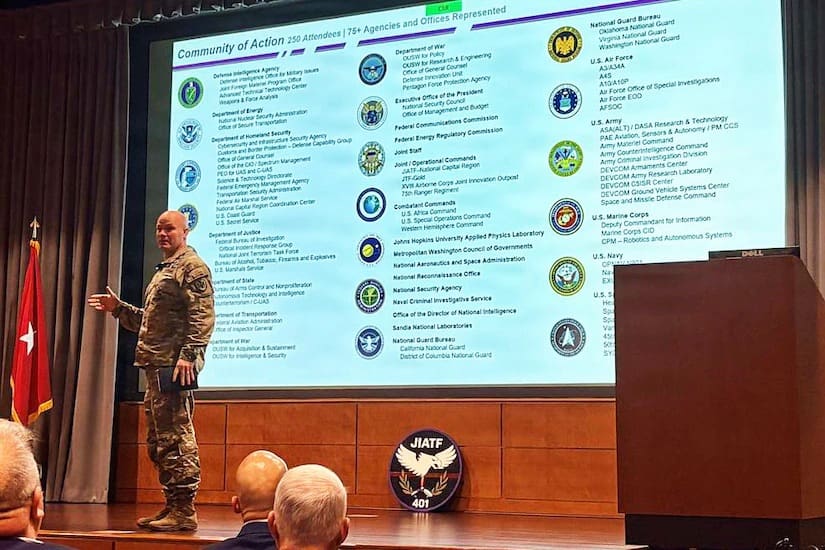
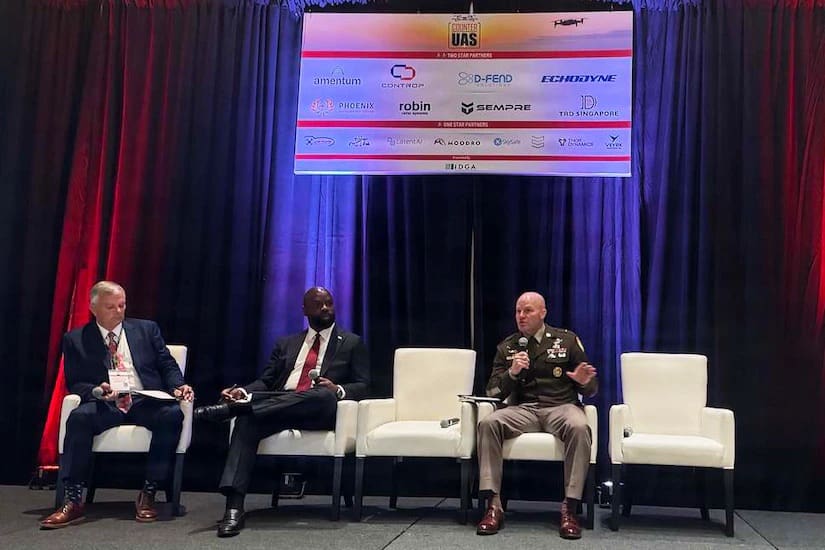
Joint Interagency Task Force 401 hosted its second interagency summit last month to accelerate cooperation against rapidly evolving drone threats.

The gathering brought together more than 200 leaders and experts from 75 departments and agencies to synchronize efforts to strengthen homeland defense against drones.  

The task force is the War Department’s premier counter-unmanned aircraft agency. Building on the momentum following the first full year since it was established in August 2025, the summit emphasized growing interagency partnerships that are rapidly delivering counter-UAS capabilities to warfighters, federal partners and local law enforcement. 

“Drones have fundamentally changed the operational environment,” said Army Brig. Gen. Matt Ross, JIATF 401 director. “To meet this challenge, we must outpace our adversaries by working together to deliver capabilities quickly. This summit is one way we are synchronizing a whole-of-government effort to secure our borders, defend the national airspace and protect the American people.” 

Discussions primarily focused on establishing a unified, cross-domain common operating picture for air traffic in areas critical for national security. Participants also took part in collaborative breakout groups focused on five key areas of counter-UAS integration for homeland defense:  

  • Major-event and critical-infrastructure preparation; 
  • Reporting, jurisdiction and information sharing; 
  • Authorities, policy and legislation; 
  • Capability access and the counter-UAS marketplace; 
  • Testing, standards and integration.  

The summit allowed participants to identify challenges, share best practices and strengthen coordination across agencies, while also highlighting innovations in the counter-UAS marketplace pioneered by JIATF 401.

It also highlighted the War Department’s efforts to transition emerging counter-UAS technologies from testing toward operational employment. The task force is conducting a directed-energy pilot program at multiple military installations to evaluate high-energy lasers, high-power microwaves and other novel technologies in an operational environment. Together, these initiatives demonstrate JIATF 401’s commitment to accelerating innovation, strengthening interagency partnerships and delivering effective counter-drone capabilities to the warfighter. 

“My charge for this summit is for each of you to walk away with specific actions to address problems,” Ross said. “We are all in this together, and it will take all of us working together to effectively counter the threat of drones and keep our warfighters and the American people safe.” 


The summit concluded with a unified commitment to maintain continuous interagency teamwork and information sharing. By aligning efforts across the department, interagency partners and federal agencies, JIATF 401 continues to cut through bureaucracy and rapidly deliver state-of-the-art counter-drone capabilities to warfighters worldwide.

By Army LTC Adam Scher, Joint Interagency Task Force 401

Strike Industries – Strike SMC Bravo for RXM 4″ with Compact Grip

Saturday, September 12th, 2026

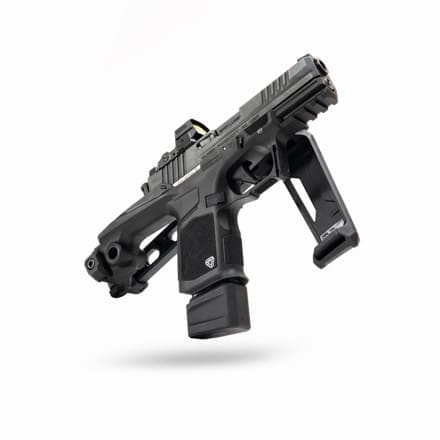
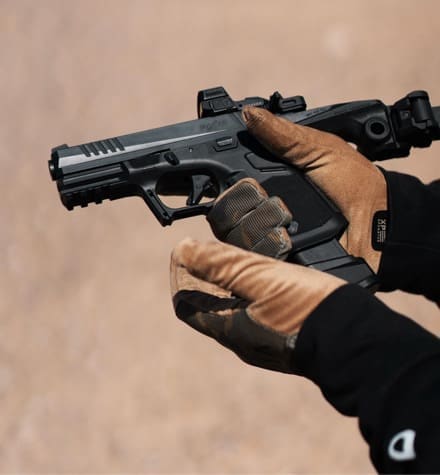
By popular demand Strike Industries has expanded the Strike Modular Chassis to accept the Ruger RXM. This allows you to add a brace or stock to your sidearm in seconds, transforming a pistol into a PDW.

Product Features:

  • 1913 Picatinny Interface: Integrated rear rail for stock or arm brace compatibility.
  • Modular Chassis System: Engineered for seamless integration with the RXM platform.
  • Enhanced Control: Double undercut trigger guard for improved bore-axis purchase.
  • Performance Ergonomics: Streamlined frame geometry for superior weapon handling.
  • Integrated Accessory Mount: Dedicated mounting point for future modular enhancements.

Specs:

L (in) – 9.58″

W (in) – 3.99″

H (in) – 1.44″

Weight (oz) – 6.00 oz

Get yours at www.strikeindustries.com/si-smc-rxm-19-bk.

Army Awards Production Contract for Enduring-High Energy Laser System

Saturday, September 12th, 2026

WASHINGTON – The U.S. Army announced today the award to AeroVironment, Inc., Albuquerque, New Mexico, of an other-transaction-agreement for production under the Enduring-High Energy Laser program. This is the Army’s first production contract for a high energy laser weapon system.

“This first of its kind directed energy program will enable our formations to defeat unmanned systems and dominate from the outset. Pairing human ingenuity with advanced technology is what ensures our Army will continue to outpace America’s adversaries,” stated General Christopher LaNeve, Vice Chief of Staff of the Army.

Directed-energy weapons, such as E-HEL, can be used to take out drones at a much lower cost than using more expensive kinetic weapons like missiles. Powered by electric energy, E-HEL generates a lethal high-energy laser beam, offering a low cost-per-shot against critical unmanned aircraft system threats, and a magazine that regenerates with the system’s power supply.

“The key to successfully countering all levels of drones is a layered defense of sensors and effectors. AV and the Army have worked for years to develop directed energy solutions, and we are proud to give our soldiers a decisive edge against drone threats,” said the Honorable Mike Obadal, Under Secretary of the Army.

Developed using a modular open systems approach design consisting of 11 major interfaces, E-HEL is not locked into a single platform or vehicle. The system is designed for operational flexibility, capable of deployment from fixed bases, semi-fixed tactical sites, and mobile combat vehicles, ensuring broad applicability across the operational spectrum. This approach will enable onboarding of cutting-edge capabilities and continuous technology upgrades as they mature to address emerging Army requirements.

“The E-HEL program is an example of how the Army has successfully utilized MOSA, a key element of acquisition reform, as part of our efforts to field technology quickly with an interface to upgrade in the future,” said the Honorable Brent Ingraham, Assistant Secretary of the Army for Acquisition, Logistics and Technology and Army Acquisition Executive. “Directed energy weapons have been considered S&T projects, and I’m proud that the Army is moving at speed and scale to deliver this first time capability,” he concluded.

The E-HEL program represents a significant step forward in the Army’s effort to deliver scalable, affordable, and adaptable directed energy capabilities to Soldiers. By transitioning from prototype development to production, the Army is establishing a foundation for continued capability growth and integration across the force. As E-HEL moves toward operational fielding, the program will continue to mature the technology and expand its ability to defeat evolving aerial threats while providing commanders with an additional layer of protection for critical assets and maneuver forces.

By US Army Public Affairs

Remembering 9/11 – In Honor of Flight 93

Friday, September 11th, 2026

Never Forget these fine people who were taken from us by evil men. Let’s honor the heroes of Flight 93 who made a fateful decision that they weren’t going to become pawns in a crazed attempt to decapitate our government. They took the enemy on, firsthand. They will always have our respect.

Let’s Roll!

The Crew
Jason Dahl
LeRoy Homer, Jr.
Lorraine Bay
Sandra Bradshaw
Cee Cee Lyles
Wanda Green
Deborah Anne Jacobs Welsh

The Passengers
Christian Adams
Todd Beamer
Alan Beaven
Mark Bingham
Deora Bodley
Marion Britton
Thomas E. Burnett Jr.
Willam Cashman
Georgine Rose Corrigan
Patricia Cushing
Joseph DeLuca
Patrick “Joe” Driscoll
Edward Porter Felt
Jane Folger
Colleen L. Fraser
Andrew Garcia
Jeremy Glick
Lauren Grandcolas
Donald F. Greene
Linda Gronlund
Richard Guadagno
Toshiya Kuge
Hilda Marcin
Waleska Martinez
Nicole Miller
Louis J. Nacke II
Donald and Jean Peterson
Mark “Mickey” Rothenberg
Christine Snyder
John Talignani
Honor Elizabeth Wainio
Kristin Gould White

We will not name the hijackers. May they forever be dishonored.

9/11 Remembered – 25 Years On

Friday, September 11th, 2026

It’s been 25 years since the world changed. In a commitment to remember our dead and all of my brothers and sisters who gave their lives to right that wrong over that last quarter of a century, we made a commitment at SSD to commemorate that day every year.

Everyone should look back on where they were that day and what they were doing; the day of the world changed.

I want to embrace the feeling of helplessness I experienced that day. I want to remember it because I don’t ever want to have the feeling again. I was on leave that day and watched the second plane hit the tower. I immediately put on a uniform and reported to my squadron. I was the senior Intelligence officer and my commander wanted answers I could not give. The Intelligence community didn’t understand what was going on as it happened and consequently, the only source of information we had was what we saw on television. I pray America is never left so unprepared again. That is part of the reason I publish every day.

The death toll is unconscionable. There were 2977 innocents killed on September 11th, 2001; the vast majority, civilians. The untold cost is to their family and friends. The world will never be the same for them.

Something inside of me changed as well. I will never forget the people who cheered that day, celebrating an attack on America and the deaths of so many innocents. I can still see them as plainly as I see those poor victims falling to their deaths. To add insult to injury, our nation elects politicians who claim we deserved 9/11.

The crisis remains. Every year we lose more and more amazing people to issues caused by those events. Victims and rescuers alike suffer life threatening medical conditions due to the exposure to toxins during the attacks and continue to succumb to these lingering wounds. As a country, we must stand by them.

The toll…it weighs on.

Never Forgive, Never Forget