FirstSpear

Archive for September, 2026

Wescom Defence Introduces Its ATMIS Mobile Signature Management System to Market at DVD 2026

Monday, September 14th, 2026

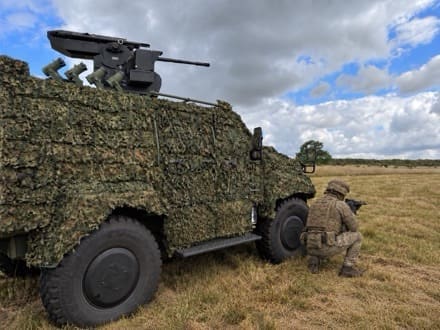
Wescom Defence, a trusted global manufacturer and solutions provider to the defence industry, specialising in advanced pyrotechnics, multispectral camouflage, soldier survivability, operational infrastructure and prime contracting support, reveals its ATMIS Mobile Signature Management system for the first time at DVD 2026. The advanced concealment technology, designed and supplied by BCB International, is being showcased alongside Wescom Defence’s other concealment products and capabilities at Stand C3-L02.

BCB International is a Wescom Defence brand, with both BCB International and Wescom Defence developing and delivering innovative survivability solutions. Together they combine specialist engineering and field-proven tactical equipment with Wescom’s broad global manufacturing and distribution footprint. Backed by over a century of engineering heritage, Wescom Defence creates specialised technologies to address the most demanding tactical environments across the globe.

The ATMIS Mobile Signature Management is a deployable camouflage panel system for multispectral concealment of vehicles, containers, and mobile platforms. The lightweight, rugged panels reduce detectability across visible, IR, and thermal spectrums. On the modern battlefield, thermal imaging, advanced radar and multi-spectral sensors mean that static and mobile assets are constantly exposed to threat detection. Failing to defeat these detection vectors leaves vehicles, equipment and personnel highly vulnerable to precision targeting. To maintain operational persistence, modern armed forces require signature management that can adapt dynamically to complex environments without hindering tactical mobility. Wescom has positioned itself firmly in this domain through its acquisition of BCB International and ATMIS.

As Wescom Defence’s premier signature management capability, ATMIS products are engineered with survivability as a first principle. It provides advanced static and mobile concealment systems that disrupt optical, thermal and radar detection.

Frances Hunt, Head of Defence Marketing at Wescom Defence said, “As a trusted provider of integrated survivability solutions, Wescom Defence is proud to showcase ATMIS at DVD 2026. ATMIS represents our signature management capability, expertly designed and supplied in-house by our highly innovative survivability brand, BCB International. By combining enhanced concealment with our broader portfolio of tactical pyrotechnics and mobility enablers, Wescom ensures NATO forces can conceal and protect themselves, whilst maintaining the initiative by out manoeuvring modern threat detection systems.”

Galvion Demonstrates Cortex EVO HALO Upgrade Pathway for UK VIRTUS Helmet at DVD 2026

Monday, September 14th, 2026

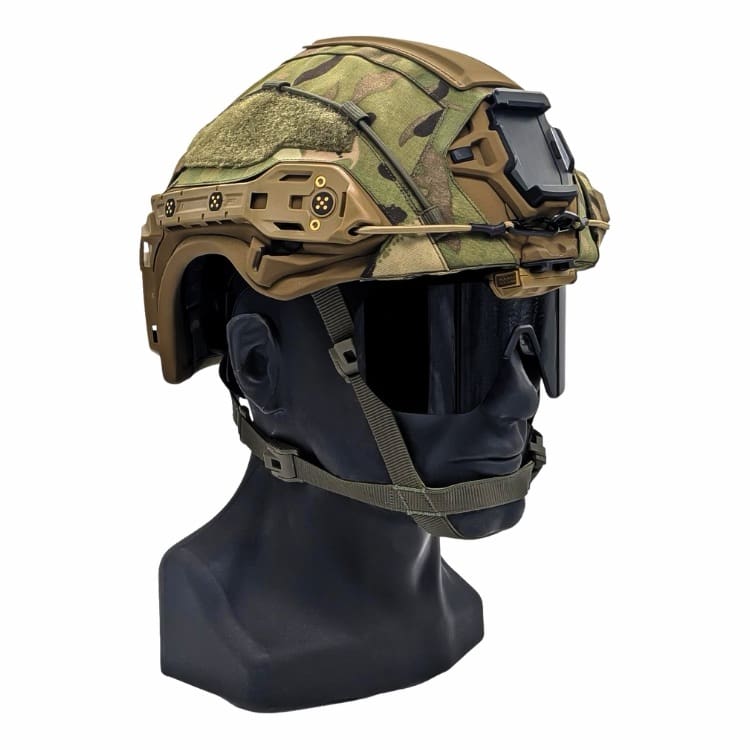
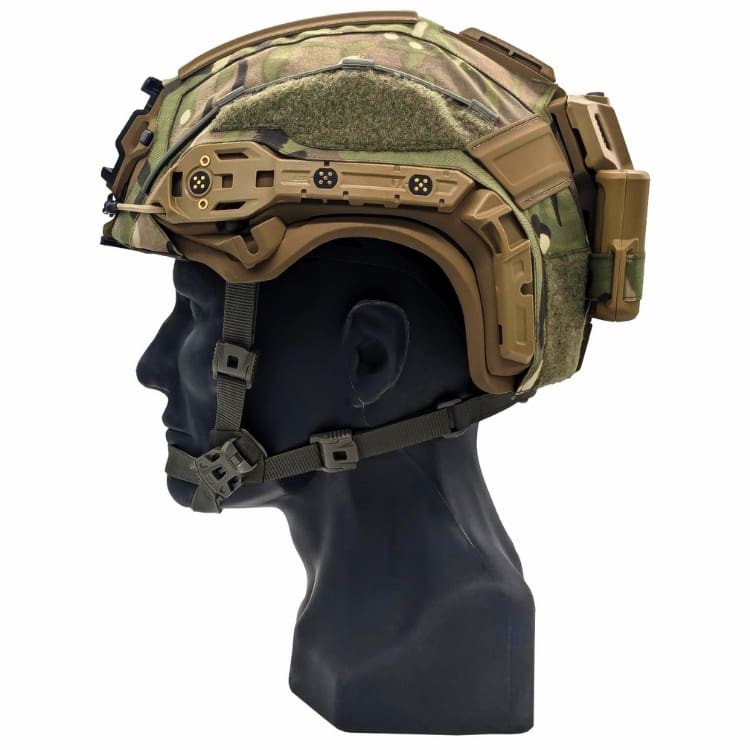
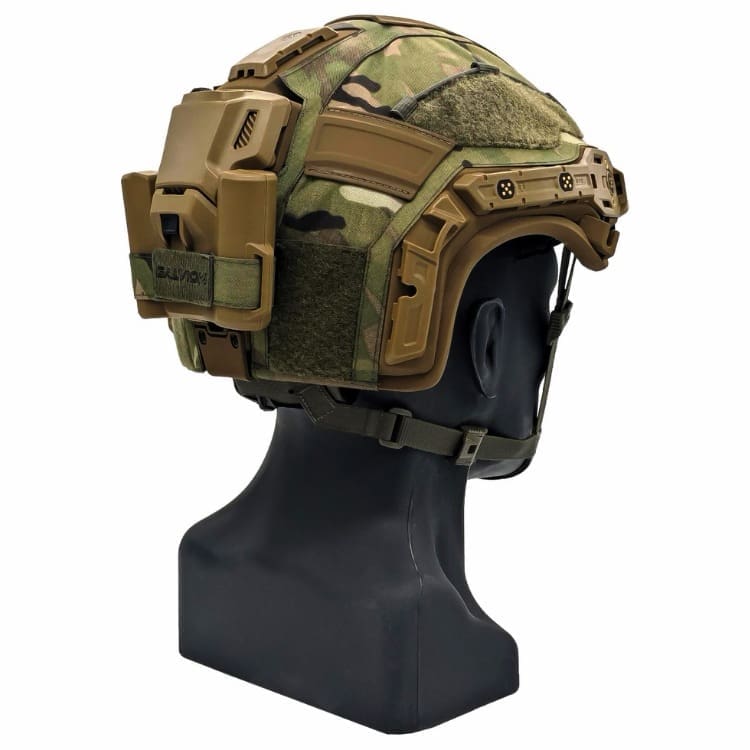
Galvion, a world leader in the design and manufacture of innovative head systems, power and data management solutions, and integrated soldier systems, will showcase a new Cortex™ EVO HALO integration concept for the UK’s in-service VIRTUS helmet at Defence Vehicle Dynamics (DVD) 2026 (Booth C3-D22).

The integration concept illustrates how Cortex EVO HALO could provide a pathway to extend and evolve the UK’s existing VIRTUS helmet fleet, introducing advanced power, data and headborne capabilities while building on the proven protective platform already in service.

The VIRTUS helmet is Galvion’s Batlskin® Cobra Plus head system, with more than 270,000 delivered to the UK Ministry of Defence since 2015. The Cortex EVO HALO concept on display at DVD is integrated onto the high-cut VIRTUS variant currently in service, but the same upgrade approach can be applied to the full-cut helmets that make up the wider fielded fleet.

Cortex EVO is Galvion’s integrated headborne architecture, bringing protection, power, data and compute together within a unified system. Its HALO configuration, introduced at Eurosatory 2026, is externally mounted and designed to extend EVO capabilities to both new and fielded helmet platforms.

Alongside the deeply integrated Embedded configuration, HALO provides an alternative implementation of the same core Cortex EVO architecture, allowing users to select an approach aligned with their operational requirements, procurement strategies and lifecycle objectives.

The EVO architecture provides a common power and data backbone capable of supporting visual augmentation, sensing and awareness technologies, digital communications and other headborne capabilities. Galvion’s AlertCentr™ software enables mission-relevant information to be managed at the headborne level, including configurable visual and audio cueing designed to allow operators to access and act on critical information without diverting attention to secondary devices. Its open architecture also enables Galvion-developed and third-party technologies to operate within a common system environment.

“Cortex EVO represents an important part of where we believe soldier systems are heading – moving beyond passive protection toward intelligent, integrated systems that enhance capability at the headborne level,” said Peter Rafferty, President of Galvion UK. “VIRTUS has provided the UK with a proven protective head system for more than a decade, and what we’re showing at DVD is how that existing platform can continue to evolve. Cortex EVO HALO creates a potential pathway to introduce advanced headborne capabilities while building on the equipment, experience and investment already in place. For us, delivering whole-life value means continuing to support and evolve fielded equipment as operational requirements change.”

The VIRTUS Cortex EVO HALO integration concept will be on display at Galvion’s booth C3-D22 throughout DVD 2026.

US Navy Awards Aware $10M Sole-Source Program of Record

Monday, September 14th, 2026

Aware Awarded Sole-Source U.S. Navy Program of Record for Advanced Custom Hearing Protection Solutions Precision-Engineered from Its Proprietary 3D Ear Scanning Technology

Atlanta, GA – September 14, 2026 – Aware Defense, a leader in custom in-ear devices powered by its proprietary eFit 3D ear scanning technology and a division of Aware CBW, has been awarded a sole-source Program of Record contract by the Naval Air Systems Command’s Aircrew Systems Program Office (PMA-202) to advance hearing protection. This prestigious selection underscores Aware’s innovative technology and commitment to protecting the warfighter.

“We are honored to be chosen as the sole-source supplier for this critical program to deploy custom hearing protection built from each warfighter’s unique ear anatomy using Aware’s patented 3D ear scanning technology,” said Sam Kellett, Jr., Chief Executive Officer of Aware.

“Hearing loss is one of the most common service-connected disabilities, and it is preventable. Because every ear is different, our eFit scanner and advanced additive manufacturing deliver precision-built protection and communications for mission-critical environments, custom fit at scale. This award reflects the U.S. Navy’s commitment to preventing hearing loss and sets a new standard for protecting the warfighter.”

The five-year contract establishes Aware Defense as the U.S. Navy’s exclusive end-to-end source for 3D digital ear scanning to capture ear canal geometry, manufacture custom hearing protection and Communications Earplugs (CEP), and deliver devices precision-engineered to the individual ear anatomy of Naval Aviation aircrew and flight-line maintainers. The PMA-202 program is anchored by Aware’s eFit scanner, the only non-contact optical 3D scanning system that uses radial illumination to capture the true geometry of the ear and ear canal past the second bend with dimensional accuracy of less than 90 microns.

The sole-source contract builds on proven execution and field validation. Under initial program funding, Aware Defense conducted on-site 3D ear scanning events nationwide and delivered 6,373 custom-fit devices from September 2025 to July 2026, while working alongside NAVAIR Aeromedical Safety Officers and Navy audiologists to fit service members. Under PMA-202, Aware will scale to 42,000 custom-fit units starting August 1, 2026, at Naval Air Stations across the United States (CONUS) and overseas (OCONUS).

“Aware Defense is ready to execute at fleet scale,” said Stu Booker, President of Aware Defense.

“We are proud to continue our partnership with the Navy to accelerate the fielding of advanced hearing protection. We know that gear that fits gets worn, and every ear scan and custom-fit device advances our mission to protect warfighters and preserve long-term hearing health. Our team has proven its ability to seamlessly scan 700 personnel in five days and have precision-fit devices in the warfighters’ ears within 60 days, enabling rapid program expansion across Naval Aviation.”

Hearing loss remains one of the most common and costly injuries across the Department of Defense. With Aware Defense’s Program of Record, custom hearing protection will become integral to how the U.S. Navy protects the hearing of its aviation personnel while supporting clear communications and operational readiness.

www.awaredefense.us

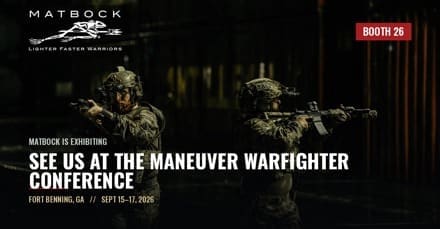
MATBOCK Monday: Fort Benning Maneuver Warfighter Conference

Monday, September 14th, 2026

Swing by booth 26 to see the latest Tarsier Eclipse Pro from MATBOCK.

They will also have on display

– ARES Drone Assault & Sustainment Pack

– Graverobber Assault Medic Pack

– ARC Ghost Carrier

Email sales@matbock.com to schedule a meeting with us at Benning.

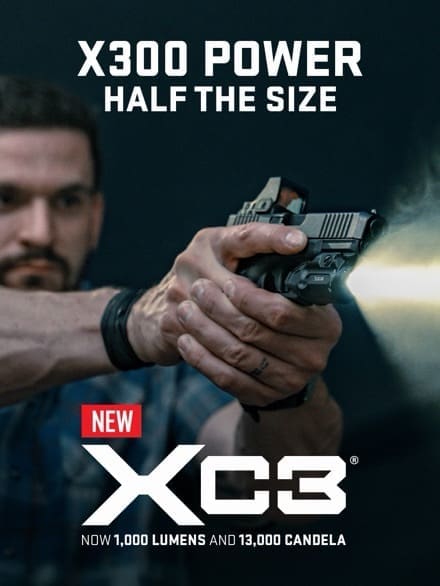
The New XC3-B! X300 Power. Half the Size.

Monday, September 14th, 2026

Fountain Valley, CA—SureFire, LLC, manufacturer of the world’s finest—and most innovative—illumination tools and tactical products, is proud to announce a new XC3 with significantly increased performance!

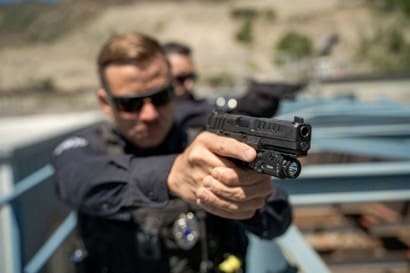
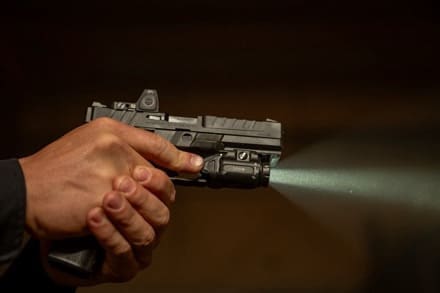
Building on a proven formula, the latest XC3 is fueled by a new rechargeable SFRCR123 battery that increases output to 1,000 lumens and 13,000 candela, nearly double the output of the original. The next-generation XC3 now delivers performance that rivals our gold-standard X300U duty light at roughly half the size and weight but with the same rugged reliability. Compatible with a wide range of commercially available holsters, the XC3 is robust enough for professional use and compact enough for everyday concealed carry.

Our hybrid beam projects an intense white light with a focused hot spot for positive target identification to 228 meters, while also providing a healthy amount of spill for situational awareness. Intuitive, ambidextrous switching provides both momentary and constant-on activation with ease. A quick press gives you constant on, and a press and hold will activate the momentary function.

The battery is front loaded into the XC3, and you do not have to remove the light from your firearm to replace it. The included SFRCR123 can be recharged via the USB-C port on the battery or with any commercially available charging dock. A 123A lithium battery can also be used to deliver 550 lumens, 7,200 candela, and longer runtime!

We’ve machined the XC3’s robust, compact body from lightweight, strong aerospace aluminum, then Mil Spec hard-anodized and sealed it to repel the elements. The result is a compact weaponlight that excels in the line of duty or any concealed carry applications.

Specs:

XC3-B COLORS: Black 
OUTPUT: 1,000 lumens (SFRCR123) / 550 lumens (123A)
PEAK BEAM INTENSITY: 13,000 candela / 7,200 candela
DISTANCE: 228 meters / 170 meters
CONSTRUCTION: Aluminum
FINISH: Hard Anodized (MIL-A-8625 Type III, Class 2)
WEIGHT: (w/batteries) 2.65 oz (75 g)
LENGTH: 2.6 in (6.6 cm)
BEZEL DIAMETER: .945 in (2.4 cm)
BATTERIES: (1) SFRCR123 rechargeable lithium-ion (incl.)
SWITCHING: Ambidextrous toggle switches
LIQUID INGRESS PROTECTION: IPX7

For more information on the XC3-B please visit surefire.com.

BFG Monday: When Equipment Steals Your Attention

Monday, September 14th, 2026

For most of my career, carrying marking lights meant accepting an improvised solution.

You taped chemlights to control their output. You tied them together with a cord. You found a way to hang the bundle from your belt or kit. Then you dealt with the weight, the bulk, the snag hazards, and the possibility that one might activate before you needed it.

That was simply how it was done.

I ran that setup through training and operations because everyone else did too. Over time, the inconvenience stopped registering as a problem. It became part of the background, another equipment compromise that professionals learned to work around.

The original MARCO® changed that for me.
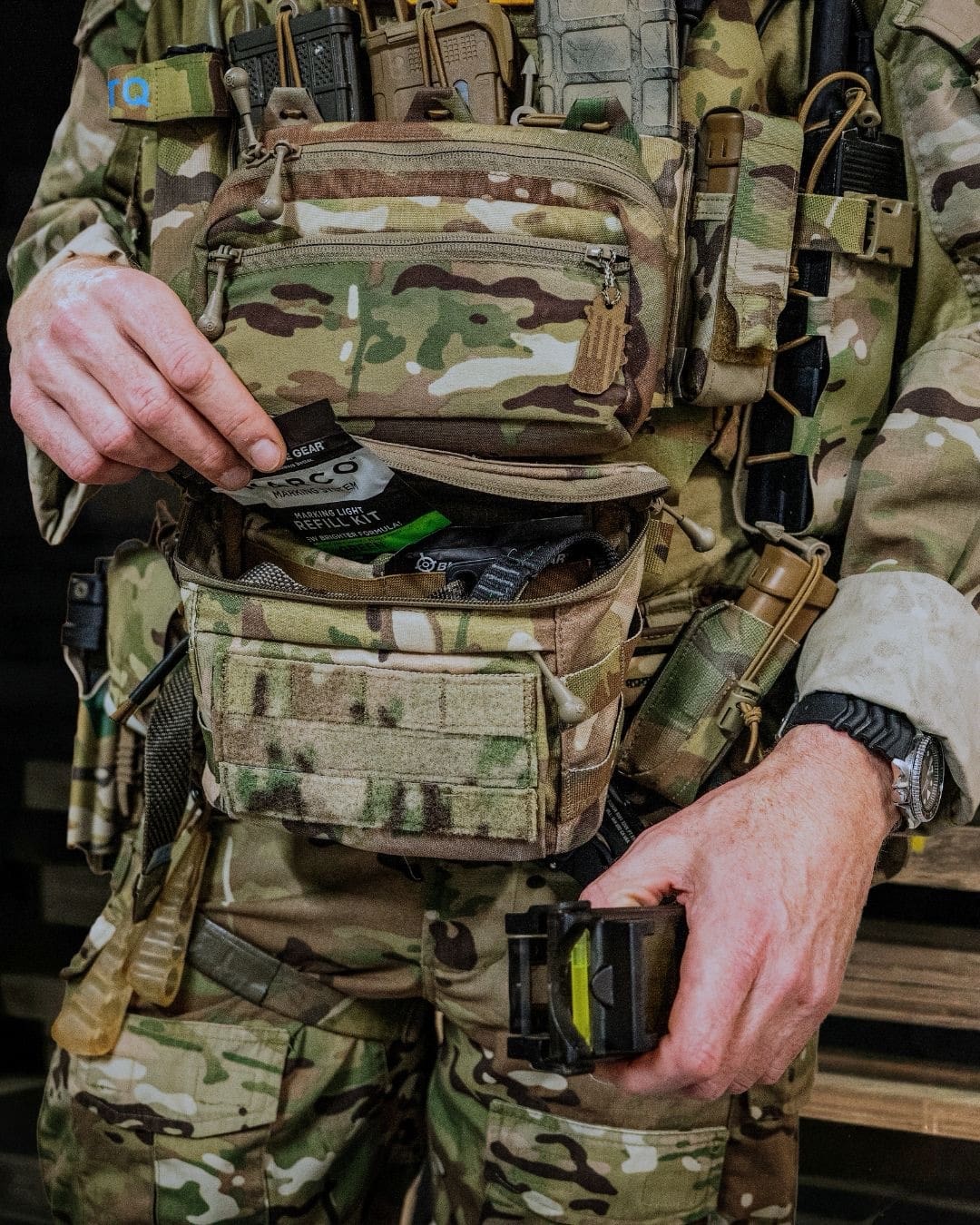
Instead of carrying a homemade bundle, I could carry thirty compact marking lights in a protected, magazine-style dispenser. The lights were organized, accessible, and far less likely to activate accidentally. That mattered with visible marking lights, but it mattered even more with infrared. An unintentionally activated IR marker may be invisible to the naked eye, but it is not invisible to someone using the appropriate optics.

That is not just an equipment inconvenience. It is a signature-management problem.

The original MARCO addressed that problem well enough that it earned a permanent place in my equipment. But after years of using, it and training others, I began to recognize another limitation.

The issue was no longer whether I could carry marking lights safely and efficiently. The question was whether I could deploy one without taking attention away from something more important.

Attention Is Part of the Load

When people evaluate tactical equipment, they usually talk about physical characteristics: weight, durability, size, materials, and mounting options.

Those things matter. But they are not the entire load.

Equipment also creates a cognitive load. It may require the user to look down, change grip, confirm an action, perform multiple steps, or pause long enough to make sure that it worked. Individually, those demands can appear insignificant. Under stress, they compete for the same limited attention needed to process the environment, communicate, make decisions, and maintain awareness.

That distinction becomes particularly important in time-compressed situations.

There are circumstances where a team can move deliberately, control its pace, and take the time necessary to solve each problem in sequence. There are also circumstances where delay carries its own consequences. Hostage rescue, active-threat response, and other urgent operations may require people to move and make decisions near the limit of what they can process effectively.

In those environments, even a simple equipment task can become disruptive if it requires the user to shift attention away from the larger problem.

That was the remaining gap I saw with traditional marking methods, and eventually with the original MARCO in specific applications. The original dispenser was safer, lighter, and more organized than a taped bundle, but deploying a light still required a sequence of actions.

Most of the time, that was an acceptable tradeoff. At a higher tempo, it could be enough friction that users chose not to mark at all.

That is an important equipment lesson. If a tool is technically available but its operation competes with the user’s primary responsibility, it may not be available in any meaningful sense.

Marking Is About More Than the First Person Through the Door

Room marking is sometimes treated like a minor administrative action. It is not.

A marking system communicates information to the people who arrive next. It can help indicate which spaces have already been addressed, identify routes or boundaries, support coordination, and reduce unnecessary duplication.

That becomes especially important when multiple elements or agencies are operating within the same structure. Without a clear marking protocol, personnel may spend time reassessing spaces that have already been addressed. They may also encounter people whose movements and positions they do not immediately understand.

Marking does not replace communication, training, or judgment. It supports them by leaving behind a simple, visible piece of information.

But that information only has value if the person placing the marker can do it without giving up attention at the wrong moment.

That is the problem MARCO HR was built to address.
A Different Approach to Deployment

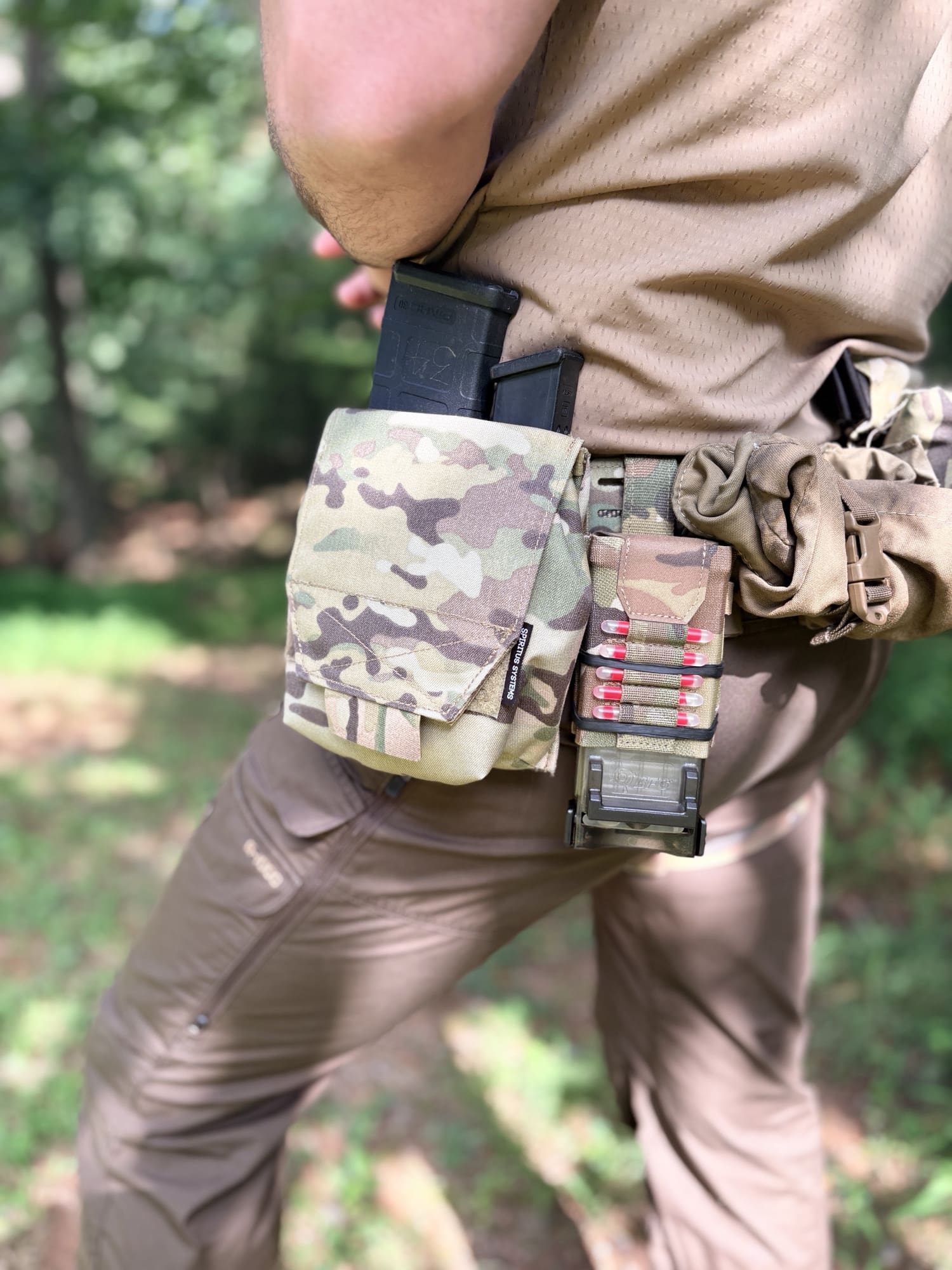
MARCO HR retains the magazine-style concept of the original MARCO, but it changes the deployment action.

The dispenser holds thirty 2-inch marking lights and uses a palm-actuated mechanism that activates and dispenses a light through a single-handed motion. The user does not have to remove a light and then perform a separate activation step. The system is intended to reduce unnecessary handling and minimize the need for visual confirmation.

That is the meaningful difference.

The benefit is not merely that MARCO HR is faster on a stopwatch. The real benefit is that it asks less of the person to operate it. Fewer movements, fewer decisions, and less visual attention are required to produce the same result: an activated marking light placed where it is needed.

MARCO HR can be carried through belt, MOLLE, or drop-hanger configurations and supports multiple marking-light colors for organizations using established visual or infrared marking protocols. The associated Ten-Speed® pouch also provides exterior mounting points for additional marking lights when users need immediate access to a different color or format.

Those options matter, but they are not the real story.

The real story is that marking no longer has to interrupt the work.

Question the Workaround

Professionals are good at adapting to imperfect equipment. That ability is necessary, but it can also hide problems.

If users tape, tie, modify, rehearse around, or simply tolerate the same limitation for long enough, the workaround begins to look like the standard. People stop asking whether the process is still necessary.

The taped chemlight bundle is a good example. It persisted because it worked well enough and because there was no obvious alternative. The original MARCO proved that marking lights could be carried in a more organized and protected system. MARCO HR takes the next step by reducing the attention required to activate and deploy them.

That progression represents more than a product update. It reflects how Blue Force Gear® believes professional equipment should evolve: identify the real problem, remove unnecessary steps, reduce avoidable risk, and make the equipment easier to use under pressure.

Not every mission requires the same speed. Not every team uses the same marking protocol. MARCO HR does not replace sound tactics, communication, or training.

What it does is remove an old equipment compromise.

For professionals working in low-light environments, that is the standard worth pursuing. Equipment should support attention, not compete for it. It should simplify necessary actions without creating another problem somewhere else. Most importantly, it should allow the user to remain focused on the reason the equipment is being carried in the first place.

That is where MARCO HR closes the gap.

Kyle Sproles
Green Beret, Special Forces CQB Instructor, and Founder of Active Shooter Response Solutions


Army Awards the First Two Production Contracts Using the Rapid Electromagnetic Warfare & Signals Intelligence (REWSI) Call for Solutions

Monday, September 14th, 2026

ABERDEEN PROVING GROUND, Md. — The U.S. Army awarded nearly $196 million in production contracts to two defense technology companies to deliver advanced electromagnetic spectrum situational awareness, direction finding, geolocation, signal identification, and other advanced capabilities directly to Soldiers.

The awards mark the Army’s first production contracts executed under the Rapid Electromagnetic Warfare and Signals Intelligence (REWSI) Call for Solutions, an initiative under the Army Open Solicitation (AOS) and Commercial Solutions Opening (CSO) framework. Both contracts include a five-year ordering period and were awarded by Army Contracting Command–Aberdeen Proving Ground (ACC-APG).

The contracts include:

Heaviside Industries Inc.: A $99 million firm-fixed-price, indefinite-delivery/indefinite-quantity contract awarded Aug. 27, 2026, for the procurement, fielding, upgrades, and sustainment of the Heaviside MOTH spectrum analyzer. The device provides a small form factor distributed electromagnetic sensor that detects and reports sources within the electromagnetic spectrum at the tactical edge.

Research Innovations Inc. (RII): A $96.9 million firm-fixed-price, indefinite-delivery/indefinite-quantity contract awarded Sept. 3, 2026, to procure capabilities supporting the Electromagnetic Spectrum Operations (EMSO) Characteristics of Need (CoN) to the AI-driven RII Dragonfly sensors integrated aboard the Menet Aero Intrepid 1200 unmanned aircraft system.

“The first two awards represent an innovation in defense acquisition – transitioning the enterprise from a reactive posture of developing proprietary systems to match emerging threats, to a proactive strategy of leveraging market velocity to consistently outpace them,” said Col. Scott Shaffer, Project Manager for Electromagnetic Warfare and Collection (PM EW&C).

Led by PM EW&C, this rapid acquisition effort supports the Army’s EMSO CoN. The initiative streamlines the acquisition process, delivering capability faster across a diverse range of technologies to meet formation and echelon needs.

The Call for Solutions (Army Open Solicitation – W9128Z-26-S-A002), released on the VULCAN portal, supports a broader effort to establish a collection of commercial capabilities. Evaluations are currently being conducted on a rolling basis throughout the open period of the CSO.


Veteran Wellness Podcast

Sunday, September 13th, 2026

The Veteran Wellness Podcast is hosted by my friend Erik Lawrence who speaks with fellow Veterans about service, health, and life.

His inaugural video was launched today and features Retired Green Beret Scott LaMorte.


Expect an honest conversation about military service, combat injuries, traumatic brain injury (TBI), cancer, recovery, and the mindset that helped carry Scott through some of life’s toughest challenges.

Scott reflects on the injuries he sustained in Afghanistan, his cancer diagnosis, the treatments and wellness approaches he chose to pursue, and why he believes faith, resilience, and taking an active role in his own health became central to his recovery.