XC3 Weaponlight

Archive for September, 2026

D&M Holding Company and PT Pindad Sign MOU to Develop Energetics Center of Excellence in Indonesia

Monday, September 21st, 2026

TAMPA, Fla. (September 21, 2026) – D&M Holding Company, Inc. (D&M), the global leader in delivering complete solutions for ammunition and energetics manufacturing facilities, and PT Pindad (Persero), a leading defense manufacturer in Indonesia, have signed a Memorandum of Understanding (MOU) to develop an Energetics Center of Excellence in Indonesia. The MOU outlines the companies’ intent to collaborate on the development of a state-of-the-art center for the joint development of propellants and critical propellant raw materials. The proposed project is intended to establish a vertically integrated propellant production capability for Pindad, strengthening supply-chain security and supporting their internal ammunition production.

“This Memorandum of Understanding represents an important first step between Pindad and the D&M family of companies toward creating an Indonesian-U.S.-European collaboration to develop an advanced, vertically integrated energetics center in Indonesia,” said James Jones, executive vice president sales and business development, D&M Holding Company. “We look forward to working with Pindad to move the joint development of this project forward as we explore the transfer of equipment and technologies and pave the way for joint research and development of the next generation of energetics raw materials.”

For more information visit D&M Holding Company.

US Special Operations Command Selects GMP for US and Foreign Weapons, Ammunition and Personal Protective Equipment Contract

Monday, September 21st, 2026

TAMPA, Fla. (Sept. 21, 2026) — Global Military Products (GMP) has been selected as one of multiple contractors for a new U.S. Special Operations Command (USSOCOM) indefinite delivery, indefinite quantity (IDIQ) contract covering the procurement of U.S. and foreign weapons, ammunition and personal protective equipment. As a contract holder, GMP will have the opportunity to compete for individual delivery orders throughout the five-year, $19.5 million contract.

“Special operations forces require speed, flexibility and dependable access to equipment. This award reflects Global Military Products’ commitment to providing U.S. and allied forces with reliable access to critical defense equipment and capabilities,” said Austin Gouveia, associate program manager, Global Military Products. “This award also reflects our ability to perform under the previous USSOCOM IDIQ contract, where we excelled at sourcing and delivering weapons and ammunition while leveraging our global network and supply chain capabilities to respond to evolving operational requirements and support USSOCOM missions.”

GMP’s selection builds on the company’s experience supporting U.S. government, defense and international customers with the sourcing, supply and delivery of defense materiel, including mortar systems, U.S. and foreign-made sniper rifles, assault rifles, machine guns, grenade launchers, anti-armor weapons, ammunition, electro-optics and weapon accessories.

Through its global supplier network and established logistics capabilities, GMP is well positioned to support time-sensitive requirements and complex international procurement efforts. Beyond procurement, the contract calls for associated program management, logistics support, testing and packaging requirements.

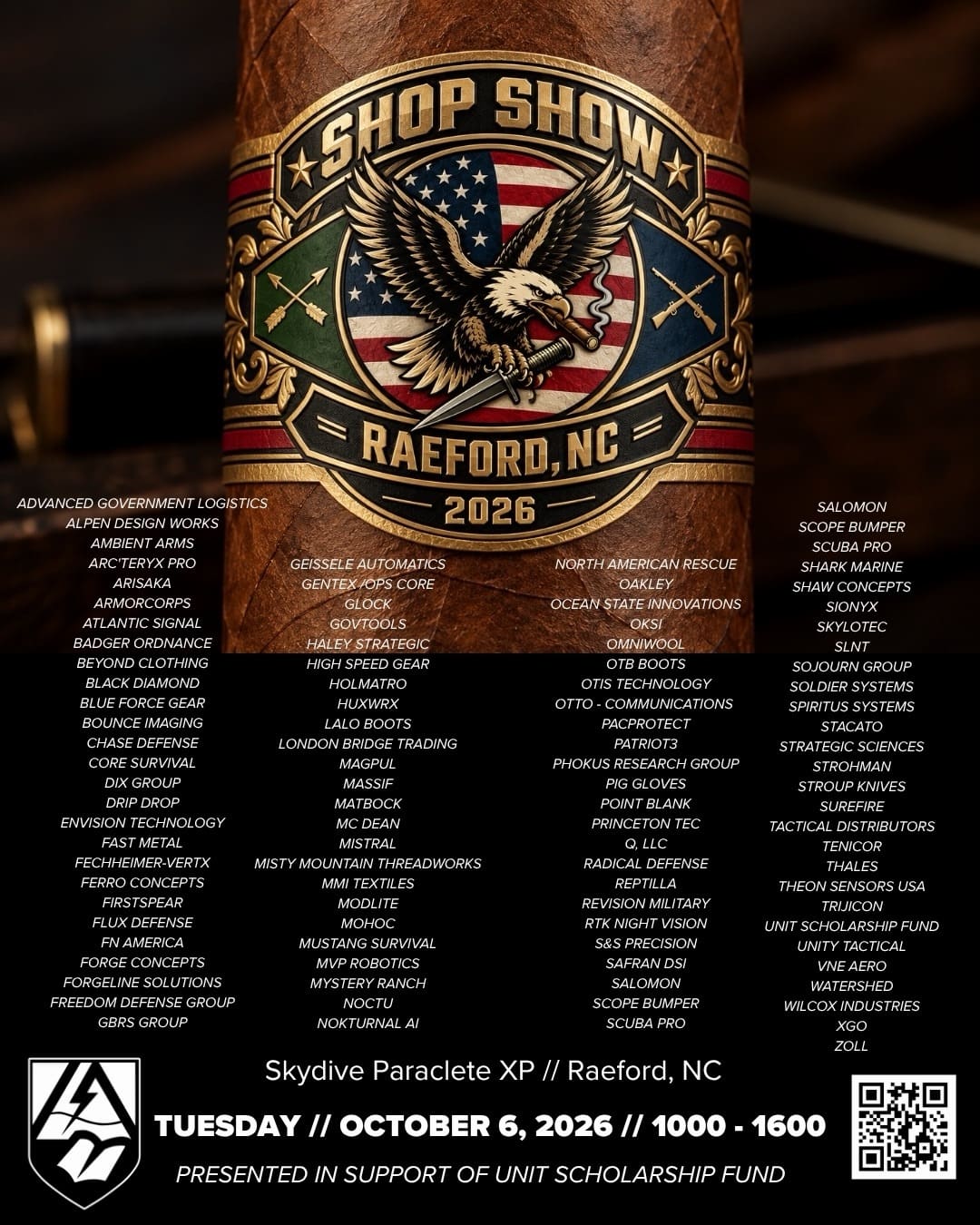
SHOP Show – 6 Oct, Raeford DZ…Be There!

Monday, September 21st, 2026

Join SSD and over 100 vendors for SHOP Show 2026 a one-day dive into the newest and coolest kit available. Proceeds benefit the Unit Scholarship Fund.

MATBOCK Monday: Excess Sewing Capacity

Monday, September 21st, 2026

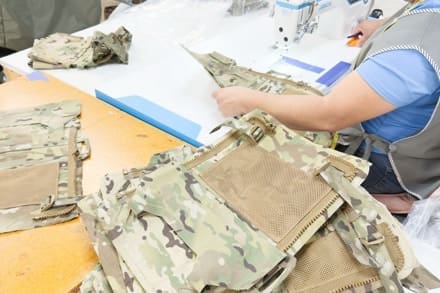
MATBOCK Manufacturing has excess production capacity available now at our facility just outside Fort Bragg. Since taking over Hawk Distributor, MATBOCK has invested a little over $500,000 into the facility’s equipment and process capability. That investment is now available to put behind other companies’ production runs, across four capability areas:

Apparel Manufacturing: Cut-and-sew production to the same Berry/TAA standards MATBOCK holds its own product lines to.

3D-Printed Drone Parts: Additive manufacturing for drone components, suited to rapid iteration and small-batch runs.

Adaptive Manufacturing: Flexible lines that can shift between product types and order sizes without long changeover delays. Currently printing Nylon 12 and TPU 90, check this out to learn more about the material properties: matbockoem.com/3d-printing

DoW Production: Scalable production for Department of War clients, from prototype quantities through full-rate production.

The facility is ISO 9001 certified and ITAR registered, giving customers compliance infrastructure already in place rather than something to stand up on their own.

If your program needs domestic, compliant manufacturing capacity near Fort Bragg, visit matbockoem.com or reach out to MATBOCK OEM at oem@matbock.com or (757) 384-1338 to discuss your production needs and timeline.

IEW History: MG Odom Convenes Tactical Intelligence Conference (21 JUL 1982)

Monday, September 21st, 2026

On July 21-22, 1982, Maj. Gen. William Odom, the Army’s assistant chief of staff, intelligence, hosted a Tactical Intelligence Conference at Fort Huachuca, Arizona. With a goal of finding consensus on the Army’s long-awaited intelligence capstone field manual, FM 34-1 Intelligence and Electronic Warfare (IEW) Operations, the conference was an overwhelming success.

The 1970s ushered in dramatic change for Army intelligence. Specific reforms recommended by the Intelligence Organization and Stationing Study (IOSS) published in 1975 were being implemented: the U.S. Army Intelligence and Security Command had been established; responsibility for all intelligence training was consolidated at the U.S. Army Intelligence Center and School (USAICS); and planning was underway for a single Army intelligence production center—the Army Intelligence Agency. Additionally, organic combat electronic warfare intelligence (CEWI) units were being activated at corps and division levels; yet intelligence doctrine struggled to keep pace with this rapid organizational and operational change. As late as 1982, MI was still relying on doctrine published more than a decade earlier.

At USAICS at Fort Huachuca, Mr. Phil Young’s Doctrinal Literature Division, Directorate of Training and Doctrine, was tasked with producing all IEW doctrinal materials for the U.S. Army and some joint services. The office had several supporting FM 34-series echelon manuals—such as FM 34-20 MI Group (CEWI) (Corps) and FM 34-10 MI Battalion (CEWI) (Division)—in various stages of completion, as well as a rough coordinating draft of FM 34-1 completed as early as 1980.
Two years later, tactical units were complaining about USAICS’ failure to produce a final version of the capstone manual. FM 34-1 was proving a significant challenge for Young’s office. Not only was Young struggling with significant personnel shortages, but the draft received some contentious feedback from the field. In a column in Military Intelligence Magazine, General Odom called out the “wholly unrealistic expectations” of the critics, stating “Two or three years ago, I doubt that we had adequate experience on which to base an effective draft of FM 34-1.” While he believed that “a great deal of experience has begun to accumulate from exercises and training,…we are nowhere near ready to write the ‘last word’ on doctrine in FM 34-1.” Still, he agreed, “it is high time to write the ‘first word’ on that doctrine.”

On July 21-22, 1982, General Odom convened a Tactical Intelligence Conference at USAICS. He brought in Army G-2s and tactical intelligence commanders from every corps and nearly every division to collaborate with the doctrine writers at USAICS. After personally helping nail down a definition of “doctrine,” Odom focused the attendees on five key areas of dissension: IEW operations, intelligence support to Operational Security (OPSEC), the all-source intelligence center, collection management, and joint and combined IEW operations.

After the conference, General Odom praised the level of competence and professionalism in the MI Branch, relating, “The wealth of insight was truly impressive, and I personally left the conference much richer from the experience.” The USAICS doctrine writers also felt enlightened but perhaps intimidated by the amount of material the July “crash effort” and a follow-on November session generated. Still, based on the two conferences’ recommendations, by the end of the year, Mr. Young’s division had hammered out a new FM 34-1 coordinating draft and staffed it for review by the major commands. A second coordinating draft—slimmer by 250 pages and focused on company and field grade officers performing IEW command and staff functions—was ready for staffing by Feb. 18, 1983. On Mar. 22-23, 1983, another meeting at Fort Huachuca led to the finalization of the manual’s content.

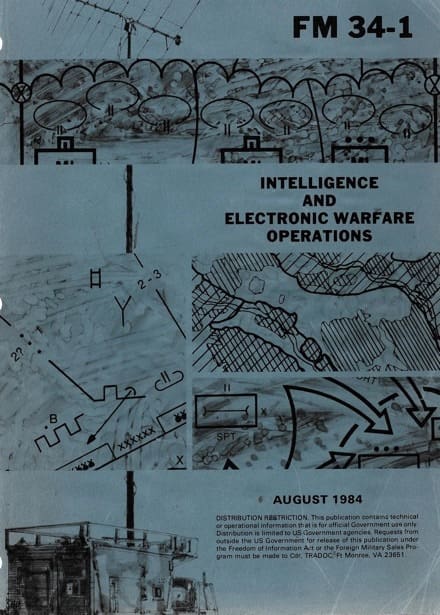
Finally, on Aug. 31, 1984, the long-awaited FM 34-1 IEW Operations was published, the first time Army intelligence field operations doctrine was compiled in a single source. It provided general doctrine for tactical IEW operations from Echelons Above Corps down to maneuver battalion levels. Mr. Young stressed, however, that the manual was still not “the last word” but, instead, would need to be updated with continual feedback from the field.

Article by Lori S. Stewart, USAICoE Command Historian. New issues of This Week in MI History are published each week. To report story errors, ask questions, request previous articles, or be added to our distribution list, please contact: TR-ICoE-Command-Historian@army.mil.

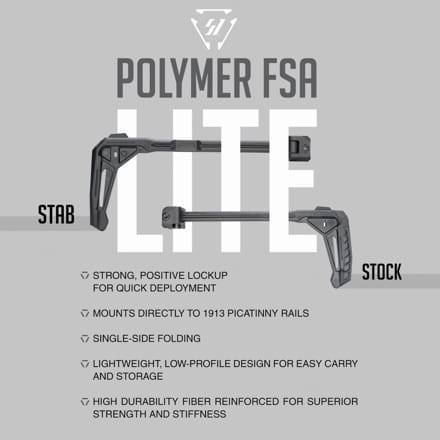
Strike Industries Launches Polymer FSA LITE STAB & STOCK

Sunday, September 20th, 2026

Whether you’re looking for a strong yet lightweight Picatinny compatible stock or stabilizer, Strike Industries has got you covered.

Features:

  • Reinforced polymer built for rigidity and durability
  • Proven locking mechanism for strong, positive lockup
  • Picatinny rail adapter included for any 1913 platform
  • Direct-mount compatible with B&T TP9/MP9
  • Ultra-compact, single side folding design
  • Everything you need to install in the box
  • STOCK version adds comfortable rubber overmold for shouldering

Gets yours at www.strikeindustries.com/si-fsa-spl-stab-stock.

BAE Systems Launches Shadow EW Compact Electronic Warfare Solutions

Sunday, September 20th, 2026

Cost-effective, low-SWaP electronics enable small airborne platforms to conduct missions in contested environments

BAE Systems has launched its Shadow EW™ family of compact electronic warfare (EW) solutions designed for a diverse and growing range of small airborne platforms. The solutions provide critical situational awareness and self-defense capabilities, improving mission effectiveness in contested environments.

Shadow EW represents a critical shift in how BAE Systems develops and delivers innovative, cost-effective EW solutions with the agility and scale required to support the demands of the U.S. Department of War.

BAE Systems can produce Shadow EW systems in high quantities at a low cost, backed by proven high-volume production capabilities and a skilled workforce. Shadow EW solutions utilize commercial microchips for high-performance computing and supply chain efficiency, allowing the company to accelerate production and delivery.

“The modern battlefield is changing at an unprecedented pace and all platforms, regardless of size, require adaptable electronic warfare capabilities to survive,” said Rebecca Cruz, Director, Shadow EW products at BAE Systems. “Shadow EW solutions provide flexible, configurable hardware paired with iterative software updates to counter rapidly evolving threats.”

Shadow EW products provide compact, low-cost EW capabilities that are optimized to support high-volume, affordable mass applications and rapid platform integration. These small, lightweight, power efficient products are developed around open architecture standards and field upgradeable, software defined capabilities. They support a full range of EW mission applications, including situational awareness, targeting, deception, survivability, and collaborative effects delivery.

Production of the Shadow EW family of products will take place at BAE Systems facilities in Cedar Rapids, Iowa with software and design work in Nashua, New Hampshire. For more information about Shadow EW, visit: www.baesystems.com/en-us/product/shadow-ew.

62d AW Pioneers First sUAS Training for C-17 Inspections in AMC

Sunday, September 20th, 2026

JOINT BASE LEWIS-MCCHORD, Wash. —  

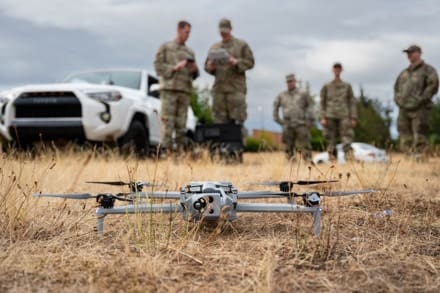
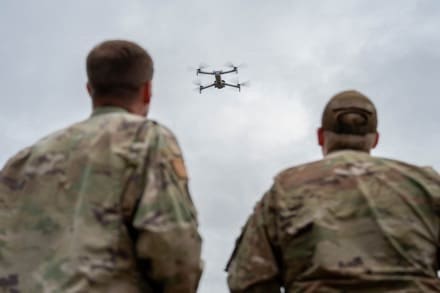
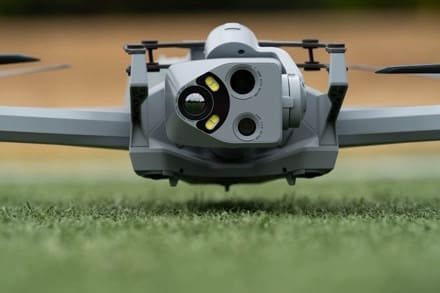
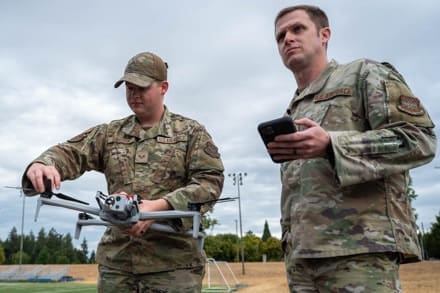
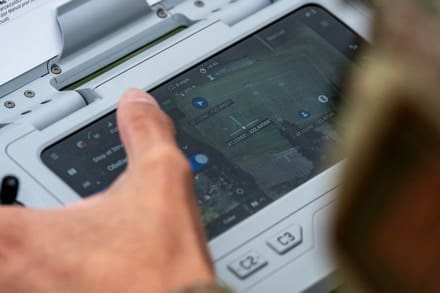
62d Maintenance Group personnel completed a four-day, hands-on training program on the Skydio X10D small unmanned aircraft system at Joint Base Lewis-McChord, Sept. 3, 2026. The training, which is the first of its kind in Air Mobility Command, included classroom instruction and practical applications of the system, introducing new, timely and safe capabilities into routine maintenance operations.

The 62d Airlift Wing is the first unit within AMC to fully implement a dedicated sUAS training and qualification program for maintenance inspections on the C-17 Globemaster III aircraft. The program is designed to be a streamlined, standardized course that can be easily replicated throughout AMC, and used as a base for further sUAS implementation.

The 62d MXG employs the Skydio X10D sUAS to conduct exterior and elevated visual inspections on the wing’s fleet of C-17s. The initiative aims to significantly reduce inspection timelines while reducing safety hazards associated with personnel conducting visual assessments.

“As a crew chief, I’m out on the line working on the C-17, which is a huge aircraft,” said Staff Sgt. Marcuscio McCampbell, 62d Aircraft Maintenance Squadron crew chief. “Being able to use the drone to perform duties like upper wing inspections, that normally take much longer, saves us time and helps the maintainers of tomorrow.”

Implementation of the X10D is not a new concept; the sUAS has already been fielded for aircraft maintenance inspections across the Department of the Air Force. Furthermore, Skydio liaisons to the Air Force introduced the system to Team McChord in 2025, demonstrating its ability to complete C-17 inspections in approximately 40 minutes. Now, the 62d MXG has a standardized training program that qualifies maintainers for C-17 inspections with the system.

“Drone technologies are expanding fast,” said Tech. Sgt. Austen Russell, 62d MXG maintenance qualification training program instructor. “I think it’s good for us to learn about them and autonomous operations, that way we’re not sending our people into harm’s way. We’re saving our people time and eliminating risks.”

Decreasing inspection times and removing excess dangers for personnel with the sUAS program increases the wing’s operational agility and accelerates crew readiness, especially in austere or expeditionary environments where specialized ground equipment may be unavailable. By utilizing the high-resolution cameras and thermal sensors equipped on the X10D, maintainers can rapidly assess entire aircraft in detail from safe ground positions.

“Having people that are qualified on using this technology is going to be a steppingstone,” said McCampbell. “We can start using drones for all types of things, it’s not necessarily just going to be aircraft maintenance.”

As the lead unit implementing sUAS maintenance training within AMC, the 62d AW is establishing standardized qualification models, flightline operating procedures, and safety protocol to serve as a scalable model across the larger mobility force. The 62d MXG is setting the standard, utilizing innovative technology to accelerate aircraft turnaround times and project rapid global mobility more efficiently.


By Airman 1st Class Frederick Barnes, 62d Airlift Wing