FULDA, GERMANY (18 September 2026)
Procurement plays an increasingly strategic role at Mehler Systems, connecting global supplier networks with engineering, manufacturing, and customers to strengthen innovation, resilience, and long-term competitiveness across the group.
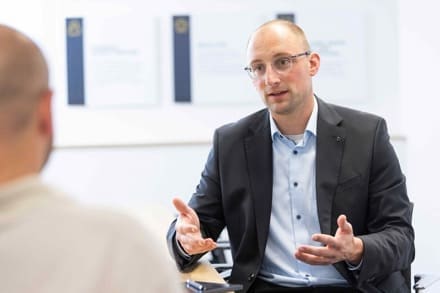
In this interview, Andreas Kiel, Group Director Procurement at Mehler Systems, discusses how procurement has evolved beyond traditional purchasing, the importance of trusted supplier partnerships, the role of Mehler Systems Asia, and why resilient value chains have become a competitive advantage in today’s defence industry.
Q: Many people assume procurement is about negotiating the lowest price. At Mehler Systems, where quality and reliability are critical, what does “good procurement” actually mean?
A: Good procurement at Mehler Systems goes far beyond negotiating prices. Our role is to create sustainable value by ensuring quality, innovation, availability, resilience, and long-term supply security across our entire value chain.
Procurement at Mehler Systems is evolving from a traditional purchasing function into the architect of global partner networks and resilient value chains. Our mission is to connect global supply networks with local market and supplier expertise, bringing together the right technologies, capabilities, and innovation partners worldwide while understanding regional market requirements, cultural differences, and strategic customer needs.
Good procurement means building trusted partnerships that create mutual value over many years. The objective is not to achieve the lowest purchase price, but to deliver the highest long-term value for our customers, our suppliers, and the Mehler Systems Group. This philosophy is best summarised in our guiding principle: Act Global – Think Local.
Q: Defence procurement is often described as being far more complex than procurement in other industries. What makes it different?
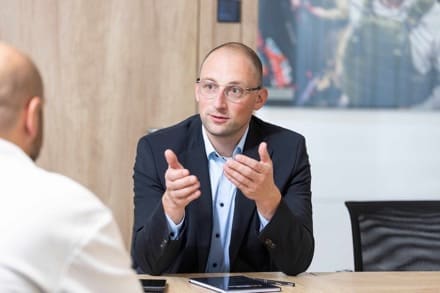
A: Performance, reliability, and compliance are mission-critical in our industry. Many of our products protect people in life-threatening situations, which means procurement decisions have a direct impact on operational readiness and user safety.
Unlike many sectors, we manage long product lifecycles, highly specialised materials, export controls, security regulations, and increasing geopolitical uncertainty while ensuring long-term product availability.
What also makes defence procurement unique is the complexity of the production networks involved. We are not only managing direct suppliers but entire value chains that extend from raw materials and specialised components through multiple supplier tiers to the end customer. Transparency, resilience, and performance across every level of that network have become critical success factors.
Procurement therefore acts as a strategic connector between customers, engineering teams, development partners, manufacturing organisations, and suppliers across different regions of the world.
Q: Procurement often works behind the scenes. At what point do you become involved when a new product is being developed?
A: Ideally, from the earliest stages of development. Innovation is rarely created by a single organisation. Many technological advances originate within the supplier network. By involving procurement early, we can identify emerging technologies, evaluate supply chain readiness, assess industrialisation risks, and accelerate development timelines.
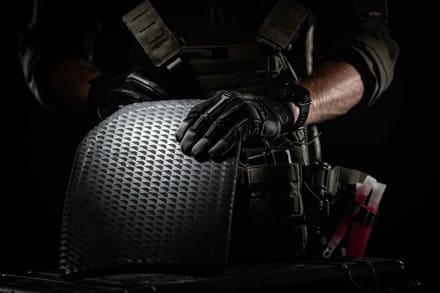
Our contribution extends well beyond sourcing components. We analyse the entire value stream behind a product, identify critical dependencies, and create transparency across second- and third-tier supplier structures. Understanding where materials, technologies, and manufacturing capabilities actually originate has become a significant competitive advantage.
Procurement therefore acts not only as a commercial function but increasingly as a strategic partner to engineering, operations, and programme management. Our role is to connect engineering teams with global technology leaders and specialised suppliers, ensuring that innovation can ultimately be transformed into scalable, reliable, and risk-resilient production solutions.
Q: Across Mehler Systems, innovation takes many forms. How does procurement help turn ideas into reality?
A: Every product innovation depends on technologies, materials, manufacturing capabilities, and supplier expertise.
Our role is to identify the best partners globally, qualify new technologies, and secure the production capabilities needed to bring those innovations into industrial production.
Suppliers themselves also play a significant role in innovation. Many contribute new material technologies, manufacturing processes, and production concepts that improve both product performance and scalability.
That is why we invest heavily in long-term supplier partnerships. By working closely with suppliers across global innovation networks, we gain early access to emerging technologies, new manufacturing capabilities, and production concepts that help shape the next generation of products.
Q: Mehler Systems continues to strengthen collaboration across its brands. What advantages does working as one group bring from a procurement perspective?
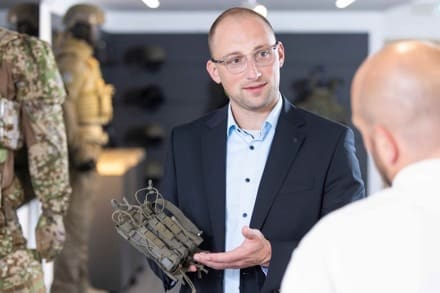
A: Working as one group significantly strengthens our market position, innovation capabilities, and procurement effectiveness.
By combining expertise from body armour, platform protection, tactical apparel, and load-carrying solutions under a common procurement strategy, we can leverage synergies, consolidate market intelligence, strengthen supplier relationships, and build greater resilience throughout the value chain.
One of the greatest advantages of operating as an integrated group is our ability to combine global scale with local expertise. Through our international footprint, we gain direct access to experienced local sourcing specialists, established supplier networks, and regional market intelligence.
This local expertise allows us to identify challenges earlier, accelerate decision-making, strengthen supplier collaboration, and create value faster for our customers and the entire group.
Q: Mehler Systems Asia has become an important part of that strategy. Why was it the right time to establish a stronger procurement presence in the APAC region?
A: Procurement was one of the principal drivers behind establishing Mehler Systems Asia.
Global supply chains have become significantly more complex, while innovation, manufacturing capabilities, and new technologies are increasingly emerging outside the traditional European supplier landscape.
To remain competitive, procurement must be present where future technologies, supplier capabilities, and innovation ecosystems are developing.
The objective of Mehler Systems Asia is not simply to strengthen sourcing activities. It is about connecting global supply networks with local market and supplier expertise, building closer relationships with key partners, accelerating development cycles, increasing transparency across the value chain, and improving supply chain resilience.
At the same time, all sourcing activities remain aligned with Mehler Systems’ global standards for quality, compliance, and performance. In many ways, Mehler Systems Asia represents the next evolution of procurement—from managing suppliers to building global ecosystems of trusted partners.
Q: Large defence programmes place very different demands on procurement. What does it take to support programmes such as MOBAST or the Ukraine project?
A: Every programme requires a different procurement strategy.
Long-term programmes such as MOBAST require stability, capacity planning, lifecycle management, and resilient supplier relationships capable of maintaining consistent quality over many years despite changing market conditions.
The Ukraine programme required something different. It demonstrated the strength of the One Mehler approach, with procurement coordinating suppliers, production capacities, logistics, and material allocation across multiple business units under demanding timelines.
Whether supporting long-term programmes or rapid-response projects, the common denominator remains the same: trusted partnerships, transparency, proactive risk management, and resilient supplier ecosystems.
Success is not built on short-term transactions but on trusted relationships that are developed and strengthened over many years.
Q: Defence customers expect rapid delivery without compromising quality. How do you balance speed, availability, and reliability?
A: Speed without quality creates risk, while quality without availability creates operational challenges. The objective is therefore to achieve all three simultaneously.
We accomplish this through proactive risk management, diversified sourcing strategies, framework agreements, and long-term supplier partnerships.
Equally important is transparency across the value chain. Understanding production technologies, manufacturing capacities, supplier interconnections, and material dependencies enables us to identify risks early, make faster decisions, and respond effectively when market conditions change.
Regional sourcing capabilities further strengthen that responsiveness by bringing us closer to suppliers, technologies, and innovation markets while maintaining globally consistent quality standards.
Q: Looking ahead, what will be the biggest challenge for procurement in the defence industry?
A: The greatest challenge will be balancing resilience, innovation, sovereignty, scalability, and competitiveness simultaneously.
Procurement will continue evolving from a transactional function into a strategic enabler of business success. Our responsibility extends beyond managing suppliers. We build trusted ecosystems of partners, secure critical technologies, and create resilient supply chains capable of supporting future growth.
Ultimately, success in defence procurement is not defined by individual transactions but by the ability to connect global supply networks with local market and supplier expertise, ensuring that critical capabilities remain available, scalable, and resilient when they are needed most.
Act Global – Think Local is therefore much more than a sourcing strategy. It is the foundation for sustainable partnerships, innovation, resilience, and long-term value creation throughout the entire Mehler Systems ecosystem.
About Andreas Kiel:
Andreas Kiel is Group Director Procurement at Mehler Systems, where he leads procurement across the group. With more than 20 years of experience in the defence industry, he specialises in strategic procurement, supply chain management, industrialisation, and global sourcing. Holding a degree in economics and a master’s degree specialising in supply chain management, Andreas Kiel has been instrumental in building Mehler Systems’ global supply chain, including the development of strategic partnerships across Asia. As a Board Member of Mehler Systems Asia, he supports the group’s international sourcing strategy while strengthening supplier partnerships and procurement capabilities across the APAC region.
For more information about Mehler Systems, please visit mehler-systems.com