Phantom Lights

Author Archive

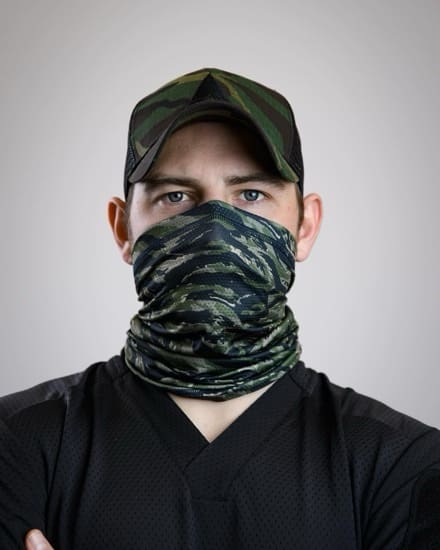
Norarm Tactical – Oslo Neck Gaiter, Gen. 2 Now in Tigerstripe

Wednesday, April 10th, 2024

Norarm Tactical has restocked their Oslo Neck Gaiter, Gen. 2 in Multipurpose camo and added five new colors as well: Tigerstripe, German Flecktarn, Norwegian Woodland, Urban Grey and Light Savage Green.

Made in a stretchy, all-mesh fabric that is comfortable to wear no matter the season, the Oslo Neck Gaiter, Gen. 2 have quickly become one of their bestsellers since its launch last Fall. They also offer discounts on unit orders. Reach out to contact@norarm.com for inquiries.

If you live in the US and are looking to get one or two neck gaiters only, they would recommend you to get them from their official dealer Americana Pipedream as they offer cheaper, domestic shipping.

Assignment Incentive Pay to be Authorized for Airmen, Guardians Stationed at Extremely Cold Locations

Wednesday, April 10th, 2024

ARLINGTON, Va. (AFNS) —  

Effective April 1, the Department of the Air Force approved a new incentive pay for Airmen and Guardians assigned to qualifying bases in the U.S. where the temperature is expected to drop below minus 20 degrees Fahrenheit. 

Cold Weather Assignment Incentive Pay is a single lump sum payment given to Airmen and Guardians after signing an agreement to serve a prescribed tour length of at least 12 months, depending on qualifying location.  

Locations that meet this threshold include Minot and Grand Forks Air Force Bases and Cavalier Space Force Station in North Dakota, Clear Space Force Station, Eielson Air Force Base and Joint Base Elmendorf-Richardson in Alaska, as well as Malmstrom AFB, Montana.  

“Airmen and Guardians living in extremely cold conditions faced unique out-of-pocket costs,” said Alex Wagner, Assistant Secretary of the Air Force for Manpower and Reserve Affairs. “In addition to the assignment and retention benefits of the pay, it also comes down to making sure we do our best to take care of our service members and their families stationed at these critical installations.”  

This payment intends to ease the financial burden of purchasing certain cold weather essentials, such as extreme cold weather gear, all-season and/or snow tires, tire mounts and alignments, engine block heaters and emergency winter car kits, as well as further incentivizing assignments. 

Although AIP-CW is effective April 1, the first pay date is anticipated for July 1, 2024, meaning Airmen and Guardians who move to a qualifying location between April 1 and June 30 will receive payment retroactively.  

The amount of AIP-CW Airmen and Guardians are eligible to receive is based on criteria in the five pay levels outlined in the table below and is subject to change. 

This change follows the Department of Defenseimplementation of the Fiscal Year 2023 National Defense Authorization Act, which included language authorizing special duty pay for members based in cold-weather climate conditions and the FY24 NDAA, which clarifies the temperature parameters that qualify an area as a cold-weather location. 

“We want to ensure Airmen, Guardians and their families have the resources needed to safely live and work in an extreme cold-weather environment,” Wagner added.  

The official guidance memorandum can be found here

Secretary of the Air Force Public Affairs

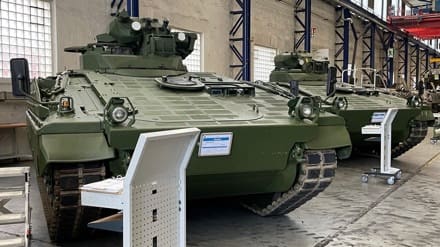
Assistance for Ukraine Unbroken: Rheinmetall Delivers Additional 20 Marder Infantry Fighting Vehicles

Tuesday, April 9th, 2024

The German government comissioned Rheinmetall to deliver 20 additional Marder infantry fighting vehicles (IFVs) to the Ukraine. The order was placed in March 2024 and has a value in the mid double-digit million Euro range. The delivery of this new lot is scheduled within 2024. So far, Rheinmetall has already handed over a three-digit number of Marder IFVs to the Ukrainian Armed Forces via direct deliveries and circular exchange programmes.

The version of the 1A3 Marder that has now been ordered also features integrated laser range finders, which enable efficient and precise target elimination. The company had already supplied the first 20 of these combat vehicles to the Ukraine on behalf of the German government in March 2023. A number of further lots have since been delivered, each in two-figure numbers.

Rheinmetall acquired the overhauled 1A3 Marder IFV from the Bundeswehr. The company began overhauling the IFVs for immediate deployment at its own expense back in spring 2022. The corresponding work has since been underway at Rheinmetall’s locations in Unterluess and Kassel.

The Marder IFV, which was developed for the Bundeswehr, and is still being operated there, is one of the world’s most proven weapon systems of its kind. Over the course of its service life, the vehicle has been repeatedly modernised and improved in its combat effectiveness. 

The Bundeswehr now has more than 300 Puma IFVs in operation, representing the latest generation of this type of combat vehicle, and gradually eliminating the Marder IFV in the German Army. In addition, a second lot of over 50 additional Pumas was ordered in 2023.

U.S. Air Force’s $46 Billion Elon Wide Agile Acquisition Contract (EWAAC) Selects Persistent Systems

Tuesday, April 9th, 2024

EWAAC will provide contract vehicle for Air Force commands seeking mobile ad hoc networking solutions.

Persistent Systems (“Persistent”), a leader in mobile ad hoc networking (MANET), announced today that it has been selected by the U.S. Air Force to participate in the multi-vendor Eglin Wide Agile Acquisition Contract (EWAAC), a $46 billion Indefinite Delivery/Indefinite Quantity (IDIQ) rapid acquisition vehicle for the development of novel weapons capabilities.

Participating in EWAAC enables Persistent Systems to better support networked autonomy efforts with the Air Force Research Laboratory (AFRL) as well as provide other Air Force customers, such as Global Strike Command and Air Combat Command, with a ready-to-use contract vehicle.

“We are very excited to be selected by the Air Force Life Cycle Management Center to participate in the Armament Directorate’s EWAAC,” said Cody Larson, director of Business Development at Persistent Systems. “EWAAC will help us with our networked weapons development efforts, the goal of which is to develop air-launched, swarming weapons that share information for increased survivability and lethality.”

EWAAC places an emphasis on digital engineering, agile software, and open systems architecture. Meeting those goals, Persistent’s Wave Relay® MANET is data-agnostic and capable of passing any digital data, allowing it to adapt to ever-changing, open-architecture weapons systems.

“This further deepens the relationship between Persistent and the U.S. Air Force to support emerging concepts like JADC2 and other programs,” said Adrien Robenhymer, VP of Business Development for the Air Force and Intelligence Community, at Persistent Systems.

Q30 and Best Ranger Competition Announce Continued Partnership to Help Safeguard Army Rangers with Q-Collars

Tuesday, April 9th, 2024

NORWALK, CT (April 9, 2024) – Q30 Innovations, the creator of the Q-Collar, proudly announces its continued partnership with the 2024 Best Ranger Competition. Taking place at Fort Moore in Georgia and celebrating its 40th anniversary, this historic event will showcase the world’s greatest soldiers outfitted in Q-Collars, the FDA-cleared device aimed at reducing the risk and severity of traumatic brain injury during high-impact activities.

The Best Ranger Competition is renowned for its rigorous challenges, demanding peak physical and mental performance from all competitors. Q30 aims to positively impact the well-being of every elite soldier taking part in this historic tradition and on the battlefield. This year, Andrew Beck, Houston Texans Fullback, Q-Collar athlete and son of Major General Christopher Beck, will join the Q30 team onsite to assist in equipping all Army Rangers with a Q-Collar and an all-new Best Ranger Competition Q-Collar sleeve during the event.

“We are honored to continue to stand alongside The Best Ranger Competition and our U.S. Army Rangers,” said Q30’s Co-CEO, Tom Hoey. “We hope to help mitigate the risks of brain injuries that occur during military activity and positively impact the overall health of our American soldiers for years to come with our proven and patented device. By backing our nation’s defenders and this historic event, we aim to advance brain health awareness and ensure the continued safety of our brave men and women.”

Close to 500,000 U.S. service members have been diagnosed with brain injuries since 2000, typically a result of head impacts and blast waves. Through these specific military scenarios, rapid acceleration and deceleration movements of the brain can occur, often referred to as “brain slosh.” To showcase the Q-Collar’s efficacy in mitigating these effects, participants in the Best Ranger Competition will receive firsthand experience of the critical protection it provides.

The Best Ranger Competition is held on Fort Moore and is open to the public. For more information call 706-718-9520 or visit BestRangerCompetition.com

More information on the product, research and how to purchase the Q-Collar can be found at Q30.com/military

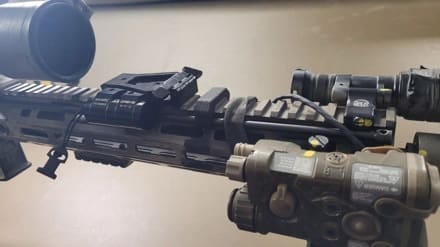
The Rescue Rod from Black Hills Designs

Tuesday, April 9th, 2024

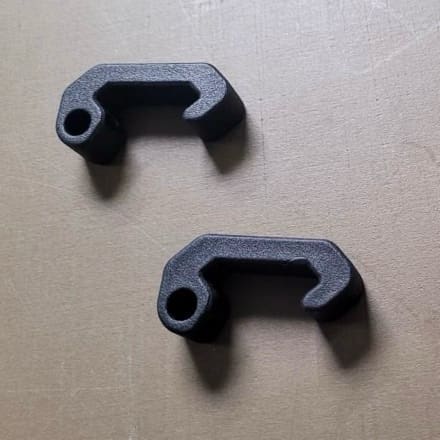
The Rescue Rod is a clamp for AK-style full length monolithic cleaning rods, that seamlessly intigrates onto a Picatinny rail; giving you the tools needed on the gun to clear a catastrophic malfunction.

It was a somewhat uncommon practice in Vietnam, particularly during the early fielding of the M16 to tape a cleaning rod along the triangular handguard to keep it handy to quickly clear a flash hider full of mud or dislodge a stuck case from the chamber in a firefight.

Sold in pairs at BLACKHILLSDESIGNS.NET.

Tactical Tuesday: The Ultimate Tactical Jeans with 11 Pockets

Tuesday, April 9th, 2024

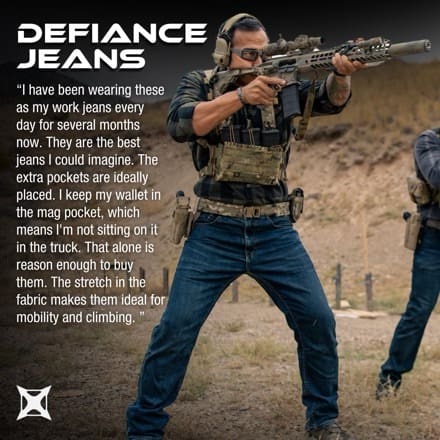
While the traditional “5 pocket jean” has long been a staple in everyone’s wardrobe, Vertx takes it to a whole new level with their revolutionary Defiance Jeans.

The Defiance Jean offers unparalleled functionality without compromising on style – plus a staggering 11 pockets. The mesh front pockets with lanyard retention not only provide added breathability and comfort, but also ensure the security of essential items like keys.

Vertx goes above and beyond with the inclusion of 2 rear yoke pockets, providing ample storage for magazines, tourniquets, phones, or any items you want quick access to without cluttering your front pockets. The standard back pockets are far from ordinary, featuring wallet traps to safeguard your valuables against pickpocketing and accidental loss.

To further enhance versatility, the Defiance Jean boasts 4 strategically located mini-stash pockets throughout the pants, ensuring you’re always prepared for any situation. And let’s not forget the advanced technology incorporated into these tactical jeans. Coolmax® fabric keeps you cool and comfortable, while CCW oriented belt loops, YKK zippers, and a gusseted crotch prevent blowouts and provide unmatched durability.

Don’t just take our word for it – experience the superiority of the Defiance Jean yourself. Discover why these are the best tactical jeans on the market, trusted by professionals and enthusiasts alike.

Army Futures Command General Lays Out Continuous Transformation Plan

Tuesday, April 9th, 2024

WASHINGTON — To give Soldiers what they need to win the nation’s wars now and in the future, the Army must continuously transform and adapt to advances in technology, said Gen. James E. Rainey, commanding general of Army Futures Command.
This flexibility is needed, he said, because of how quickly the environment is evolving.

“The amount of technical disruption in the character of war is unprecedented, and it just continues to go faster and faster,” he said during a keynote presentation at the U.S. Army Global Force Symposium in Huntsville, Alabama last week. “Whatever you think you know this year, come back in 90 days, and you’ll know something different.”
To combat this changing landscape, the service is focused on transformation in three different periods: 18-24 months, two to seven years, and seven to 15 years. Work done in each period has a ripple effect on the others.

The first period is referred to as transformation in contact. This area deals with capabilities delivered to deployed warfighters for testing and analysis. They provide real-world feedback allowing the Army to make necessary adjustments for future use.

In this area, the Army can adapt to current warfighting conditions. This was used when the service noticed the value of loitering munitions, also known as suicide drones, in the war in Ukraine. Army Futures Command put in a priority-directed requirement and is in the process of buying the capability.
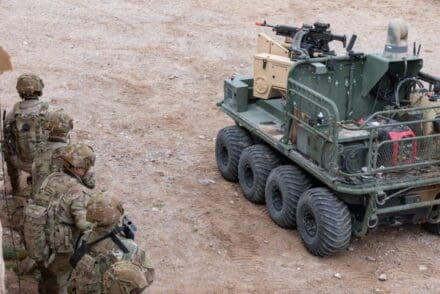
AFC is also working with industry partners on ground-based rockets, ground-based missiles and counter-unmanned aircraft systems that work on offense to protect light infantry and armored companies.

“The United States Army, we believe in offense and attacking,” he said. “So, there is a big opportunity to figure out how we are going to provide effective counter-UAS capabilities to units on offense.”
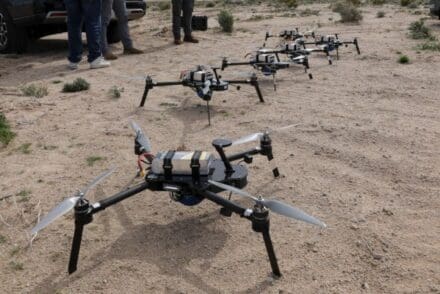
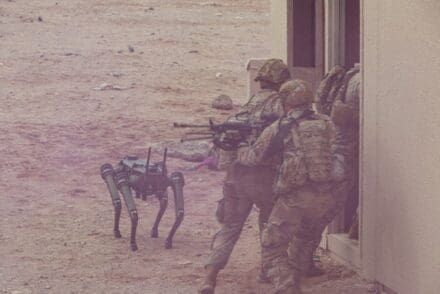
Human-machine integrated formations is another initiative the service is working on in the 18–24-month period. This program brings robotics and autonomous vehicles into fighting formations. The goal of the project is to keep Soldiers out of harm’s way whenever possible.

The Army tested numerous integrated formations during Project Convergence Capstone 4 in Fort Irwin, California last month.

“This is one of our major efforts inside the Army,” Rainey said. “It’s going very well and is full of opportunities to go to the next level. We’re never going to replace humans with machines, it’s about optimizing them.”

The Army will start prototyping the first integrated platoons in the next two years.

The two-to-seven-year period is known as deliberate transformation. In this time frame, the service is continuing to work on the Future Long Range Assault Aircraft, extending the range of cannon artillery, adding magazine depth and improving indirect fire weapons, engineering capabilities and the network.

Rainey said the service’s number one priority in deliberate transformation is improving the network. The service is working on a data-centric system to enable commanders to make quicker and more informed decisions.

The Future Long Range Assault Aircraft is a hot topic issue with the service’s recent aviation rebalance. Rainey assured that the Army is committed to FLRAA and the capability it brings to maneuver rifle squads.

“We don’t do attrition warfare,” he said. “We do maneuver warfare. So, FLRAA is an absolute must we have to continue to deliver, and it’s in good shape.”

Innovating in engineering battalions is another key priority for the Army, he explained.

“We’re more likely to get stopped by the terrain than by an enemy we fight and that’s not OK,” he said. “We [have got to] get after the engineering transformation and modernization.”

The Army announced the end of the Extended Range Cannon Artillery platform program last month but the requirement to extend cannon fire remains. The service recently completed a tactical fires study on artillery modernization. The research from the study showed significant success in extending the range by making adjustments to the rounds, Rainey said.

AFC is taking this knowledge and looking at ways to innovate the rounds and the propulsion systems. They are also looking to increase magazine depth to give Soldiers not just the capability but the capacity they need.

The last time frame is referred to as concept-driven transformation. This is where the Army is looking to sustain advantages, develop new capabilities and build endurance for future conflicts.

The service is working on merging offensive and defensive fire systems, adding robotics to contested logistics, bringing survivability and lethality to light infantry divisions, decreasing the weight of armored formations, and increasing its emphasis on war gaming.
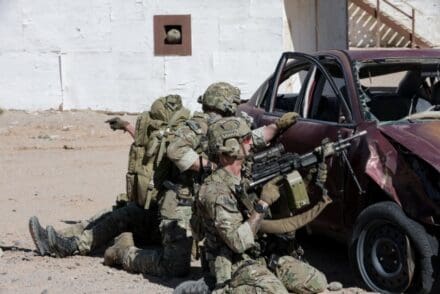
This continuous transformation over all three periods is meant to make the Army more adaptable, flexible and lethal while giving Soldiers the capacity and capabilities to win now and in the future.


“Whatever we do as we transform, we have to preserve that people advantage we have,” Rainey said. “They are our greatest asset.”

By Christopher Hurd, Army News Service