GORE-TEX Professional

Archive for the ‘SOF’ Category

USSOCOM Selects M-Lok For Weapon Programs

Friday, March 31st, 2017

IMG_0651

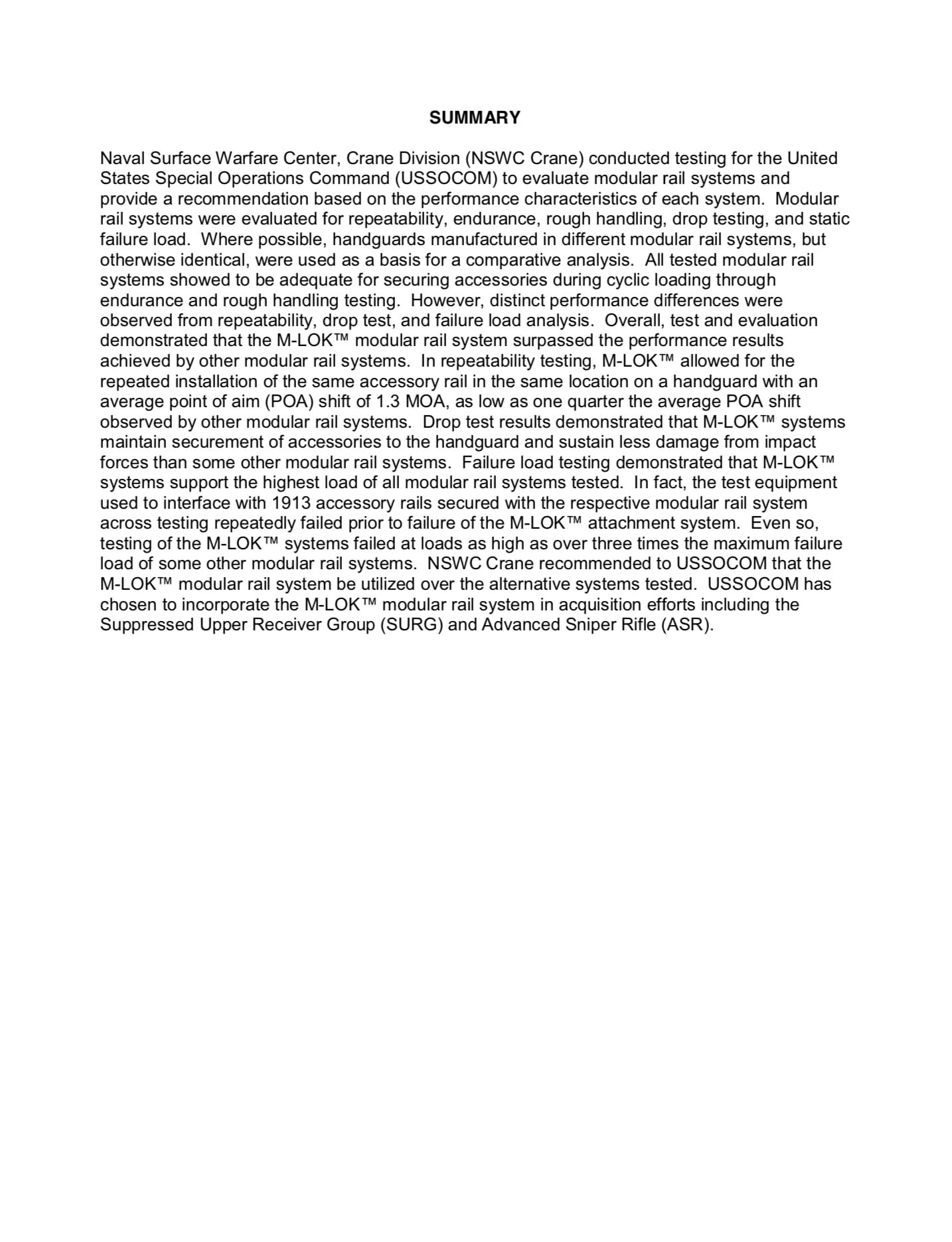
While we’ve heard rumors of a USSOCOM directed study by NSWC-Crane of weapon accessory attachment systems, we only recently came into possession of evidence of that study, conducted in 2016. We present to you the summary of the report, as it offers the most pertinent facts. However, we are not offering up the rest of the report, as it contains proprietary information regarding the Magpul M-Lok attachment as well as other, competing systems.
IMG_0652

The summary states:

SUMMARY

Naval Surface Warfare Center, Crane Division (NSWC Crane) conducted testing for the United States Special Operations Command (USSOCOM) to evaluate modular rail systems and provide a recommendation based on the performance characteristics of each system. Modular rail systems were evaluated for repeatability, endurance, rough handling, drop testing, and static failure load. Where possible, handguards manufactured in different modular rail systems, but otherwise identical, were used as a basis for a comparative analysis. All tested modular rail systems showed to be adequate for securing accessories during cyclic loading through endurance and rough handling testing. However, distinct performance differences were observed from repeatability, drop test, and failure load analysis. Overall, test and evaluation demonstrated that the M-LOKTM modular rail system surpassed the performance results achieved by other modular rail systems. In repeatability testing, M-LOKTM allowed for the repeated installation of the same accessory rail in the same location on a handguard with an average point of aim (POA) shift of 1.3 MOA, as low as one quarter the average POA shift observed by other modular rail systems. Drop test results demonstrated that M-LOKTM systems maintain securement of accessories to the handguard and sustain less damage from impact forces than some other modular rail systems. Failure load testing demonstrated that M-LOKTM systems support the highest load of all modular rail systems tested. In fact, the test equipment used to interface with 1913 accessory rails secured with the respective modular rail system across testing repeatedly failed prior to failure of the M-LOKTM attachment system. Even so, testing of the M-LOKTM systems failed at loads as high as over three times the maximum failure load of some other modular rail systems. NSWC Crane recommended to USSOCOM that the M-LOKTM modular rail system be utilized over the alternative systems tested. USSOCOM has chosen to incorporate the M-LOKTM modular rail system in acquisition efforts including the Suppressed Upper Receiver Group (SURG) and Advanced Sniper Rifle (ASR).
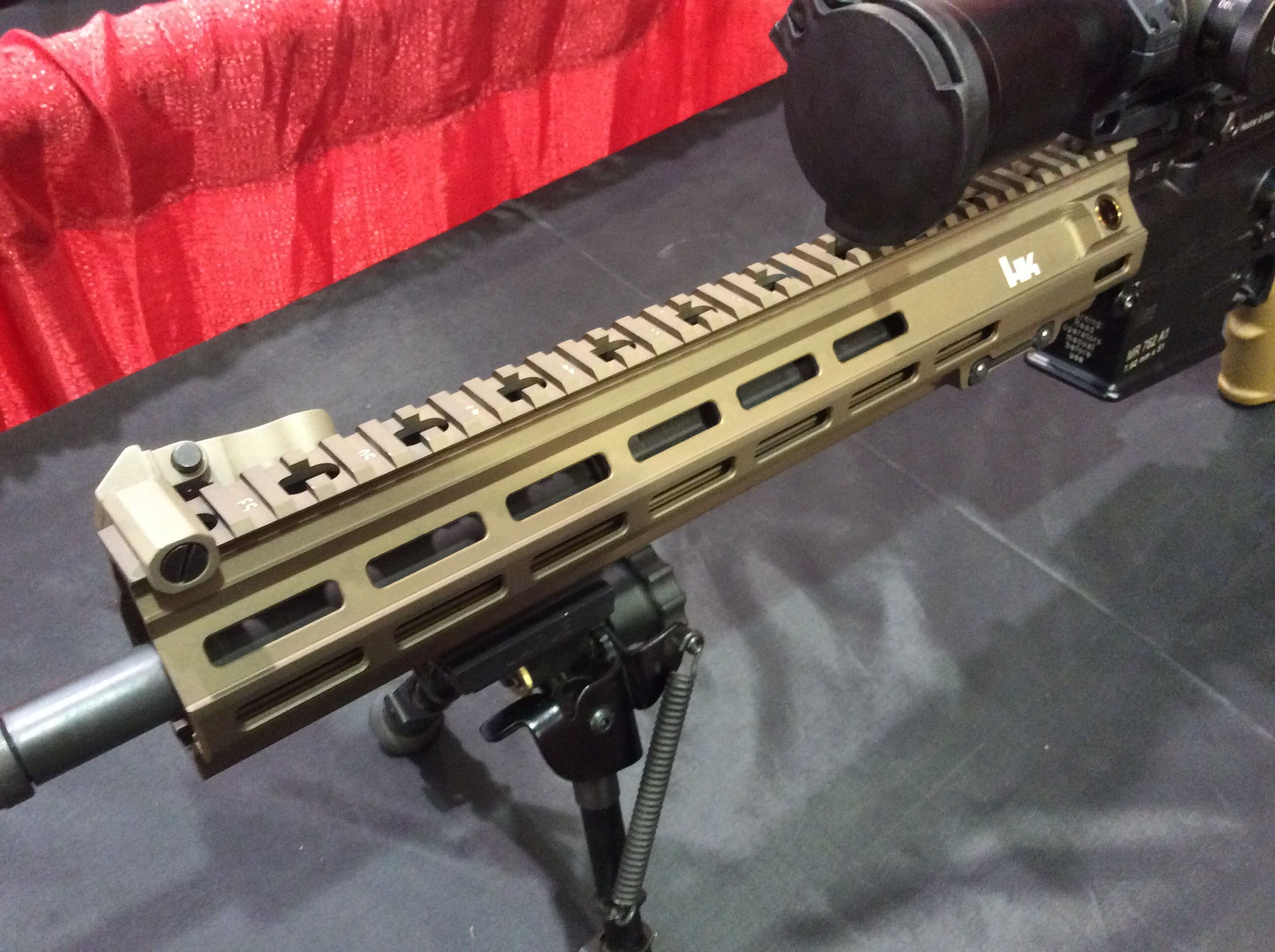
Of additional note, the US Army directed H&K to integrate an M-LOK rail (designed by Geissele) on the new Compact Semi-Automatic Sniper System rifle which is an indication of wider Dod adoption of M-Lok.
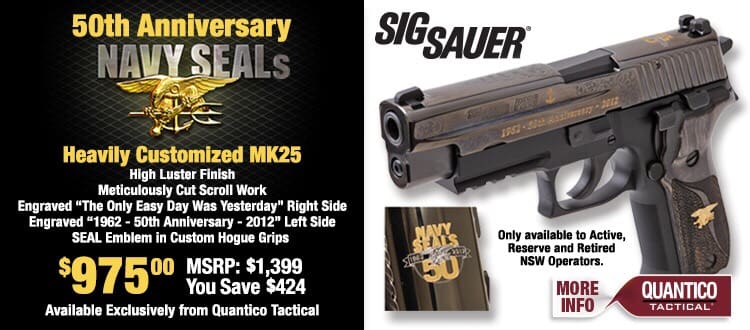
Quantico Tactical Offering SEAL 50th Anniversary SIG MK25 Pistols

Tuesday, March 28th, 2017

These highly customized Sig Sauer MK25 pistols commemorate the 50th Anniversary of the US Navy SEALs.

Features:
• Custom, High Luster Finished Sig MK25 Pistol
• Meticulously Cut Scroll Work
• Engraved with Gold Inlay:
o “The Only Easy Day Was Yesterday” on Right Side of Slide
o “1962 – 50th Anniversary – 2012” on Left Side of Slide
• SEAL Emblem in Custom Hogue Grips
• Available Exclusively from Quantico Tactical while supplies last

Price: $975

These commemorative pistols are only available to active, reserve and retired SEALs and UDT Members who preceded the SEALs. Please note there is a eligibility verification process. Available via their website or in their stores.

Quantico Tactical manages the Commemorative Weapon Program for Sig Sauer and Smith and Wesson. Quantico is also the leading Military/LE Program weapon reseller for SIG, Smith & Wesson, FN, Beretta and IWI. To design a commemorative weapon or to organize a group buy for your unit, contact Quantico Tactical at www.quanticotactical.com/CommemorativeWeapons.

Special Forces Basic Combat Course – Support

Sunday, March 12th, 2017

The Utah Army National Guard runs a two-week course for 19th Special Forces Group’s support troops called the Special Forces Basic Combat Course – Support (SFBCC-S). Other, similar courses have sprung up for other SOF Enablers since the war began.  However, I don’t of any others that are firing mortars. 

USSOCOM Seeks Personal Defense Weapon

Friday, March 10th, 2017

In a request for information released yesterday to industry, United States Special Operations Command (USSOCOM) seeks to identify potential sources within the national technology and industrial base with the ability to provide a conversion kit for the M4A1 to create a Personal Defense Weapon (PDW) system:

-Complete Kit to include upper receiver and butt stock kit
-Any tools required to complete an operational conversion
-A light and sound reducing suppressor that can be attached to the system when needed

PDW Kit specifics: The kit must be adaptable to the standard M4A1 lower receiver, any modification to the lower receiver must be reversible and nonpermanent. The kit must be in .300 Blackout (BLK) cartridge, total system weight, including the M4A1 lower in not to exceed 5.5lbs. Length with stock extended not to extend 26″ length with stock collapsed or folded shall be 17″ (T), 15″ (O) and a height not to exceed 7.5″. Weapon shall be fully functional when collapsed or folded. Kit should include a 5.56mm barrel that can be changed from .300 BLK to 5.56mm in less than 3 minutes. Accuracy shall be 3.0 MOA (T), 2.0 MOA (O) @100 yds. and 5.0 MOA (T), 3.0 MOA (O) @ 300 yds. both in .300 BLK supersonic.

While there are numerous solutions on the market, based on the mention of a folding stock, it sounds like someone is interested in the SIG SAUER MCX kit.

Interested parties have until 10 April to submit their information. Visit WWW.FBO.GOV for more information.

Feel The SURG Redux – USSOCOM Again Seeks Suppressor Upper Receiver Group for M4A1 Carbines

Monday, March 6th, 2017

Last year, USSOCOM’s Directorate of Procurement released a solicitation for the Suppressor Upper Receiver Group, however they canceled the program before it was completed. The requirement was a bit too ambitious for the state of the art.

Despite this, SURG isn’t dead. As updates made on the FedBizOpps page from February of this year shows, USSOCOM’s DoP regrouped, rewrote the requirement, and reissued it, with the latest amendment released on March 1st.

As a reminder: “The SURG weapon upgrade of the M4A1 Lower Receiver Group will allow the Warfighter’s weapon to be optimized for continuous suppressed use.” Interestingly, there’s no requirement, at least on the open to the public side, that the upper feature an integral suppressor, just that it is suppressed.

Several companies have licked pieces of the challenge, but not the whole thing as an integrally suppressed upper which can not only handle the M855A1 cartridge but also remain cool enough under use to meet the program’s objectives.

It remains to be seen whether the revitalized requirement will bear an issued product, or will phase out, due to an overly ambitious requirement, like the first time.

Visit www.fbo.gov to view the entire requirement.

The SOF Truths

Monday, February 27th, 2017

The Special Operations Forces Truths have been around for so long that they are taken for granted. The thing is, you can apply them to any low denisty, high demand capability. I thought we should kick off this Monday morning by revisiting them since the US Army has not only deactivated its Long Range Surveillance capability but it’s Pathfinder Companies as well. Once they’re gone, it’s difficult to bring them back. 

Humans are more important than hardware

People – not equipment – make the critical difference. The right people, highly trained and working as a team, will accomplish the mission with the equipment available. On the other hand, the best equipment in the world cannot compensate for a lack of the right people.

Quality is better than quantity

A small number of people, carefully selected, well trained, and well led, are preferable to larger numbers of troops, some of whom may not be up to the task.

Special Operations Forces cannot be mass produced

It takes years to train operational units to the level of proficiency needed to accomplish difficult and specialized SOF missions. Intense training – both in SOF schools and units – is required to integrate competent individuals into fully capable units. This process cannot be hastened without degrading ultimate capability.

Competent Special Operations Forces cannot be created after emergencies occur

Creation of competent, fully mission capable units takes time. Employment of fully capable special operations capability on short notice requires highly trained and constantly available SOF units in peacetime.

Most special operations require non-SOF assistance

The operational effectiveness of our deployed forces cannot be, and never has been, achieved without being enabled by our joint service partners. The support Air Force, Army, Marine and Navy engineers, technicians, intelligence analysts, and the numerous other professions that contribute to SOF, have substantially increased our capabilities and effectiveness throughout the world.

TacJobs – USSOCOM Offering Fellowships to Industry

Tuesday, February 7th, 2017


SOF AT&L has established a venue called SOFWERX; an unclassified, open collaboration activity designed to bring non-traditional partners from industry, academia, and the government together to work on USSOCOM’s most challenging problems.

USSOCOM has vacancies for energetic technical experts from industry to be Exchange Fellows in the SOFWERX innovation environment. Ability to work in a dynamic environment is a must.

Desired Industry Fellowship qualifications:
1. Software Programmer – Coding
2. Senior Software Programmer – Algorithms
3. Electrical Engineer – Control Theory
4. Aerospace Engineer
5. Robotics Engineer
6. Systems Engineer
7. Mechanical Engineer
8. Software Programmer – Mobile Developer (Android etc)

Fellowships will be managed under a Cooperative Research and Development Agreement (CRADA). Lengths will be negotiated but expect between three and 12 months.

Terms and conditions: The private sector organization providing the Industry Fellow will have full responsibility for payment of all salary, allowances, and any benefits (i.e. medical care, worker’s compensation) to their participating employee(s), including any travel and/or relocation expenses if the individual participant selected is outside of the local Tampa area.

Resume: Interested parties should submit a resume, five pages maximum, to IndustryFellow@socom.mil.

Applications are due February 21st. For full details, visit www.fbo.gov.

Polaris Wins Canadian Special Forces Ultra-Light Combat Vehicle Contract

Wednesday, December 21st, 2016

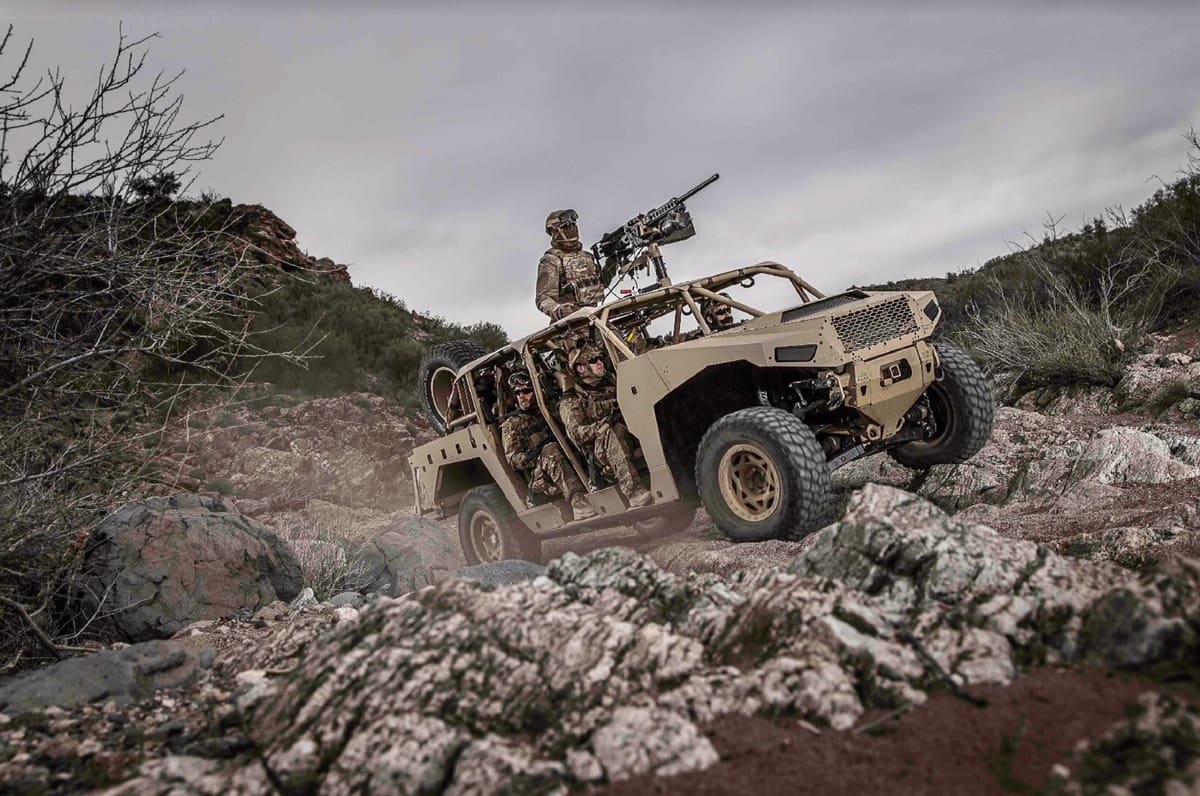
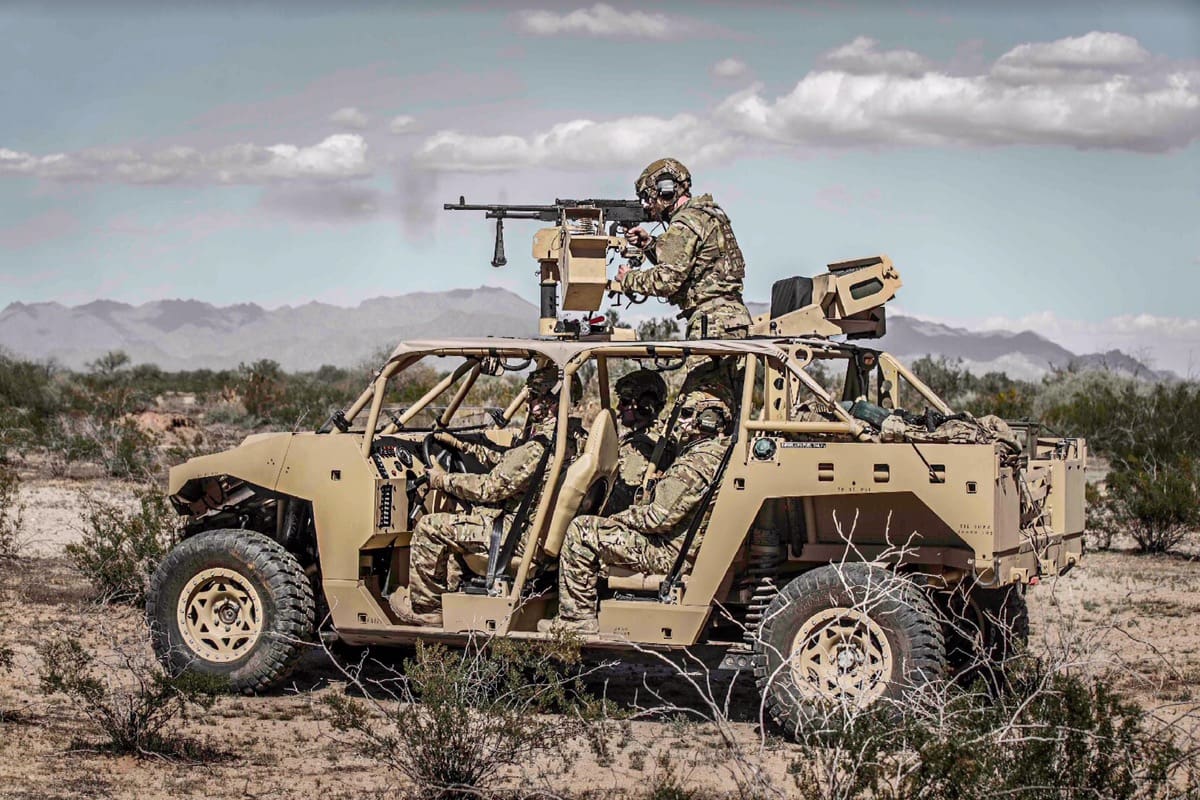
MINNEAPOLIS (December 20, 2016) — Public Works and Procurement Canada (PSPC) has awarded its Ultra-Light Combat Vehicle (ULCV) contract to Polaris, following an open and competitive bid process. The $15.5 USD million contract includes DAGOR vehicles, maintenance and operator training, spare parts, and the option for additional vehicles (at an additional cost) to meet the requirements of Canadian Special Operations Forces Command (CANSOFCOM).

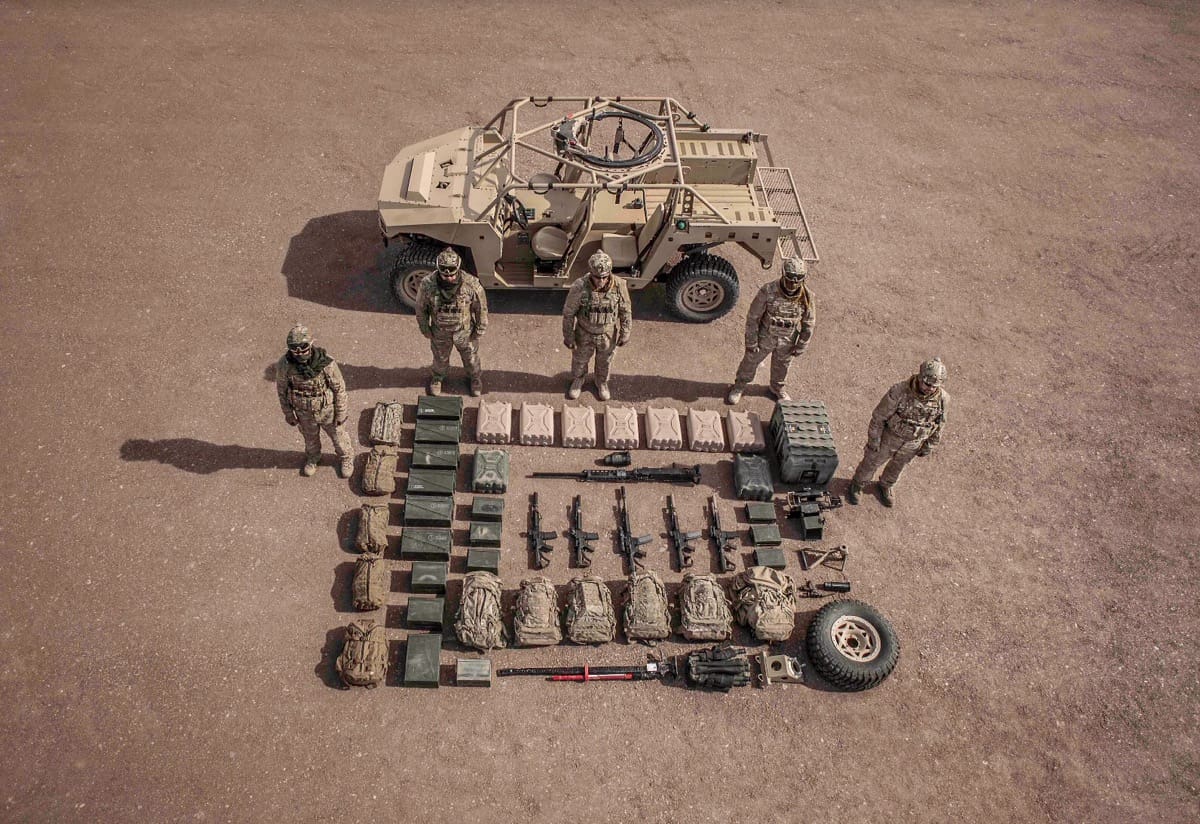
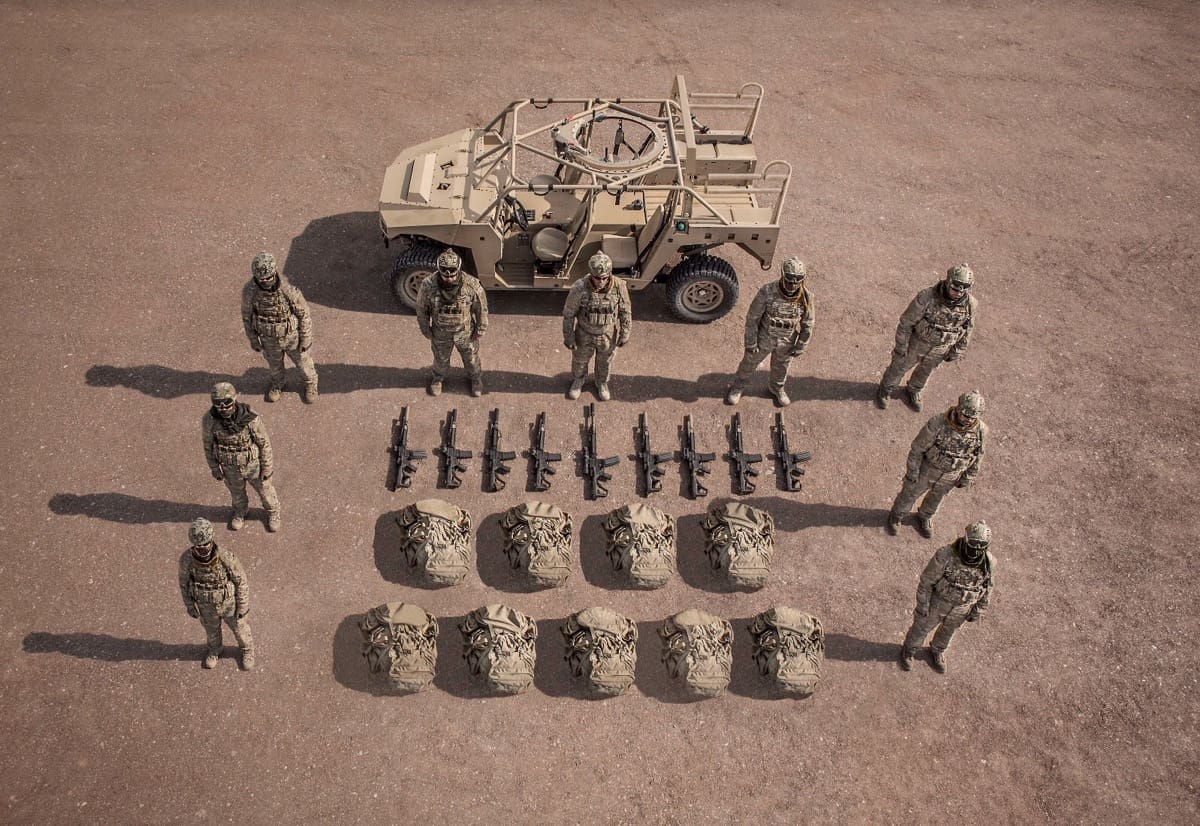
Ultralight ground mobility is at the forefront of many military’s needs – especially the Canadian Special Forces, which can deploy on extremely short notice for counter-terrorism operations and other time-sensitive Special Operation Forces (SOF) missions. The DAGOR ultra-light combat vehicle is just as deployable and was designed to be modular and light-weight to support a variety of expeditionary missions.

The ULCV contract is structured to provide CANSOFCOM with a custom vehicle to meet Canada’s unique SOF requirement. The flexible DAGOR platform will undergo engineering and mission configurations to incorporate new features and capabilities, including redesigned payload configuration, weapons mounts, electrical system improvements, and integrated communication systems. The final vehicle configuration, testing, and production of the ULCV will be a collaborative effort with CANSOFCOM.

“We are extremely pleased to have won the contract following the competitive process to provide our DAGOR vehicles to CANSOFCOM as this major international program award builds on our strong current domestic base,” said John Olson, PhD, vice president and general manager of Polaris Government and Defense. “We are proud to partner with the Canadian government and industry to deliver this ground mobility capability and the lifecycle support to smartly sustain it. Our program management, engineering, operations, and logistics teams are looking forward to working closely with our Canadian customer.

Olson added, “We greatly appreciated PSPC’s professionalism and found the ULCV procurement to be rigorous, thorough and well-executed as they delivered clear requirements, were extremely responsive to industry questions, and crisply executed the entire effort.”

With seating for up to nine, DAGOR comprises the optimal balance of rapid air transportability, payload capacity and advanced mobility. DAGOR gives an advantage back to dismounted warfighters, allowing formations to move faster, carry more and significantly reduce combat fatigue. And its weight and size allow it to be internally transportable on a variety of in-service aircraft, including CH-47 and C-130.

Polaris Government and Defense vehicles deliver a coveted combination of deployability, versatility and off-road mobility, forged from more than 60 years of off-road vehicle experience that is simply unmatched. Vehicles include the rugged Sportsman MV 850, the modular and nimble MRZR, and the DAGOR, which expands upon the range, payload and off-road mobility of any previous tactical off-road vehicle. The enhanced tactical mobility provided by Polaris Government and Defense gives an advantage back to dismounted troops, allowing formations to move faster, carry more and significantly reduce combat fatigue. Polaris FSR support is scalable worldwide and includes military vehicle training, service and maintenance. It also can be supplemented internationally through the Polaris network of distributors. And because Polaris vehicles are in service throughout the world, there is a high degree of interoperability and commonality among U.S. and allied forces.

www.polaris.com