TYR Tactical

Archive for the ‘SOF’ Category

USASOC Sniper Competition Wrap Up

Tuesday, April 16th, 2019

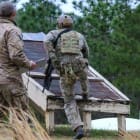
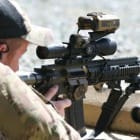
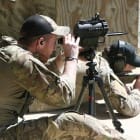
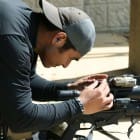
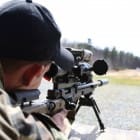
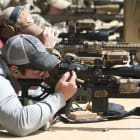
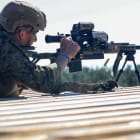
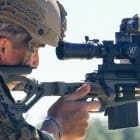
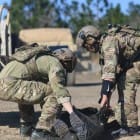
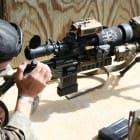
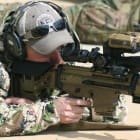
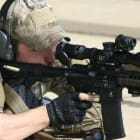
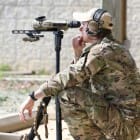
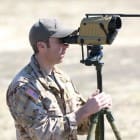
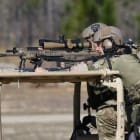
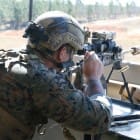
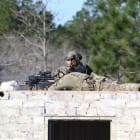
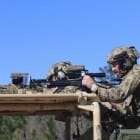
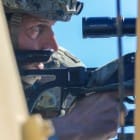
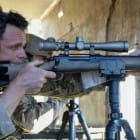
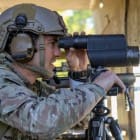
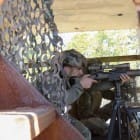
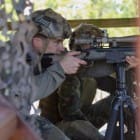
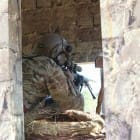
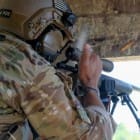
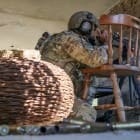
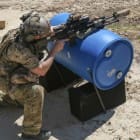
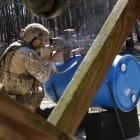
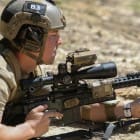
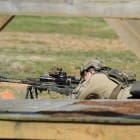
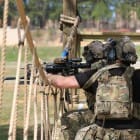
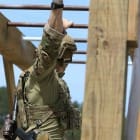
FORT BRAGG, NC — Two-man sniper teams from allied countries, NATO and four branches of the U.S. armed forces participated in the 10th United States Army Special Operations Command International Sniper Competition at Fort Bragg, North Carolina from March 17-22, 2019.
1C38F566-001F-415C-B214-96F626E300B0

Each team faced a myriad of challenges that tested their performance under physical and mental stress while racing against a time limit of as little as four to eight minutes per event. Competitors received no instructions until just moments before competing in scenarios designed to replicate unexpected, but potential battlefield conditions.

“The way we run this is completely different,” said Master Sgt. Josh, a Special Forces Sniper Course instructor. “The competitors show up to each event with only their briefing book. They are completely blind. They don’t get the opportunity to talk to anybody, listen to anything or see the stages before shooting.”

While 21 teams brought their experience, skills and weapons to the competition, they learned quickly that victory could boil down to simple fundamentals.
“You have the super precision side of your skill set, but basics will come into play at some point in the next five days,” said U.S. Army Col. Michael Kornburger, Commander of the 1st Special Warfare Training Group (Airborne) that hosted the event, during the competition orientation brief.

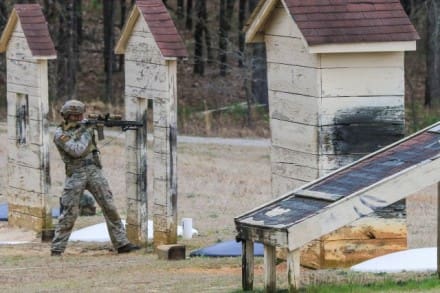
The competition kicked off with a night live-fire exercise on the installation’s Range 37. This range, a 130- acre, 360-degree course and the epicenter of the competition, was developed specifically to train special operations forces for urban warfare techniques and to hone marksmanship skills. There, the teams engaged targets with their rifles and pistols with the aid of night vision devices. The limited visibility and reliance on noise discipline made the first event all the more challenging.

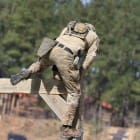
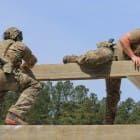
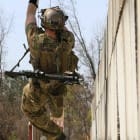
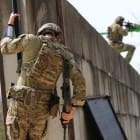
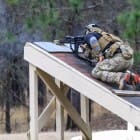
Throughout the entire competition, the pace never slowed as the administrators forced a very rigorous and precise schedule. Competition designers pushed participants to their mental limits with events that required teams to find an enemy target in a crowd at long range or to abandon their own weapons and take up a fallen sniper team’s rifle, scope and data on previous engagements card. Physically demanding events stressed their ability to fire with precision, such as engaging targets while running through a grueling obstacle course or with one hand cuffed to their back.

“The core tasks of everything revolves around real-world application,” emphasized Josh.

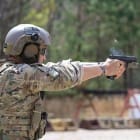
Many events required more than sniper mastery. Competitors used carbines and pistols as well, switching from one weapon system to the other as they navigated through obstacles.

“The reason we added that in there is as a lead component for level one snipers; you should be able to shoot all your weapons effectively,” Josh said. “It’s easy to get down and practice behind your favorite rifle or gun, but you have got to pick them all up.”

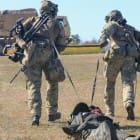
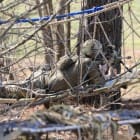
On the final day of the competition, the snipers donned ghillie suits and participated in a “stalk” event. This event required teams to sneak up to a target across hundreds of meters of terrain without being detected by administrators actively searching for them, all again under the stress of a ticking clock.
Since its initiation in 2009, the international competition has served to strengthen partnerships amongst allied military participants.

“These guys could very well see each other on a not too distant battlefield somewhere down the road,” said U.S. Army Maj. William Cunningham, the commander for Range 37. “That camaraderie of getting together with the guys that do the same stuff for the same cause, albeit they’re from different countries, is another great part of this competition.”

This year’s winners were:

1st place: USASOC

2nd place: USASOC

3rd place: Marine Corps Scout Sniper

By SGT Michelle U. Blesam
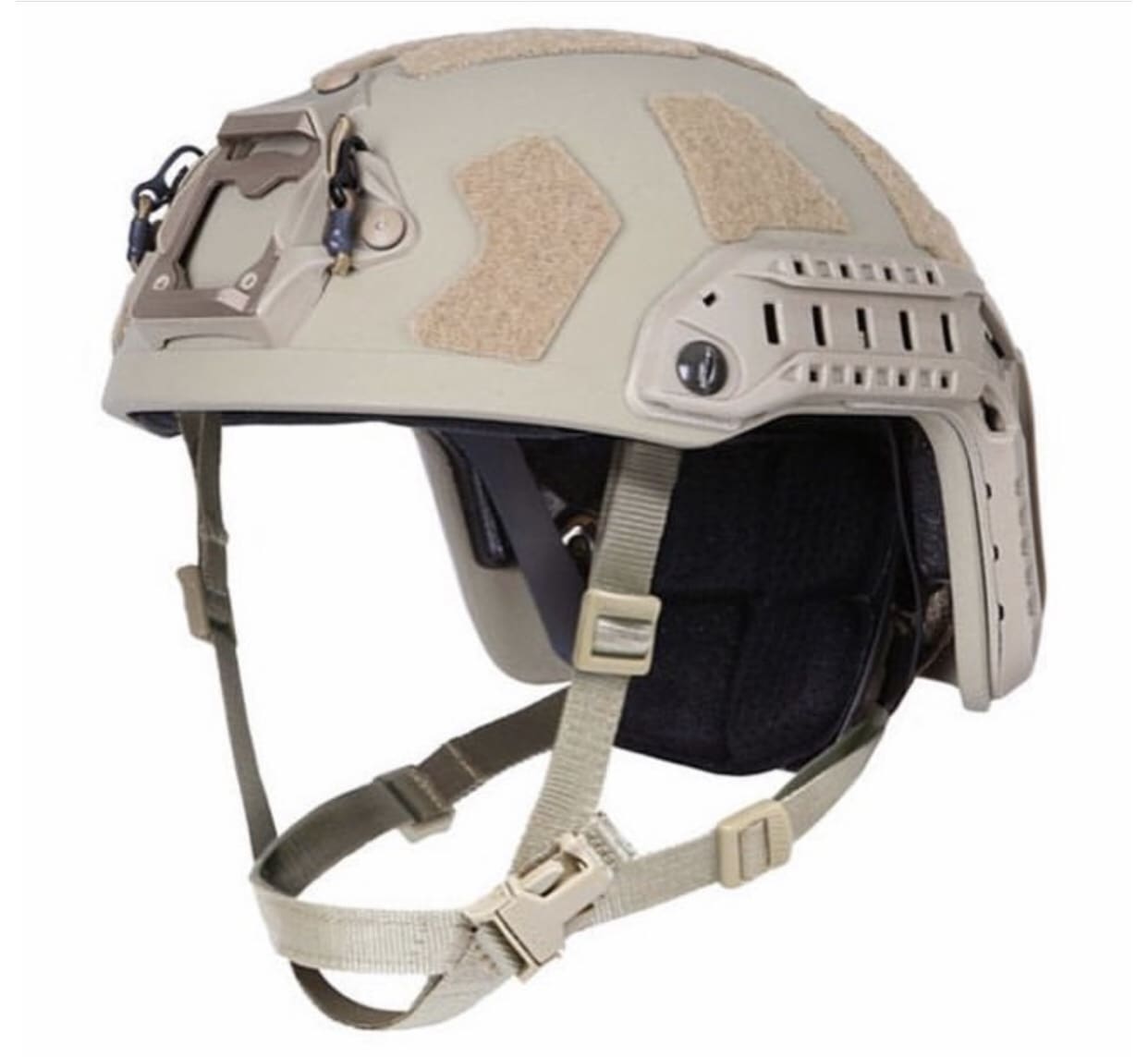
USSOCOM Selects Ops-Core FAST SF Helmet for Family of Tactical Headborne Systems, Awards $95 Mil Contract

Saturday, April 13th, 2019

Almost two years ago, United States Special Operations Command launched Family of Tactical Headborne Systems (FTHS), the search for Commerical-Off-The-Shelf Special Operations Forces Personal Equipment Advanced Requirements (SPEAR) Ballistic and Non-Ballistic Helmets.

Now, they have announced that they have awarded a $95,000,000 IDIQ contract to Ops-Core parent company Gentex after selecting the FAST SF as the new helmet for special operators.

Gentex Corp., Simpson, Pennsylvania, was awarded a $95,000,000 maximum, indefinite-delivery/indefinite-quantity, firm-fixed-price contract (H92403-19-D-0003) for the purchase of Special Operations Forces Personal Equipment Advance Requirements (SPEAR) family tactical headborne systems in support of U.S. Special Operations Command (USSOCOM). Fiscal 2019 operations and maintenance funds in the amount of $150,000 were obligated at the time of award. The work will be performed in Simpson, Pennsylvania. Work is expected to be completed by April 2024. This contract was awarded through full and open competition with two proposals received. USSOCOM, Tampa, Florida, is the contracting activity.

This signifies a double win for Gentex. Their was recently selected by SOCOM as part of Communications Accessory Suite Land (CASL), the comms component of FTHS.

A limited number of the FAST SF Carbon helmets were also recently purchased by the FBI.

SOCOM Begins Procurement Of Communications Accessory Suite Land

Monday, April 8th, 2019

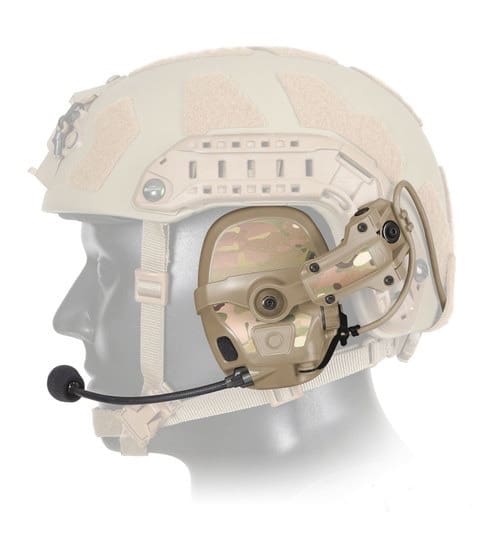
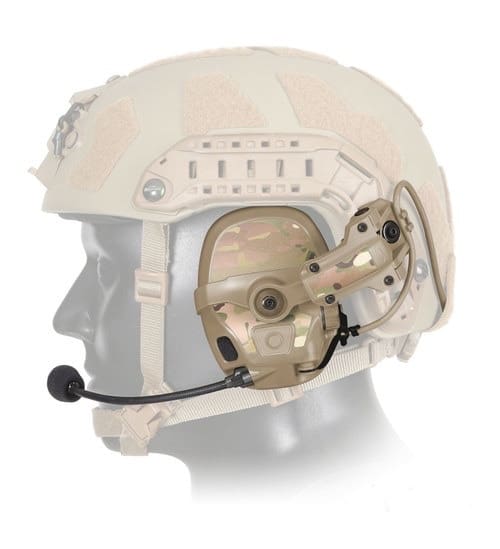
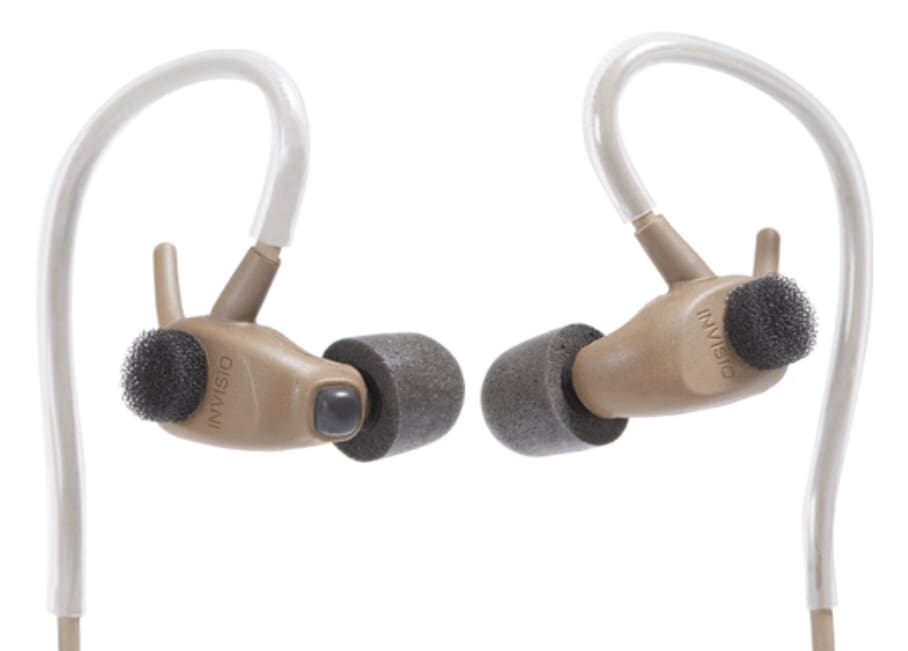
Over the weekend, the US Army’s Program Management Office for Special Operations Forces Survival, Support and Equipment Services issued two J&As for the purchase of Communications Accessory Suite Land (CASL) components via GSA. CASL was envisioned as a technologically advanced Communications Accessory Suite compatible and interoperable with the Next Generation Handheld (NGHH) radio (and other legacy radio systems), consisting of a Push-To-Talk, high noise Headset (circumaural or in-the-ear) and associated cables.

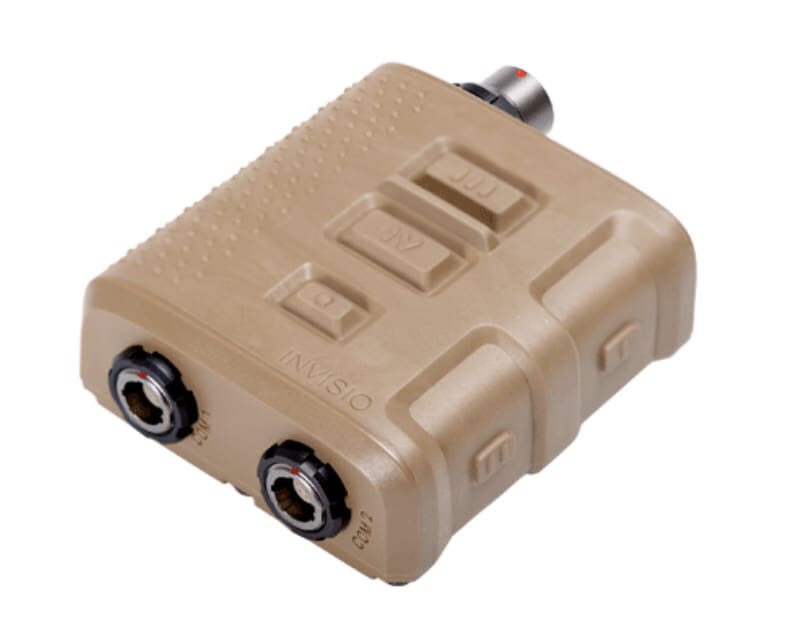
Specifically, SOCOM plans to purchase the Ops-Core AMP Communications Headset, Invisio X5 Headset and V60 PTT.

Although, both components of the system were selected almost a year ago, there were apparently software issues which needed to be worked out with SOF radio manufacturer Harris Corp, before fielding could begin.

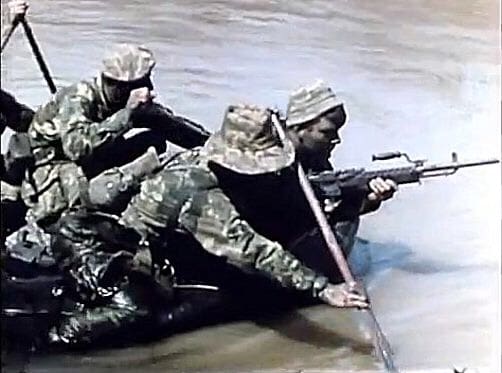
SCUBAPRO SUNDAY – The Men with Green Faces

Sunday, April 7th, 2019

Special Warfare TISC Opens Doors to Solve Tomorrow’s Problems, Dedicated to ST Founder

Sunday, April 7th, 2019

HURLBURT FIELD, Fla. (AFNS) — The Special Warfare Technical Integration Support Center opened its doors during a ribbon cutting and dedication ceremony in Fort Walton Beach, Florida, Jan. 11, as the newly named Col. John T. Carney Center of Excellence.

With the name of “Coach,” Carney embodied within the 25,000-square-foot facility, the roots of special tactics aim to inspire employees of the SW-TISC every day.

“Every special tactics leader strives to give their men the best equipment and training to fight our enemies,” said Col. Spencer Cocanour, 24th Special Operations Wing vice wing commander. “Coach Carney pushed the envelope to get the very best for his people. He fought the bureaucracy with the same ferocity he fought the enemy.”

The wearable communication equipment that special tactics operators carry in the field needs to be the best that the Department of Defense can offer to fight tonight and tomorrow’s battles and this starts with the work of the men and women within the SW-TISC.

“This building is unique It will bring together a diverse group of professionals with different backgrounds to collaborate, develop, test, field and operationalize concepts to maintain our competitive edge,” said Brig. Gen. William Holt, the Air Force Special Operations Command special assistant to the commander. “This rapid response integration will create a tangible repeatable innovation rhythm to reduce the timeline from innovative concept to operational implementation.”

With the National Defense Strategy of 2018 outlining the Department of Defense objectives to include delivering performance with affordability and speed, the SW-TISC will aid AFSOC by streamlining development to fielding.

“The TISC will push the envelope on fielding technology,” Cocanour said. “That means placing cutting edge technology into the hands of the most lethal special operators this nation has ever produced.”

By integrating technologies, ensuring interoperability and providing appropriate updates and training on the equipment used in the 24 SOW, special tactics operators are able to answer U.S. Special Operations Command’s call to deliver tactical air-to-ground integration and conduct global access, precision strike, personnel recovery, and battlefield surgery operations.

“There’s a SOF principle of the hyper enabled operator that is a highly trained individual with elite skills, but they also have a network of systems on them that they wear and that they interact with,” said Todd Weiser, the chief technology officer and director of innovations with AFSOC. “The future is that operator is going to have the ability with their kit to inter-operate with an F-35 [Lightning II], with an F-22 [Raptor], with an Army vehicle. That network, the sharing of information and internet of things, micro sensors, micro small unmanned aircraft system; all of that stuff is coming together.”

As a special tactics officer with years of experience in the field and operations, Lt. Col. Eli Mitchell, the branch chief of special tactics requirements with AFSOC, sees tomorrow’s battle requiring a more accurate and efficient way of delivering capabilities.

“(The SW-TISC) is a game changer — really what it does is speeds up bombs on targets and increases situational awareness on the battlefield,” Mitchell said. “You’re talking about reducing the potential for fratricide, increasing target engagement timelines and also increasing your munitions effectiveness by more precisely striking the appropriate target.”

By evolving for tomorrow’s fight, the special tactics enterprise is leading from the front with technology and equipment used on the battlefield on a global scale within the Air Force, SOCOM, and the DOD.

“The world’s more complex than it ever has been and it’s continuously getting more complex and we need to get ahead of it in a timely manner,” Wieser said. “That’s what this facility will help us do, get ahead of it so that we can compete with our near peers as well as other adversaries.”

Holt left the most recent addition to the AFSOC team with some motivations to do exactly what Air Commandos are known for; thinking outside the box.

“You are in the business of making the impossible, possible. Your mission is to get out of the box,” Holt said. “When someone tells you it’s impossible, double down to prove them wrong. Never forget there is always a way.”

By Senior Airman Joseph Pick, 24th Special Operations Wing Public Affairs

USASOC Team Wins 10th Annual USASOC Sniper Competition

Monday, March 25th, 2019

Now in its 10th year, a team representing the United States Army Special Operations Command won the 2019 USASOC Sniper Competition, held last week at Fort Bragg’s Range 37.

4F1DD973-6AB9-4246-A33C-796F56915333

The second place team also represents USASOC, with the third place overall coming from the US Marine Corps’ School Sniper School.

92FBAF09-99BD-4F94-9287-A1ACE064E27D

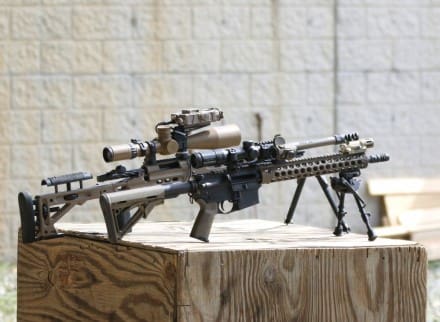
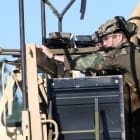
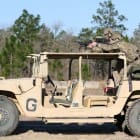
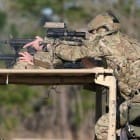
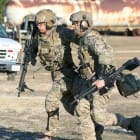
We do not have the scores nor the overall standing of the 18 other two-man teams which represented US and international services. But, we do have a gallery of images taken during the Competition by the USAJFK Special Warfare Center and School. Many of the firearms used in the comp are personally owned.

Photos by SGT Michelle Blesam and Ken Kassens.
USSOCOM Awards Contract to Sarcos Robotics for Delivery of Full-Body, Autonomously Powered Robotic Exoskeleton

Tuesday, March 19th, 2019

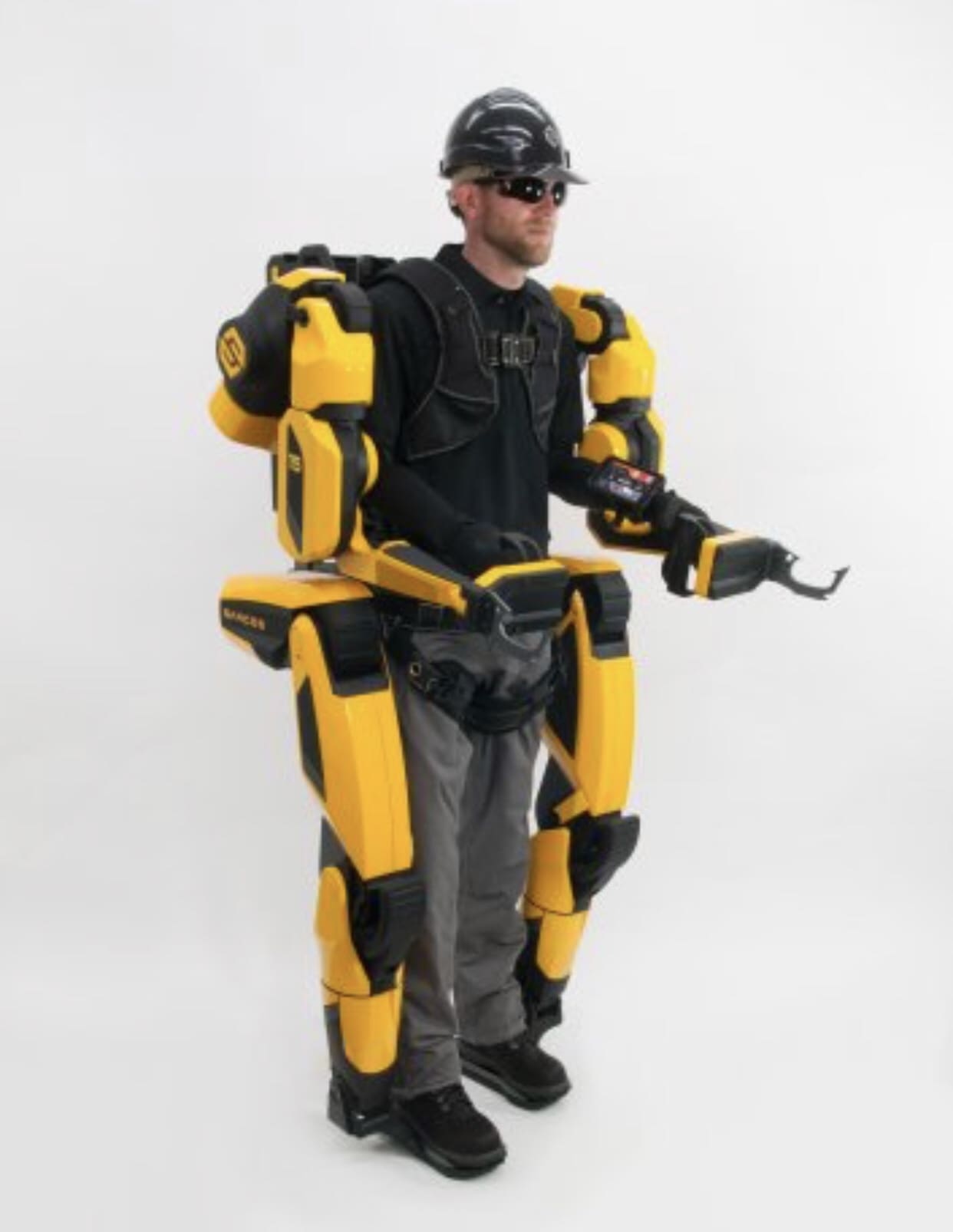
SALT LAKE CITY and BELLEVUE, Wash. – March 18, 2019 – Today, Sarcos Robotics, a global leader in robotic systems that augment, rather than replace humans working in the industrial, public safety and military sectors, announced that it has been awarded a contract by the United States Special Operations Command (USSOCOM) to deliver a pre-production version of its Guardian™ XO® (“XO”) full-body, autonomously powered robotic exoskeleton. The XO is capable of operating for up to eight hours per battery charge, while walking at three miles per hour and carrying up to 200 pounds of payload. With the ability to “hot swap” rechargeable batteries in the field, XO run-time is essentially unlimited.

The USSOCOM XO contract follows Sarcos’ recent announcements regarding collaborations with both the U.S. Air Force and the U.S. Navy to develop and evaluate variations of the Guardian™ XO® for use cases specific to these services. With 17 years of development efforts and more than $175 million invested in R&D, Sarcos has been laser-focused on ensuring the Guardian XO Max is safe, intuitive and power efficient. Sarcos recently shared significant power and performance enhancements to the XO, including significant improvements in power consumption, control system functionality and load transfer.
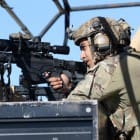
USSOCOM Selects Barrett Firearms Manufacturing MRAD as New Advanced Sniper Rifle

Tuesday, March 12th, 2019

5B182BA9-CBFF-4120-BCC4-E97F48E2FE69

USSOCOM has made the following announcement regarding the purchase of the Advanced Sniper Rifle:

Barrett Firearms Manufacturing Inc., Christiana, Tennessee, was awarded an estimated $49,936,300, five-year, indefinite-delivery/indefinite-quantity, firm-fixed-price contract (H92403-19-D-0002) for the purchase of advanced sniper rifles in support of U.S. Special Operations Command (USSOCOM). Fiscal 2019 research, development, test and evaluation funds in the amount of $387,234 are being obligated at the time of award. The work will be performed in Christiana, and is scheduled to be completed by March 2024. The solicitation was posted on the Federal Business Opportunities website under “full and open competition” and six proposals were received. USSOCOM, Tampa, Florida, is the contracting activity.

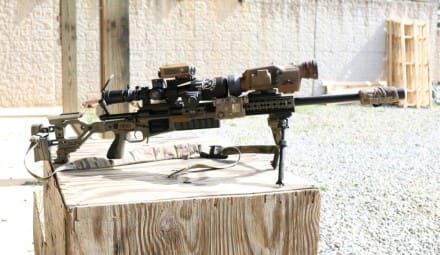
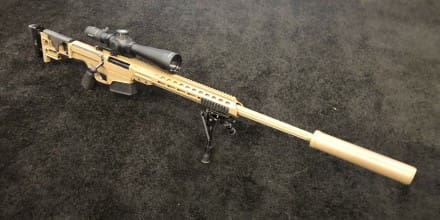
The ASR replace the Precision Sniper Rifle manufactured by Remington. The new ASR is the Barrett Multi-Role Adaptive Design and will fire the 338 Norma Mag, 300 NM and 7.62 NATO cartridges.