Celebrate 20 years of the TLR-1

Archive for the ‘Advertiser’ Category

March Mannequin Madness – Day 6

Friday, March 18th, 2022

During IWA Helikon-Tex displayed their new products on mannequins arrayed around their stand. Each day we will showcase a different one and detail the gear.


Day 6 brings us the popular Swagman Roll Poncho which continues to come out in more color schemes like the Desert Night Camouflage reproduction.

Insulated with Climashield, this multi-role blanket can be worn like a pool go or configured as a sleeping bag.

FirstSpear Friday Focus: NEW Gustaf T-Shirt

Friday, March 18th, 2022

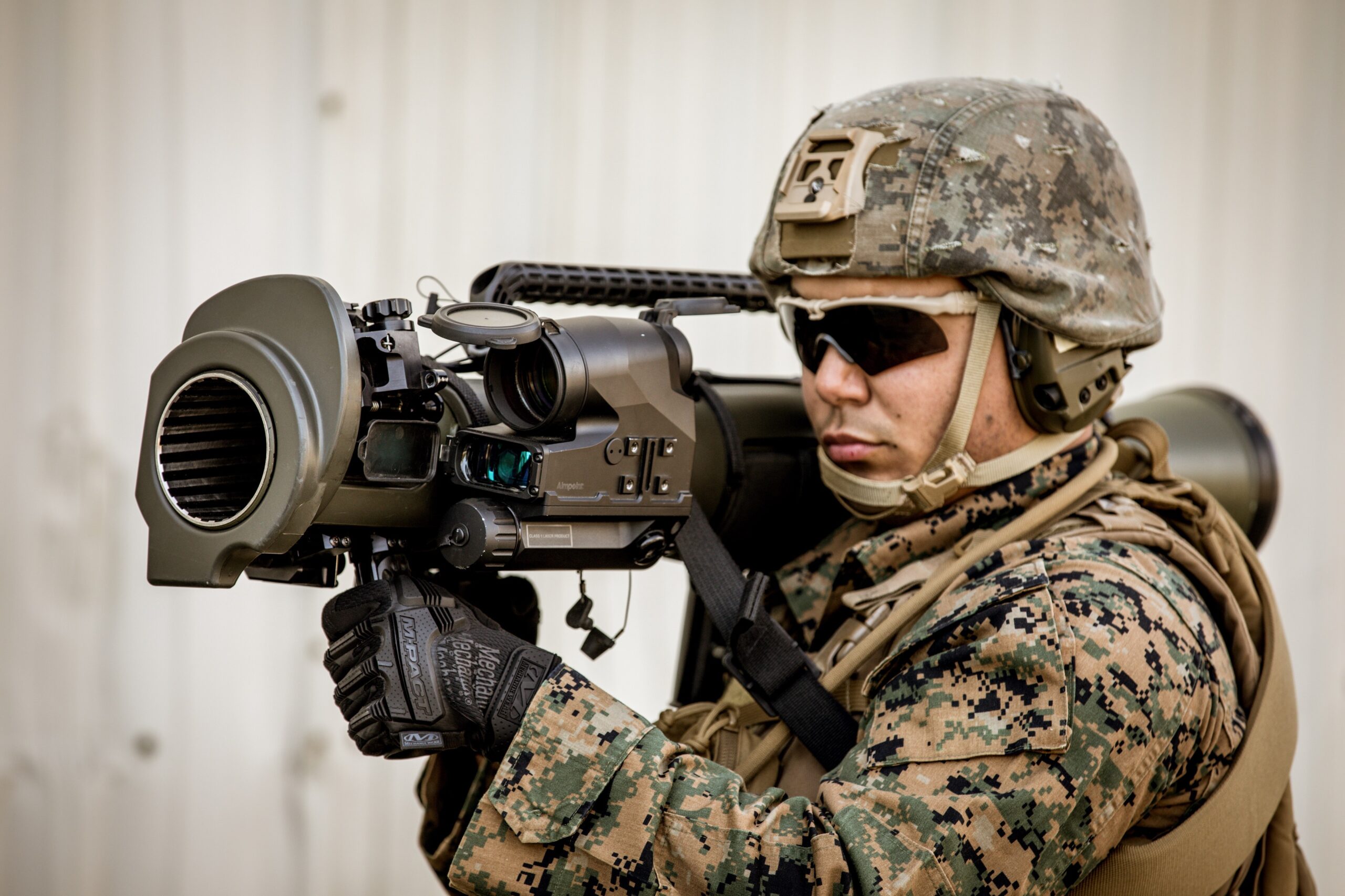
The FS skull is back, shouldering a recoilless Carl Gustaf, and is taking no prisoners. Who doesn’t love a good game of duck, duck, goose? Nothing spreads freedom like an 84mm. Like everything we do, this shirt is high-quality and Built for the X.

Don’t lose your head and full send to the cart before they’re gone. These are limited edition colors— offered in Laguna Yellow & Black.

Check them out now: www.first-spear.com/gustaf-t-shirt

March Mannequin Madness – Day 5

Thursday, March 17th, 2022

During IWA Helikon-Tex displayed their new products on mannequins arrayed around their stand. Each day we will showcase a different one and detail the gear.

Since it’s St Patrick’s Day why not feature some green for Day 5?

All set for a patrol, this ensemble consists of MCDU Combat Shirt and Pants with a CPU Hat and Guardian Chest Rig.

The MCDU Pants are new for this year.

US Army Seeks Sources for M240 6.8mm Conversion Kits

Wednesday, March 16th, 2022

The U.S. Army, Army Contracting Command-New Jersey at Picatinny Arsenal, NJ 07806-5000 is conducting a market survey / sources sought notice on behalf of the Project Manager Soldier Lethality (PMSL) for an M240 6.8mm conversion kit for M240B and/or M240L. Presently, the M240B and M240L machine guns are 7.62mm weapons.

From the RFI:

The conversion kit should include all hardware and instructions needed to modify a standard M240B and/or M240L to fire the 6.8mm ammunition. This will include a new barrel assembly and may include changes to the weapon powering through updates to the gas regulator, drive spring, or other means. The barrel assembly may be either of the standard barrel length (M240B) or short barrel (M240L). Information on 6.8mm ammunition type, specifications, and availability should be provided.

The winner of the US Army’s Next Generation Squad Weapons program to replace the 5.56mm M4 Carbine and M249 SAW with weapons firing 6.8mm for close combat forces (XM5 & XM250) should be announced soon. From the beginning of this effort many have referred to it as an ammunition program. This Army RFI demonstrates the veracity of that claim.

While there have been several different candidate weapons involved, there were three very different ammunition types in the running until late last year. All were developed to meet the Army’s requirement to create what is essentially a 270 WSM but with a 20% weight reduction for both ammo and weapons.

The most radical type of ammunition offered up was the so-called case telescoped cartridge from Textron, a rimless technology with the projectile embedded within the case. They are no longer in the running and such a modification to the M240 desired by the Army would have been impossible.

Slightly less ambitious is True Velocity’s polymer cartridge case with its peculiar neck design where the projectile is inserted into the case. TV’s ammunition is intended to be manufactured in their proprietary machines.

Finally, SIG SAUER’s ammunition division introduced a hybrid case with a brass body and steel head. With this construction, they claim to gain an significant increase in velocity over conventional brass ammunition as well as the desired weight reduction. It can be manufactured with current machinery, but adds the step of attaching the two case components together.

However, despite Textron’s exit from the program, I will assert that there are still three candidate cartridges. Along with SIG and True Velocity, the Army is sure to have cooked something up in-house, if only for experimentation purposes to establish a baseline of 6.8 conventional, brass case ammunition.

Both the Army and industry know a lot about how such a cartridge would perform across all JPEO Ammunition’s requirements and how to manufacture it with the machines currently located at Lake City Army Ammunition Plant.

In fact, no matter which type of ammunition is elected for NGSW, it will be manufactured at Lake City Army Ammunition Plant. The program has budgeted for a new next gen ammo building there.


270 WSM next to SIG’s 6.8mm Hybrid Cartridge.

You’ll note that NGSW is a Carbine and SAW replacement and those are currently 5.56mm weapons. When you consider that the next gen is 6.8mm, regardless of which form it takes, is the equivalent of 270 WSM, then you realize it will outperform 7.62mm NATO. Then, you’ll ask yourself why you’d provide the Infantry Company a weapon with a shorter range which delivers less energy on target than what the Squad is carrying. From the beginning, it was a forgone conclusion that if feasible, at least some of the M240s in inventory (around 100,000 across DoD) would be rechambered to 6.8.

In fact, True Velocity demonstrated this capability in the M240 last year, and reports are that the US Army has conducted experimentation with their own 6.8mm ammunition.

This move makes complete sense and I’m glad to see the Army moving forward with it. However, since the Army has yet to announce which team has won NGSW and therefore which type of ammunition the 6.8 conversion will be required to fire, it will be more difficult for industry to offer specifics in response to the Army’s sources sought notice.

Eric Graves

Editor

March Mannequin Madness – Day 4

Wednesday, March 16th, 2022

During IWA Helikon-Tex displayed their new products on mannequins arrayed around their stand. Each day we will showcase a different one and detail the gear.

Day 4’s Assaulter is clas head to toe in MultiCam Black.

The mannequin is wearing an MBDU Shirt and Trousers made from ripstop NYCO along with the Cobra Battle Belt and Competition Inner Belt as well as their Training Mini Rig.

Although his helmet is equipped with a cover, it is a one-off made in the prototype shop to finish off the gear. Instead, Direct Action, Helikon-Tex’s mission oriented gear brand offers helmet covers.

SIG SAUER to Host SIG Freedom Days: A First of Its Kind SIG Shooting Experience

Wednesday, March 16th, 2022

NEWINGTON, N.H., (March 16, 2022) – SIG SAUER is pleased to announce SIG Freedom Days – the first ever total consumer SIG range and shooting experience hosted by SIG SAUER. The SIG Freedom Days experience will take place May 6 – 8, 2022, at Ben Avery Shooting Facility in Phoenix, Arizona and costs $79.95 for a daily pass.

Guests at SIG Freedom Days will have the opportunity to shoot nearly 50 different SIG SAUER firearms including the entire newly released SPECTRE Comp Series of guns, the most popular EDC P365 series, the P320 to include the U.S. Army’s P320-M17 and the U.S. Marine’s P320-M18, the MCX rifle in multiple configurations including the MCX-SPEAR, yet to be released SIG pistols and rifles, and much more.  Additionally, attendees will also get to shoot some of Mossberg’s most popular shotguns and Crossbows from Xpedition Archery.

This event also includes live demonstrations from Team SIG’s professional shooters as well as Jerry Miculek, the greatest competitive shooter of all-time. Learn tips and drills about carry optics from Team SIG Captain and Carry Optics World Champion Max Michel, modern EDC carry tips for women from Lena Miculek, and precision shooting from World Sniper Champion and former Army Marksmanship Unit (AMU) Captain Daniel Horner.  Team SIG and Jerry Miculek will also host a daily speed shooting demonstration and interactive contest with SIG prizes. See additional demonstrations from other professionals such as SGM Kyle Lamb (ret.), owner of Viking Tactics and SGM Mike Glover (ret.), owner of Fieldcraft Survival.

Connect with sponsors at SIG Freedom Days including USCCA (United States Concealed Carry Association), Black Rifle Coffee Company, XPEDITION Archery, Mossberg, 5.11 Tactical, Fieldcraft Survival, Guns. com and more.

You can also connect with notable people including New York Times best selling author Jack Carr (get autographs in his Terminal List Series books), Justin Melnick with his dog Dita from the popular series “SEAL Team,” and meet MSG Scotty Neal (ret.), from the notable “12 Strong” initiative in Afghanistan.

A SIG Freedom Days daily pass includes the opportunity to shoot 10 stages featuring SIG pistols and rifles (ammunition included), and access to all activities and demonstrations. Additional 5-stage purchase opportunity will be available on-site for $29.95.

To purchase a SIG Freedom Days pass, or learn more about the event, visit the SIG FREEDOM DAYS registration site.

March Mannequin Madness – Day 3

Tuesday, March 15th, 2022

During IWA Helikon-Tex displayed their new products on mannequins arrayed around their stand. Each day we will showcase a different one and detail the gear.

Helikon-tex is working to expand their clothing designed specifically for women and an day 3, we’ve got a sampling.

This the new Squall Women’s Hardshell paired with Hoyden Range Leggings and the Shooting Time Trucker cap. The shirt is the women’s UTL Polo Shirt.

TMS Tuesday – The M.A.R.C.H Algorithm – Respiration

Tuesday, March 15th, 2022


The MARCH algorithm is laid out differently from Advanced Trauma Life Support (ATLS) which used Airway, Breathing, and Circulation (ABC’s) as the order of treatment. MARCH stands for Massive Hemorrhage, Airway, Respiration, Circulation, Hypothermia/Head injury. Respiration consists of penetrating thoracic trauma.

When it comes to penetrating thoracic trauma, it is important to systematically check the entire torso for wounds, from the umbilicus to the clavicle, including the axillae and any folds of skin. Medics often use a raking motion in opposite or off angle directions to assist in identifying difficult to see or smaller wounds.

An open chest wound, sometimes referred to as a “sucking chest wound”, will trap air in the chest, creating a pneumothorax. If too much air builds up, it will create enough pressure to become a tension pneumothorax, which can lead to decreased function in the non-injured lung and heart and could lead to death.

According to the Committee on Tactical Combat Casualty Care, assessing and treating tension pneumothorax should progress as follows:

Suspect a tension pneumothorax and treat when a casualty has significant torso trauma or primary blast injury and one or more of the following:

• Severe or progressive respiratory distress

• Severe or progressive tachypnea

• Absent or markedly decreased breath sounds on one side of the chest

• Hemoglobin oxygen saturation < 90% on pulse oximetry

• Shock

• Traumatic cardiac arrest without obviously fatal wounds

If not treated promptly, tension pneumothorax may progress from respiratory distress to shock and traumatic cardiac arrest.

All open and/or sucking chest wounds should be treated by immediately applying a vented chest seal to cover the defect. If a vented chest seal is not available, use a non-vented chest seal. If you must use a non-vented chest seal, then you must be vigilant in continued patient assessment, as air from the damaged lung may continue to build up inside the chest. For the layperson, this means “burping” the dressing to release air. For providers, this means needle decompression, finger thoracotomy, or tube thoracostomy.

Initial treatment of suspected tension pneumothorax:

• If the casualty has a chest seal in place, burp or remove the chest seal.

• Establish pulse oximetry monitoring.

o All individuals with moderate/severe TBI should be monitored with pulse oximetry. Readings may be misleading in the settings of shock or marked hypothermia.

• Place the casualty in the supine or recovery position unless he or she is conscious and needs to sit up to help keep the airway clear as a result of maxillofacial trauma.

• Decompress the chest on the side of the injury with a 14-gauge or a 10-gauge, 3.25-inch needle/catheter unit.

• If a casualty has significant torso trauma or primary blast injury and is in traumatic cardiac arrest (no pulse, no respirations, no response to painful stimuli, no other signs of life), decompress both sides of the chest before discontinuing treatment.

o Either the 5th intercostal space (ICS) in the anterior axillary line (AAL) or the 2nd ICS in the mid-clavicular line (MCL) may be used for needle decompression (NDC.)  If the anterior (MCL) site is used, do not insert the needle medial to the nipple line.

o The needle/catheter unit should be inserted at an angle perpendicular to the chest wall and just over the top of the lower rib at the insertion site. Insert the needle/catheter unit all the way to the hub and hold it in place for 5-10 seconds to allow decompression to occur.

o After the NDC has been performed, remove the needle and leave the catheter in place.

The NDC should be considered successful if:

• Respiratory distress improves, OR

• There is an obvious hissing sound as air escapes from the chest when NDC is performed (this may be difficult to appreciate in high-noise environments), OR

• Hemoglobin oxygen saturation increases to 90% or greater (note that this may take several minutes and may not happen at altitude), OR

• A casualty with no vital signs has return of consciousness and/or ` radial pulse.

If the initial NDC fails to improve the casualty’s signs/symptoms from the suspected tension pneumothorax:

• Perform a second NDC on the same side of the chest at whichever of the two recommended sites was not previously used. Use a new needle/catheter unit for the second attempt.

• Consider, based on the mechanism of injury and physical findings, whether decompression of the opposite side of the chest may be needed.

• Continue to re-assess!

If the initial NDC was successful, but symptoms later recur:

Perform another NDC at the same site that was used previously. Use a new needle/catheter unit for the repeat NDC.

• Continue to re-assess!

If the second NDC is also not successful:

• Continue on to the Circulation section of the TCCC Guidelines.

These recommendations are from the TCCC Guidelines which can be found at: www.deployedmedicine.com/content/40

Tools to Aid in Respiration

TacMed™ Solutions offers a variety of products built to help with this respiratory emergencies including HALO™ Chest Seals, TPAKS for Needle Decompression, a Standard and Complete Chest Tube Kit, a Basic Chest Wound Kit and more. To stock your kit with essential tools, check out TacMed™ Solutions at tacmedsolutions.com/collections/m-a-r-c-h-tccc/respiratory.