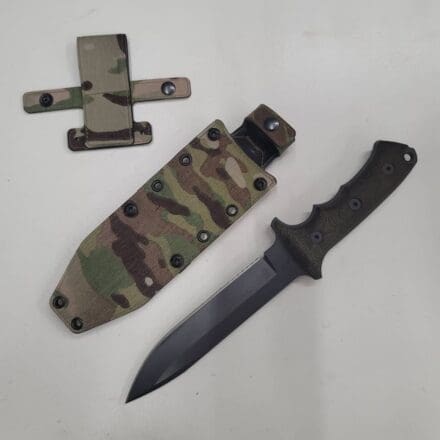
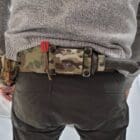
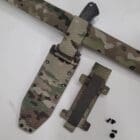
Designed specifically for the Yarborough knife issued to Special Forces Qualification Course graduates, this sheath is 1.5″ x 7.25″ and will fit many other models like the civilian model, the SF Knife.
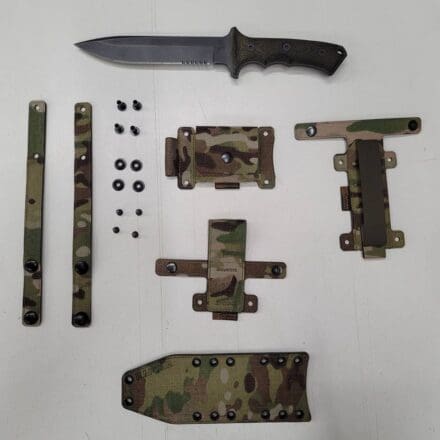


Designed specifically for the Yarborough knife issued to Special Forces Qualification Course graduates, this sheath is 1.5″ x 7.25″ and will fit many other models like the civilian model, the SF Knife.
The SENTRY™ Hexmag Carbon Fiber AR-15 Mag uses a proprietary blend of Carbon Fiber for a stronger, lighter AR-15 magazine.
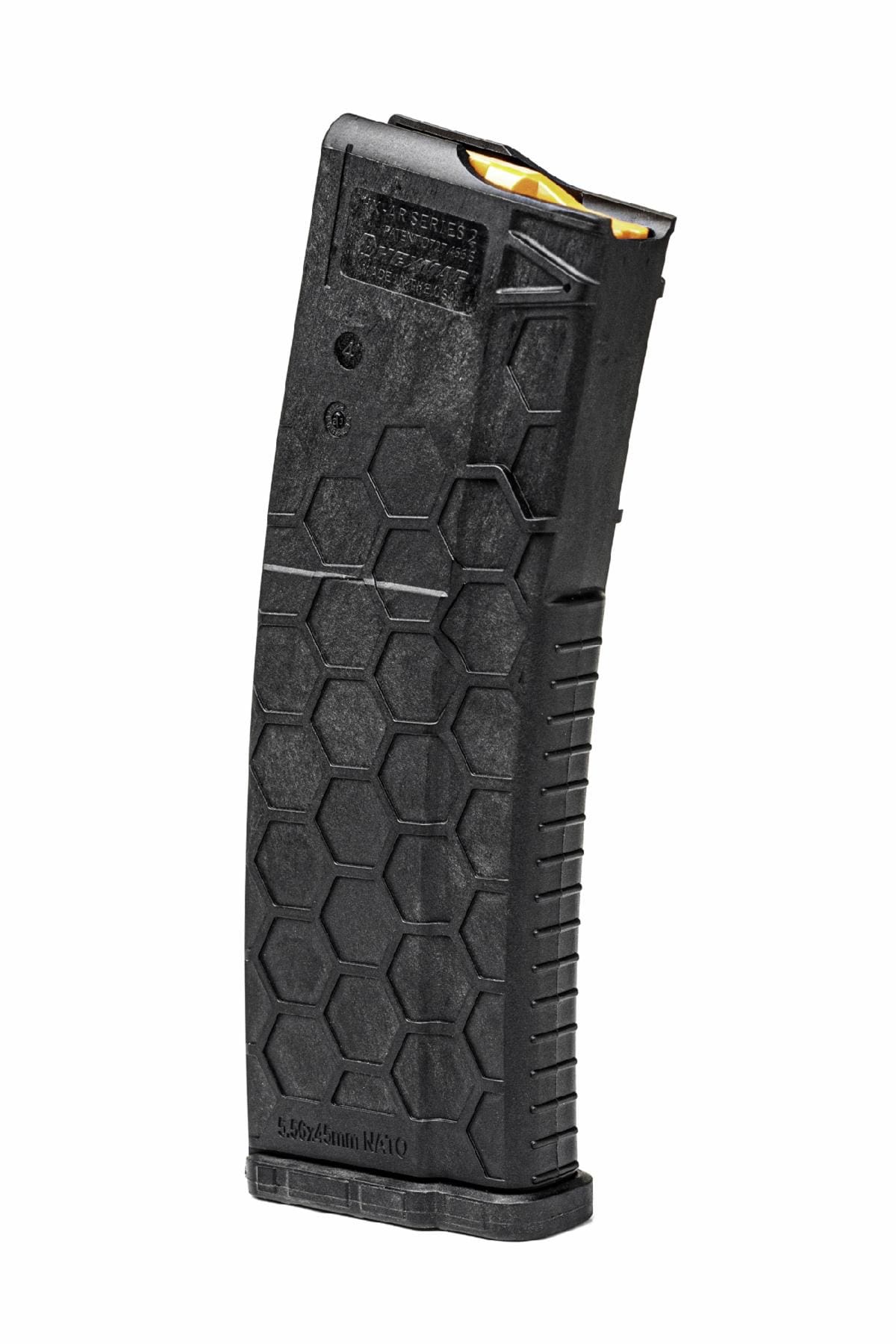
Virginia Beach, Va. (February 2021) – After the acquisition of the Hexmag brand in 2017 SENTRY Products Group set out to refine and expand their magazine and on gun accessory line. The most recent advancement is SENTRY’s Carbon Fiber AR-15 magazine, made from a proprietary carbon fiber composite blended with our Polyhex2 polymer, offering exceptional durability and consistent performance. While Hexmag’s polymer magazines are known for exceptional reliability and resiliency, the introduction of Carbon Fiber significantly increases the overall strength and rigidity which further enhances performance. An added benefit to the end-user is that Carbon Fiber reduces the total weight by 20 percent over the standard magazine.
As with all Hexmag products the new Carbon Fiber AR-15 Mag features the patented Hexture pattern for confident and positive grip, no matter the environmental conditions. With the industry’s first tool-less takedown design, the magazines can be easily cleaned and maintained. A heat-treated stainless-steel spring eliminates corrosion and resists fatigue even while loaded for long periods of time. Customization can be done through Hexmag’s True-Riser system to create State compliant 10, 15, and 30-round configurations; and with the SENTRY HexID color identification system, the user can quickly identify caliber and ammo type through the coded safety system featuring high visibility followers and latch plate.
Available in black with an MSRP of $21.99 you can find this product through Midway, RSR, and the SENTRY’s website www.sentrytactical.com.
UF PRO has created a glossary containing a wide range of materials used in tactical clothing.
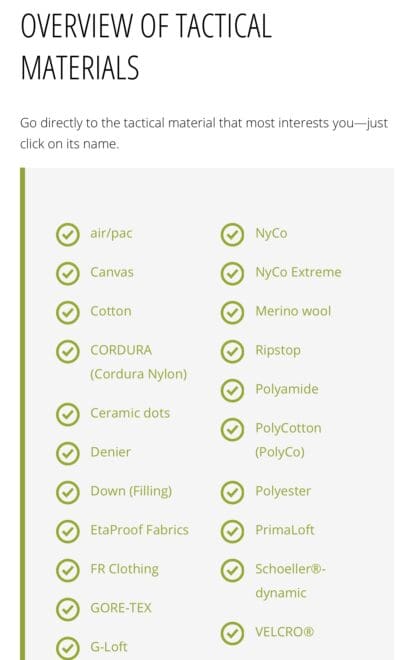
Check it out and bookmark it. It’s a great resource.
ufpro.com/blog/article/tactical-materials-glossary
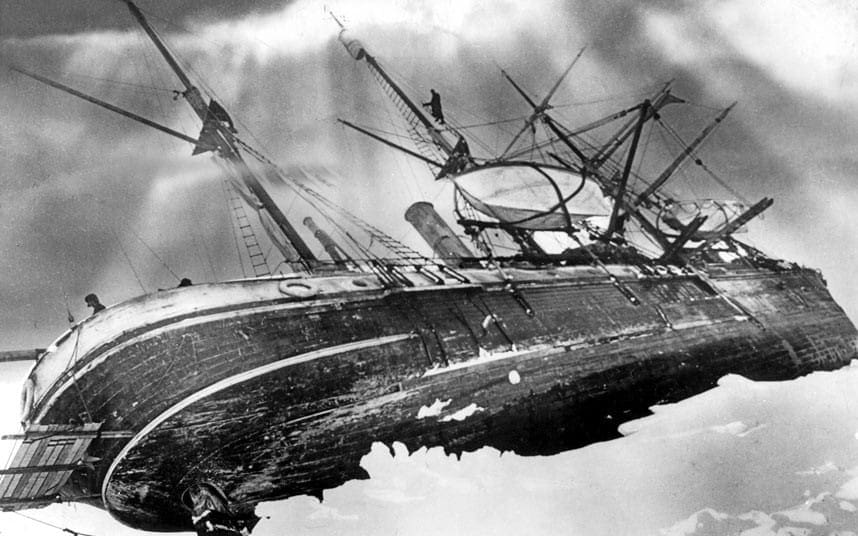
On 5 December 1914, the HMS Endurance left South Georgia for Antarctica, carrying 27 men (plus one stowaway who became the ship’s steward), 69 puppies, and a tomcat named, Mrs. Chippy. The goal of expedition leader Shackleton, who had once agonizingly fallen short of reaching the South Pole twice, was to establish a base on Antarctica’s Weddell Sea coast.
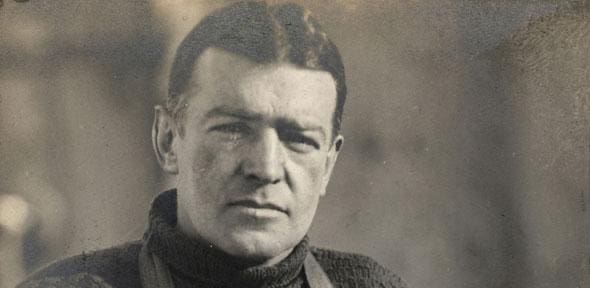
From there, on the first crossing of the continent, a small party, including himself, would eventually arrive at the Ross Sea, south of New Zealand, where another group would be waiting for them, having set up food and fuel depots along the way. Endurance joined the pack ice two days after leaving South Georgia, the barrier of dense sea ice standing guard across the Antarctic continent. The ship pushed its way through leads in the ice for several weeks, gingerly working its way south, but on 18 January, a northern gale jammed the pack hard against the ground and tightly squeezed the floes against each other. There was suddenly no way forward, nor any way back.
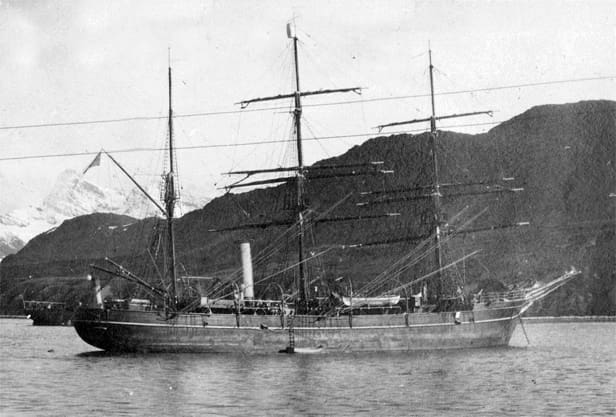
They were sailing from their landing place within a day; now, with each passing day, the ice’s drift was slowly moving them farther south. Nothing else could’ve been done but to create a routine and wait for the winter.
The crew saved as many provisions as they could in the time that passed between abandoning Resilience and watching the ice swallow it up entirely while sacrificing anything and anything that added weight or consumed valuable resources, including bibles, books, clothes, instruments, and keepsakes.
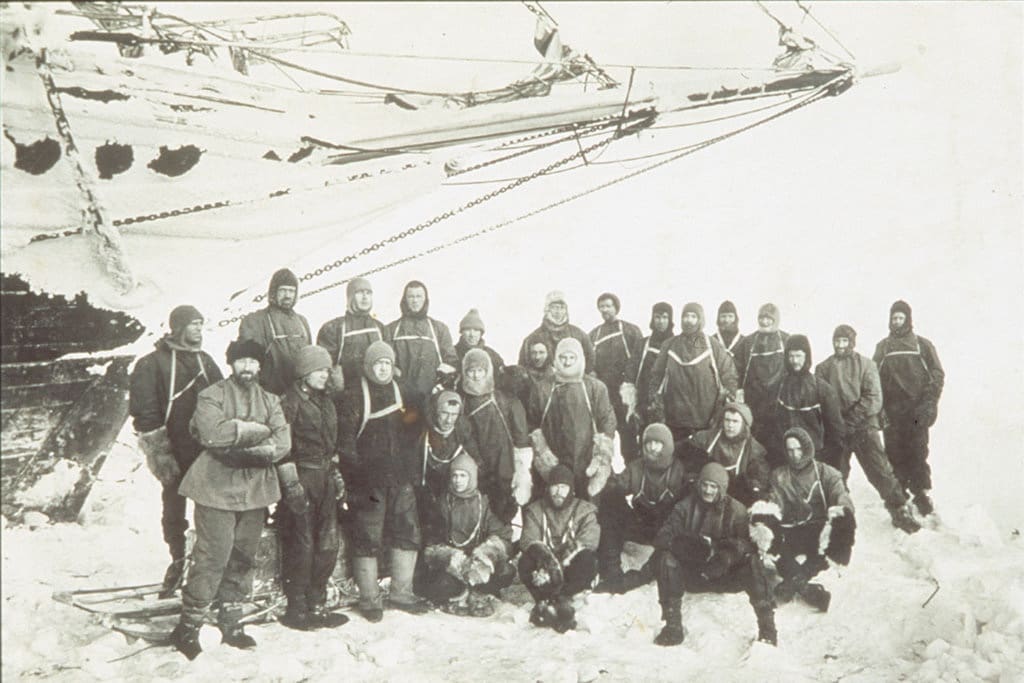
The original plan was to march toward the land through the ice, but that was abandoned after the men accomplished just seven and a half miles in seven days. There was no alternative,” Shackleton wrote, “except to camp on the floe again and to possess our souls with what patience we could until conditions would become more favorable for a revival of the attempt to escape.” The ice drifted further north slowly and steadily, and the snow-capped peaks of Clarence and Elephant Islands came into view on 7 April 1916, flooding them with hope.”
“The floe was a good friend to us,” Shackleton wrote in his diary, “but it has reached the end of its journey and is now obliged to break up at any moment.”
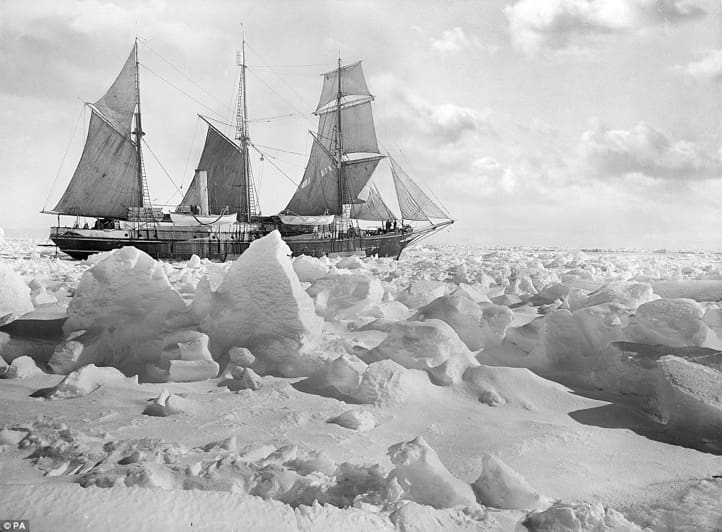
It did precisely that on 9 April, breaking with an almighty crack underneath them. Shackleton gave the order to break camp and launch the ships, and all of a sudden, they were finally free of the ice that had alternately surrounded them and supported them.
Now they had to deal with a new foe: the open ocean. It poured icy spray on their faces and threw cold water over them, beating the boats from side to side, and as they fought the elements and seasickness, it took brave men to the fetal position.
Captain Worsley navigated through the spray and the squalls through all of it before Clarence and Elephant Islands emerged just 30 miles ahead after six days at sea. The men had become tired. Worsley had not slept for 80 hours by that time. And although some have been crippled by seasickness, some have been wracked by dysentery. Frank Wild, the second-in-command of Shackleton, wrote that “at least half the party was insane.” But they rowed resolutely toward their target, and they clambered ashore on Elephant Island on 15 April.
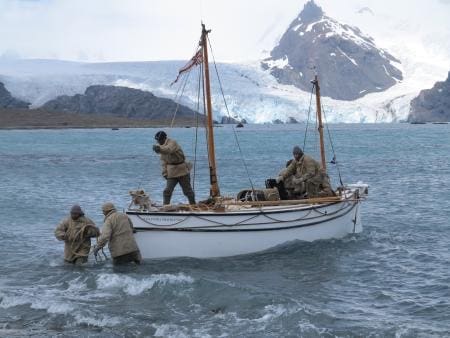
They were on dry land for the first time since leaving South Georgia 497 days ago. Their ordeal was far from over, however. After nine days of healing and training, Shackleton, Worsley, and four others set out on one of the lifeboats, the James Caird, to seek aid from a whaling station in South Georgia, more than 800 miles away. The chance of someone coming across them was vanishingly slight.
They fought monstrous swells and furious winds for 16 days, blowing water out of the ships and beating ice out of the sails. Shackleton recorded, “The boat tossed endlessly at the great waves under grey, threatening skies.” Each surge of the sea was an adversary to be watched and circumvented.” The elements hurled their worst at them even as they were within touching distance of their goal: “The wind screamed as it ripped the tops off the waves,” Shackleton wrote.” “Our little boat swung down into valleys, up to tossing heights, straining till her seams opened.”
The wind eased off the next day, and they made it ashore. Help was nearly at hand, but this was not the end, either. The winds had driven the James Caird off course, and from the whaling station, they had landed on the other side of the island. And so Shackleton, Worsley, and Tom Crean set out to reach it by foot, scrambling over mountains and sliding down glaciers, forging a route that no human being had ever forged before they stumbled into the station at Stromness after 36 hours of desperate hiking.
In no possible circumstances could three strangers possibly arrive at the whaling station from nowhere, definitely not from the mountains’ direction. And yet here they were: their stringy and matted hair and beards, their faces blackened with blubber stove soot, and creased from almost two years of tension and deprivation.
And the old Norwegian whaler remembered the scene when the three men stood in front of Thoralf Sørlle, the station manager:
The boss would say, “Who the hell are you?” ‘And in the middle of the three, the awful bearded man says very quietly:’ My name is Shackleton.’ I turn away and weep.’
Once the other three James Caird members were rescued, attention turned to the rescue of the remaining 22 men on Elephant Island. Yet, despite all that had gone before, this final mission proved to be the most challenging and time-consuming of all in many respects. Although attempting to cross the pack ice, the first ship on which Shackleton set out ran dangerously low on fuel and was forced to turn back to the Falkland Islands. The government of Uruguay provided a vessel that came within 100 miles of Elephant Island before being beaten back by the ice.
Every morning on Elephant Island, Frank Wild, left in charge by Shackleton, issued an appeal for everyone to “lash up and stow up” their belongings. Might the boss come today! “He proclaimed every day. His friends became increasingly bleak and questionable. Macklin reported on 16 August 1916, “Eagerly on the lookout for the relief ship.” “The hope of her coming was quite abandoned by some of the party.” Orde-Lees was one of them. “There is no longer any good in deceiving ourselves,” he wrote.
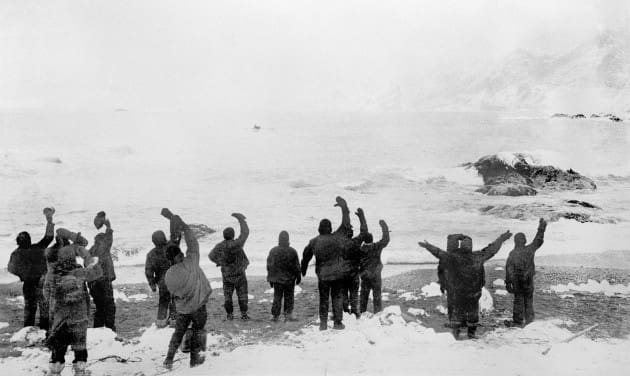
But Shackleton acquired from Chile a third ship, the Yelcho; eventually, on 30 August 1916, the Endurance saga and its crew came to an end. When they spied the Yelcho just off the shore, the men on the island were settling down to a lunch of boiled seal’s backbone. It had been 128 days since James Caird’s departure; everyone ashore had broken camp within an hour of the Yelcho emerging and left Elephant Island behind. Every one of the Endurance crew was alive and healthy twenty months after setting out for the Antarctic.
Never did Ernest Shackleton reach the South Pole or traverse the Antarctic. Another expedition to the Antarctic was initiated, but the Endurance veterans who accompanied him found that he seemed smaller, more timid, drained from the spirit that kept them alive. On 5 January 1922, he had a heart attack on a ship in South Georgia and died in his bunk. He was a mere 47.
Wild took the ship to Antarctica with his death, but it proved inadequate to the task, and he set course for Elephant Island after a month spent futilely trying to penetrate the pack. He and his comrades, from the safety of the deck, peered through binoculars at the beach where so many of them had been living in fear and hope.
“Once again, I see old faces and hear old voices, old friends scattered all over,” Macklin wrote. “It is impossible, however, to express all I feel.”
And with that, one last time, they turned north and went home.
Rheinmetall is currently bringing another 27 Boxer command vehicles of the Bundeswehr up to the latest A2 standard. Germany’s Federal Office for Bundeswehr Equipment, Information Technology and In-Service Support (BAAINBw) awarded the order at the end of January 2021. The 27 vehicles are to undergo modernization at the Rheinmetall Landsysteme GmbH plant in Kassel, Rheinmetall’s centre of excellence for tactical wheeled vehicles. Work is set to begin in March 2021, with return of the vehicles to the Bundeswehr slated to take place during the 2022-2024 timeframe. For Rheinmetall, the order is worth a figure in the lower two-digit million-euro range.
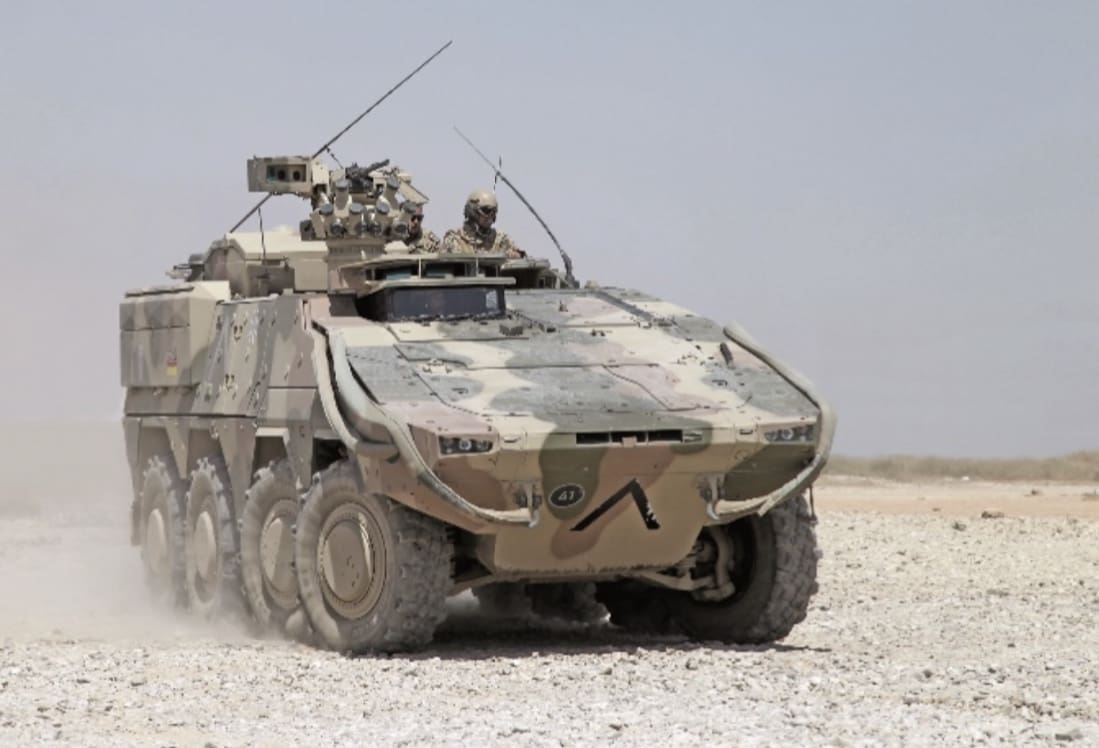
The command vehicle, or FüFz in German military parlance, is one of four variants of the tried-and-tested, high-mobility Boxer armoured transport vehicle currently in service with the Bundeswehr. The FüFz is found in mechanized formations, where it serves as a mobile tactical operations centre or command post. The vehicles feature a full panoply of radio equipment and advanced C4I systems.
The upgrade to A2 status encompasses an extensive array of modernization measures, including (among other things) the driver’s visualization system; the exhaust emission and air-conditioning ducts; the towing gear; the driver’s station; the headlight technology; as well as software and system security modifications. In addition, the vehicle’s satellite communications capability, voice and data transmission and IT equipment will all be improved.
Now official, the latest order forms a sequel to the modernization to A2 status of the first lot of 38 Boxer command vehicles that commenced in 2017. The current combat performance upgrade of the second lot will ensure that the Bundeswehr’s entire fleet of 65 Boxer command vehicles reflects the latest tactical and technical state of the art.
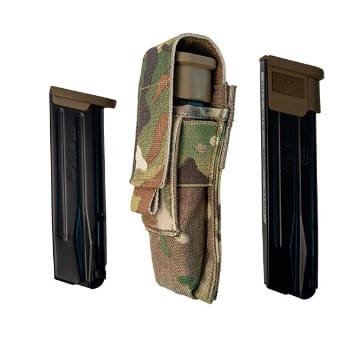 (Eagle, ID – Owyhee Group Companies) With the Sig Sauer® M17 and M18 recently selected as the new official side arm of the U.S. Military, Owyhee Group Companies (OGC) is introducing the new M17/M18 Mag Pouch. The pouch comes in three configurations, a single mag pouch, a double mag pouch and a triple mag pouch. Each is designed to accommodate the 17 and 21 round magazines.
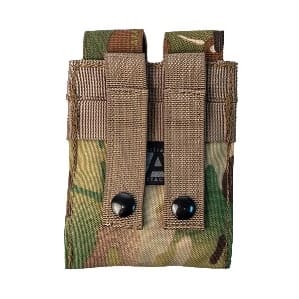
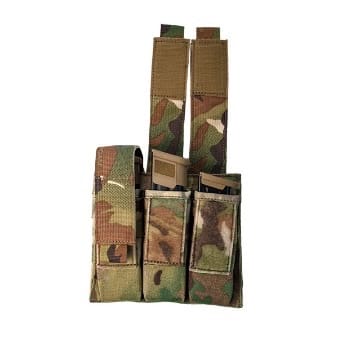 Each model features a hook and loop flap closure with pull tab that makes it quick and easy to access your next magazine. The elastic retention strap squeezes the mag within the pouch for a tight, but accessible fit. The pouches are MOLLE compatible and Berry Amendment compliant and available in Coyote, Black or MultiCam.
 Interested parties can purchase these items direct on the Company’s website at owyheegroup.com or for large quantity orders and pricing email sales@owyheegroup.com or call sales at 208.938.6086.
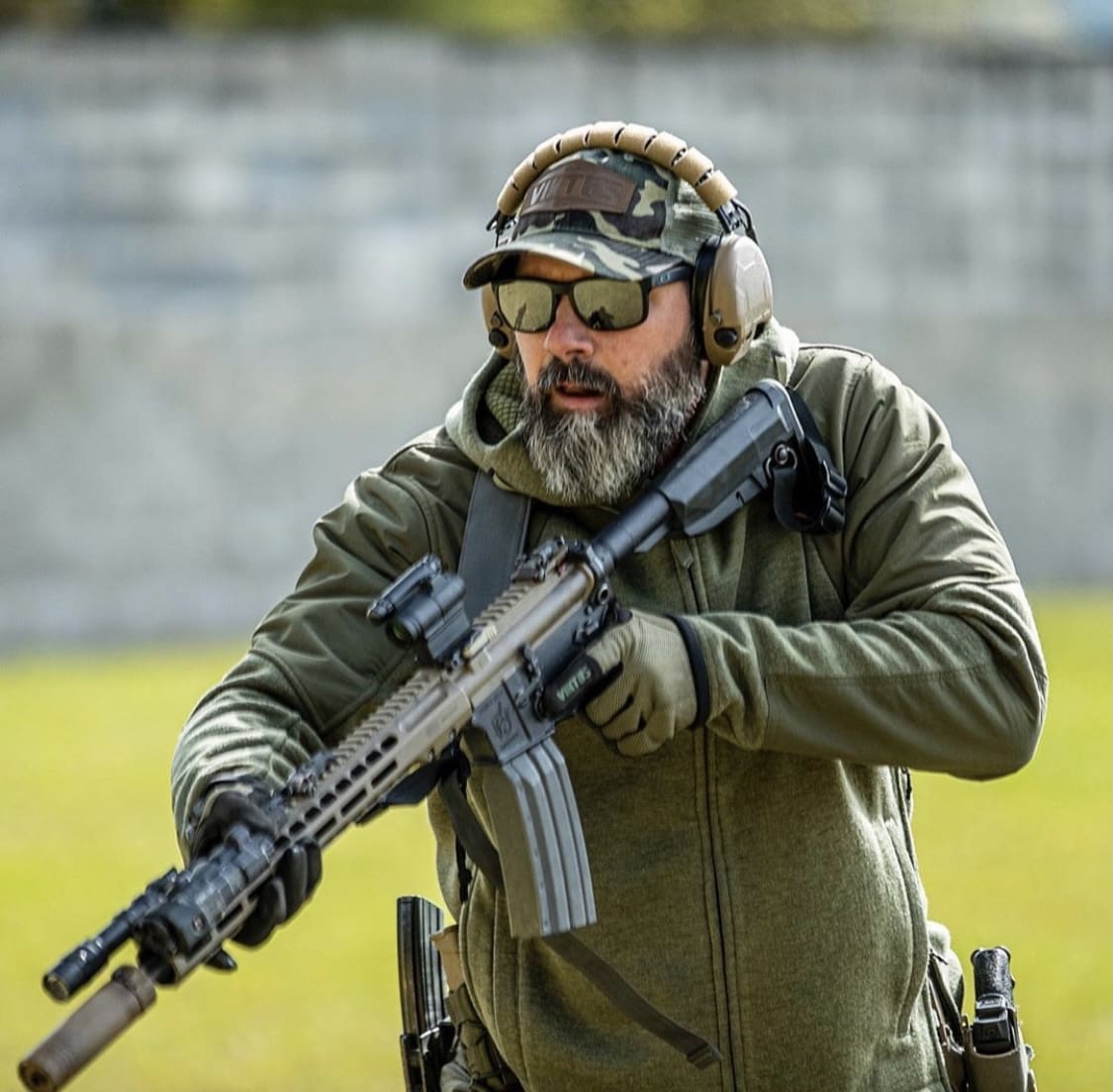
February 12, 2021 (Redmond, WA) – B.E. Meyers & Co., Inc. is proud to announce the addition of Jared Reston to their team of Brand Ambassadors. Reston brings over 20-years of law enforcement experience, with over 16-years as full-time SWAT, and over 10-years as a trainer leading his company Reston Group, to B.E. Meyers and Company’s team of Brand Ambassadors.
“I am proud to be named in the same sentence as B.E. Meyers & Co., Chuck Pressburg, Bill Blowers, and the rest of the Brand Ambassador team,” said Reston. “Jacksonville Sheriff’s Office was one of the early agencies to adopt the MAWL™, and I’ve been a believer ever since. I run MAWL on everything for several reasons: I’m a lefty and the ambidextrous controls are a huge advantage for me; I’ve never run out of distance with the MAWL, even at 500-yard engagement Special Precision Rifle engagements; and I’ve never found the edge with a MAWL – it’s like turning on the lights in any engagement. It’s great to be associated with a brand like B.E. Meyers & Co. that makes products for you and the guys you respect.”
Reston began his law enforcement career as a patrol officer with Jacksonville Sheriff’s Office in 2000. In 2004 Reston became a member of JSO’s full-time SWAT Team, where he trained in waterborne insertion and interdiction, K9 tactics, CQB, explosive breaking, less lethal, sniper, and assault tactics. Additionally, Reston served as an assigned Detective in the Department of Homeland Security/ Gang Investigations unit, and as the assistant team leader, and lead firearms instructor for the SWAT team. His career includes the successful completion of over one thousand SWAT missions.
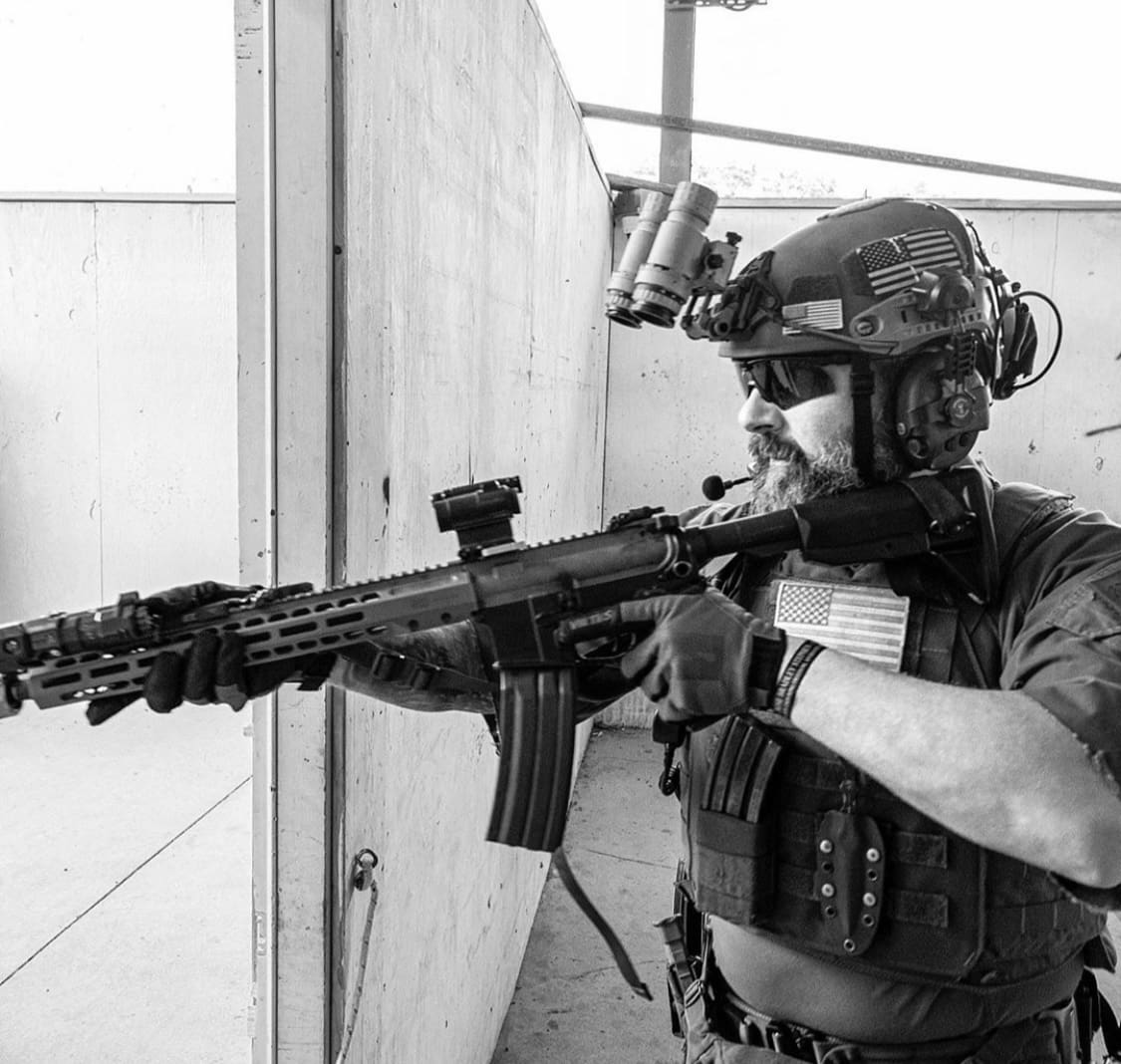
In 2008, Reston was involved in a shoot-out with a shop lifter. Although Reston was hit seven times, he was able to return fire, ending the encounter and the effectively stopping the shooter. “Luck made the bullets not kill me, mindset kept me in the fight, skill made me win,” said Reston. For his bravery and skill, Reston was awarded The President of the United States’ “Medal of Valor”, American Police and Hall of Fame’s “National Police Officer of the Year”, Fraternal Order of Police’s “Florida Police Officer of the Year”, and the State of Florida’s “Law Enforcement Officer of the Year.”
While traveling the country and recounting this incident, Reston came to realize officers did not have the same multi-faceted training that had saved his life. This observation was the catalyst for Reston to found Reston Group, LLC, a training company focused on sharing his knowledge and experience in resolving lethal force incidents to help law enforcement, military, and responsible citizens sharpen their mindset, skills, and ultimately help save lives.
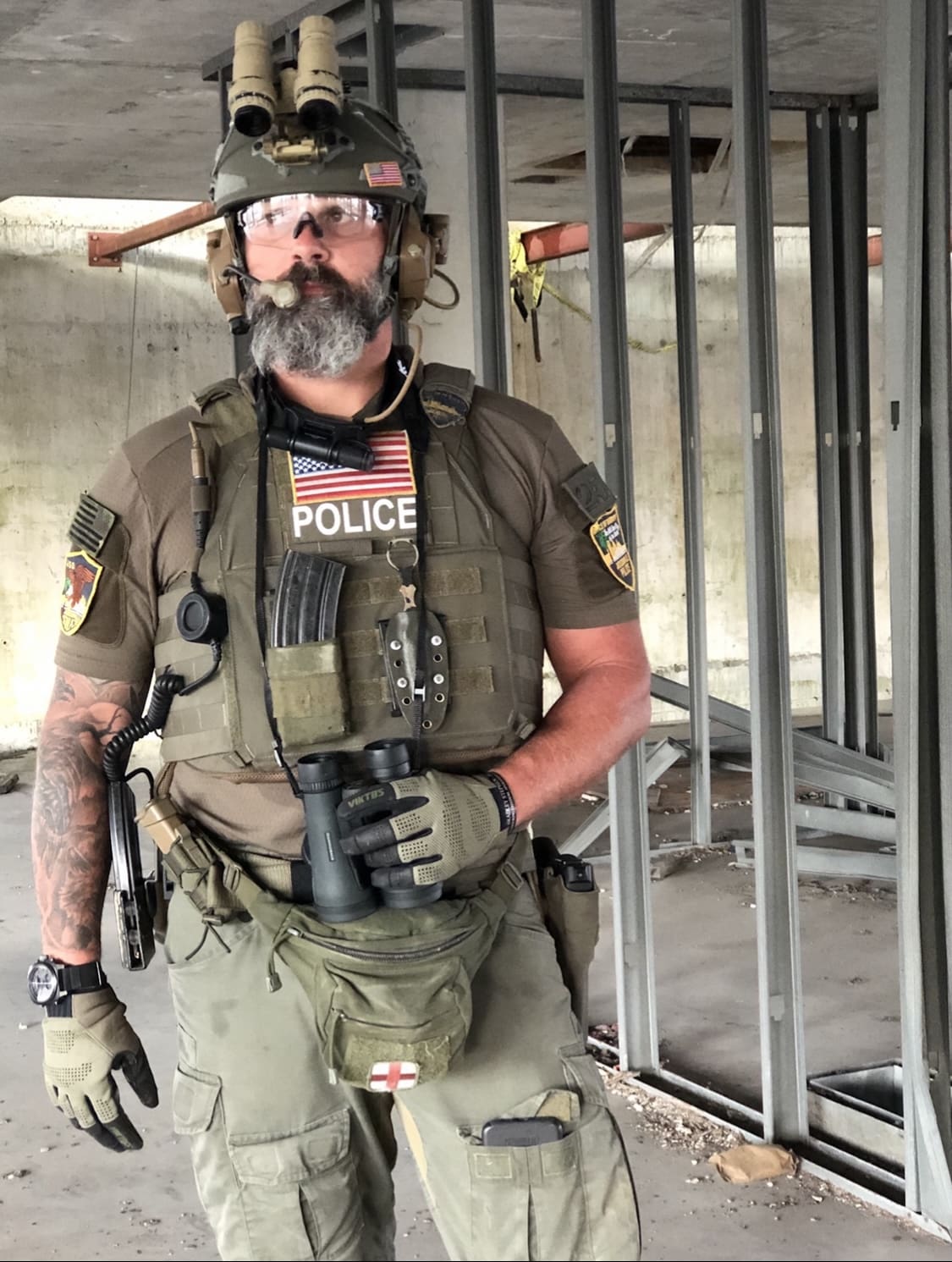
“Jared has provided both invaluable training and feedback on one of our core small arms solutions, the MAWL. His level of knowledge and expertise elevate him within the community of subject matter experts,” said Matthew Meyers, CEO of B.E. Meyers & Co. “We’re excited to add Jared to our team of Brand Ambassadors.”
Reston now works for Safariland, LLC as an Account Manager, in addition to his role as Founder and Lead Trainer of Reston Group, LLC.
www.bemeyers.com
www.restongrouptraining.com
This week’s focus is FirstSpear’s Assaulter’s Gun Belt (AGB). It’s a versatile belt designed to handle tough situations. Accessed through a two-point, high strength metallic buckle, the AGB is strong enough for you to facilitate combat-equipped buddy drags. It can integrate with the AGB Padded Sleeve to provide more comfort and provide you with additional 6/12 attachment points. FS also offers AGB point pads, deluxe suspenders and 6/9 belt links that can be purchase separately.
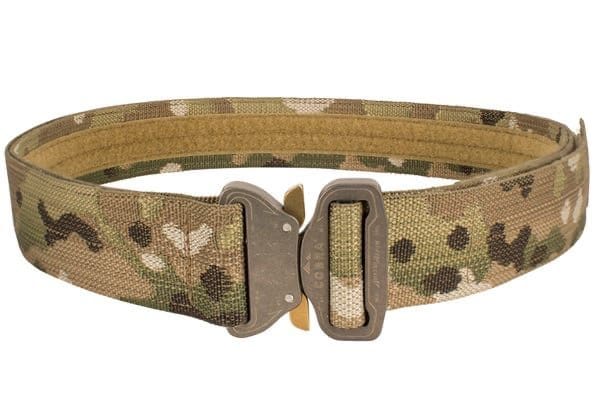
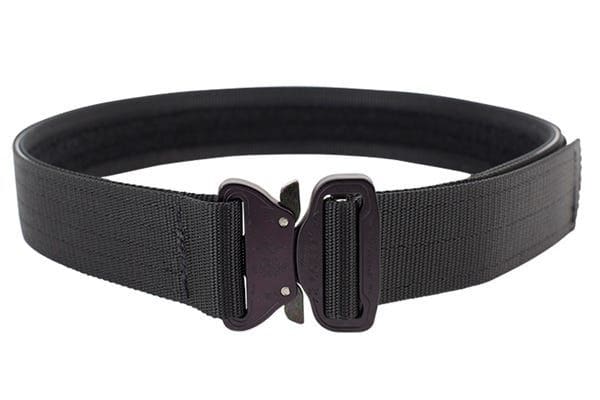
• Belt Width: 1.75”
• Buckle Width: 2”
• Integrates with the AGB Padded Sleeve
• Accommodates multiple FS components
• Completely removable buckle
• Compatible with Base Belt or Base Belt Lite when used with the AGB Sleeve
It’s a phenomenally rigid and surprisingly comfortable piece of first line gear.
“I’ll be honest, my old belt sucked and I wanted a replacement. A friend of mine kept plugging First Spear and I’m glad I listened to his suggestion. This belt is incredibly rigid and has served me well as an EDC belt as well as a full on stand-alone load bearing platform. Handles any and all things I’ve slapped on it and more with ease. I’m planning on purchasing another along with an AGB padded sleeve so I don’t have to pick between using the AGB as a standalone and having it set up as a fully dedicated battle belt. Why choose when you can have both? Compared to other belts I’ve used this belt is both much more rigid and surprisingly comfortable. I would not hesitate to replace this belt with an identical one, or to recommend First Spear products to any of my buddies. Top of the line, no compromise gear. Will be buying from you guys again.”
—Online Review
It can also accommodate many different FirstSpear components that will help optimize it for the full spectrum of tactical and discretionary operations. The buckle is completely removable from the belt for routing through smaller pant belt loops.
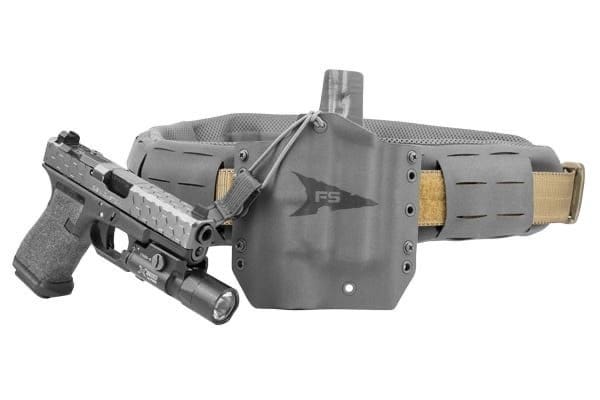
*This AGB is setup with the FS SSV Holster, AGB padded sleeve—sold separately*
Now available in black, khaki and MultiCam.
For more information check out, www.first-spear.com/assaulters-gun-belt-agb