TYR Tactical

Archive for the ‘Advertiser’ Category

SureFire Behind the Scenes Pt. 1: Suppressors

Wednesday, April 21st, 2021

SureFire Behind the Scenes Pt. 1: Illumination takes you behind the scenes of manufacturing illumination tools.

SIG SAUER Electro-Optics Spotlight – ROMEO4 Series

Wednesday, April 21st, 2021

The SIG SAUER Electro-Optics ROMEO4 Series currently consists of three models with the ROMEO4T as most feature rich variant.

ROMEO4H
ROMEO4S
ROMEO4T

The ROMEO4 is a 1×20 closed red dot sight designed for fast, accurate target acquisition regardless of lighting conditions, weather or terrain. It is available with 1 or 2 MOA dots and the various reticle patterns can be seen in the graphic above (Dot, Circle-Dot, Dot with Holds, Circle-Dot with Holds). The ROMEO4H is a bit different with a 2 MOA Green Horseshoe reticle.

Additionally, the ROMEO4 is the FBI general issue optic for patrol carbines and they also serve various other government and law enforcement agencies around the world. In fact, it was quite a shocker in 2019 to see an SAS operator responding to a terrorist attack in Nairobi, Kenya outfitted with a ROMEO4. However, SIG has not acknowledged any military sales of the ROMEO4 series.

Battery life is an impressive 100,000+ hours for the ROMEO4S & T thanks to the CR2032 battery combined with a solar panel. The ROMEO4H offers 50,000 hours, but there is no solar panel.

There are 12 illumination settings for the ROMEO4T (10 daytime/2 NV). Additionally, the ROMEO4 series incorporates MOTAC (Motion Activated Illumination) which powers the sight up when it senses motion and powers down when it does not, providing operational safety and enhanced battery life.

The main housing is 7075 aluminum with a 1.41″ riser mount and additional lower 1/3 co-witness spacer. Adjustments are 0.5 MOA with 100 MOA windage and elevation travel.

The sight weighs just 7.6 oz and offers IPX8 environmental proofing meaning it can be submerged to more than 1 meter. In fact, SIG goes even further, conducting Mil-Spec 810G testing and submersing the sight up to 20 meters. On the other hand, the ROMEO4S & H variants is subjected to IPX7 testing which only certifies the sight to submersion of up to 1 meter for 30 minutes.

The ROMEO4 series of optics are assembled in the USA using some foreign sourced parts. I visited SIG SAUER Electro Optics in Oregon last Fall and watched the team assemble these optics.

SIG continues to optimize their supply chain, working with multiple vendors for those components they don’t manufacture in-house.

Likewise, they continue to improve the performance of their existing line, while simultaneously introducing new models. Stay tuned to SSD as we continue our coverage of additional SIG SAUER Electro Optics offerings.

SENTRY Solutions Dry Lubrication System Cleans and Protects While Using Your Firearms and Knives

Wednesday, April 21st, 2021

SENTRY SOLUTIONS – The Oil Free Gun & Gear Care Choice

SENTRY Solutions gun care products have been around for years. Are you still cleaning and oiling your guns, knives, and gear? Read below why SENTRY Solutions’ dry lubrication system will stop this vicious cycle and let you enjoy more range time, not cleaning time!

Let’s start off with the SENTRY Original Tuf-Cloth, a 12″ x 12″ lint-free cloth in a resealable pouch that is a CDLP Cleaner, Dry Lubricant and Protectant all in one. This go-to cloth will give you literally hundreds, if not years of use. Keep one in your range bag, your gun locker, even your glove compartment. After a day on the range, simply wipe guns off and stow them away. Next time you pull them out for a day of training, you’ll notice that they aren’t tacky or oily and they are lint and dust free. Amazing! It’s SENTRY’s unique dry lubrication technology that does it.

Unlike traditional cleaners and lubricants, the CDLP in the cloth wipes away any dirt and fingerprints and leaves behind a micro bonding shield making metals non-stick, leaving a protected surface that does not attract and hold debris. Performance, reliability, and accuracy are enhanced; cleaning becomes as simple as brushing off and re-wiping. You will find that even after thousands of rounds, guns look like they haven’t been fired and residue is just wiped away.

SENTRY Tuf-Glide comes in a handy applicator bottle or pen applicator, both excellent choices for hard to reach areas and to “re-activate” your Tuf-Cloth after hundreds of uses. Tuf-Glide’s CDLP technology not only removes the gunk, protects from debris, lint, and dirt sticking to the metal parts, but it also lubricates and protects against corrosion and rust (without sticky oils) and keeps parts moving and functioning at their optimal level even in extreme heat and cold – no gunk freeze-up!

You’ll find more uses for the Tuf-Glide in your tool arsenal, too. Don’t forget your knives need protection too!

What is little, is mighty, especially when it comes in the form of SENTRY Hi-Slip Grease. Offered in either a 2 oz. jar or 12cc syringe, Hi-Slip Grease is a concentrate, in that, a little will go a long way for lubing and protecting against corrosion, especially from salt water, sweat, and any powder residue. It prevents galling on metals such as stainless, blued, titanium, and aluminum, even under high loads and extreme conditions.

Hi-Slip Grease, once applied, does not migrate and will protect metal surfaces in temperatures from -54C/-65F to 343C/650F. If you’ve got some training to do in Antarctica or the Yuma desert, this is the stuff to protect your firearms.

A handy tip from gunsmiths: Use Hi-Slip Grease to hold those tiny and tricky springs and washers during assembly. Saves an afternoon on your knees looking for one tiny spring under your dusty work bench.


Although, you shouldn’t make it a habit to look down a gun barrel, bore and barrel cleaning is a fact of life. SENTRY Smooth-Kote Bore and Barrel Treatment is the answer to cut down time and how often your bores and barrels need attention.

How do they do that? Smooth-Kote is based on the same oil free technology using a molydbenum dry lubricant to protect against friction, fouling, and wear. It’s fast drying properties micro bond to the metals and, here’s a big benefit, it actually enhances accuracy, bullet velocity, and reliability. It also eliminates grime and it reduces extreme fouling, leading to less time and less frequent cleaning your bores and barrels!

Once you try SENTRY’s BP-2000 Powder, you’ll wonder why you didn’t get on the SENTRY Solutions bandwagon before. This super unique dry lube powder is made from pure powdered, sub-micron, passivated molybdenum disulfide that naturally micro bonds to any metal surface. In other words, it reduces the coefficient of friction, and if that doesn’t make sense – it reduces friction 20 percent more effectively compared to an oiled surface.

You’ll find a smoother and lighter trigger pull, eliminating trigger creep for a crisp release and reset.

Breaking in a new pistol or rifle? Hate the barrel-break-in time? Using BP-2000 Powder will significantly reduce barrel-break-in time AND significantly reduce the number of rounds needed in the process. These days, anything to help save on ammo costs is a good thing!

SENTRY Solutions products are an essential part of gun and knife care. Protecting what protects you and your family shouldn’t be left to products that cannot stand up to tough environmental conditions or the ravages of time and moisture. The benefits of using SENTRY Solutions products are:

• Oil Free – no gunk or oils to collect dust, dirt, and debris
• Actually continues to lubricate while functioning – keeping guns and knives clean and protected
• Prevents corrosion. Marine Tuf-Cloth and Tuf-Glide is designed specifically for salt-water or high humidity environments
• Improves the functioning of the firearm or knife. Improves accuracy and reliability
• Fast-drying, micro-bonding
• Use on multiple types of metals
• Keep in mind all the metal products you use that could use some SENTRY Solutions attention – tools, bicycles, boats, fishing equipment, motorcycles, and so much more.

High Speed Gear Adds AmChar as Newest Distributor

Tuesday, April 20th, 2021

SWANSBORO, N.C. – April 20, 2021 – High Speed Gear® grew its distributor base even further by signing on one of the nation’s premier firearm wholesalers, the New York-based AmChar Wholesale Inc.

AmChar Wholesale Inc, a leading wholsale distributor, received its opening order of HSGI® gear April 9 and is ready to start supplying its dealers.

“The addition of AmChar to our network is key to servicing the law enforcement market in the fullest capacity,” said Allison Mitchum, HSGI director of sales and marketing. “Our products have become the gear of choice for law enforcement agencies all over the world, especially now as we prepare to launch the Comp-Tac® CT3™ Level III holster. So, our partnership with AmChar is the perfect alliance for our brand and for our customers. Furthermore, HSGI’s core values pair perfectly with AmChar’s mission.”

“We are proud to offer High Speed Gear to our customers,” said Tony DiChario, AmChar president and CEO. “This company is offering something new and different that we think fits the interests of our buyers.”

AmChar has been in the firearms business since 1980. During the last 40 years, it became one of the top distributors in the industry for law enforcement entities and independent dealers in the United States. AmChar is backed by industry professionals who have been in the firearms business for over a half century. AmChar Wholesale is one of the largest law enforcement distributors in the United States and the top Glock law enforcement distributor for the past several years. The company also operates a secondary warehouse and distribution center in McDonough, GA.

Among the popular products from High Speed Gear and Comp-Tac® now in stock and available from AmChar are the:

• ReFlex™ IFAK System
• Various Duty TACOs®
• Handcuff TACO®
• X2R® TACO®
• Various Polymer TACOs®
• Double Decker® TACO®
• Triple Pistol TACO®
• CT3™ Lvl III holster (coming soon)
• Kydex Tourniquet TACO®

Dealers can establish an account with AmChar Wholesale Inc. by calling 585-325-3951 x155. To place an order with AmChar, dealers can contact them at sales@amchar.com

AmChar Wholesale Inc.
Mike Hutchings, national sales manager
585-328-3951 x155

High Speed Gear
Allison Mitchum, director of sales and marketing
allison.mitchum@highspeedgear.com
910-325-1000 x1306

Hudson Supplies proud exhibitor at BlueLine Expo International (Virtual) – April 22, 2022

Tuesday, April 20th, 2021

You will have the opportunity to chat with the owner and/or one of his team member:

Drone and security specialist for LE, Product Manager for various LE brands and Jim Bremner President of CTOA. Download the latest product information and get latest information:

Blueline Event:

pheedloop.com/BlueLineExpo/site/home

Blueline Registration:

pheedloop.com/BlueLineExpo/site/register

Hudson Supplies is proud to confirmed a $ 10 000 partnership for the Tough Mountie Challenge 4th edition that will be held on October 2nd 2021.

The Foundation of Stars supports pediatric research for children and teenagers.

Details  www.foundationofstars.ca and Tough Mountie: gendarmedefer.com/race-details

Rheinmetall and Northrop Grumman Agree to Strategic Partnership for Precision-Guided Enhanced Range Artillery Ammunition

Monday, April 19th, 2021

Rheinmetall and Northrop Grumman have formalized an agreement to cooperate in the field of precision-guided enhanced range artillery ammunition. Rheinmetall’s South African subsidiary Rheinmetall Denel Munition and Northrop Grumman signed a 10-year strategic partnership agreement to this effect in February 2021. During this period, the two companies plan to cooperate together in order to offer forward-looking ammunition technology to the international market, including the United States, to support future artillery operations.

The partnership will focus, above all, on achieving an enhanced range 155mm artillery round fitted with an integrated M1156 precision guidance kit (PGK), as well as on developing a new 155mm projectile with an improved integrated propulsion system.
In service with a number of armed forces, the M1156 PGK is an inexpensive, immediately available means of enhancing the accuracy of existing types of artillery ammunition. In combination with Rheinmetall’s V-LAP projectile, which currently achieves the longest maximum range of any conventional artillery projectile, the M1156 PGK results in a swiftly available solution, proven in numerous combat operations, for long-range precision-guided munitions. The longest range ever attained by a conventional artillery projectile currently stands at 76 kilometres, achieved in 2019 at the Alkantpan test range with a non-NATO Joint Ballistics Memorandum of Understanding (JBMOU)-conforming 52-calibre gun and RDM 155mm projectile.

The armed forces of more than twelve nations now use enhanced range Rheinmetall artillery ammunition from South Africa. The integration of tried-and-tested technologies results in a quick increase in capabilities and combat power. Furthermore, other NATO nations and non-JBMOU users can adopt this solution based on Rheinmetall’s existing artillery portfolio.

Rheinmetall and Northrop Grumman have conducted testing of the V-LAP projectile variants and PGK in South Africa early in 2021, and are intending to demonstrate it later at the US Army proving ground in Yuma, Arizona.

TNVC and Forward Controls Design Panel, Cable Management-MLOK (PCM-MLOK)

Monday, April 19th, 2021

TNVC is proud to announce the release of a new collaborative project with Forward Controls Design, the Panel, Cable Management-MLOK (PCM-MLOK!

tnvc.com/shop/tnvc-fcd-pcm-mlok

Designed as a simple product to solve a simple problem, the PCM-MLOK provides remote switch cable management for mission critical accessories. In the past, end-users have either had to choose between placing accessories in less-than-optimal positions to locate the controls where they could be reached, or have had to use zip-ties, electrical tape, camoform fabric, and a myriad of other methods to manage device control cables.

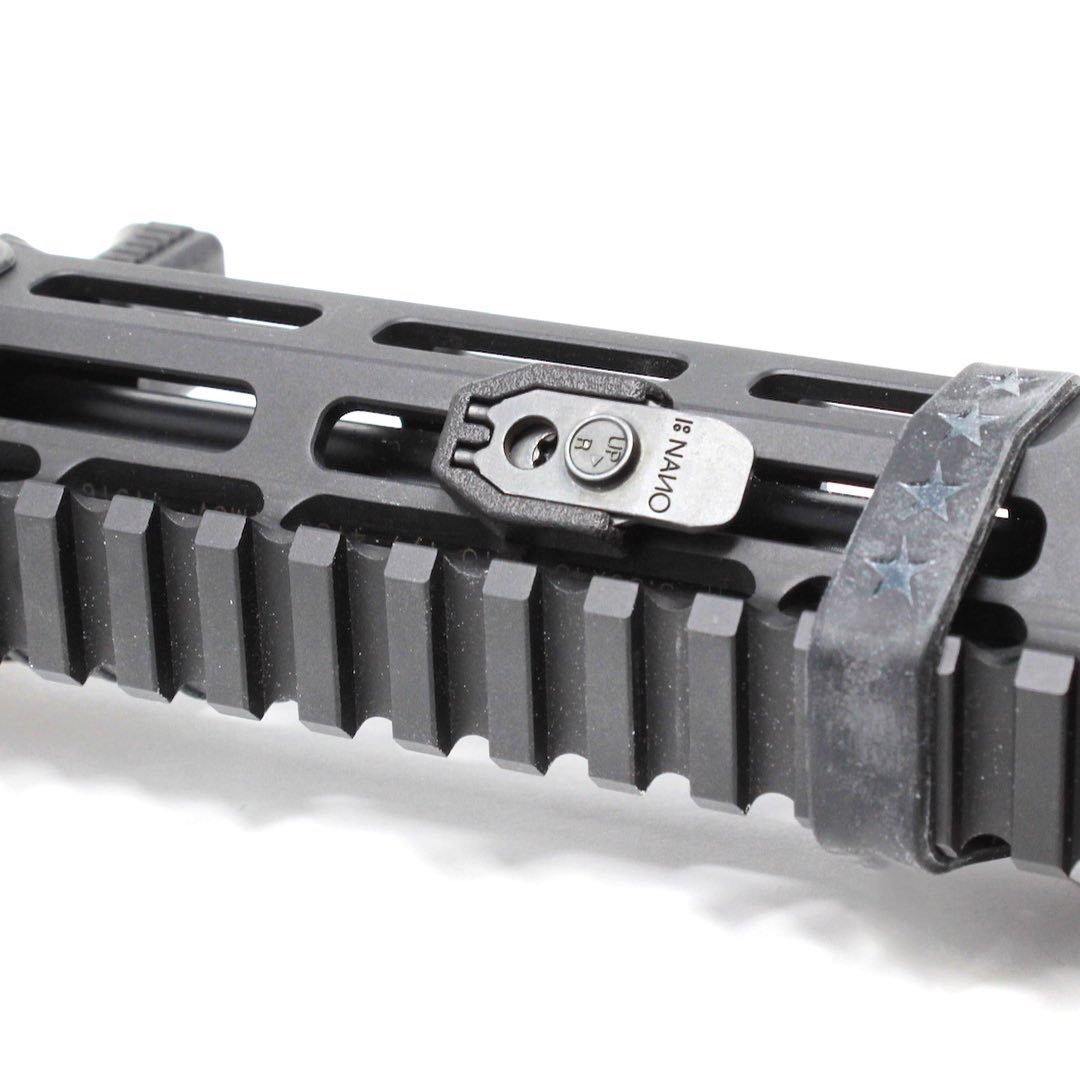
The TNVC/FCD PCM-MLOK is a machined aluminum multi-directional cable management device that affixes to any MLOK-Compatible interface, and can be used to both route and protect remote device activation cables.

Unlike zip-ties or most other cable management solutions available on the market, the PCM-MLOK is designed to fully protect as much of the exposed cable as possible, preventing the “Night Monster” from grabbing and snagging exposed cable, causing damage to the cable, switches, or device connectors themselves. Nevertheless, creating a product that improves on cable management better than zip-ties is a more difficult task than it sounds like!

When seeking out a partner to develop a cable management system, we reached out to Forward Controls Design, a company known for its focus on function over form, and for taking the smallest and simplest components of the AR system that most people take for granted, and thoroughly studying their function, and finding ways to improve them.

The result of this collaboration is the TNVC/FCD PCM-MLOK, machined from aircraft grade aluminum billet by Arson Machine Co., which not only provides the best protection for remote switch cables, but allows for an open architecture, promoting airflow and head dissipation. The PCM also features Forward Controls Design signature “All Angles” dimpled surface texture, which both provides effective gripping surface from (get this) all angles, while also increasing surface area, further encouraging heat dissipation and mitigation.

While the use of machined aluminum makes the PCM more expensive than many other cable management solutions, it provides considerable functional improvements to other options, while largely eliminating what was once the “weak link” in visual augmentation systems device integration.

The internal cable channels can support cables up to 0.140? in diameter, accepting most common Surefire, Crane/Insight, and Unity Tactical remote switch cables, and the internal cable routing features a 0.150? radius to allowing cables to be routed at 90 degree angles without putting unnecessary stress on the cable with sharp kinks and corners.

The TNVC/FCD PCM-MLOK is proudly made and designed in the USA, and is Type III hard coat anodized in Black, Flat Dark Earth, and Olive Drab and retails for $29.99

tnvc.com/shop/tnvc-fcd-pcm-mlok

Dealer pricing is available, as are bulk and OEM options subject to MOQ.

Please contact sales@tnvc.com to inquire.

SCUBAPRO Sunday – Eugene Stoner and the M63/M63A Stoner Machine Gun

Sunday, April 18th, 2021

Eugene Morrison Stoner is the father of the AR family of rifles (and everyone knows AR stands for Armalite Rifle), that includes the AR-5, AR-15 and the M16. The family of M16s are one of the most iconic weapons engineered in world history. Stoner worked for the Vega Aircraft Company installing armament units after graduation from a vocational high school and before joining the Marine Corps right after Pearl Harbor was attacked. He served in the Pacific until the end of the war. In 1945 he went to work for Whitaker, an aircraft equipment maker in 1954, he transferred to Fairchild Engine & Airplane Corporation as chief engineer for a newly formed small division called Armalite, which was headed by George Sullivan, a patent counsel for Lockheed Corp. They met at a local range, where Sullivan was testing a new prototype for an Air Force survival rifle.

The AR5, is the product of Eugene Stoner’s feedback on the survival rifle. The AR5 is now better known as the AR7, or Henry Rifle’s US Survival Rifle. Stoner finished the first run of the ArmaLite AR-10 design in 1955. This was a game-changer in the world of small arms – a firearm that was small, quick to shoot, and didn’t weigh a ton. When the AR-10 was chambered for the 7.62x51mm NATO. When it was changed to chamber the new .223 Remington round its name was changed to the AR-15. Stoner’s name would go down in history if he had done nothing but build the AR-15, but he did so much more than that. He was a self-made man with only a high school education. Stoner changed the world as we know it forever, in addition to changing the landscape of American firearms, as well as the world stage, by inventing the M16. That gun, along with the AK (idea stolen from WW2 German guns) family of weapons, are the two most famous guns globally. He also designed one of the most iconic weapons of the Vietnam War and SEAL Team’s history. Eugene Stoner, left ArmaLite around 1961 to join Cadillac Gage Corp. There he started to build an entirely new set of weapons.

In 1962, known as Stoner 62, the first version, chambered the 7.62x51mm NATO ammunition. Later that year, it was changed to chambered for 5.56mm to help save weight. The name also changed to the Stoner 63. That system, developed and promoted until the early 1970s, was extensively tested as the XM22 (Stoner 63A rifle), XM23 (Stoner 63A carbine), and XM2077 by the U.S. military (light machine gun with belt feed). However, the Mk.23 model 0 belt-fed light machine gun configuration was used in small numbers by both the Navy and some Marines in Vietnam. In general, the Stoner system was somewhat too costly and also slightly over-complicated for a dedicated light machine gun, though having the advantages of modularity and interchangeability of parts allowed for great versatility in tactical use. The Stoner was known for being a little finicky when cleaning and maintaining, but reliable if proper care was taken. Overall, between 1962 and 1971, some 3,500 to 4,000 Stoner M63 weapon kits were made. Of those, some 2400 Stoner 63 Light machine guns were purchased by the U.S. Navy for Special Forces in Vietnam and about 100 more were purchased for the enhanced Mk.23 mod.0 variant. Starting in 1963, the Stoner 63 was used in combat in Vietnam, primarily in the hands of SEAL Teams.

The Stoner machine gun was developed to maximize firepower. The versatility of the Stoner 63 made it the perfect weapons system for the newly minted SEAL teams during the Vietnam War. SEAL Teams One and Two evaluated the 63A, saying that the weapon was “significantly superior” to the M60 machine gun and suggested at least six guns for every 12-man SEAL platoon. It was also claimed that immediate action drills and tactics for contacts with the enemy were based around the weapon system and were actively established by SEAL platoons to fit with the 63A.

One of the last times the Stoner was used by the U.S. Military was by the Marines in limited numbers during the 1983 invasion of Grenada.  Despite its success, the Stoner 63 never saw wider acceptance. After the Army provided the 63A Light Machinegun (LMG) version for evaluation to some Green Berets in the 1970s, the branch concluded that the unique platform was too tricky for battlefield maintenance,  which is ironic, given that it was the unique recoil buffering mechanism of the Stoner 63 that helped make the platform so flexible in the first place, in combination with the multi-use receiver.

The Stoner 63 framework has several barrel types for LMG models, with different lengths and profiles. Small, fluted barrels were used by the Navy Mark 23 model 0 machine guns, but other models (with long barrels) also saw action in Vietnam.

A universal bolt group is used in the stamped steel receiver, with a multi-lug rotating bolt and a long-stroke gas piston with a gas tube. For the attachment of all other sub-assemblies and the quick-detachable barrel, the receiver also has many sets of mounting points. The receiver is so orientated in the rifle. The carbine configuration is such that the gas device lies above the barrel and the feed unit’s mounting points are below the receiver. Some pictures are so iconic people make shirts out of them( Thirty Seconds Out)

The receiver is turned ‘upside down’ in all machine gun setups, either belt or magazine fed, with the gas system being below the barrel, ejection on the left side, and the feed unit above the receiver. The trigger unit has no hammer in the machine gun configuration; instead, its sear interoperates with the cut in the gas piston rod, only allowing fully automatic firing, and only from the open bolt. The magazine feed unit can handle patented curved box magazines and can be used to configure both rifle and machine gun. It was only possible to use the belt feed unit in machine gun setups.

Early guns had a left-side feed, which often triggered jams due to ejected shells’ reflection back into the ejection window. Later guns had a right-side feed that eliminated this problem. The 100-round box containers, made of plastic, were issued with late production LMG’s with right-side feed. All the containers were clipped to the receiver’s rim, and various rear sight units were available for different setups, with the front sights being mounted on quick detachable barrels. The charging handle was located on the right side of the bolt carrier for the earlier Stoner 63 device weapons; the safety and fire selector were merged into one control, located on the trigger unit’s left side. The charging handle was attached to the gas piston rod on the modified Stoner 63A device and projected from the top in the rifle/carbine configuration or from the bottom in the MG/LMG configuration; safety was formed as a separate lever on the front of the trigger guard, with the fire mode selector still located above the pistol grip on the side of the trigger unit. Plastic was the traditional buttstock and forearm. All Stoner 63 light machine guns were supplied with detachable folding bipods; although Cadillac Gage Corp produced tripods and even vehicle mounts, it seems that they were never really used in combat.

The Stoner machine gun is one of the most iconic weapons of the Vietnam War. I always think about buying an airsoft version just to frame and hang in my garage. But, that said, I started out as a 60 gunner so, if anything, I would have to get an Echo Three first. If you have ever had the opportunity to fire one, you are a very lucky person. Well not in the “hey those guys are shooting at us, I should return fire with my Stoner”. I mean more of the “Hey, I am shooting a Stoner on the range”……not that shooting back at people that are shooting at you is bad thing.