When you first start diving, sometimes little things will happen, which most likely will not occur as you gain more experience like forgetting to bring an extra mask. Sometimes It can be a little most serious like you might forget to do a proper purge process, and you get to depth, and you pass out. Your dive buddy has to pull you to the surface and think he is getting kicked out because he is a new guy like you, and he believes he killed his swim buddy. Other things can happen that are a little more series. It can cause some harm if you are not careful, and it will make you look like you have to hickeys on your eye. It is a good thing if it is around Halloween, you will look like a zombie and not a cool one like the Walking Dead. It is a mask squeeze or for the corpsman in the group called facial barotrauma.
What is Mask Squeeze?
A Mask squeeze can occur with the incorrect equalization of the air pressure inside your mask, causes it to compress tighter against your face, causing the small blood vessels around the eyes to burst. If you don’t know how this feels, it’s like the covered areas of your face get sucked into the mask as the negative space between them gets smaller. While all dive briefs should t divers are usually warned about during Open Water Diver courses, many don’t pay too much attention to it after underestimating the trauma that it can cause. So unless you’re willing to surface with scary, bloodshot eyes, you’ll want to remember what not to do and what you can do to prevent it from happening during any of your dives.
How Does Mask Squeeze Happen?
Several things can cause an unfavorable change of mask pressure. The most common is failing to exhale into the mask during descent. Many divers remember to equalize their ears since ear discomfort becomes increasingly noticeable as you dive deeper. Still, they may not realize the increase in scuba mask pressure until after they surface.
Other factors that increase the likelihood of mask squeeze from diving are poor dive mask fitting (particularly if you choose a mask that’s too small for your face or too tight, to begin with) and fast descent. As you can imagine, it can be easy for a diver to forget the steps to take to prevent mask squeeze, especially for beginners who are worried about getting air into the mask.
Dangerous Effects of Mask Squeeze
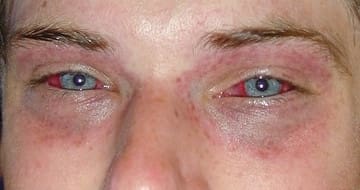
Divers who suffer from mask squeeze may notice bruising around the eyes, blood spots over the white areas of their eyes, and swelling. Fortunately, it rarely causes injury inside the eyeball. Divers often get alarmed and panicky when they see blood in their eyes. Still, the condition isn’t as dangerous as it looks and usually clears away without any significant mask squeeze treatment.
In the most severe cases, the hemorrhage can last longer, or you might notice a loss of vision or pain, in which case you should visit a doctor straight away.
Avoiding Mask Squeeze
Prevention is always better than cure, so every diver needs to remember how to use their masks properly and avoid mask squeeze.
First, never wear masks that cover only the eyes. While those may be suitable for snorkeling, you’ll need a mask that can be equalized if you’re swimming at greater depths. Fortunately, modern dive masks have nose valves that allow divers to quickly equalize the air space between their mask and face without the risk of flooding it.
Next, don’t choose a mask that feels tight, to begin with. Once you descend, the pressure automatically causes an increased suction on the mask. A scuba mask should sit comfortably on the diver’s face and stick when mild pressure is applied even without the strap being worn.
To help prevent bruising, a soft silicone skirting is also a must, so the mask will comfortably cushion and spread the pressure around your face.
Finally, don’t descend too fast and make it a habit to equalize. Instead of being worried about water getting into your mask, it helps you get comfortable taking off and putting on your dive mask underwater.
Through practice and with the presence of mind, you can easily avoid mask squeeze and enjoy much safer dives.
What is mask squeeze?
Like the air spaces in your sinuses and ears, you must also equalize the air space in your mask as you descend. When you descend, failure to equalize, or add air to the air space in the mask, by exhaling through your nose, can create unequal pressure between the mask air space and the vascular pressure within the blood vessels of the face. This can result in various degrees of facial barotrauma, or injury to the soft tissues of your face contained within the mask. Imagine your face in a suction cup. The soft tissues beneath the mask and especially around the eye, swell (periorbital edema) and discolor, such as redness or bruising (ecchymosis).
What treatment do I need?
Unless you are experiencing eye pain or visual problems, there is no treatment for facial barotrauma except time. Because it is a bruise, your body will eventually reabsorb the effect of your mask squeeze. Your physician or an eye specialist should immediately address eye pain or visual disturbances such as blurred vision or loss of part of the visual field. These symptoms would be extremely rare in mask squeeze, however. The signs and symptoms of mask squeeze can take up to two weeks or more to resolve. Unfortunately, it is one of those conditions where you will probably look worse than you’d like before it gets better. Not only will blood and edema needs to be reabsorbed, but it tends to be gravity-dependent – which means it will spread downward on your face. Before you heal, you may look like a red-eyed black-and-blue marked creature in a B-grade horror flick or a boxer that took at least two too many punches.
Who gets mask squeeze?
Mostly new divers get squeezed – they tend to be overwhelmed by all the skills they need to remember, such as buoyancy control and equalizing their ears and sinuses, all while being mesmerized by the mysteries of the sea. More experienced divers, however, are not immune to mask squeeze. They tend to have mask squeeze when they concentrate on some new activity or focus on a task that diverts their attention from clearing their mask. Changing to a new mask or to a low-volume mask may also lead to mask squeeze, because the diver may not be accustomed to when to add air. Finally, poor-fitting masks or other issues such as facial hair may lead to problems with equalizing.
How do you prevent mask squeeze from happening again?
The solution to preventing mask squeeze is to remember to keep your nasal passageways open during descent. By exhaling through your nose and using a properly fitted mask, you will minimize facial barotrauma risk. A mask should fit comfortably against your face, and you should be able to achieve an appropriate seal by gently placing the mask on your face and inhaling through your nose. The mask should seal to your face and not fall off even without the mask strap in place. It is not unusual for a small amount of leakage to occur while diving, especially if you have facial hair. Exhaling through your nose and tilting your face towards the surface while cracking the mask’s lower seal will generally remove any unwanted water from your mask.




 ?
?