TYR Tactical

Archive for the ‘Advertiser’ Category

SIG SAUER Electro-Optics ROMEO8H Wins 2019 Golden Triggr for “Innovation in Optics”

Thursday, August 29th, 2019

NEWINGTON, N.H., (August 26, 2019) – SIG SAUER Inc., is pleased to announce the ROMEO8H was awarded the 2019 Golden Triggr Award for “Innovation in Optics” at the recent TriggrCon Expo held July 24 – 27, 2019, in Bellevue, Washington.

The TriggrCon Expo showcased the newest, most innovative companies and products in the tactical firearms industry. Recipients of the Golden Triggr Awards are evaluated on the following criteria: 1) Concept and Design: innovation that addresses a need and becomes a  basis for future innovation; 2) Finish: quality of materials and manufacturing design and, 3) End User: the innovation should provide a high value and benefit that exceeds the cost.

“For the second year in a row SIG SAUER Electro-Optics is honored to be recognized for innovation in optics in this forum by our peers at TriggrCon with our ROMEO8H red dot sight,” said Andy York, President, SIG SAUER Electro-Optics. “The ROMEO8H is a ruggedized MIL-SPEC rectangular red dot sight designed to deliver an exceptionally wide field-of-view for unmatched situational awareness and target acquisition.”

The ROMEO8H 1 x 38mm is a full-sized red dot sight designed for modern sporting rifles (MSR) and shotguns. Featuring Quad Ballistic Circle Dot reticle with ballistic holds will withstand the most severe conditions, and is ideal for rapid target acquisition in any environment with an exceptionally large 38mm field of view. The ROMEO8H features MOTAC™ power management, a rectangular viewing window, and will maintain zero under the most hostile temperature differentials.

ROMEO8H Specifications:
Height: 2.8in.

Length:  3.52in.

Width:  1.97in.
Field of View: 1.25in. x .91in.
Magnification:  1x
Illumination Settings: 10 Day / 2 Night Vision
Adjustment  Increments: 0.5 MOA
Weight: 10.3 oz. / 292 g
Battery Life: 50,000+
Waterproofing:  IPX-7 rated

MSRP: ($599.99)

The ROMEO8H is now available.

HSGI – Ambidextrous Multipurpose Pouch

Wednesday, August 28th, 2019

SWANSBORO, N.C., Aug. 28, 2019 – High Speed Gear®, maker of Battle-Proven Tactical Gear™, recently released its newest pouch, the Ambidextrous Multipurpose Pouch (AMP), which is an excellent solution for medical equipment, magazines or other items commonly needed on an equipment belt.

The AMP is a versatile, double-ended pouch that works perfectly as a small IFAK pouch or as a general-purpose pouch. The AMP fits medical supplies, two 5.56 magazines, a poncho and survival gear, or other similarly-sized items. Additionally, the pouch features dual openings, allowing easy access from both ends or with either hand, and can be mounted vertically on MOLLE and either vertically or horizontally on belts. A pull tab assists in removing contents and adjustable shock cord allows the user to compress the contents or attach external items.

“The AMP was designed, like many of our other TACOs® and pouches, to allow our users flexibility with the equipment they carry,” said Bill Babboni, HSGI® vice president of sales and operations. “Traditional pouches are great, but having several mounting options along with dual closures gives our customers that extra level of functionality and dynamic use they’ve come to expect of High Speed Gear®.”

For more than 20 years, High Speed Gear® has been dedicated to building the best American-made tactical gear with distinct and innovative products such as the TACO® and the Sure-Grip Padded Belt®. Our products are designed for the highest level of comfort, functionality, versatility and are always user driven to meet the operational needs of a wide variety of end users.

See the video at: vimeo.com/highspeedgear/amp

www.highspeedgear.com/hsgi/12AM00-12AM00

SureFire Announces Suppressor Training Product NSNs

Wednesday, August 28th, 2019


Fountain Valley, CA—SureFire, LLC, manufacturer of the world’s finest—and most innovative—illumination tools and tactical products, is pleased to announce that National Stock Numbers (NSN) are now assigned to SureFire’s full spectrum of training products.

SF-BSD-556  NSN/ 1005-01-608-7572

Train Smarter. The SureFire Blank Safety Device not only cycles the host weapon when using blank ammunition, but is designed to safely contain up to three inadvertently fired live rounds of M855 without injuring the shooter or others. The BSD duplicates the weight, length and feel of its equivalent SureFire sound suppressor which is critical in providing realistic training value. If a live round is fired, the live round penetrates a sacraficial wall, causing sound and flash to vent from the bottom of the BSD and alerting the shooter and those around him of a problem. The SF-BSD-556 is specifically for 10.5″ barrels, such as the MK18, while the SF-BSD-556-M4 is for 14.5″ barrels. The Fast-Attach® mechanism allows for secure attachment or removal of the Blank Safety Device to SureFire compatible adapters, no tools required.

SF-TRAINER-556  NSN/ 1005-01-608-7565

SF-TRAINER-762  NSN/ 1005-01-608-7570

Train like you Fight. SureFire Suppressor Trainers are intended for use with marking cartridges (e.g. Simunition® FX®, and UTM), training ammunition (e.g. SRTA), frangible and live ammunition in a training environment. The SureFire Trainers mimic the length, weight, and attachment of SureFire SOCOM Fast-Attach® suppressors allowing warfighters to train as they would fight when participating in force on force training scenarios. Every SureFire Suppressor Trainer is made in the U.S.A.

www.surefire.com

ZEV Technologies Releases Compact Version of the O.Z-9

Monday, August 26th, 2019

Offering the same modular innovation introduced with the Standard-size O.Z-9, the scaled-down O.Z-9 Compact blurs the line between personal defense, concealed carry and a duty pistol without sacrificing any features. Better balance, less felt recoil, more control, faster target acquisition, and flatter shooting are all noticeable advantages of the full-length internal steel receiver. Other key features include an improved grip angle and ergonomics, extended beavertail, the enhanced grip texture, and single pin take-down modularity.

“The OZ9 Compact is the epidemy of modularity. I always envisioned being able to have one gun that would do anything with endless options. The Standard OZ9 was just the first step, and the Compact is the next. With this platform we will be releasing new grips, slides, and accessories that allow the end-user the ability to customize the gun to better fit their needs.” said Alec Wolf, Founder and CTO ZEV Technologies.

“If you are familiar with the O.Z-9, then you are going to love the Compact O.Z-9. It offers the same full-size modularity of O.Z-9, just in a smaller, more concealable version.” said Dave Roberts, V.P. of Marketing.

Additional information on the O.Z-9 Compact can be found at www.zevtechnologies.com/oz9-compact

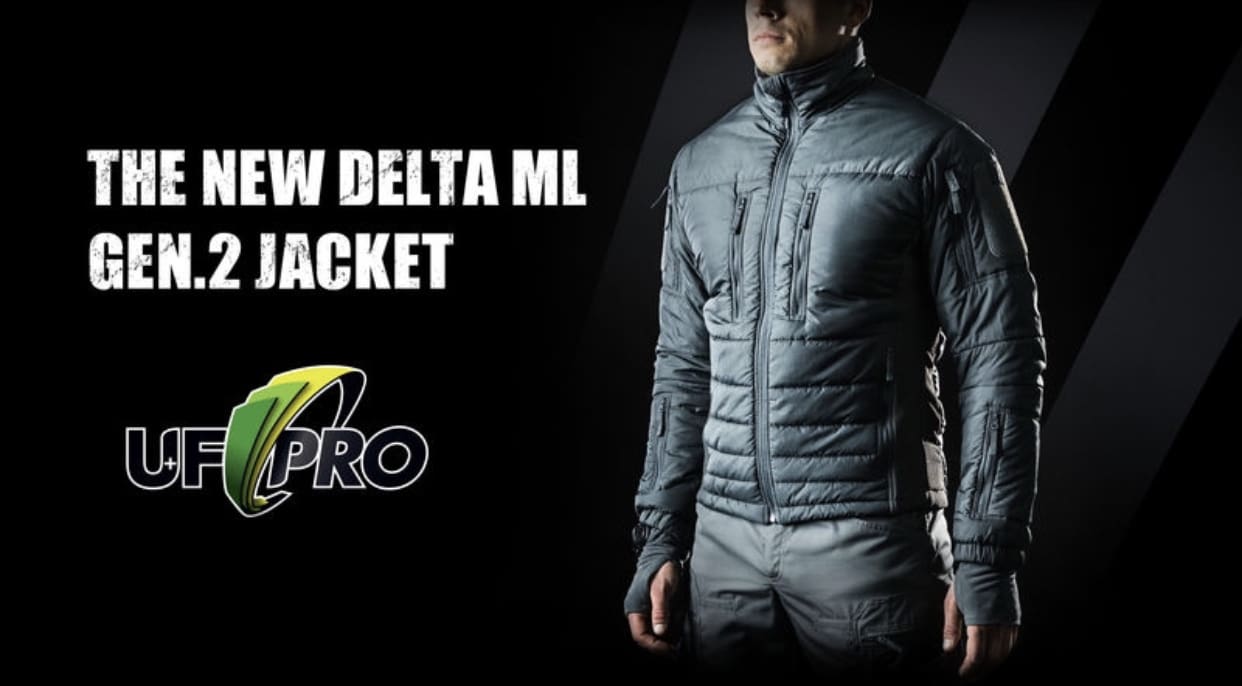
UF PRO Presents: Solo CQB & Corner Fed Rooms

Monday, August 26th, 2019

UF PRO continues their CQB series of videos with host Eli familiarizing you with the different types of rooms you can encounter and dives into the tactics of CQB when you are operating alone.

SCUBAPRO Sunday – History of Wetsuits

Sunday, August 25th, 2019

 Wetsuits go back to the commercial fishing and salvage industries of the 1910s. Before wetsuits divers used grease to help keep them warm (tuff bastards) The development of the wetsuit started as military research in the early 20th century. The first underwater suit was the Mark V suit (I know there were other types thru the ages) It allowed divers to go deeper into the ocean than ever before. It was developed for the U.S. Navy, primarily for use in deep-sea and salvage operations. Early versions of the wetsuit proved to be useful insulation garments, but with the discovery of neoprene, resulting from research throughout the Second World War, there was a big leap forward and the real turning point for the wetsuit as we know them. After World War Two, sport diving became more popular in the United States.  The popularity of movies like the “Frogmen,” (I have heard a lot of Vietnam Frogman joined after seeing the Frogman) the Cousteau book and film adaptation of “The Silent World” and the magazine “Skin Diver.”

The modern wetsuit dates back to 1951 – 1952. Hugh Bradner is mostly credited in invented it, (credited as the inventor of the contemporary wetsuit depending on who you ask) a physicist associated with the University of California, Berkeley looking to improve on the equipment used by the U.S. Navy. Early wetsuits sandwiched the relatively thin neoprene between layers of spandex or nylon. The earliest versions of the wetsuit worked by trapping a small amount of water between the body and the suit. The water is heated by the body’s temperature and acted as insulation. These modern wetsuits also had improved stitching and seams that kept the outfit watertight and prevented the outside water from entering the suit and cooling the diver. When Bradner first showed the Navy, they were not that happy with it. The Navy was concerned that the gas inherent in neoprene would make divers more visible on sonar.



This program was taken over Jack O’Neill in 1959; he started producing early neoprene wetsuits in his Santa Cruz garage. His company, called O’Neill began selling these suits in 1959 with the motto, “It’s always summer on the inside.” Around the same time, Bob Meistrell started producing a similarly-designed wetsuit under the company name Body Glove.

Bob & Bill Meistrell and Jack O’Neill (better known as the founders of Body Glove & O’Neill) have also staked their claims as inventors of the modern wetsuit.


The first neoprene suits were not easy to put on and could be easily torn by pulling and stretching. This led to the practice of divers sprinkling talc on their bodies before donning their wetsuit. After a few years, wetsuits began being lined with nylon so they could be put on easier. Many different techniques were employed over the evolution of the wetsuit design some of these were seam taping, seam gluing, and eventually blind stitching. Seam taping provided relief for some problems; this technique involved melting tape into the nylon which sealed the seam and prevented water from entering the suit. Seam gluing was another technique where they fixed the slabs of neoprene together, which resulted in a smooth, flat surface; however, the neoprene and the glue was often not a strong enough mix and easily tore. The eventual outcome was blind stitching, and this is the technique used predominantly in all wetsuit types and designs. The blind stitching technique is where a curved needle that is used for blind stitch sewing is designed not to go all the way through the neoprene but just under the surface of the material and comes back up on the same side. Using this technique, the neoprene is sewn together without having to puncture a hole through the entire piece of neoprene. As a result of this, no holes in the neoprene means no water flushing out the suit. Due to the nature of blind stitching, it creates a flat seam which increases the comfort of the wetsuit.

Body Glove designed the very first non-zip wetsuit, (there are two different years that I have found 1970 and 1989) But there are a lot more options today. There are several closure options to choose from (front, back & cross zip).  Spandex, for flexibility and titanium and other thermoplastic materials, for insulation, have been introduced to the fabric for improved performance. Eventually, they became lined with nylon, which decreased the sticky texture of the neoprene; however, nylon decreased the flexibility of the wetsuit. It was not until the 1970’s that double-backed neoprene was being sewed together; it was simple but not very effective. The result of punching holes through the double layers of neoprene opened the inside of the wetsuit to the environment. This resulted in lots of flushing through the seams, so the result of this was new techniques in seam binding.

Even today’s wetsuits are mostly made from foamed neoprene and are worn by just about every person that is in the water for extended periods from surfers, spearfishes, divers, windsurfers, and a wide range of other sports. Wetsuits are also used to help prevent abrasion and provide thermal insulation as well as assisting in buoyancy.

SIG SAUER Raises a Record-Setting $70,000 for the Honored American Veterans Afield Organization at Annual Charity Golf Tournament

Friday, August 23rd, 2019

NEWINGTON, N.H., (August 19, 2019) – SIG SAUER, Inc. is pleased to announce the 4th Annual 2019 SIG SAUER Charity Golf Tournament raised $70,000 for the Honored American Veterans Afield (HAVA) organization held August 9, 2019 at Pease Golf Course in Newington, New Hampshire.  In 2019 this annual event expanded to 192 golfers that contributed to the near doubling of the monies raised for the HAVA organization.      

“For over a decade, the HAVA organization has been re-integrating disabled veterans and injured military into American life through outdoor activities and the shooting sports,” said Tom Taylor, Chief Marketing Officer and Executive Vice President, Commercial Sales, SIG SAUER, Inc.  “For everyone at SIG SAUER it’s an honor to support this meaningful program, and contribute to continuing the services provided by HAVA that are making a difference in the lives of the men and women that fought to protect our freedoms.”

HAVA is a 501(c)3 organization founded in 2007 by a group of executives from the hunting and shooting industry to help disabled veterans and injured active-duty military returning from war heal, and reintegrate back into everyday life through participation in outdoor activities. HAVA sponsors guided hunts, shooting events, and outdoor activities across the country hosting hundreds of veterans annually.

SIG SAUER is a longstanding supporter and sustaining sponsor of the HAVA organization. Annually, SIG SAUER participates in HAVA sponsored shooting and hunting events across the country benefiting hundreds of veterans, including the upcoming 7th Annual Rock Castle Family Day on September 14, 2019 at Rockcastle Shooting Sports Center in Park City, Kentucky.   

To learn more about the HAVA organization visit honoredveterans.org

Platatac Peacekeeper MK4 Chest Rig Back In Stock

Friday, August 23rd, 2019

Thanks to a government overrun, Platatac has a limited stock of their Peacekeeper MK4 Chest Rig (with Low Pro Straps – included). The Chicom LW H-Harness is also available as an upgrade.

Peacekeeper MK4 Chest Rig

Features:
– 4 x MOLLE Rows 2 x MOLLE Columns (x2)
– 2 x medium-sized zippered pouches with front zip pockets
– 3 x 5.56mm Double magazine pouches
– 1 x Horizontal zippered pocket with Cyalume loops (under magazine pouches)
– 3 x External mesh pockets on rear
– 1 x Internal Velcro pocket
– Sewn drainage holes
– Built from 500 Denier Multicam Cordura nylon fabric
– YKK Zips with Paracord pulls

Chicom LW H-Harness
(Peacekeeper MK4 not included)

Features:
– Compatible with Peacekeeper MK4
– 55mm Folded 500D Cordura nylon to support heavy loads
– Folded construction with soft edges for optimized comfort
– 25mm elastic to attach PTTs or route hydration tube/antenna/comms cable
– Low profile, lightweight without affecting durability
– Adjustable 25mm web tape straps – Velcro loop at rear to attach individual ID markers – All ITW Nexus Hardware
– 130 gms