Colt

Archive for the ‘Advertiser’ Category

Plate Carriers. Forged in Poland.

Thursday, October 1st, 2026

Every mission requires a different setup.

Explore six Direct Action® configurations and remember: gear should enhance the operator’s capabilities, not limit them.

There is no single plate carrier for every task. Choosing a plate carrier doesn’t start with the product. It starts with the mission. A dynamic CQB environment places different demands on an operator than those faced by a team medic or JTAC, while covert operations come with an entirely different set of requirements.
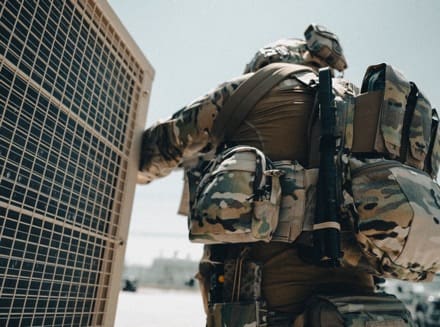
That is why choosing a plate carrier and the rest of the loadout should start with the requirements of a specific mission, not with the product itself. Mission duration, threat level, access to support, load carried, operational environment, and the need to maintain high mobility – each of these factors influences the final setup.

Direct Action® treats the plate carrier as the foundation of a scalable system. Combined with cummerbunds, front flaps, back panels, pouches, and magazine pouches, it allows operators to build a configuration around the requirements of a specific task. Each component of the system is designed to enhance the operator’s capabilities rather than restrict mobility or access to mission-essential equipment.

This approach is part of the Individual-as-a-System® concept developed by Direct Action®, where equipment is treated as an integrated system tailored to the individual operator, their role, and the mission at hand.

ASSAULTER – MAXIMUM MOBILITY. MINIMUM UNNECESSARY GEAR.
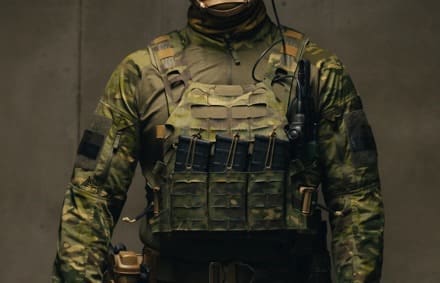
An assaulter operates fast, dynamically, and aggressively. Especially in CQB, seconds can determine the outcome. Ergonomics, unrestricted movement, and immediate access to weapons, magazines, and essential equipment are therefore critical.

This setup is designed primarily for missions where speed and mobility take priority over the ability to carry large amounts of additional equipment.

HEAVY ASSAULTER – GREATER PROTECTION FOR GREATER THREATS.
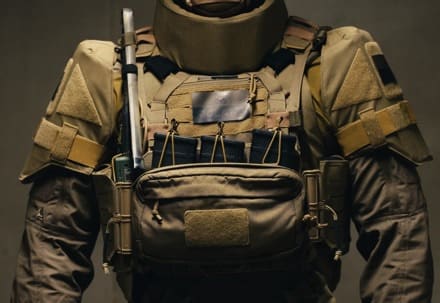
Not every operation allows for a minimalist approach. In high-threat environments, increased operator protection and the ability to carry more ammunition and equipment become priorities.

In the Heavy Assaulter configuration, some mobility is deliberately traded for a higher level of protection. The setup can be expanded with additional protective components, including soft armor, while its configuration provides greater load-carrying capacity.

ASSAULTER QR – RAPID RELEASE WHEN IT MATTERS.
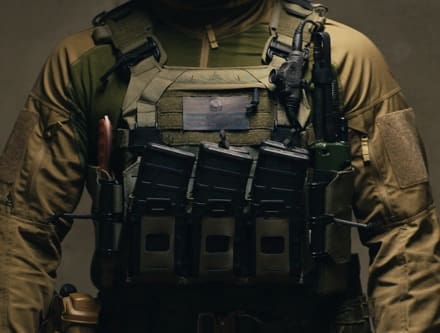
Operations conducted on or around water place additional demands on equipment. In an emergency, the ability to rapidly ditch the plate carrier together with the complete loadout can have a direct impact on operator safety.

The Assaulter QR configuration is built around the Spitfire QR Plate Carrier, equipped with Duraflex® QRS quick-release buckles on the shoulders and cummerbund. The system allows the carrier to be rapidly removed and then put back on while retaining full functionality – for example, after providing medical assistance.

MEDIC – SAVING LIVES WITHOUT SACRIFICING COMBAT CAPABILITY.
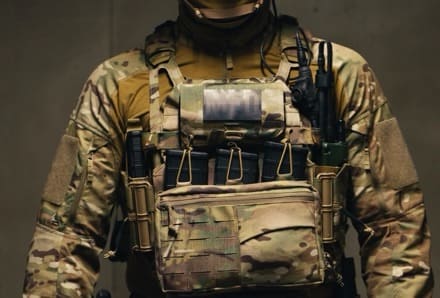
A team medic remains a full-fledged member of the assault team. They must be prepared both to fight and to provide immediate care to a casualty. The setup must provide rapid access to medical equipment without restricting access to weapons and essential gear.

JTAC – COMMUNICATION AND COORDINATION AS PRIORITIES.
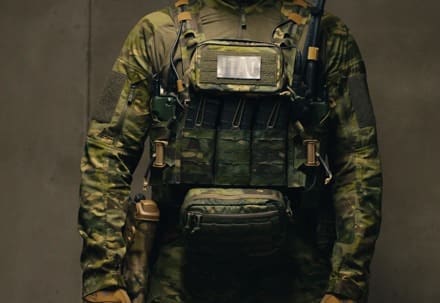
A JTAC’s role requires an entirely different approach to equipment configuration. Coordinating air support and managing communications means carrying multiple radios, PTTs, navigation devices, phones, map pouches, and additional equipment.

The JTAC configuration is built around organizing this equipment, providing easy access to communications, and enabling the operator to work effectively over extended periods.

In this role, the plate carrier becomes more than a protective and load-bearing platform. It serves as the foundation of a system that allows the operator to manage multiple means of communication while maintaining access to the rest of their equipment.

LOW PROFILE – WHEN DISCRETION AND SURPRISE ARE KEY.

In some operations, discretion and surprise provide a critical advantage.

The choice between the Hellcat Low Vis Plate Carrier and the Corsair Low Profile Plate Carrier depends on the amount of equipment carried and the nature of the mission. Both were designed to provide protection while minimizing their impact on freedom of movement and the operator’s visual signature, but each addresses a slightly different set of requirements.
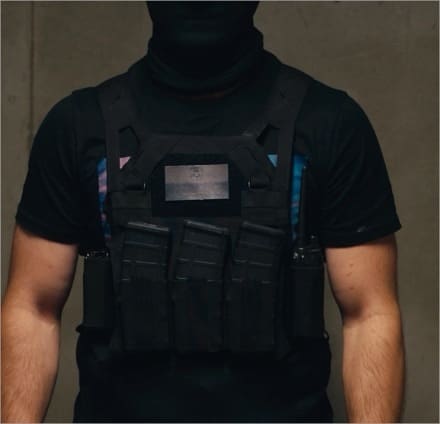
The Hellcat Low Vis Plate Carrier can be worn discreetly under a jacket or sweatshirt, but it can also serve as an outer plate carrier. It is an ideal solution when you need to keep a low profile while maintaining greater firepower. The individual pockets in the front flap and cummerbund can accommodate rifle, pistol, or SMG magazines, allowing the setup to be adapted to the weapon system without any modifications. The carrier is also compatible with selected components from the Spitfire system, while the buckles on the front panel make it compatible with most Direct Action® chest rigs.
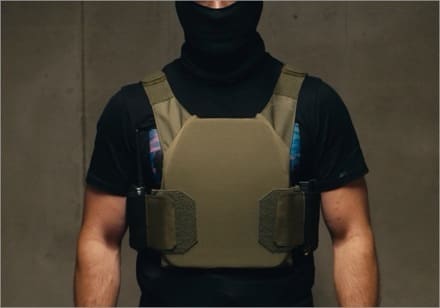
The Corsair Low Profile Plate Carrier takes minimalism a step further. It was designed primarily for covert wear under clothing – even beneath a lightweight shirt. Components that would add bulk or increase the carrier’s visual signature, such as additional Velcro panels, flaps, or extensive external modularity, have been eliminated. Its elastic cummerbund features internal pockets for magazines and a compact radio.

THE MISSION DEFINES THE SETUP.

Assaulter, Heavy Assaulter, Assaulter QR, Medic, JTAC, and Low Profile represent six different approaches to equipment configuration. These are example setups that can be modified according to individual needs, preferences, and mission requirements.

Together, they demonstrate the fundamental principle behind the Direct Action® system: define the mission requirements first. Configure the gear second.

The gear should follow the mission – not the other way around.

directactiongear.com/en/plate-carriers/mission-setup-execution

Useful links:
youtu.be/gtzMQF6doA0
youtu.be/AWJ66GIjyLU
youtu.be/AL0Fn0v8vxo
youtu.be/Unu1Jtg4AiY
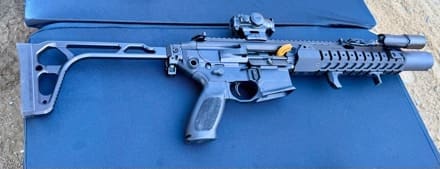
SIG SAUER – LTAW

Wednesday, September 30th, 2026

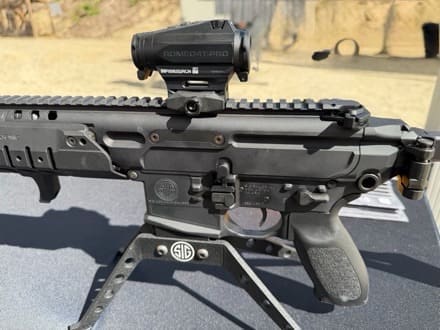
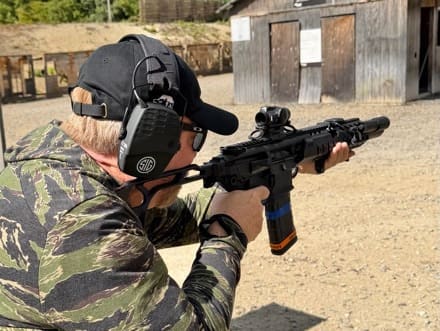
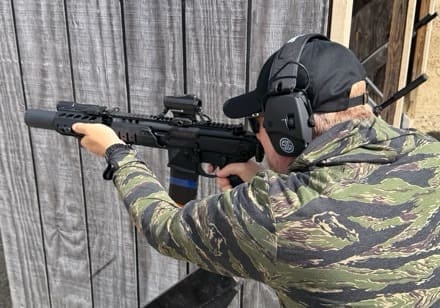
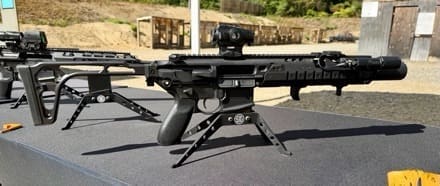
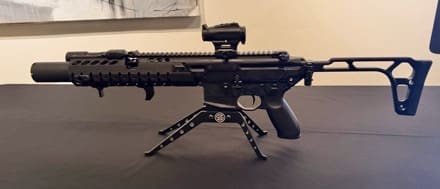
During last week’s SIG NEXT event in New Hampshire they announced the launch of the LTAW, a modernized version of the famous Low Visibility Assault Weapon first introduced well over a decade ago for use by Special Operations Forces.

LTAW is a bit of a play on the original name, but also denotes that it is based on the newer MCX LT platform.

Features:

  • Kate Moss Stock
  • Two-stage match duo trigger
  • Gen 1 MCX grip
  • SD hand guard with integrated heat shield
  • SQX 300 inconel printed suppressor
  • Arisaka barricade stop, hand stop, QD sling mount and light mount
  • ROMEO4T-PRO comes with the 2 stamp variant

* Despite the SIG FOXTROT light in the photos, it is not part of the package.

A couple of updates to the design:

  • ATA rail is now MLOK compatible
  • LT upper and lower with lightening cuts

The LTAW is a joy to shoot, particularly with 300 BLK subsonic ammunition. Recoil and sound are negligible. It’s compact as well at 7 lbs with a 6.75″ barrel and an overall length of 33″ and just 22.3″ with the stock folded.

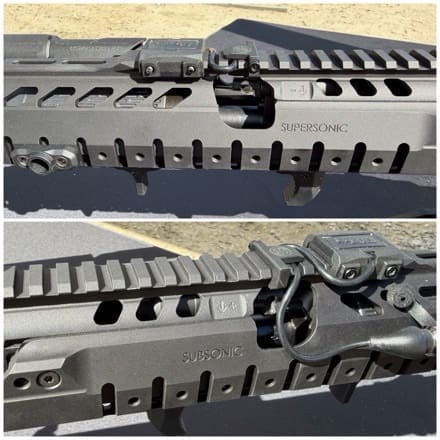
One of the original features you’ll enjoy is the markings on the hand guard for sub and supersonic ammo settings of the gas regulator.

The LTAW will be offered in three versions:

  • Pistol (fitted with “training tube” for aesthetics)
  • SBR (fitted with “training tube” for aesthetics)

Access to these different models may adapt based on possible upcoming changes to the National Firearms Act

The LTAW variants will be available for order by the end of this year, initially as RSR exclusives for the first year, so be sure to get with your favorite dealer.

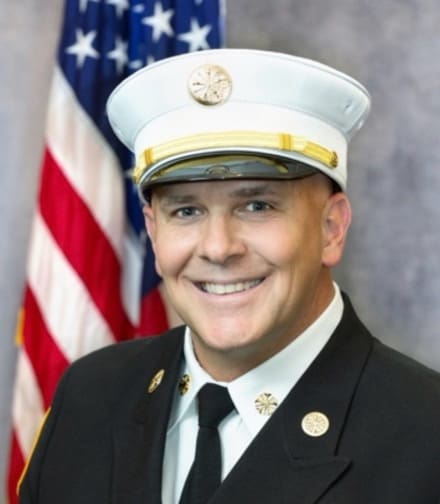
Darley Welcomes Jack “J.” Taylor III to Fire Advisory Board

Tuesday, September 29th, 2026

ITASCA, IL – September 29, 2026 – Darley, a leading provider of defense, fire, and emergency services equipment, is pleased to announce the appointment of Jack “J.” Taylor III to its Fire Advisory Board.

Jack “J.” Taylor III brings more than three decades of fire service leadership to the Darley Fire Advisory Board. A retired Fire Chief with 33 years of service, Taylor held executive leadership roles with the Pearland, Trophy Club, and Irving Fire Departments, where he championed operational excellence, organizational health, and firefighter well-being. He is widely recognized for advancing firefighter health and safety initiatives, including cancer prevention, mental health, resiliency, and peer support programs. Following his retirement from the Pearland Fire Department, where he led the organization to multiple industry recognitions, Taylor joined Siddons-Martin Emergency Group as Executive Director of Strategic Initiatives. His extensive experience in emergency services leadership, combined with a steadfast commitment to servant leadership and developing high-performing teams, brings valuable insight and perspective to the Darley Fire Advisory Board.

J comments, “I’m honored and excited to join the Darley Fire Advisory Board and have the opportunity to contribute to an organization with such a long history of serving the fire service. After 33 years in the first service, I hope to bring the perspective of a fire chief and organizational leader, while also drawing on my current corporate experience working alongside departments and industry partners. I look forward to listening, sharing ideas, and helping Darley continue to find innovative ways to support firefighters and the communities they serve.”

Read more here: www.darley.com/media/darley-welcomes-jack-j-taylor-iii-to-fire-advisory-board

SIG SAUER – M17-SOF

Tuesday, September 29th, 2026

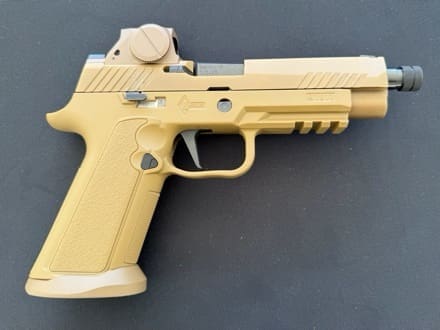
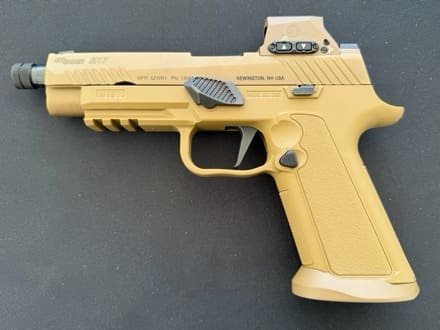
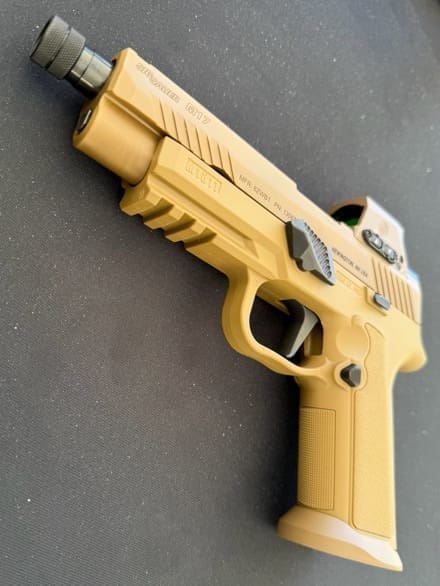
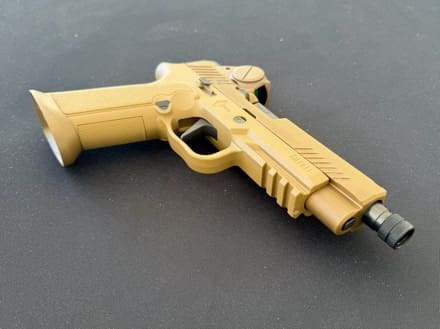
Despite assertions to the contrary on the internet, the P320 is not being cancelled. In fact, a new production model was announced during SIG NEXT. Meet the M17 SOF.

The Modular Handgun System can easily be configured by swapping out parts and accessories. As soon as the program was awarded back in 2018 SIG set up an example for SOF use.

Similar enhancements were announced last year, such as Modular Handgun eXchange and the MHS General Forces Configuration (MHS-GFC) variant utilizing COTS accessories.

Configuration:

  • M17 Slide Equipped With ROMEOM17 Optic
  • Coyote Brouwer M1811 Grip Module With Magwell
  • GoGun Gas Pedal Takedown Lever
  • Threaded 5.5” Barrel
  • Flat X-Series Trigger
  • XRAY3 Day/Night Sight

www.sigsauer.com/m17-sof

BlackPoint Tactical Duty Holsters See Widespread Adoption Across Agencies Worldwide

Monday, September 28th, 2026

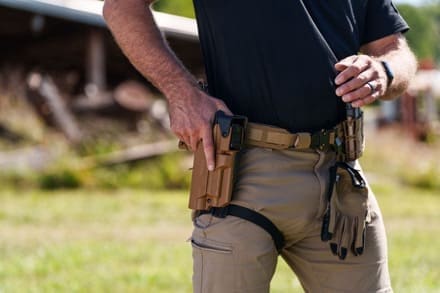
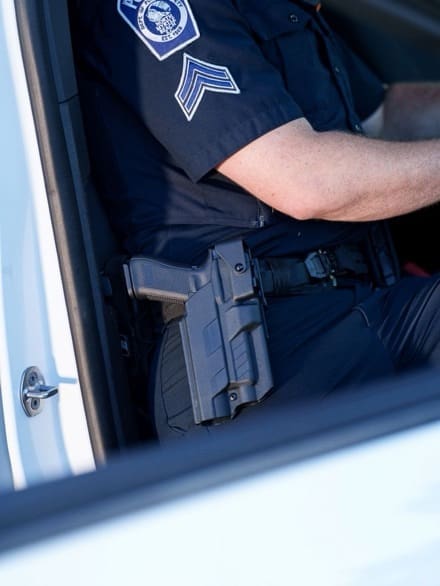
ALPHARETTA, G.A. – September 28, 2026 – BlackPoint Tactical, a High Speed Gear Products Group brand, is seeing widespread adoption of its duty holsters among law enforcement and military agencies around the globe. As agencies evaluate modern alternatives for their officers and operators, the BlackPoint Duty Series is gaining momentum for its combination of reliable retention, intuitive operation and adaptability across evolving equipment requirements.

The growing adoption reflects a shared need across agencies: a duty holster that provides uncompromising weapon security without sacrificing a fast, consistent draw. The BlackPoint Duty Series, which includes the Enhanced Duty Holster (EDH), Slick Duty Holster (SDH), Concealed Duty Holster (CDH), and the Taser 10 Ark-Lock, was designed and engineered around direct input from real-world users operating in demanding environments.

At the center of the platform is BlackPoint’s patented Master Grip Concept. The retention lever is positioned so users can establish a natural master grip and deactivate the retention mechanisms without the additional hand articulation required by many traditional duty holsters. The result is a smooth, repeatable draw stroke designed to support faster, more accurate rounds on target. The same core activation mechanics carry across retention levels and into BlackPoint’s TASER® holsters, helping agencies reduce training hurdles when deploying multiple systems.

The Duty Series is available in light-compatible and non-light-compatible configurations and includes the patent-pending SHIM system. By changing the installed SHIM, agencies can configure the holster for multiple weapon lights, allowing the platform to adapt as equipment needs change. Supported configurations continue to expand as BlackPoint responds to agency and end-user demand.

Key features of the BlackPoint Duty Series include:

• Retention Levels: Available in 3 level (EDH family) and 2 level models (SDH family).

• Full Coverage Trigger Guard: Minimizes any object from entering trigger guard while pistol is holstered.

• Optics Cover: Optional Optic Cover to help enclose the optic cavity when holster hood is closed

• Barrel Plug: Allows the holster to function with or without the weapon light attached.

• Retention Lever Overdrive: Lever range of travel beyond release enhancing draw performance.

• Lever Extender: Extends the retention lever to enhance ergonomics based on user preference.

• Material Thickness: Holster features durable unibody 0.125” KYDEX® design.

• Mounting: Compatible with mounts from popular 3rd parties. *Adapter Plate Required  

“We are seeing agencies around the world recognize that they do not have to choose between security, speed and adaptability,” said Gary Robbins, Director of Law Enforcement Business Development at High Speed Gear. “The Duty Series was built around the realities officers and operators face in the field, and its growing adoption is strong validation that the platform is meeting those needs.”

“A duty holster must perform every single time,” said Tyler Johnson, VP of Finance and Holster Sales. “The confidence agencies are placing in BlackPoint reflects the work our team has put into delivering a modern, dependable alternative. We are proud to support more professionals globally and will continue expanding the platform as their requirements evolve.”

BlackPoint Duty Series holsters are available through BlackPoint Tactical and authorized dealers. Firearm, light and mounting compatibility options continue to expand. Agencies and dealers interested in product evaluations, fitment information or purchasing support are encouraged to contact the High Speed Gear Products Group team.

For more information about the BlackPoint Duty Series, visit blackpointtactical.com/shop/category/duty-series.

MATBOCK Monday: MWAD 2.0

Monday, September 28th, 2026

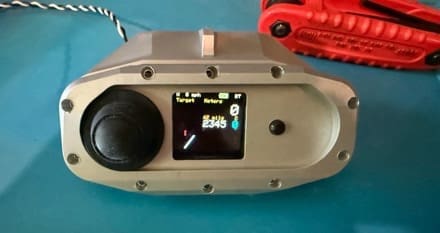
Building on the success of the Multi Weapon Aiming Device (MWAD) 1.0, we are proud to introduce the next generation: the MWAD 2.0. This new and improved model enhances the user experience and provides even greater accuracy and reliability for indirect fire weapon systems.

The MWAD 2.0 is a multi-platform capable digital firing solution device that displays range

and azimuth of your target. It provides real-time ballistic solutions that account for environmental conditions, round type, platform, and lot deviations, allowing the user to put rounds on target more accurately and in less time than with legacy aiming systems.

Key upgrades in the MWAD 2.0 include:

  • Software Update: A comprehensive software update delivers a more intuitive user interface and faster processing for even quicker targeting solutions.
  • Glenair Hardwire Connector: A new Glenair hardwire connector ensures a secure and reliable connection in the most demanding environments.
  • Tri-Axial Gyroscope: The addition of a tri-axial gyroscope enhances motion tracking for more precise ballistic calculations, even on the move.
  • Robust Thumbstick: A new, more robust thumbstick offers improved

To learn more about the MWAD, check out their youtube channel: youtu.be/dLALK_5Z0OU or email sales@matbock.com

SIG SAUER KILO Micro LRF

Monday, September 28th, 2026

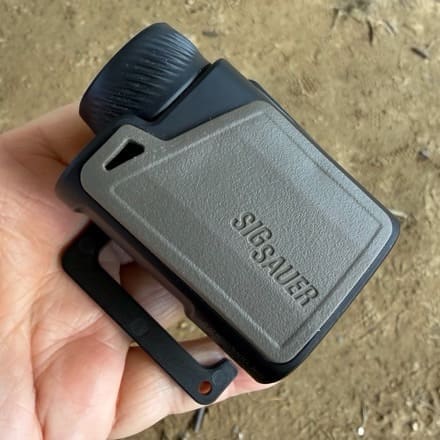
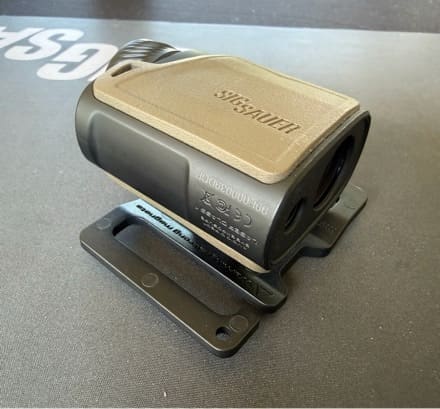
They really pulled out all the stops during last week’s SIG NEXT event, but of all of the new products, my favorite is the smallest.

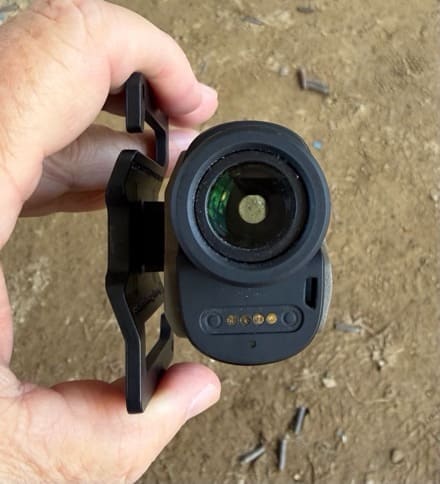
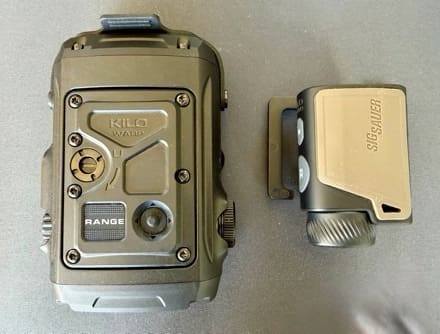
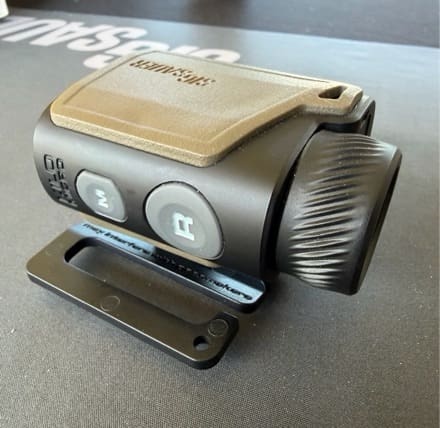
I first saw it in a photo with no frame of reference for its size. Turns out, it’s truly palm sized. Below you can see it next to the WARP, SIG’s full featured LRF.

It started out as an archery LRF but proved to be much more versatile and they’ve added eight onboard firearm ballistic groups to the archery setting.

Weighing just 3.4 ounces, this small, handheld laser range finder features a 4x18mm Monocular can which range past the 1000 yards promised by SIG using their GEN II LIGHTWAVE DSP.

KILO Micro relies on a rechargeable battery for up to 3,000 ranges per charge. They’ve included a QDI magnetic harness mount but I’m trying to figure out a way to mount it to coaxially to a weapon mounted optic.

Top all of that off with an IP67 waterproof rating and $249.99 MSRP and I’d recommend everyone pick one up.

www.sigsauer.com/kilo-micro-4x18mm

The Medical Kit You Stopped Knowing Why Familiarity and Readiness Fade Long Before the Emergency

Monday, September 28th, 2026

The Problem on the Pavement

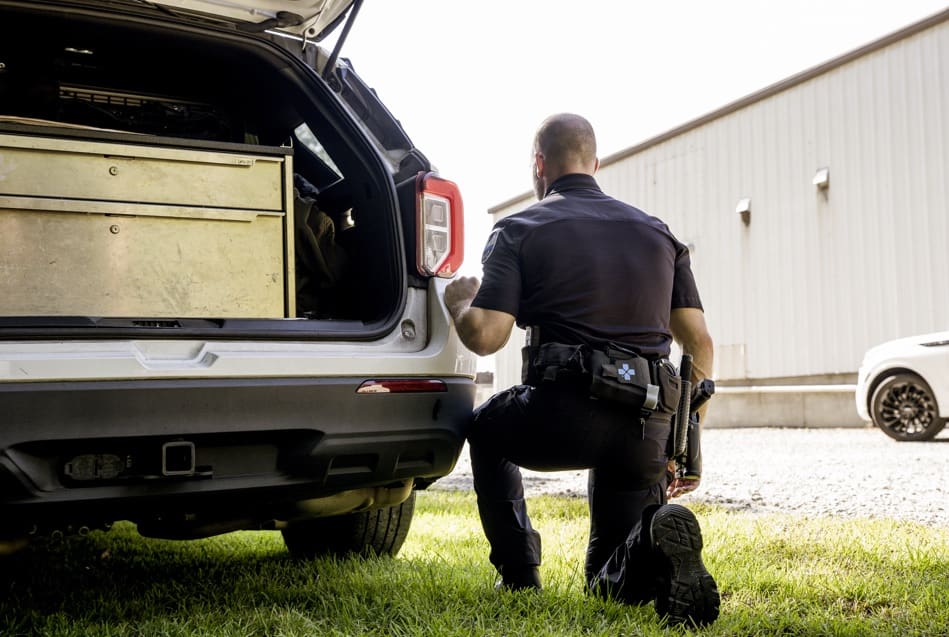
I arrived at the crash a few minutes behind another officer.

His trauma kit was already open on the pavement. Gauze wrappers moved in the wind and caught against the edge of the road. Under the rotating emergency lights, he dug through the pouch, lifting one item after another and putting each one back as if the answer might be underneath it.

The patient was nearby. The ambulance was still miles away.

The officer was not panicked. He was not frozen.

He was lost.

The kit had been issued years earlier. He had trained with it once, mounted it to his equipment, and carried it through countless shifts without opening it again. Now, kneeling on the shoulder of a rural road, he had equipment in front of him but no working familiarity with what it contained.

This was not a tactical incident. It was an ordinary car crash, the kind that happens every day in communities where professional medical help may still be fifteen or twenty minutes away.

The officer carried the kit.

What he no longer carried was familiarity.

Nothing about that scene was unusual. In fact, it represents one of the most common medical-readiness gaps I encounter, and it has very little to do with the quality of the equipment inside the pouch.

The kit was present.

Readiness was not.

When Presence Becomes a Substitute for Capability

Somewhere between issue day and the emergency, a trauma kit can stop being working equipment and become a symbol.

The officer knows it is there. The pouch occupies the same place on a carrier, duty belt, or inside a patrol vehicle. Its presence creates reassurance, and over time, that reassurance begins to stand in for capability.

The kit gets mounted and forgotten.

Inspections come and go. Elastic stretches. Supplies expire. Someone borrows an item and does not replace it. A tourniquet staged incorrectly on day one may remain that way for years because nobody opens the pouch and questions it.

The equipment still looks ready from the outside.

That is what makes the problem dangerous.

Carrying medical equipment is not the same as maintaining medical capability.

Capability has an expiration date when it is not renewed.

Training Does Not Remain Fresh Because the Certificate Does

Almost every officer I meet has received medical training.

Far fewer have received it recently.

There was an academy block, a certificate, and a successful evaluation. The officer demonstrated the required skills, returned to duty, and moved on to the next responsibility.

Then the years began to pass.

The certificate does not change.

The responder does.

Knowledge becomes less immediate. Confidence remains even as fluency declines. Five years may pass before an emergency finally asks whether the skill is still usable.

That is a brutal time to discover the answer.

Medical intervention is especially vulnerable to decay because it requires judgment and action at the same time. Applying a tourniquet, packing a wound, managing an airway, or assessing a casualty are not simply physical tasks. They require decisions made under stress.

The responder still remembers taking the course. The steps may still sound familiar when someone explains them.

But recognition in a classroom is different from performance beside a damaged vehicle in poor light while another person waits for help.

Skill does not need to disappear completely to become insufficient.

It only needs to fall below the level the emergency demands.

The Emergency May Not Match the Kit

The officer at that crash faced another challenge.

His kit had been assembled primarily for penetrating trauma. It contained a tourniquet, hemostatic gauze, and a chest seal. For a gunshot wound, those items may have been exactly what he needed.

That was not the emergency in front of him.

Patrol officers routinely encounter vehicle crashes, falls, overdoses, industrial injuries, medical emergencies, and prolonged waits for EMS. There is nothing wrong with carrying a specialized trauma kit. The problem begins when responders expect one specialized solution to solve every problem.

Training reveals what equipment is missing, what equipment is unnecessary, and what emergencies are most likely to occur in a particular community.

The requirement should drive the equipment.

The equipment should not be purchased first and justified later.

Sustainment Training Reveals the Truth

Sustainment training does more than preserve skill.

It diagnoses readiness.

You cannot identify weaknesses in equipment you never open. You cannot evaluate skills you never test. You cannot know whether a medical system works under pressure by looking at it mounted neatly on a duty belt.

Realistic repetitions expose gaps quickly.

Missing supplies become obvious. Poor placement becomes frustrating. A kit that seemed organized becomes confusing when opened in low light. Equipment that seemed easily accessible becomes difficult to reach from a vehicle seat.

Those discoveries should be welcomed.

A failure discovered during training is a problem that does not have to be discovered beside a real casualty.

Without those repetitions, readiness is based on memory and assumption.

Sustainment training replaces assumption with evidence.

A Practical Sustainment Standard

Maintaining familiarity does not require a major budget increase or a dedicated training day. It requires consistency.

• Inventory the kit from memory.

• Open and inspect it quarterly.

• Practice access under realistic conditions.

• Train for the emergencies you are most likely to encounter.

• Put sustainment training on the calendar.

Familiarity is perishable. Like any other critical skill, it must be renewed deliberately before it is needed.

Five Questions Worth Answering Now

Before purchasing another piece of equipment, answer these questions honestly:

1. When was the last time you opened your medical kit and handled its contents under pressure?

2. Can you identify everything inside it right now without looking?

3. Can you access the kit and deploy the tourniquet using only your support hand while seated and in low light?

4. What emergency was the kit originally built to address, and what emergencies do you encounter most often?

5. If you had to work from a partner’s kit instead of your own, could you use it effectively?

If those answers create discomfort, pay attention to it.

Discomfort is information.

It means a gap has been identified before an emergency exposed it.

Know the Kit Before the Kit Is Needed

I still think about the officer kneeling on that rural road.

The gauze wrappers moving across the pavement. The open pouch beneath the emergency lights. The ambulance somewhere in the distance. The officer holding equipment that had been beside him for years but had become unfamiliar when he finally needed it.

Nothing inside that pouch had suddenly changed.

The distance between the officer and the equipment had grown one unopened shift at a time.

Somewhere tonight, another trauma kit is sitting untouched on a duty belt, mounted to a carrier, stored inside a patrol vehicle, or tucked behind the seat of a truck.

Its owner may have carried it for years.

Maybe that confidence is justified.

There is only one honest way to find out.

Open the kit.

Lay out the contents.

Train with the equipment until every item has a purpose, every position is familiar, and every movement has been practiced before urgency takes control of the moment.

The solution may not be another purchase.

It may be an afternoon of repetitions, a training partner, and the willingness to confront what has faded.

Do it before gravel is beneath your knees, blood is on your gloves, and the ambulance is still miles away.

Do it before somebody else’s life depends on what you remember.

Learn More About Blue Force Gear® Medical Solutions

Familiarity should never begin while kneeling beside a casualty.

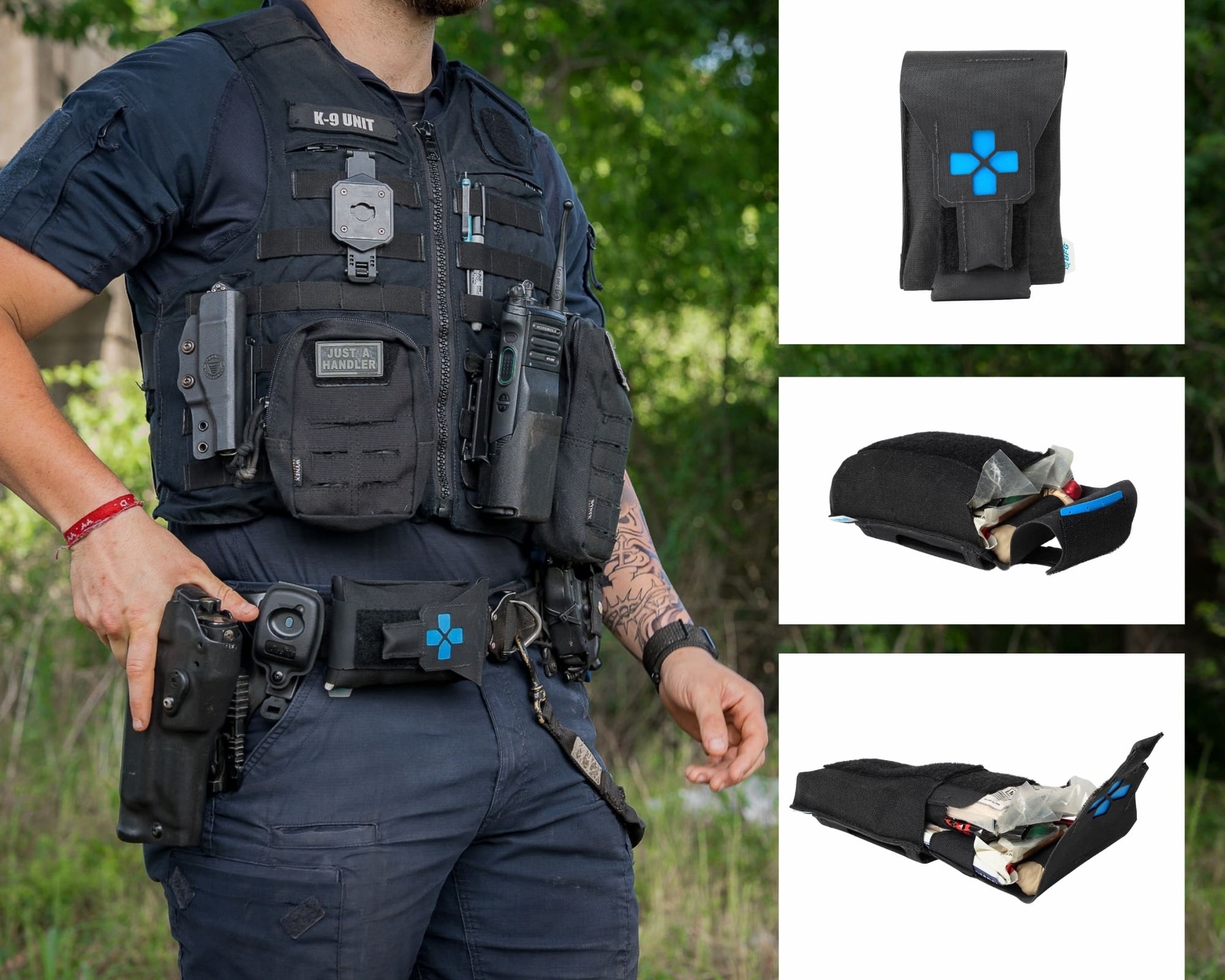
Whether you’re evaluating an existing setup or building a medical capability from the ground up, Blue Force Gear’s trauma kits are designed to provide rapid access, consistent placement, and secure organization so responders can focus on the problem in front of them, not the equipment on their belt.

Explore the Micro Trauma Kit NOW!® Nano ES, and the full line of Blue Force Gear trauma kit solutions.

This article is intended for general educational purposes and is not a substitute for certified medical training, agency protocols, product instructions, or guidance from qualified medical professionals.


By John Chapman, Task Force 70 Foundation

About the Author

John Chapman, known widely as Chappy, is a law enforcement professional with more than 34 years of experience spanning operations, leadership, curriculum development, applications engineering, and training. A published author and nationally recognized instructor, he has spent nearly three decades developing and delivering patrol and tactical law-enforcement training programs.

Chappy currently serves as Executive Director of the Task Force 70 Foundation, a nonprofit dedicated to training, mentoring, and supporting underserved rural and small-town law-enforcement agencies throughout the United States.