Pirata Series from OTB Boots - Coming March 2026!

Archive for the ‘Advertiser’ Category

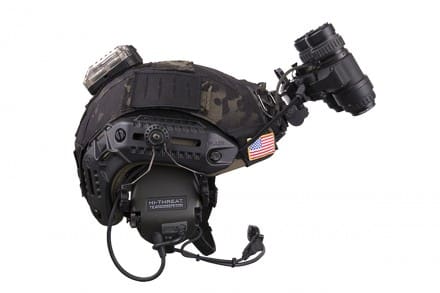
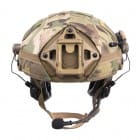
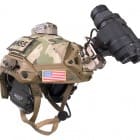
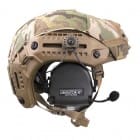
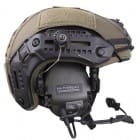
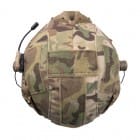
Spiritus Systems R A I D Cover for MTEK FLUX Helmet

Tuesday, September 4th, 2018

The new R A I D Cover for MTEK FLUX Helmet from Spiritus Systems is a bare bones design, utilizing Velcro rather than sewn-in bungee cords which may snag.

FCFE7149-638A-4E3D-B3D5-D46EB5A9662B

Made from Solution Dyed IR DEFEAT 500D Cordura Nylon, the cover also incorporates genuine VELCRO brand Hook and Loop which is also IR DEFEAT. They also reinforced the front attachment points with a rubber impregnated material (HANK) that is extremely abrasion resistant.

The R A I D Cover is built in North Carolina and is Berry Compliant. Currently it is only available for the MTEK FLUX line of helmets. To include the Flux Ballistic, Carbon, and Carbon Vented. Current color offerings include Multicam, Multicam Black, Black, Ranger Green and Coyote Brown.

spiritussystems.com/raid-cover-flux

Polk County FL Sheriff’s Office Selects American Defense Mfg UIC Rifles

Tuesday, September 4th, 2018

New Berlin, WI. August 2018 – American Defense Manufacturing® is pleased to announce the Polk County Sheriff’s Office has selected the UIC Mod 1 LE-X 11.5” SBR (Short Barrel Rifle) as their official SWAT rifle. The Polk County Sheriff’s Office is a full-service law enforcement agency serving Polk County, Florida. Polk County is the fourth largest county in the State, with approximately 2,010 total square miles, and is the ninth most populated county with an estimated population of 646,989.

“The Polk County Sheriff’s Office awards the bidder whose bid is determined, in writing, to be the most advantageous, taking into consideration price and criteria set forth in the Invitation-To-Bid (ITB). We consider in part, but not limited to, quality offered, delivery terms, budget requirements, location, and service reputation of the vendor, in determining the most advantageous bid” Said David Rounds, Deputy Director Central Services Bureau.

The UIC Mod 1 LE-X 11.5” SBR rifle combines premium components, exceptional performance, accurate barrels (provided by Rosco Mfg®), and dependability that law enforcement agencies can count on day after day. It provides

officers with full ambidextrous controls to include charging handle, safety selector, magazine release, and bolt catch and release to improve the usability whether left or right handed. In addition, American Defense Mfg® is committed to

supporting agencies beyond the sale by providing immediate, temporary replacement of any American Defense Mfg® rifle used in a critical incident and taken out of service for evidentiary purposes. American Defense Mfg® “Ready Reserve” Program provides immediate, temporary replacement of any ADM rifle that is destroyed in the line of duty in order to reduce department disruption and maintain 100% stock in the departments armory.

“We are very proud to have been selected by Polk County Sheriff’s Office and are confident our rifle platform will exceed their expectations.” Said William Phebus, Director of Sales. “American Defense is not just a firearm assembler, American Defense Mfg® operates a full manufacturing facility, where we can control quality and maintain strict tolerances through all manufactured parts that result in superior performance and reliability”

Delivery of the UIC Mod 1 LE-X 11.5” SBR is estimated to begin in Q4 2018.

For more information on American Defense Mfg® optical, illumination, target acquisition device mounting solutions, and premium ambidextrous firearms, please visit our website at www.admmfg.com.

Trijicon RMR Type 2 Selected for US Special Operations Command

Tuesday, September 4th, 2018

Wixom, MI, (September 4, 2018) – Trijicon®, Inc., global provider of innovative aiming solutions for the hunting, shooting, military and law enforcement markets is pleased to announce the selection of the Trijicon RMR (Ruggedized Miniature Reflex) Type 2 by NSWC Crane Division for the USSOCOM Miniature Aiming System – Day Optics Program. The contract is for a five-year period. Work will be performed in Wixom, Michigan, and is expected to be completed by August 2023.

“Trijicon is honored and extremely pleased to win this contract,” said John Rupp, Vice President of Business Development.  “This selection is a testament to the rugged durability of Trijicon optics and the RMR Type 2 will provide outstanding performance to USSOCOM.”

The Trijicon RMR® Type 2 deploys a new electronics design that bolsters durability and performance in the most punishing environments and extends the functionality of the red dot sight. The updated electronics and battery contacts increase reliability under the harshest use and stiffest recoil. The CR2032 lithium battery lasts up to four years in the Adjustable LED model at mid-setting. Audible and tactile windage and elevation adjustments allow for quick and easy zeroing with no need for special tools or devices.  The RMR Type 2 is compatible with existing RMR mounts and optics-ready pistols.

Trijicon is proud to count among its users all the United States Military Services, including Special Operations Forces, the United States Government, state and local Law Enforcement and many of America’s allies.

BE Meyers & Co Exhibiting At Maneuver Conference / Fort Benning Expo 2018

Tuesday, September 4th, 2018

B.E. Meyers & Co., Inc. will be exhibiting their advanced laser systems and warfighter solutions at the Maneuver Warfighter Conference and Fort Benning Expo on September 11-13, 2018 at the Mcginnis-Wickham hall in Fort Benning, GA. Visit booth #18 to speak with the B.E. Meyers & Co. Team, and to see the Modular Advanced Weapon Laser – Direct Action (MAWL®-DA); the IZLID® series of laser pointers/illuminators; the GLARE® RECOIL weapon mounted Hail and Warning laser system; and the BOARS™-M2 optics and accessories rail for the M2 platform. B.E. Meyers & Co. will also be displaying their new M2A1F threaded flash hider for the General Dynamics M2A1 heavy machine gun.

To schedule a meeting with B.E. Meyers & Co. at the Maneuver Warfighter Conference/Fort Benning Expo, please contact sales@bemeyers.com.

Final Fifty ZEV-Winkler Knives Now Available  

Monday, September 3rd, 2018

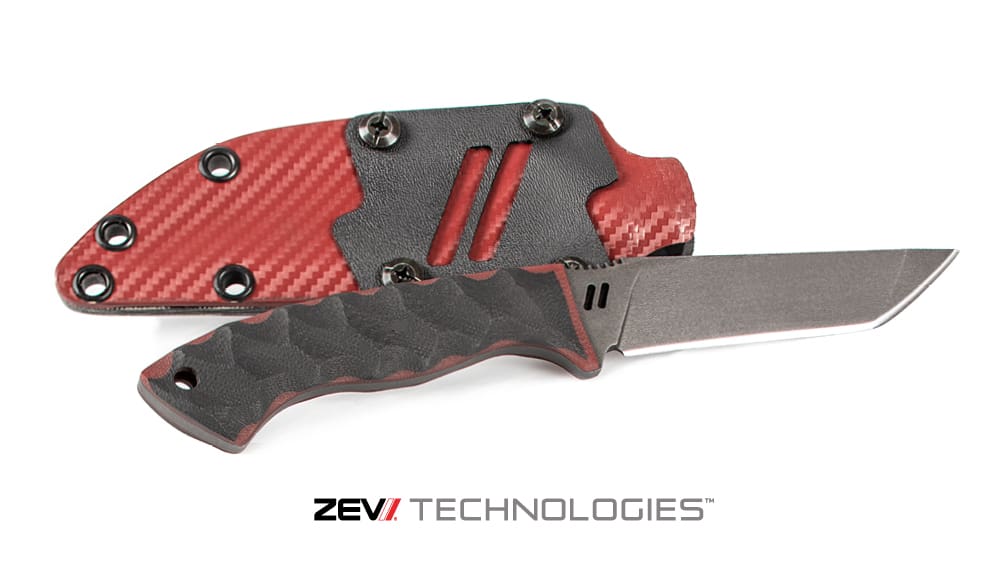
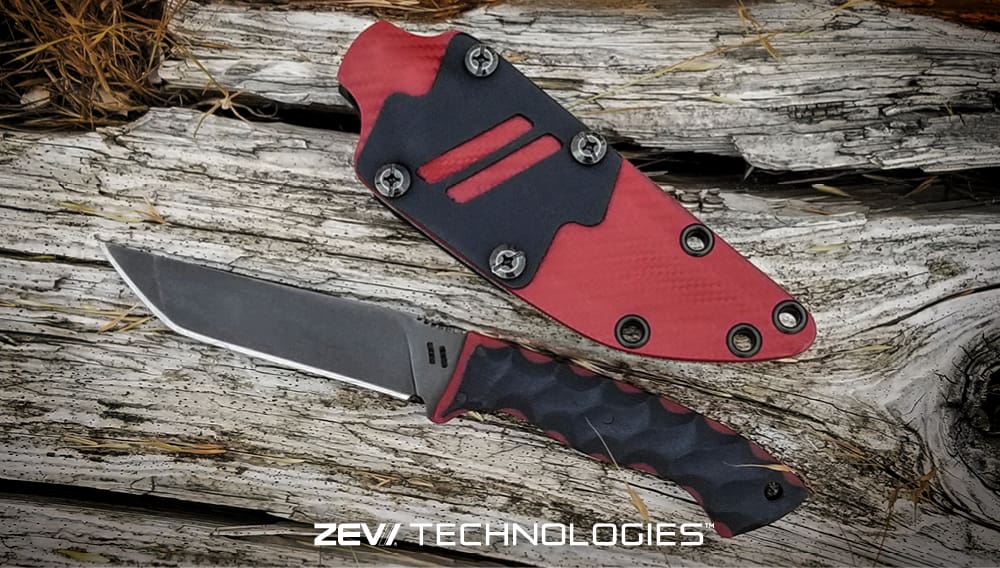
For anyone that missed out on adding one of these spectacular ZEV-Winkler collaboration knives to their kit, now is your chance. ZEV Technologies teamed up with Winkler Knives to create a unique, custom limited-edition, personal defense knife suitable for everyday carry.

47A1B1FF-EE05-4757-97E1-9DD4CB730DC6

With a total of 100 produced, this second and final batch of 50 is sure to sell out

The 4-1/4” blade is made from 80CrV2 steel, coated in black oxide and features a sculpted G10 curved handle, for an overall length of 8-3/8”. Additionally, the blade features thumb index file work on top of the blade. The final detail is the Kydex sheath featuring a contrasting overlay in ZEV’s iconic red and black color scheme.

5FEAC213-0807-4FFB-8524-A85B4BBE2F51

Knife Specifications:
• Blade steel: 80CrV2
• Black oxide no-glare finish
• Blade length: 4 1/4″
• Overall length: 8 3/8″
• Blade thickness: 3/16″
• Skeletonized, full tapered tang
• Thumb index file work

B9AADB5A-0289-41E8-AED4-6272EAF0F38F

Sheath:
• Red and Black Kydex® featuring ZEV slashes
• Spring steel, belt clip that can be mounted on either side of the sheath in both vertical or horizontal positions

www.zevtechnologies.com/ZEV-winkler-knife

Protonex to Exhibit PTX Power Manager Systems at MSPO

Sunday, September 2nd, 2018

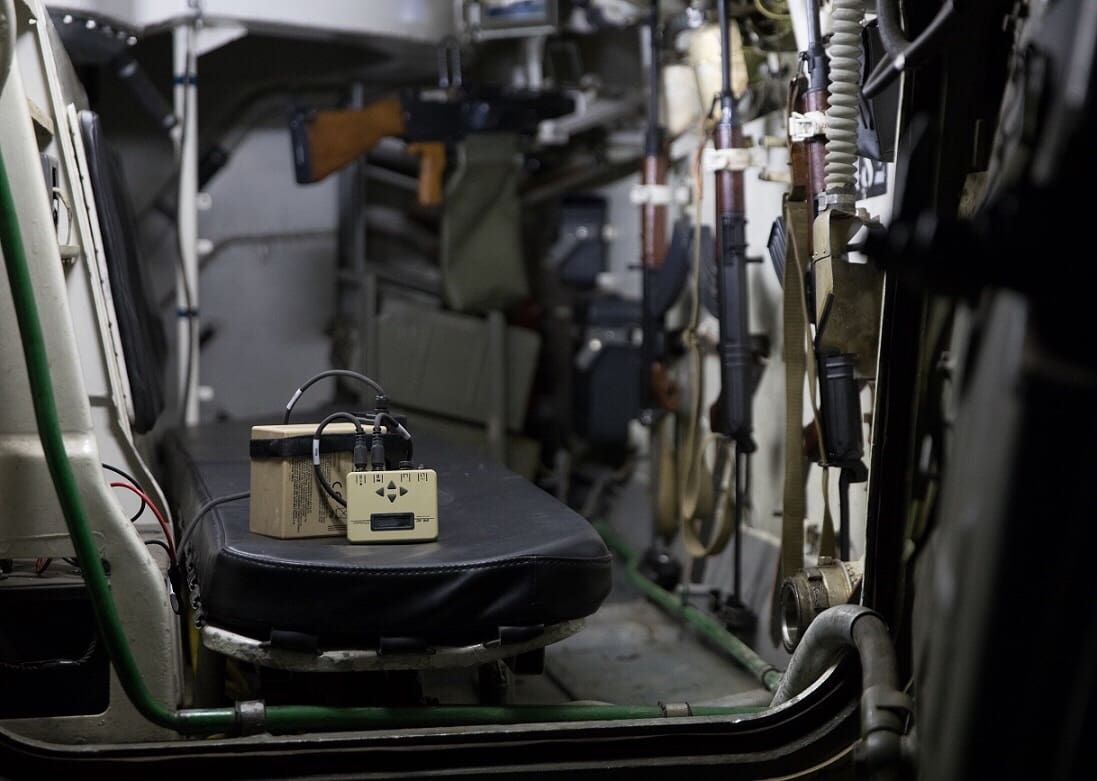
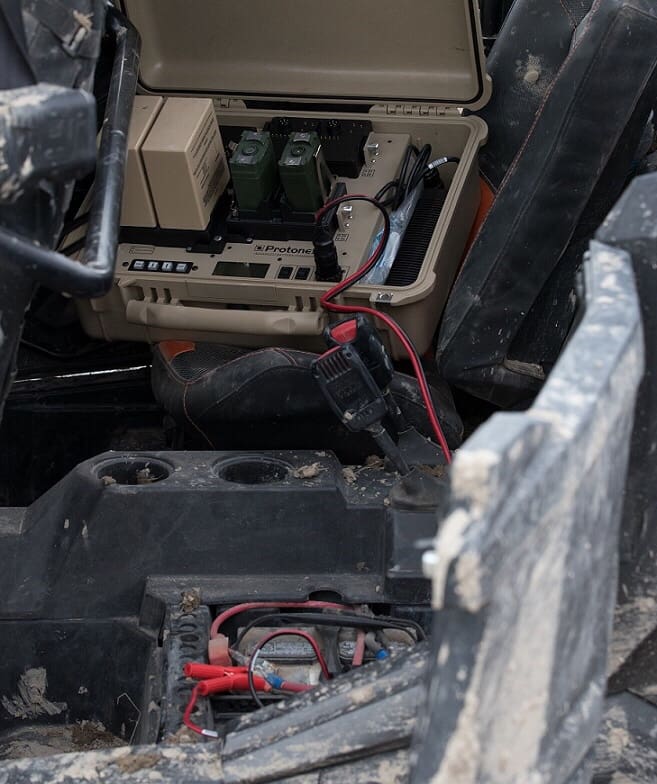
Visit booth # F-20 in the US Pavilion at MSPO 2018 next week in Kielce, Poland to see the PTX range of tactical power management solutions in action.

Included in the display will be the industry-leading ABC-812 Adaptive Battery Charger and the operationally-proven SPM-622 Squad Power Manager. Visitors will be able to see how the ABC and SPM can be used to keep AUV and UGV platforms fully operational in austere environments. They will also be able to see a demonstration of how to draw power from any vehicle – NATO or former Warsaw Pact – and keep dismounted troops powered up and in the fight.

PTX power management systems are also featured in the Sept. issues of ‘Armada International’, ‘FRAG OUT!’, ‘Infantry Bugler’, ‘Military Technology’, and ‘Marine Corps Gazette’.

SCUBAPRO Sunday – History of Combat Divers/Swimmers in the US

Sunday, September 2nd, 2018

The first mention of combat swimmers appears in the chronicles of the Greek historian Herodotus ca 450BC. The Persian king Xerxes used divers to retrieve goods off of sunken ships. They were also used for ship repair and reconnaissance of harbors and channels.

Almost every Navy throughout history has had some form of combat swimmers. They have been used to smuggle goods in during the siege of Syracuse during the Peloponnesian war. The Spartans and Athenians were one of the first to employ combat swimmers, but history usually credits Alexander the Great in his famous siege of Tyre (Lebanon) in 332 B.C. He used “demolition divers” to remove obstacles from the harbor. Aristotle reported that Alexander himself made several dives in a crude diving bell to observe the work in progress. They were also used to cut the anchor lines of Roman ships by the Byzantines in 320 BC. The Byzantines replaced the lines with their own and pulled the Roman boats into the harbor ending a 3-year siege. The Romans then replaced all their anchor line with steel chains.

The U.S. started using Combat swimmer at the birth of our country. They were used during the revolutionary war to set fires and sink British ships. They were also used in the Civil war by both sides for sabotages and scouting. The U.S. didn’t really use combat swimmers again until WW2. Although some Americans did service with specified dive units of our allies in WW1. Those men would go on to help set up the units we used in WW2.

The combat diving mission was the same in World War II as it had been in previous wars: to remove obstacles from enemy waters and to gather intelligence. The Navy’s Underwater Demolition Teams (UDT) were created from bomb disposal experts and SeaBees (combat engineers) teamed together in 1943 to devise methods for removing obstacles that the Germans were placing off the beaches of France.

There where more than one combat swimmer/diver unit for the U.S. Navy in WW2. To name a few where the Navy Scouts and Raiders unit, Underwater Demolition Units (UDT), Navy Combat Demolitions Units (NCDU) and the OSS Maritime Unit. The OSS MU was on the cutting edge for U.S. combat swimmer/ divers. They where the first to use the Lambertsen Rebreathing Unit (LARU), an early underwater breathing device. The Lambertsen unit permitted a swimmer to remain underwater for several hours and to approach targets undetected because the LARU did not emit telltale air bubbles. Dr. Christian J. Lambertsen, then a U.S. Army captain, developed the Lambertsen for the MU. They also developed or used several innovative devices, including an inflatable surfboard, a two-man kayak, and limpet mines that attached to the hull of a ship.

The first UDT combat mission, wherein the Pacific. It was a daylight reconnaissance and demolition project off the beaches of Saipan in June 1944. In March of the next year, preparing for the invasion of Okinawa, one underwater demolition team achieved the exceptional record of removing 1,200 underwater obstacles in two days, under heavy fire, without a single casualty.

Diving apparatus where not extensively used by the UDT during the war. No suitable equipment was readily available to them. UDT experimented with a modified Momsen lung and other types of breathing apparatus, but not until 1947 did the Navy’s acquisition of Aqua-Lung equipment give impetus to the diving aspect of UDT operations. The trail of bubbles from the open-circuit apparatus limited the type of mission in which it could be employed, but a unique SCUBA (self-contained underwater breathing apparatus) platoon of UDT members was formed to test the equipment and determine appropriate uses for it.

UDT-21 (now SEAL Team 4) is credited with accepting the first official surrender on mainland Japan of WW2. Here the Commanding Officer LTCmdr Clayton of UDT-21 receives the first sword surrendered to the U.S. on mainland Japan. When he returned to the ship, he was ordered to return it so they could surrender to General MacArthur (just one more thing in a long list, that makes him one of the worst generals in history.)
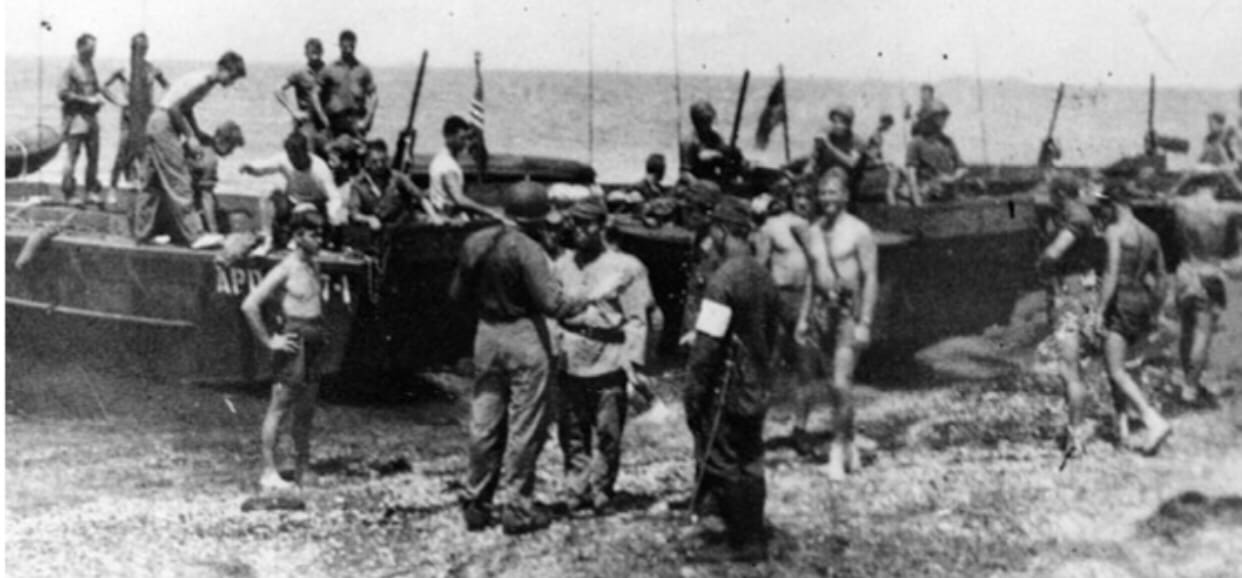
At the end of WW2, most of the special maritime units where dissolved, all except a hand full of UDT teams. In the Korean Conflict, the Frogman started to come out of the water more and more. They where assigned targets like destroying bridges and other direct action missions.

In 1962, President Kennedy established SEAL Teams ONE and TWO from the existing UDT Teams to develop the Navy’s Unconventional Warfare capability. The Navy SEAL Teams were designed as the maritime counterpart to the Army Special Forces “Green Berets” with their primary focus on Direct Action missions. They deployed immediately to Vietnam to operate in the deltas and thousands of rivers and canals in Vietnam and effectively disrupted the enemy’s maritime lines of communication.

The SEAL Teams’ mission was to conduct counter guerilla warfare and clandestine maritime operations. SEALs also advised and trained Vietnamese forces, such as the LDNN (Vietnamese SEALs). Later in the war, SEALs conducted nighttime Direct Action missions such as ambushes and raids to capture prisoners of high intelligence value.

The SEALs were so effective, that the enemy named them, “the men with the green faces.” At the height of the war, eight SEAL platoons were in Vietnam on a continuing rotational basis. The last SEAL platoon departed Vietnam in 1971, and the last SEAL advisor in 1973.

In 1983 all UDT teams where turned into SEAL teams (SEAL Team 4 and 5) and SEAL Delivery teams (SDV 1 and 2). All branches of service have Combat Swimmer/Divers. In the Army, Rangers and Special Forces (Green Berets) can go thru Army combat diver school in Key West. The Air Force has a combat diver course for all ParaRescue and Combat Controllers. As both groups get assigned to work with all branches of Special Forces, they have to know how to dive as well. The Marines also have a Combat dive course that Marine Raiders and Recon personal attend.

Explosive Ordnance Disposal units. All branches also have EOD units. They are as old as the combat swimmer unit and have always been a big part of every military operation. Draper Laurence Kauffman, the man credited with starting the UDT, and being the first U.S. frogman was first an EOD officer with the British at the start of WW2. One month before Pearl Harbor he returned to the U.S. and joined the Naval Reserve. EOD personnel are some of the smartest people on the battlefield today. They are right there in the fight with all Special Forces and conventional units.

The mission of the combat swimmer has not changed much since it started around 450 BC. Combat swimmers still conduct special reconnaissance missions of beaches and harbors. They can climb out of the water to destroy something or even grab someone off a beach. The only thing that has changed is the technology that is available to them, but the basic combat swimmer skills will always be the same. Just about every country in the world is accessible from the water so the need for a combat swimmer will never go away.


Ballard Signs Agreement to Divest Non-Core Power Manager Business

Saturday, September 1st, 2018

VANCOUVER, BC, CANADA and SOUTHBOROUGH, MA, USA – Ballard Power Systems (NASDAQ: BLDP; TSX: BLDP) today announced that it has entered into a definitive agreement to divest certain non-core assets of its subsidiary, Protonex, related to the Power Manager business to Revision Military Ltd.), a private U.S.-based company, for up to $16.0 million in cash. Ballard will retain certain assets related to fuel cell propulsion systems for military and commercial unmanned vehicles.


Terms of the transaction include upfront consideration of $4.75 million to Ballard, subject to a customary working capital adjustment, and up to a further $11.25 million, based on achievement of specific sales objectives during a 12-month earn-out period. The transaction is expected to close within the next 60 days, subject to customary closing conditions.

Randy MacEwen, Ballard President and CEO said, “This divestiture is consistent with our strategy of continuous portfolio optimization. We decided to divest Protonex assets that are no longer aligned with Ballard’s strategic fuel cell focus, while retaining assets related to the unmanned vehicle market, under the Ballard brand. The divestiture reduces complexity while allowing us to further invest in our core fuel cell business.”

Mr. MacEwen continued, “We originally acquired Protonex to provide strategic diversification and to engage the U.S. military complex as a potential customer for portable fuel cell products. With the developing value proposition and attractive market opportunities for fuel cell electric vehicles or FCEVs in Heavy- and Medium-Duty Motive markets, including bus, truck, rail, marine and other applications, we are divesting the Power Manager business to focus on core fuel cell market opportunities. The Power Manager business is a good long-term business that better complements the Revision strategy.”

Jonathan Blanshay, CEO of Revision Military Ltd. commented, “Revision is in the business of developing and supplying leading-edge protective equipment, along with innovations in power management and integrated systems, for mission critical military and tactical use. We are confident that our corporate platform, along with planned increases in U.S. defense spending and achievement of Milestone C, create a compelling growth opportunity for the Protonex Power Manager business.”

In 2015 Ballard paid approximately $17.5 million in shares and cash to acquire Protonex, which included the Power Manager business, a Solid Oxide Fuel Cells business which was divested in January 2018, and the unmanned vehicle business.

For additional information regarding unmanned vehicles, please visit www.ballard.com/markets/uav.