Sidewinder Compact III

Archive for the ‘Air Force’ Category

AV Selected for $499M AFRL Contract to Advance Electromagnetic Spectrum Survivable Materials, Awarded $246M in Task Orders

Friday, October 3rd, 2025

ARLINGTON, Va., October 1, 2025 – AeroVironment, Inc. (“AV”) (NASDAQ: AVAV), a leading provider of advanced research and development innovation for national security missions and warfighter protection, has been selected for a 10-year single-award, indefinite-delivery/indefinite-quantity (IDIQ) contract valued at $499 million by the U.S. Air Force Research Laboratory (AFRL) for the High-Performance Electromagnetic Spectrum Survivable Materials Advancement (HELMSSMAN) program. Work completed under the program will mature material technology development and deploy protective solutions to the frontlines, guarding warfighters against exposure to harmful electromagnetic radiation.
“As technologies advance and battlespace tactics evolve, AV is helping warfighters stay ahead of emerging threats,” said Wahid Nawabi, AV Chief Executive Officer. “Whether through our autonomous systems, our layered counter-drone technologies, our advancements in satellite communication and space domain awareness, or–like HELMSSMAN–our advanced research and development, we are taking on the most critical challenges and rapidly transitioning innovation from the lab to the frontlines.”

AV has been awarded two initial task orders for this contract valued at $246 million:

Under the “Advanced Development of Vision Protection Materials” task order, valued at $98M, AV will develop a suite of viable electromagnetic spectrum (EMS) protection capabilities that do not increase operational risk or degrade mission performance. The team will research the interaction of EMS elements with materials, systems, and personnel to develop future-proofed vision protection systems for our warfighters.

Under the “Advanced Development of Materials for EMS Resilience” task order, valued at $148M, AV will conduct research on the impacts of EMS sources on U.S materials, components, and systems and provide mitigation options to the warfighter to ensure effective kill chain execution in complex environments. The team will develop test infrastructure and modeling methods to accelerate the fielding of measures validated in realistic environments for warfighter protection.

With these task orders, AV will research, develop, test, evaluate, prototype, demonstrate, and transition technologies to advance the development of vision protection materials and materials for electromagnetic spectrum (EMS) resilience. Work is planned to begin this month.

Leveraging its multi-domain, multi-mission expertise and past performance delivering innovative R&D material solutions to AFRL, AV will advance electronic protection materials through directed energy solutions, test range experience, modeling, and simulation (M&S) capabilities, and space technology transitions. The company has previously supported AFRL through the development of laser-hardened materials and techniques and electronic, photonic, electro-optical, and quantum materials for Intelligence, surveillance, and reconnaissance (ISR) and electronic warfare (EW) missions.

“We have demonstrated unique strengths in managing and executing strategic research programs,” said Dr. John Hogan, Vice President of Advanced Research and Development at AV. “This contract complements and continues our research and development work in material development with AFRL. We are honored to be a trusted partner in this effort.”

The Advanced R&D team at AV, located in Dayton, OH, is dedicated to developing hardened, smart materials that dynamically adapt properties to protect warfighters, their sensors, and their assets, like ground vehicles, aircraft, and structures. With expertise in thermal, optical, and electronic systems, the team identifies challenges and vulnerabilities across various domains and develops material solutions to counteract threats.


77th Intelligence Wing Activates on JBAB

Saturday, September 27th, 2025

JOINT BASE ANACOSTIA-BOLLING, Washington, D.C.  –  

Joint Base Anacostia-Bolling hosted an historic ceremony for the activation of the 77th Intelligence Wing at JBAB, Washington, D.C., July 24, 2025.

Established during WWII as the 77th Observation Group of the U.S. Army Air Forces, the 77th has evolved over more than 80 years of service, supporting various Army and Air Force mission sets. In its next mission as the 77th IW, the wing will support the Defense Intelligence Agency by aligning Air Force competencies with mission assets, supporting Airmen development and retention, and empowering mission command at the appropriate levels.

“This activation will ensure we have mission-ready Airmen trained and equipped to support the Defense Intelligence Agency mission,” said Chief Master Sgt. Jermaine Evans, the senior enlisted leader for the 77th IW.  “The new wing’s construct, with wing and squadron leadership, is familiar to our Airmen and will help as they communicate issues and solve problems.”

The 77th IW traces its roots to a rich history of supporting the warfighter since 1942.

“We want to ensure our Airmen receive the same, if not better, support, development, and advocacy they would receive in a traditional Air Force organization while becoming the premier wing that Airmen volunteer to be a part of,” said Evans.

The 77th IW continues its legacy of supporting the warfighter by ensuring Airmen are equipped to support the DIA mission – to prevent and decisively win wars.

“My number one job is to normalize and standardize Air Force training, force development, and adherence to regulations in order to ensure the Airmen of the 77th IW can meet the demands of the DIA mission and peer competition,” said Col. Ryan O’Neal, commander of the 77th IW.  “I foresee the 77th Intelligence Wing becoming a critical link aligning the Air Force intelligence community with all source intelligence analysis and tradecraft provided by DIA as the intelligence community’s functional lead.”

As an effective case study, the Air Force currently operates the 70th Intelligence, Surveillance and Reconnaissance Wing, which trains and equips Airmen to support world-wide cryptologic and cyber missions from its headquarters at the National Security Agency, Fort George G. Meade, Maryland.

O’Neal explained that the proven concept of the 70th ISR being a force multiplier to the NSA is what the 77th IW will be to DIA. Units under the 77th IW include the 2nd and 15th Intelligence Squadrons along with the 5th and 6th Intelligence Support Squadrons, which are slated to conduct activation ceremonies on JBAB in late July and early August.

According to O’Neal and Evans, Airmen in the 77th IW can expect a tradition of excellence and an emphasis on honing their skillsets, which bring value to the Air Force, the intelligence community and the American people.

US Air Force Updates Physical Fitness Program

Wednesday, September 24th, 2025

ARLINGTON, Va. (AFNS) —  

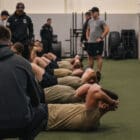
In support of the Department of the Air Force “Culture of Fitness” initiative, the Air Force unveiled changes to its Physical Fitness Assessment and a new fitness program, which will apply to Total Force Airmen.   

Beginning Jan. 1, 2026, the Air Force will pause all PFA testing to facilitate the transition to the updated program. The Air Force will then begin testing Airmen on the new PFA standards on March 1, 2026, with the release and implementation of the revised AFMAN 36-2905.  

From March 1, 2026, through Aug. 31, 2026, all fitness tests will be diagnostic to provide Airmen time to adapt to the new standards. Beginning Sept. 1, 2026, the Air Force will resume official, scored testing under the new PFA standards.

“These fitness changes are about having a healthy, ready force prepared to meet today’s mission and the demands of the future fight,” said U.S. Air Force Chief of Staff Gen. David Allvin. “The updated model reflects our high standards for fitness and ensures our Airmen have the tools they need to protect their long-term health.”

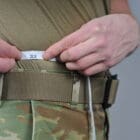
The new PFA reimplements the scored body composition component using the current Waist-to-Height Ratio program and introduces a two-mile run. Additionally, service members will be required to take the PFA every six months regardless of their score. The updated scored components, to include body composition, and increased testing frequency introduce a more challenging physical fitness assessment to better gauge the fitness of the force.

The updated PFA features a 100-point scoring system across four categories:  

• Cardiorespiratory (50) 

• Waist-to-Height Ratio (20) 

• Muscle Strength (15)  

• Muscle Core Endurance (15)

All alternate exercises for cardiovascular, strength and endurance components remain an option for Airmen during their PFA; however, Airmen will be required to perform a two-mile run during at least one PFA every 365 days; however, Airmen will be required to perform a two-mile run as their cardio component during at least one PFA every 365 days.  

Active-Duty members can complete the body composition measurement up to five days before their PFA. Air Force Reserve and Air National Guard members may complete their body composition component during their drill period prior to their PFA. All members retain the option to take their body composition measurement during the PFA, but that is not mandatory. 

To better foster a culture of fitness across the force, installation commanders may now direct units to conduct mass testing for PFAs twice per year on the following cycles: 

Cycle 1 – September to March 

Cycle 2 – March to September 

In addition to the PFA updates, the DAF is releasing “The Warfighter’s Fitness Playbook,” which provides guidance to Airmen and Guardians reinforcing the service’s efforts to ensure service members safely, healthily and effectively meet fitness and readiness standards. 

“The Warfighter’s Fitness Playbook” is an adaptive and agile resource for Airmen and Guardians for implementing fitness and lifestyle management programs to include sleep and nutritional tips, and exercise and fitness guidance.    

This toolkit emphasizes how physical fitness is essential for service members to meet and exceed the demands for airpower through strength and stamina and provides a comprehensive guide for Airmen to reach and maintain a high level of physical fitness. 

This change augments the DAF’s approach to fitness, building a more ready and resilient force by empowering Airmen to prioritize their health and encourage excellent performance.  

AFMAN 36-2905, “The Warfighter’s Fitness Playbook” and updated PFA scoring components can be found at www.afpc.af.mil/Career-Management/Fitness-Program. 

Secretary of the Air Force Public Affairs

One Month Out for MAG Exchange at Tucson, AZ

Saturday, September 20th, 2025

We’re about a month away from the first MAG Exchange in Tucson. The focus is on ANG and AFRC ground combatants who are attending WEPTAC.

Final Basing Decision for Special Operations Wing to Davis-Monthan AFB, Revisions to Maximize Effectiveness

Monday, September 15th, 2025

ARLINGTON, Va. (AFNS) —  

The Department of the Air Force has selected Davis-Monthan Air Force Base, Arizona, as the new location for the 492nd Special Operations Wing.

Originally announced in August 2023, the plan to establish the 492nd SOW at Davis-Monthan AFB has been refined to prioritize mission effectiveness, cost efficiency and alignment with Air Force and Department of War priorities.

Following the required environmental analysis, these previously announced units will relocate to Davis-Monthan AFB:

• Headquarters, 492nd Special Operations Wing at Hurlburt Field, Florida

• 492nd Special Operations Theater Air Operations Squadron at Duke Field, Fla.

• 319th Special Operations Squadron at Hurlburt Field, Fla.

• Air Combat Command Intelligence Squadron, new activation

Additionally, as part of a refined plan, Davis-Monthan AFB is identified as the preferred location for the following units as part of the 492nd SOW:

• 34th Special Operations Squadron at Hurlburt Field, Fla.

• 20th Special Operations Squadron and 20th Special Operations Aircraft Maintenance Squadron at Cannon Air Force Base, New Mexico

The Air Force will begin the required environmental analysis on proposed changes beginning fall 2025.

Secretary of the Air Force Public Affairs

AFSOC Stands Up 31st Air Task Force

Sunday, September 14th, 2025

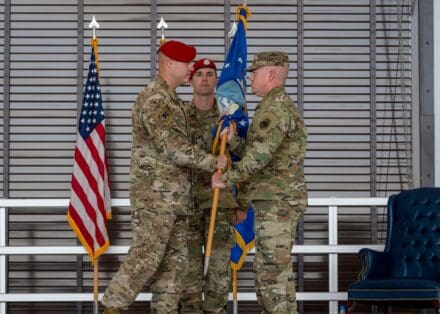
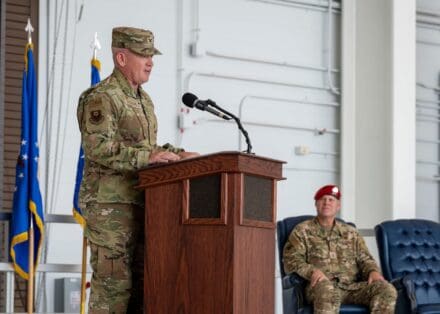
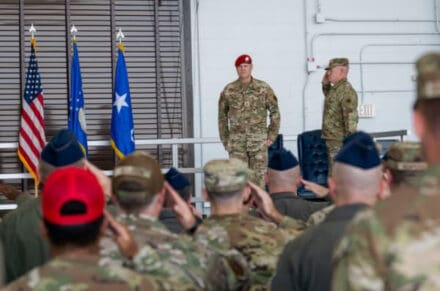
HURLBURT FIELD, Fla. – Air Force Special Operations Command activated the 31st Air Task Force July 15 and marked the milestone with a stand-up and assumption of command ceremony Sept. 12 at Hurlburt Field.

The ceremony presided over by U.S. Air Force Maj. Gen. Michael Martin, AFSOC deputy commander, marked the official activation of AFSOC’s second ATF. U.S. Air Force Col. Brad M. Dvorak assumed command, and Chief Master Sgt. Matthew Greiner will serve as the command chief.

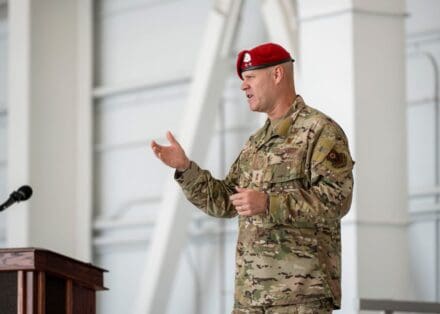
“We are activating the next Air Force unit of action,” said Martin. “This unit is deliberately integrated, self-sufficient, and ready to bring airpower anywhere in the world.”

ATFs are limited-scale, experimental units designed to provide combat capabilities to the Joint Force. As the Air Force transitions away from the Expeditionary Air Base model, ATFs serve as a step toward the Air Force’s long-term design for building fully ready, taskable units prepared to compete and win.

“We have been what the nation needed us to be for the last 20 years,” said Martin. “This is the next chapter in how the Air Force meets the next threats and challenges globally.”

Airmen assigned to the ATF will align with the Air Force Force Generation cycle, deploying as cohesive units rather than aggregating personnel from multiple installations. The deliberate cycle fosters unit familiarity and provides clearer assessments of Air Force capacity to the joint force.

“You won’t find a better integrated group of Airmen working across mission lines, united by a shared vision and forged through incredible community support,” said Dvorak.

The stand-up of the 31st ATF reflects a service-wide effort to build teams capable of delivering integrated capabilities to combatant commanders while strengthening the Air Force’s long-term force design.

“In short order, we’re bringing air superiority any time, any place, anywhere,” said Dvorak. “Chief Greiner and I are so grateful to lead such a talented group of individuals.”

The Department of the Air Force has designated seven ATFs across the service as part of this force presentation initiative. ATFs mark a key stage in the Air Force’s continuing path to modernization and readiness, ensuring the service is postured to outpace emerging threats.

Story by 2nd Lt Rachel Heck | 1st Special Operations Wing

Thunder Dome: Looking Back, Powering Forward with AFSOC Innovation

Saturday, September 13th, 2025

HURLBURT FIELD, Fla. —  

Air Force Special Operations Command continues to champion innovation with its third annual Thunder Dome Innovation Competition scheduled this fall. Beyond the competition, the program’s success is measured by the real-world impact of its funded projects.

Every year, the competition solicits project submissions from Airmen across the AFSOC enterprise that can positively benefit readiness. Once reviewed, senior leaders select the teams with the best proposals to present in front of a judging panel. The command awards the winners with funding to develop their concepts into tangible solutions.


As we prepare for the next Thunder Dome competition, here’s a look at the progress of past winners and their ongoing projects:

From Prototype to Production: The LaraCota Comm Cord Tester

Funded through the 2024 Thunder Dome competition, the LaraCota Comm Cord Tester introduced by a member of the 27th Special Operations Wing, progressed from prototype to mass production upon additional evaluation at Cannon Air Force Base, New Mexico.

K-RATH: A Collaborative Approach to Innovation

K-RATH, developed by the 492nd SOW, received an initial Thunder Dome award for prototype development. Further funding secured collaborations with Michigan Technological University students for engineering testing and product design by Nottingham Spirk, with support from the Office of the Assistant Secretary of the Air Force for Acquisition, Technology and Logistics. The next stage for the project is further prototype development.

Enhancing Training Capabilities: The Electrical Training Board and Specialized Fueling Trainer

The 2025 Thunder Dome competition funded two projects focused on training. The 353rd SOW at Yokota Air Base received an investment to develop an Electrical Training Board, coordinating with Air Education and Training Command; while the 492nd SOW was awarded funding for a Specialized Fueling Trainer, currently under further prototype development with SOFWERX.

These featured innovations offer just a glimpse into the outcomes of the Thunder Dome competition. By empowering Air Commandos with funding, resources, and a platform to share ideas, AFSOC fosters a culture of continuous improvement with its annual Thunder Dome program.

Voting for the 2026 Thunder Dome Innovation Competition is now open and runs through September 26th. Select the best game-changing ideas to solve our toughest challenges, your vote will help determine the finalists.

Use this link to set up your DoD-Registered account and cast your three votes for the most impactful ideas. Every Air Commando voice matters!

Air Force Special Operations Command Public Affairs

CRT Chief: The Quarterback to Mission Success

Wednesday, September 10th, 2025

TRAVIS AIR FORCE BASE, Calif. —  

For the National Football League, teams are required to have a handful of captains before the start of the season and these team leaders are elected by their peers to ensure their teammates’ jobs are performed at the highest level and that there is accountability during a long, tough football season.

Similarly, a Contingency Response Team (CRT) Chief is elected by their peers to lead a group of highly specialized Airmen and ensure team mission success during tough training exercises and deployments.   

A CRT normally denotes the size of the team deploying, consisting normally between 15-25 Airmen, whereas a Contingency Response Element (CRE) consists of more than 100 Airmen.

To become a Contingency Response Team Chief, an Airman must successfully complete six tasks:

  • Complete an application called a Command Job Qualification Standard
  • Complete landing zone safety officer training,
  • Complete drop zone controller/safety officer training
  • Complete a contingency response mission planning course
  • Complete a mobile command and control communication (C3) operations course.
  • Lead a mission away from their duty station

“A CRE Commander and CRT Chief have similar responsibilities because both can have final mission authority and makes decisions not explicitly assigned to higher-level authority,” Tech. Sgt. Travis Urquhart, 921st Contingency Response Squadron operations expeditor and Exercise Turbo Distribution 25-2 CRT Chief in-training said.

Urquhart is one of two CRT Chiefs in-training to be certified during Exercise Turbo Distribution 25-2, which is a U.S. Transportation Command-led exercise taking place in August at multiple locations.

Turbo Distribution is a Joint Task Force-Port Opening exercise designed to train personnel to rapidly respond to humanitarian aid/disaster response missions around the world. 

“Additionally, the CRE Commander, or CRT Chief, can be the primary liaison with the host nation, coalition or other U.S. forces, the supported command and/or controlling agency,” Urquhart stated. “Unless otherwise indicated, the CRE Commander or CRT Chief may delegate specific duties to other team members as necessary, but in a nutshell, you are responsible for leading a team in the planning, deploying, redeploying and reconstituting a team at any austere airfield around the world.”

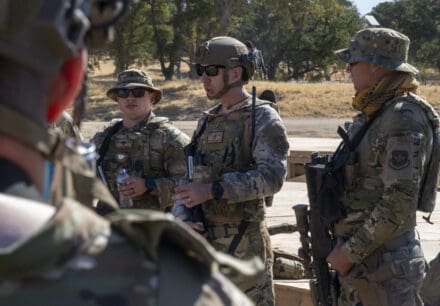
For Exercise TD 25-2, 20 CR Airmen from the 821st Contingency Response Squadron and 921st CRS are participating as part of a CRT which provides aerial port capabilities, conducts airfield assessments and determines the suitability and feasibility of the airfield and landing zones in support of air operations immediately upon arrival at Fort Hunter-Liggett in Jolon, California.

If Exercise TD 25-2 were a football game, the most important position on the field is the quarterback, which would be CRT Chief on location, and the goal, similar to winning the game, is to have mission success upon returning home.

“I left my career field as a boom operator to be in CR,” Urquhart shared. “Now I get to lead highly specialized teams as a CRT Chief and that will open the door to different deployment opportunities and perspectives that I didn’t have before as a boom operator.”

How an Airman becomes selected to become a CRT Chief is actually quite simple. The position is only open for the rank of Technical Sergeant and Master Sergeant. If they are labeled as 1A1 flyers, they will need to step away from their primary mission designation, just like how Urquhart did, to join the 621st Contingency Response Wing for three years in order to become a CRT Chief. Most importantly, these applicants must have demonstrated and excelled at previous leadership positions in order to even be considered.

Finally, CRT Chiefs must complete three field exercises: an observational exercise of a fully qualified team chief, an instructor-assisted exercise to learn how to perform the duties of a CRT chief, and lastly, an evaluation exercise where they are observed by a qualified CRT Chief.

By SSgt Scott Warner, 621st Contingency Response Wing