Lowa Zephyr Mk 2 GTX

Archive for the ‘Air Force’ Category

First Look – US Army’s New Direct View Optic by SIG SAUER

Wednesday, November 4th, 2020

Just as Fiscal Year 2020 was closing out, the US Army awarded SIG SAUER an Other Transaction Agreements contract valued at $77,168,400.00 for the Direct View Optic program. SIG put up their TANGO6T which continues to rack up contract wins.

The Army envisioned DVO of being capable of variable power magnification with minimum magnification of 1.0x with no rounding and maximum magnification greater than or equal to 6.0 power.

Their rationale was that variable power magnification optics combine the capabilities of the non-magnified optic’s ability to engage close quarter targets with a fixed-magnification optic’s ability to detect, recognize, identify, and precisely engage targets at extended ranges. This allows the Soldier to have both critical capabilities without the limitations of either non magnified or fixed magnification optics.

The Army announced the program in June of 2019. It seemed to move rapidly at first, but then stalled as COVID-19 sidetracked many programs. The Army also used the time to consider prioritization of its Next Generation Squad Weapon program, intended to replace the 5.56mm M4A1 and M249 with new weapons firing a 6.8 x 51 mm round with increased range and penetration for use by close combat forces. These include Infantry, Cavalry Scouts, and Combat Engineers as well as those who provide them embedded support, such as Combat Medics. The Army has included its Special Operations Forces as well in the NGSW program.

Just when many expected the Army to cancel the program, they announced the contract award.


This is a TANGO6T mounted to the SIG SAUER SLSR in 6.8mm, their NGSW Rifle candidate, nicknamed the Spear.

The TANGO6T is a 1-6×24 riflescope featuring a Flat Dark Earth (FDE) anodized aircraft grade aluminum maintube, illuminated front focal plane reticle, an ultra-bright red horseshoe dot for fast daylight target acquisition, locking illumination dial, Power Selector Ring (PSR) Throw Lever, and a laser-marked scope level indicator for mount installation. All of the variants I have used so far have featured the red horseshoe dot.

The DVO version of the TANGO6T differs slightly from both the version already adopted by the Army for the Squad Designated Marksman Rifle and the version selected by US Special Operations Command for the Squad – Variable Power Scope program.

The SDMR optic procurement is complete and the S-VPS procurement is ongoing, with a new reticle, despite a lot of rumors to the contrary.

We’ll dispel another rumor as well. These are assembled in the US. No, the optical prescription doesn’t come from the US, no one’s does, at least not for any optic you’d want to use. But everything else is made here, and the whole thing is assembled here as well.


An initial version of the USSOCOM S-VPS.

There will be a new reticle for DVO. From what I understand it will be a BDC reticle for the M855A1 ammunition. It is also slightly shorter in length than the other versions. I’d expect a few other changes as well before it begins fielding, as this always happens. We’ll update you once we hear more.

The optic below was built for the DVO program. It’s the one mounted to the Spear above. The color variations in the photos are due to lighting.

Expect this procurement to move out quickly. Test and evaluation should proceed rapidly as the TANGO6T is already a known quantity. Conversely, this new optic will also have significant impacts on marksmanship training in how to properly use a variable power optic, beyond snipers and designated marksmen. That could mean the training base will have to adapt the SDMR new equipment training for a new caliber, and wider audience. The optics will likely be ready before the force is ready to receive them.

The first tranche of around 45,000 DVO are supposed to go to the US Air Force for use by Security Forces, which is the largest enlisted careerfield in the AF. This will satisfy a requirement we’ve been reporting on since 2018.

However, the US Army will assuredly buy off this contract as well. They awarded it after all. To be sure, the Army is committed to the Next Generation Squad Weapon – Fire Control solution currently being evaluated alongside the NGSW candidates. However, there are two issues afoot. First off, FC will be very expensive and likely only used with the next gen guns once they come online. The second issue is that the Army has almost one million M4/16 rifles in their inventory. Even if NGSW is completely fielded it’s well short of the inventory of rifles and machine guns it will replace. I estimate the M4 will remain in service well into the 2040s in very large numbers, as in hundreds of thousands. While the M4 won’t be the main battle rifle used by close combat forces, there is no reason to not replace the current fixed magnification (1x magnification) M4 COMP from Aimpoint with a variable power optic.

Consequently, there is already talk of a procurement of tens of thousands of DVO for use by close combat forces awaiting NGSW since DVO was written specifically for use with the M4A1. Yes, you read that right, the Army will buy this scope. Remember, the Army initially talked about purchasing 120,000 optics (to include other agency buys) when the requirement dropped.

There’s a lot of room in the contract to buy optics and they can modify it to buy even more if the need arises. Considering it’s an OTA, modifying the ceiling isn’t difficult. The Army just needs to be careful about how long they use the section 804 authority to purchase this piece of equipment (up to five years according to the award data).

However, once it is assigned an NSN, they can transition procurement into sustainment and have the Defense Logistics Agency manage procurement. Along with that move is generally a new contract opportunity and a chance for other vendors to compete to build it. This usually occurs once the initial contract runs out, which is around five years.

This program kicks off soon.

Air Force’s Special Warfare Training Builds Physical, Intellectual Leaders Ready To Handle Threats Worldwide

Wednesday, October 28th, 2020

JOINT BASE SAN ANTONIO-LACKLAND, Texas (AFNS) —

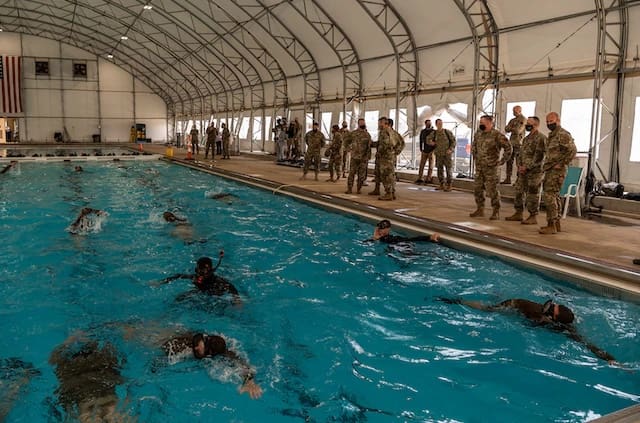
Army Gen. Richard D. Clarke, commander of U.S. Special Operations Command, saw firsthand how Air Education and Training Command officials ensure joint forces are well equipped with ready and lethal special operations Airmen during a visit to Joint Base San Antonio-Lackland Oct. 16.

“This visit shined a spotlight on how AETC recruits and trains all enlisted Air Force special warfare operators,” said Lt. Gen. Brad Webb, commander of Air Education and Training Command. “The next generation of Airmen must be lethal and ready to compete, deter and win in an increasingly complex environment, and it starts here in the First Command.”

The visit traced the initial skills training path of special operators from recruiting and accessions through basic and technical training.

“The realism and intensity of this training is vital because when these Airmen finish their training, they’ll need to address challenges we may not be able to predict,” Clarke said. “AETC is training leaders who will be asked to address an ever-changing landscape where the fight we’ve engaged in since 9/11 may not resemble the threat our adversaries will present in the coming years. The physical toughness, intellectual capacity and ethical core these Airmen are developing during their training will help the Joint Force address the worldwide range of challenges each geographic combatant commander faces.”

“Having the agility of mind to understand mission-type orders, to understand commander’s intent and be able to move out are essential elements of AETC and the training we provide special warfare Airmen,” Webb added.

The path of a special operator starts with Air Force Recruiting Service. To help find the right candidates who can excel through an intense training pipeline, AFRS established the 330th Recruiting Squadron, a specialty squadron whose mission is to effectively scout, develop and guide future special warfare Airmen to their combat calling.

“Our special warfare careers are some of the most challenging career fields we have to fill,” said Maj. Gen. Edward Thomas, AFRS commander. “Candidates must meet exceptionally high physical standards and must have the grit and determination to push further and harder.”

Enlisted special warfare career fields include combat controllers, pararescue, special reconnaissance, and tactical air control party. In 2019, the 330th RCS successfully increased recruitment 20% compared to their inaugural year in 2018.

Once trainees are recruited, Second Air Force takes the lead, beginning with basic military training at JB San Antonio-Lackland, under the responsibility of the 37th Training Wing.

“BMT sets the foundation for all of the Air Force’s enlisted Airmen,” said Maj. Gen. Andrea Tullos, Second Air Force commander. “We are aligning foundational competencies to meet National Defense Strategy objectives so our Airmen immediately enhance mission execution when they join their first Air Force or joint team.”

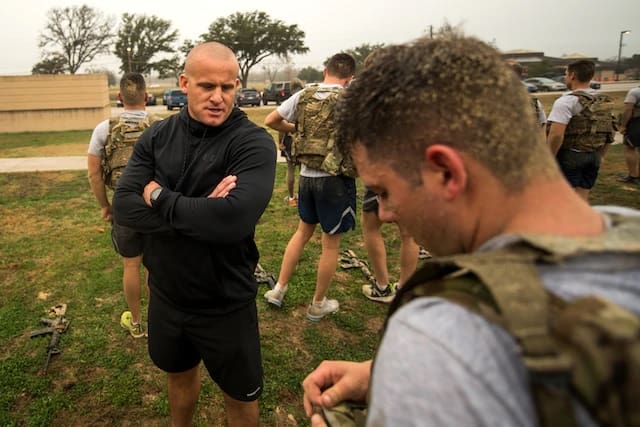
While at BMT, enlisted special warfare trainees receive additional physical training and are aggregated in flights together so they can foster the camaraderie needed to prepare them for the next phase of training they enter in the Special Warfare Training Wing, also located at JB San Antonio-Lackland.

“We are training these newly-minted Airmen to meet the demands of the future battlefield,” said Col. Mason Dula, Special Warfare Training Wing commander. “We push the limits of human performance and technology to build a stronger, smarter, more lethal force capable of solving the nation’s most complex military problems.”

Training begins with the Special Warfare Preparatory Course before recruits are vectored into an Air Force specialty code. Depending on their AFSC, trainees move to other locations around the country for schools such as Air Force Combat Dive School, Airborne and Survival, Evasion, Resistance and Escape School. Each course is meant to push trainees’ mental and physical abilities to their limits.

“As a tactical air control party, I can attest that this training pushes our Airmen to their limits, but it also prepares them for the reality of the austere environments they will face as an operator,” said Chief Master Sgt. Adam Vizi, Second Air Force command chief. “Going through all of the training associated with the TAC-P pipeline ensured I was trained, equipped and ready to deliver timely, accurate and lethal effects on the battlefield.”

There are several training pipelines, which, depending on the specialty, vary in length. Airmen who successfully complete training proceed to their operational units and join Air Force special tactics teams or joint forces at USSOCOM.

The tour also included a visit to the Career Enlisted Aircrew Center of Excellence. Here, members of the 37th Training Group have established an Air Force specialty code baseline and prepare candidates to complete follow-on flight training programs. The COE staff members prepare graduates for nine AFSC-awarding courses, including four that directly support special operations. After completing the Aircrew Fundamentals Course, students who complete the Basic Flight Engineer, Basic Loadmaster Course or Basic Special Missions Aviation Course attend initial qualification courses that prepare them to be Air Commandos.

“These enlisted Airmen take the training they gain here in the First Command and carry it with them through their operational careers,” said Chief Master Sgt. Erik Thompson, AETC command chief. “It is imperative we provide them with the preparation they need to compete in every domain and win for the joint force and the nation.”

Story by Jennifer Gonzalez, Air Education and Training Command Public Affairs
Photos by Johnny Saldivar

First Arctic Survival Kits Installed in Eielson F-35As

Friday, October 23rd, 2020

EIELSON AIR FORCE BASE, Alaska — In November of 2019, Airmen from the 354th Fighter Wing developed a new arctic survival kit for the F-35A Lightning II. Now, 11 months later, the first kits are being installed in Eielson’s F-35A fleet.

Eielson’s F-35As are the first of the Air Force’s fleet to be stationed in an arctic climate, which drove the need for a new survival kit. After months of research, development and testing, the design was sent to the 354th Operations Group commander for approval. In April the kit was given the “green light” and aircrew flight equipment Airmen got busy building them for the approaching winter.

“Due to the smaller size of the seat we are limited on how many items we can pack in here,” said U.S. Air Force Staff Sgt. Ross Dugger, a 354th Operations Support Squadron AFE craftsman. “Over the years, we’ve worked with [survival, evasion, resistance and escape specialists] to develop this kit and decided what is the most essential equipment needed to survive.”

Airmen from AFE are responsible for packing the kit to fit a specific size in the F-35A before it is ready to go into the jet. The kit consists of survival tools and equipment to help pilots in case of an emergency ejection to include a knife for gathering food, a poncho to stay dry, and flares to signal rescue teams.

“It’s been a learning curve, with the seats being so new they are not as easy to pack,” Dugger said. “With time we will become more efficient and continue to ensure our pilots’ safety.”

After the kit has been packed and fitted to the seat, Airmen assigned to the 354th Maintenance Squadron Aircrew Egress Flight bring the kit to the jet and carefully swap the summer kit with the arctic kit. While doing this, Egress also inspects the seat for discrepancies to ensure the pilot will be safe if they eject.

“We are starting from the ground up, setting up systems and learning as we go,” said Staff Sgt. Victor Benitez, a 354th MXS Aircrew Egress specialist. “There’s a lot of components and sometimes it can take a long time to put just one bolt in, but it has to be done so that everything works 100 percent of the time.”

The new arctic seat kits will be installed on all of Eielson’s F-35A fleet and could potentially be used by some partner nations who have F-35s in similar climates.

“Hopefully they never have to use these items but I take a lot of pride in my work, which could potentially save a pilot’s life,” Dugger said.

By Senior Airman Beaux Hebert, 354th Fighter Wing Public Affairs
“Son, only a pimp in a Louisiana whore- house carries pearl-handled revolvers. These are ivory.”

Sunday, October 18th, 2020

The quote actually belongs to Army LTG George S Patton, responding to a reporter during World War II, who asked about his “pearl handled” revolver.

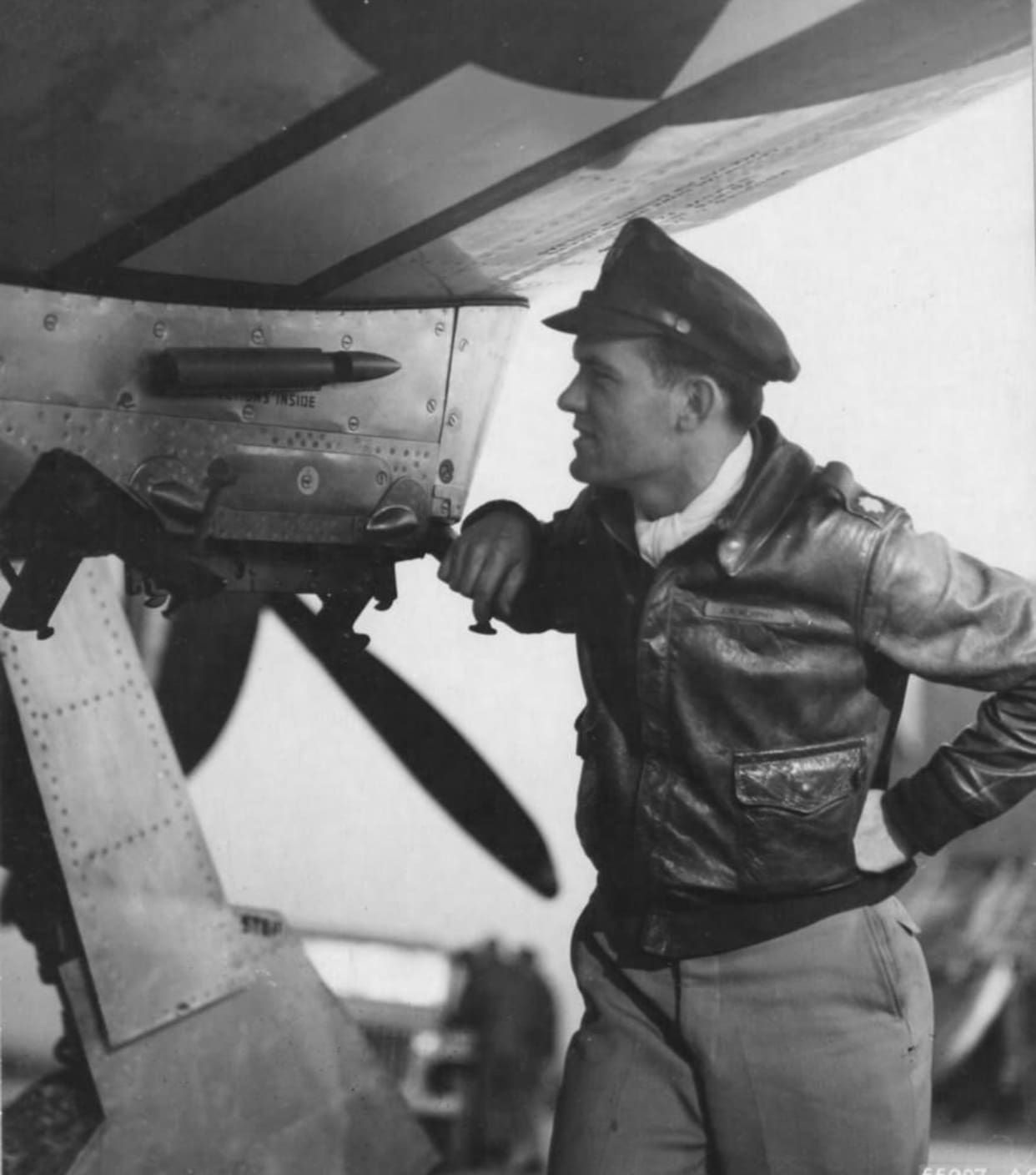
However, it’s the first thing I thought of when I ran across this photo taken in June, 1953 of USAF SSgt Billy Davisson standing guard at the entrance to the Headquarters facilities of the Strategic Air Command, Offutt Air Force Base, Omaha, Nebraska.

Army, Air Force Form Partnership, Lay Foundation for CJADC2 Interoperability

Wednesday, October 14th, 2020

WASHINGTON — Unity among military branches and a combined, all-domain effort could be the difference in winning large-scale, multi-domain battles the Army expects to fight in the future.

To help achieve that goal, the Army and Air Force signed a two-year collaboration agreement in the development of Combined Joint All-Domain Command and Control, or CJADC2, which will impact units in both branches, leaders announced Tuesday.

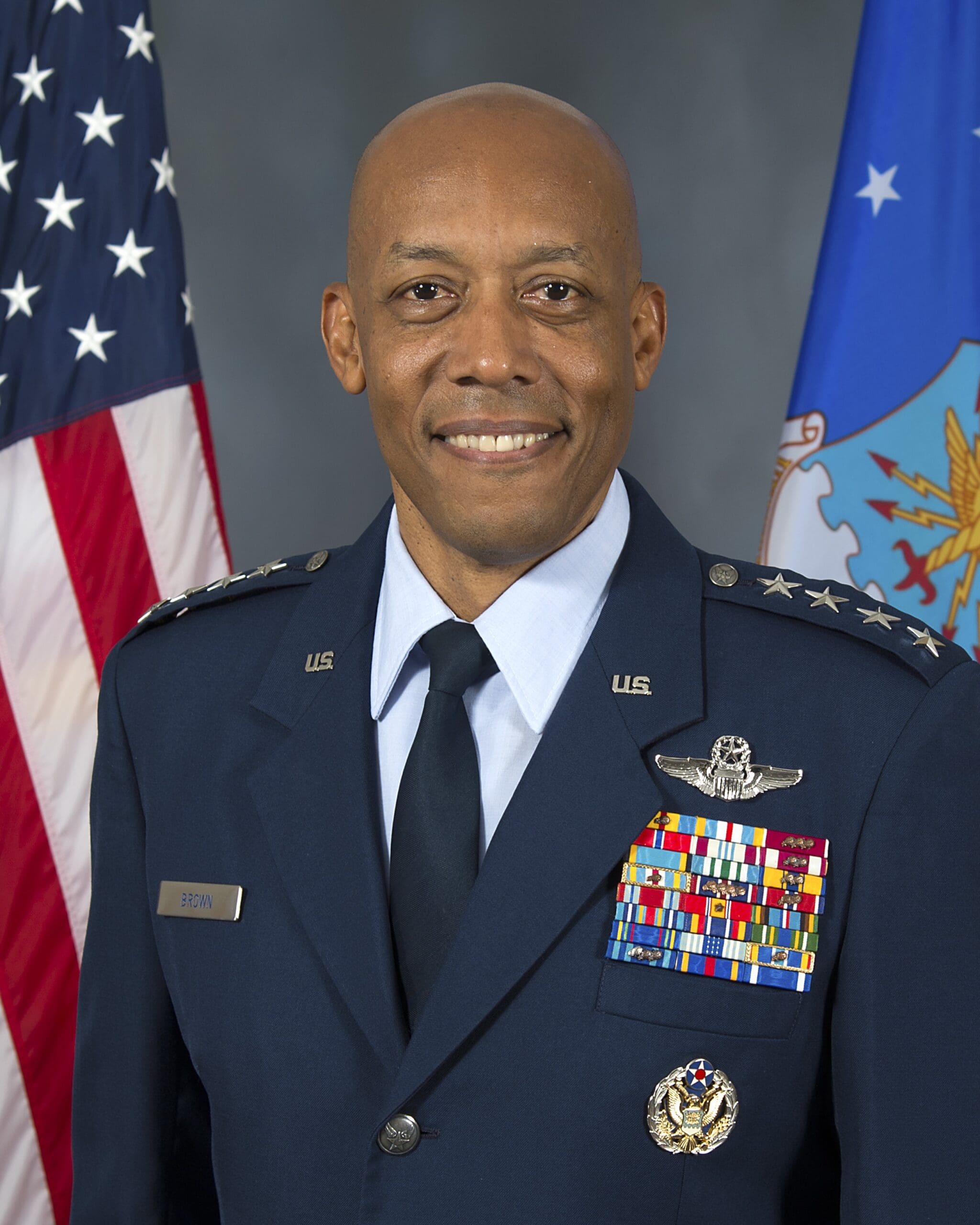
During the daylong meeting at the Pentagon, Army Chief of Staff Gen. James C. McConville and Air Force Chief of Staff Gen. Charles Q. Brown Jr. discussed how to best combine each service’s assets to achieve greater synchronization. It also marked the first Army-Air Force talks since Brown took on his new role in August.

Both service chiefs agreed to establish CJADC2 at the most “basic levels” by defining mutual standards for data sharing and service interfacing in an agreement that will run until the end of fiscal year 2022.

Army Futures Command and the Air Force’s office of strategy, integration and requirements, A-5, will lead the effort, designed by the Defense Department to deliver CJADC2 capabilities to the warfighter quicker and to promote “shared’ understanding of concepts and capabilities.

In the CJADC2 concept, each of the military’s six branches would connect sensors, shooters, and command nodes in a “mesh network” that will allow commanders more options and the ability to act faster. Each branch, including the newly-formed Space Force, must learn to interface with each other and successfully access data, reconnaissance and intelligence collected from across joint networks.

“The core challenges of the future fight are speed and scale,” said Lt. Gen. Charles Flynn, Army deputy chief of staff, G-3/5/7. “The future fight will be much faster, and the joint force will have more sensors and more shooters. [It will] be more widely distributed than ever before.”

The initiative will combine the Army’s Project Convergence with the Air Force and Space Force’s Advanced Battlefield Management System, or ABMS, and will impact the joint forces’ training as well as exercises and demonstrations.

Project Convergence is the Army’s plan to merge its joint force capabilities and keep pace with technological change. On Sept. 18, the Army completed its five-week Project Convergence 20 exercise at Yuma Proving Ground, Arizona, where it tested artificial intelligence capabilities along with its abilities to transmit information from sensors in the air, space and on the ground.

Meanwhile, the Air Force developed ABMS to enable the joint force to quickly collect, analyze and transmit data at machine speeds. Both projects are designed to help make informed battlefield decisions faster.

“ABMS is the Internet-of-Things for the military — it’s ‘IoT.mil.’ Imagine the level of situational awareness typically relegated to traditional brick-and-mortar centers being provided to those who need it most on the edge,” said Preston Dunlap, the Air and Space Force’s chief architect. “Imagine allowing operators to choose what data feeds are important to them and for others to be able to subscribe to get the information they need. The power of this architecture is unlocked by services, allies and partners working together to connect networks and share information at machine speed. That’s all-domain superiority. And today’s event took us one step closer to realizing that future.”

By Joe Lacdan, Army News Service

Air Mobility Liaison Officers Sharpen Their Tactical Edge with IZLID

Saturday, October 10th, 2020

JOINT BASE MCGUIRE-DIX-LAKEHURST, N.J. —

The 621st Mobility Support Operations Squadron is adding another weapon to an already stocked arsenal to enhance situational awareness and tactical edge for its air mobility liaison officers.

The Infrared Zoom Laser Illuminator Designator will replace the dated signal light gun currently used by AMLOs to signal and direct aircraft.

“AMLOs use this equipment in a tactical environment, designating the landing zone for inbound aircraft,” said Maj. Stephen Quinn, 621st MSOS AMLO. “The IR beam is covert, but highly visible for the night vision goggle-wearing aircrew, and allows the AMLO to easily guide the aircraft to the threshold.”

The IZLID is a compact, lightweight infrared laser used for pointing and marking by military forces. The laser is a powerful long-range illuminator, small enough to fit in the user’s pocket and sufficient enough to direct airstrikes.

The new laser is “covert and portable compared to the old light guns,” said Quinn, and more effective in a tactical environment.

“The most important aspect is enhanced situational awareness for aircrew at the push of a button,” Quinn said. “Landing zone approach lights vary in effectiveness, but a quick lase with the IZLID can prevent a crew from selecting the wrong aimpoint.”

The expectation is to utilize the IZLID for all future landing zone operations in-theater. The squadron is planning on purchasing five IZLIDs for deployment use and in garrison training.

“It’s awesome and worth the price,” Quinn said. “AMLOs are basically Jedis already, and this gives us a lightsaber to help with the job.”

A win for AMLOs is a win for the whole squadron. 

“Every day, week, month, and year we get closer and closer to what is needed for MSOS and AMLO Nation equipment-wise,” said Staff Sgt. Sededrick Parks, 621st MSOS supply and equipment manager. “I believe this equipment has catapulted us further in that direction.”

By TSgt Luther Mitchell Jr., 621st Contingency Response Wing Public Affairs

High Ground Wins Next Gen ANG Helmet Cover

Tuesday, October 6th, 2020

Ehmke Manufacturing Company, Inc., home of High Ground is pleased to announce that the Air National Guard (ANG), has awarded a contract to purchase High Ground’s newly designed “TANGO-SFS” helmet cover for their special operations and security forces units.

High Ground’s TANGO-SFS helmet cover is specifically developed for operators that require demanding performance criteria, functionality and Berry Compliance. High Ground’s technical staff and application engineers worked directly with the Air National Guard to evaluate, research and test downrange feedback that resulted in product enhancements and the incorporation of unique design elements in the ANG’s head borne protection systems.



“Our team of engineers working under the direction of Executive Vice President Michael Runella, were able to develop a helmet cover that exceeds the requirements to support the mission of our Air National Guard (ANG),” said High Ground President Glenn Aust. “Our mission at High Ground is and has always been to focus on what we can do to support our war fighters as they selflessly work each day to protect us and the interests of our country.”  

“These advancements position High Ground as a major contributor to future head borne systems that will benefit the military. High Ground now offers a 100% Berry Compliant, made in the U.S.A., commercial off the shelf (COTS) product,” said Mike Runella, Executive Vice President.

“Mike Runella and his product development team did an excellent job of translating the Air National Guard’s performance criteria into a robust head borne systems product. The joint collaboration between the soldier and our technical team has resulted in a high-performing product for our front-line soldiers,” commented Ehmke CEO Bob Rosania. “I see this as just the first product we will develop with the help of the Air National Guard.

The complete High Ground product catalogue of tactical gear and armor can be found at www.highgroundgear.com.

High Ground: We Make Every Stitch Count…


RCO Delivers Department of the Air Force Capabilities

Monday, October 5th, 2020

WASHINGTON (AFNS) —

Less than 200 personnel assigned to the Department of the Air Force Rapid Capabilities Office rapidly develop capabilities to outpace and counter the increasing threats of adversaries.

Their primary focus incorporates cutting-edge approaches to standard acquisition processes to produce capabilities for both the Department of Defense and the DAF, which includes the U.S. Air Force and the U.S. Space Force.

The mission of the DAF RCO is to expedite development and fielding of select DoD combat support and weapon systems by leveraging defense-wide technology development efforts and existing operational capabilities.

“Built on using speed and efficiency, we expedite the fielding of critical capabilities to the warfighter,” said Randy Walden, director and program executive officer for the DAF RCO. “This includes operators in both the United States Air Force and the United States Space Force in support of the National Defense Strategy.

Originally activated in April 2003, one of its first projects was to deploy significant upgrades to the Integrated Air Defense System, now operational around the National Capital Region, to meet critical counter-terrorism objectives before the January 2005 Presidential Inauguration Day.

Today, the DAF RCO portfolio includes several high priority developmental and experimental programs.

For example, the X?37B Orbital Test Vehicle program is an experimental test platform that supports the U.S. Space Force to meet DAF objectives. Space Professionals conduct X-37B launch and on-orbit operations, and the DAF RCO program office team will include Space Force members as the new service continues to stand up.

The X-37B is an experimental test program to demonstrate technologies for a reliable, reusable, unmanned space test platform. The primary objectives of the X-37B are twofold: reusable spacecraft technologies for America’s future in space; and operating experiments, which can be returned and examined on Earth.

Currently, the X-37B is conducting on-orbit operations in its sixth mission.

The DAF RCO is also home to the B-21 Raider program. The B-21 is a U.S. Air Force priority, which will provide critical operational capability and flexibility across a wide range of military objectives, providing both conventional and nuclear capabilities in fulfillment of national objectives.

The B-21 is being designed to be highly survivable with the ability to penetrate modern air defenses to strike any target, anywhere on the globe in a contested area of operations.

The program plans to deliver the first B-21 aircraft to operational bases in the mid-2020s.

“The DAF RCO is a unique organization because it supports priorities for both the Space Force and Air Force,” Walden said. “The office is staffed with a variety of functional DAF specialists who form a collaborative melting pot of expertise built specifically to operate within the gray areas of the standard acquisition processes.”

The DAF RCO conducts streamlined acquisitions in response to Air and Space Forces and Combatant Command requirements. It reports directly to a board of directors comprising of the Under Secretary of Defense for Acquisition and Sustainment; Under Secretary of Defense for Research and Engineering; Secretary of the Air Force; Assistant Secretary of the Air Force for Acquisition, Technology and Logistics; U.S. Space Force Chief of Space Operations; and Chief of Staff of the Air Force.

“Whether it’s digital engineering, prototyping or modern software development, the DAF RCO is committed to advancing the capabilities of the Department of the Air Force,” Walden added.

By Secretary of the Air Force Public Affairs