Celebrate 20 years of the TLR-1

Archive for the ‘Army’ Category

Sensor with 100,000 Times Higher Sensitivity Could Bolster Thermal Imaging

Friday, October 9th, 2020

Better detecting microwave radiation could improve thermal imaging, electronic warfare, radar

RESEARCH TRIANGLE PARK, N.C. — Army-funded research developed a new microwave radiation sensor with 100,000 times higher sensitivity than currently available commercial sensors. Researchers said better detection of microwave radiation will enable improved thermal imaging, electronic warfare, radio communications and radar.

Researchers published their study in the peer-reviewed journal Nature. The team includes scientists from Harvard University, The Institute of Photonic Sciences, Massachusetts Institute of Technology, Pohang University of Science and Technology, and Raytheon BBN Technologies. The Army, in part, funded the work to fabricate this bolometer by exploiting the giant thermal response of graphene to microwave radiation.

“The microwave bolometer developed under this project is so sensitive that it is capable of detecting a single microwave photon, which is the smallest amount of energy in nature,” said Dr. Joe Qiu, program manager for solid-state electronics and electromagnetics, Army Research Office, an element of the U.S. Army Combat Capabilities Development Command’s Army Research Laboratory. “This technology will potentially enable new capabilities for applications such as quantum sensing and radar, and ensure the U.S. Army maintains spectral dominance in the foreseeable future.”

The graphene bolometer sensor detects electromagnetic radiation by measuring the temperature rise as the photons are absorbed into the sensor. Graphene is a two dimensional, one-atom layer thick material. The researchers achieved a high bolometer sensitivity by incorporating graphene in the microwave antenna.

A key innovation in this advancement is to measure the temperature rise by superconducting Josephson junction while maintaining a high microwave radiation coupling into the graphene through an antenna, researchers said. The coupling efficiency is essential in a high sensitivity detection because “every precious photon counts.”

A Josephson junction is a quantum mechanical device which is made of two superconducting electrodes separated by a barrier (thin insulating tunnel barrier, normal metal, semiconductor, ferromagnet, etc.)

In addition to being thin, the electrons in graphene are also in a very special band structure in which the valence and conduction bands meet at only one point, known as Dirac point.

“The density of states vanishes there so that when the electrons receive the photon energy, the temperature rise is high while the heat leakage is small,” said Dr. Kin Chung Fong, Raytheon BBN Technologies.

With increased sensitivity of bolometer detectors, this research has found a new pathway to improve the performance of systems detecting electromagnetic signal such as radar, night vision, LIDAR (Light Detection and Ranging), and communication. It could also enable new applications such as quantum information science, thermal imaging as well as the search of dark matter.

The part of the research conducted at MIT included work from the Institute for Soldier Nanotechnologies. The U.S. Army established the institute in 2002 as an interdisciplinary research center to dramatically improve protection, survivability and mission capabilities of the Soldier and of Soldier-supporting platforms and systems.

By US Army CCDC Army Research Laboratory Public Affairs

Natick Soldier Center’s New Fabric Enhances Cybersecurity, Subzero Weather Durability

Thursday, October 8th, 2020

NATICK, Mass. – The Combat Capabilities Development Command Soldier Center, or CCDC SC, is working with industry to develop a new shelter fabric that will increase durability in subzero conditions and provide electromagnetic, or EM, shielding. The EM shielding will prevent the detection of EM emissions that are generated within a Command Post shelter and provide cybersecurity to Command Post wireless networks.

CCDC SC’s Expeditionary Maneuver Support Directorate is working with industry partners to develop the new laminate systems with higher performance and durability. Kristian Donahue, a chemical engineer in EMSD at CCDC SC, explained that General Purpose, or GP, shelter fabrics are currently made with a coating that becomes brittle at subzero temperatures. This impacts the durability of the fabric, the environmental protection of the shelter, and the light discipline aspect of signature management. Light discipline refers to luminous signs that can lead to the detection of the presence of troops and military facilities.

Donahue stated that the team was already able to successfully develop a new GP tent material that eliminates the low-temperature durability issues, a significant milestone which will help benefit the EM shielding work as well.

“Our goal is to also add additional functionality to this GP tent fabric by integrating an electromagnetic shielding material into the GP fabric,” said Donahue. “This EM shielding fabric will prevent the EM emissions generated within a Command Post shelter from being detected by adversaries, as well as provide cybersecurity to wireless networks operating within the CP.”

Donahue explained that EM shielding is important for both security and Soldier safety.

“Electromagnetic emissions can be detected by adversaries therefore giving away your position,” said Donahue. “Those emissions can also be intercepted and exploited by cyber warfare units.”

The new shelter fabric is also lower weight, thus reducing the logistical footprint. Moreover, there is no longer the risk of increased volume associated with the current fabric, which may become stiff at subzero temperatures and the stiffness can affect volume. In certain cases the increased volume may interfere with moving and packing.

The new fabric technology will also enhance Soldier protection and lethality.

“With increasing peer and near-peer adversaries, the ability to maintain Command and Control and Communications becomes highly imperative,” said Donahue. “The ability to maintain C3 while not being detected is important in the ability to increase unit survivability and unit lethality. The ability to deny detection during a multi-domain battle will ensure dominance on the battlefield.”

By Jane Benson, CCDC SC Public Affairs

US Army Face Coverings Available from Clothier Design Source

Tuesday, October 6th, 2020

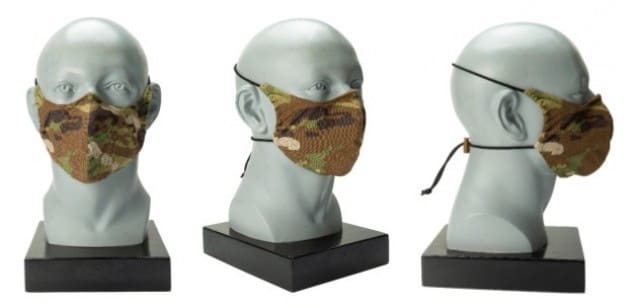
The U.S. Army Combat Capabilities Development Command Soldier Center designed and developed Army Face Coverings based on the guidelines from the Center for Disease Control (CDC) and Department of Defense (DoD) to wear cloth face coverings when social distancing protocols could not be met.

There are currently two designs:

Clothier Design Source, a Minnesota-based manufacturer of medical textiles offers both in Black, Tan 499 and OCP. Your also offer embroidery.

Visit www.clothierdesignsource.com.

US Army to Disband Asymmetric Warfare Group and Rapid Equipping Force

Saturday, October 3rd, 2020

Ever since the Army moved the Asymmetric Warfare Group and Rapid Equipping Force under Training and Doctrine Command, General Paul Funk has been working to disband the units, even go so far as to deactivate elements within AWG before the Army had made a final decision.

This week, the Army made their announcement. The decision is short sighted. The Army talks of transitioning from counter-insurgency operations to large-scale combat across multiple domains but then fails to acknowledge how the Russians are currently conducting operations globally.

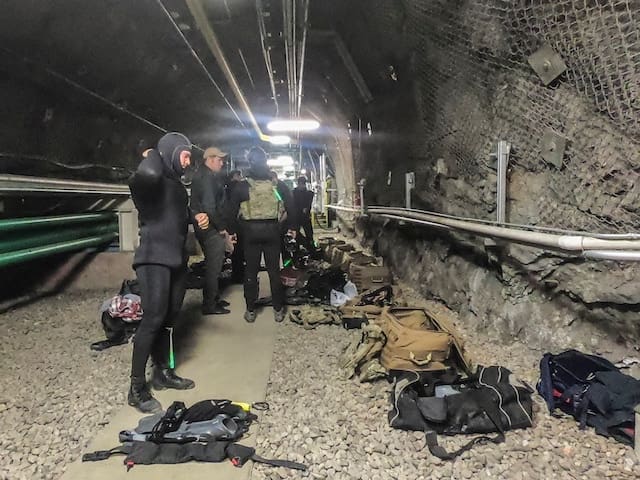
The threats continue to remain asymmetric and require agile acquisition to rapidly identify requirements, assess niche solutions and field them. Just look at the subterranean work these two units have done.

There are several other commands within the Army where AWG and REF would have been more effective and adapted to changes within the Army. For example, the easy button was to move them to Army Futures Command to accomplish the tasks set forth above. That’s right in AFC’s mission.

Alternatively, they could have been moved to USASOC and adapted slightly to more adequately support SOF missions. Or, they could have been moved under the fledgling Security Force Assistance Command.

Any of those courses of action would have ensured that the US armed forces had organizations dedicated to assessing new threats and working to rapidly mitigate those threats.

America is more vulnerable without both AWG and REF.

Below is the Army’s announcement.

Army to discontinue AWG, REF efforts next year

By Devon Suits, Army News Service October 2, 2020

WASHINGTON — Army senior leaders announced plans to discontinue both the Asymmetric Warfare Group and Rapid Equipping Force, as the service shifts funding and resources from counter-insurgency operations to large-scale combat across multiple domains.

For more than 14 years, the AWG and REF have provided Soldiers with rapid materiel solutions and operational advisory support to close capability gaps during operations in Iraq, Afghanistan and elsewhere.

Both organizations fall under U.S. Army Training and Doctrine Command and are slated to close no later than Sept. 30, 2021.

For the next year, AWG and REF leadership will prioritize a seamless transition of personnel, all while simultaneously moving programs and equipment to other agencies throughout the force, TRADOC officials said.

Mission

The REF bridged gaps between tactical-level requirements for materiel solutions and the long-term Joint Capabilities Integration and Development System process across most commodity areas.

Established in 2002 out of Fort Belvoir, Virginia, the REF provided Soldiers with non-standard equipment solutions to support mission demand, said Steven Sliwa, its deputy director.


Later in 2006, the Army established the AWG, headquartered at Fort Meade, Maryland. During operations in Iraq and Afghanistan, the AWG provided operational advisory support to develop rapid solutions to enhance Soldier survivability.

At the time, the AWG helped the Army avoid “tactical surprise” and fight back against an emerging improvised explosive device threat throughout the area of responsibility, said Lt. Col. Morgan Southern, the AWG Charlie Squadron commander.

During the height of the wars in Iraq and Afghanistan, the Army identified many institutional shortcomings. It was incumbent of both agencies to respond to these capability gaps, which led to the development of new doctrine, organization, training, materiel, leadership and education, personnel, and facilities, or DOTMLPF, throughout the ranks — specifically for counter-insurgency operations, according to TRADOC officials.

In a targeted effort to streamline the materiel process, the Army granted REF leadership the authority to approve urgent requests, Sliwa said. Soldiers could fill out a “REF 10-liner” — a 10-question form — to identify a tactical problem and various characteristics, and request REF to find a solution.

“The goal has always been speed,” as the REF worked to equip Soldiers within 180 days of receiving a 10-liner request, Sliwa added.

Similarly, AWG stepped into an operational advisory support role to assist formations across a broad range of missions at the point of need, Southern said.

Counter-unmanned aircraft systems

The AWG and REF both focused on a range of Army challenges, working closely with other Army and Defense Department agencies, along with academia and commercial research, development, and technology communities.

Some accomplishments include developing solutions to counter unmanned aircraft systems and preparing the Army for underground operations.

The growing threat of unmanned aircraft systems, coupled with the speed of innovation of off-the-shelf UAS technology, all supported the need for counter-UAS policy.

“We identified the emerging threat and conducted a variety of global scout activities to help the Army understand … before it materialized on the battlefield,” he said.

The AWG focused on requirements to help fend off an opposing UAS, all while informing commercial solutions to ensure the survivability of Army-owned assets. The Army’s counter-UAS response pushed the development of doctrine and helped improve training, Southern added.

The REF also played a role in bolstering the Army’s counter-UAS capability, Sliwa said. The agency organized the first counter-UAS experiment at Yuma Proving Grounds, Arizona.

The result of that experiment led to REF’s procurement of the DroneDefender counter-UAS system, Sliwa said. Visually similar to a rifle, the defender system allowed Soldiers to disrupt an adversary’s UAS through directed energy.

The Army’s counter-UAS response “is a good example of how both organizations worked closely to identify a materiel solution … because the AWG had a full understanding of how [UASs] would be employed,” Sliwa added.

Today, the Army continues to lead a joint effort to align counter-UAS systems by enabling more “plug and play” technological capabilities, as part of the Joint Counter-Small Unmanned Aircraft Systems office.

Underground operations

The AWG and REF also helped close a capability gap tied to subterranean operations. Research on underground operations started in Afghanistan, where units encountered increase use of water-management channels, known as a Karez, by enemy forces, Southern said.

“The AWG had operational advisors on the ground with companies and platoons in Afghanistan,” he added. “When Soldiers started to encounter this challenge, AWG personnel begin to assist them at the point of need.”

AWG quickly developed techniques, tactics and procedures, and later shifted Army operations in the subterranean environment.

The REF also provided a wide range of solutions to maintain operational effectiveness while operating underground. Solutions included compact and secure network communications; personnel tracking; chemical, biological, radiological and nuclear interface upgrades; relay nodes; and wireless video capabilities, REF officials said.

Moving on

As the former director of REF, Sliwa said he is incredibly proud of all the hard work the organization did to support the warfighter.

“We believe our best always came after we partnered with other agencies and organizations,” he said. “I am excited to see how the Army takes [the REF] on in the future.”

Similarly, Southern is humbled to have served two tours with the AWG. He is a former deputy commander of AWG, troop commander, and officer-in-charge of the operations and research analysis cell, he said.

“I am extremely proud to have served in this unit and witness all that this unit has done for our Army,” Southern said. “AWG’s contribution has been tremendous” as it maintained its primary mission — help others succeed.

To ensure the value of the organization’s work over the past 14 years is not lost, all lessons learned will be maintained by the U.S. Army Combined Arms Center via the Center for Army Lessons Learned, Centers of Excellence, and other TRADOC enterprise stakeholders.

Landmark Discovery Could Improve Army Lasers, Precision Sensors

Friday, October 2nd, 2020

RESEARCH TRIANGLE PARK, N.C. — An Army-funded landmark discovery at New York University could change the way researchers develop and use optical technologies, such as lasers, sensors and photonic circuits over the next decade.

After years of research, the team of scientists achieved what many thought was perhaps impossible–they developed a method to create colloids that crystallize into the diamond lattice. This photonic technique, published in Nature, could lead to cheap, reliable and scalable fabrication of 3D photonic crystals for optical circuits and light filters.

These 3D photonic crystals—self-assembled formations of miniscule materials in a stable assembly—could open the door to lightweight high-efficiency lasers, precise light control with 3D photonic circuits and new materials for managing thermal or radio signatures.

High-efficiency lasers are key to Army modernization priorities, including Air and Missile Defense, as they play a key role in both precision sensing and directed energy systems. Likewise, efficient lasers and integrated photonic circuits will play a key role in next-generation technologies like light-based quantum computing, atomic clocks and gyroscopes for precision navigation and timing, and optical systems with improved size, weight, and power.

“This long-sought demonstration of the first self-assembled colloidal diamond lattices will unlock new research and development opportunities for important Department of Defense technologies which could benefit from 3D photonic crystals,” said Dr. Evan Runnerstrom, program manager, Army Research Office, an element of the U.S. Army Combat Capabilities Development Command’s Army Research Laboratory.

Colloidal crystals, made up of spheres hundreds of times smaller than the diameter of a human hair, can be arranged in different crystalline shapes depending on how the spheres are linked to one another. Each colloid attaches to another using strands of DNA glued to surfaces of the colloids that function as a kind of molecular Velcro. When colloids collide with each other in a liquid bath, the DNA snags and the colloids are linked. Depending on where the DNA is attached to the colloid, they can be programmed to spontaneously create complex structures.

This process has been used in the past to create strings of colloids and even close-packed cubic colloidal crystals, but not the diamond structure—which displays an optical band gap for visible light. Much as a semiconductor filters out electrons in a circuit, an optical band gap completely rejects certain wavelengths of light. Filtering light in this way is practical only if the colloids are arranged in a diamond formation, a process previously deemed too difficult and expensive to perform at commercial scale.

“There’s been a great desire among engineers to make a diamond structure,” said Dr. David Pine, professor of chemical and biomolecular engineering at the NYU Tandon School of Engineering. “Most researchers had given up on it, to tell you the truth – we may be the only group in the world who is still working on this. I think the publication of the paper will come as something of a surprise to the community.”

The investigators discovered that they could use a steric interlock mechanism that would spontaneously produce the necessary staggered bonds to make this structure possible. When these pyramidal colloids approached each other, they linked in the necessary orientation to generate a diamond formation. Rather than going through the painstaking and expensive process of building these structures through the use of top-down approaches like nanofabrication, this mechanism allows the colloids to structure themselves from the bottom-up without the need for outside interference. Furthermore, the diamond structures are stable, even when the liquid they form in is removed.

The team and their collaborators—including researchers from the Centre de Recherche Paul Pascal – CNRS, Pessac, France; and Sungkyunkwan University, Suwon, South Korea—are now focused on converting these colloidal diamonds into 3D photonic crystals that can be used in a practical setting. They are already creating materials using their new structures that can filter out optical wavelengths in order to prove their usefulness in future technologies.

“I am thrilled with this result because it wonderfully illustrates a central goal of ARO’s materials design program — to support high-risk, high-reward research that unlocks bottom-up routes to creating extraordinary materials that were previously impossible to make,” Runnerstrom said.

The National Science Foundation also funded this research.

By US Army CCDC Army Research Laboratory Public Affairs

D3O Impact Protection Specified by US Army

Thursday, October 1st, 2020

Thursday 1 Oct, 2020 – D3O is proud to be the specified helmet suspension pad supplier in the recently awarded Integrated Helmet Protection System (IHPS) Suspension System contracts. The split awards to VisionCorps (Lancaster, Pennsylvania), and Winston-Salem Industries For The Blind Inc. (Winston-Salem, North Carolina), are Firm Fixed Price Indefinite Delivery Indefinite Quantity (IDIQ) contracts, with deliveries through 21 June 2023. Under the terms of the contract, D3O will deliver up to 100,000 suspension pad sets per year. Building on D3O’s past performance delivering IHPS helmet pads to the US Army as a sub-tier supplier during the Low Rate Initial Production (LRIP) program phase, these latest awards cement D3O’s market position as a leading provider of next generation head protection to the US Armed Forces.

The IHPS is one of four subsystems of the cutting-edge Soldier Protection System (SPS), a modular, scalable, tailorable platform designed to defeat current threats at a reduced weight in comparison to the Army’s existing Personal Protective Equipment (PPE) system. SPS increases the warfighter’s survivability, mobility and modularity by optimizing soldier protection while effectively reducing weight with the latest technologies and managing all lifecycle aspects of personal protective equipment. SPS provides the soldier with multiple levels of protection tailorable to a broad range of missions.

The IHPS consists of a helmet, with provision for adding mandible protection and/or ballistic visor for mounted use. The system is designed to protect a soldier’s head, enabling soldiers to configure its various components to optimize protection to the specific threat and mission.

D3O, a UK-based impact protection company with offices and Berry Amendment-compliant production capability in the US, was the first company to simultaneously meet the IHPS system’s rigorous 14 foot/second impact protection requirement while delivering improved performance for the traditional 10 foot/second requirement. The company is now producing a one-size-fits-all IHPS helmet pad system that is also lighter and more comfortable than the previous generation. This reduces soldier burden, allowing for increased survivability, agility, and maneuverability.

To develop the system, D3O leveraged its previous helmet pad design expertise supplying multiple Defense customers, including prominent international protective kit providers, as well as its expertise developing market-leading impact protection across the industrial, sports, motorcycle and electronics markets. The result, developed in collaboration with the National Industries for the Blind (NIB), is a helmet pad set that exceeds the requirements set by the US Army. D3O commenced IHPS Generation I LRIP in summer 2018.

Bill VanMullekom, Executive Vice President, said: “Our ultimate goal for the SPS IHPS program is to bring the benefits of next generation D3O Impact Protection to those that need it most. Our next generation helmet pad systems meet the most stringent impact standards while being suited for a wide array of helmet shells, offering maximum protection to the warfighter. D3O invests heavily in its new material and product engineering pipeline initiatives and is proud to serve US Army needs with this latest technology.”

The new offering complements D3O’s helmet pad range, consisting of the original TRUST Stealth and Berry Compliant TRUST Nimbus, the company’s latest lightweight system tested for use in both aramid and polyethylene helmet shells for greater versatility. Nimbus is available in 7- and 9-pad configurations, the latter affording end users the option to remove a single pad to create a channel for over-the-ear hearing communication straps. A study conducted in the second quarter of 2020 to obtain both military and law enforcement user reviews on TRUST Nimbus confirmed it is suitable for wear all day, every day. A majority of users advised this system was better or much better in terms of comfort, breathability, weight and overall than their prior helmet liner, and 100 percent recommended a change from their prior system to the TRUST Nimbus system.

Army-funded Research May Enable Drones to Run on Any Type of Fuel

Thursday, October 1st, 2020

ABERDEEN PROVING GROUND, Md. — The U.S. Army recently awarded the University of Illinois-Urbana Champaign an $8 million, four-year cooperative agreement to develop key technologies that may allow the Army’s unmanned air and ground vehicles to run on any type of fuel.

Researchers at the U.S. Army’s Combat Capabilities Development Command Army Research Laboratory expect new technologies to increase unmanned vehicle performance and reliability and increase drone efficiencies.

“The Army’s fleet of unmanned aircraft systems often experiences performance and reliability issues due to fuel property variations and their effects on the ignition,” said Dr. Mike Kweon, program manager for the lab’s Versatile Tactical Power and Propulsion Essential Research Program.

The university will research comprehensive multi-fuel chemistry and ignition assistant technologies, which add energy to engines for reliable ignition.

Engines require a mixture of air and fuel, and an ignition source–either spark or compression ignition–to operate. For compression-ignition engines, thermal energy generated by compression is insufficient when low ignition quality fuels are used especially at high altitudes and cold conditions.

To address this, University of Illinois-Urbana Champaign researchers will investigate the ignition chemistry of fuels using machine learning algorithms, develop materials for novel ignition assistant technologies for flexible fuel UAVs, and investigate advanced propulsion technologies for high speed air launch effects in collaboration with Army scientists and researchers.

“We are thrilled to be taking part in development of new technologies that will be integrated into new UAV propulsion systems in the future for the Army. Equally important is training the next generation of engineers who can serve our nation in this field of science,” said Prof. Tonghun Lee, University of Illinois-Urbana Champaign. “This partnership is very exciting. The laboratory set out on a mission to operationalize science for transformational overmatch.”

Part of effort will expand the team to include experts in academia, small businesses and industry to push concepts and ideas into future capabilities for the Army, Lee said.

“The University of Illinois-Urbana Champaign has expertise and capability to perform research in multi-fuel chemistry and ignition assistance in a partnership with the Army to advance these technologies and to provide future capabilities for the warfighter,” he said.

This university-led research project is one of 11 funded this summer by the Army’s corporate laboratory as a part of Center for UAS Propulsion efforts to develop technologies for multi-fuel capable hybrid-electric engines. Each university partner is helping the Army address the energy demand required to power future unmanned vehicles. The Army awarded additional funding for similar research at the University of Minnesota; University of Michigan; University of Wisconsin-Madison; University of Illinois at Chicago; Iowa State University; University of Delaware; University of North Texas; Texas A&M University; University of Missouri and University of Tennessee-Knoxville.

The research, slated to begin this fall, is part of a larger research portfolio of multi-fuel capabilities technologies led by the laboratory that supports the Army Modernization Priority for Future Vertical Lift. Most recently, the laboratory announced the development of a new, advanced scientific model that will allow vehicle maintenance specialists to turn to bio-derived fuels in austere locations, as well as efforts to convert a home-based generator into a power source for autonomous ground and air vehicles.

By US Army CCDC Army Research Laboratory Public Affairs

Medevac Officer Looks to Help Army One Invention at a Time

Tuesday, September 29th, 2020

WHEELER ARMY AIRFIELD, Hawaii — Mahdi Al-Husseini had his whole career figured out as he enrolled in Georgia Institute of Technology back in 2013. He knew he would graduate with a joint degree in biomedical engineering and public policy before attending graduate school for computer science.

From there, he planned to pursue a job in the defense and space industry.

The idea of joining the Army never once crossed his mind, he said. He knew nothing of his school’s Reserve Officer Training Corps, or ROTC, and the vast opportunities in the Army.

Now a first lieutenant, Al-Husseini serves as an active-duty aeromedical evacuations officer with 3rd Battalion, 25th Aviation Regiment at Wheeler Army Airfield, Hawaii.

He is also an engineer currently developing an aerial hoist stabilization system that could help save lives during an in-air medical extraction.

“There is something unique about the medevac mission,” he said. “We ensure that America’s sons and daughters — individuals that have experienced great tragedy — have an opportunity to return home.”

Best-laid plans

While Al-Husseini’s passion for engineering never wavered during college, he did find a deeper calling to support something greater than himself.

The Army quickly soared to the top of his list, as he joined ROTC during his junior year. He was determined to give back to the people and institutions that helped him succeed.

“After I joined, I was deciding between a few different Army branches: medical services, engineering, or cyber,” Al-Husseini said. “That same year, I interned at the U.S. Army Aeromedical Research Lab.”

The USAARL looks to deliver scientific solutions to help save lives, according to lab officials. Research efforts target biomedical, physiological, and psychological issues, as the Army aims to increase the performance of aviation, airborne, and ground personnel.

As an intern, Al-Husseini assisted the lab’s experimental testing efforts tied to various aviation helmets. He eventually crossed paths with two medevac pilots working on a separate project. The three became friends as they started to exchange ideas.

“This was the first time I talked in depth about the medical evacuation mission,” Al-Husseini said. “We are responsible for bringing home America’s wounded warriors. In my opinion, this is truly one of theArmy’s no-fail mission sets.”

Influenced by his peers’ passion and drive, Al-Husseini’s outlook on engineering and his future career decisions started to shift.

“My experience [with USAARL] cemented my interest in the aeromedical mission. I decided to request medical services as my first choice of branch,” he said.

“I [now] look at engineering and computer science as tools in my toolbox,” he added. “I love engineering and computer science … but as an engineer, you have to decide what to do with those tools.”

Training, engineering, competing

Shortly after college, Al-Husseini found himself at Fort Rucker, Alabama, for flight training. It was around the same time that he started building his own company, a combined team of Army aviators and engineers, to develop their Stabilizing Aerial Loads Utility System.

“When we perform a medical evacuation on a real mission, usually it is the worst day of a patient’s life,” he said. “I wanted to use my skills and tool in a way that supports these Soldiers.”

During an in-air medevac mission, pilots are trained to control the aircraft as the hoist-line sways from the downward force of air created by the vehicle’s rotor system. Commonly known as downwash, this aerodynamic force can cause the hoist line to spin or oscillate, putting a patient or operator at risk.

“There have been fatalities connected to the spin, sway, or oscillation of the hoist line,” Al-Husseini said. “There have been a lot of folks that are negatively affected, either through asphyxiation, fatigue, or nausea. These real problems are impacting our patients, which are already in a compromised state.”

The new hoist-line system is designed to connect between a patient’s litter and the line’s base. The device’s internal control system will help stabilize the patient through a series of automatic spinning reaction wheels to counter the hoisted load movement.

As Al-Husseini continued through flight training, he split himself between two worlds. He spent most of his time learning to be an aeromedical evacuation officer, and then his free time on his invention.

He credits much of his success to the overwhelming support he received from leadership and colleagues during training and his career, including Capt. Kimberly Smith.

“It is amazing to see everything that he’s done and accomplished, all while learning how to fly,” said Smith, commander of Company D, 1st Bn., 145th Avn. Rgt. at the Army Aviation Center of Excellence.

Al-Husseini remained committed to his team as they entered their new aerial load system into several competitions, including the Army’s xTechSearch.

“The xTechSearch program is incredibly well run,” he said. “It is so important to the many small businesses that are working to develop technology” that might aid in the Army’s future.

The Army’s acquisition process can be confusing and overwhelming for a smaller business, he added. Through the competition, small business owners develop connections and can earn possible funding for a specific program.

“It is an exciting time to be in the Army right now and be an engineer,” Al-Husseini said. “The Army is working to improve on a technical level, and the xTechSearch program is a model blueprint” for the way ahead.

To attend these competitions, Al-Husseini had to request a delay in training, Smith said. Pausing a Soldier’s education could negatively impact their career, and is typically granted on a case-by-case basis.

“When you are on the flight line, it can definitely become very challenging. Your purpose is to learn how to fly,” Smith said. “I always preach to the students: you have to find balance.

“I am impressed that [Al-Husseini] managed all of flight school and graduated, all while designing a device that could be beneficial for the Army,” she added.

Currently, the device from Al-Husseini’s team is being evaluated by USAARL. If selected, it could become a vital tool in support of the medevac mission, he said.

Seeing the device on an Army aircraft, “would be a dream come true,” he added. “Not for myself and the success of my team, and not for any financial gain. Just knowing that each Soldier will be better off because of what we developed … is more than I could possibly ask for.”

Alternatively, if his device does not meet the Army’s final selection process, Al-Husseini would applaud the decision.

“I do not want my device to be selected if there is a better device that exists,” he added. “I want whatever is best for our Soldiers in the field. That is what it means to be an engineer. You have to continue to scrap your designs or refine to pivot and to create new ideas.”

Overall, Al-Husseini said, the Army is a diverse force full of incredibly inventive and resourceful people.

“Identify a problem and find a way to solve it,” he added. “You will be amazed at how supportive the Army can be. I think this is one of the things that makes our Army the greatest in the world.

“I want to encourage Soldiers to think outside the box and continue to push their limits to find ways to improve their organization. Because at the end of the day — no one knows their mission set better than they do.”

By Devon Suits, Army News Service