XC3 Weaponlight

Archive for the ‘Comms’ Category

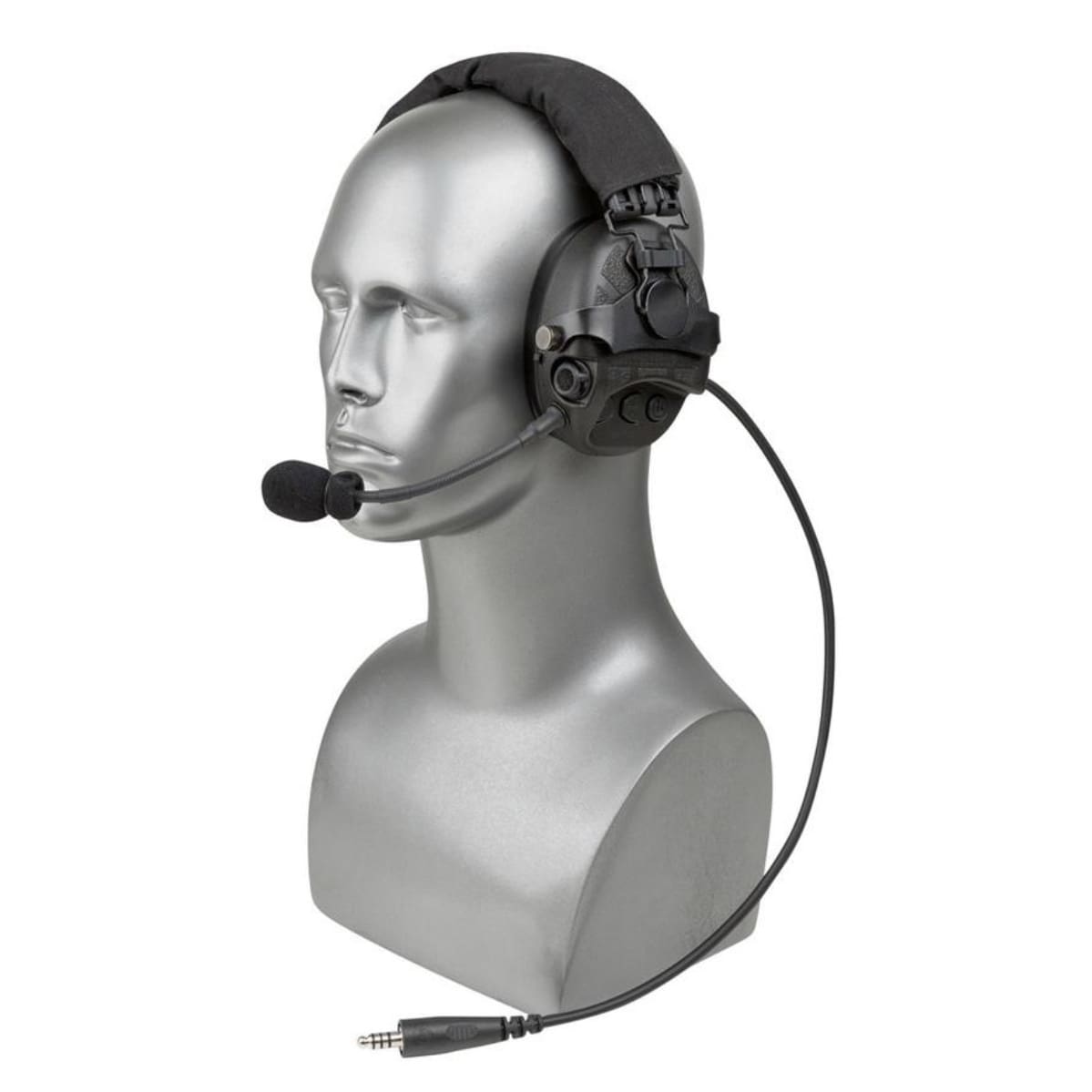
Team Wendy Releases EXFIL Adapter for AMP Communication Headset

Tuesday, July 21st, 2020

Adapter Breakaway Capability Improves Safety and Airborne Utility


CLEVELAND, OH (July 21, 2020) – Cleveland-based Team Wendy®, a leading provider of exceptional head protection systems, announced today the launch of its EXFIL® Adapter for the Ops-Core AMP™ Communication Headset. This headset, originally designed for Ops-Core’s ARC Rail, can now be also be mounted on Team Wendy helmets.

The adapter easily attaches each arm of the AMP headset to Team Wendy’s EXFIL Rail 2.0 or EXFIL Rail 3.0 accessory mounting systems. A press fit design – rather than a hard mount – ensures breakaway functionality when enough pressure is applied in an emergency situation.

“The breakaway capability is important for airborne operations,” said Mike Romanchek, director of sales and business development for Team Wendy. “The EXFIL Adapter reduces risk should lines get tangled around the headset by detaching from the helmet thus reducing the chances of equipment malfunction or injury.”

The EXFIL Adapter for the Ops-Core AMP Communication Headset retails for $21.99 and is available for purchase on TeamWendy.com and through authorized Team Wendy dealers.

New Research Shows Promising Future for Warfighter Communication

Wednesday, July 8th, 2020

ADELPHI, Md. — Soldiers operate in remote wireless environments with limited bandwidth and unpredictable connectivity, making it challenging to receive timely and reliable information. Using novel communications software, Army researchers prove that a reliable data delivery system can be created that survives adverse network environments.

One of the capabilities in the U.S Army’s Multi-Domain Operations is rapid convergence of cross-domain capabilities, said Dr. Jade Freeman, a researcher with the U.S. Army Combat Capabilities Development Command’s Army Research Laboratory.

“Future operations against a threat require the joint force to conduct continuous and rapid integration of multi-domain capabilities to gain cross-domain overmatch,” Freeman said. “The Army strategy’s operating environment is a battlespace with congested, degraded and wireless networks, and the warfare dynamics and complexities are constantly changing at a fast pace.”

A report recently published by the lab proves that timely and reliable data delivery under adverse tactical network environments is possible.

Army researchers conducted a study on the communication technology that supports optimized information interoperability, mediation and convergence – the ability to rapidly converge effects from multiple domains – under the contested network environment.

In the study, the researchers show that Mockets technology-enabled Integrated Sensor Architecture, or ISA, achieved superior performance in data transaction in terms of timeliness and volume, compared to using the Transmission Control Protocol, or TCP, based communication method under both stressed and wireless network settings.

ISA is the Army’s interoperability solution for sharing information between sensors and systems developed by the lab’s sister organization, the CCDC Command, Control, Computers, Communications, Cyber, Intelligence, Surveillance and Reconnaissance Center. ISA uses the TCP communication method to transmit data between sensors and devices.

Mockets (Mobile Sockets) is a novel communications library developed by the lab, specifically designed for wireless networking scenarios to improve communications in mobile ad hoc network environments.

According to Freeman, Mockets design and implementation meets the needs of tactical military information networks, which are typically wireless, and ad hoc with low bandwidth, intermittent connectivity and variable latency.

“Tactical networking environments are often characterized as Denied, Intermittent and Limited, or DIL, bandwidth,” Freeman said. “Systems and applications linking sensors and tactical devices in operations can produce constant data stream. Such dissemination of information across domains and echelons is constrained by these challenges of network conditions, and a potential consequence can be a missed opportunity or an action based on outdated messages or even cost of lives due to the loss of mission-critical information.”

The primary objective of this experimentation, Freeman said, was to evaluate the performance of ISA data transfer with Mockets under various network settings.

The data transmission rates from the Mockets protocol were evaluated and compared to those from the traditional TCP in ISA under the wired networking environment (Ethernet Local Area Network), which provides the baseline results, and then in the Extensible Mobile Ad-hoc Networking Emulator, simulating a stressed wired communication.

Additionally, the protocols were experimented using military tactical radios simulating radio communications in a wireless environment.

The results show that the Mockets protocols outperformed TCP on ISA under every wireless setting in addition to stressed wired networking environments, Freeman said. On average, the latency using Mockets was reduced by more than one third of the transmittal speed of TCP on the stress network. Likewise, Mockets-enabled ISA achieved two-fold increase in throughput from TCP in a wireless setting.

For Freeman and her fellow researchers, the continuation of this study is crucial to the future operating environment and protection of our Soldiers in combat.

“We want ensure that our Soldiers are supported with communication tools so that they can conduct missions with vital information at the edge uninterrupted,” Freeman said. “Soldiers operate in remote, harsh and hostile locations, and we believe that Mockets middleware is an innovative communication technology that will ensure network resiliency and adaptability.”

Additionally, she said, this research will contribute to the Army’s pursuit in strategy “Information Dominance” against its adversaries, rapid convergence of cross-domain capabilities on seamless machine-to-machine, man-machine interface, and artificial intelligence.

As for next steps for this research, Freeman said it still remains to understand and evaluate many other functionalities of Mockets with command, control, communication, and information, or C3I, technology integration.

For example, she said, Mockets has a variety of tuning parameters adapting to network condition, optimizing the bandwidth and mobility support, as well as message tagging, prioritization and cancellation features to control network congestion.

The lab will continue Mockets evaluations as well as further enhancement with automated performance optimization according to message context and network conditions, which will benefit the Army’s Network Modernization effort.

By U.S. Army CCDC Army Research Laboratory Public Affairs

Phoozy – Apollo II Cell Phone Cover

Friday, July 3rd, 2020

Apollo II Cell Phone Cover by Phoozy will protect your mobile device in several ways.

The cover contains a chromium thermal barrier to prevent overheating when in direct sunlight.

The same chromium barrier helps prevent freezing of the device in the cold.

It also helps keep the device afloat in case it falls overboard. Finally, the material also absorbs the shock of drops.

Offered in two sizes, the Apollo is available in several colors, including Woodland Camouflage.

phoozy.com/products/apollo-ii

How Covid-19 Has Changed How We Communicate

Friday, June 19th, 2020

Coronavirus is changing the way we all live. With some businesses that rely on communication still operating, 3M Peltor headsets sold by First Source Wireless can help companies communicate from a distance.

Eldersburg, MD – June 19, 2020 – Coronavirus has changed the way we are all communicating. During these changing times, businesses are struggling to follow the strict guidelines that vary by state regarding social distancing. Before we get back to a new normal, we must figure out how to communicate in business without disrupting operations, while at the same time ensuring our employees, customers, and partners remain safe.   First Source Wireless has partnered with 3M by adding additional resources to provide businesses with new ways to keep communicating while remaining at a safe distance.

“We understand it is important to stay healthy during these times and recognize the need to improve communicating from a distance”.  Says Nick Hohman, Vice President of First Source Wireless. “Communication in businesses and between team members has changed drastically, meaning we need to find new solutions to protect not only us but everyone around us.”

Essential businesses are still operating which means oil refineries, manufacturing plants, and distribution centers are still working tirelessly within our communities. Communication is changing right in front of our eyes. Maintaining constant communication, like how we have before, is important during these challenging times because:

• Distribution facilities and production facilities are still open and need to be able to operate business as usual.

• The lower number of workers making communication harder between teams

• Laws require at a safe distance which means the way we have communicated before is changing.

First Source Wireless provides 3M Peltor hearing protection headsets that let you communicate with others while still keeping at a safe distance.

“People rely on communication to effectively do their job. That’s why we have increased our inventory to still provide optimal Peltor headsets to our communities that depend on them in their business.” Says Taylor Thomas, Marketing Specialist from First Source Wireless. “We want to provide options to business professionals that allow them to be extremely productive will remaining safe by maintaining the social distancing protocols that have been put in place around the world.

First Source Wireless has added new 3M Peltor headsets to their inventory to improve communication for industries that converse closely to allow them to talk from a distance.  In addition to allowing workers to communicate from a distance, the Peltor series headsets and accessories provide noise cancelation capabilities that prevent hearing damage to users.  All of the litecom headsets have a built-in two-way radio and can connect to smartphones via Bluetooth. The Peltor LiteCom are used by distribution and manufacturing plants to converse with workers in any part of the facility. These headsets are wireless and have a range of up to 1.25 miles line of sight. Some of the Litecom headsets feature environment listening microphones that can amplify low-level noises providing full situational awareness to users.

They also have capabilities to protect the users from hearing if exposed to loud noise during the workday. These headsets allow you to transmit and receive critical information fast, and effortless with the use of VOX technology better known as voice operated switching.

First Source Wireless is staying open during these times and shipping orders as normal to give our business professionals the equipment they need to stay safe during these challenging times. The Peltor Litecom wireless communications headsets are available in a variety of models that provide various features, functionality, and pricing. First Source Wireless also offers 3M Peltor accessories like electronic earplugs and replacement items that give our public safety professionals more options to choose from when it comes to how they communicate.

First Source Wireless provides optimal wireless solutions to public safety professionals and commercial customers who depend on reliable communication every day. They are partnered with 3M Peltor, Pulse Larsen, Harris, and BK Technologies. Since 2003, they have been a trusted leader of wireless communication products. Waveband Communications, a partnering company of First Source Wireless selling two-way radio accessories, is also remaining open during these times.

For more information on this press release or additional comments please contact Taylor Thomas at tthomas@wvbandcoms.com or 800-991-4569.

TEA Catalog Vol 6

Wednesday, June 10th, 2020

teaheadsets.com/e-catalog

GEN-II U94 Comms Headset from TEA

Monday, June 8th, 2020

The GEN-II U94 is a new low cost modular solution designed for the AN/PRC-163 and other dual channel radios for users who don’t necessarily need or want the complex functionality of a multi-comm digital system. This PTT is based off the same rugged and familiar TEA U94 platform that so many use today. This simple design can be ordered in a dual or Tri-comm configuration to accommodate secondary radios, intercom systems or remote PTT’s. It can also be ordered with the additional in-line junction that will accommodate, EUD and USB cable accessories.

www.teaheadsets.com

Emdom Comtac Headset Cover

Monday, June 1st, 2020

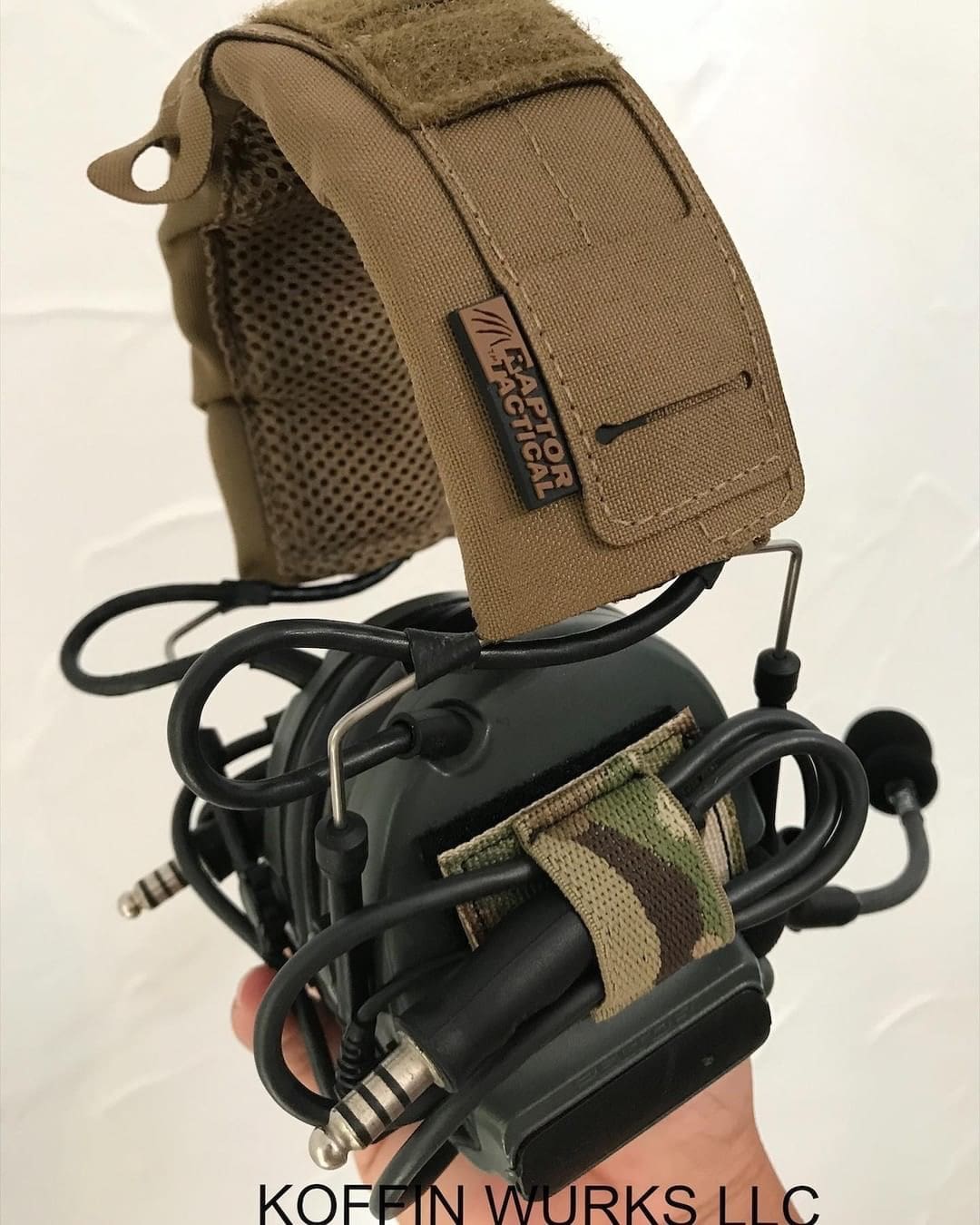
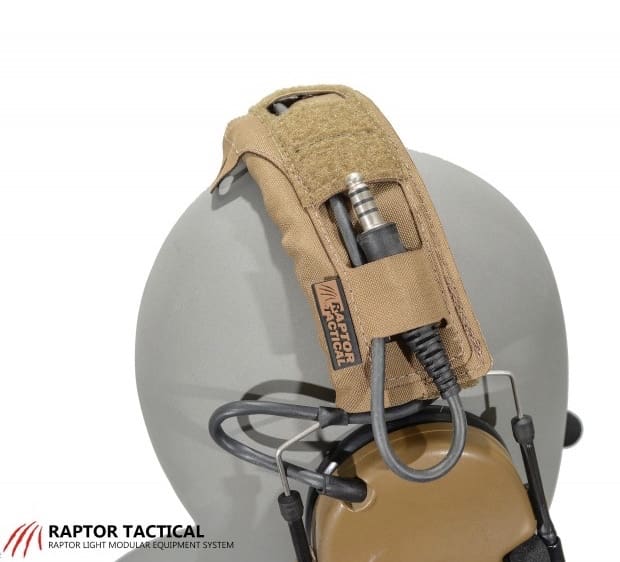
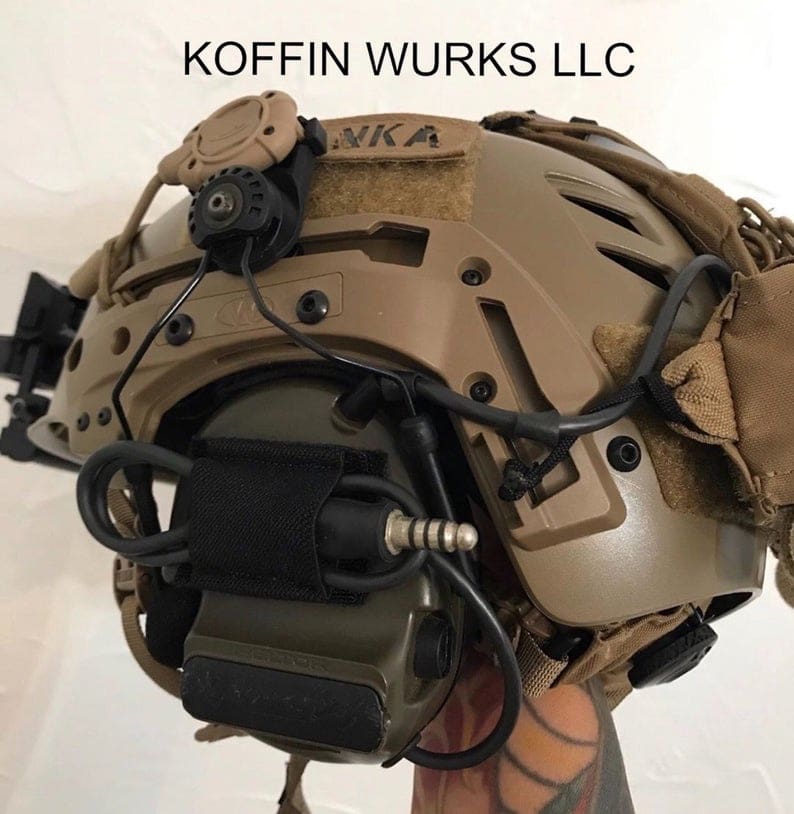
The Emdom Comtac Headset Cover is specifically designed for Peltor COM-TAC headsets.

The two-piece design combines TWEAVE 520E 4-way Durastretch Nylon fabric for durability on the top with Dri-Lex padded fabric for heat / moisture management, breathability, and quick drying underneath to match the curvature of the head for full contact.

There’s also Velcro along the top for a name tag or S&S V-lite as well as a para-cord loop to accommodate storage. What’s more, excess comms cord can be stowed above either ear cup.

Available in a wide variety of colors and patterns, check the site for availability.

www.emdomusa.com/Emdom-Comtac-Headset-Cover

New 5G Switch Provides 50 Times More Energy Efficiency Than Currently Exists

Saturday, May 30th, 2020

RESEARCH TRIANGLE PARK, N.C. — As 5G hits the market, new U.S. Army-funded research has developed a radio-frequency switch that is more than 50 times more energy efficient than what is used today.

With funding from the Army Research Office, an element of the U.S. Army Combat Capabilities Development Command’s Army Research Laboratory, researchers at The University of Texas at Austin and the University of Lille in France, have built a new component that will more efficiently allow access to the highest 5G frequencies, in a way that increases devices’ battery life and speeds up how quickly users can do things like stream HD media.

Smartphones are loaded with switches that perform a number of duties. One major task is jumping back and forth between different networks and spectrum frequencies: 4G, WiFi, LTE, Bluetooth, etc. The current radio-frequency switches that perform this task are always running, consuming precious processing power and battery life.

“Radio-frequency switches are pervasive in military communication, connectivity and radar systems,” said Dr. Pani Varanasi, division chief, materials science program at ARO. “These new switches could provide large performance advantage compared to existing components and can enable longer battery life for mobile communication, and advanced reconfigurable systems.”

The journal Nature Electronics published the research team’s findings.

“It has become clear that the existing switches consume significant amounts of power, and that power consumed is useless power,” said Dr. Deji Akinwande, a professor in the Cockrell School of Engineering’s Department of Electrical and Computer Engineering who led the research. “The switch we have developed can transmit an HDTV stream at a 100GHz frequency, and that is an achievement in broadband switch technology.”

The new switches stay off, saving battery life for other processes, unless they are actively helping a device jump between networks. They have also shown the ability to transmit data well above the baseline for 5G-level speeds.

Prior researchers have found success on the low end of the 5G spectrum – where speeds are slower but data can travel longer distances. This is the first switch that can function across the spectrum from the low-end gigahertz frequencies to high-end terahertz frequencies that could someday be key to the development of 6G.

The team’s switches use the nanomaterial hexagonal boron nitride, a rapidly emerging nanomaterial from the same family as graphene. The structure of the switch involves a single layer of boron and nitrogen atoms in a honeycomb pattern sandwiched between a pair of gold electrodes. Hexagonal boron nitride is the thinnest known insulator with a thickness of 0.33 nanometers.

The impact of these switches extends beyond smartphones. Satellite systems, smart radios, reconfigurable communications, and Internet of Things, are all examples of potential uses for the switches. In addition, these switches can be realized on flexible substrates making them suitable for Soldier wearable radios and communication systems that can benefit from the improved energy efficiency for longer battery life with faster data speeds as well as other defense technologies.

“This will be very useful for radio and radar technology,” Akinwande said.

This research spun out of a previous project that created the thinnest memory device, also using hBN. Akinwande said sponsors encouraged the researchers to find other uses for the material, and that led them to pivot to RF switches.

In addition to the U.S. Army, support through a Presidential Early Career Award for Scientists and Engineers, the U.S. Office of Naval Research and The National Science Foundation’s Engineering Research Center funded the research. The Texas Nanofabrication Facility partly fabricated the switch and Grolltex, Inc., provided hBN samples.

By U.S. Army CCDC Army Research Laboratory Public Affairs