Troop Performance

Archive for the ‘Contracts’ Category

DoD Plans To Save $72 Million On Afghan Uniforms By Spending $100 Million For New Ones

Tuesday, August 1st, 2017

Last week, the Honorable John Sopko, the Special Inspector General for Afghanistan Reconstruction, testified before the House Armed Services Committee, concerning his organization's recent report on the Afghan National Army's proprietary camouflage pattern, licensed to Afghanistan by Canadian company Hyperstealth Biotechnology Corporation.  SIGAR maintains that the US government overspent on an untested and inappropriate camouflage pattern. Boy, does this story sound familiar. 

Of all the untold Billions of Dollars squandered on bad construction contracts and given away to Afghan warlords, SIGAR is fixated on what they have identified as $28 Million, they claim was overspent during a period of five years on camouflage uniforms for the Afghan National Army.  Furthermore, the SIGAR report, and Mr Sopko's testimony alleges that the situation will result in a further $72 Million in overspending over the next decade, if it's not changed.

The Department of Defense's  answer to the situation? Why, spend even more money of course. The plan is to direct the US Army's Natick Soldier Systems Center to conduct a camouflage study and completely recapitalize the entire ANA with new uniforms in a camouflage pattern owned by the US Army. SIGAR estimates that will save us about $72 million. While Mr Sopko has yet to disclose how much this scheme is going to actually cost, I did a back of the napkin estimate based on what was spent in the past. To replace their uniforms in a timely manner, will be excess of $100 Million; well in excess. When you do the math, that potential savings of $72 quickly becomes a $18 Million+ deficit.  Not to mention the disruption of the ANA, as a side effect. 

When this new camouflage pattern is finally pursued, no commercial patterns will be considered, lest the Army have to pay a royalty. The point here isn't to offer our Allies the best available camouflage, but rather the cheapest and no one is taking the interests of the Afghans into consideration in this unilateral action. Amazingly, the last time Natick conducted a camouflage study for Afghanistan, the US Army selected a commercially developed pattern developed by Crye Precision, called MultiCam, over the camouflage developed by Natick.

The Army later conducted a massive camouflage modernization effort under the direction of Natick. The results of the Phase IV Camouflage Improvement Effort have never been released to the public and the Army ultimately created and fielded an inferior version of Crye's MultiCam which they were already using, in order to save a buck or two. 

In addition to the known elements such as established supply chain costs associated with this action, there are Millions of Dollars in potential, additional costs to the American taxpayer and industry. For instance, we have no idea how much the Natick study will actually cost the taxpayer because the salaries of government employees and use of equipment and facilities are looked at as sunk costs by DoD rather than being properly tracked and accounted for. Furthermore, it will take time (and drive up costs) to develop a supply chain for a new pattern. Printers will have to "learn" how to print it.

Industry will also have surge to create a sufficient number of completely new camouflage uniforms to support the transition for the ANA.  This will result in an increased transportation burden costing an untold amount out of money.  Then there's the question of how much money was spent to conduct this investigation and produce this report.  It doesn't seem like the taxpayer is getting a lot of bang for its buck. 

Interestingly, Mr Sopko also informed the legislators that a criminal probe had been launched regarding the matter, which, short of evidence of malfeasance, begs the question, why? Considering the pallets of $100 bills handed off to fickle Afghan warlords over the past 16 years, we are going to criminally investigate something where we actually saw a return on investment? The ANA actually received uniforms which provides them a common identity as an element of Afghan national power. Additionally, the uniforms work at night, when the ANA operates, and are in a tightly controlled camouflage pattern which is difficult for the enemy to acquire.

If I were an acquisition or contracting officer who made things happen in spite of the plodding framework created by the DFAR at any point since the war began, I'd be very concerned about this precedent. Because, if they're going to take a look at the Afghan National Army's camouflage expenditure, they are bound to look at other fast-tracked acquisition programs. In fact, someone probably ought to take a hard look at what DoD was up to regarding uniforms, during the same period.

Lest I remind everyone, this is what our Soldiers were wearing during the same period the SIGAR report is concerned with. It's also a camouflage pattern that wasn't tested, and not only wasn't suitable for use in Afghanistan, but for anywhere else it turns out. What's more, it was developed by the same organization that SIGAR wants to developed the ANA's next pattern, Natick Soldier Systems Center. 

It gets worse. The US taxpayer spent untold Billions of Dollars on that US Army pattern. The Army admitted to $5 Billion expenditures in 2012, but they kept spending after that, and their number was based solely on program Dollars at DLA.  It's almost impossible to really capture how much was spent in local purchase, at the sister service level, and on UCP ancillary items for major end items.  The real number is closer to $10 Billion than five. If they want to launch a criminal investigation based on fraud, waste and abuse, UCP is a great place to start.

If SIGAR wanted to actually improve things for Afghanistan, they could make these recommendations:

1. Simplify and standardize the cut and construction of Afghan uniforms across the board.

2. Negotiate a better licensing fee with the owner of the ANA's camouflage.

3. Replace the Camo patterns of the other Afghan forces which are forced to continue to wear the same patterns as their enemies.

Points one and two would help bring down costs of the ANA uniform and point three would result in a safer and more effective Afghan security infrastructure.  

Mr Sopko's team at SIGAR has done some great work, but they need to do much better on this issue. Spending more money than is saved is not a win.  Instead, this is a big loss, both for the American taxpayer and our ally, Afghanistan.

Gentex Awarded $13M U.S. Army Contract for Apache Aviator Integrated Helmet

Tuesday, July 25th, 2017

Direct contract enables better pricing, and streamlined engineering and integration support

Simpson, PA, July 24, 2017. Gentex Corporation, a global leader in personal protection and situational awareness solutions for defense forces, emergency responders, and industrial personnel has been awarded a $13,443,811 firm-fixed-price contract by the U.S. Army for the delivery of Apache Aviator Integrated Helmets (AAIH).

IMG_3118

Worn by Apache helicopter crews, the AAIH is an integrated helmet, display, and sight system with improved safety features and comfort that provides situational awareness and targeting information. The integrated helmet is a key component of the next generation Apache helicopter, the AH-64E, which will be flown by over 15 countries.

IMG_3119

Prior to the competitive win, Gentex had been supplying the helmet to the Army as a subcontractor under a prior agreement. “We’re proud to have been chosen to continue producing this next generation aviator helmet for the Army,” said Robert McCay, vice president aircrew systems, Gentex Corporation. “Providing the helmet to the Army directly allows for better pricing, and streamlined engineering and integration support.”

The AAIH is based on the highly successful Gentex HGU-56/P Rotary Wing Helmet System, which Gentex has been supplying to the U.S. DoD since 1993. Work for the AAIH contract will be conducted at Gentex’s large capacity manufacturing facility in Simpson, Pennsylvania, and is expected to be complete by June, 2022.

USSOCOM Seeks Body Worn Sensors

Tuesday, July 18th, 2017

Not long ago, we mentioned Joint Threat Warning System, USSOCOM’s program of record for SIGINT collection systems. For ground-based collection, that is the AN/PRD-13(V)2. By default, it is also the system used by the US Army, which seems to have checked out of developing tactical SIGINT systems. Many capabilities which SOCOM adopts in the SI realm, also find their way into US Army LLVI.

USSOCOM, Special Operations Forces Acquisition Technology and Logistics (SOF AT&L), Program Executive Officer for Special Reconnaissance, Surveillance and Exploitation (PEO – SRSE), Program Manager for Joint Threat Warning Systems (PM-JTWS) recenty released an RFI to industry for Body worn sensor with low Size Weight and Power (SWaP). As communications systems become more sophiticated, so must the equipment designed to collect against them.

According to the RFI, the Program Manager is specifically interested in signals intelligence technologies, ideas and solutions which advance in the following Key Interest Areas:

1) Body worn sensor with low Size Weight and Power (SWaP)
2) Low profile DF antenna

JTWS is seeking potential solutions with the below criteria as initial guidance but not formal direction:

• Hardware:
o Software Defined Radio Threshold –
-Ability to conduct surveys of special/advanced Signals of Interests (SOIs)
-Provide Narrowband automatic signal detection
-Ability to search (scan) special frequency bands
-Ability to search (scan) operator created search parameters or tables
-The system shall have the ability to be sanitized upon command
-The system shall have the ability to be zeroized upon command
-Zeroize feature shall include a fail-safe device to prevent inadvertent zeroizing

o Software Defined Radio Objective –
-Survey capability between the frequency range of 3 – 6,000 MHz
-Provide Wideband automatic signal detection
-Allow for remote zeroization and sanitization

o Antenna Threshold –
-Multiple cables lengths and calibration tables for different operational environments
-Antenna repair kit
-Convenient antenna and cable kit
-Shall conform to platform specific requirements for use on a full range of platforms
-Man-packable antenna shall come with the ability to be mounted off the body for operations on-the-halt

o Dedicated SIGINT Communications Architecture Threshold –
-LOS Meshed Network / Self-Healing connectivity to support collaborative operations

o Dedicated SIGINT Communications Architecture Objective –
-Beyond Line of Sight (BLOS) Meshed Network / Self-Healing connectivity to support collaborative operations
-Low Probability of Interception (LPI) and Low Probability of Detection (LPD) waveforms

o Data Storage Devices Threshold –
-Removable, replaceable and separated from operating system storage
-Store a minimum of 100 GB of data storage in a removable form factor
-Clear identification markings for emergency destruction

o Data Storage Devices Objective –
-Encryption for data-at-rest
-Digitally record, catalog and store a minimum 500 GB of data in a removable form factor

o Environmental and EMI/EMC conditions
-Compliant with MIL-STD-810F and MIL-STD-461F as required, or commercial requirements in accordance with operational platform

o Global Positioning System (GPS)
-Receive, display and metatag collected sensor data with GPS-based position, time stamp and/or platform navigation data from either internal or external source(s)
– ystem clock time synchronization to the sensor; if GPS loses synchronization the sensor time will be maintained until GPS is reacquired
-Comply with CJCSI 6140.01.

o Weight Threshold –
-Sensor shall weigh no more than 12 lb with batteries, less antenna(s) and ancillary cabling

o Weight Objective –
-Reduction of weight between 3 lb to 9 lb

o Batteries Threshold –
-Sensor shall be powered by hot-swappable MIL-SPEC batteries for a minimum of eight (8) continuous hours using batteries carried by the operator
-Sensor shall store a Hold Up Battery (HUB) in an effort to prevent loss of data during unexpected system power down

o Batteries Objective –
-Increase operating time on batteries to a minimum of twelve (12) hours

• Data:
o Sensor will detect, collect, locate and process multiple data types
o Sensor will output common audio and data formats
o Exchange of data utilizing File Transfer Protocol (FTP), IPV6 and Secure file transfer protocol (SFTP)
o Ability to exchange data with other sensors and networks

• GUI:
o Human Machine Interface (HMI) / Graphic User Interface (GUI) Threshold –
-Interface with RaptorX
-Display frequency spectrum type observation of signals (separable into up to three {3} spectral displays selectable by the operator)
-Ability to adjust the basic receiver tuning via a spectral display
-Selectable visual and/or aural indications of a newly detected signal within five (5) seconds of the signal’s presence
-Display status of all channels
-Ability to start or stop recording on any channel from the GUI
-Ability to convey sensor status in the form of a Built In Test (BIT), with corresponding error codes
-Support searching in both manual and automated modes
-Include frequency-spectrum separable for up to three spectrums between 3 – 6000 MHz
-Provide audio / graphic monitoring on spectral display with minimum update rate of 3 Hz.
-Adjustable basic receiver tuning via the spectral display (volume, frequency, squelch, span)
-Display results in near-real time across the JTWS family of systems
-Overall system and all subsystem visual output shall be on a single, common display, with screens for each subsystem or system function set selectable
-Provide enough display area to simultaneously view and manage user defined functions/features of sensor (i.e. higher resolution displays or enhanced user interfaces)
-Displays shall be readable in bright sunlight when in direct frontal view by the operator
-Equipment shall not disrupt operator user of night vision goggles when not viewing system display
-Variable brightness control from zero illumination to its maximum, sufficiently illuminated for nighttime operations and daytime operations
-Display emitter location data/results in real-time on a user defined map (e.g., Ellipse, Heat map, LOB, point target)
-Upon user request, display operator geographic location (GPS) and compass orientation to equipped sensors
-Transmit positional data across networks
-Display estimated signal source location on a moving map display
-Color-code or otherwise provide distinguishing display of each signal being tracked
-Displays shall be NVG compatible
-User shall be able to play back historical libraries with the ability to combine previous and current information
-Produce an output data stream compatible with current DOD geospatial mapping programs

o Human Machine Interface (HMI) / Graphic User Interface (GUI) Objective –
-Provide acquired information to onboard / off board (when selected by operator) processing elements for intelligence and Command & Control (C2) purposes (for both organic and external / off board force employment) and provide updates to onboard / off board Common Operation Picture (COP)
-User interface for mapping, audio control, sensor control and data manipulation

o Audio Processing real-time and post mission audio manipulation Threshold –
-User Interface (UI) shall provide audio controls for volume, frequency, squelch, span, noise reduction and advanced filtering
-Audio output compatibility with various interphone systems / headsets
-Provide reduction of signal noise to improve raw collection for audio quality and speech detection
-Provide selectable real-time filtering of audio
-Displays shall provide for dual audio outputs
-Displays shall route audio to operator(s) from any four simultaneous signals

o Audio Processing real-time and post mission audio manipulation Objective –
-Route audio to operator(s) from any four simultaneous signals, each present for at least two seconds; each audio stream 100% complete
-Quickly retrieve and play back a segment of audio data collected within the past 15, 30, 45, or 60 seconds in order to further analyze the data
-Buffer real-time audio, so that upon resumption the operator will be able to recall missed audio during playback times
-Provide the user the option to post process audio for language identification, speaker identification, gender identification, speech detection and group identification via post mission analysis using audio processing software
-Provide the user the option to process audio in near real-time for Language identification, speaker identification, gender identification, speech detection and group identification. Also audio should be available via post mission analysis using audio processing software.

• Software:
o Information Assurance to comply to ICD 503 protection level 3, Integrity Level Of Concern (ILOC) medium, Availability Level of Concern (ALOC) medium or equivalent Office of the Director of National intelligence (ODNI) directives/publications

Remember, this is still just an RFI and the information will be used to inform requirements. However, if as a company, you don’t participate, the government may not be aware of a capability you can provide and won’t issue a requirement for it. They need to know the art of the possible. The Government requests submissions NLT 28 JUL 17.

For more information visit www.fbo.gov.

Update – SPEAR Family of Tactical Headborne Systems Coxswain Helmet System Solicitation

Monday, July 10th, 2017

Natick has issued an update to the pre-solicitation for the SPEAR Family of Tactical Headborne Systems Coxswain Helmet System.

“Final solicitation is estimated to be released end of July/beginning of August 2017. Proposals will be requested within 1-2 months of RFP release. The response date indicated for this notice is an estimate at this time.”

The new estimated response date, when proposals are due to the government, is Sep 15, 2017 12:00 pm Eastern which is a change from the original estimate of Jul 25, 2017 12:00 pm Eastern.

The SPEAR Family of Tactical Headborne Systems Coxswain Helmet System will consist of a non-ballistic helmet system with modular accessories which will consist of a visor, ballistic mandible, non-ballistic (i.e. impact) mandible, and two piece ballistic appliqué. Additionally, the helmets require a variety of VAS Shrouds, Helmet Covers, Accessory Rails, Pads, Exterior Velcro sets, and Peltor Adapters.

The helmets will be offered in five sizes in Tan, Neutral Grey, AOR 1, AOR 2 and MultiCam.

The contract, when awarded will be valued at up to $95 million.

For full details, visit www.fbo.gov.

US Government Accountability Office – Decision Documentation Regarding Glock’s Protest Of The MHS

Thursday, June 29th, 2017

Untitled

Click to view .pdf

With the recent reveal of Glock’s entry to the US Army’s Modular Handgun Competition, the 19MHS, we felt it prudent to feature the US Government Accountability Office’s denial of Glock’s protest of the competition results. You can read through all 17 pages of the document by clicking the image above, which goes over Glock’s list of complaints from their protest, including claims of favoritism towards SIG, the contest being ended too early, and the supposed obligation for the US Army to award multiple contracts. Regardless, the following passage details the main reason that SIG won over Glock (emphasis ours):

Based upon the technical evaluation and my comparative analysis of the proposals, the Sig Sauer proposal has a slight technical advantage over the Glock proposal given that their proposal was rated higher in Factor 1, Bid Sample Test – Technical which is the most important factor. The advantage of the Sig Sauer proposal is increased when the license rights and production manufacturing factors are brought into consideration. [. . .] The price analysis shows that the Sig Sauer total evaluated price is $102,705,394 less than the Glock total evaluated price, making the Sig Sauer proposal overall the Best Value to the Government.

Sig Sauer’s proposal was slightly superior technically and clearly superior in factors 4 and 5 [SSD note: License Rights – Ammunition and License Rights – Handgun & Accessories]. Since there were so few other discriminators between the two proposals in most aspects, the least important factor, price, became a significant discriminator. Simply put, when taking the price premium into account, there is no correlating superior performance factor for Glock, as compared to Sig Sauer, to support paying that premium.

Consequently, I cannot justify paying a price premium of over 37% for the Glock submission, even as a second award. One (1) award to Sig Sauer on Solicitation Number W15QKNR-0002 represents the overall best value to the Government.

Ultimately, SIG’s victory came down to them severely underbidding Glock, to the tune of approximately $100 million. That’s not to say price was the only factor; the P320 did perform slightly better in the Technical Bid Sample Test than the Glock equivalent. Not to mention that SIG was able to offer better license rights for the chosen ammunition, handgun, and accessories. Regardless, in the Government’s eyes, the Glock wasn’t worth $100 million more than the SIG.

Rheinmetall To Equip 68 Bundeswehr Rifle Platoons With Gladius Future Soldier Systems

Thursday, June 29th, 2017

The German Bundeswehr has placed an order with Rheinmetall valued at €370 million for enough Future Soldier – Expanded System (IdZ-ES) soldier systems to equip 68 rifle platoons. Called Gladius, the new systems will be delivered beginning in 2018.

IdZ-ES connects dismounted infantrymen into the network, sharing information with another, armored vehicles and higher headquarters. According to Rheinmetall, IdZ-ES has been in service with German troops in Afghanistan since summer 2013.

IMG_9563

However, initial systems were procured in 2012. In total, the Bundeswehr has procured three lots, consisting of 90 systems, each of which is designed to equip a ten-man section or squad. The 68 platoon systems are enough to equip over 2,460 soldiers.

In a press release, Rheinmetall describes Gladius:

Meriting special mention is the core and helmet system. The battery-powered core computer – worn on the soldier’s back and thus known as the “electronic backbone” – controls all the devices and sensors carried by the soldier via various interfaces. Its principal functions include power supply management, access control and monitoring, the soldier information system for map and situation display, navigation, reporting, exchange of reconnaissance and target data, processing sensor data (e.g. own position, line of sight), operator interfaces and visualization as well as system configuration.

The soldier can control the Soldier Command System and communication via a manually operated control and display unit known by its German initials as the BAG. All relevant data concerning the current situation, the position of friendly forces (blue force tracking), the mission and system status are displayed either on the BAG or, alternatively, on the OLED helmet display. The modular battle dress uniform can be readily adapted to meet the current environmental and temperature conditions. Other important features include the ballistic body armour (Protection Class 1) with integrated ventilation shirt as well as a modular harness for?carrying ammunition, ordnance, the electronic backbone and additional equipment. The IdZ-ES protective vest comes complete with chest rig and hip belt; with added ballistic inserts, it offers protection up to German Level 4. The section or squad leader and his assistant are both issued with an additional leader module consisting of a portable command computer operated via touchscreen. A rifle-mounted push-to-talk button enables wireless communication even when the operator leader has raised his weapon. Furthermore, small arms can also be fitted with optical and optronic devices of the latest generation.

Rheinmetall also notes that Canada uses a Gladius variant in their developmental Integrated Soldier System Project.

USSOCOM Announces Joint Threat Warning System Industry Day

Wednesday, June 28th, 2017

Joint Threat Warning System is the SIGINT Collection architecture for USSOCOM.  The current manpack version is the AN/PRD-13(V)2.  


While I used an early version of this system in Haiti over 20 years ago, it has come a long way from the AN/TRQ-30 DF loops first fielded to 3rd Group in 1990. They were the height of 1950s technology and the receiver used like 30 D cell batteries. 

As communication technology evolves, so must the equipment used to collect signals. Consequently, PM-JWTS is hosting an Industry Day, 13-14 July, 2017.

The Program Manager is specifically interested in signals intelligence technologies, ideas and solutions which advance One or more of the following Key Interest Areas:

1) Unique Signals of Interest

2) Modular and scalable open architecture systems (please see additional guidance below)

3) Remote C2 and Data Viewing

Further Clarification:

Modular and Scalable Open Architecture Systems: Need to allow the operator to choose relevant SIGINT applications and tailor the system to best support individual mission requirements. JTWS is seeking potential solutions with the below criteria as initial guidance but not formal direction:

• Hardware: Provide VPX (VITA 46)/Open VPX (VITA 65) based solutions that are modular and scalable from a body-worn or small UAS form factor to a vehicle/maritime platform to an airborne chassis. Focus should be on a 3U card size in order to maximize reuse between form factors. If use of VPX standards for small form factor solutions is not possible, alternative standards-based options that do not violate the remaining guidelines should be brought forward.

• Data: VITA 49 should be implemented for the data transport layer and output data using the Tactical SIGINT Data Model (TSDM). Systems should be JICD 4.x (currently 4.2) compliant at the sensor level for reporting, tuning, and collaborative geolocation.

• GUI: Partners should deliver capabilities with the ability to conduct full command and control and visualize mission data in RaptorX.

• Software: The adoption of the OpenVPX standard reduces the need for a pure open architecture solution across the program, but systems should still seek to implement open architecture solutions on individual cards in order to combine capabilities and maximize the capacity of each card within the system. Examples include GNU Radio and REDHAWK, but could be extended to any number of current industry and government developed environment.

Remote Capabilities: This capability needs to be Beyond-Line-of-Sight (BLOS), however the program office would prefer Over-the-Horizon (OTH) with minimal latency delays.

Vendors interested in attending the Industry Day should visit www.fbo.gov.

NSWC-Crane Issues Presolicitation For New Optics – Miniature Aiming System – Day Optic Squad – Close Quarters Sight and Clip-On Magnifier

Tuesday, June 20th, 2017

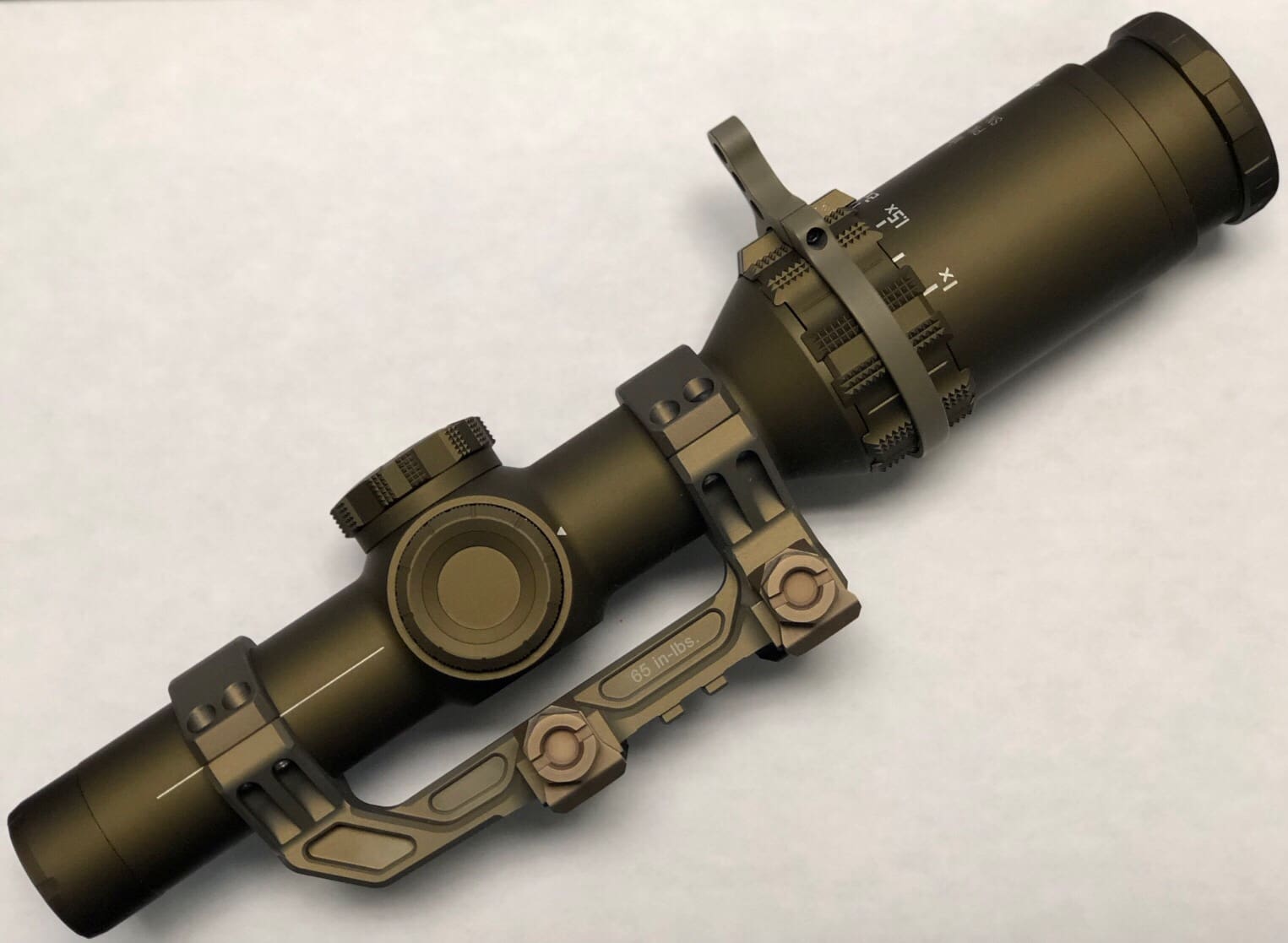
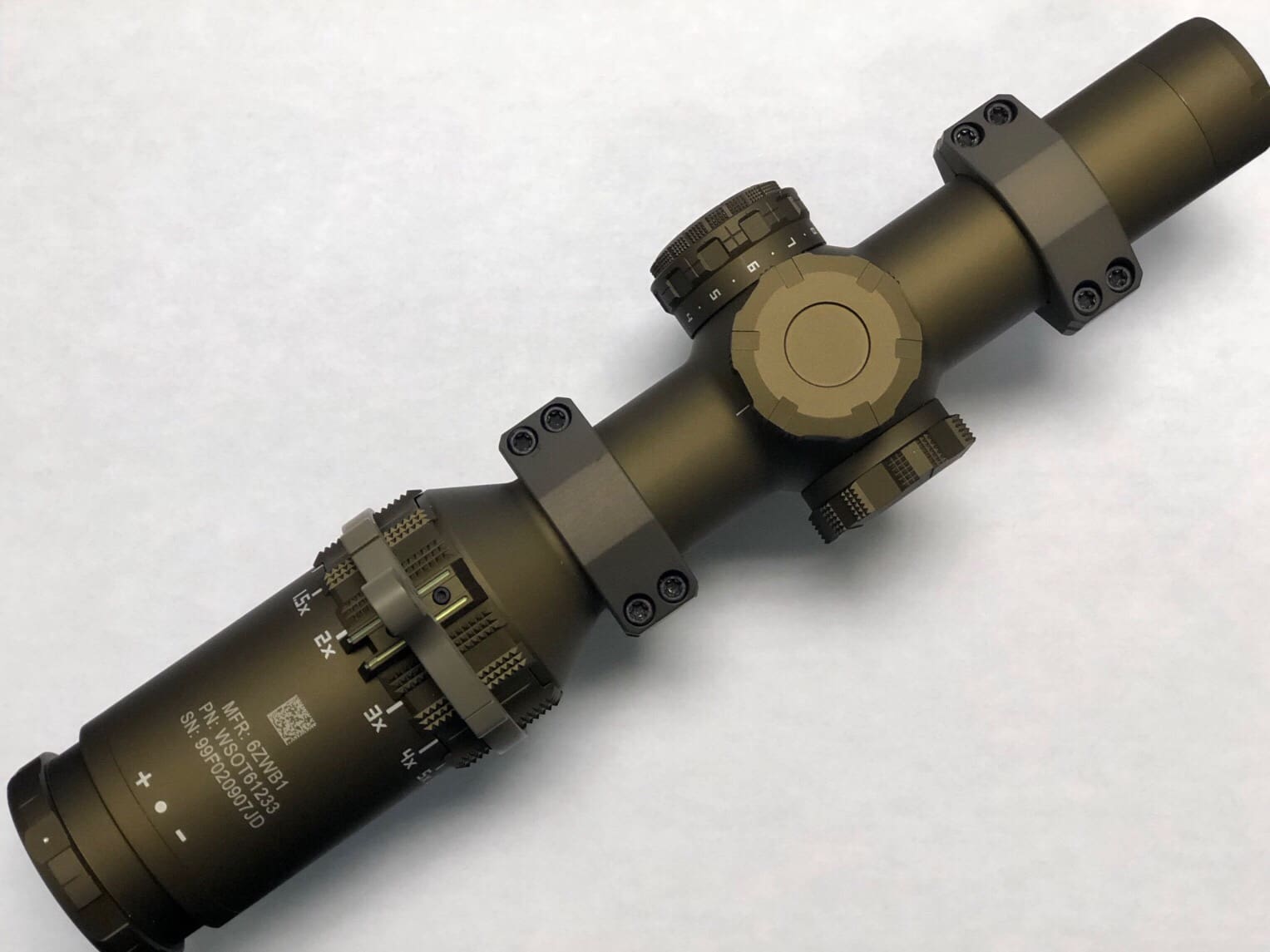
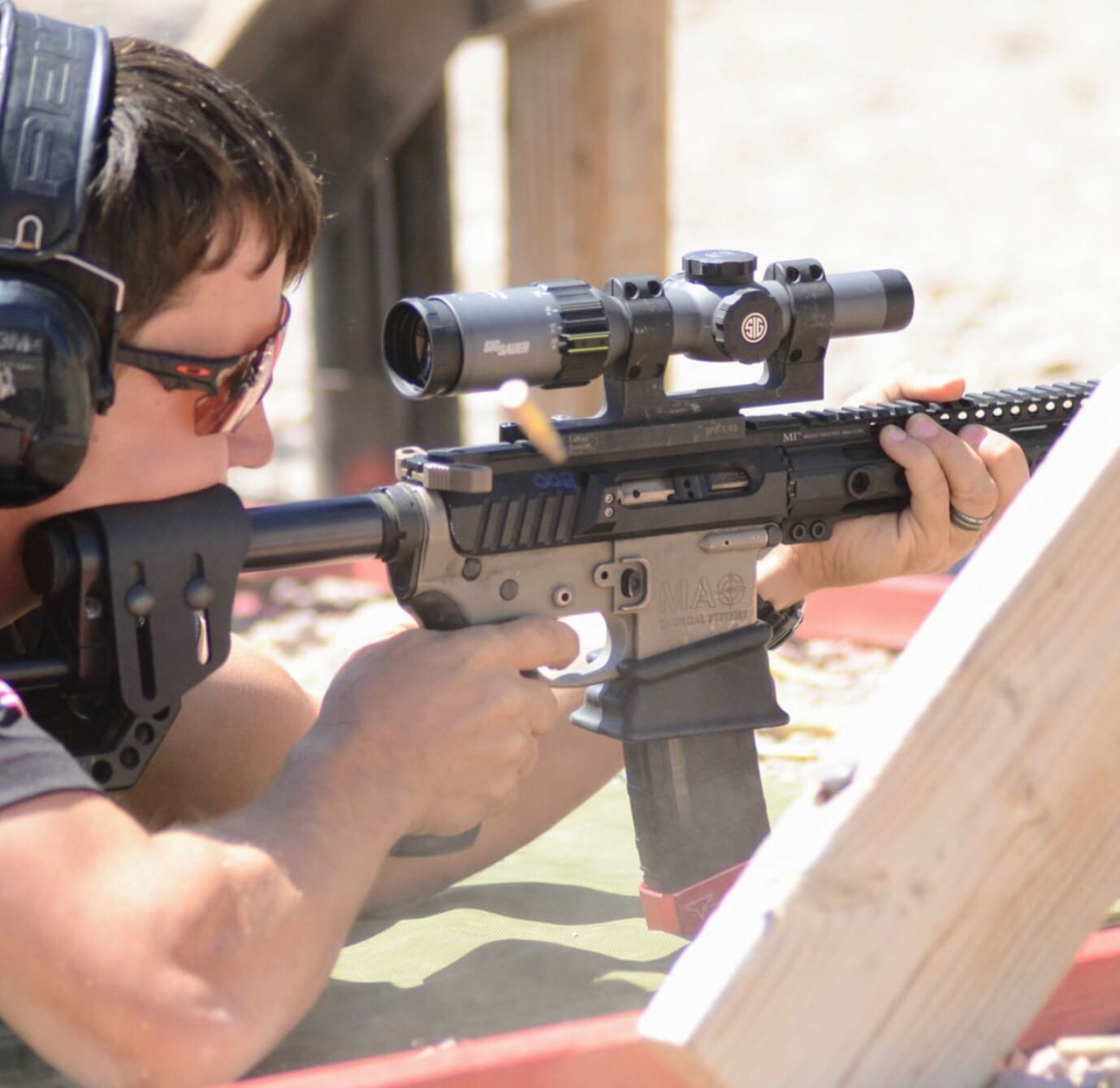
The Naval Surface Warfare Center, Crane Division, which manages small arms development for USSOCOM, has issued a presolicitation, informing industry that it intends to issue a solicitation contract for a full and open competition for an anticipated Firm Fixed Price Indefinite Delivery Indefinite Quantity (IDIQ) contract that will cover a five year ordering period with five (5) additional one (1) year options that may be exercised at the Governments convenience. When you see the minimum and maximum for the IDIQ, your eyebrows will raise a little, but it will make sense.

The anticipated requirement is for a Miniature Aiming System – Day Optics (MAS-D) Squad – Close Quarters Sight (CQS) and Clip-On Magnifier (CM). The sights will be used on both compact and assault rifles. The anticipated contract minimum quantity is thirty (30) units OR $36,000 and the anticipated contract maximum quantity is thirty-nine thousand three hundred units (39,300) OR $47,160,000. These numbers give the command a great deal of flexibility, allowing them to select more than one contract awardee. Additionally, there is room for other organizations to purchase from this contract.

This slide comes from COL Samuel Ashley’s (USASOC G8) briefing at last month’s NDIA Armaments Symposium. Many know that USASOC divested itself from the use of EOTech Holographic Weapon Sights due to their thermal shift issue. What many don’t know is what they replaced them with as an interim solution. The 75th Ranger Regiment had an immediate need and a shoot off of Commercial Off The Shelf red dot sights was conducted at Ft Bragg, NC. The sights evaluated included the EOTech as a baseline, Aimpoint T2, Leupold LCO and Trijicon MCO. I am told that the EOTech performed very well but that it was not a candidate for selection due to its thermal shift problems. I am also told that the user evaluation preferred the Leupold LCO. However, in a second phase of the evaulation conducted at Crane, the LCO had some reliability challenges, so ultimately, the Rangers got the Aimpoint T2. Interestingly, 1st Special Forces Command (Airborne)(Provisional) chose to field the Army’s service common M68 optic, also by Aimpoint. The use of service common equipment saves the command’s MFP-11 Dollars for other capabilities.

Below is another slide from that same briefing that shows, in generalities, what USSOCOM expects from a Close Quarters Sight and how many they want to buy.

The anticipated timeframe for the release of the solicitation is expected to be in the Fall of 2017. For full details, visit www.fbo.gov.