Phantom Lights

Archive for the ‘Contracts’ Category

USSOCOM Seeks Body Worn Sensors

Tuesday, July 18th, 2017

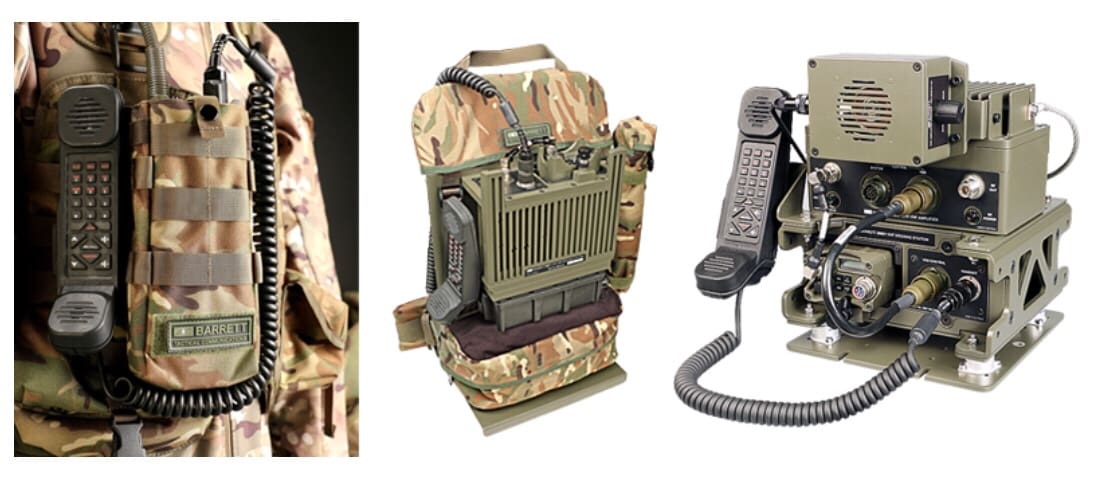
Not long ago, we mentioned Joint Threat Warning System, USSOCOM’s program of record for SIGINT collection systems. For ground-based collection, that is the AN/PRD-13(V)2. By default, it is also the system used by the US Army, which seems to have checked out of developing tactical SIGINT systems. Many capabilities which SOCOM adopts in the SI realm, also find their way into US Army LLVI.

USSOCOM, Special Operations Forces Acquisition Technology and Logistics (SOF AT&L), Program Executive Officer for Special Reconnaissance, Surveillance and Exploitation (PEO – SRSE), Program Manager for Joint Threat Warning Systems (PM-JTWS) recenty released an RFI to industry for Body worn sensor with low Size Weight and Power (SWaP). As communications systems become more sophiticated, so must the equipment designed to collect against them.

According to the RFI, the Program Manager is specifically interested in signals intelligence technologies, ideas and solutions which advance in the following Key Interest Areas:

1) Body worn sensor with low Size Weight and Power (SWaP)
2) Low profile DF antenna

JTWS is seeking potential solutions with the below criteria as initial guidance but not formal direction:

• Hardware:
o Software Defined Radio Threshold –
-Ability to conduct surveys of special/advanced Signals of Interests (SOIs)
-Provide Narrowband automatic signal detection
-Ability to search (scan) special frequency bands
-Ability to search (scan) operator created search parameters or tables
-The system shall have the ability to be sanitized upon command
-The system shall have the ability to be zeroized upon command
-Zeroize feature shall include a fail-safe device to prevent inadvertent zeroizing

o Software Defined Radio Objective –
-Survey capability between the frequency range of 3 – 6,000 MHz
-Provide Wideband automatic signal detection
-Allow for remote zeroization and sanitization

o Antenna Threshold –
-Multiple cables lengths and calibration tables for different operational environments
-Antenna repair kit
-Convenient antenna and cable kit
-Shall conform to platform specific requirements for use on a full range of platforms
-Man-packable antenna shall come with the ability to be mounted off the body for operations on-the-halt

o Dedicated SIGINT Communications Architecture Threshold –
-LOS Meshed Network / Self-Healing connectivity to support collaborative operations

o Dedicated SIGINT Communications Architecture Objective –
-Beyond Line of Sight (BLOS) Meshed Network / Self-Healing connectivity to support collaborative operations
-Low Probability of Interception (LPI) and Low Probability of Detection (LPD) waveforms

o Data Storage Devices Threshold –
-Removable, replaceable and separated from operating system storage
-Store a minimum of 100 GB of data storage in a removable form factor
-Clear identification markings for emergency destruction

o Data Storage Devices Objective –
-Encryption for data-at-rest
-Digitally record, catalog and store a minimum 500 GB of data in a removable form factor

o Environmental and EMI/EMC conditions
-Compliant with MIL-STD-810F and MIL-STD-461F as required, or commercial requirements in accordance with operational platform

o Global Positioning System (GPS)
-Receive, display and metatag collected sensor data with GPS-based position, time stamp and/or platform navigation data from either internal or external source(s)
– ystem clock time synchronization to the sensor; if GPS loses synchronization the sensor time will be maintained until GPS is reacquired
-Comply with CJCSI 6140.01.

o Weight Threshold –
-Sensor shall weigh no more than 12 lb with batteries, less antenna(s) and ancillary cabling

o Weight Objective –
-Reduction of weight between 3 lb to 9 lb

o Batteries Threshold –
-Sensor shall be powered by hot-swappable MIL-SPEC batteries for a minimum of eight (8) continuous hours using batteries carried by the operator
-Sensor shall store a Hold Up Battery (HUB) in an effort to prevent loss of data during unexpected system power down

o Batteries Objective –
-Increase operating time on batteries to a minimum of twelve (12) hours

• Data:
o Sensor will detect, collect, locate and process multiple data types
o Sensor will output common audio and data formats
o Exchange of data utilizing File Transfer Protocol (FTP), IPV6 and Secure file transfer protocol (SFTP)
o Ability to exchange data with other sensors and networks

• GUI:
o Human Machine Interface (HMI) / Graphic User Interface (GUI) Threshold –
-Interface with RaptorX
-Display frequency spectrum type observation of signals (separable into up to three {3} spectral displays selectable by the operator)
-Ability to adjust the basic receiver tuning via a spectral display
-Selectable visual and/or aural indications of a newly detected signal within five (5) seconds of the signal’s presence
-Display status of all channels
-Ability to start or stop recording on any channel from the GUI
-Ability to convey sensor status in the form of a Built In Test (BIT), with corresponding error codes
-Support searching in both manual and automated modes
-Include frequency-spectrum separable for up to three spectrums between 3 – 6000 MHz
-Provide audio / graphic monitoring on spectral display with minimum update rate of 3 Hz.

-Adjustable basic receiver tuning via the spectral display (volume, frequency, squelch, span)
-Display results in near-real time across the JTWS family of systems
-Overall system and all subsystem visual output shall be on a single, common display, with screens for each subsystem or system function set selectable
-Provide enough display area to simultaneously view and manage user defined functions/features of sensor (i.e. higher resolution displays or enhanced user interfaces)

-Displays shall be readable in bright sunlight when in direct frontal view by the operator
-Equipment shall not disrupt operator user of night vision goggles when not viewing system display
-Variable brightness control from zero illumination to its maximum, sufficiently illuminated for nighttime operations and daytime operations
-Display emitter location data/results in real-time on a user defined map (e.g., Ellipse, Heat map, LOB, point target)
-Upon user request, display operator geographic location (GPS) and compass orientation to equipped sensors
-Transmit positional data across networks
-Display estimated signal source location on a moving map display
-Color-code or otherwise provide distinguishing display of each signal being tracked
-Displays shall be NVG compatible
-User shall be able to play back historical libraries with the ability to combine previous and current information
-Produce an output data stream compatible with current DOD geospatial mapping programs

o Human Machine Interface (HMI) / Graphic User Interface (GUI) Objective –
-Provide acquired information to onboard / off board (when selected by operator) processing elements for intelligence and Command & Control (C2) purposes (for both organic and external / off board force employment) and provide updates to onboard / off board Common Operation Picture (COP)
-User interface for mapping, audio control, sensor control and data manipulation

o Audio Processing real-time and post mission audio manipulation Threshold –
-User Interface (UI) shall provide audio controls for volume, frequency, squelch, span, noise reduction and advanced filtering
-Audio output compatibility with various interphone systems / headsets
-Provide reduction of signal noise to improve raw collection for audio quality and speech detection
-Provide selectable real-time filtering of audio
-Displays shall provide for dual audio outputs
-Displays shall route audio to operator(s) from any four simultaneous signals

o Audio Processing real-time and post mission audio manipulation Objective –
-Route audio to operator(s) from any four simultaneous signals, each present for at least two seconds; each audio stream 100% complete
-Quickly retrieve and play back a segment of audio data collected within the past 15, 30, 45, or 60 seconds in order to further analyze the data
-Buffer real-time audio, so that upon resumption the operator will be able to recall missed audio during playback times
-Provide the user the option to post process audio for language identification, speaker identification, gender identification, speech detection and group identification via post mission analysis using audio processing software
-Provide the user the option to process audio in near real-time for Language identification, speaker identification, gender identification, speech detection and group identification. Also audio should be available via post mission analysis using audio processing software.

• Software:
o Information Assurance to comply to ICD 503 protection level 3, Integrity Level Of Concern (ILOC) medium, Availability Level of Concern (ALOC) medium or equivalent Office of the Director of National intelligence (ODNI) directives/publications

Remember, this is still just an RFI and the information will be used to inform requirements. However, if as a company, you don’t participate, the government may not be aware of a capability you can provide and won’t issue a requirement for it. They need to know the art of the possible. The Government requests submissions NLT 28 JUL 17.

For more information visit www.fbo.gov.

Update – SPEAR Family of Tactical Headborne Systems Coxswain Helmet System Solicitation

Monday, July 10th, 2017

Natick has issued an update to the pre-solicitation for the SPEAR Family of Tactical Headborne Systems Coxswain Helmet System.

“Final solicitation is estimated to be released end of July/beginning of August 2017. Proposals will be requested within 1-2 months of RFP release. The response date indicated for this notice is an estimate at this time.”

The new estimated response date, when proposals are due to the government, is Sep 15, 2017 12:00 pm Eastern which is a change from the original estimate of Jul 25, 2017 12:00 pm Eastern.

The SPEAR Family of Tactical Headborne Systems Coxswain Helmet System will consist of a non-ballistic helmet system with modular accessories which will consist of a visor, ballistic mandible, non-ballistic (i.e. impact) mandible, and two piece ballistic appliqué. Additionally, the helmets require a variety of VAS Shrouds, Helmet Covers, Accessory Rails, Pads, Exterior Velcro sets, and Peltor Adapters.

The helmets will be offered in five sizes in Tan, Neutral Grey, AOR 1, AOR 2 and MultiCam.

The contract, when awarded will be valued at up to $95 million.

For full details, visit www.fbo.gov.

US Government Accountability Office – Decision Documentation Regarding Glock’s Protest Of The MHS

Thursday, June 29th, 2017

Untitled

Click to view .pdf

With the recent reveal of Glock’s entry to the US Army’s Modular Handgun Competition, the 19MHS, we felt it prudent to feature the US Government Accountability Office’s denial of Glock’s protest of the competition results. You can read through all 17 pages of the document by clicking the image above, which goes over Glock’s list of complaints from their protest, including claims of favoritism towards SIG, the contest being ended too early, and the supposed obligation for the US Army to award multiple contracts. Regardless, the following passage details the main reason that SIG won over Glock (emphasis ours):

Based upon the technical evaluation and my comparative analysis of the proposals, the Sig Sauer proposal has a slight technical advantage over the Glock proposal given that their proposal was rated higher in Factor 1, Bid Sample Test – Technical which is the most important factor. The advantage of the Sig Sauer proposal is increased when the license rights and production manufacturing factors are brought into consideration. [. . .] The price analysis shows that the Sig Sauer total evaluated price is $102,705,394 less than the Glock total evaluated price, making the Sig Sauer proposal overall the Best Value to the Government.

Sig Sauer’s proposal was slightly superior technically and clearly superior in factors 4 and 5 [SSD note: License Rights – Ammunition and License Rights – Handgun & Accessories]. Since there were so few other discriminators between the two proposals in most aspects, the least important factor, price, became a significant discriminator. Simply put, when taking the price premium into account, there is no correlating superior performance factor for Glock, as compared to Sig Sauer, to support paying that premium.

Consequently, I cannot justify paying a price premium of over 37% for the Glock submission, even as a second award. One (1) award to Sig Sauer on Solicitation Number W15QKNR-0002 represents the overall best value to the Government.

Ultimately, SIG’s victory came down to them severely underbidding Glock, to the tune of approximately $100 million. That’s not to say price was the only factor; the P320 did perform slightly better in the Technical Bid Sample Test than the Glock equivalent. Not to mention that SIG was able to offer better license rights for the chosen ammunition, handgun, and accessories. Regardless, in the Government’s eyes, the Glock wasn’t worth $100 million more than the SIG.

Rheinmetall To Equip 68 Bundeswehr Rifle Platoons With Gladius Future Soldier Systems

Thursday, June 29th, 2017

The German Bundeswehr has placed an order with Rheinmetall valued at €370 million for enough Future Soldier – Expanded System (IdZ-ES) soldier systems to equip 68 rifle platoons. Called Gladius, the new systems will be delivered beginning in 2018.

IdZ-ES connects dismounted infantrymen into the network, sharing information with another, armored vehicles and higher headquarters. According to Rheinmetall, IdZ-ES has been in service with German troops in Afghanistan since summer 2013.

IMG_9563

However, initial systems were procured in 2012. In total, the Bundeswehr has procured three lots, consisting of 90 systems, each of which is designed to equip a ten-man section or squad. The 68 platoon systems are enough to equip over 2,460 soldiers.

In a press release, Rheinmetall describes Gladius:

Meriting special mention is the core and helmet system. The battery-powered core computer – worn on the soldier’s back and thus known as the “electronic backbone” – controls all the devices and sensors carried by the soldier via various interfaces. Its principal functions include power supply management, access control and monitoring, the soldier information system for map and situation display, navigation, reporting, exchange of reconnaissance and target data, processing sensor data (e.g. own position, line of sight), operator interfaces and visualization as well as system configuration.

The soldier can control the Soldier Command System and communication via a manually operated control and display unit known by its German initials as the BAG. All relevant data concerning the current situation, the position of friendly forces (blue force tracking), the mission and system status are displayed either on the BAG or, alternatively, on the OLED helmet display. The modular battle dress uniform can be readily adapted to meet the current environmental and temperature conditions. Other important features include the ballistic body armour (Protection Class 1) with integrated ventilation shirt as well as a modular harness for?carrying ammunition, ordnance, the electronic backbone and additional equipment. The IdZ-ES protective vest comes complete with chest rig and hip belt; with added ballistic inserts, it offers protection up to German Level 4. The section or squad leader and his assistant are both issued with an additional leader module consisting of a portable command computer operated via touchscreen. A rifle-mounted push-to-talk button enables wireless communication even when the operator leader has raised his weapon. Furthermore, small arms can also be fitted with optical and optronic devices of the latest generation.

Rheinmetall also notes that Canada uses a Gladius variant in their developmental Integrated Soldier System Project.

USSOCOM Announces Joint Threat Warning System Industry Day

Wednesday, June 28th, 2017

Joint Threat Warning System is the SIGINT Collection architecture for USSOCOM.  The current manpack version is the AN/PRD-13(V)2.  


While I used an early version of this system in Haiti over 20 years ago, it has come a long way from the AN/TRQ-30 DF loops first fielded to 3rd Group in 1990. They were the height of 1950s technology and the receiver used like 30 D cell batteries. 

As communication technology evolves, so must the equipment used to collect signals. Consequently, PM-JWTS is hosting an Industry Day, 13-14 July, 2017.

The Program Manager is specifically interested in signals intelligence technologies, ideas and solutions which advance One or more of the following Key Interest Areas:

1) Unique Signals of Interest

2) Modular and scalable open architecture systems (please see additional guidance below)

3) Remote C2 and Data Viewing

Further Clarification:

Modular and Scalable Open Architecture Systems: Need to allow the operator to choose relevant SIGINT applications and tailor the system to best support individual mission requirements. JTWS is seeking potential solutions with the below criteria as initial guidance but not formal direction:

• Hardware: Provide VPX (VITA 46)/Open VPX (VITA 65) based solutions that are modular and scalable from a body-worn or small UAS form factor to a vehicle/maritime platform to an airborne chassis. Focus should be on a 3U card size in order to maximize reuse between form factors. If use of VPX standards for small form factor solutions is not possible, alternative standards-based options that do not violate the remaining guidelines should be brought forward.

• Data: VITA 49 should be implemented for the data transport layer and output data using the Tactical SIGINT Data Model (TSDM). Systems should be JICD 4.x (currently 4.2) compliant at the sensor level for reporting, tuning, and collaborative geolocation.

• GUI: Partners should deliver capabilities with the ability to conduct full command and control and visualize mission data in RaptorX.

• Software: The adoption of the OpenVPX standard reduces the need for a pure open architecture solution across the program, but systems should still seek to implement open architecture solutions on individual cards in order to combine capabilities and maximize the capacity of each card within the system. Examples include GNU Radio and REDHAWK, but could be extended to any number of current industry and government developed environment.

Remote Capabilities: This capability needs to be Beyond-Line-of-Sight (BLOS), however the program office would prefer Over-the-Horizon (OTH) with minimal latency delays.

Vendors interested in attending the Industry Day should visit www.fbo.gov.

NSWC-Crane Issues Presolicitation For New Optics – Miniature Aiming System – Day Optic Squad – Close Quarters Sight and Clip-On Magnifier

Tuesday, June 20th, 2017

The Naval Surface Warfare Center, Crane Division, which manages small arms development for USSOCOM, has issued a presolicitation, informing industry that it intends to issue a solicitation contract for a full and open competition for an anticipated Firm Fixed Price Indefinite Delivery Indefinite Quantity (IDIQ) contract that will cover a five year ordering period with five (5) additional one (1) year options that may be exercised at the Governments convenience. When you see the minimum and maximum for the IDIQ, your eyebrows will raise a little, but it will make sense.

The anticipated requirement is for a Miniature Aiming System – Day Optics (MAS-D) Squad – Close Quarters Sight (CQS) and Clip-On Magnifier (CM). The sights will be used on both compact and assault rifles. The anticipated contract minimum quantity is thirty (30) units OR $36,000 and the anticipated contract maximum quantity is thirty-nine thousand three hundred units (39,300) OR $47,160,000. These numbers give the command a great deal of flexibility, allowing them to select more than one contract awardee. Additionally, there is room for other organizations to purchase from this contract.

This slide comes from COL Samuel Ashley’s (USASOC G8) briefing at last month’s NDIA Armaments Symposium. Many know that USASOC divested itself from the use of EOTech Holographic Weapon Sights due to their thermal shift issue. What many don’t know is what they replaced them with as an interim solution. The 75th Ranger Regiment had an immediate need and a shoot off of Commercial Off The Shelf red dot sights was conducted at Ft Bragg, NC. The sights evaluated included the EOTech as a baseline, Aimpoint T2, Leupold LCO and Trijicon MCO. I am told that the EOTech performed very well but that it was not a candidate for selection due to its thermal shift problems. I am also told that the user evaluation preferred the Leupold LCO. However, in a second phase of the evaulation conducted at Crane, the LCO had some reliability challenges, so ultimately, the Rangers got the Aimpoint T2. Interestingly, 1st Special Forces Command (Airborne)(Provisional) chose to field the Army’s service common M68 optic, also by Aimpoint. The use of service common equipment saves the command’s MFP-11 Dollars for other capabilities.

Below is another slide from that same briefing that shows, in generalities, what USSOCOM expects from a Close Quarters Sight and how many they want to buy.

The anticipated timeframe for the release of the solicitation is expected to be in the Fall of 2017. For full details, visit www.fbo.gov.

Marine Corps Systems Command Awards Contract to Produce Enhanced Combat Helmet

Sunday, June 11th, 2017

Marine Corps Base Quantico, Va. — Marine Corps Systems Command has awarded a $51 million contract to provide Enhanced Combat Helmets to every Marine – a move that will help keep Marines safe throughout training and deployments.


Marine Corps Systems Command has awarded a contract to provide Enhanced Combat Helmets to the fleet. The ECH exploits lightweight material technology to provide enhanced ballistic protection against select small arms and fragmentation. The helmet consists of a ballistic shell, suspension pads, and four-point retention system. In addition to the above components, a reversible helmet cover, night vision goggle bracket and attachment hardware will be provided for wear. (U.S. Marine Corps photo by Sgt. Isaac Ibarra)

Gentex Corporation, of Simpson, Pennsylvania, was selected to produce and deliver the helmets. Gentex was awarded a five-year, indefinite delivery/indefinite quantity contract.

Since 2014, Marines have only been issued the ECH when they prepare for deployment. This purchase will enable Marines to use the helmet during training as well, eliminating the need to trade helmets before and after deployments.

“Right now, we have three helmets fielded, but the future vision is a single helmet for all operating forces, which greatly simplifies logistics considerations and increases cost savings,” said Nick Pierce, team lead, Body Armor and Load Bearing Equipment.

Also used by the Army and Navy, the ECH provides the most ballistic protection beyond any other Department of Defense helmet. It exploits lightweight material technology to provide enhanced ballistic protection against select small arms and fragmentation. The helmet consists of a ballistic shell, suspension pads and four-point retention system. In addition to those components, a reversible helmet cover, night vision goggle bracket and attachment hardware will be provided for wear.

Helmets were tested as part of the source selection process in January 2017.

First Article Testing will begin in September 2017 and support delivery of the first order for 35,424 helmets. Fielding is scheduled for the spring of 2018 and will include I, II and III Marine Expeditionary Forces.

The ultimate future vision for the ECH is to safeguard Marines in training and deployments with one helmet, Pierce said.

“The ECH is the helmet of the future Marine,” said Maj. John Draper, ECH project officer. “It’s important for Marines to train with the same gear they will bring into combat.”

By Kaitlin Kelly, MCSC Office of Public Affairs and Communication | Marine Corps Systems Command |

Armor Express Awarded Major Contract with Florida’s Orange County Fire Rescue Department to Outfit Firefighters and EMS Officers with Personal Protection Equipment

Friday, June 9th, 2017

Hundreds of first responders to benefit from state-of-the-art body armor, including ballistic resistant vests and helmets certified to NIJ requirements and tested against special threats

CENTRAL LAKE, MI, June 8, 2017 – Central Lake Armor Express, Inc. (“Armor Express”), a leading manufacturer and distributor of high-performance body armor solutions, is pleased to announce today that the Company has been awarded a contract with the Orange County Fire Rescue Department (OCFRD) in Florida to outfit Officers with its advanced HardcoreTM SU carrier and QuantumTM Level IIIA armor featuring ballistic cummerbund inserts for full wrap-around protection. Additionally, Armor Express will provide OCFRD with its high-performance BUSCH AMP-1 E Level IIIA ballistic helmet, featuring uni-size capability.

“We are very excited by this incredible opportunity with Orange County Fire Rescue and our vital partnership to ensure that their firefighting, rescue and medical emergency officers have the most reliable personal protective equipment required,” stated Rex McGrath, Armor Express’ Channel Manager for Fire/EMS. “As the largest fire and rescue agency in Central Florida, serving roughly 1,000,000 citizens and visitors and responding to more than 119,000 service calls annually, we’re honored to support OCFRD with advanced body armor solutions. We’re committed to addressing the unique needs of their first responders, who often don’t know what level of threat they’re responding to. These men and women put their lives on the line every day when there’s a crisis and they ensure our communities are safe. In turn, we stand ready to safeguard them.”

Under the terms of the contract, Orange County Fire Rescue purchased 350 ballistic armor systems and helmets respectively, along with 160 carry bags for proper equipment storage. The award is sponsored in part by the County and by a grant from the Office of the Medical Director.

“Given the extensive history of fire and EMS response to active shooter events, from 1999 at Columbine High School to the Pulse nightclub tragedy last year, and ongoing events throughout the nation and the world, Orange County Fire Rescue is ensuring our first responders are properly equipped and prepared to safely respond and render care to those impacted by violent incidents in our community,” said Chief Otto Drozd III. “All positions on field response units are now equipped with ballistic vests and helmets. Crew members are authorized to deploy the vests and helmets any time they determine there is a risk of violence or explosive threats. When crews are dispatched to a Potentially Violent Situation (PVS), our new procedures require they don the vests and helmets prior to response.”

The equipment has been issued department-wide, and it has already been put to use. First responders from Orange County Fire Rescue recently arrived on scene in ballistic equipment to a deadly workplace shooting. “With the equipment deployed on responding crews, we were prepared to provide victims with the best chance of survival,” continued Chief Drozd.

OCFRD selected Armor Express’ HardcoreTM SU carrier which accommodates soft concealable body armor, while external plate pockets give the first responder the option of adding hard armor protection at any time. It is intended for use as an external garment—worn visibly over a uniform, for example, and consists of two primary components—the BALLISTIC PANELS and the TACTICAL CARRIER or “outer shell”. The Hardcore SU has a lightweight, low profile design with fully adjustable shoulders and waist; it is designed not to hamper the movements required while rendering first aid and extraction. The Dynamic Cummerbund System allows the user to breathe and move much more efficiently. The shoulder strap geometry offers enhanced ergonomics and the liner shell material uses 3D spacer mesh for improved heat, moisture and debris dissipation. The plate pocket offers MOLLE webbing for modularity and optional attachments.

Paired with the Hardcore SU carrier, Armor Express’ QuantumTM Level IIIA ballistic package will provide OCFRD officers with the kind of robust protection leveraged by numerous federal law enforcement agencies. The armor is ideal for firefighters and EMTs in need of a light, flexible, yet sturdy solution. Viewed as a workhorse in the industry, the Quantum is capable of stopping special threats such as the 5.7 x 28 Sporting Round (both Level II and IIIA) and the 5.7 x 28 Lead Free. It is also uniquely certified to the Department of Defense’s standards for fragmentation protection.

Additionally, OCFRD personnel will benefit from the BUSCH AMP-1 E Level IIIA helmet. This ACH/MICH-shaped helmet is made of aramid fibers in a composite matrix. It features fragmentation protection and is tested to V50 > 2130 f/s (650 m/s) 17gr. Another significant feature of the BUSCH AMP-1 E helmet from Armor Express is its uni-size capability, which will enable OCFRD to address the multiple sizing needs of its broad staff in a single solution – making it an extremely affordable option.

In related news, Chief Drozd’s proposal to establish a clear, concise, operational standard to guide fire and emergency service response to active shooter events and other violent incidents was accepted by the National Fire Protection Association (NFPA) Standards Council. The new Technical Committee for Cross Functional Emergency Preparedness and Response begins meeting this month. The committee will establish criteria for all components of emergency response, including ballistic equipment.

McGrath concluded, “Our work with the Orange County Fire Rescue team is a big step in Armor Express’ commitment to working more closely with the Fire & EMS markets and expanding product and service reach to agencies that are depending on personal protection more than ever before. First responders are facing increasingly dangerous environments with the rise of active shooter/mass casualty incidents. On June 12, we will be reminded of the Pulse nightclub attack and remember all those who were lost. We will also acknowledge the important lessons learned and re-affirm Armor Express’ pledge to supporting communities and the first responders who answer the calls for help. Through our continued investment in next-gen armor systems and protection technologies, we will continue to bring the peace of mind they deserve.”

www.armorexpress.com