Wilcox Ind RAID Xe

Archive for the ‘Contracts’ Category

The 7.62mm Intermediate Combat Service Rifle Program Is Dead

Thursday, September 21st, 2017

GEN Milley

For two weeks now we’ve been told by multiple sources that the US Army’s effort to field a 7.62mm NATO Service Rifle has been placed on hold (that’s how the Army kills a program without actually cancelling it). This, after industry jumped through hoops to provide the Army with samples of a fully automatic rifle, based on US Army Chief of Staff, General Mark MIlley’s testimony on May 25th.  In front of the Senate Armed Services Committee, he stated that the there is a proliferation of inexpensive threat body armor and that they have a 7.62mm projectile to deal with it.


He said, “We recognize the 5.56mm round, there is a type of body armor it doesn’t penetrate. We have it as well. Adversarial states are selling it for $250.” He went on to say, “There’s a need, an operational need. We think we can do it relatively quickly,” and went on to say, “The key is not the rifle, it’s the bullet.” GEN Milley sated that they’ve done some experimentation at Ft Benning and they have a solution. When asked by Sen King if it would require a new rifle, GEN Milley responded, “It might, but probably not.” GEN Milley went on to explain that the “bullet can be chambered in various calibers, it can be modified to 5.56, 7.62.”

The Army’s answer to that was an RFI and then solicitation for a full auto 7.62mm Intermediate Combat Service Rifle which closed just weeks ago. Now, it’s dead on the vine. No word on how the Army will deal with the vendors and the weapons they submitted, or more importantly, the threat it identified before Congress.

There has been an internal struggle within the Army between the leadership and the Acquisition community over this and other directed requirements from the Army Staff at the Pentagon. The CSA and other senior leaders have issued orders to purchase specific capabilities and the Acquisition community has resisted. Another example of this phenomenon is the Directed Requirement for the USSOCOM Plate Carrier and Level IV armor plate from late last year which, despite full testing and fielding by SOCOM, is caught in a bureaucratic cycle of new testing and effort to copy the armor carrier.

However, in this case, the Acquisition community moved relatively quickly, but GEN Milley allegedly had a “squirrel!” moment during a recent visit to Fort Benning, where he was introduced to the Lightweight Small Arms Technology and its associated Telescoping Case technology. LSAT has been a science project since the 1980s. His fixation of this new shiny toy should stall out Army Service Rifle modernization for years, if not decades, giving Picatinny plenty of breathing room to work on their own agenda.

Sources say that the new path forward is to write a new requirement for a Next Generation Carbine, something that has long been a mid-term goal. However, GEN Milley says that he has a threat the Army must deal with in the now. How will the Army mitigate that threat if it doesn’t get the capability he told the SASC and the Army solicited industry to fulfill?

Persistent Systems Awarded $8.9 million Radio Contract for US Army WMD Teams

Tuesday, September 19th, 2017

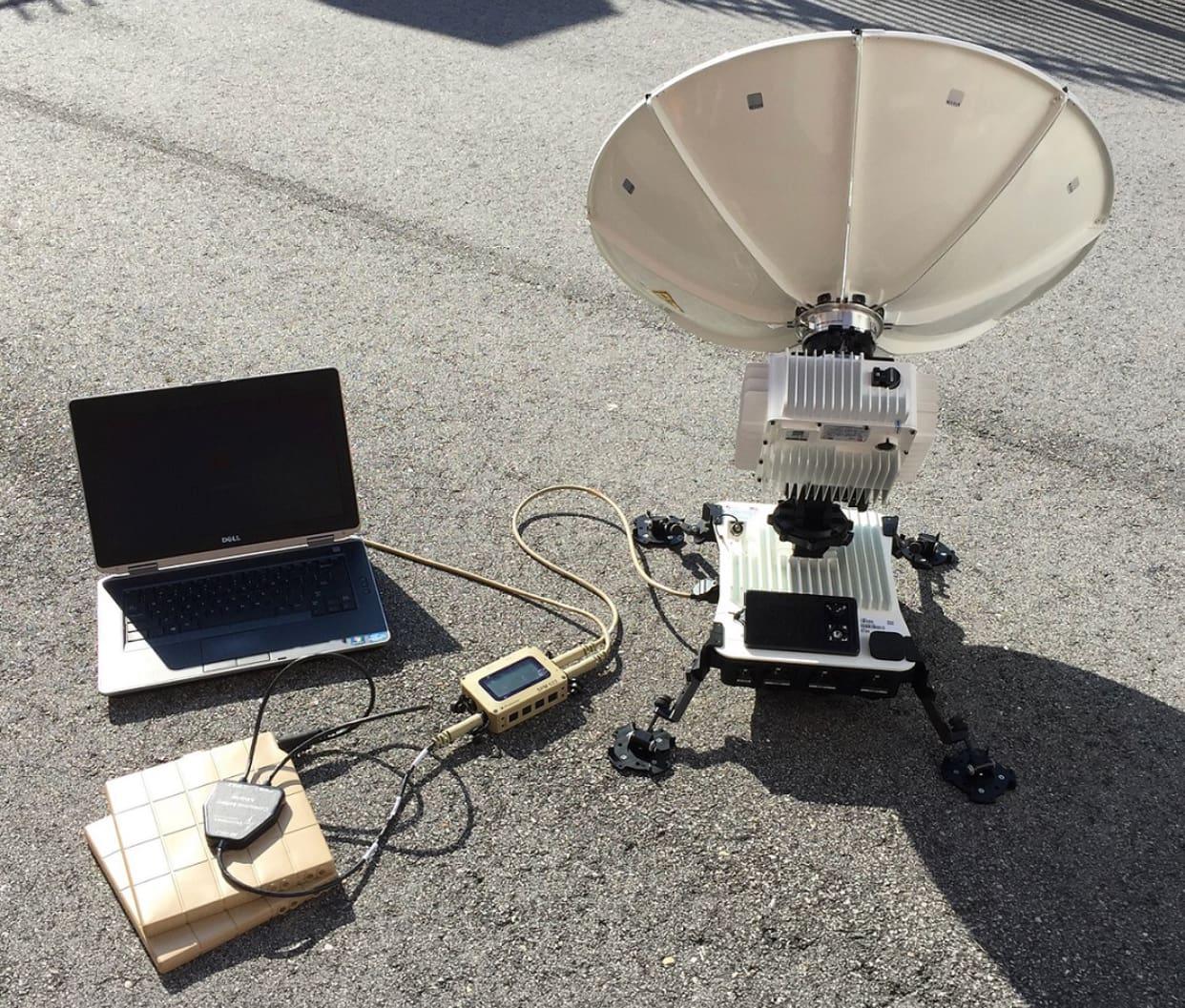
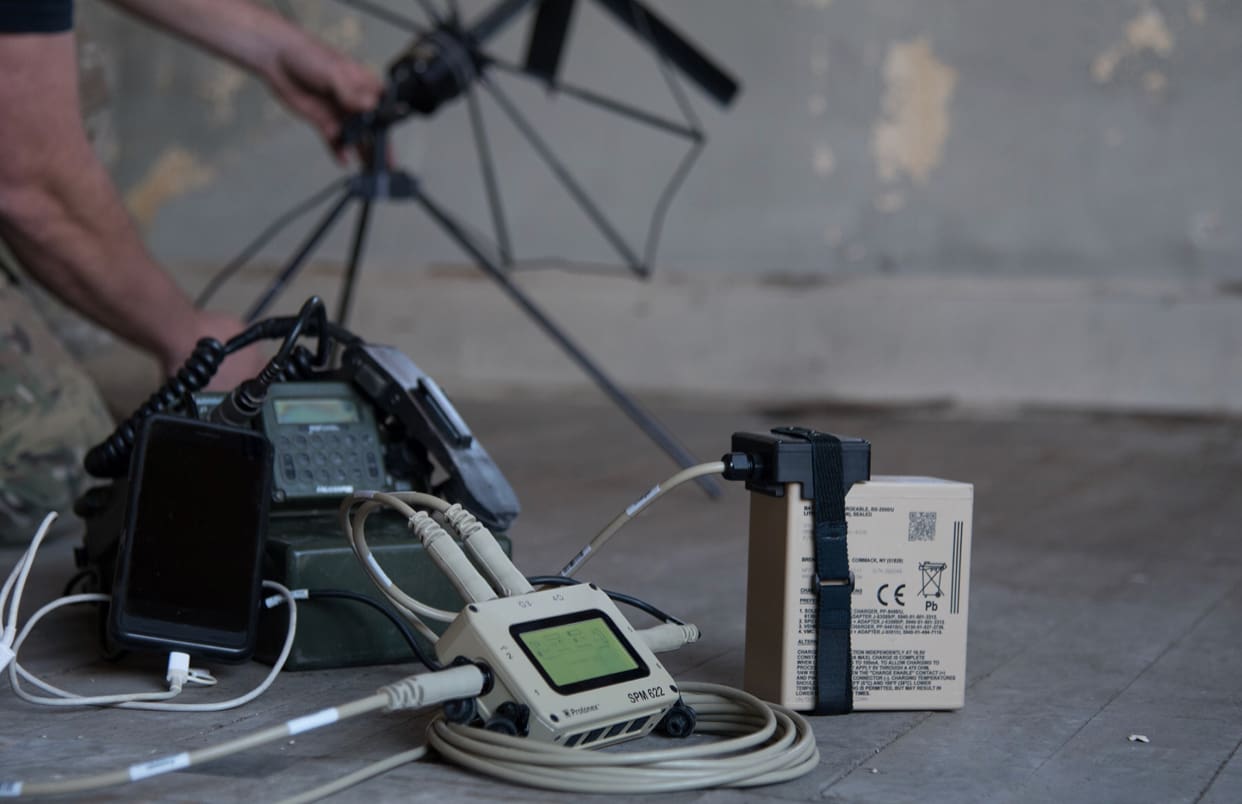
New York, N.Y. — Persistent Systems, LLC (“Persistent”), a leader in Mobile Ad hoc Networking (MANET) Technology and developer of Wave Relay®, announced today that it was awarded an $8.9 million contract award to provide more than 950 MPU5 radios to the U.S. Army National Guard’s Weapons of Mass Destruction Civil Support Teams (WMD-CSTs).

The contract is in support of the U.S. Army’s Unified Command Suite (UCS) Program of Record, which is managed by the Joint Program Executive Office for Chemical Biological Defense (JPEO-CBD). The UCS program aims to provide communications interoperability between military emergency response elements and Federal, State, and Local authorities on the scene of an incident.

IMG_4225

The Unified Command Suite is a self-contained communications vehicle that can either be driven to or be air-lifted via a C130 to an incident location. The MPU5 radios enable a high-speed communication network to be established on-the-fly, which empowers CST personnel to operate across the incident area while remaining connected both to the vehicle and to each other.

“Whether at a campaign rally or along a marathon route, National Guard Civil Support Teams run WMD detection operations to keep Americans safe,” said Louis Sutherland, VP of Business Development for Persistent. “That’s why it is so important that they have a robust wireless network.”

The MANET element of Persistent’s solution creates a vast, self-forming, self-healing radio network that does not require outside infrastructure to work. Should a node drop out of the network, sensor data collected by a Civil Support Team member will simply be routed another way. Using the MPU5 also means cutting down on the number of relay radios needed to push signals over and around obstacles.

IMG_4224

The MPU5 provides push-to-talk audio, video encoding, and an integrated Android™ computing environment that allows the installation of 3rd party applications. It is a 6W 3×3 MIMO radio which provides extremely long range and throughput exceeding 100 Mbps. These capabilities enable National Guard Civil Support Teams to network their sensors and transmit data collected in the field to the UCS vehicle and then on to a national lab for analysis.

“MIMO radios thrive in urban environments, where standard radios have trouble,” Sutherland said. “This enables the CST personnel to extend their network further from the truck and operate effectively in urban, high-population-density environments that are the most likely targets of an attack.”

Persistent has customers in the Army, Air Force, and Department of Homeland Security.

“Some of our most passionate advocates come from the chemical, biological, radiological, nuclear, and explosives detection community,” Sutherland said. “In fact, our MPU5 radio is already embedded in QinetiQ’s Talon unmanned ground robot which is also used by Civil Support Teams.”

Persistent has already begun delivery of its radios and expects to make another delivery of 500 radios to the Unified Command Suite program this month. The radio integration is being performed by NAVAIR in Patuxent River, Maryland.

Why Hasn’t The US Army Adopted Polymer Magazines?

Monday, September 18th, 2017

Despite adoption of polymer magazines by USSOCOM, the Marine Corps, and even the Air Force, the US Army has yet to join them. To make matters worse, the Army has evaluated polymer rifle magazines several times, and seems to have ignored their own results. In fact, the Air Force is said to have based their decision on the last Army test report. Granted, the Army has authorized use of the Magpul GEN M3 PMAG, but unlike the others, they haven’t made it their primary magazine.

While there’s been lots of online conjecture as to why the Army hasn’t adopted a polymer magazine, the true answer may well lie in this slide from a briefing presented by LTC Steve Power, PM Individal Weapons at PEO Soldier’s PM Small Arms, during NDIA’s 2017 Armament Systems Forum, this past May.

The Army is going to conduct yet another polymer magazine evaluation under the Soldier Enhancement Program. Direct your attention to the sub bullet on the slide below, which states, “Assess legal and contractual issues that could arise of pursued.” Most fail to understand the significance of that statement. Turns out, what’s holding the Army back is something bigger than any of us; procurement set asides.

IMG_4217

To begin to understand why it’s so important, you need to know that AbilityOne has a government-only sales website sponsored by three organizations, National Industries for the Blind, SourceAmerica (formerly NISH), and the US AbilityOne Commission, the operating name for The Committee for Purchase From People Who are Blind or Severely Disabled. They are all involved in providing goods to the US Government, based on the Javits-Wagner-O’Day Act or “JWOD Act” authorized under 41 U.S.C. 8501-8506c. These nonprofit agencies manufacture a variety of commodities throughout the United States, and employ people who are blind or have other severe disabilities. It’s a public/private success story.

Not only is the program Congressionally mandated, the AbilityOne Program employs more than 47,000 Americans. As you can imagine, this gives it a lot of clout. Essentially, once a commodity is provided via a directed source, it always will be. That’s why the legal review was mentioned as a factor, perhaps as important as, if not more than, how well the magazines work.

By now, you’ve said to yourself, “Well the other services have transitioned to the PMAG, why can’t the Army?” The answer lies in the numbers. The Army’s buying power is massive when it comes to small arms amd accessories. It buys more than the other three services combined, and that’s even if you add SOCOM into the equation. For the Army to drop a directed source is a very big deal and they will assuredly face Congressional pressure over such a move.

While it’s certainly frustrating to see the Army move so slowly toward the the wholesale adoption of a polymer magazine, we understand that there’s a bit more to it. That’s why we are publishing this information. You need to understand it as well. The Army needs to get its ducks in a row in order to make the business case for transition. But now that all of the cards are on the table regarding what’s at stake, there’s no excuse to keep kicking the can down the road. While performance must trump set asides, the question is, how much does performance need to improve for the Army to upset the rice bowl?

Armor Express Secures Contract with U.S. Marshals Service to Outfit Officers with AMP-1 TP VPAM-certified Ballistic Helmets

Thursday, September 14th, 2017

CENTRAL LAKE, MI, September 13, 2017 – Central Lake Armor Express, Inc. (“Armor Express”), a leading manufacturer and distributor of high-performance body armor solutions, is proud to announce that the U.S. Marshals Service has awarded the Company a contract to outfit Officers in the Western District of Virginia with its latest helmet innovation, the Busch AMP-1 TP ballistic helmet certified to the VPAM standard.

The United States Marshals Service (USMS) is the primary federal agency charged with conducting fugitive investigations throughout the country. The agency regularly works in concert with other federal, state, and local law enforcement agencies to seek out and arrest violent fugitives and sex offenders, and has established task forces throughout the nation to facilitate the apprehension of fugitives.

“We are honored to support this crucial branch of Federal Law Enforcement and stand ready to service their requirements,” stated David Jones, Director of Federal Sales. “We worked to ensure they have the most reliable, high-performance head gear. The Armor Express team understands the enormous danger that USMS officers face when dealing with the most violent fugitives and offenders, and having state-of-the-art protective equipment is of critical importance. We look forward to growing our partnership through the development and delivery of life-saving armor solutions that enable our men and women in uniform to do their job and return home safely.”

Introduced in early 2017, the Busch PROtective AMP-1 TP helmet is certified to VPAM (HVN-2009), the Gold Standard of ballistic testing within Germany, Austria and Switzerland, and brings first rate protection to tactical law enforcement, anti-terror and specialized police officers who may be exposed to close quarter combat and increased risk of being shot within the head region. The helmet is constructed of a multi-layered aramid composite, using a patented EBSP method – a unique production technique that creates elite ballistic capabilities previously attainable only in Titanium helmets.

Weighing an average of 3.6 pounds, the AMP-1 TP is able to stop ballistic threats as close as .78” from the edge and multiple shots on a small surface area. Its increased edge and multi-impact capabilities enhance the helmet’s protective area by up to 50%, compared to standard ballistic helmets. For the risk of taking multiple hits at close range, another key protective element is the helmet’s ability to transfer and dissipate energy around its shell, thereby reducing blunt force trauma. The helmet’s EBSP process counters this threat, thereby significantly reducing the energy transfer to the skull to less than 25 joules. VPAM’s extremely high testing requirements measure back-face deformation, ensuring when the helmet is hit by an incoming round, there is minimal energy transferred from the helmet shell to the user’s head. Further, the AMP-1 TP offers high fragmentation protection of more than 2,034 f/s, according to STANAG 2920.

The helmet comes with a unique rail-system with speed-connect system (SCS) technology, advanced protective padding system certified to the EN 397 (impact/shock attenuation standard), wheel dial for ultimate uni-sizing flexibility, and protective bag. The ‘uni-size’ feature is instrumental, helping departments with typical limited budgets to remove the cost of having to purchase multiple units based on individual fit. The special rail-system with speed-connect system (SCS) gives the wearer even more tactical and modular protective capability. The modular protective visors with varied protection levels (Blunt Impact, Fragmentation, or 9mm/44Mag) can be added/removed from the helmet within seconds, without ever having to take off the helmet – providing the benefit of always being protected. Additional accessories include the NVG 3-hole shroud, helmet cover (black or green color), helmet Velcro kit, helmet counter weight kit, visor protective cover and side-rail adaptor. The AMP-1 TP helmet comes in black, green and sand colors.

For more insights on the Busch AMP-1 TP helmet, along with all soft and hard armor solutions, visit the Armor Express website at www.armorexpress.com.

DLA Goes Bananas, To The Tune Of $49 Million

Tuesday, September 12th, 2017

From The “Too Good To Pass Up” Pile. The Defense Logistics Agency recently announced this contract award. I think it’s the company name, and the fact they are are local, that got my attention.

IMG_3908

“Norfolk Banana Distributors,* Norfolk, Virginia, has been awarded a maximum $49,200,000 firm-fixed-price with economic-price-adjustment, indefinite-delivery/indefinite-quantity contract for fresh fruits and vegetables. This is a three-year contract with no option periods. This was a competitive acquisition with three responses received. Location of performance is Virginia, with a Sept. 9, 2020, performance completion date. Using military services are Army, Navy, Air Force, and Marine Corps. Type of appropriation is fiscal 2017 through 2020 defense working capital funds. The contracting activity is the Defense Logistics Agency Troop Support, Philadelphia, Pennsylvania (SPE300-17-D-P309).”

Survitec PCS Aims to Significantly Reduce Preventable Battlefield deaths

Monday, August 28th, 2017

Norwegian Defence Material Agency signs up to $18m framework contract

Safety solution provider Survitec has launched a pre-hospital care system (PCS) – delivered by the Survitec Med division – that when effectively deployed will dramatically reduce preventable battlefield deaths, by providing world-leading pre-hospital medical equipment packaged ready for field use.

In line with the Norwegian Defence requirement, the PCS adheres to Tactical Combat Casualty Care (TCCC); a battlefield medical doctrine that optimises the interventions and equipment required to reduce preventable battlefield deaths to a minimum.

Around 90% of battlefield deaths occur before reaching definitive medical care1. By employing Survitec’s PCS solutions, combined with the implementation of TCCC guidelines, battlefield personnel can be equipped with the latest and most innovative pre-hospital solutions available today.

Survitec’s PCS equips the user with the tools and training they need to rapidly assess, treat and extract casualties at all stages of the TCCC process; including Care Under Fire, Tactical Field Care and Tactical Evacuation situations. It consists of four components to include high-quality equipment, tactical and emergency pre-hospital training, end-to-end expert support and a global servicing and restock network, ensuring all stages of global battlefield care are delivered seamlessly.

The Norwegian Defence Material Agency (NDMA) has awarded the framework agreement to Sweden-based Promoteq AB, with Survitec as subcontractor, acting as the System Integrator. This is the first large-scale operation of its kind and is valued at $18m for three years – with an option to extend further – meaning the Norwegian Defence will be supported by the cutting edge of battlefield care into the next decade. Survitec’s partner Promoteq is a security and government contractor with more than 10 years of experience of providing Medical state of the art products and training to the Scandinavian market.

Survitec will be officially unveiling the system at DSEI at London’s ExCel, which runs between September 12th and 15th.

Rune Jensen, Chief of Project Department in the General Material Division, NDMA says: “So far the NDMA has a good experience with Promoteq as a System Integrator and Survitec as a subcontractor. We are looking forward to testing a System Integration of this scale and have very high expectations to further cooperation and their future deliveries.”

Survitec Med is staffed and managed by a team full of military experience, informed by years of real world combat deployments and by active, qualified civilian paramedics to provide the best solutions to all tactical field users.

Kevin Wheeler, Medical Director of Survitec, said: “This is a complete end-to-end solution and the only offering of its kind that combines modular designs, tactical medical training, expert support and servicing, anywhere in the world. In simple terms, it is a system that will significantly increase survivability – it will save lives. It not only equips military personnel with the tools they need to care for their comrades, but also provides the training they need to execute any support and care efficiently and quickly. We are proud to be supplying the system to the Norwegian Armed Forces and we hope that other militaries follow suit to ensure their troops are equipped with the latest and most innovative pre-hospital care medical solutions available today.”

Created by Survitec with support from Promoteq, the PCS is delivered with the close involvement of over 40 leading medical companies. Survitec supplies world leading equipment, with each component uniquely packed into a suite of modules optimised for the relevant phase of care, be it under fire, in-field or tactical evacuation.

Survitec’s mission is to provide innovative medical systems that deliver the right equipment to project forward the highest level of care in harsh environments.

The PCS supports extraction, field care, mobility, casualty sustainment and mass casualty events while meeting all required industry standards.

www.survitecgroup.com

Canadian Forces Seeks Sniper Body Armour System

Thursday, August 24th, 2017

Public Works Canada has issued a tender for a Sniper Body Armour System. The details are below, but they only want 319 systems with an option for up to an additional 240 systems over the following 36 months. With numbers that low, it seems like a waste of resources to issue a tender. Just buy something off the shelf from a five eyes partner.  However, they are looking for Canadian content here, so if two or more Canadian companies bid, they won’t consider outside bids.

They explain thier requirement:
The sniper community currently has access to the in-service Fragmentation Protective Vest (FPV) that is worn by all Canadian Forces (CF) members. The in-service FPV is an all-in-one system, meaning the soft armour and in-service Bullet Resistant Plate (BRP) pockets are part of one garment. While the in-service FPV provides excellent ballistic protection, it hinders the snipers ability to operate effectively due to its bulk and restricted range of motion. Therefore it was determined that snipers require a less restrictive garment that allows flexibility of protection and movement based on operational needs.

The Sniper Body Armour System (SBAS) to be delivered under this contract is composed of three components. The first component is the SBAS External Carrier (SBAS EC) that will hold the SBAS Ballistic Panel (SBAS BP). The second component is the SBAS Plate Carrier (SBAS PC) that will hold the in-service BRP. The third component is the Bilingual User Instructions Card that provides important information related to sizing and wearing/caring for the SBAS.

The SBAS will provide ballistic protection to members of the sniper community with improved flexibility of movement and protection options. The sniper will wear individual components or both to maximize ballistic and fragmentation protection.

Quatities:
Item 01 – Sniper Body Armour System (inclusive of all related components) – quantity: 319 units

Options:
This requirement also includes options to purchase additional quantities as follows:
Item 02 – External Carrier Rear – estimated qty: 140 units
Item 03 – Ballistic Panel Rear – estimated qty: 140 units
Item 04 – External Carrier Front – estimated qty: 140 units
Item 05 – Ballistic Panel Front – estimated qty: 140 units
Item 06 – Plate Carrier Rear – estimated qty: 140 units
Item 07 – Plate Carrier Front – estimated qty: 140 units
Item 08a – Sniper Body Armour System (inclusive of all related components) – estimated qty: 240 units

One of the things I really appreciate about Public Works is that they are very specific about how they will evaluate a candidate’s bid proposal.  For example, go take a look at this Technical Evaluation Workbook.  If only the American acquisition community were so transparent.

Read the full details of the solicitation here.

CANSOF Seeks Advanced Special Operations Forces Combat Uniform

Wednesday, August 23rd, 2017

In a solicitation published to Public Works, the Department of National Defence (DND) has issued a requirement for Commercial-Off-The-shelf Advanced Special Operations Forces (SOF) Combat Uniforms (ASCU) to be supplied in accordance with DND specifications.

It is a two stage procurement:

Step I (Initial Contract): each Bidder deemed compliant will be awarded a contract for the supply of a quantity of twenty (20) Shirts and quantity twenty (20) Pants. These Combat Uniforms will be subjected to a User Acceptance performance Evaluation.

Step II (Main Contract): Following the User Acceptance Performance Evaluation result, one contract will be awarded for the Combat Uniforms. The Requisition on contract (ROC) will be for one (1) year with the option to extend for four (4) additional one (1) year period. The Bidder must supply and deliver the Combat uniforms as specified in Individual Requisition on Contract.

The candidate uniforms will be manufactured from No Melt No Drip fabric in the MultiCam print. The uniforms will be trialled by 10 wearers and their technical merit will be evaluated based in these factors:

Although they want samples in MultiCam print, they’ve included a place holder for other colors and patterns in the solicitation.

Have an exterior finish as follows:

a. Printed with the MULTICAM® camouflage pattern; and

b. Other finishes as available including white, black, tan and alternate camouflage patterns;

Another interesting requirement for potential bidders:

Expertise and Proven Design
The Bidder must be an experienced military uniform manufacturer by having been in the business of developing, manufacturing and/or selling military uniforms for a minimum of three (3) years and having sold a minimum of five hundred (500) uniforms to an American, British, Canadian or Australian (ABCA) military force in the last five (5) years.

It will be interesting to see if this solicitation gets CANSOF away from the Peerless manufactured uniforms they are currently using.