XC3 Weaponlight

Archive for the ‘Contracts’ Category

Darley Lands Milestone Defense Contract with DLA

Friday, January 8th, 2021

Itasca, IL, January 8, 2021 – On January 5, the Defense Logistics Agency (DLA) awarded Darley Defense a contract on the 5th iteration of the Special Operational Equipment (SOE) Tailored Logistics Support (TLS) Program. The award, made to Darley and five other contractors, is valued at $33 Billion over a 10-year period. The award has a two-year base contract with four two-year option periods. It is an Indefinite Delivery Indefinite Quantity (IDIQ) contract that enables Federal customers to order commercial-off-the-shelf items within the scope of Special Operational Equipment. Darley supplied roughly $500 million in equipment to federal customers in FY2020 under the predecessor SOE TLS contract.


The scope of work under the SOE TLS program includes the total logistics support for the special operational equipment requirements of DLA customers to include military installations, federal agencies, and other authorized DLA customers located worldwide.  

“This contract is really our license to sell to the DOD,” said Darley CEO, Paul C. Darley. “We are proud to be able to serve our defense and other federal customers for another 10 years under this milestone contract. Our team is strong, and we are well suited to assist our military customers in meeting their capabilities for their ever-evolving mission sets.”  

www.darley.com

True Velocity Completes On-Time Shipment of Over 625K Rounds of Composite-Cased Ammo to US Army

Thursday, January 7th, 2021

Delivery marks beginning of final review period for force modernization program

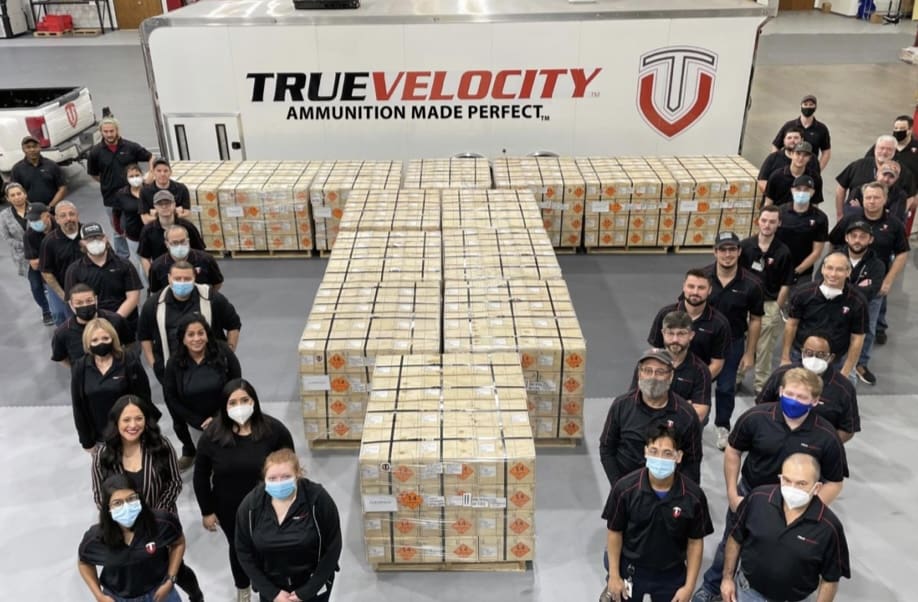
GARLAND, TX (January 7, 2021) – Texas-based ammunition manufacturer, True Velocity, finalized delivery of more than 625,000 rounds of the company’s proprietary composite-cased 6.8mm ammunition to the U.S. Army for consideration in the Next Generation Squad Weapon Program (NGSW). This milestone marks a significant point in the review process to become the U.S. Army’s next choice in small arms Ammunition, which is anticipated to effectively replace the standard 5.56x45mm round carried by many soldiers.

The U.S. Army initially shortlisted True Velocity’s composite-cased ammunition in August 2019 as a finalist for the NGSW program and the first shipment of 6.8mm True Velocity ammunition was delivered to the Army in August 2020. Following this most recent delivery, the Army will test the ammunition in a variety of settings throughout 2021 before issuing a final decision on contracts related to NGSW participation.

“It has been a long, exciting road to get to this point,” said Chris Tedford, president of True Velocity. “We have consistently been able to demonstrate the effectiveness and superior performance of True Velocity’s designs and manufacturing processes time and time again, proving that we represent the obvious choice for the future of military small arms ammunition. Due to the dedication of our team, we are living up to our ethos of making ammunition perfect for our warfighters.”

True Velocity’s proprietary 6.8mm composite-cased ammunition presented to the U.S. Army boasts significant advantages over brass ammunition including a 30 percent weight reduction, improved accuracy, optimized muzzle velocity and increased ballistic efficiency. True Velocity’s manufacturing processes and infrastructure are also being reviewed by the U.S. Army, as the company’s technology and designs could drastically increase efficiency through automation and a substantial reduction in manufacturing footprint. A True Velocity production cell that occupies just 2,640 square feet can produce as many as 27 million rounds per year.

“We look forward to continuing the review process alongside the U.S. Army and exceeding their expectations in every way possible,” said Kevin Boscamp, CEO of True Velocity. “True Velocity rounds will not only give warfighters a significant advantage in the field, but we believe our products and processes will save institutions such as the Department of Defense millions of dollars in logistics costs. We are eagerly anticipating their decision.”

For more information, visit tvammo.com.

Atlantic Signal Receives Orders in Excess of $2 Million for Below H2O Maritime Headset Originally Developed for US Naval Special Warfare

Thursday, January 7th, 2021

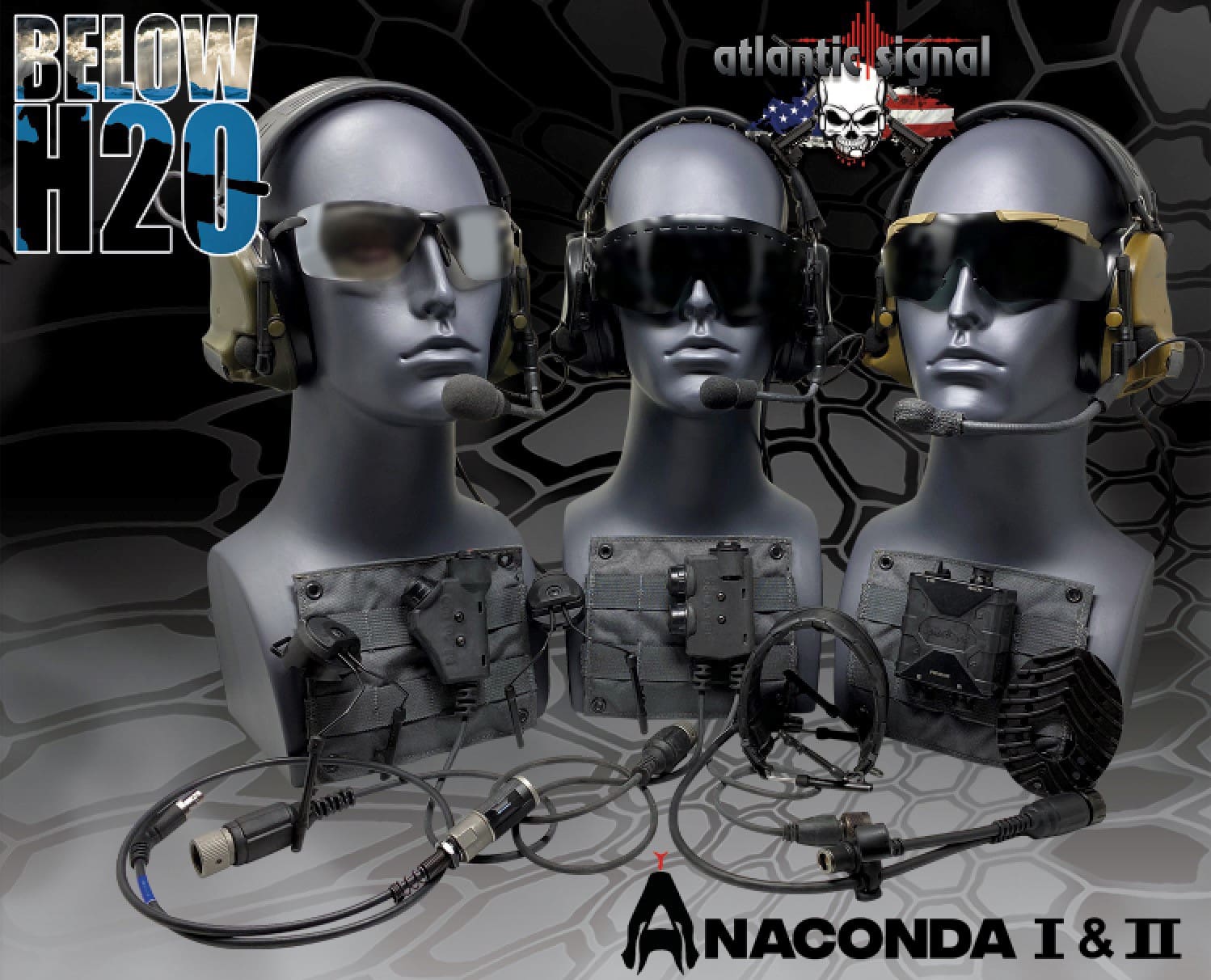
(4 JAN 2021 Topeka, KS) Atlantic Signal recently received orders totaling in excess of 2 million dollars for the company’s Below H20 headset, various maritime push-to-talks assemblies and radio interface cables.

Atlantic Signal developed the Below H20 headset several years ago to meet the requirements established by USSOCOM for maritime communications and a Program of Record. Ultimately, the company was awarded a multi-year contract for the headset and accessories for Naval Special Warfare and MARSOC with deliveries beginning in 2018.

During the Below H20 headset’s development, the company began development of three all-new push-to-talk assemblies: * a single comm known as the Below H20 Single Comm Push-to-Talk, * a dual comm known as the Below H20 Dual and * a multi-comm Push-to-Talk known as the Anaconda. The company debuted an all-new Maritime multi-comm Push-to-Talk during the fourth quarter of 2020 known as the SHIELD. The SHIELD PTT was developed initially, specifically, for the Federal Bureau of Investigation’s nationwide Special Operations Units and Hostage Rescue Team. The PTT will be universally available to clients in early 2021.

USSOCOM’s maritime requirement changed several years ago for ancillary communication devices from a 2 hour / 20-meter exposure to 10 hours / 10 meters in both salt and freshwater.

Atlantic Signal began working with the 3M/Peltor ComTac headset to modify the ground/swimming headset traditionally offered by 3M (1 meter / 30 minutes). Modifications included multiple custom headset downleads, sealing of the earcups, development and manufacture of an ambidextrous boom microphone designed to withstand the harsh conditions associated with maritime operations / exposure and silicone replacement ear shell seals among other modifications.

While the initial orders from USSOCOM were specific to an interface to another company’s push-to-talk, the demand for alternative PTTs from non-program clients was overwhelming.

“We were receiving sometimes weekly calls requesting alternative push-to-talks to the model the program office had chosen for one specific client at the time of the contract award which was Naval Special Warfare, stated Randall Hedrick, President and Managing General Member of Atlantic Signal. “We recognized at that point that the demand for a new maritime headset for the U.S. Military must include alternative push-to-talks. We reached out immediately to our select group of military and Federal law enforcement clients who assist us with the development of nearly every single product we eventually bring to market. The requirements were across the board and we therefore decided to design and manufacture multiple maritime push to talks simultaneously. From meetings, to design, 3D model and functioning prototypes, re-works and eventual production – the total time was less than 90 days before products were completed and an initial purchase was made. This scenario is indicative of how we operate. There is a demand, we hold meetings with the client and assess marketability. Traditionally a decision is made internally within one week whether or not to move forward. Once a project is accepted, CAD drawings are created and sent to the client. After discussions with the client, non-functioning 3D models are generated and shipped out. Further meetings are held with the client and modifications made to the 3D model. Following ergonomic acceptance, functioning prototypes are created and shipped for user fielding. Once accepted, first articles are produced, a bill of materials is generated, production time studies are completed and eventually a new product is born and introduced to the marketplace. I’ve literally seen concepts brought to the table by clients and a finished product ready for the market within 30 days. It is commonplace for us to be in the development, prototype and production phases of multiple products simultaneously. We have become highly adept at meeting customer expectations in a timeframe rarely achieved by others”, stated Hedrick.

The Below H20 headset, PTTs and cables have proven to be highly sought after solutions for both the U.S. and foreign militaries as it has been over two decades since a new circum-aural maritime headset had been available. The company offers simple maritime PTT solutions all the way to PTTs that will interface up to four nets, various ICS platforms and smartphones all in EMI shielded designs with added cross banding capabilities. The company has developed and manufactures maritime radio cable assemblies for old school PRC 148 and 152 radios to modern day multi-band portables including manufacturers such as Trellisware, Silvus, Thales and Harris RF.

The Below H20 headset, maritime PTT solutions and various accessories including custom cables can be viewed on the company’s website at www.atlanticsignal.com.

Avon Protection’s FM50 Mask Chosen by the Netherlands

Thursday, January 7th, 2021

Avon Protection is pleased to announce they have received an order from The Netherlands for FM50 masks and FM61EU filters under the NATO Support & Procurement Agency (NSPA) contract.

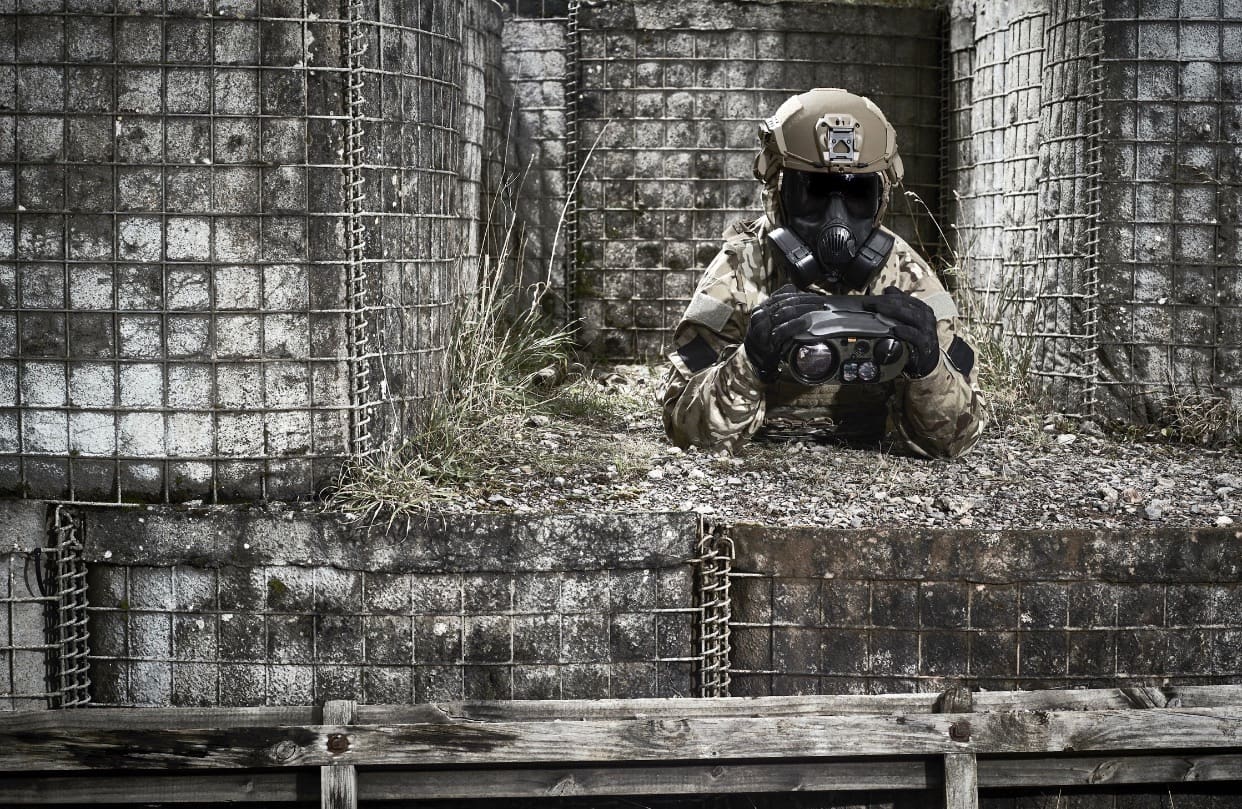
The Netherlands joins other NATO Nations and Partners, Norway, Belgium and Finland, in purchasing the FM50 to protect their militaries. Developed in conjunction with the United States Department of Defense to counter the multiple CBRN threats met in modern war fighting, anti-terrorist and peace-keeping operations, the FM50 is the most operationally proven and widely deployed battlefield respirator in the world. 

Commenting, James Wilcox, President, Military at Avon Protection, said:

“We are proud The Netherlands continues to choose Avon Protection to provide the best CBRN protective equipment for their troops. We look forward to continuing our relationship with this strategically important customer to deliver and support this world leading military capability.”

TSSi Awarded 5th Generation DLA SOE TLS Contract

Wednesday, January 6th, 2021

Harrisonburg, Virginia, January 6, 2021 – TSSi is proud to announce that the Defense Logistics Agency (DLA) has awarded TSSi a contract for the 5th Generation of the Special Operational Equipment (SOE) Tailored Logistics Support (TLS) Program. This $33 Billion, 10-year, Indefinite Delivery Indefinite Quantity contract enables customers to order commercial, off-the-shelf part numbered items within the scope of Special Operational Equipment.

DLA created the TLS program to infuse supply chain management best practices into the procurement process of commercial goods and services to the U.S. Government. These best practices incorporate the latest innovations in information technology, supply chain management theory, and real-world experience to provide improved customer support. We are excited to extend our eleven-year partnership with DLA and continue working closely with our Government partners to serve both DLA and TSSi’s ultimate customer: the Warfighter.

More details about this contract can be found on TSSi’s website, www.tssi-ops.com.

Defense Logistics Agency Awards 10-Year, $33 Billion Special Operations Equipment Tailored Logistics Support Contract to 6 Firms

Wednesday, January 6th, 2021

The Defense Logistics Agency announced yesterday the following contract award:

Atlantic Diving Supply Inc.,* doing business as ADS, Virginia Beach, Virginia (SPE8EJ-21-D-0020); Federal Resources Supply Co.,* Stevensville, Maryland (SPE8EJ-21-D-0021); Noble Supply Co., Inc.,* Rockland, Massachusetts (SPE8EJ-21-D-0022); SupplyCore Inc.,* Rockford, Illinois (SPE8EJ-21-D-0023); Tactical Survival Specialties Inc.,* Harrisonburg, Virginia (SPE8EJ-21-D-0024); and W.S. Darley & Co.,* Itasca, Illinois (SPE8EJ-21-D-0025), are sharing a maximum $33,000,000,000 firm-fixed-price, indefinite-delivery/indefinite-quantity contract under solicitation SPE8EJ-18-R-0001 for the fifth generation Special Operations Equipment (SOE) Tailored Logistics Support (TLS) program. The scope of work under the SOE TLS program includes the total logistics support for the special operational equipment requirements of Defense Logistics Agency (DLA) customers to include military installations, federal agencies, and other authorized DLA customers located worldwide. This was a competitive acquisition with 29 offers received. These are two-year base contracts with four two-year option periods. Locations of performance are Virginia, Maryland, Massachusetts, and Illinois, with a Jan. 4, 2023, ordering period end date. Using customers are Army, Navy, Air Force, Marine Corps and Coast Guard. Type of appropriation is fiscal 2021 through 2022 defense working capital funds. The contracting activity is the Defense Logistics Agency Troop Support, Philadelphia, Pennsylvania.

Saab Receives Follow-on Contract for GlobalEye

Monday, January 4th, 2021

Saab has today received a follow on contract with the United Arab Emirates regarding the sale of two GlobalEye systems, Saab’s advanced airborne surveillance system. The order value is USD 1.018 billion and the contract period is 2020-2025.

The original contract with the United Arab Emirates for GlobalEye was signed in 2015. This contract is an amendment to that signed in 2015.

“We are proud that the United Arab Emirates continues to show great trust in Saab and our solutions. It shows that Saab remains on the cutting edge regarding advanced technology. The GlobalEye program is running according to plan and we have an efficient cooperation with the customer”, says Saab’s President and CEO, Micael Johansson.

The work will be carried out in Gothenburg, Linköping, Arboga, Järfälla and Luleå in Sweden and in Centurion, South Africa.

The contract was signed by the customer on the 30th of December 2020, hence the order was booked during the fourth quarter 2020.

GlobalEye provides simultaneous air, maritime and ground surveillance. It combines sophisticated radar technology with the ultra-long range Global 6000 aircraft from Bombardier.

www.saab.com

Marine Corps Begins Widespread Fielding of Suppressors

Wednesday, December 30th, 2020

MARINE CORPS BASE QUANTICO, Va. —

Marines risk their lives to protect others.

Many are trained to locate, close with and destroy the enemy by fire and maneuver, or repel the enemy’s assault by fire and close combat. They engage adversaries in any clime and place, no matter how arduous the conditions.

Marine Corps Systems Command is tasked not only with enhancing the lethality of warfighters. The command also strives to protect them.

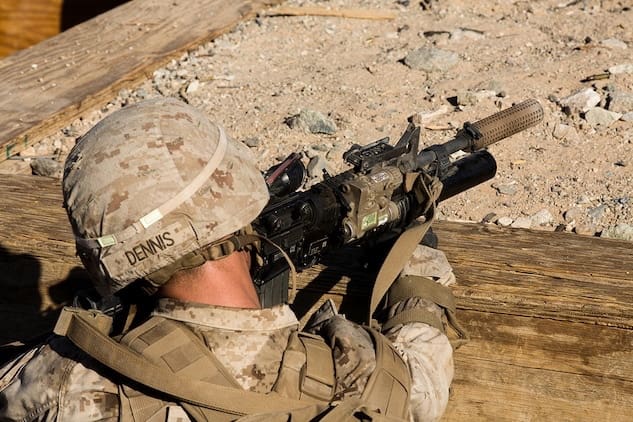
MCSC has taken another step toward increasing lethality and protection for Marines. In December, the command began the process of fielding thousands of suppressors to infantry, reconnaissance and special operation units for employment on the M27, M4 and M4A1 rifles.

Small arms suppressors are designed to reduce a weapon’s noise, flash and recoil. They are also time-efficient, as attachment and detachment only takes a few seconds. The mass fielding of the suppressors, and their myriad benefits, represents a monumental moment for the Marine Corps.

“We’ve never fielded suppressors at this scale,” said Maj. Mike Brisker, weapons product manager in MCSC’s Program Manager for Infantry Weapons. “This fielding is a big moment for the Marine Corps.”

MCSC works with CD&I, PP&O

In recent years, the Marine Corps had already begun suppressing its M38 and M4A1 rifles. However, an increased number of commanders felt suppressing additional weapons would increase the overall lethality of the infantry.

The impetus for equipping additional weapons with suppressors came from a series of experimentations at a 2016 “Sea Dragon” event, which enables the Marine Corps to experiment with current and emerging technologies and operational concepts.

At the event, a battalion employed the suppressors as part of a Marine Corps Warfighting Lab experimentation.

“The positive feedback from that experiment was the primary driving force behind procuring suppressors,” said Brisker. “We’ve had a few limited user experiments with various units since that time, and all of those events generated positive reviews of the capability.”

Before acquiring the suppressors, MCSC worked with the Marine Corps’ Combat Development and Integration; Plans, Policies and Operations; and the Fleet Marine Force to determine the optimal concept of distribution to support the close combat Marine.

“Our intent was to leverage commercially available technology to support the near-term modernization required for our close combat Marines,” said Billy Epperson, the Infantry Weapon Capabilities Integration Officer at CD&I.

Epperson added that the Marine Corps conducted Limited User Evaluations in 2019 with commercial suppressors provided by vendors showcasing the latest and greatest in technology to characterize requirements in support of an acquisition effort that began in fiscal year 2020.

In 2020, PM IW procured about 6,700 small arms suppressors through Defense Logistics Agency’s Tailored Logistic Program, and acquired more than 7,000 additional units on the first delivery order upon the contract award. Brisker said the goal is to field approximately 30,000 suppressors by fiscal year 2023.

How suppressors save lives

CWO4 David Tomlinson, MCSC’s infantry weapons officer, emphasized the importance of suppressors in exchanging information during battle. He said gun fights create a chaotic environment with intense noise levels, producing communication problems that can increase confusion.

“I would say the most important thing the suppressor does is allow for better inter-squad, inter-platoon communication,” said Tomlinson. “It allows the operators to communicate laterally up and down the line during a fire fight.”

Tomlinson said suppressors can save lives, as Marines engaged in battle can expose themselves from their firing position. The suppressor reduces their audible and visual signature, making it more difficult for the enemy to ascertain their location.

In addition to tactical advantages on the battlefield, the reduced noise of the suppressors also benefits a Marine’s long-term health, said Brisker. According to the U.S. Department of Veterans Affairs, hearing problems are by far the most prevalent service-connected disability among American veterans.

“In the big picture, the VA pays out a lot in hearing loss claims,” said Brisker. “We’d like Marines to be able to continue to hear for many years even after they leave the service. These suppressors have that benefit as well.”

Tomlinson mentioned how the news of the fielding of additional suppressors has created a groundswell of excitement among the units receiving them. He believes the myriad advantages suppressors provide will benefit the Marine Corps for years to come.

“As I travel and brief units, this capability has generated the most interest—from lance corporals to colonels,” said Tomlinson. “There has been an overwhelming excitement to receiving the suppressors, which we anticipate will serve as an effective capability for the warfighter.”

Story by Matt Gonzales, MCSC Office of Public Affairs and Communication, Marine Corps Systems Command

US Marine Corps photo by Sarah N. Petrock, 2d MARDIV Combat Camera