Come Join us for an Echelon Happy Hour Wednesday 2-4pm at our Booth 62308 and grab a free can of Echelon. While you’re there, take a peek at some of the new products we’re releasing this year.


Come Join us for an Echelon Happy Hour Wednesday 2-4pm at our Booth 62308 and grab a free can of Echelon. While you’re there, take a peek at some of the new products we’re releasing this year.


Come see us next week at SHOT Show 2026 over at booth #32111 from Tuesday, January 20th through Friday, January 23rd. Check out our product line-up and catch up with our team to learn more about what’s coming in 2026!

To request an estimate click image above or visit First-Spear.com/Request-For-Estimate. FirstSpear is the premier source for cutting-edge tactical gear for military, law enforcement and those who train. For more information visit First-Spear.com.
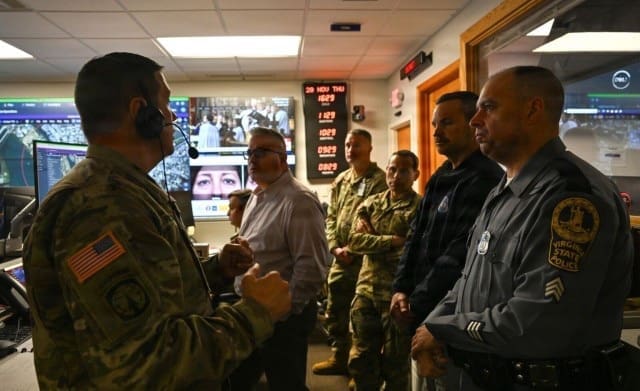
WASHINGTON — Joint Interagency Task Force 401 announced Jan. 11 its first acquisition under the Replicator 2 initiative, awarding a contract for two advanced DroneHunter F700 systems, which are expected to be delivered by April.

This acquisition provides the task force with enhanced capabilities to counter the growing threat posed by small unmanned aerial systems. It also marks a significant step in the War Department’s strategy to rapidly field counter-unmanned aerial systems to protect military installations and critical infrastructure across the United States.
“We’re designed to move at the speed of relevance, cutting through red tape, consolidating resources, and engaging venture capitalists, tech startups, and nontraditional defense firms as critical partners,” said Army Brig. Gen. Matt Ross, JIATF 401 director.
“We have just one measure of effectiveness: to deliver state-of-the-art counter-UAS capabilities to our warfighters both at home and abroad. This purchase of the DroneHunter system is a key first step in accomplishing our Replicator 2 mission,” Ross added.
Replicator 2: A New Approach to Counter-UAS
The Replicator initiative, first announced in August 2023, is a War Department effort to accelerate the delivery of innovative capabilities to the warfighter at speed and scale.
While the first phase, Replicator 1, was focused on deploying thousands of autonomous systems across multiple domains, Replicator 2 is specifically aimed at countering the threat posed by small UAS.

The joint task force, established in August 2025, is the lead organization for this effort, tasked with synchronizing counter-small UAS efforts across the department and rapidly delivering joint capabilities.
“Replicator 2 is not about starting from scratch,” Ross said. “It’s about leveraging the incredible innovation happening in the commercial sector and getting it deployed where it is needed most.”
The DroneHunter: A State-of-the-Art Solution
The DroneHunter is a reusable, artificial intelligence-driven interceptor drone that provides a unique and effective solution to counter small UAS, especially in settings where personnel, infrastructure and surrounding activity require careful control of effects.
The system uses AI and radar to detect and track small, low-altitude drones in complex environments. Once it spots a potential threat, the system can capture it with a tethered net.
The captured drone is then safely towed to a designated location for forensic analysis. This solution is ideal for use in the homeland, where the risk to civilian populations and infrastructure must be minimized.
This initial purchase is the first step in the tailored approach the task force will take to deliver state-of-the-art counter-UAS technology to protect military infrastructure and service members.
“This is one example that demonstrates how JIATF 401 has taken counter-drone efforts from a community of interest to a community of action,” Ross said. “The task force is focused on a whole-of-government approach, working with interagency partners and industry to build a layered defense against the full spectrum of small UAS threats to the homeland.”
By Lt. Col. Adam Scher, Joint Interagency Task Force 401
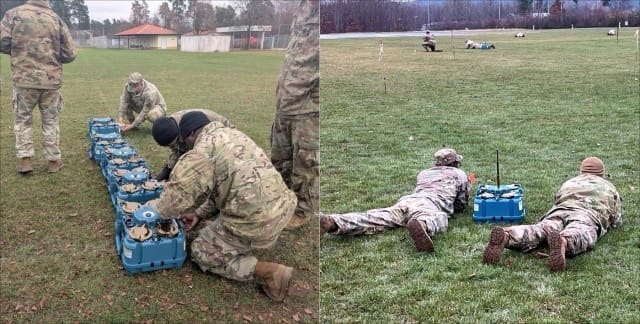
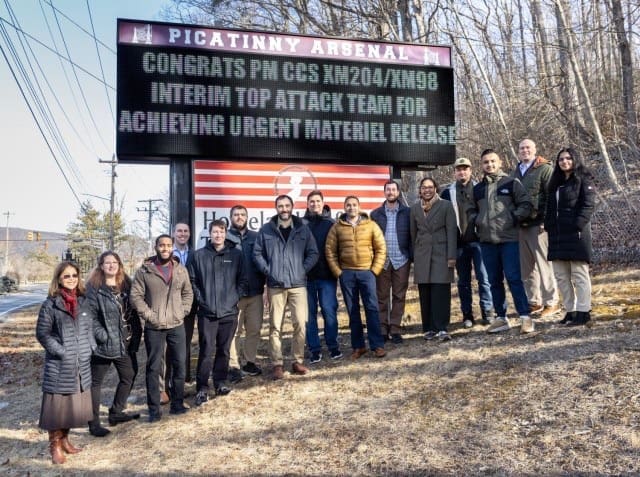
PICATINNY ARSENAL, NJ — The U.S. Army’s XM204 interim top-attack munition was approved for Urgent Materiel Release (UMR) and successfully conducted initial fielding in Europe on December 4, 2025. Managed by Project Manager Close Combat Systems (PM CCS) at Picatinny Arsenal, NJ in partnership with Textron Systems of Wilmington, MA, the XM204 completed Low-Rate Initial Production in September of 2025. The munition was then fielded to the 2nd Cavalry Regiment, based at Rose Barracks in Vilseck, Germany for training.
New Equipment Training and Doctrine, Training and Tactics were provided to 2nd Cavalry Regiment to review the performance, reliability, and integrated safety features of the XM204 and prepare for use Army-wide.
Eight Observer Coach/Trainers from the Joint Multinational Readiness Center also attended the train-the-trainer course so those personnel can continue to guide other Soldiers on the effective use of the weapon system. The training was held at Grafenwoehr Army Base and at the conclusion of training/fielding, PM CCS and JPEO Armaments & Ammunition (JPEO A&A) achieved Initial Operational Capability milestone.
The XM204 is an anti-vehicle munition with standoff and top attack capabilities designed to support terrain shaping operations by supporting a number of counter mobility tasks such as blocking, disrupting, fixing, and turning an enemy force.
“Seeing the XM204 perform so successfully reinforces the strength of our development teams and the speed at which they can design, build, test and field critical munitions that can degrade enemy mobility and create tactical advantages for friendly forces,” said Maj. Gen. John T. Reim, JPEO A&A and Commanding General of Picatinny Arsenal. This new system addresses evolving battlefield demands and the ongoing need to produce safe, reliable, and lethal munitions for our Warfighters and international partners.
The XM204 can be rapidly emplaced and is highly portable; the system can be employed alone, in multiples or in tandem with other terrain shaping systems. The lightweight munition features a dispenser launcher module that autonomously deploys multiple submunitions. Each submunition is equipped with onboard sensors to detect enemy vehicles and utilizes an explosively formed penetrator to defeat those threats. If not armed, the system is recoverable which allows Soldiers to reposition it as needed.
The XM204 also includes tamper-resistant features, armed/safe indicators, and self-destruct timers, aligning with U.S. landmine policy on anti-personnel landmines and reducing post-conflict risks to civilians.
In addition to the XM204, the XM98 Emplacement Trainer was approved by U.S. Army Tank-Automotive and Armaments Command in November. The XM98 training munition was also fielded to the 2nd Cavalry Regiment in Germany. The regiment is the longest continuously serving cavalry unit in the Army and plays a key role in North Atlantic Treaty Organization’s enhanced Forward Presence initiative.
By Michael Chambers
Reach out to sales@matbock.com to book your meeting with the MATBOCK team. They will be releasing a new carrier and the next generation Tarsier Eclipse.
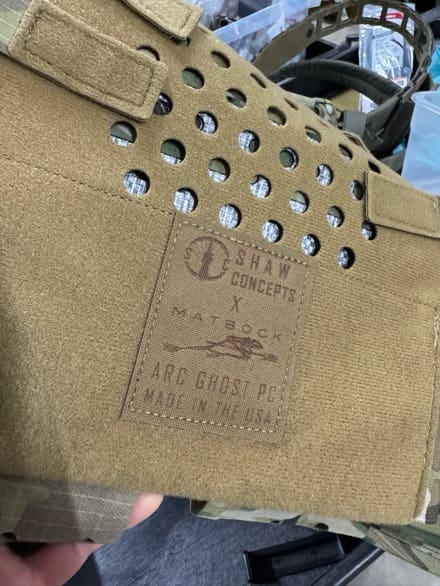
ARC Ghost:
This is a collaboration between Shaw Concepts and MATBOCK to bring innovative designs by Shaw Concepts utilizing MATBOCK Ghost. The ARC Ghost will also be on display at Show Concepts booth 60508 level one of the ballrooms.
Tarsier Eclipse Pro:
After nearly 14 years, the Tarsier Eclipse is getting a huge upgrade and the Tarsier Eclipse Pro was born. Early production prototypes are going out to units now with production of the Tarsier Eclipse Pro rolling out at the end of Q1 / early Q2 2026.
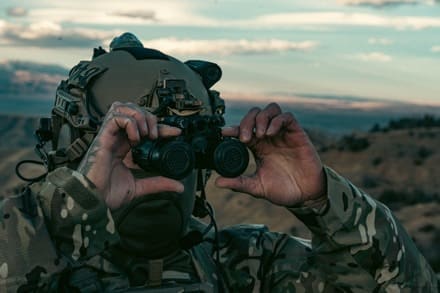
*Final designs may vary slightly as these are in the final stages of pre-production prototypes.*
Schedule your meeting today and stop by Shaw Concepts booth #60508 to see the latest from both companies
See you all at Shot Show 2026! Email: sales@matbock.com
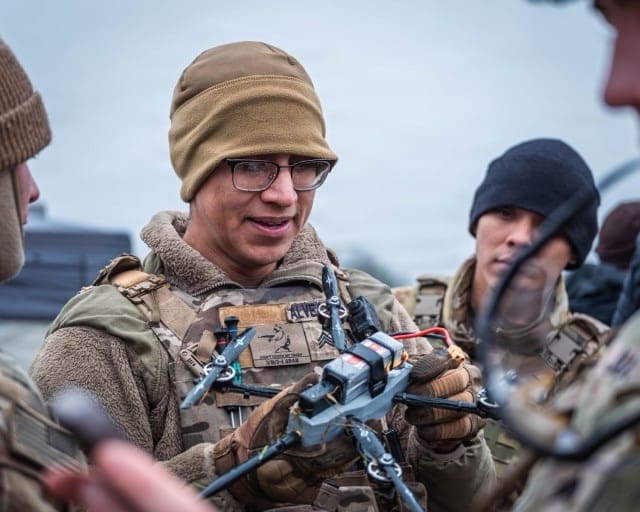
ABERDEEN PROVING GROUND, Md. — When Soldiers took to the field for Project Flytrap 4.5, they were not only testing emerging counter-unmanned aerial system technology but also tackling a challenge facing multinational operations: how to move sensor data quickly, reliably and securely across networks.
Project Flytrap is a recurring C-UAS experimentation series in Europe focused on assessing passive and active sensors, and defeat capabilities against group 1-3 UAS in a coalition environment. Conducted by V Corps alongside U.S. and partner nation forces, the exercise series is designed to identify capability gaps, test new technologies and refine tactics under realistic operational conditions.
As part of the exercise, Army teams worked alongside V Corps to evaluate how the integrated sensor architecture, or ISA, could help address data sharing and interoperability gaps revealed during earlier iterations of the exercise.
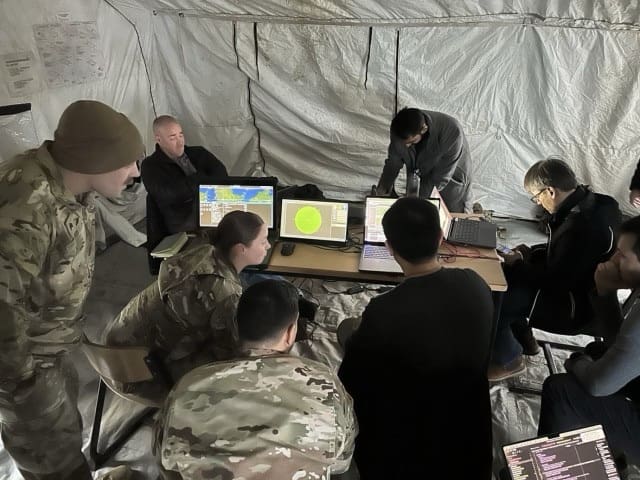
Developed by Capability Program Executive – Intelligence, Electronic Warfare and Sensors, ISA is a framework that connects sensors and networks across domains, services and coalition partners using standardized, open-architecture data formats. As demand for rapid, interoperable sensor data grows across Europe, ISA has emerged as a scalable, plug and play backbone for operations.
“The goal is a plug and play environment where partner nations can bring in their sensors and contribute to a common operating picture,” said Russell Nadler, a technical program integrator with CPE-IEW&S’ Integration Directorate. “ISA can be the enabler that helps pass sensor data seamlessly between allied and U.S. systems.”
Conducted over multiple iterations in recent months across locations in Germany and Poland, Project Flytrap supports the Eastern Flank Deterrence Line warfighting concept by bringing U.S. and partner-nation soldiers together to evaluate new technologies under realistic conditions. Previous iterations exposed limitations in existing networks, particularly when integrating multiple sensors and processing large volumes of data in real time.
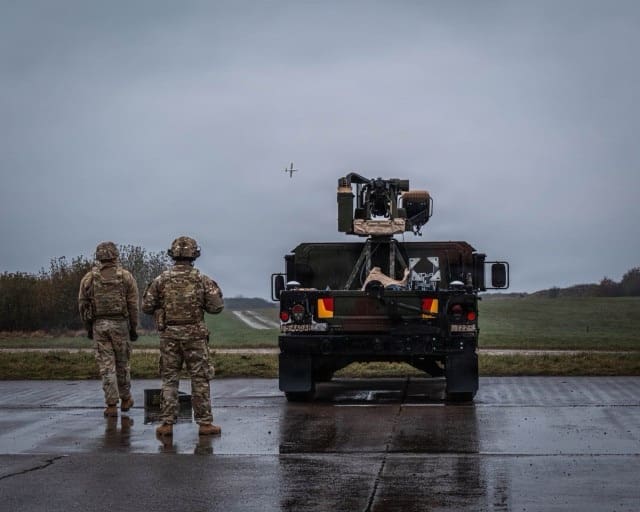
“For us, Flytrap really highlighted the importance of having an architecture that could scale and adapt as systems were added,” said Maj. Oniel Rhooms, Project Flytrap network integration lead for V Corps. “By the time we got to 4.5, ISA had matured to a point where it could actually enable that integration instead of becoming another barrier.”
Built for Interoperability
By leveraging open data standards, ISA enables information from radar, optical, infrared and acoustic sensors — regardless of origin — to flow into a shared environment without custom re-coding or system-specific interfaces. This approach provides a more flexible and resilient way to integrate sensors across units and coalition partners.
“ISA wasn’t just part of the network, it was also part of how we validated vendors,” Rhooms said. “It helped us determine early on whether systems could actually connect and deliver what they claimed, which saved time and reduced risk once we went live.”
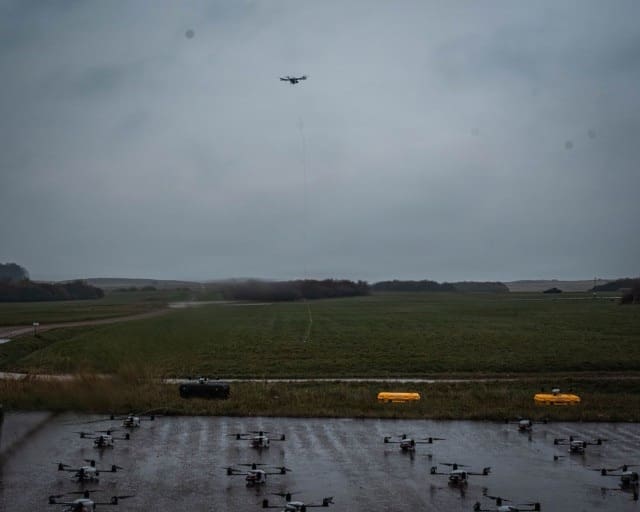
That flexibility extended beyond technology. Rhooms emphasized the importance of the ISA team’s on-site support, noting their ability to adapt quickly as conditions changed.
“The people mattered just as much as the technology,” he said. “They were able to pivot, solve problems on the spot, and make connections happen that otherwise wouldn’t have.”
Looking ahead
As adversary drone tactics continue to evolve, exercises like Flytrap remain essential for testing technologies under real-world stress. With Flytrap 4.5 demonstrating the value of a more integrated approach, V Corps and CPE-IEW&S will continue refining how ISA supports interoperable C-UAS and sensing operations across the European theater.
By Kay Edwards
HOHENFELS TRAINING AREA, Germany – The Joint Multinational Readiness Center (JMRC) has been training its Observer, Controller/Trainers (OC/T) in new technologies to keep its world-class training ready for the future fight.
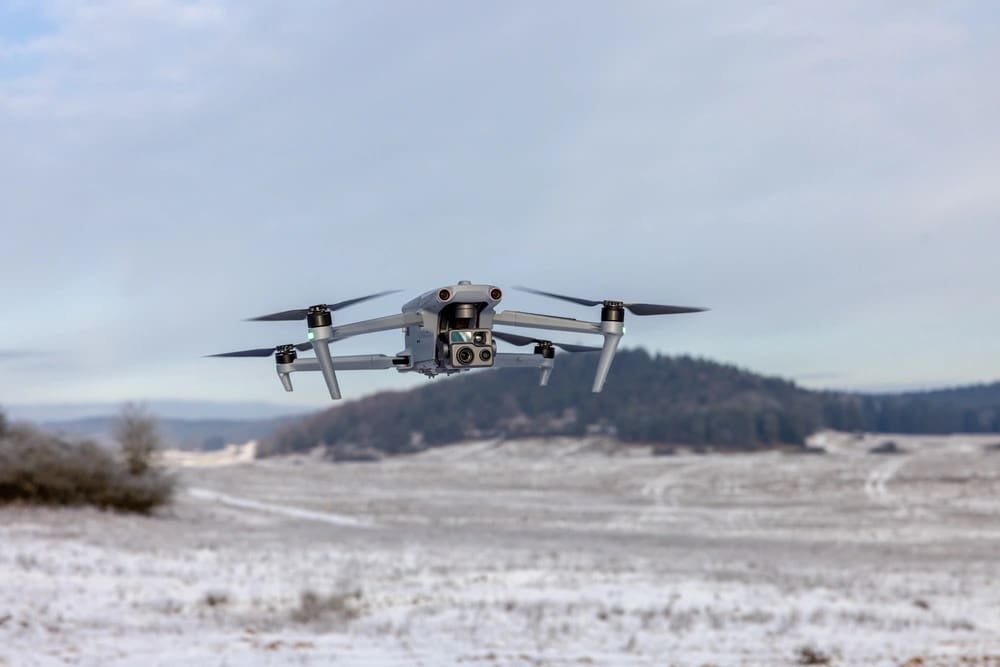
The OC/Ts from the nine “critter” teams are being trained in evolving tasks and technologies such as Maven, electronic warfare (EW), unmanned aircraft systems (UAS), and integrated tactical network (ITN).
“This OC/T recertification training is an opportunity for the OC/Ts to become proficient on some tasks that are constantly changing and new,” said Maj. Dustin Allen, deputy operations for JMRC. “It’s to meet higher headquarters’ intents of knowing new technologies so that we can better facilitate the rotational units as they come through ‘the Box’.”
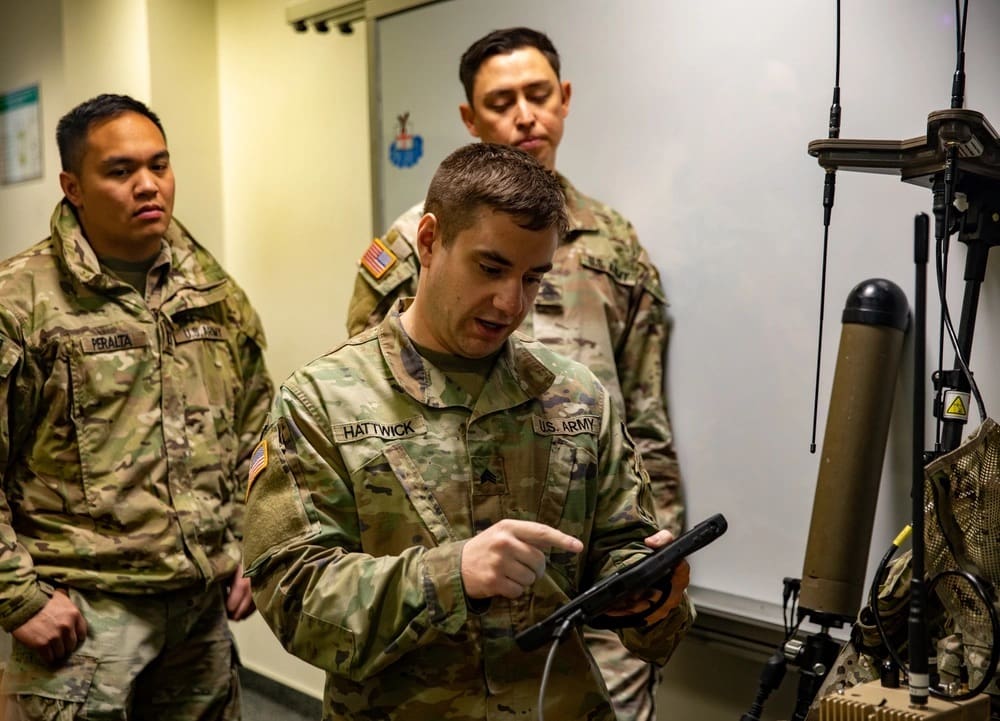
One of the systems that the OC/Ts are training on is the Maven Smart System. The Maven Smart System is the Department of Defense’s most prominent artificial intelligence capability. Designed to process drone imagery and full-motion video, Maven integrates sensors with artificial intelligence and machine learning to enhance battlefield awareness and support operations such as targeting, logistics planning and predicting supply requirements for deployed Soldiers.
“Maven is something that is near and dear to (U.S. Army Europe and Africa’s) heart,” said Allen. “We are trying to incorporate it into our daily battle rhythms, so that the critter teams are well versed in it. We also want to be able to teach the rotational units that come through that aren’t familiar with the system and get them better with it.”
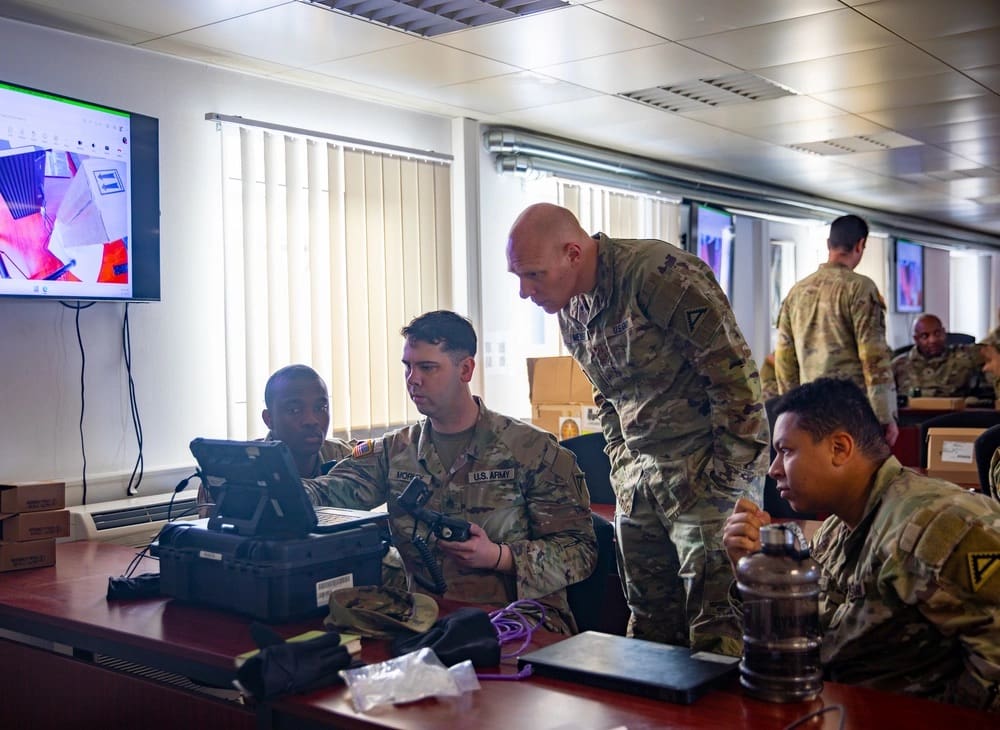
OC/Ts have also been working with UAS. UAS training develops Soldiers’ abilities to operate and employ aerial systems in support of reconnaissance, intelligence collection, and mission planning, helping to facilitate the combined arms fight on the ground.
“UAS is a big push, especially in past rotations where we have seen a massive increase in UAS capabilities on the battlefield,” said Allen. “OC/Ts are going to have their own UAS so that they can send a drone up and inject it there, and watch the rotational units’ UAS.”
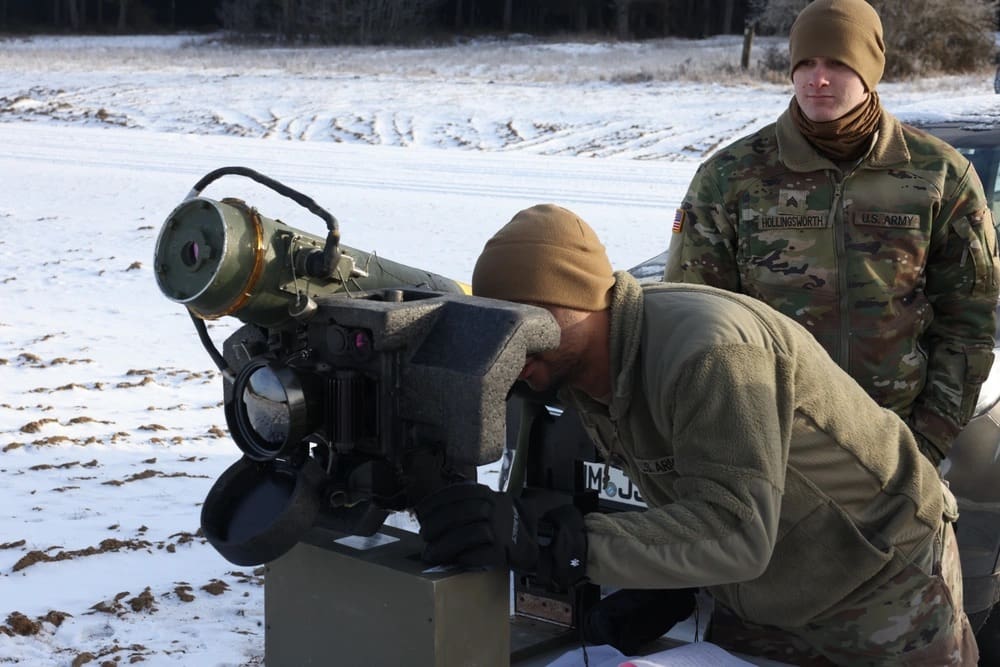
Another system that has been seen on the battlefield that OC/Ts are being trained on is EW. EW enhances commanders’ abilities to detect, disrupt and protect against enemy electromagnetic capabilities, enabling freedom-of-action across the battlefield.
“Big in current warfare is the introduction of electronic warfare,” said Allen. “During this time, we are giving the OC/Ts the opportunity to see and become familiar with the vastly growing EW capabilities.”
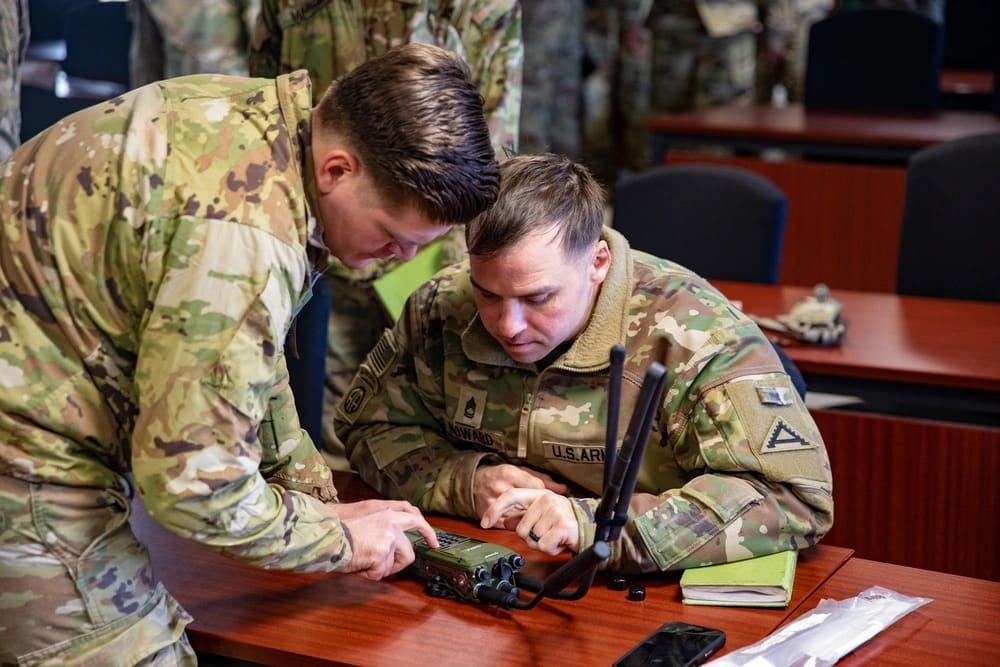
The last system that the OC/Ts are being trained on is the ITN. ITN delivers secure, resilient and expeditionary communications that connect Soldiers, platforms and command posts across the battlefield. ITN is designed to operate in contested and degraded environments, and enable timely data sharing and mission command to support multi-domain operations.
“You can interconnect the radios that we use for our communications network across Hohenfels and JMRC, so we can communicate more clearly across the box,” said Allen.
“Our OC/Ts are already world-class,” said Allen. “This training can help make them even better and have more systems that they are proficient in. We’re really going to see all this hard work they are putting in, be used in the next Combine Resolve we host, and I’m excited to see them use all these new systems we have.”
Story by SGT Collin Mackall
7th Army Training Command