Atrius Development Group

Archive for the ‘Guest Post’ Category

SWAT, Military Practice Tactical Casualty Care During 2023 Tactical Rescue Challenge

Sunday, September 10th, 2023

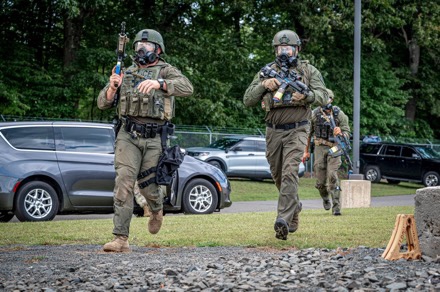
SWAT and Military teams put their tactical combat care skills to the test during the 5th Annual Tactical Rescue Challenge at the Connecticut National Guard’s Camp Hartell in Windsor Locks, Conn. Aug. 14, 2023.
The Tactical Rescue Challenge was created in 2018 as an additional piece to the annual Connecticut SWAT Challenge and tests police and rescue teams on critical medical skills and tactics necessary during rescue operations in austere environments.

“[The challenge is] really geared toward the team medic although operators are cross trained into medicine, so you have not just medics participating in the event but other operators for any kind of tactical team,” said Maj. Wesley Kyle. “There’s a heavy emphasis on medicine in addition to casualty evacuation rescue techniques, moving the casualties off the “X”, and performing treatments at appropriate times.”
Prior to 2001, a trauma patient may have received basic life-saving medical care when an Emergency Medical Technician arrived on the scene. However, Kyle said the wars in Iraq and Afghanistan lead to a shift in the point of origin for beginning emergency medical care from the EMT to the police officer or other first responders.

“Moving care toward the point of injury really started out of those wars and then quickly transitioned to the civilian tactical teams,” said Kyle, an Emergency Room doctor in the civilian sector with experience working with SWAT during his residency. “We’re still translating lessons learned from the battlefield because there was such a large loss of life with penetrating trauma, and there was kind of an explosion of new ideas … it’s changed the whole landscape and it’s incredible to see all these things fully adopted on the civilian side.”
Medical innovation is, of course, not something new on the battlefield. Tourniquets were first developed by the Roman army. The concept of triaging patients was developed by Baron Dominique Jean Larrey, chief surgeon in Napoleon’s Army. The ambulance was invented during the American Civil War. Tactical Combat Casualty Care, or TC3, methodologies were developed in the early 90s and fine-tuned during the Global War on Terror. There have also been massive advancements in preventative medicine, mental and emotional health, sanitation, plastic surgery and prosthetics, and many, many more.

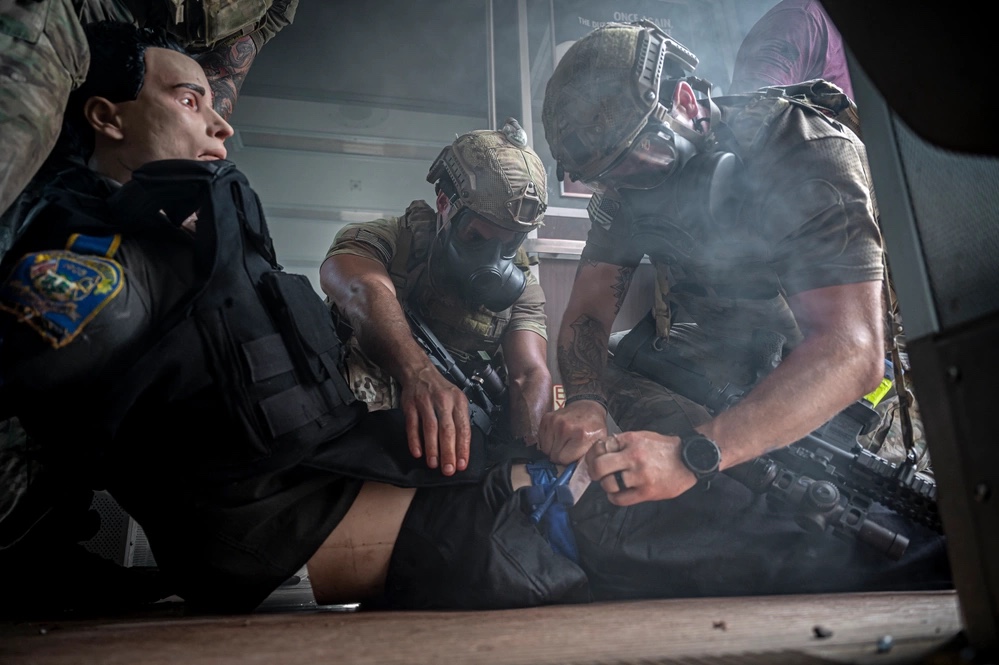
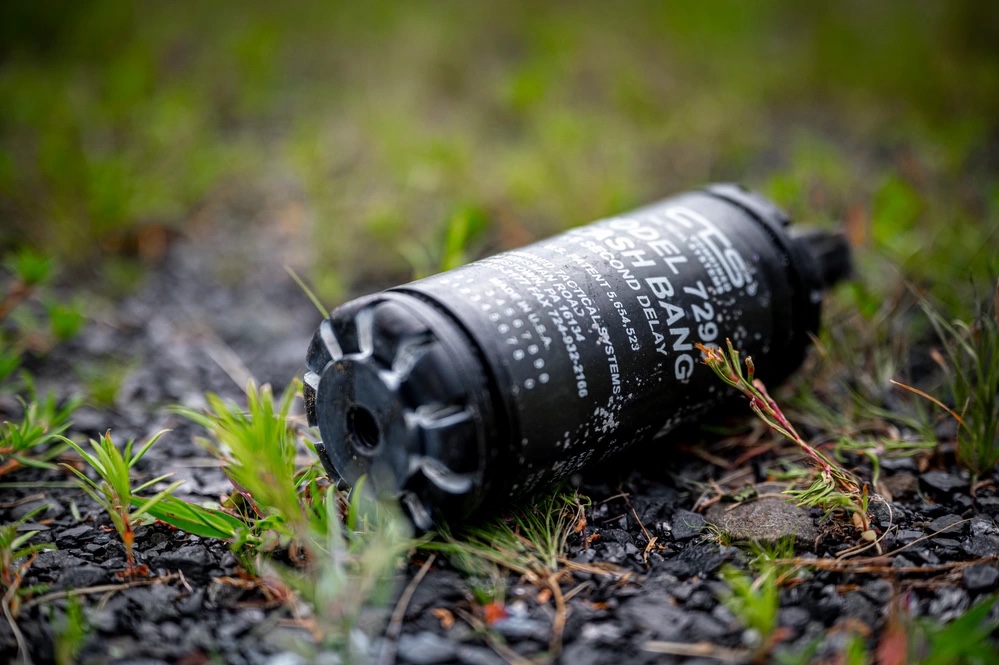
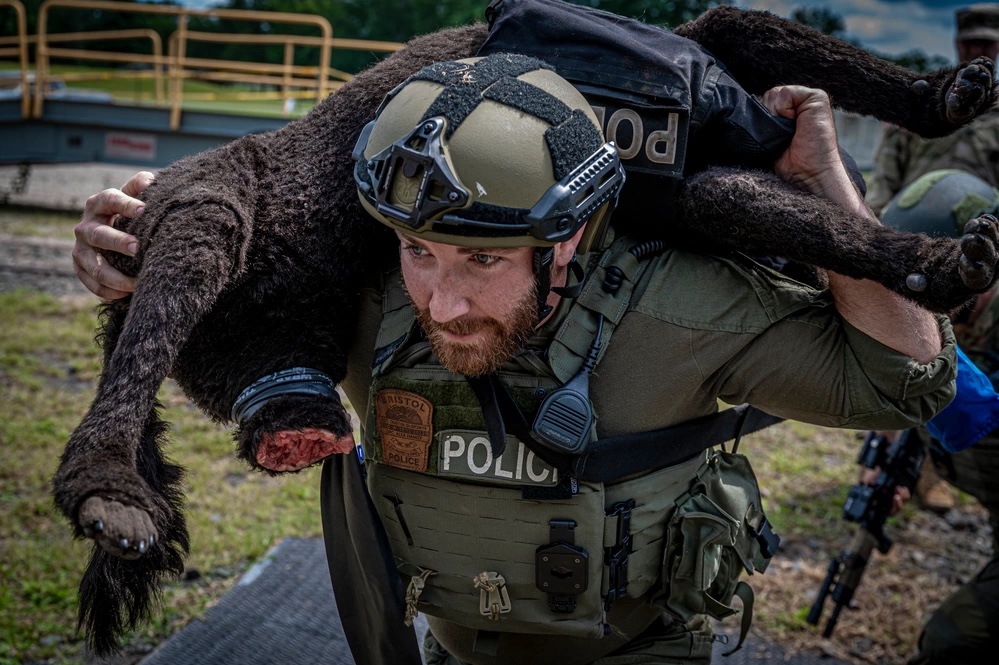
For competitors in the Tactical Rescue Challenge, the primary focus was on TC3: care under fire, tactical field care, and tactical evacuation care. In one scenario, teams were required to breach a train and eliminate a threat before evaluating and applying field care to a simulated casualty and extracting the patient to a higher-level of care. A second scenario had teams extract a wounded K-9 from a tear gas-filled train car before administering a tourniquet.

While the idea of a first responder, such as a police officer, having the capability, training, and resources available to administer lifesaving first aid may seem logical, the truth is not every department or officer is afforded this luxury. In addition to providing a competitive environment for officers and operators to practice their skills in a stressful, high-pace environment, the Tactical Rescue Challenge is also meant to demonstrate the importance of incorporating these skills at the lowest level to improve the survivability for people in harm’s way.

To learn more about the Tactical Rescue Challenge, visit: www.ctswatchallenge.com/tactical-rescue-challenge

Photo by Timothy Koster, Connecticut National Guard Public Affairs Office
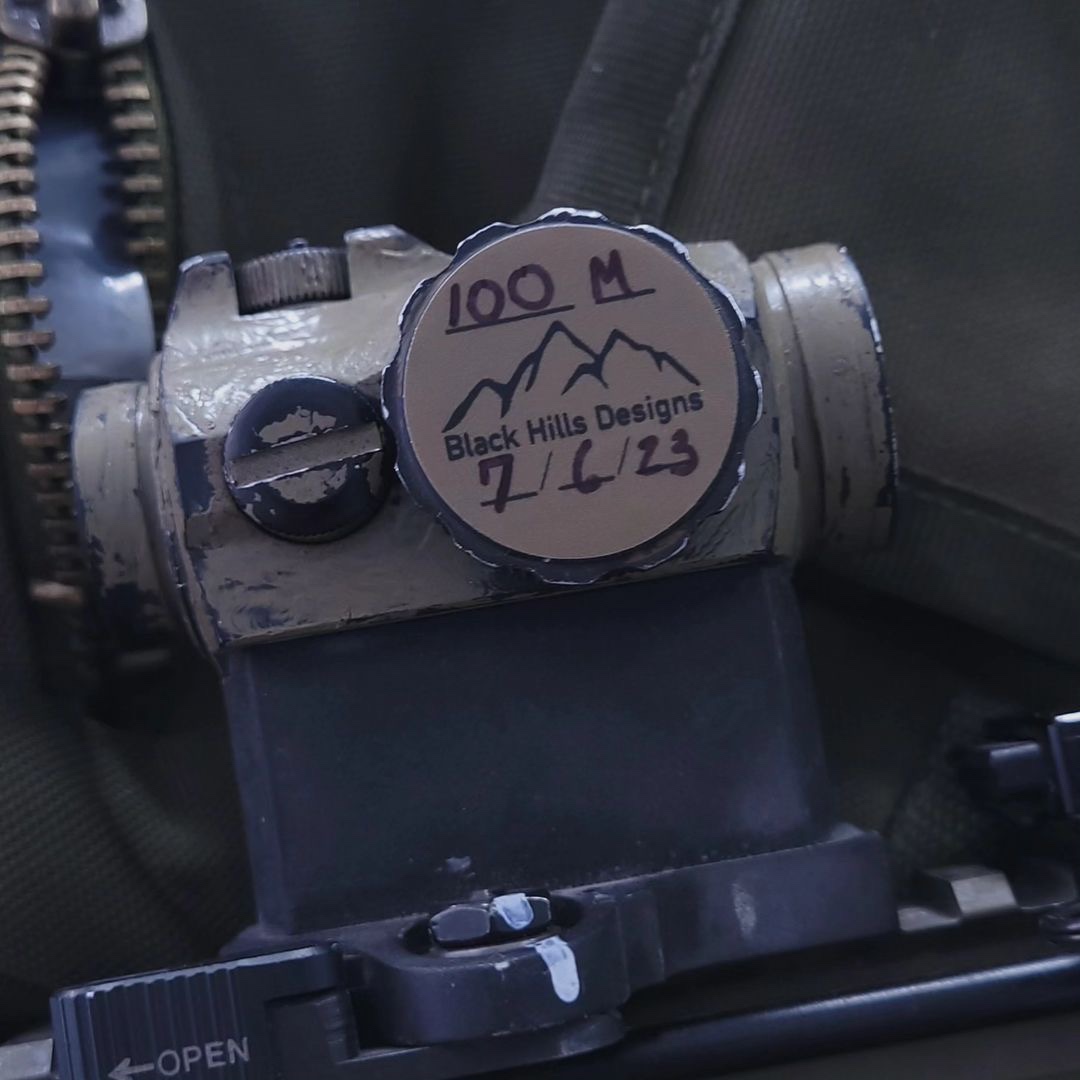
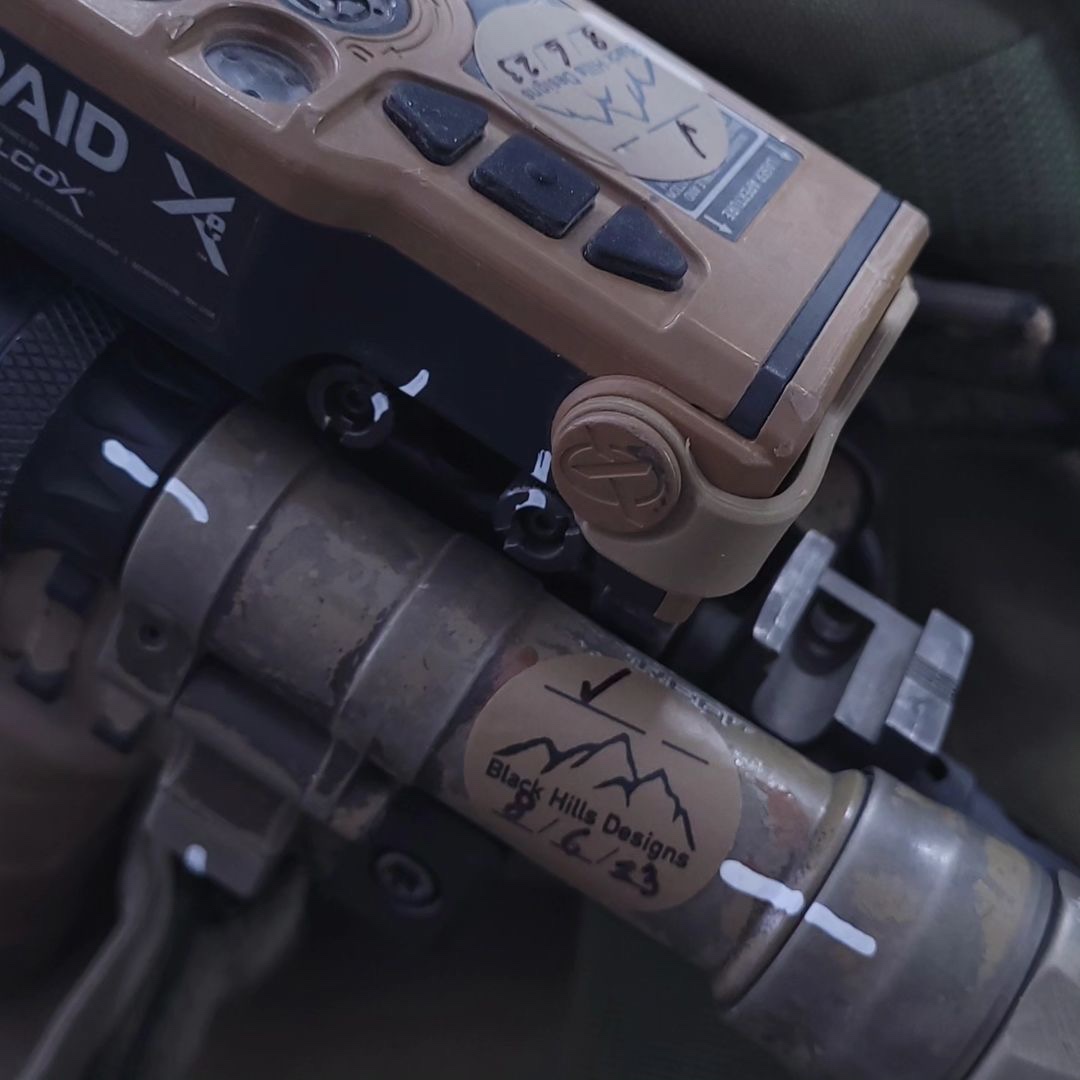
ZERO-R Slaps from Black Hills Designs

Saturday, September 9th, 2023

Pre-combat checks (PCC) are some of the most important, yet neglected fundamentals of being combat effective. When you bring your rifle to a fight and there is nothing to aim with, who is going to foot the bill? This goes for lights, lasers, NODS, thermals and all the other cool guy gadgets that takes some level of consumable or require a zero. The ZERO-R slaps are a way to help bring your attention to the mission readiness state of your equipment.

Use the Black Hills Designs ZERO-R as a quick way to verify the last time you performed a zero, verified batteries, serviced the weapon or any other number of sensitive maintenance tasks. 

www.blackhillsdesigns.net/product/zero-r-5-slap

US Army Organic Industrial Base Sets Strategic Course for Future

Saturday, September 9th, 2023

REDSTONE ARSENAL, Ala. — Leaders from across the Army Sustainment Enterprise are making decisions to ensure the organic industrial base, or OIB, is both ready to respond today and in the future whenever the nation calls upon it.

Army Materiel Command leadership recently hosted two events to synchronize and focus efforts across the OIB as the 23 depots, arsenals and ammunition plants begin executing the OIB’s most comprehensive modernization in history.

“Our job is to make sure that we are executing accordingly and doing all the things we need to do,” said Marion Whicker, AMC’s executive deputy to the commanding general. “It’s all about being ready and chance favors the prepared.”

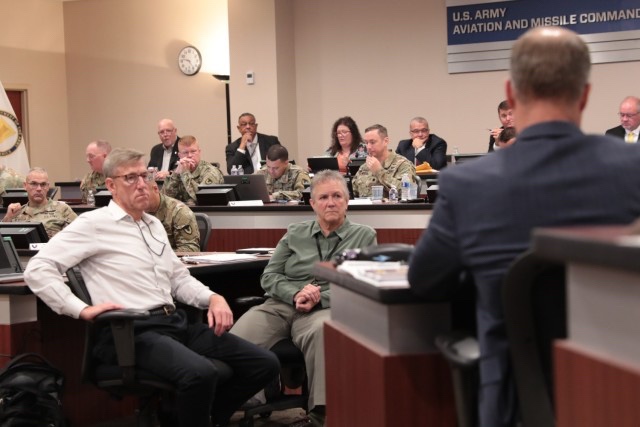
Whicker set the stage at the OIB Commander’s Summit, August 22-23, which offered an opportunity for commanders across the OIB to share information and collaborate with AMC leaders about current modernization efforts, including infrastructure and facility investments, data visualization systems and tools, environmental considerations and OIB metrics.

For more than half the commanders attending this was their first summit and their first time commanding an OIB site, which Whicker noted is different from any other commanding position within the Army. She highlighted that real impact an OIB commander can have is creating enduring processes.

“The biggest thing you can focus on is vision, climate and culture, that is what you will leave behind as you go onto your next assignment,” she said. “It’s those enduring processes that you can put in place that will continue to drive these organizations through modernization.”

In October, at the start of fiscal year 24, the OIB will officially kick off its 15-year modernization plan, which will modernize facilities, processes and people to bring the OIB into the 21st century, infuse industry best practices and refine human capital management structures to maximize the skills and capabilities of the workforce. Whicker said because of the OIB’s extensive support to operations in Eastern Europe, the Army has already received additional funding increasing the MIP’s original total from $16 billion to $18 billion and starting some modernization projects before the original start date.

“The Army had a plan, and we were able to demonstrate that we were shovel ready, so when the DoD accelerated modernization efforts the Army’s OIB was ready,” she said.

To do this, Rich Martin, AMC’s director supply chain management, emphasized the commanders needed to learn the data analytic tools available to them to understand their installation’s important metrics including capacity, performance to promise and carry over.

“Modernization is not just a series of projects, this is a comprehensive effort to take today’s OIB into something it isn’t,” said Martin, who previously served as AMC’s director of the OIB Modernization Task Force. “This is a significant investment plan, and you need to understand the criticality of these updates. You need to understand what purpose or capability you are bringing to generate a capacity.”

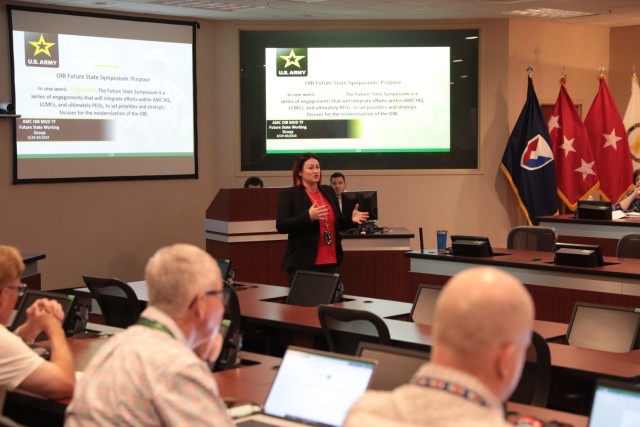
Just a week later, AMC hosted a second event, the OIB Future State Symposium, which is the first of a series of meetings to bring together AMC headquarters elements to ensure OIB modernization efforts are integrated across staff sections. Stephanie Hoaglin, the Modernization Task Force acting director, set the stage with the task force’s three focus areas supporting signature modernization efforts, support to enduring systems and divesture.

“These two days are all about alignment,” said Ron Wilson, AMC OIB Modernization Task Force, about the two objectives. “One is two align headquarters initiatives to future state goals for the OIB, and number two then push those initiatives into the 15-year modernization plan.”

The OIB Future State Symposium will expand over time to include AMC’s life cycle management commands, OIB commanders and ultimate the Program Executive Offices and the office of the Assistant Secretary of the Army (Acquisition, Logistics and Technology).

By Megan Gully

FirstSpear Friday Focus: 9/11

Friday, September 8th, 2023

Britain’s Commandos to Get New Assault Rifles

Friday, September 8th, 2023

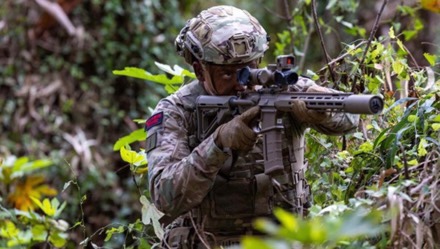
Britain’s elite Royal Marine Commando Forces will be stealthier and deadlier thanks to a new assault rifle.

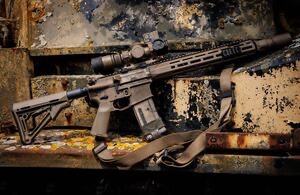
The Knight’s Stoner 1 (KS-1) rifle (designated L403A1) headlines a host of new kit additions for the UK Commando Forces in ‘lead strike teams’ – those responsible for raiding and amphibious operations worldwide.

More than a thousand of the new rifles have been bought from US producers Knight’s Armament Company and come with advanced optical and thermal sights as well as suppressor (silencer) systems to make Commandos harder to trace and more formidable in combat.

The Commando Force regularly deploys around the globe in all extremes of environment – arctic, desert and jungle – reacting to crises and conducting a range of complex operations, including counter piracy and terrorism, drugs busts and humanitarian aid and disaster relief.

It means there is a need to put top-end kit in the hands of these specialist warriors to give them the upper hand on the battlefield.

A new rifle, night vision goggles, tactical communications systems, battlefield vehicles and ‘survivability systems’, including new helmets, communications and suppressors which make the force more difficult to detect, are to be rolled out as the Royal Navy makes an initial investment in new kit for its elite, very high readiness fighting force, with plans for a longer-term procurement programme from 2024.

Captain Nick Unwin RN, Commando Force Programme Director, said: “Delivery of quality equipment such as we see today is a genuine increase in capability and capacity for the UK’s Commando Force Strike Teams and offers significant tactical advantage to the user.

“The Commando Force Programme is delivering change across all areas of amphibious operations; this is just one small part of the wider change programme we are all embarked upon as we adjust to evolving threats and challenges.”

Alongside this new rifle and a new helmet made by Gentex, Commando Forces will take delivery of the new Fused Binocular Night Vision Device produced by L3Harris, giving them a significant advantage over their adversaries in night-time littoral operations, or as they move in darkness through confined spaces during boarding operations.

Again, more than a thousand have been procured and the systems feature advanced low-light image intensification with a fused thermal input – which means the devices include both night vision and thermal sensor superimposed into a single image for the operator – that far outperforms older systems currently used by the UK’s Armed Forces.

Commando Forces are also exploring how to use the night vision kit alongside digital communications systems, providing a live feed to the goggles to help commanders assess the battlefield and make decisions.

Meanwhile, advances are being made with upgrades to the Sharpshooter rifle.

The Lewis Machine and Tool L129A2 rifle is an improvement on the well-established Sharpshooter with new Leupold scopes and HuxWrx suppressors, making it more accurate and quieter.

It is also equipped with an Envision Technology ballistic calculator and a Pixels-on-Target thermal sight. Each Commando Strike Team will comprise two designated expert shooters equipped with these upgraded rifles.

Royal Marines

£90 Million Contract Equips Armed Forces with Advanced New Rifle

Wednesday, September 6th, 2023

British troops will soon be more lethal on the battlefield, as a new £90 million contract delivers modern, high precision rifles.

From:

Ministry of Defence and James Cartlidge MP

Published

7 September 2023

The new advanced rifle.

• New rifle provides UK troops with an improved lethal capability on the battlefield.

• Rifle more discreet through sight and hearing signature reduction.

• Up to 10,000 weapons could be procured over the next 10 years.

British troops will soon be more lethal on the battlefield, as a new £90 million contract delivers modern, high precision rifles.

The Alternative Individual Weapon (AIW) system – known as the L403A1 and procured by Defence Equipment & Support (DE&S) under Project HUNTER – is made up of a new assault rifle fitted with a muzzle signature reduction system and an improved optical sighting system.

The AIW is a modern rifle using the latest in design technology and manufacturing methods, to produce an exceptionally reliable and accurate weapon. The magnified optic means the user is able to engage threats from greater distances; whilst the signature reduction system works to mask the AIW from detection from sight and hearing.

Supplementing the current in-service L85A3, the AIW system has been secured under a £90 million contract with Macclesfield-based company Edgar Brothers, supporting the Prime Minister’s priority to grow the economy by helping sustain approximately 50 jobs at the family-owned company.

Minister for Defence Procurement, James Cartlidge said:

This is another example of how we are committed to investing in the most advanced battlefield equipment to back our troops on the battlefield. This advanced rifle’s ability to help soldiers maintain the stealth edge not only protects them but delivers war-fighting advantage over our adversaries.

An initial £15 million order of 1,620 AIW systems has been placed, with options to procure up to 10,000 systems – totalling £90 million – under the contract over the next decade. The systems will initially be fielded to the Army Special Operations Brigade (ASOB) who operate in complex, high threat environments.

DE&S Dismounted Close Combat Portfolio Leader, Colonel Paul Cummings, said:

Project Hunter has been a fabulous example of close collaboration with the user community and strong engagement with industry to deliver game-changing capability at pace. This is another example of the enormous commitment of the men and women in DCC to deliver battle-winning capability into the hands of the user and I’m enormously proud of what they have achieved. We look forward to continuing to work closely with Edgar Brothers as we move into the production phase.

The L403A1 is a high performing modern development of the ArmaLite Rifle (AR), which pushes the boundaries of modern performance. As an AR system, it shares much in common with the rifle systems used by many of the UK’s allies. Given their specialist role, and the critical task of working with and alongside many of the UK’s allies, the platform will enable ASOB to share skills and drills in an efficient manner.

Lt Col Gareth Davies, SO1 SoldierWorks, Military Capability Delivery, Army Headquarters, said:

Project HUNTER has successfully delivered a new weapon option for UK Defence. At the current time this is being procured for the Army Special Operations Brigade (ASOB). It offers a marked increase in lethality, and the system includes one of most capable day sights currently available. Importantly the weapon system will be further enhanced by our newest generation of night optics, with which the ASOB are already equipped.

As a key component of the ASOB, the Ranger Regiment will receive the AIW later this year. Made up of four battalions, the Rangers deployed to over 60 countries in their first 12 months of operation, following their formation as part Future Soldier under the Defence Command Paper 2021.

2nd Infantry Division Soldiers Test New Army Command Post Communications

Wednesday, September 6th, 2023

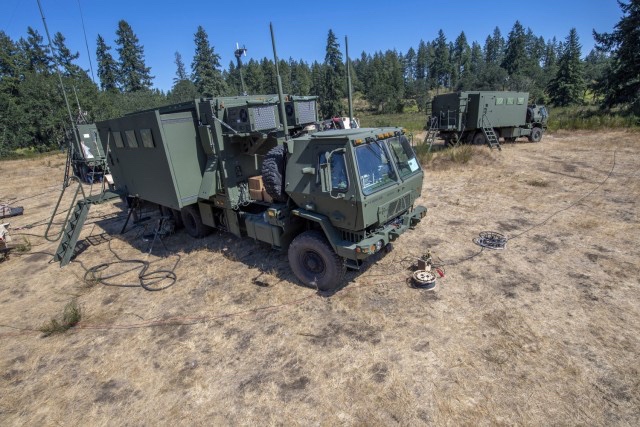
JOINT BASE LEWIS-MCCHORD, Washington — Soldiers here are testing new gear to achieve the Army’s top priority in communications to reduce its command post battlefield footprint while improving mobility and agility.

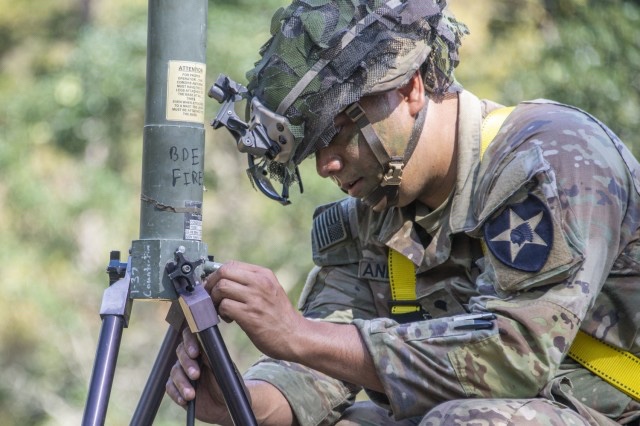
Under development in two increments, termed Increment 0 and Increment 1, Soldiers of the 1st Stryker Brigade Combat Team “Ghost,” 2nd Infantry Division, are testing Inc. 0 of the Command Post Integrated Infrastructure (CPI2).

Maj. Joseph Brown, brigade fire support officer, and lead planner for the exercise and test, said, “CPI2 is intended to provide the Army a more survivable mission command platform.”

Brown said it is important for combat units like his to be able to tear down, move, and stand up their capabilities rapidly.

“If it functions the way it is intended,” he said, “brigades will consume less time in transitions and the improved survivability makes our C2 structure more resilient to enemy attack.”

“Soldiers are exercising the CPI2 by conducting real-world missions in an operational environment,” said Mr. Beresford Doherty, test officer with the U.S. Army Operational Test Command, based at West Fort Cavazos, Texas.

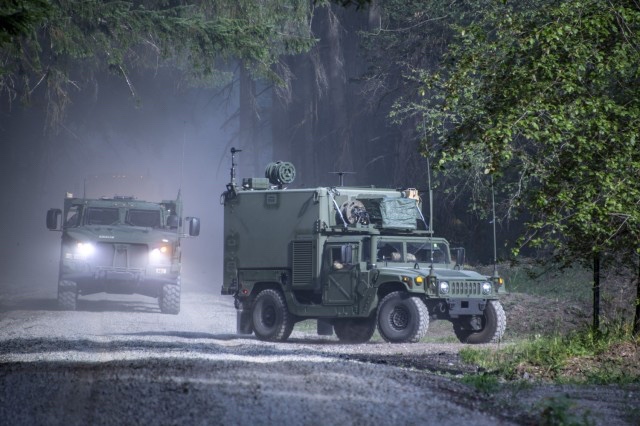
“Nine production representative vehicles are being tested under simulated combat operations,” he added.

According to its website, Program Executive Office Command, Control, Communication Tactical (PEO C3T) at Aberdeen Proving Ground, Maryland, CPI2 is currently executing multiple phases of prototyping, integration, and experimentation.

Doherty said CPI2 will replace the dated Command Post Tent System (SICUP) with a family of more mobile systems.


“One of the most important elements of the test is Army Soldier feedback of how the CPI2 performs in support of their mission,” Doherty said.

“Soldier feedback and lessons learned during Inc. 0 will inform Inc. 1, which expands upon product lines with an additional mix of military vehicle platforms, including armored vehicles, Joint Light Tactical Vehicles and Medium Tactical Vehicles,” he added.

Sgt. 1st Class Austin Bradford, brigade help desk NCOIC said, “So far it’s been pretty good, we’ve run into some issues, but I think as we work things out it’s going to get better and faster.”

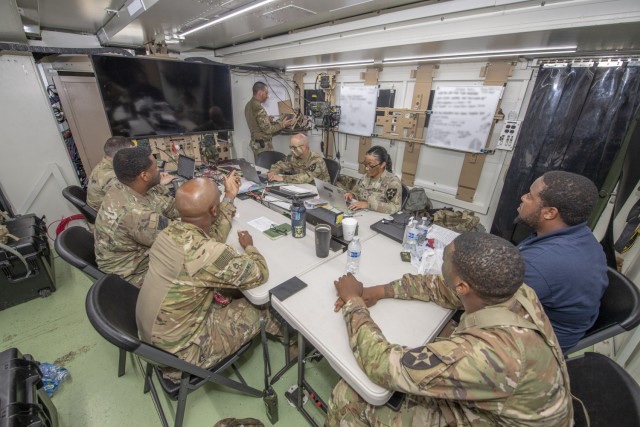
Platoon Leader 2nd Lt.  Cassie Daly, working out of the brigade’s tactical action center, seemed excited about the overall set up of the “expando” vehicles and quick connection capabilities.

“It’s been cool to see the attachments to the S3, or our attachments to the BDE S6 and other S shops that are fielding these new expandos,” she said.

“The coolest part is that they can connect the services we provide through wireless, verses through fiber, across the battlefield. And just the whole set up of the expando is like a mini conference room.”

According to Mr. Robert Potter, chief of Mission Command at the U.S. Army Evaluation Center at Aberdeen Proving Ground, Maryland, data points collected during the test will be used to assess operational effectiveness, suitability, and survivability of CPI2, as well as any effects across the Doctrine, Organization, Training, Materiel, Leadership, Personnel and Facility domains.

Story by Jacqueline Howard, Test Officer, Mission Command Test Directorate, U.S. Army Operational Test Command

Photos by Tad Browning, Lead Audiovisual Production Specialist, U.S. Army Operational Test Command

215 Gear – Safariland Drop Leg Holster Adaptor

Tuesday, September 5th, 2023

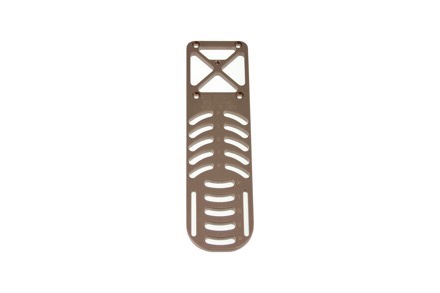
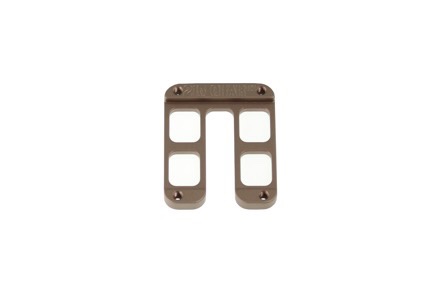
Designed to mount any Safariland™ holster or QLS plate, allowing for holster drop and CANT. Other OEM or aftermarket systems allow for holster drop, ignoring the ability to allow for rearward CANT of the pistol grip. By adding negative CANT into the pistol, it provides a streamlined draw of the pistol. To achieve a streamlined draw, CANT the pistol grip rearward, until your forearm and wrist, while in a straight line, naturally drop to your pistol grip. If you have to angle your wrist, you are reducing economy of motion and slowing you draw. The OEM Safariland™ QLS never achieves a neutral or zero, at best at 5º positive CANT.

Our system provides a rock solid clamp onto your belt, for both left and right handed shooters. Additionally built into our base are slots to accommodate the original Safariland™ leg strap, or the 215 Gear™Leg Strap.

Includes: 6061 Aluminum adapter Base Plate, Universal Mounting Adapter, four U.SA. made #8-32×1/2” Adapter Mounting screws, three U.S.A made #8-32×1/2” holster/QLS mounting screws.

Does not include: Installation tools or thread locker.

Additional accessories for purchase:

-Replacement 8-32×1/2” screws for mounting your holster or QLS plate.

-Loctite 242 Single Use thread locker.

-Leg Strap

Made in the U.S.A/ Berry Compliant Made with 100% U.S.A 6061 Aircraft Grade Aluminum.

Anodized matte FDE or Black.

www.215gearstore.com/safailanddroplegholsteradaptor

Be advised of other manufactures products that say “Made in the USA”, but do not specify “Made in the USA with USA materials”. We only use USA materials with certifications. These are the same materials specified for aerospace applications. The difference is almost a 50% difference in materials cost. Words matter.