XC3 Weaponlight

Archive for the ‘Guest Post’ Category

AFSOC Implements Wing-Level A-staffs, Breaks Down Bureaucratic Barriers and Increases Readiness

Thursday, May 4th, 2023

HURLBURT FIELD, Fla. —  

Five wings assigned to the Air Force Special Operations Command implemented the new wing air staff (A-staff) structure on March 30, 2023.

This change has been in the works since the 2021 CORONA Conference when Air Force Chief of Staff Gen. CQ Brown Jr. approved a redesign of the wing headquarters that adds a functional staff to an existing wing headquarter staff. The A-staff is designed to break down bureaucratic barriers, improve speed and quality of decision making, allow better alignment with higher headquarters and grow leaders needed for Great Power Competition.

“By reorganizing wing staffs, we streamline authoritative actions and processes throughout the chain of command,” said Col. Jocelyn Schermerhorn, AFSOC Director of Operations (A3). “This new structure alleviates the administrative burden at the squadron level allowing them to focus on the mission.”

Each wing within AFSOC is organized with an A-staff that best suits their mission set, which includes:

A1 – Manpower, Personnel, and Services  

A2 – Intelligence                                  

A3 – Operations  

A4 – Logistics, Engineering & Force Protection

A5 – Plans & Requirements 

A6 – Communications  

Wing Staff Agencies – such as Public Affairs, History, Chaplain, JAG Corps, Inspector General, etc., transition to Special Staff in the A-staff model.

Ultimately, Airmen are exposed to the wing A-staff and their processes earlier in their careers, making them better prepared for operating within joint organizations.

“Prior to this change, Airmen were arriving to headquarters assignments and joint deployments without a good or even general understanding of how a numbered staff functions,” said Col. Christopher Busque, AFSOC Director of Manpower, Personnel and Services (A1). “This new structure addresses that concern by allowing Airmen to gain exposure to the A-staff construct earlier on in their careers.”

The transitioning AFSOC wings are expected to meet full operational capability of the A-staff implementation by early FY24.

By 2nd Lt Cassandra Saphore

Effective June 1, First Term Airmen Can Retrain into AFSCs Under 90% Manning in Lieu of Separation

Wednesday, May 3rd, 2023

ARLINGTON, Va. (AFNS) —  

The Air Force is changing the process of how First Term Airmen can retrain to provide additional opportunities for Airmen to stay in uniform instead of separating.

Effective June 1, all FTA can retrain into any Air Force Specialty Code they qualify for that is under 90% manned prior to separation, even if their current AFSC is below 90% manned.

Qualified Airmen must be within their retaining window and meet medical, Air Force Enlisted Classification Directory standards, Armed Services Vocational Aptitude Battery score and physical fitness standards to be approved.

“Glad to see us make this change as it relates to retraining opportunities for the force,” said Chief Master Sgt. of the Air Force JoAnne S. Bass. “Providing these opportunities for our Airmen helps us keep talent on the bench. While this particular change impacts First Term Airmen, expect to see more initiatives like this as we evolve our policies and talent management to focus on the force of the future and building the Air Force our nation needs.”

Additionally, the FTA Retaining Selection Board is also no longer required during the retraining application process. This removes the racking-and-stacking retraining application process based on the number of quotas needed for a more streamlined ‘first in, first out’ process. Phase 1 FTA retraining quotas will be open to all FTAs entering their retraining window during Fiscal Year 2024.

The Exception to Policy will be reassessed June 1, 2024, unless it is rescinded earlier.

Secretary of the Air Force Public Affairs

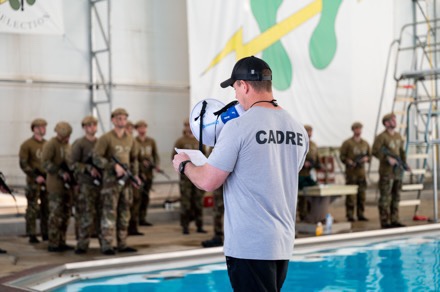
Special Warfare Training Wing: Preparing for Strategic Competition

Tuesday, May 2nd, 2023

JOINT BASE SAN ANTONIO-LACKLAND, Texas   –  

We consistently talk about the future fight and preparing for strategic competition. This is by design, with the singular purpose of defending our nation against any who would test our resolve. The character of war is constantly changing, yet its fundamental nature remains the same. Special Warfare Airmen and operators must be prepared to face the harsh nature of war and be ready to master its new character.

Over the past 30 years, China has rapidly transformed its military capabilities, which means we must prioritize our own transformation and modernization to ensure superiority on the battlefield. We must be deliberate in the investment and development of our force to preserve our nation’s freedoms and way of life in the future.

How does the Special Warfare Training Wing fit into the equation? How does your work every single day determine the outcome of the future fight? Both are, in every sense of the word, vital.

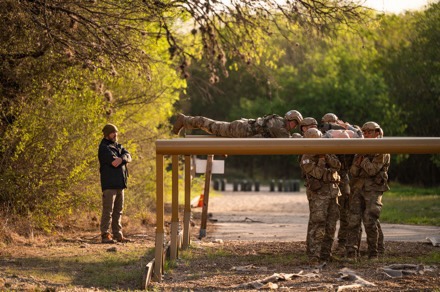
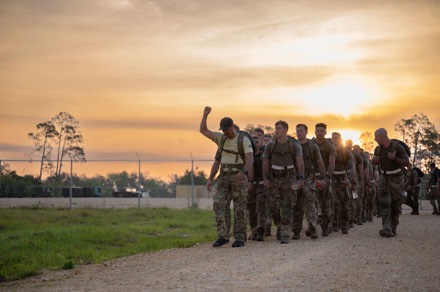
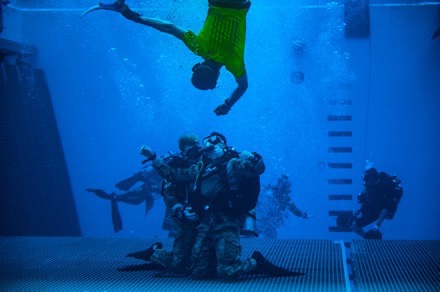
This team shoulders the precarious burden of shaping the minds, strength and emotional capacity of our next generation of Air Force Special Warfare operators, the Multi-Capable Airmen who will remain our competitive advantage now and going forward.

Your daily work sharpens the most strategic players in our nation’s arsenal. But this extends beyond your work with candidates and includes your time with each other. Each of you is a strategic asset, able to leverage access, strike and recovery to position the U.S. for strategic advantage in competition. By taking advantage of everything this Wing offers, we look to ensure you remain the most agile, empowered, lethal and combat-effective Airmen in the world.

Yes, we select and equip the next generation of operators, but we also consider it our mission to invest in and develop our nation’s best who come to us as instructors and staff. Use this assignment to learn more about how your own brain works and how your body trains by taking advantage of the wealth of knowledge amongst your teammates.

Additionally, carve out time in your busy schedules to understand the environment of strategic competition and our adversaries. I recommend visiting the China Toolkit that Air University’s China Aerospace Studies Institute recently released. The Toolkit is full of videos, articles and even Chinese publications that the CASI team translated into English.

The work you do every day is crucial in preparing yourself, your colleagues and our candidates for strategic competition. I am proud of this team, and of everything you do to set our nation up for victory.

By Col Nathan Colunga Commander, Special Warfare Training Wing

High Risk, High Reward

Monday, May 1st, 2023

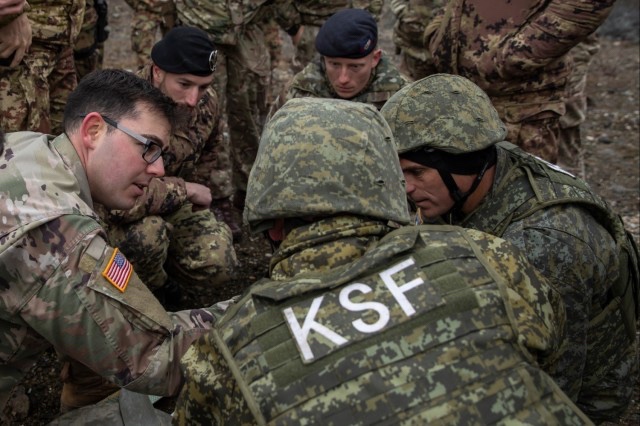
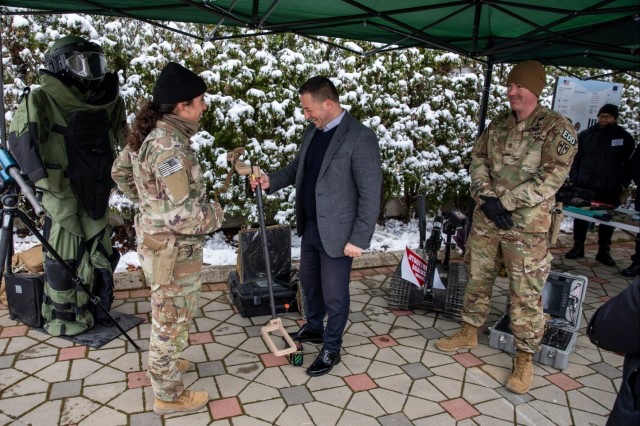
CAMP BONDSTEEL, Kosovo — The people of Kosovo have been working for over 20 years to continue removing unexploded ordnance from conflicts that occurred in the region. The torch has now been passed to the 720th Explosive Ordnance Disposal (EOD) Company during Kosovo Force Regional Command-East’s 31st rotation.

“Normally whenever we get one of the 9-lines they’re coming from local civilians,” said Sgt. 1st Class Matthew Baldwin, an EOD Technician with the 720th EOD Company from Baumholder, Germany. “They’ll encounter ordnance either on their own property or when traveling for commerce up in the mountains.”

The team typically receives two to three calls a week during the winter months, and up to five calls during the summer months. This increase is due to individuals going into areas that are usually inaccessible during the winter, like up in the mountains for example, Baldwin said.

“We’ve been finding a wide range of stuff, all the way from World War I up to the war in Kosovo back in the ‘90s,” said 1st Lt. Naomi Dawood, commander of Task Force EOD from the 720th EOD Company, Baumholder, Germany. “I would say hand grenades are probably the most common things we find here though.”

The EOD team at Camp Bondsteel is on call 24/7 and has an average response time of 30 minutes upon receiving a 9-line request. After normal business hours, or if there are multiple calls at once, it may take an hour or more before they are able to leave the base.

However, it’s not just the Soldiers from 720th EOD Company that gets to have all of the fun. Their team works closely with other NATO partners and allies, as well as the Kosovo Security Forces, or KSF, to work together on clearing the region and keeping communities safe.

“Working with other EOD units has really been an honor,” Baldwin said. “It’s very interesting to see some of their practices, they’re very different from what we typically do on response missions, but that’s because we haven’t had a lot of interoperability training with them before coming into theater.”

The KSF also has an advantage when it comes to locating these unexploded ordinances, known as UXO, according to Dawood.

“They’ve been super cooperative and eager to work with us,” Dawood said. “They obviously live here, so they’re a little bit more knowledgeable about the land than we are, which is nice when we get lost sometimes trying to find a UXO.”

The road to becoming an EOD technician is no small feat. The job comes with a rigorous interview process, followed by 9 months of advanced individual training. Another unique part about this military occupational specialty is that enlisted Soldiers and officers alike work side-by-side as classmates throughout the entire course.

1st Lt. Dawood originally wanted to become a doctor when she was commissioning through the Reserve Officers’ Training Corps program, but decided she wanted something a little more adventurous.

“Wanting to become an EOD tech is probably the best thing I’ve done in the Army,” Dawood said. “It’s very exciting and it’s always a challenge, which I really like.”

The excitement and challenges seem to be a large interest in those Soldiers who are interested in taking the career path of an EOD technician. As one of the noncommissioned officers in Task Force EOD, Baldwin said he also enjoys the high intensity moments that come with the job.

“As an EOD tech, I think my favorite part of my job is wherever I’m working with my team members, essentially by ourselves. There is a huge degree of responsibility we inherit whenever we are on mission,” Baldwin said. “We have support from local law enforcement and usually a medic, but other than that, it’s myself and two of my team members working on UXO calls in very high risk situations.”

Operations such as these are vital to the region in ensuring a safe and secure environment for all people of Kosovo. The collaboration between Kosovo Force and local law enforcement is essential for continuing effective communication and dialogue.

“The KFOR mission really is important because it is one of the examples of NATO coming together, supporting a conflict resolution and trying to bring stability to a region,” Baldwin said.

Task Force EOD is committed to their mission here in Kosovo. Their team members are dedicated to the history of the region and the people who live there today.

“This is something that I’ve heard about for a very long time, even before I became an EOD tech, so it’s awesome for me to actually be here and have an impact on the community and learn about the ordnance that’s here,” said Dawood.

By CPL Skyler Schendt

Sky Soldiers Train to Defend the Skies with NATO Allies

Sunday, April 30th, 2023

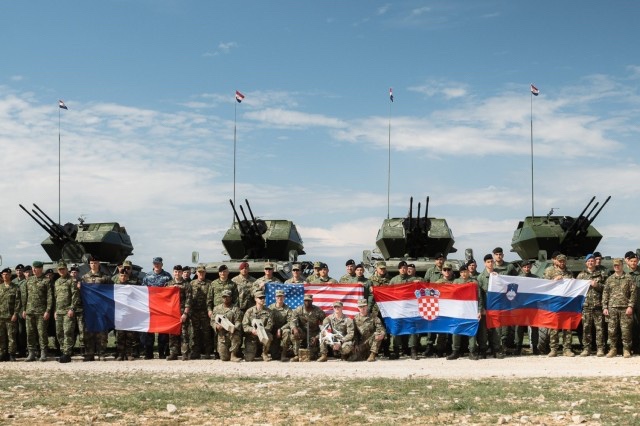
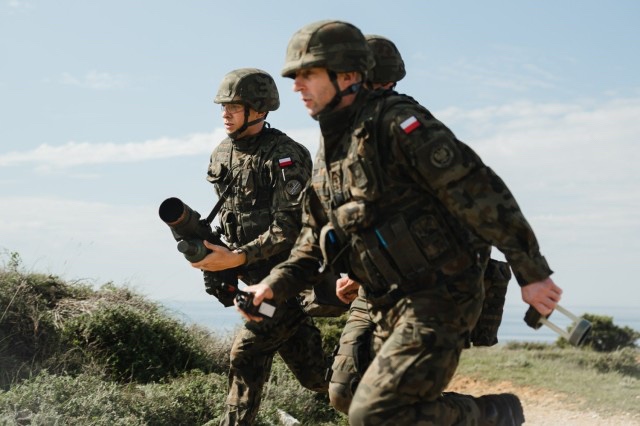
PULA, Croatia — A small group of 173rd Airborne Brigade paratroopers, or “Sky Soldiers,” traveled to Croatia take part in a multinational air defense and electronic warfare exercise from April 19 through 21, 2023 called Exercise Shield 23.

Exercise Shield is an annual Croatian air defense exercise that aims at strengthening the execution of air defense tactics against low and medium altitude moving aerial threats.

During the exercise this year, units from the United States, Croatia, Poland and Slovenia collectively trained on air defense and electronic warfare tactics, techniques and procedures, including air-space control, synchronization, surveillance, threat detection and live fire engagements against flying objects.

The exercise strengthened air defense interoperability between NATO allies by combining multiple air defense platforms in the same area of operations.

Capt. Mitchel Hess, the 173rd Airborne’s air defense officer, has attended the last two Shield exercises.

“The relationship we have built with the Croatians is of great importance to our collective security,” said Hess. “Through allied training and collaboration, we have developed a strong partnership. The Croatians have demonstrated their dedication and professionalism, and we look forward to continuing our partnership with them for years to come.”

Croatian Army 2nd Lt. Jure Brkic, Croatian Air Defense Regiment, has been one of the lead officers on the Croatian side for building a successful partnership with the 173rd Airborne Brigade.

“From the initial planning to final planning, we had a lot of brainstorming of ideas for training,” said Brkic. “And of course, the relationship between allies is important in many ways. Such as getting familiar with different doctrines, problem solving, interoperability and learning new weapon systems.”

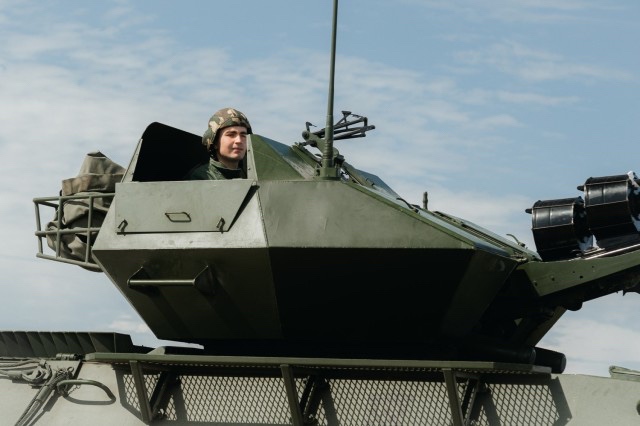
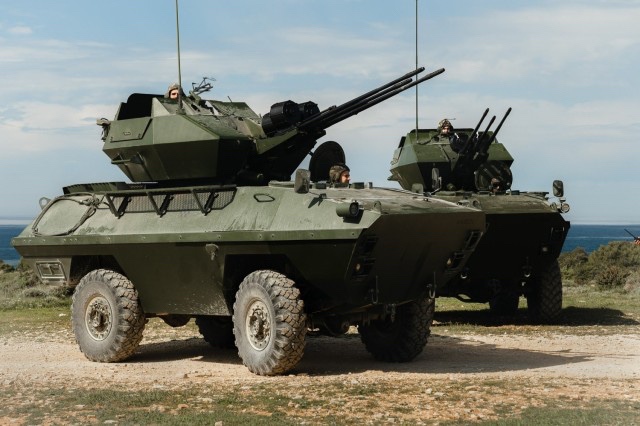
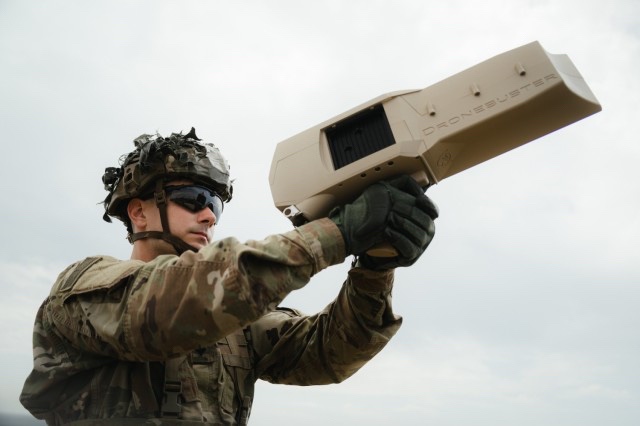
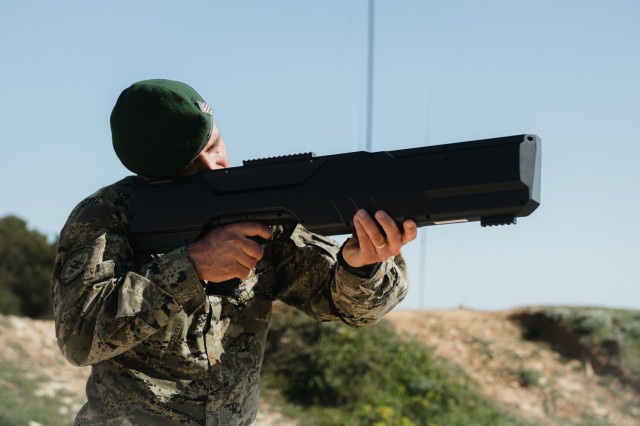
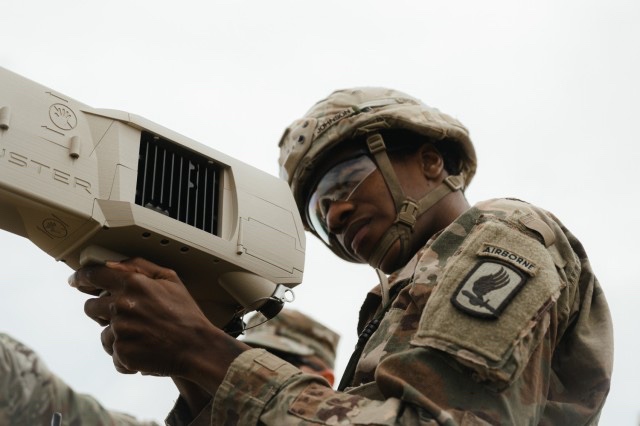
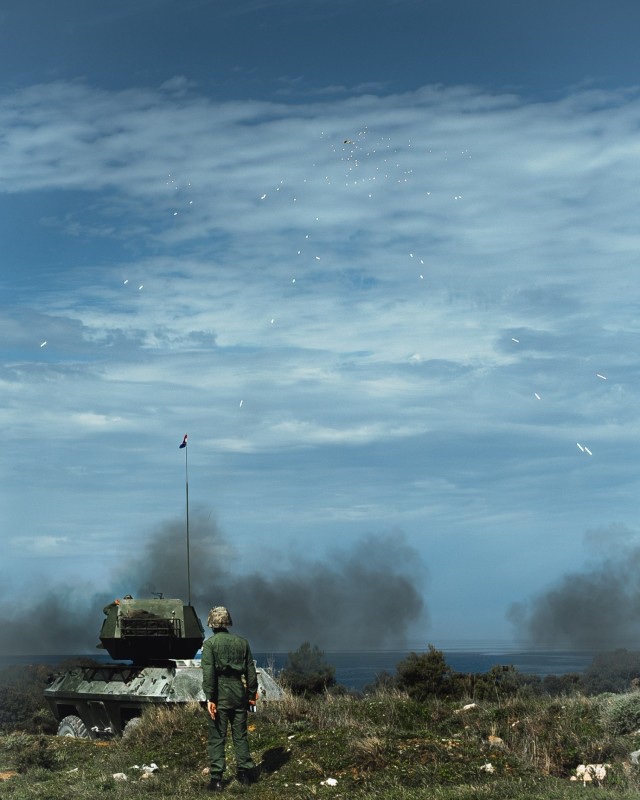
Each country brought a different air defense platform to the seaside training area near Pula and utilized basic drones and flares to simulate detecting and engaging enemy targets. The Sky Soldier air defenders brought Dronebuster 3Bs, while the Croatian Air Defense Regiment used the QR-07S3 Drone Jammer System.

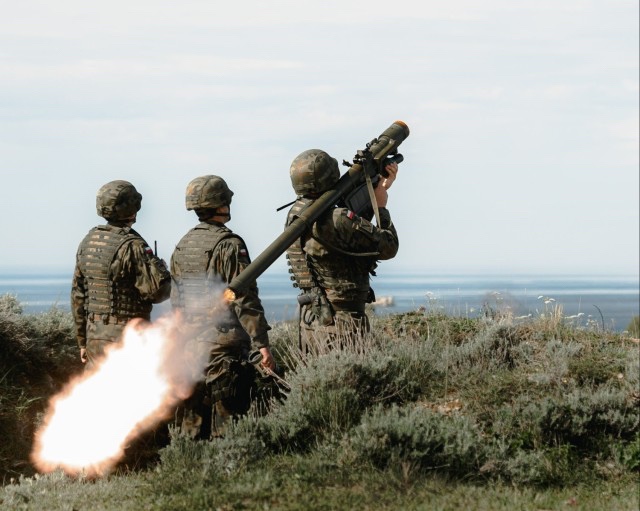
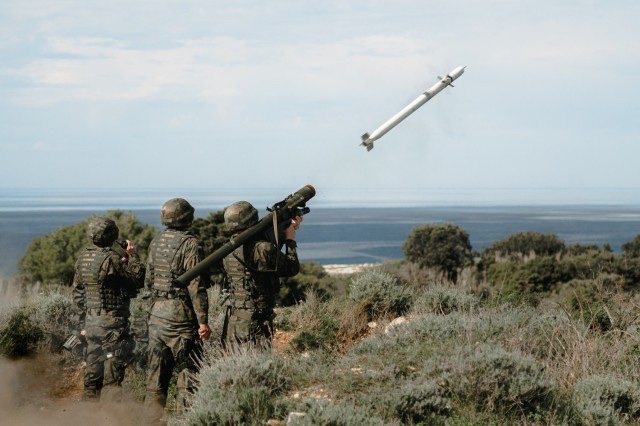
Last year, the Sky Soldiers brought FIM-92 Stinger missiles to engage launched flares. This year, Polish air defenders brought their Piorun Portable Anti-Aircraft Missile System or “Thunderbolt” and demonstrated two live missile launches.

Distinguished visitors from each participating country’s military came to oversee the training at the end of the exercise. The culminating event was an incredible display of NATO air defense. All countries’ militaries demonstrated their capabilities by engaging aerial targets with their respective platforms. From Dronebusters to missiles to anti-aircraft guns, the point got across — the air defenders are truly stronger together.

The 173rd Airborne Brigade is the U.S. Army’s Contingency Response Force in Europe, providing rapidly deployable forces to the United States European, African, and Central Command areas of responsibility. Forward deployed across Italy and Germany, the brigade routinely trains alongside NATO allies and partners to build partnerships and strengthen the alliance.

Story by MAJ Robyn Haake

Photos by SGT Mariah Gonzalez

AFRL Technology Aids Operators During Afghanistan Evacuation

Saturday, April 29th, 2023

ROME, N.Y. (AFRL) — Engineers from the Air Force Research Laboratory, or AFRL, refined a fielded tool called the Tactical Awareness Kit, or TAK, to aid operators in the fall 2021 Afghanistan evacuation. The kit has also been adapted to fit the missions of local, state and federal agencies in fighting wildfires and responding to natural disasters.

TAK is a technology developed by AFRL scientists and engineers that has been transitioned to and used by numerous U.S. and international warfighters, including special operations and civilian users.


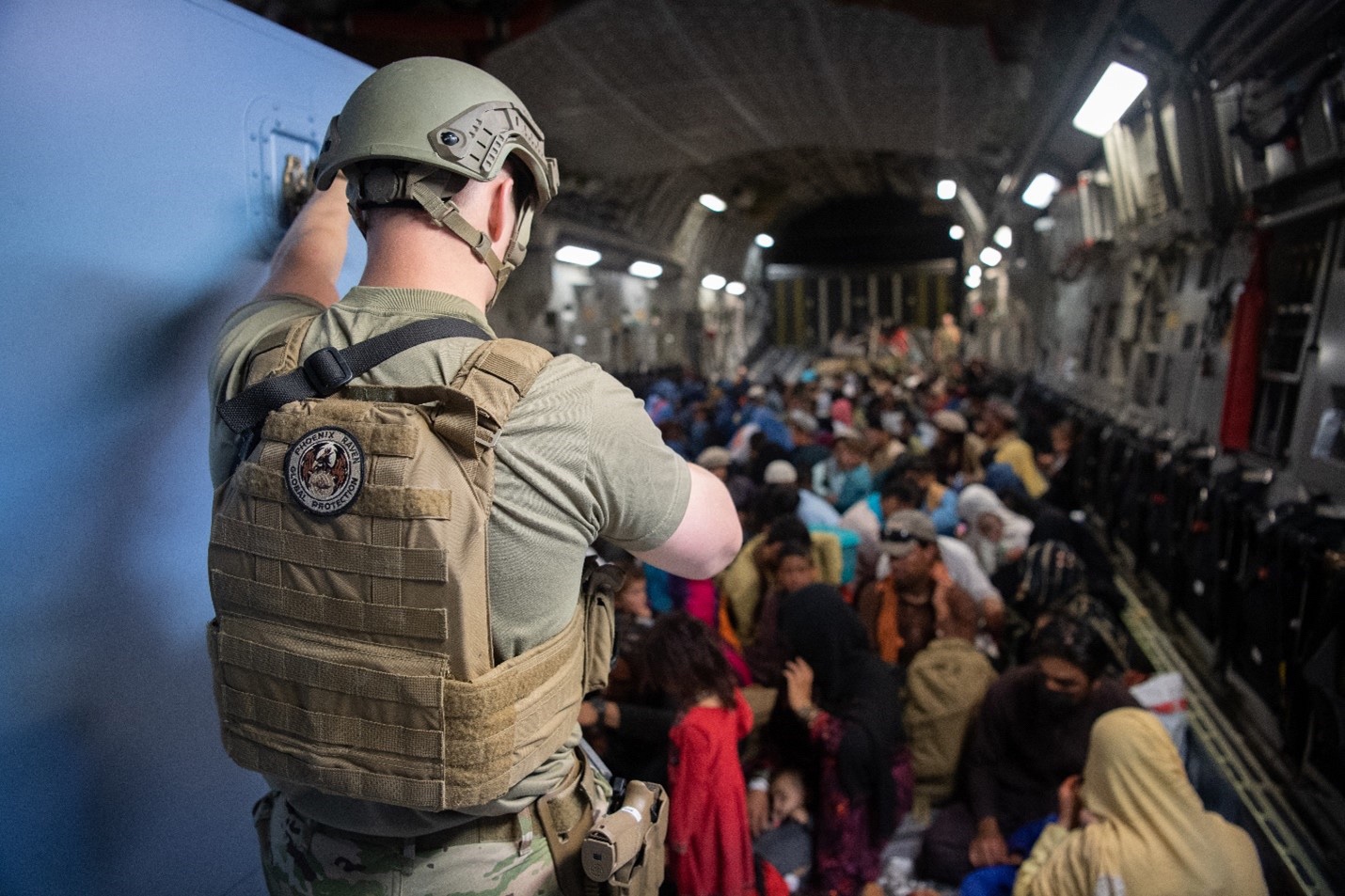
A U.S. Air Force security forces raven, assigned to the 816th Expeditionary Airlift Squadron, maintains security aboard a U.S. Air Force C-17 Globemaster III aircraft in support of the Afghanistan evacuation at Hamid Karzai International Airport, Afghanistan, Aug. 24, 2021. Support from Air Force Research Laboratory, or AFRL, systems like Tactical Awareness Kit, or TAK, helped facilitate safe extractions of families and US civilians. (U.S. Air Force photo / Master Sgt. Donald R. Allen)

As U.S. warfighters completed the main evacuation effort in Afghanistan in 2021, many Afghan allies and U.S. civilians still needed to get to safety. AFRL’s Information Systems Division, part of the lab’s Information Directorate at Rome, New York, employed the use of TAK to connect evacuees safely and securely with operators.

“AFRL’s unique system ensured that only the sender and recipient could access the needed information for the extractions,” said Capt. Landon Tomcho, an AFRL program manager. “Furthermore, the TAK system is already established in the operator community. The agile development principals integrated into the TAK ecosystem since its transition allowed the AFRL teams to apply their expert knowledge to rapidly create and employ a scenario-specific solution.”

AFRL’s Information Directorate monitored the efforts in Afghanistan and worked to understand the operating environment and situations before planning the implementation of changes needed for use. However, getting to delivery and implementation of TAK took tenacity, development, and dozens of phone calls, said Tomcho. These efforts resulted in AFRL connecting with the proper entities to put the TAK secure communications tool into the hands of the warfighters conducting the extractions to help direct individuals to safety and keep them safe.


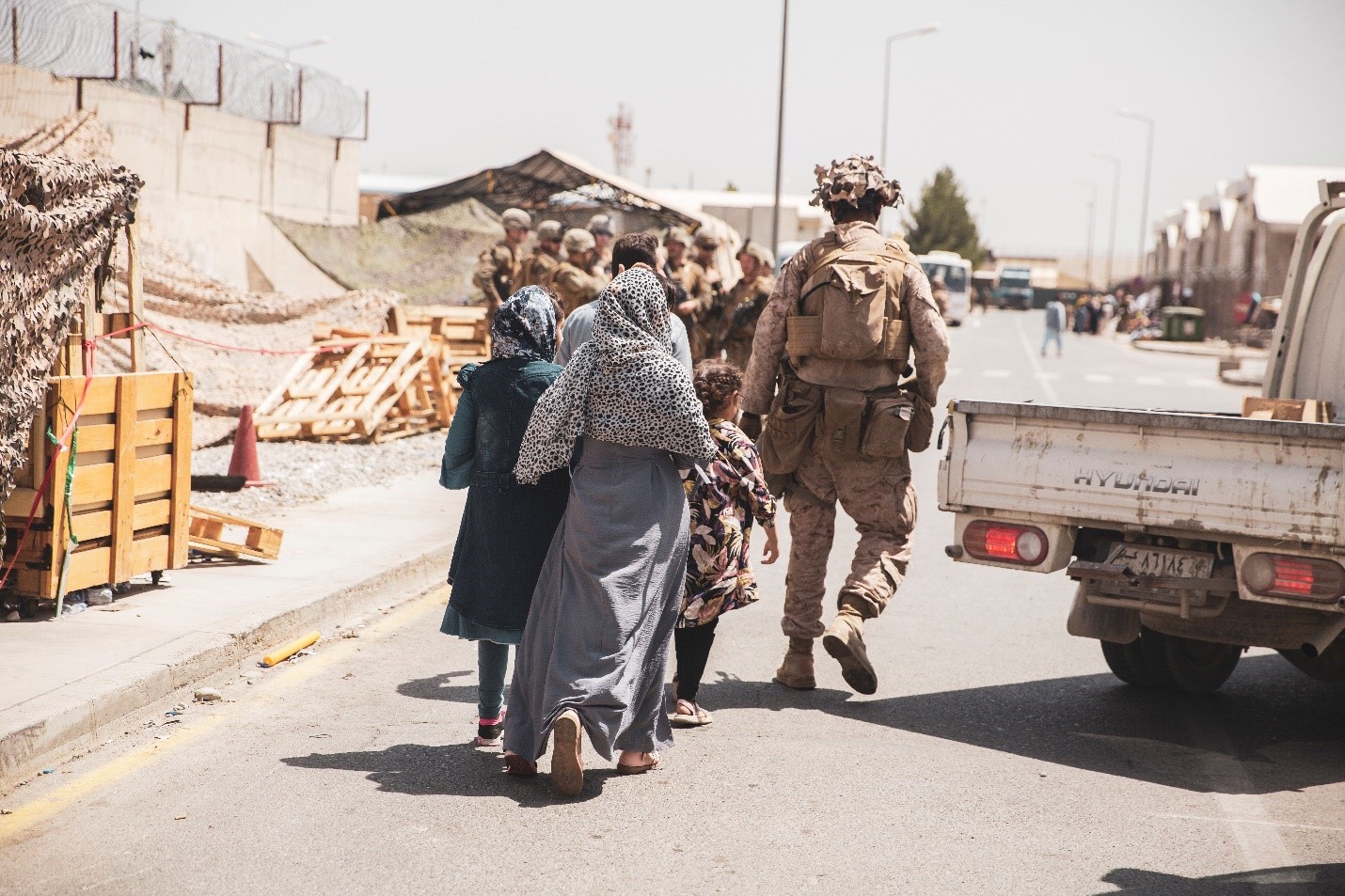
A U.S. Marine with Special Purpose Marine Air-Ground Task Force – Crisis Response – Central Command escorts a family during an evacuation at Hamid Karzai International Airport, Kabul, Afghanistan, Aug. 21, 2021. U.S. service members assisted the Department of State with a non-combatant evacuation operation in Afghanistan. Support from Air Force Research Laboratory, or AFRL, systems such as the Tactical Awareness Kit, or TAK, helped facilitate safe extractions of families and U.S. civilians.

“Having a flexible and secure means of communication would be critical to the former special operators who joined the extraction missions,” Tomcho said. “These operators had all the right tactical skills; they just needed a bit of extra technology to provide greater situational awareness.”

Ryan McLean, director of TAK product center, said his team is proud to support the Information Directorate by tackling issues such as humanitarian assistance.

“As the Allied information dominance platform, TAK delivers world-class situational awareness through a family of networked geospatial products,” McLean said. “Capt. Tomcho’s successful efforts show how the TAK products enable a rapid convergence of innovation, initiative and impact when lives are on the line.”

Additionally, instead of using an app on a dedicated device to track critical assets, the platform was re-tasked to a web portal environment, said Tomcho. The access portal allowed operators to see specific location coordinates for the extractions from any device with an internet connection. Since the platform was secure, it was the optimal solution for communication between operators and the extraction parties. It provided greater access to ensure they could receive communications and critical information in limited access environments. Because of the security, hackers are unable to decipher information.


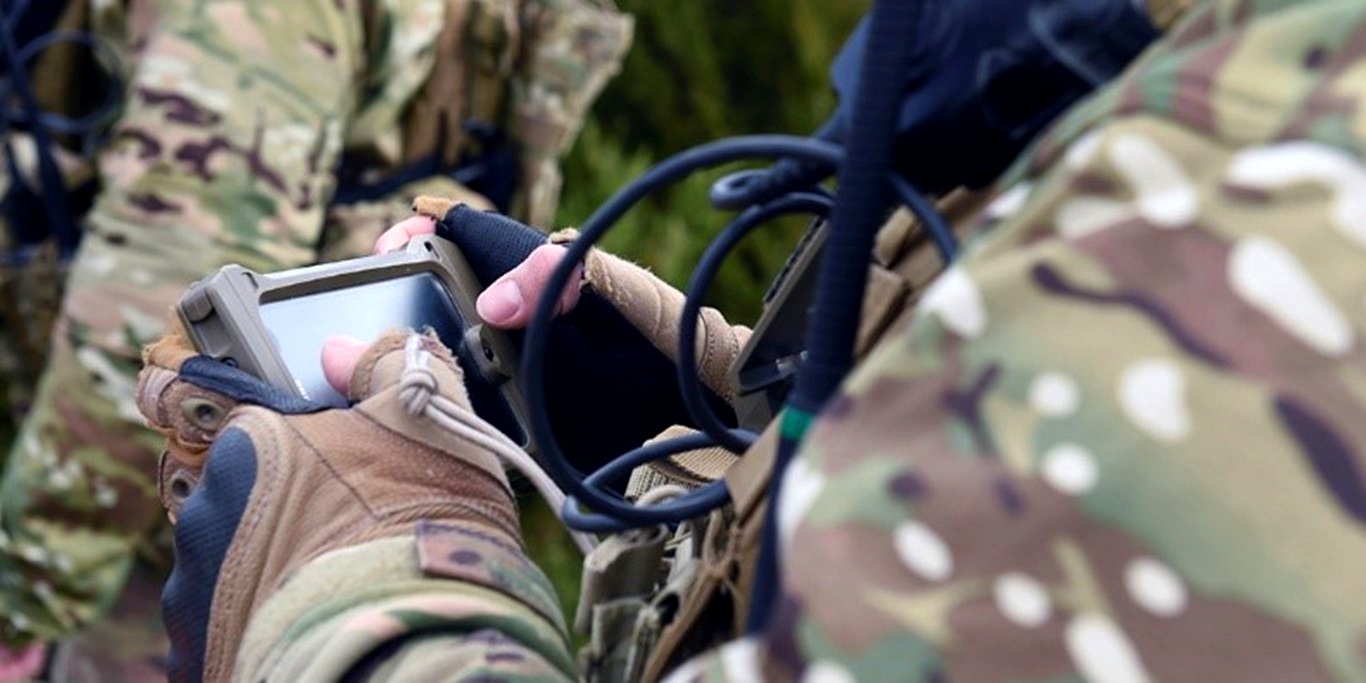
Air Force Research Laboratory, or AFRL, researchers and technical teammates re-tasked a current fielded tool called Tactical Awareness Kit, or TAK, to directly assist extraction efforts by operators in Afghanistan in the Fall of 2021 and increase the chances of success. USAF tactical air control warfighters demonstrated the capabilities of the TAK system — similar to those used during operations to evacuate U.S. citizens and allies in Afghanistan. (U.S. Air Force photo)

“In the end, AFRL researchers deployed a highly successful secure communications solution to operators that saved numerous lives,” Tomcho said.

AFRL’s application was leveraged to communicate information only the sender and recipient could securely verify, facilitating efficient and safe extractions.

www.afresearchlab.com

By Marc Denofio, Air Force Research Laboratory Public Affairs

FirstSpear Friday Focus – Light Weight Assault Ghillie

Friday, April 28th, 2023

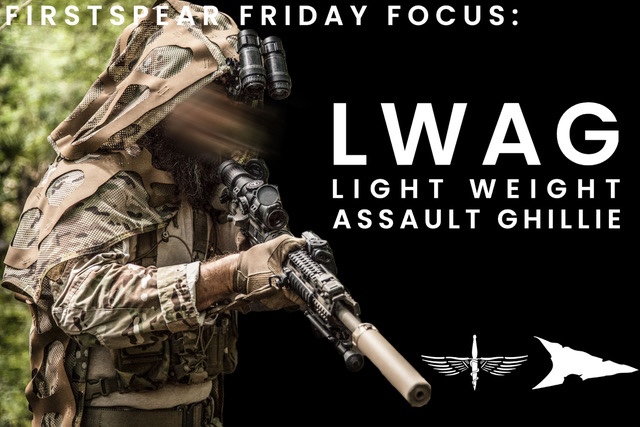
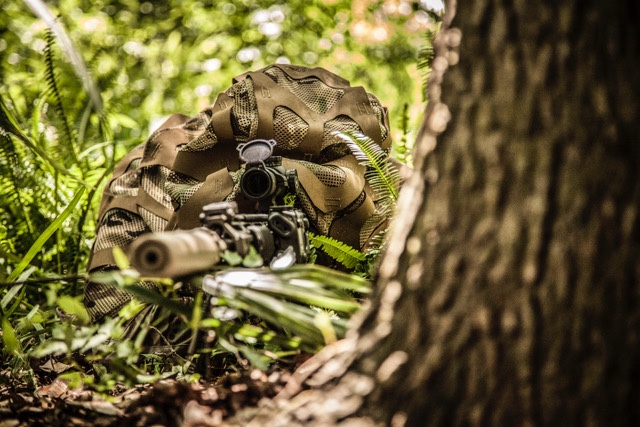
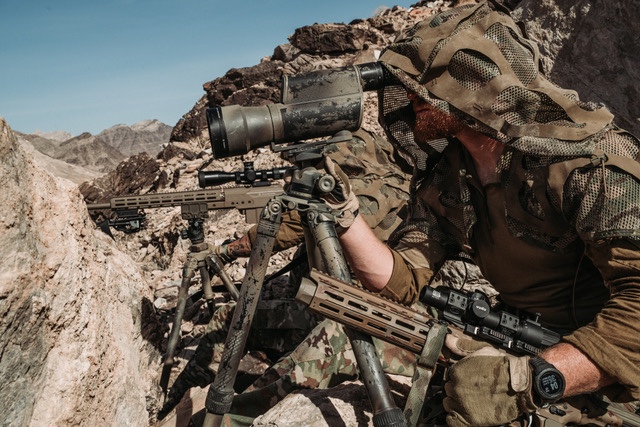
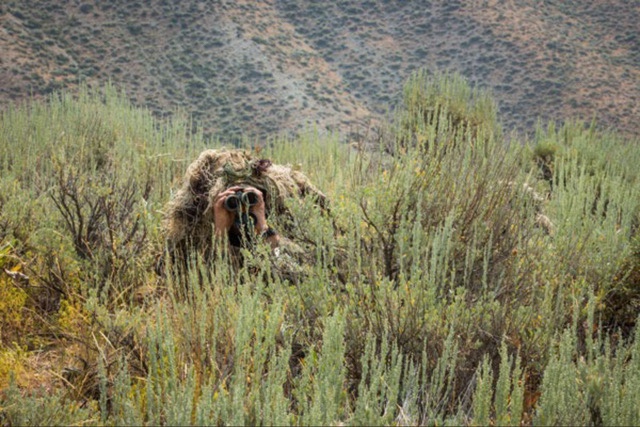
Developed in conjunction with Treadswift, the LWAG is a lightweight concealment cloak that can be used for disrupting visual, infrared, or thermal detection. Utilizing lightweight, weather resistant mesh and Trelleborg combination patterning, the LWAG can be garnished with jute, vegetation or used as is. Generously sized to cover equipment, but still easy to stow on your pack or load carriage, it has stretch cord for underarm positioning and a security strap for the front that can be adjusted for height and girth. The hood of the LWAG is secured in place with large smock style buttons.

Check out FirstSpear to find American Made kit and accessories, Built For The X.

AF Research Lab Re-Ups Affiliation with Longtime Liquid Crystal Industry Partner AlphaMicron Inc to Meet DoD Needs

Friday, April 28th, 2023

WRIGHT-PATTERSON AIR FORCE BASE, OHIO (AFRL) – Longtime Air Force Research Laboratory, or AFRL, industry partner AlphaMicron Inc., is utilizing a 2021 Ohio Federal Research Network, or OFRN, funding award to expand the capability of its patented guest host liquid crystal technology, called e-Tint, to electronically dimmable protective eyewear for the Department of the Air Force, or DAF, Department of Defense and commercial markets.

The $1.35 million award, comprised of $900,000 from the state of Ohio and a $450,000 AlphaMicron, or AMI, cost share, enables AMI to apply emergent fundamental research toward the expansion of its e-Tint technology for the development of advanced sun protection devices for pilots and special warriors, as well as specialized laser protection film for civilian and military eyewear, said Principal Electronics Engineer Dr. Darrel G. Hopper in the Airman Systems Directorate of AFRL’s 711th Human Performance Wing.

In its persistent mission to mature its technology and create advanced applications, AFRL has partnered with AMI — a global leader in liquid crystal-based light reactive technologies — since its founding in December 1996 as a spinoff of Kent State University’s Liquid Crystal Institute, Hopper said.

“Most recently, AMI was a performer under the 2018 Electronically Dimmable Eye Protection Devices Small-Business Technology Transfer Research (STTR) program sponsored by the Airman Systems Directorate,” Hopper said. “During the 2020-2022 Phase II award, AMI partnered with Bowling Green University, Kent State University and Miami University to develop next-generation electronically dimmable eye protection devices enabling them to work toward the 70% transmission window needed for current and future DAF applications.”
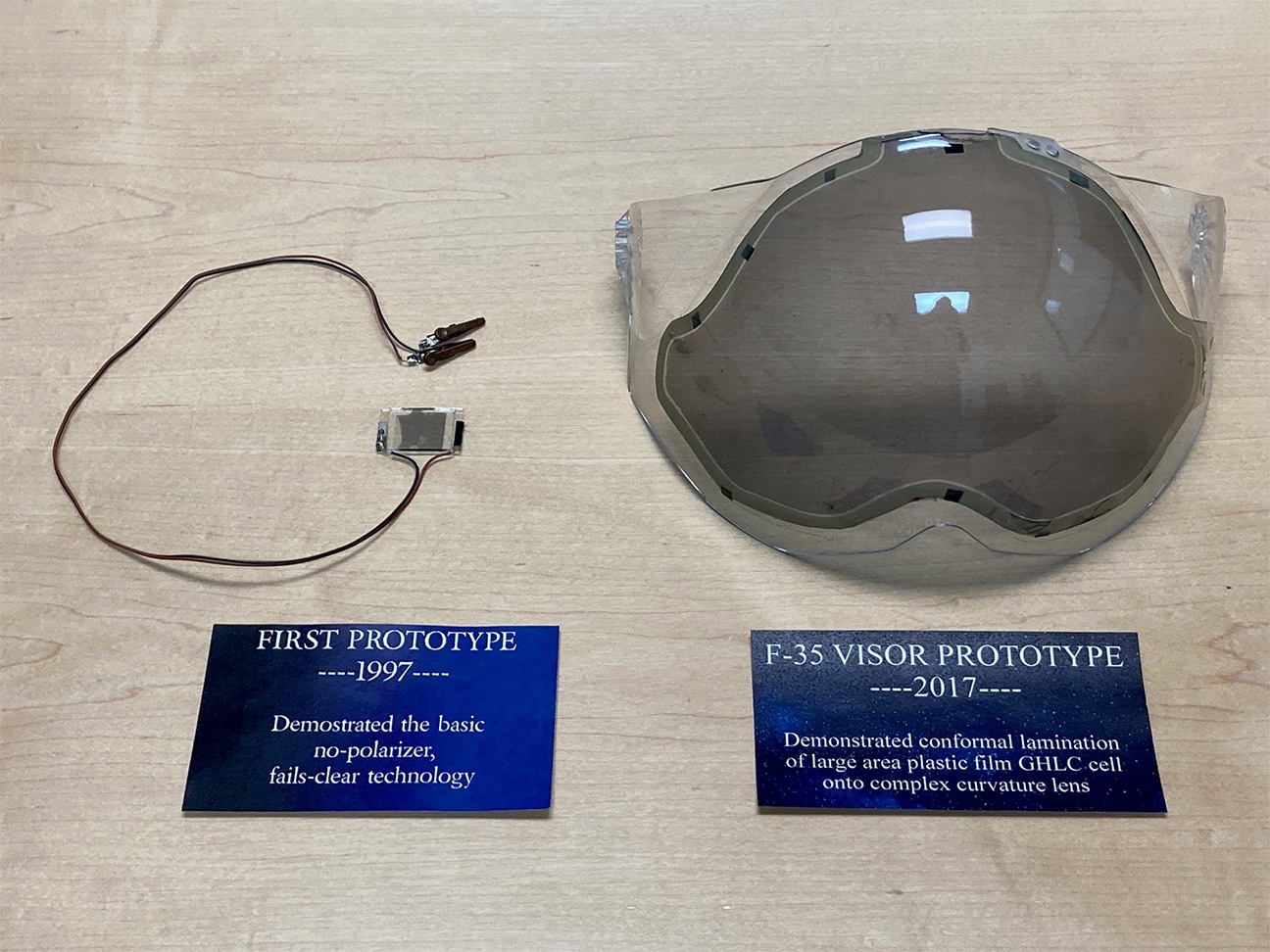

The image depicts AlphaMicron Inc., or AMI’s prototype progression over the course of 20 years. AMI’s first dimming proof of principle prototype from 1997 was eventually integrated into a Full Complex Curvature Helmet F-35 Visor prototype for the U.S. Department of the Air Force in 2017 to help mitigate pilots’ difficulties managing light transmission during flight. The initial collaboration between AFRL and AMI resulted in the creation of e-Tint, an electronic tint-on-demand liquid crystal technology that can be applied to flexible plastic substrates, such as pilot visors, instead of traditional glass. e-Tint switches from clear to dark faster than an eye can blink — about 0.1 of a second— and is fail-safe in a power outage. This technology was used to create the world’s first electronic switchable eyewear which was field tested by the U.S. Army and is now being issued to soldiers through the Approved Protective Eyewear List.? In addition to current applications, the technology is being developed for augmented reality applications and see-through displays, where simultaneously controlling ambient and display light is important, said AMI’s Chief Technology Officer and Chief Executive Officer Dr. Bahman Taheri.(U.S. Air Force photo)

The AFRL-sponsored 2018 STTR award expedited AMI’s process of qualifying and applying for the OFRN funding, as AMI was able to sustain the same academic partnerships it had developed under the previous effort, Hopper said.

AMI’s OFRN effort was one of five selected in the OFRN round five: Sustaining Ohio’s Aeronautical Readiness and Innovation in the Next Generation, or SOARING, Opportunity Announcement. According to its website, OFRN awards funding for projects that help expand Ohio’s research capabilities and grow its workforce in the areas of defense, aerospace, energy and health.

“AFRL’s history with AlphaMicron is long and rich,” said Personal Protection Direction Lead Dr. Matthew Lange in AFRL’s Materials and Manufacturing Directorate. “This OFRN funding is so important because it is what gets this kind of technology done. It’s enabling the continuation of solutions that are relevant to DOD needs.”

The storied relationship between AFRL and AMI led to the development of foundational optical technology with numerous commercial and military applications, said Dr. Richard Vaia, chief scientist, AFRL’s Materials and Manufacturing Directorate.

“This ensures critical suppliers have multiple revenues for pervasive aspects of critical technology for future DAF systems,” Vaia said.

AMI’s collaboration with the DAF dates back to its first Small Business Innovation Research, or SBIR, award in 1997 under the Variable Transmittance Visor program, Hopper said.

Prototypes produced under this first agreement eventually led to future collaborations with AFRL.

In 1997, AFRL partnered with AMI to address light management issues in fighter pilot helmets; researchers were challenged to develop variable-tint visors that would enable pilots to see clearly in flight, despite fluctuating lighting conditions. When pilots encountered sudden washes of intense sunlight mid-flight, they struggled to read and track the data on their aircraft-mounted and head-mounted displays, Hopper said.

“There was a need for some way of controlling visor tint, as it was affected by the transmission of light when the pilots would go above or below the clouds,” said Chief Executive Officer and Chief Technology Officer Dr. Bahman Taheri, who co-founded AMI with two other colleagues in 1996. “This was a safety hindrance. So AFRL asked us to join them to find a solution [based on the then-new guest host liquid crystal technology].”

AFRL and NASA have been working on solving this problem since the 1970s, Hopper said. It has taken the industry 20 years to realize the need for this type of technology for near eye applications. This need has accelerated with the recent emphasis on augmented reality glasses where displayed image contrast can be washed out because of the background ambient lighting conditions.

The initial collaboration between AFRL and AMI resulted in the creation of e-Tint, an electronic tint-on-demand liquid crystal technology that ultimately helped mitigate the pilots’ difficulties managing light transmission during flight. According to AMI’s website, e-Tint switches from clear to dark faster than an eye can blink — about 0.1 of a second— and is fail-safe in a power outage. Notably, the technology can be applied to flexible plastic substrates, or surfaces, instead of traditional glass, to benefit Airmen and Guardians.

“The Air Force was very specific about what it wanted,” Taheri said. “There were all of these boxes we needed to check. And one of them was they wanted to be able to encapsulate the layer of liquid crystal — which is very thin, 6 microns, so about one-tenth of the diameter of a human hair — between plastic. Glass is brittle and flat, not flexible and curved. If you drop it, it breaks. Flexible plastic substrates do not shatter, and they’re lightweight.”

All of these qualities make plastic desirable to glass when it comes to developing agile solutions for pilot eyewear, Taheri said, but the task of translating the liquid crystal technology to flexible plastic substrates was not without its challenges.

“Precisely because it’s flexible, it can be difficult to apply that thin layer of liquid crystal between two pieces of plastic and maintain uniformity,” Taheri said.

Around 2010, AFRL Chief Technologist Dr. Timothy Bunning led efforts within the Materials and Manufacturing Directorate to bring AMI on board to partner with members of his research team in what was then called the Functional Materials Division. Bunning’s group was working on expanding in-house liquid crystal research and develop resilience technologies relating to laser and flash eye protection. Bunning, who served at the time as division chief and, later, as the directorate’s chief scientist, assembled a research team that included Lange, Dr. Michael McConney and Dr. Timothy White, among others.

Together, the AFRL and AMI researchers sought to translate AMI’s preexisting e-Tint technology on flexible plastic substrates to variable-tint visors for DAF pilots.

“Our efforts with AMI were very fruitful,” Bunning said. “In AFRL, we are list-makers, we are very structured, we are always proactively pushing the bounds of the research. Our collaboration [with AMI] allowed us to combine efforts to reduce the risk of these new technologies, and it also led to some high-end publications in prominent scientific journals.”

White, who has since transitioned out of AFRL to take up a professorship in the Department of Chemical and Biological Engineering at the University of Colorado-Boulder, said the vibrant partnership between his research team and AMI successfully resulted in the pursuit of both near- and far-term laser and flash eyewear protection solutions.

“Alpha Micron was and continues to be an incredible partner for the DOD to work with,” White said.

Taheri said his various collaborations with AFRL have opened doors to do more of what he genuinely enjoys.
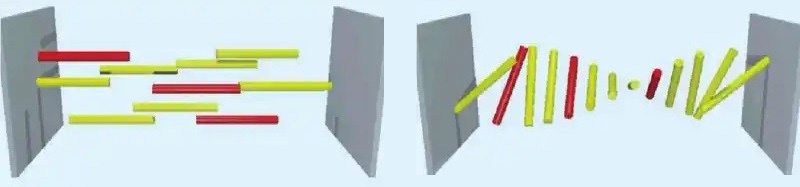

The graphic illustrates how reorienting liquid crystal (yellow) causes dichroic dye (red) to reorient along with it, which changes the transmission of light. In 1997, the U.S. Department of the Air Force identified a need for controlling visor tint in pilot eyewear. Visor tint was affected by light transmission when pilots would go above or below the clouds, as sudden washes of intense sunlight mid-flight impacted their ability to read and track the data on their aircraft-mounted and head-mounted displays. To address this safety issue, AFRL partnered with Kent State University-based AlphaMicron Inc., or AMI, a global leader in liquid crystal technology, to find a solution based on AMI’s proprietary polarizer-free, guest-host liquid crystal system known as e-Tint. AMI’s Chief Technology Officer and Chief Executive Officer Dr. Bahman Taheri likens this system to a molecular version of a Venetian blind. (Courtesy photo / AlphaMicron Inc.)


“Working with AFRL gave and continues to give me a glimpse into what the future of eyewear is going to be,” Taheri said. “This helped AMI create the e-Tint technology for head-mounted displays, and ambient and intense light management for the warfighter. It is the reason that AMI’s CTRL Eyewear is now the only electronic military grade eyewear in the Army’s Authorized Protective Eyewear List (APEL). It took 25 years for the consumer electronics companies working on advanced electronic AR glasses to realize this need.”

Most recently, AMI has set its sights on expanding its technologies beyond near eye applications to the commercial automotive and architectural sectors. The company plans to leverage its preexisting connections to major automotive Tier 1 companies to apply electronically dimmable technology to replace electrochromic mirrors in electric cars, and to integrate sunroofs with switchable glazing technology. These measures will help maintain more consistent temperature control and extend battery life in electric vehicles.

“With the advent of electric cars, what [the auto industry] is really starting to want is this switchable glazing that can be applied to the glazing in the vehicle to stop the car from heating up when it’s parked,” Taheri said. “Heat can be a big drain on an electric car battery when you are trying to cool it down and having a sunroof that ‘switches’ makes a big difference there.”

Taheri said he credits his company’s collaboration with AFRL for giving AMI a head start in this field.

“Because of our interaction with AFRL, AMI is now the main supplier of the much-needed dimming element to many of these top tier companies,” Taheri said. “In that same tone, I genuinely believe that the work currently being performed for the AFRL [with Dr. Lange and his team] is also decades ahead of its time. I have no doubt that it will be the solution to some of the problems not yet realized in the consumer market.”

The company’s commercial expansion can only mean good things for the future of AFRL, Lange said, as the development of any new industry technology can provide fresh avenues for meeting DOD supply chain needs.

“It’s so important to continue to support our industrial base at all levels in order for them to be successful,” Lange said.

Hopper, Lange and Taheri said they look forward to future AFRL collaborations.

“Some of the coolest projects always come from the Air Force,” Taheri said. “My team always wants to gather in on those because they know there’s going to be a tough problem to solve.”

-Gail Forbes, Air Force Research Laboratory