SIG SAUER - Never Settle

Archive for the ‘Guest Post’ Category

Futures Command Integrates Transformation Efforts Across Army, Multinational Force

Sunday, July 9th, 2023

AUSTIN, Texas — For the U.S. Army to reach its transformation goals, it must ensure the innovations being tested and adopted in support of future readiness are also being seamlessly integrated across the force — a focus area for the Army’s newest four-star command.

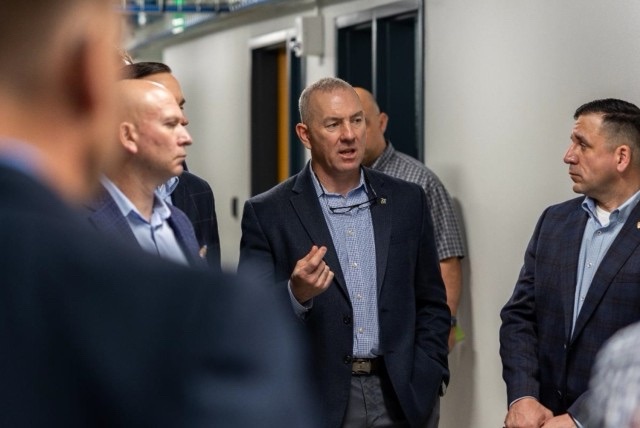
“Army Futures Command has taken the approach that we will lead the integration for the United States Army, and the land component specifically, into all the domains that we’re dependent on — air, land, sea, space, cyberspace, etc., a truly multi-domain approach, while at the same time looking at concepts for the future — with all those key partners that we need to work with,” said Army Futures Command Deputy Commanding General Lt. Gen. Thomas H. Todd III.


The command’s strategic integration of transformation activities — from initial concepts and requirements onward — ensures the Army is achieving effective, sustainable and far-reaching improvements to how the force operates both on and off future battlefields.

AFC is undertaking its integration work in myriad ways, including building new systems compatible with those of multinational partners, incorporating support mechanisms for modern technologies into training modules and long-term sustainment plans, and sharing critical lessons learned from groundbreaking science and technology research across all relevant components of the Army and joint force. The command executes integration activities in conjunction with its five other core functions: future operational environment, concepts, research, experimentation and requirements; these six functions support the command’s ability to prioritize people, design the Army of 2040 and deliver the Army of 2030.

AFC’s Directorate of Integration is responsible for synchronizing integration across doctrine, organization, training, materiel, leadership, personnel, facilities and policy, while numerous downtrace organizations — including cross-functional teams, or CFTs — are engaging in integration-furthering activities daily. These efforts reinforce one another, enabling the U.S. military and its allies to more clearly see where strengths and weaknesses exist, and remedy any potential problems.

“The Army strategy requires a keen focus on integration, allowing us to hone in on necessary resiliency and situational awareness of the battlespace,” said Mike Monteleone, director of the Assured Positioning, Navigation and Timing/Space (APNT/Space) CFT.

“Resiliency and situational awareness build confidence. Confidence builds speed. Speed builds force lethality. To achieve that end result, the Army must focus on integration at all levels,” Monteleone continued.

The APNT/Space CFT was able to increase as well as observe stakeholder integration during its most recent Positioning, Navigation and Timing Assessment Experiment, known as PNTAX, held at White Sands Missile Range, New Mexico, from August to September 2022.

PNTAX, which brings together hundreds of military and industry participants annually, is the Army’s premier live-sky, open-air GPS and communications denied/degraded experiment, offering tactical scenarios informed by pacing threats. The experiment incorporates new and existing PNT and navigation warfare technologies, which Army and joint force participants can assess, develop and reassess in the most challenging and realistic environments available.

The Assured Positioning, Navigation and Timing/Space Cross-Functional team is a crucial part of the Army Futures Command, responsible for accelerating the delivery of advanced APNT, Tactical Space and Navigation Warfare capabilities to the Soldier. One way the CFT informs technology and system requirements, is through the PNT Assessment Experiment, or PNTAX.

PNTAX provides an opportunity for early, immersive experimentation, where the Army and its partners across government, industry and academia put technology of varying readiness levels directly into Soldiers’ hands. These early opportunities for direct end-user feedback are crucial and heavily influence the rest of the technology development process to meet capability requirements and ultimately integrate faster.

Other examples of how AFC is integrating new solutions are evident in the international partnership-building work being carried out by the Network and Long Range Precision Fires (LRPF) CFTs.

The Network CFT acknowledges that as national armies operate in multinational coalitions during future expeditionary operations, integration and interoperability of communications will be paramount to ensuring battlefield success. As a result, the CFT hosts foreign liaison officers from the armies of two close allies, the U.K. and Australia, to help shepherd information interoperability initiatives, concepts and goals.

Both the U.K. and Australia participated in Project Convergence 22, the Army’s capstone transformation experiment of 2022, to advance multinational collaboration, with data integration successes occurring at the human, technical and procedural levels. Today, U.K. and Australian officers are assisting with preparation for Capstone 4, a Project Convergence capstone experiment to be held in 2024. Capstone 4 will build upon the collaborative successes of PC22 by integrating increasing numbers of Australian, British and American data platforms.

Meanwhile, the LRPF CFT continues to advance its co-development of next-generation weapons systems capabilities with the U.K. as part of a collaborative agreement established in 2020. A foreign liaison officer from the U.K is part of the team, helping facilitate discussions, problem solving and continuous learning. The partnership between the two militaries emphasizes complementarity for joint deployments and enhances experimental operational activities, which are crucial for delivering the Army of 2030 and designing the Army of 2040.

“Our alliances play a vital role in shaping the future of our countries, and by working together with multinational partners, we enhance our collective strength,” said Col. Rory Crooks, director of the LRPF CFT.

The LRPF CFT demonstrated refined strategies and tactics for multi-domain battlefields during PC22, converging effects among Joint and Allied forces. The CFT also engaged in additional experimentation and learning with Australian and U.K. counterparts in the areas of artificial intelligence-enabled computing, manned-unmanned teaming, secure transport layer networks and disaggregated sensor collections, which can reduce the time required to identify, target and neutralize enemy threats.

AFC’s integration of new technology and processes improves interoperability between systems from various nations while also enhancing human capabilities and connectivity — all of which are integral to the Army’s pursuit of war-winning future readiness.

By Army Futures Command

Sneak Peek – Modular Vest Adaptor by Unobtanium Gear and @The_Random_Oh

Saturday, July 8th, 2023

The MVA (Modular Vest Adaptor) fills a capability gap in the standard issued IOTV (Improved Outer Tactical Vest) and MSV (Modular Scalable Vest) platforms. Designed by active duty soldiers and produced in partnership by Unobtainium Gear and The Random Oh, the MVA allows the user to attach any hook/loop wing or radio pocket and dangler style pouches without interfering with the quick disconnect features found on the vests themselves. No modification to the plate bag or cummerbund necessary.

Weighing in at only 1.5 ounces, the MVA will be compatible with IOTV Generations 3 and 4, and MSV Generation 2 vests.

Stay tuned for an official announcement and release in the coming months.

PEO Soldier Assumes Responsibility for Lethal Unmanned Systems Directed Requirement, Initiates Low Altitude Stalking and Strike Ordnance (LASSO) Program

Saturday, July 8th, 2023

Fort Belvoir, Va  –  

Program Executive Office (PEO) Soldier assumed responsibility of the Lethal Unmanned Systems directed requirement on May 4, 2023, and initiated the Low Altitude Stalking and Strike Ordnance (LASSO) program under Project Manager Soldier Warrior and Product Manager Soldier Precision Targeting Devices. PEO Soldier is currently using an urgent capability acquisition pathway to rapidly deliver this capability to the Infantry Brigade Combat Team (IBCT).

In addition, PEO Soldier’s teammates at the Maneuver Capability Development and Integration Directorate (MCDID) at Fort Moore are actively developing the enduring requirement to support a future program of record.

LASSO is a man-portable, tube launched, lethal payload munition, unmanned aerial system. It includes electrical optical /infrared sensor, precision flight control, and the ability to fly, track and engage non-line-of-sight targets and armored vehicles with precision lethal fires. LASSO currently consists of three modules: the launch tube, unmanned aerial system, and fire control station.

“We’re really excited to partner with industry and bring this capability to our IBCTs,” said Maj. John Dibble, Assistant Product Manager for LASSO. “This anti-tank capability is a key contributor to our efforts to increase the lethality of the Army of 2030’s IBCT and maintain overmatch against our near-peer threats.”

By Jason Amadi

FirstSpear Friday Focus – Assaulter Armor Carrier v2

Friday, July 7th, 2023

You heard the call for something that’s light and low-profile while still offering full protection. We answered with the AAC v2. Whether your mission is land or sea, let the Assaulter Armor Carrier v2 keep you geared up and ready.

Don’t forget the upgraded Instant Adjust Back Panel – it ensures your carrier is always sized right for the mission. Its minimal padding and water-resistant nylon mesh material make it one tough cookie – lightweight and streamlining you while keeping you safe. You can configure it with BC inserts, soft armor inserts, and hard armor inserts to give you full protection.

If you’re ready to leave the boys in the dust, check out the 6/12 Padded Wings that offer you added comfort while giving you extra pockets for all your gear. So if you need protection for your mission, the AAC v2 is the one for the job. Light and low-profile – mean and strong.

Visit FirstSpear to find American Made kit and accessories, Built For The X.

Magruder Takes Command of Special Tactics

Friday, July 7th, 2023

HURLBURT FIELD, Fla. —  

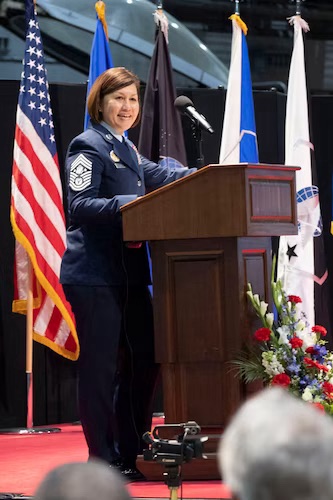
Col. Daniel Magruder assumed command of the 24th Special Operations Wing during a ceremony at the Special Tactics Training Squadron on Hurlburt Field Jun. 29.

Air Force Special Operations Command commander Lt. Gen. Tony Bauernfeind presided over the ceremony where Magruder took the guidon from Col. Jason Daniels, who is moving on to serve as the Deputy Director of Operations at headquarters AFSOC.

During his command, Daniels led Special Tactics through multiple crises including executing a challenging non-combatant evacuation in Kabul, humanitarian assistance in Haiti, a variety of missions in Africa, the Middle East, Europe, South America, and Asia, and expanded the wing’s focus from countering insurgencies and terrorists to include strategic competition.  

Bauernfeind shared words of praise for Daniels.

“Under his leadership, the Air Commandos of the 24 SOW were innovative across the spectrum of conflict, resolute under pressure, and made the impossible look simple,” said Bauernfeind. “The 24 SOW provided back-to-back historic extraction support in August of 2021 and those outstanding achievements would not have been impossible without Jason’s leadership.”  

As Daniels prepared to relinquish command, he reflected on his time in the 24 SOW.

“I stand here overwhelmingly with a feeling of thanksgiving for the chance to serve with, lead, and command with the Special Tactics community for more than two decades, particularly the last couple of years,” said Daniels. “The opportunity to command this wing and serve its Airmen has been the greatest honor of my career.”

Daniels was awarded the Legion of Merit Second Oak Leaf Cluster for exceptionally meritorious conduct during his tenure as wing commander from Jun. 4, 2021, to Jun. 29, 2023.

Following the change of command, Magruder spoke to the wing for the first time as commander.

“To the men and women of the 24th Special Operations Wing, Jen and I look forward to working for you. Every day we must earn the distinction as our Air Force’s premier ground special operations force,” said Magruder. “I am optimistic about our future because of you… the incredible people that fill our ranks, I aim to earn your trust as we work together to solve our nation’s toughest problems.”

Magruder earned his commission from the United States Air Force Academy in 2003. He has not only commanded at the flight, squadron, and group levels, but has served in a variety of high-level positions, including being the Chief of Staff of the Air Force’s speech writer.

Magruder closed out the ceremony with a challenge to the men and women of Special Tactics.

“To every member of the AFSOC team and the 24 SOW, I encourage you to think about your place in history. It will call on each of you in some way. When history calls on you, when you are tapped on the shoulder, will you be willing to deliver the roar our nation needs?”

By Capt Savannah Stephens, 24th Special Operations Wing Public Affairs

All Trauma Can Cause PTSD

Thursday, July 6th, 2023

FALLS CHURCH, Va. (AFNS) —  

Post-traumatic stress disorder is commonly associated with combat-related trauma, but service members may not know that PTSD can also be caused by experiences beyond the battlefield.

PTSD is a physical and mental reaction to a situation or event that was perceived as dangerous, according to behavioral health experts.

“The key is being exposed to a traumatic event,” said U.S. Air Force Col. Larry Kroll, deputy chief of the Defense Health Agency’s behavioral health clinical management team.

“Threatened death, actual or threatened serious injury, actual or threatened sexual violence—there are all kinds of traumatic experiences that qualify,” he said. These noncombat-related traumas include car accidents, mass shootings, natural disasters, physical, sexual, and emotional abuse.

The PTSD trigger can vary from person to person. What is traumatic for one person may not be traumatic for another.

“A tornado comes and destroys the town you live in. Your neighbor’s house is still standing. Yours is destroyed,” Kroll said. “Both parties could be diagnosed potentially with PTSD.”

The trigger may be through direct exposure to trauma, or even indirect exposure. According to Kroll, indirect exposure could range from situations like a first responder witnessing trauma as part of their job to learning that a relative or close friend was exposed to a trauma.

There are several symptoms that can lead to a PTSD diagnosis.

Re-living the event: Service members who experienced a traumatic event may re-live the event in their minds over and over again. They may have nightmares or flashbacks. Reminders of the trauma can be caused by people, places, sounds and smells. These reminders are called “triggers.”
 

Avoiding situations that remind you of the event: Service members may avoid the things that remind them of the experience to avoid painful thoughts and feelings.
 

Negative thoughts or feelings that worsen after the trauma: You may have changes in thoughts and moods after a trauma. You may blame yourself or feel guilty for having these thoughts. You may separate yourself from others, lose interest in things you like to do, and feel more and more isolated.
 

Hyperarousal: You may feel too alert or hyper-aware of your surroundings. You may have trouble sleeping and concentrating. You may feel irritable, overly aggressive, or be easily startled.

It’s important to reach out for help if you experience PTSD symptoms. Treatments like cognitive processing therapy and prolonged exposure therapy are highly effective and available in most military hospitals and clinics. Newer treatments like eye movement desensitization and reprocessing therapy may help too.

According to Brandi Blue, a licensed clinical social worker at Nellis Air Force Base, Nevada, these therapies allow for the patient to process their feelings of distress and challenge any unrealistic thoughts that have come from the trauma.

Service members may have felt reluctant to get help in the past, but Blue said that education in schools and exposure to mental health needs and symptoms on social media, television, and in movies is lessening the stigma.

“We can help you manage it better and deal with it better,” said Kroll. “We just want you to have a better life and a more fulfilling life.”

Kroll sees a difference in younger service members. “I think young soldiers, sailors, marines, airmen, and guardians now are far more comfortable getting mental health support than service members were when I first came in… they’re more comfortable talking about their stuff.”

Resources: The Military Health System has many resources available to help service members, families, or veterans, such as:

The Psychological Health Center of Excellence: The center seeks to improve lives of service members by advancing excellence in military psychological health care research.

Real Warriors Campaign: Real Warriors encourages members of the military community to seek help for mental health concerns by promoting a culture of support. The campaign features videos, tools, and resources with key information about mental health and how to get help.

inTransition: inTransition is a free, confidential program that offers specialized coaching and assistance for active duty service members, National Guard and Reserve, veterans, and retirees who need access to mental health care.

For a complete list of PTSD and mental health resources, visit the Health.mil information pages.

By Ken Cornwell, MHS Communications

US Army Marks 50th Anniversary of All-Volunteer Force

Wednesday, July 5th, 2023


(Photo Credit: Photo by Doug Ware, Courtesy of Stars and Stripes, all rights reserved)

WASHINGTON — On July 1, 2023, the U.S. Army and the nation celebrated the 50th Anniversary of the all-volunteer force. For half a century, the call to serve has been answered with Americans making the choice to represent the highest ideals of service and patriotism through military service.

“This year is the 50th anniversary of the all-volunteer force,” said Secretary of the Army Christine Wormuth during the Army’s Birthday Festival. “That is 50 years of selfless service, 50 years of Soldiers from all walks of life volunteering to realize their potential, 50 years of Soldiers being all they can be.”

In 1973, the Nixon administration announced the U.S. military would fill its ranks exclusively with Americans that made the choice to serve rather than with draftees. Prior to 1973’s all-volunteer force, a near-continuous conscription began with President Franklin D. Roosevelt’s activation of the nation’s first peacetime draft in support of World War II. That first draft, between November 1940 and October 1946, enlisted over 10 million Americans. The draft was again re-adopted in 1948 and continued to exist until it was officially halted on July 1, 1973.

(Photo Credit: Photo by Warren Leffler, courtesy of the Library of Congress)

The Army started working on developing the all-volunteer force well before the draft ended. According to Nicholas Torre, an Army Historian with the U.S. Army Center of Military History, in April 1971, a transitionary program called VOLAR, named for the new Volunteer Army Program, was successfully implemented at select bases. VOLAR was an experiment designed to increase retention rates and morale among Soldiers and to attract those who wanted to serve. The results were promising. For example, reforms at Fort Carson that aligned with the principles of VOLAR resulted in a 45% increase of reenlistments.

“VOLAR and accompanying initiatives sought to rectify the ills of the Vietnam-era draft-dependent Army,” said Torre. The Army wanted to find ways to increase discipline and morale as it moved towards an all-volunteer force. That included improving work environments by focusing on three areas: Army professionalism, day-to-day quality of life and addressing contextual social problems like race-related and drug abuse issues. Today, at the close of the Global War on Terror and with recruitment presenting challenges, there are parallels shared between the inception of the all-volunteer force and the present state. For instance, the U.S. Army’s continues to be a diverse force and a place for equal pay and treatment.

“Our Soldiers, from the newest E-1 to the most experienced generals come from all over the country, from many different backgrounds, from multiple demographics, races and ethnicities. And while our Soldiers are as diverse as the nation they serve, we have seen throughout our history that we are strongest when we serve together. At the end of the day, what unites us is our shared Army values. That and our collective mission to fight and win the nation’s wars,” said Wormuth.

Our diverse force continues to be united by a common mission, but the U.S. Army has also evolved over the last 50 years. Under the draft system, draftees usually served for two years. Today enlistments vary depending on each Soldier’s training and career path. Today’s Army offers more complex education and training for over 200 career paths. New innovations in training such as the Holistic Health and Fitness, new approaches towards mental readiness, sleep readiness, physical readiness and spiritual readiness are telling of how today’s Army is prioritizing setting up Soldiers for readiness and success.

“No other organization can bring out the best in people like the United States Army,” Chief of Staff of the U.S. Army Gen. James C. McConville remarked at the Army’s Birthday Festival.

Wormuth succinctly expressed what’s at the core of encouraging and celebrating Americans who choose to serve in an Army of possibilities, “The strength of our total Army has always been and will always be, our people.”

By Corinne Dionisio

US Special Forces Partner with Bosnian SIPA for Joint Combined Exchange Training

Tuesday, July 4th, 2023

SARAJEVO, Bosnia-Herzegovina — Forty miles southwest of Sarajevo, enemies are holed up in an underground government facility built inside a mountain during the Cold War to protect a former Yugoslav president against nuclear attack.

From a Sarajevo compound, U.S. Army Green Berets assigned to the Critical Threats Advisory Company, or CTAC, take off to raid the 70,000-square-foot protective bunker alongside Bosnia-Herzegovina State Investigation and Protection Agency, known as SIPA, officials May 8, 2023.

Three nondescript houses disguise each entrance to the facility. Through the houses and inside the labyrinthine structure, intermittent volleys of gunfire with the enemy reverberate through tunnel corridors. Room by room, the combined force of assaulters systematically clear the protective bunker.

This raid was the culmination exercise of a six-week-long joint combined exchange training focused on close-quarters battle and small unit tactics.

“It was a time-sensitive target, so the planning cycle was condensed,” said the troop leader assigned to CTAC, 10th Special Forces Group (Airborne) — a highly lethal force capable of collaborating with elite special operations forces elements worldwide. “The bunker has small hallways and small rooms … I wanted to raid the bunker to see how the team would react; to see how I would command and control.”

The 100-room structure was selected as a target to test the force’s methods due to its complexity and extensive size.

Providing solutions for the most sensitive problems and succeeding is paramount, said the special support unit executive officer, a SIPA official with over thirty years of police experience. The mission’s challenging location, time constraints and finite resources presented a nightmare scenario that compelled partners to combine efforts, overcome adversity and get results.

The mission succeeded, shortfalls and gaps were identified, and both sides provided recommendations for future reference, said the special support unit executive officer. Experience and lessons learned from the CTAC are valuable resources that will align the special support unit in solving complex problems.

“I do truly believe that the systems were tested that day,” said the CTAC troop leader. “We definitely learned lessons working with a new partner force which is key in refining troop standards. It’s the Green Beret way.”

By SSG Anthony Bryant