Celebrate 20 years of the TLR-1

Archive for the ‘Guest Post’ Category

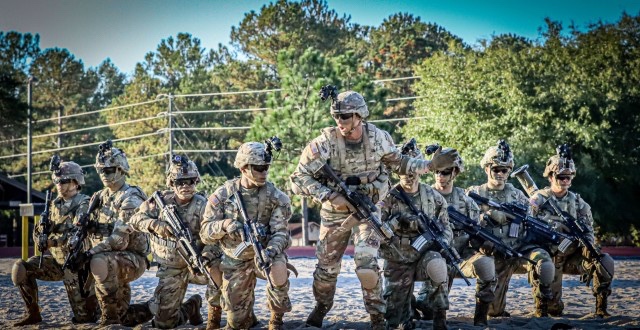
Squad Leaders Gain New Insight Through Army Course

Tuesday, January 24th, 2023

As Soldiers progress through the ranks in the Army, their level of responsibility increases to include leadership roles. Part of the process involves learning how to be an effective leader and mentor while balancing ongoing demands.

To better prepare for their role as a squad leader, four Soldiers with the “This is My Squad” Leader Panel attended the Squad Leader Development Course and the Counseling Enhancement Workshop at Fort Eustis, Virginia, to learn the necessary skills to enhance the performance of their squads.

Sgt. Maj. Of the Army Michael A. Grinston worked with the Army Resilience Directorate to advance this initiative as part of the SLDC course to allow squad leaders to reflect critically on their leadership style and to learn to employ evidence-based leadership skills.

“Sergeants and staff sergeants are entering the phase right now where they are either emulating a leader or trying to figure out how they can develop their own leadership style,” said Sgt. 1st Class Michael Barin, Ready and Resilient Training Division, Army Resilience Directorate. “This course provides junior NCOs the ability to understand what their leadership style looks like and how to leverage their values to realize it.”

Based on Army doctrine, the two-day course for sergeants and staff sergeants is designed to equip squad leaders with evidence-based skills and strategies for effective leadership to use in a range of situations.

“We started the course by identifying our leadership styles and how we can improve them,” said Staff Sgt. Jova Silva, plans and operations noncommissioned officer with Joint Task Force- National Capitol Region, U.S. Army Military District of Washington, Provost Marshal Protection Directorate. “We had several scenarios throughout the course where we’d have to identify certain aspects like thinking traps, different ways to approach the situation and how to address them.”

The course of instruction is provided by performance experts who are civilian contractors with graduate degrees in sports psychology, industrial/organizational psychology, social psychology or related fields. Instructors are also certified through the American Association of Sports Psychologists and start teaching once they have been integrated into their local Army communities.

“We want to make sure the instructors can meet squad leaders where they are and communicate with them in their own language,” Barin said.

During the course, squad leaders examined Army Doctrine Publication 6-22 and research from the fields of human performance, organizational psychology, and positive psychology to highlight the impact and importance of squad-level leadership behaviors. In addition, students assessed their abilities to lead and evaluated their characters as defined in ADP 6-22 to determine whether they aligned with the leadership philosophy they wanted to create.

In addition to SLDC, Soldiers participated in the Counseling Enhancement Workshop, which took place over three days, to teach squad leaders how to effectively conduct a counseling session using communication techniques in Army Technical Publication 6-22.1. The class was peer-to-peer led, and instructor-facilitated with built-in scenarios where students acted out the roles of counselor and counselee.

“The workshop breaks the institutionalized way of counseling and gets out of the ‘template, copy and paste’ way of doing things,” said Barin. “It teaches students how to properly communicate, have those hard and rewarding conversations, and record them properly.”

For Staff Sgt. Winifred Collette, supply noncommissioned officer with the 5th Security Force Assistance Brigade, the workshop was essential to help her look at counseling more humanely versus just following the regulation and policy.

“This class helped me realize that although we have a mission, we need to think about the humane aspect of the Soldiers standing to our left and right,” Collette said. “The mission will always be there, but the way we treat the people who accomplish it might determine how long we have them to rely on.”

According to assessments completed by the Walter Reed Army Institute of Research’s Research Transition Office, feedback from Soldiers who have gone through the course has been positive, with more than four out of five NCOs reporting the curriculum being well organized, important and beneficial.

“Junior leaders who complete the SLDC training leave with a better understanding of themselves as Army leaders,” said Dr. Ian Gutierrez, research psychologist with the WRAIR Research Transition Office. “Among those who received SLDC, the proportion of NCOs who agreed that they had a leadership philosophy and a mission statement increased by more than 30% from pre-training assessment to the final follow-up assessment, highlighting that the training not only prompted squad leaders to develop their own Army-aligned leadership philosophy during the course, but that they retained the benefits of this exercise two months following the training.”

ARD and WRAIR continue to refine the course curriculum based on iterative evaluations and direct feedback from Soldiers to produce a training experience that has a meaningful impact on junior Army leaders.

“It is important to ensure that Soldiers’ crowded training schedules are being filled with trainings that directly contribute to their ability to lead others, develop themselves and their fellow Soldiers, and achieve Army goals,” Gutierrez said. “We believe that this model of Army curriculum development for training in readiness and resilience will continue to yield successful outcomes in the years ahead.”

The SLDC course is available through ARD R2 Performance Centers at 32 Army installations. Any camp, post or station without an R2PC can submit a request for a mobile training team to come to their location.

The course is recommended for sergeants who have spent more than one year time-in-grade, and staff sergeants within their first year of promotion.

For more information, go to www.armyresilience.army.mil/ard/R2/I-Want-to-Schedule-Training.

By Josephine Pride

WEPTAC 2023: Solving Enterprise-Level Challenges

Monday, January 23rd, 2023

NELLIS AIR FORCE BASE, Nev. (AFNS) —  

U.S. and international combat air forces senior leaders participated in the Weapons and Tactics Conference and C2 Summit at Nellis Air Force Base, Jan. 2-13.

WEPTAC is Air Combat Command’s annual pinnacle of tactics and warfare with a charge to accelerate the modernization and development of solutions for the joint employment of forces across the range of Air Force core warfighting functions.

“There is a common saying of ‘As goes Nellis, so goes the Air Force,” said Maj. Gen. David Lyons, ACC director of operations, in a speech to an audience of nearly 1,400 U.S. and allied service members. “The primary focus of WEPTAC is the National Defense Strategy and therefore the U.S. Indo-Pacific Command. We are here at the nexus of airpower to advise and shape our nation’s warfighting prowess.”

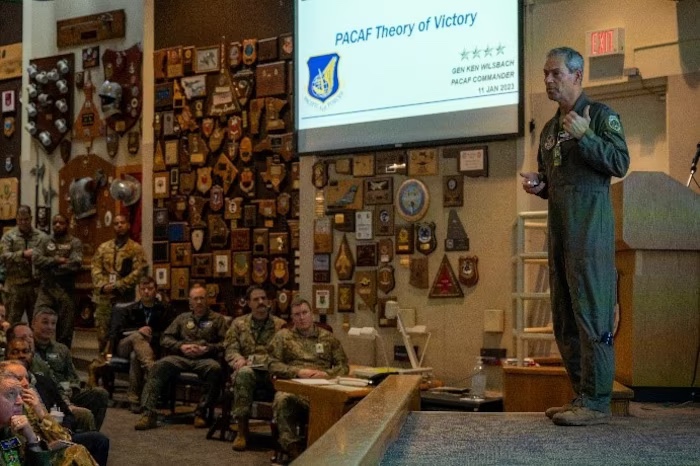
Gen. Ken Wilsbach, Pacific Air Forces commander, gave the keynote address to this year’s summit and WEPTAC attendees, emphasizing a need for constant forward motion with innovation as a requirement for mission success.

“Innovation will be the key to ultimately winning the next fight,” Wilsbach said. “Improvements in innovation talked about at previous years’ WEPTACs can be seen in PACAF today.”

Lyons added that while focus on emerging technologies and processes like the Advanced Battle Management System are critical to the Air Force maintaining competitive advantage in the Indo-Pacific, effective employment of warfighting constants like mobility and logistics capabilities also remain vital to success in conflict in the region.

“Do not wish away logistics. There is no room for error when we look at the tyranny of distance in the Pacific,” Lyons said. “You cannot overlook tanker plans, logistics and sustainment, weapons, communications and mission-type orders. Think about and talk about these things, including swap-out plans, rejoin plans from disparate locations, and comm-out mission planning – there is nothing we can’t tackle when we put our minds to it.”

Along with the tyranny of distance in the Pacific, fiscal and political constraints limit the establishment of new enduring air bases. To address these challenges, the Air Force introduced Agile Combat Employment, or ACE: a proactive and reactive operational scheme of maneuver executed within threat timelines to increase survivability while generating air-combat power.

“ACE will expand the envelope in the next fight; it will be a highly contested environment,” Wilsbach said. “ACE needs to be exercised in every squadron, every day.”

The National Defense Strategy states that to enable our military advantage in the air domain for the long term. We must shift away from legacy platforms and weapons systems that are decreasing in relevance today and will be irrelevant in the future.

Addressing the Air and Space Force senior leaders in the audience, Lyons highlighted the multi-disciplinary specialists conducting WEPTAC’s various working groups.

“We have provided you experts of multiple disciplines to inform your solutions and outputs across multiple programs and resources to provide tangible, feasible decisions to support our conclusions,” he noted.

WEPTAC’s scope and purpose brings the future faster and accelerates change in the United States Air Force. In its 23rd year, WEPTAC continues to provide feedback from warfighters directly to general officers and decision-makers that lead to substantive enhancements and improvements across the Joint Force, both from tactics development and science and technology advancement recommendations.

Wilsbach concluded his speech with a straightforward charge, “It’s not going to be easy, but we must put in the work. No shortcuts.”

Story by Michael J. Hasenauer, Nellis Air Force Base Public Affairs

Photo by Airman 1st Class Josey Blades

Retired U.S. Army Sergeant Major Paved Way for EOD Technicians in Elite Special Forces Unit

Sunday, January 22nd, 2023

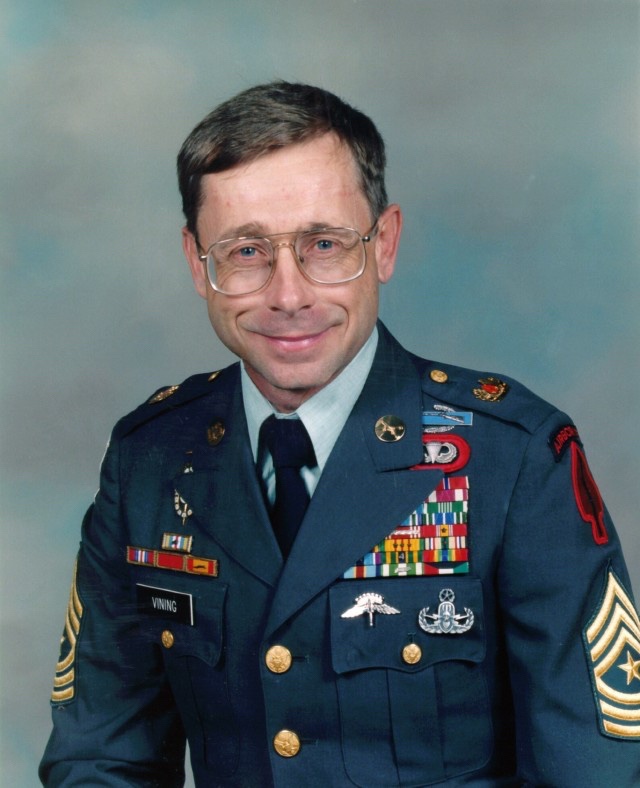
SOUTH FORK, Colo. – If you have spent much time on military-related social media platforms, you’ve probably seen some of the memes featuring a seasoned U.S. Army sergeant major with a Master Explosive Ordnance Disposal Badge and Combat Infantry Badge.

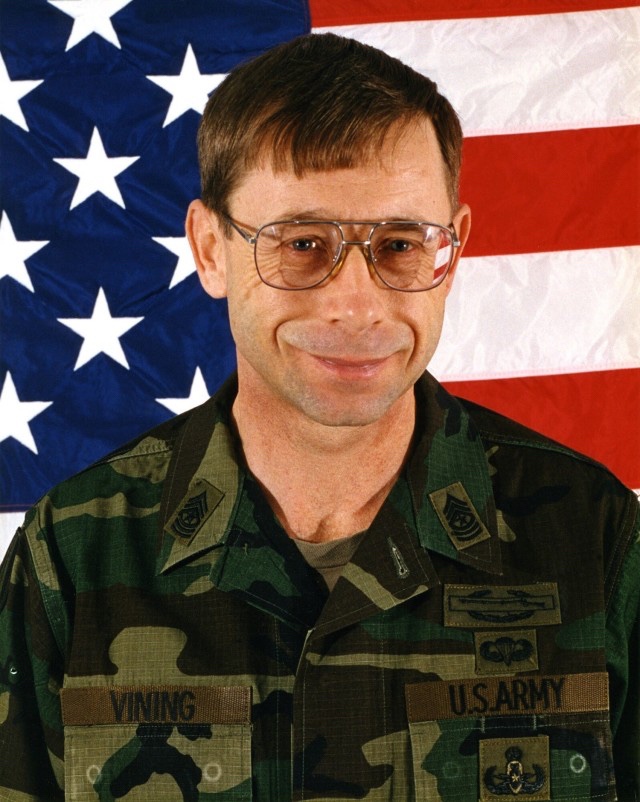
The Army EOD technician behind those memes is retired U.S. Army Sgt. Maj. Mike R. Vining, one of the founding members of the 1st Special Forces Operational Detachment-Delta (Airborne) and one of the unit’s first EOD technicians.

The reason his Army career has gained so much attention is because Vining has participated in many of the American military operations that defined the latter part of the 20th century, as an Explosive Ordnance Disposal technician and an elite Special Forces Operator.

Growing up in Howard City, Michigan, Vining was interested in science and mountain climbing. He received chemistry sets for Christmas every year and earned the Grand Prize in a High School Science Fair for a Wilson Cloud Chamber. Vining was also a member of the Science Club and Chess Club and participated in wrestling and track.

Vining then watched a movie that changed the trajectory of his life.

“I saw a World War II movie about a British soldier disarming a large German bomb in an underground chamber in London, England,” said Vining. “I thought, wow, that must take a lot to disarm a large ticking bomb.”

At 17, not long after the Tet Offensive in the Vietnam War, Vining went to an Army recruiting office and signed up to be an Ammunition Renovation Specialist with the plan of volunteering for EOD as soon as possible. After graduating from basic training camp at Fort Knox, Kentucky, he went to Ammunition Renovation School on Redstone Arsenal, Alabama, where he learned how to destroy unserviceable Code H ammunition during a course that was taught by EOD technicians.

He attended EOD training on Fort McClellan, Alabama, and Indian Head, Maryland, and graduated in May 1969.
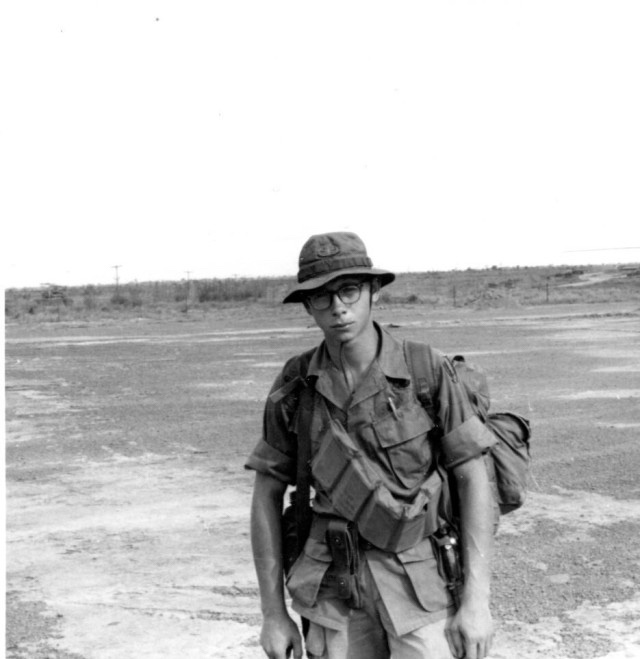
While serving with the Technical Escort Unit at Edgewood Arsenal, Maryland, he volunteered to serve in Vietnam and he spent 11 months with the 99th Ordnance Detachment (EOD) in Phuoc Vinh, Vietnam, in an area west of Saigon and near the Cambodia border.

Two of the most memorable EOD operations of his career happened in 1970 when he participated in the destruction of the Rock Island East and Warehouse Hill enemy weapons and ammunition caches in Cambodia.

Vining was part of the seven-man Army EOD team that supported the 1st Cavalry Division mission to secure and destroy the largest weapons and ammunition cache discovered during the U.S. military’s involvement in the Vietnam War.

Named “Rock Island East” after the Rock Island Arsenal in Illinois, the enemy weapons cache had 932 individual weapons and 85 crew-served weapons as well as 7,079,694 small arms and machine gun rounds. The enemy cache also contained almost a thousand rounds of 85mm artillery shells that were used for the D-44 howitzer and the T-34 tank.

Vining and the EOD techs had to dodge enemy fire and endure biting red ants while working on the cache. After setting up “scare charges” to keep enemy forces out of the security perimeter, Vining made it on the helicopter in time to watch the explosion and see the mushroom cloud that was visible from 50 miles away. The seven Army EOD technicians at Rock Island East used 300 cases of C4 explosives to destroy 327 tons of enemy munitions.
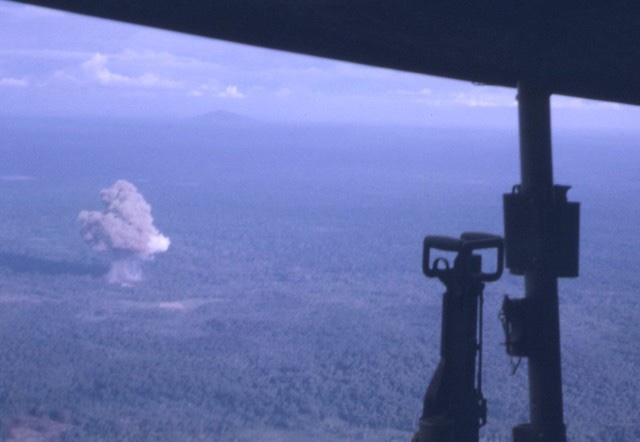
During the operation to seize the cache site, 10 American Soldiers died and 20 were injured.

Later at the Warehouse Hill operation in Cambodia, the EOD team had to disarm booby traps and crawl into underground tunnels to place C4 explosives on 14 cache sites. Vining had to contend with large cave crickets, poisonous centipedes, spiders, bats and scorpions in the narrow tunnels. The teams used 120 cases of C4 explosives to destroy hundreds of thousands of enemy rounds.

After completing his tour in Vietnam, Vining left the Army and returned home to Michigan. He got a job at a plant that stamped out automotive body parts for Ford Motor Company and then became the lead employee on the third shift of the largest press in the plant, a 500-ton press.

“Although it was very good pay, I did not see myself doing this for 20 to 30 years,” said Vining. “In October of 1973, I saw my Army recruiter and asked to go back into the Army.”

The U.S. Army recruiter told Vining that he would have to serve as an EOD technician again, which was exactly what he wanted. He was assigned to the 63rd Ordnance Detachment (EOD) on Fort Leonard Wood, Missouri.

Vining was serving on a U.S. Secret Service support mission when his EOD supervisor, Sgt. Maj. Kenneth Ray Foster, Sr., was killed by an improvised explosive device at the Quincy Compressor Division Plant in Illinois, in 1976. Afterward, Vining thought it was time for a change.

“I decided to take Emergency Medical Technician training and following that I decided to volunteer to be a Special Forces medic,” said Vining. “I was getting out of EOD when my control sergeant major told me that they were forming a new Special Forces organization at Fort Bragg, North Carolina, and that they were looking for six EOD techs.”

Vining called the number and flew to Fort Bragg, North Carolina, for an interview with Col. “Chargin’ Charlie” Beckwith, the founder of the 1st Special Forces Operational Detachment-Delta. Beckwith envisioned the concept that the U.S. Army should have a counterterrorism unit like the British Special Air Service.

“Two weeks later, I was one of four Army EOD techs to start the Operator Training Course 1,” said Vining. “Only two of us made it through. The second person was (retired Sgt. Maj.) Dennis E. Wolfe.”
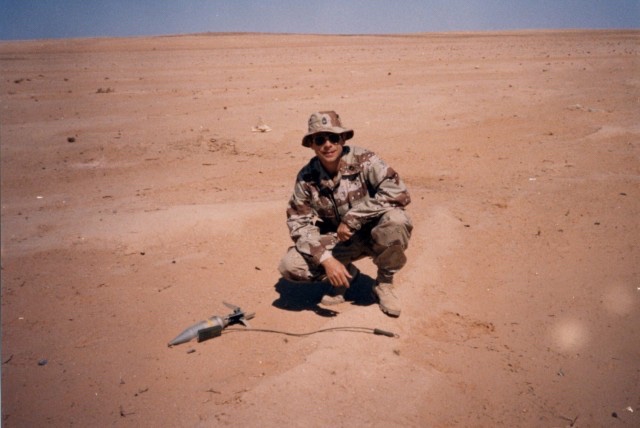
One of the unit’s first operations was the clandestine mission to rescue 53 American hostages at the U.S. Embassy in Tehran, Iran. Known as Operation Eagle Claw, the rescue mission was cancelled after the loss of three helicopters during a sandstorm at the staging site known as Desert One. While the aircraft were leaving the Desert One staging area, a RH-53D helicopter crashed into the transport aircraft that Vining and his team was on.

The helicopter rotor chopped into the top of the fuel-laden aircraft and a fireball shot by Vining and his team. As the EC-130E “Bladder Bird” was engulfed in flames and munitions cooked off around them, Vining and his teammates made it off the aircraft. Vining and his team got on another aircraft with faulty landing gear and just enough fuel to make it across the water to safety.

During the Desert One aircraft collision, eight American troops were killed and both aircraft were destroyed.

Joint Special Operations Command was created as a result of the investigation that followed the ill-fated rescue mission.

In October 1983 during Operation Urgent Fury, when U.S. forces invaded the Caribbean Island of Grenada following the pro-Cuban coup there, Vining was on a rescue team sent to free political prisoners at the Richmond Hill Prison.

His Blackhawk helicopter came under intense enemy anti-aircraft fire on approach to the prison facility and the mission had to be delayed.

The political prisoners were released before a second mission was launched.

After seven years of serving with distinction in Delta Force, Vining accepted an assignment with the 176th Ordnance Detachment (EOD) on Fort Richardson, Alaska. He made the move to be more promotable within the EOD community and to be close to the mountains of the 49th state.

While in Alaska, he maintained his proficiency for EOD missions and later came back to twice climb the 20,310-foot Mount Denali, the highest mountain in North America.

Within one year, he was back at the 1st Special Forces Operational Detachment-Delta, where he would serve in Operation Desert Storm. Although his EOD duties didn’t change, Vining switched to infantry during this time to make himself more promotable within the elite Special Forces unit.

During this second 1st Special Forces Operational Detachment-Delta tour, Vining also participated in Operation Pocket Planner during a Federal Penitentiary prison riot in Atlanta in 1987.

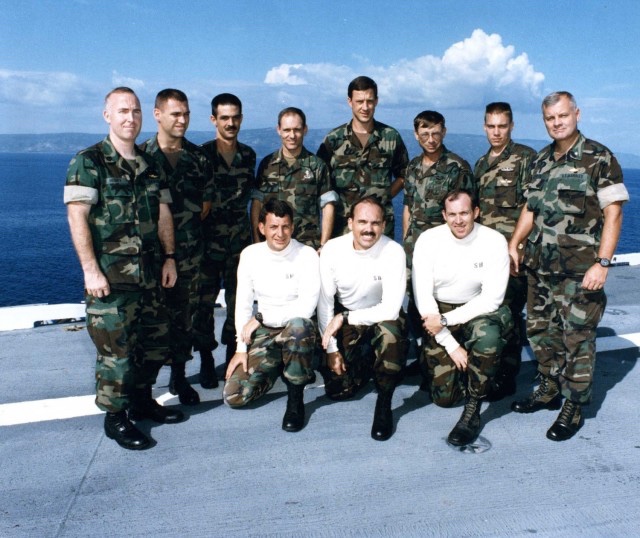
Vining would later serve at the Joint Special Operations Command as an exercise planner and J-3 Special Plans sergeant major. He was the Joint Special Operations Task Force senior enlisted advisor aboard the aircraft carrier USS America (CV 66) during Operation Uphold Democracy in Haiti.
The sergeant major also served as an explosive investigator on the task force that investigated the 1996 Khobar Tower bombing in Dharan, Saudi Arabia, and he used the lessons learned from that attack to help hardened U.S. installations around the world.

During nearly three decades in uniform, Vining earned the Combat Infantry Badge, Master Explosive Ordnance Disposal Badge, Parachutist Badge, Military Free Fall Parachutist Badge and Austrian Police High Alpine “Gendarmerie-Hochalpinist” Badge.

Vining racked up a huge stack of medals and ribbons that include the Legion of Merit Medal, Bronze Star Medal, two Defense Meritorious Service Medals, Army Meritorious Service Medal, Joint Service Commendation Medal, Army Commendation Medal, two Joint Service Achievement Medals and the Army Achievement Medal. He also earned his Bachelor of Science Degree in Sociology from the University of the State of New York.

Vining said he was glad when the U.S. Army established the 28th Ordnance Company (EOD) (Airborne) to support U.S. Army Ranger and Special Forces missions around the world, as well as the two Airborne Platoons of the 722nd Ordnance Company (EOD) and 767th Ordnance Company (EOD) to support the 82nd Airborne Division’s Immediate Response Force mission.
The Fort Bragg, North Carolina-based companies are all part of 192nd EOD Battalion, 52nd EOD Group and 20th Chemical, Biological, Radiological, Nuclear, Explosives (CBRNE) Command, the U.S. military’s premier all hazards command.

Vining said that the Kirtland Air Force Base New Mexico-headquartered 21stOrdnance Company (EOD WMD) was another welcome addition to the U.S. Army EOD units. The highly specialized company is part of the 71st EOD Group and 20th CBRNE Command.

From 19 bases in 16 states, Soldiers and U.S. Army civilians from 20th CBRNE Command take on the world’s most dangerous hazards in support of joint, interagency and allied operations.

“In my time, Army EOD was viewed as Combat Service Support, but in reality, Army EOD is Combat Support and has always been that way and that means supporting Special Operations and Airborne forces,” said Vining.

Vining said the key to success in the EOD profession is noncommissioned officer (NCO) leadership and mentorship.

“Mentorship is one of the duties of a senior NCO,” he said.

The Army EOD community marked its 80th anniversary in 2022 and NCOs have played a critical role in the EOD profession since its inception. Led by noncommissioned officers, EOD teams often serve on their own in austere environments, covering vast operational areas.

Vining also encouraged EOD techs to seek help for both the seen and unseen scars of war that come with the profession.

“I believe if you spend a career in EOD that you will witness severe injuries and death,” he said. “EOD is an inherently dangerous career but it is also a very rewarding career knowing you have eliminated a hazardous situation.

“If you are suffering from events that you were involved in, you are not alone in dealing with this kind of trauma. I encourage you to open up and just talk about it to a fellow EOD tech or an EOD veteran,” said Vining. “From World War II to the present, we have all witnessed the horrors of war and even the dangerous job we do in peacetime.”
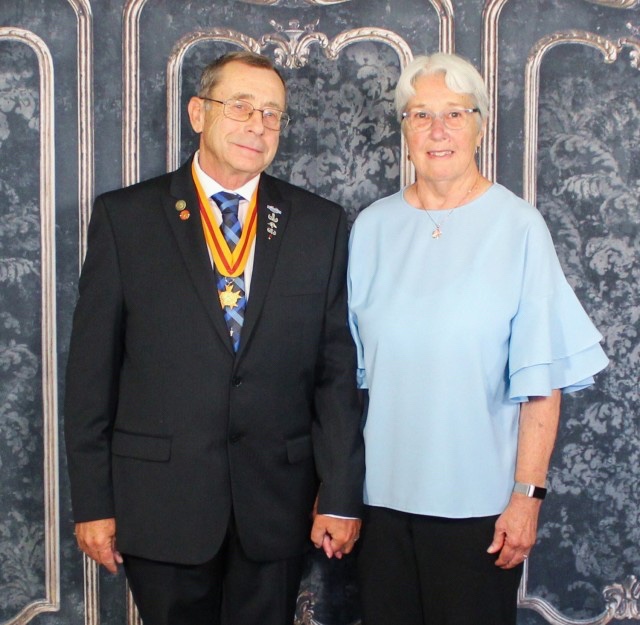
In January 1999, Vining retired from the U.S. Army and married his wife Donna Ikenberry, a hiking guidebook author, professional wildlife photographer and freelance photojournalist. They were engaged at the top of Mount Rainer in Washington and exchanged wedding vows on Mauna Kea, the highest mountain in Hawaii.

Today, they live together in South Fork, Colorado, where Vining continues to enjoy spelunking, skiing, rock climbing and mountaineering. He also remains active in the veteran’s community.

Vining was inducted into the U.S. Army Ordnance Corps Hall of Fame in 2018.

When he hung up his highly decorated uniform after nearly three decades of service, Vining said he never knew that his storied career would later launch a tidal wave of memes.

“I do not know how any of the memes got started,” said Vining. “One of my grandchildren saw that someone even did a Pokémon card on me.”

By Walter Ham

Multi-Capable Airmen Lead the Way for 443rd AES

Saturday, January 21st, 2023

AL ASAD AIR BASE, Iraq (AFNS) —  

A team of Multi-Capable Airmen at Al Asad Air Base stepped out of their traditional responsibilities to become vital force multipliers for joint and coalition partners across the installation.

Embracing MCA, a defender and a client systems technician from the 443rd Air Expeditionary Squadron became skilled in communication capabilities and setting up technical communication equipment, taking it upon themselves to become proficient in skills they traditionally wouldn’t have been required to learn.

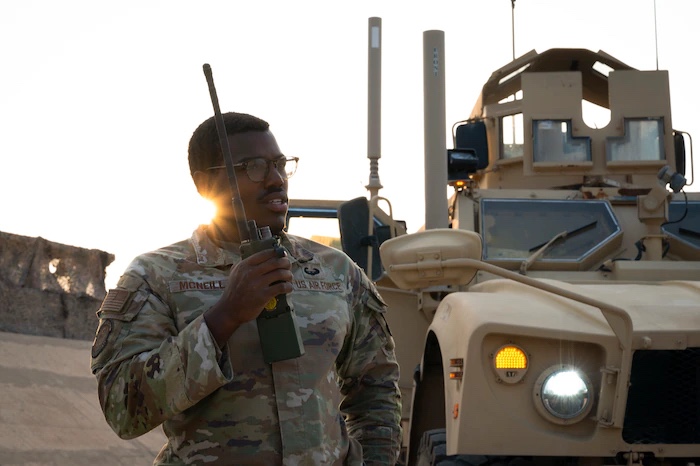
This drive started from the moment they arrived. By capitalizing on an opportunity to innovate and increase efficient and effective communication capabilities for the Airmen around him, Senior Airman Byron McNeill Jr., 443rd AES supply and security forces fireteam lead, decided to face the challenge head-on.

McNeill crafted a plan alongside Staff Sgt. Daniel Meeks, 443rd AES client systems technician, within a few days of arriving on the installation.

“I knew that we had a frequency that was supposed to work but didn’t, and I knew that we should be getting further range with our radios than what they were getting,” McNeill said. “My leadership gave me the chance, and I just took the opportunity and ran with it. Then, it was just collaborating with everyone around me and finding out trial and errors with the radios.”

A defender coming to the 443rd AES with prior radio operation experience, McNeill’s collaboration with Meeks has paid dividends for the installation.

“We call each other almost every day asking each other about things,” Meeks said. “He’s strong-willed with what he wants done and he gets it done. It’s been easygoing with him. We’ve improved our communication capabilities already in just our first month of being here.”

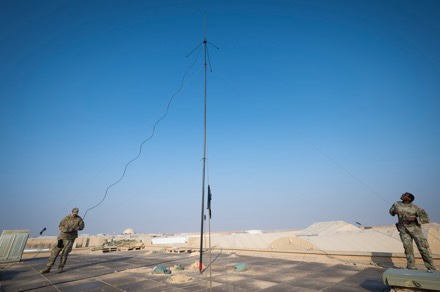
Feeding off each other’s skill sets, they have raised three communication antennas and boosted long-range communications in multiple mine-resistant ambush protected all-terrain vehicles. They assisted and reprogrammed Norwegian Armed Forces radios and were able to get communication capabilities immediately restored. McNeill and Meeks have also held classes with other 443rd AES defenders, giving them the skills to troubleshoot their communication equipment and change their radio frequencies to respond to any situation.

Ensuring communication capabilities are effective and efficient for others, while teaching the next Multi-Capable Airman, is what continues to fuel both.

“Communication is the biggest thing in any scenario,” McNeill said. “Being able to give the warfighter the ability to talk to one another and to talk to higher-ups, brings it all together. There are no mistakes when good communication is in play.”

By Staff Sergeant Dalton Williams, 386th Air Expeditionary Wing Public Affairs

FirstSpear Friday Focus: Laser Frame Pockets

Friday, January 20th, 2023

FirstSpear continues to innovate and develop cutting edge technologies to give war fighters and first responders the utmost edge.


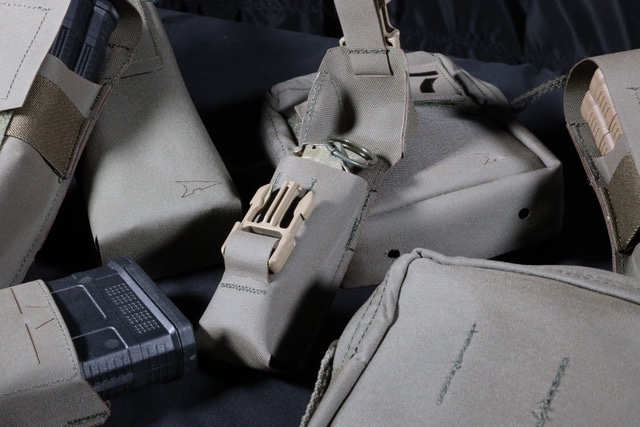
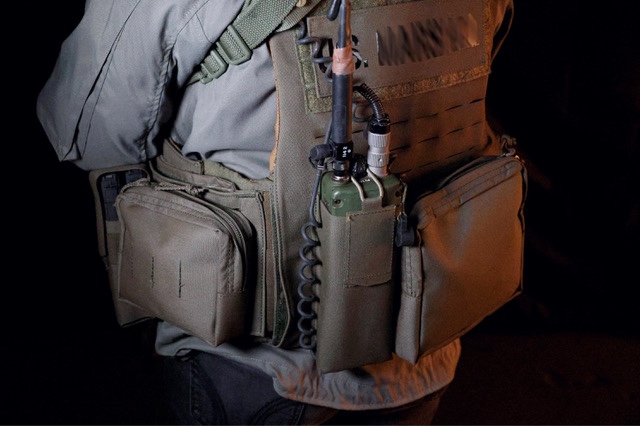
(LaserFrame pocket Suite in Ranger Green)


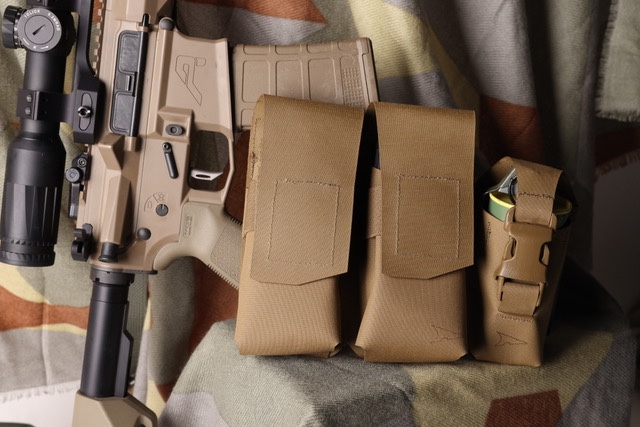
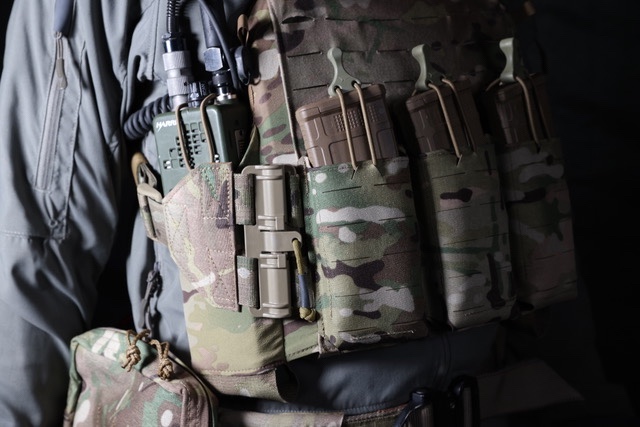
(LaserFrame Double M4, 2 Mag and Smoke Grenade Pockets in Coyote)

LaserFrame pockets will be available in a full suite of options with hem-less designs and construction. Many of your familiar pockets in traditional 500D will be found in LaserFrame options to include, standard rifle / pistol mags, 40 mm, flash-bang, radio, and more. These pockets will be launching throughout 2023, check them out at www.first-spear.com/laserframe.


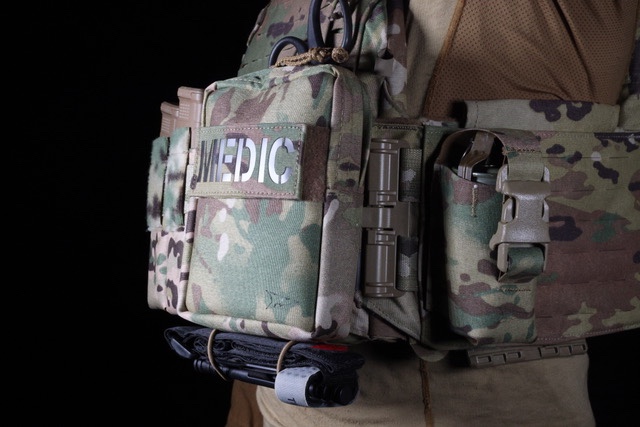
(LaserFrame Single M4, 2 Mag and Smoke Grenade Pockets in Multicam)


(LaserFrame M4 Triple Mag Ranger Shingle in Multicam)

Utilizing FirstSpear’s proprietary laminate material, LaserFrame technology dramatically reduces weight, decreases pocket footprint and retain’s shape when empty, all of which combine to allow for a sleeker and more functional platform.


(LaserFrame 148/152 Radio Pocket in Ranger Green)

The LaserFrame line features our 6/9 attachment system that is compatible with our laser fusion 6/12 platforms as well as legacy MOLLE platforms.

Visit FirstSpear to find America’s premier tactical gear and equipment.

SHOT Show 23 – P R S x PRISM

Wednesday, January 18th, 2023

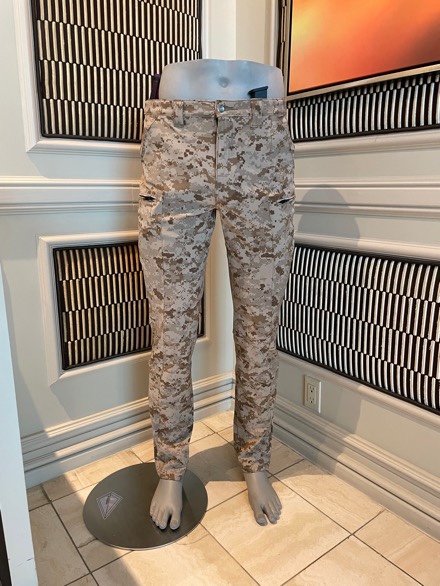
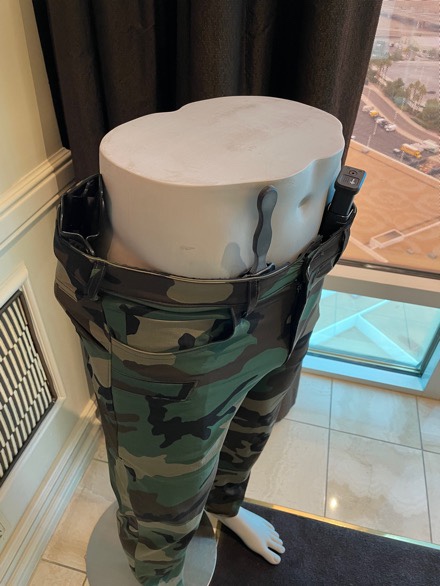
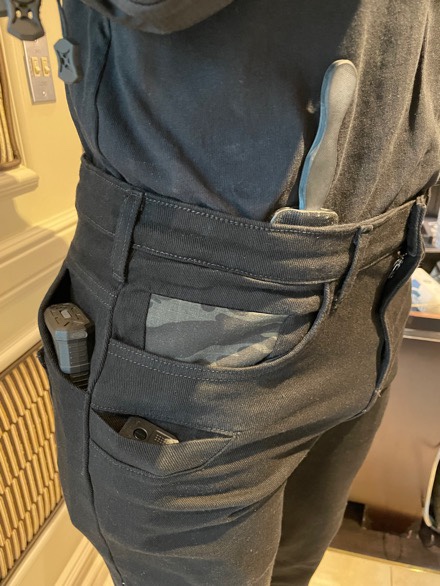
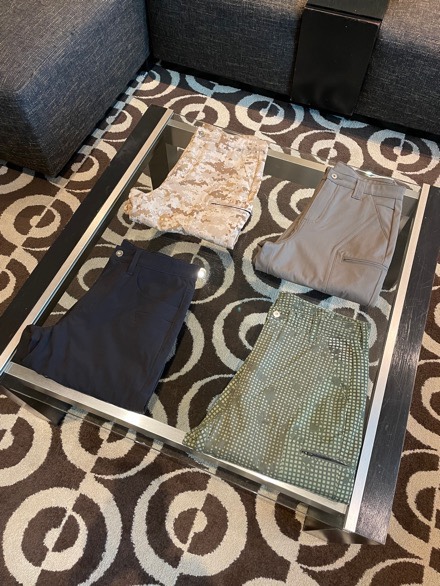
From the former founder of OXCART, comes PRISM, an apparel manufacturer that has the capability of providing for clients, both domestically and abroad.  PRISM is launching a new way of keeping hold of your closest assets with the PRISM Retention System (PRS).

With the goal of building a retention system that works with traditional “hook and loop,” PRISM sought a quick, effective and interchangeable way to manage gear, pouches, and kit, to conform to the ever-changing environment that is the operational space.  Comfortable, manageable and a never-ending possibility of movement around your waist, the PRS are set for your own personal fitting. 

From pants, to shorts, to yoga pants, or joggers, the capabilities are endless with what you carry on a daily basis.  In an area that is non-conforming, to running errands and out with the family, being able to place your needed necessities, on your person, and in a comfortable way, is what PRS is all about. 

In collaboration with Black Triangle, a series of sheaths & holsters are also being built that do not feature any metallic properties, making getting through certain detection areas rather easy.  RFID and other pouches capable of hiding signatures are also in the works by PRISM. 

For further information and license inquiries, please contact:

mark@prism.us  

www.prism.us

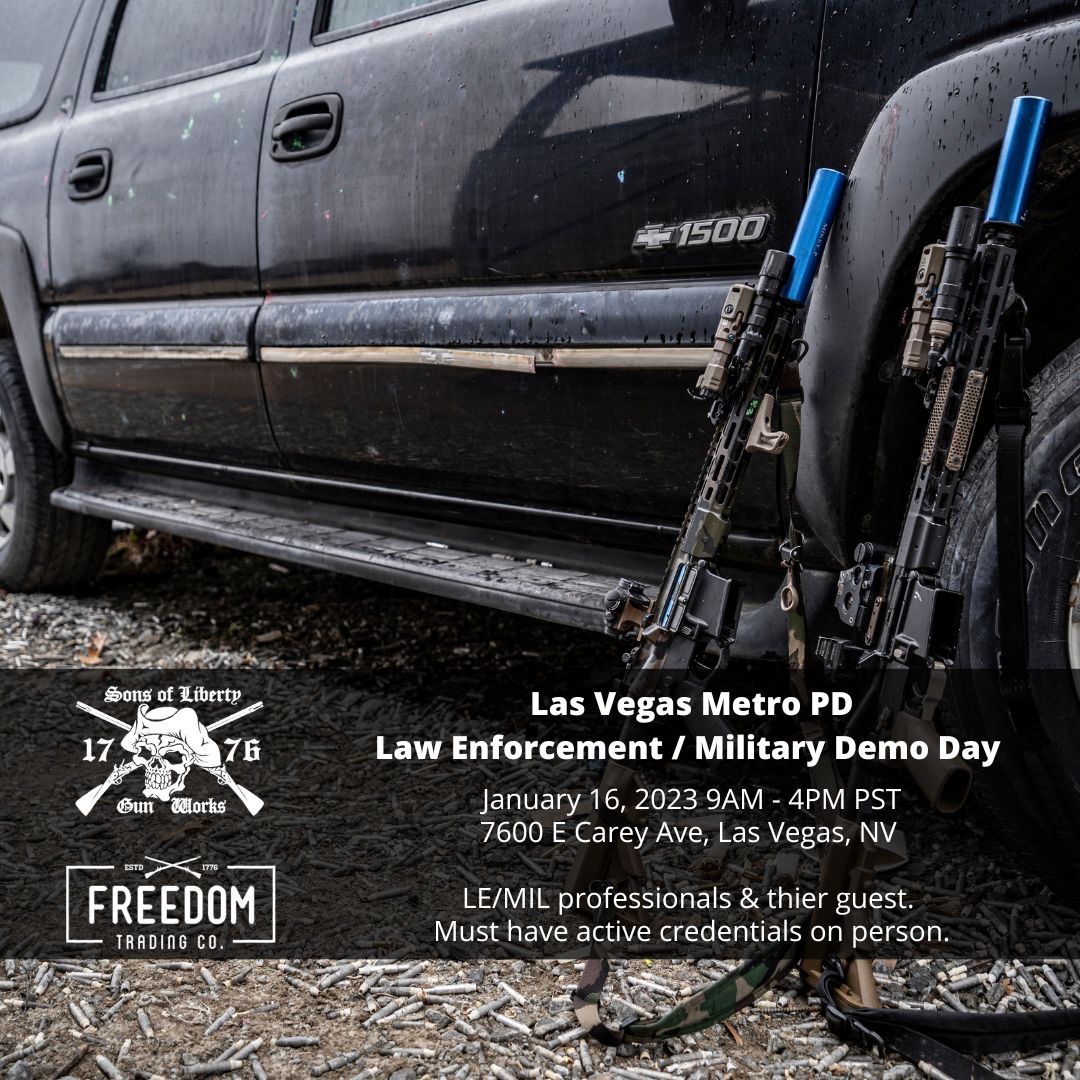
Sons of Liberty Gun Works to Participate in Las Vegas Metro Range Day

Sunday, January 15th, 2023

San Antonio, Texas 13-JAN-2023 – Sons of Liberty Gun Works, a superior manufacturer of high quality, hard-use, direct impingement firearms; is pleased to announce our participation in the Las Vegas Metro Range Day on Monday, January 16th, 2023, in Las Vegas, NV. With supported efforts by their premier dealer, Freedom Firearms / Freedom Trading Co.

SOLGW is the only manufacturer that offers the “Duty Use Replacement Program”. If a duly sworn law enforcement officer uses either their personally owned or department issued Sons of Liberty Gun Works firearm, in the course of their official duties and is without it for any reason including evidentiary procedures; Sons of Liberty Gun Works will provide that officer/agency with an equivalent loaner until such time as the solely owned / issued weapon is returned by the investigating authority.

For more information:

Freedom Firearms / Freedom Trading Co: www.freedomtrading.com

Sons of Liberty Gun Works: www.sonsoflibertygw.com

SOLGW LE/GOV Sales: william@sonsoflibertygw.com

Fire for Effect: Notes on the Forward Observer

Saturday, January 14th, 2023

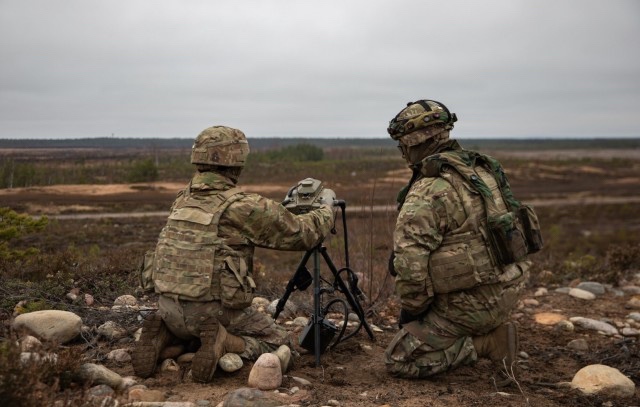
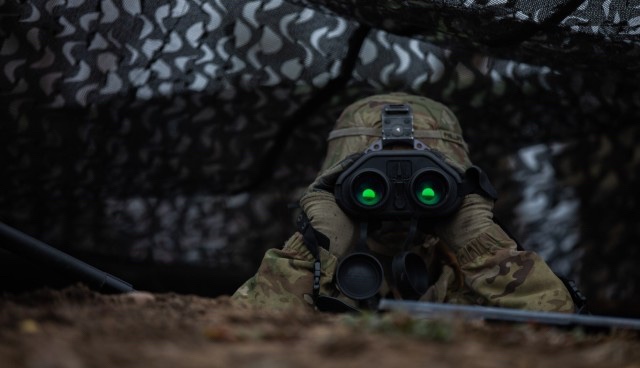
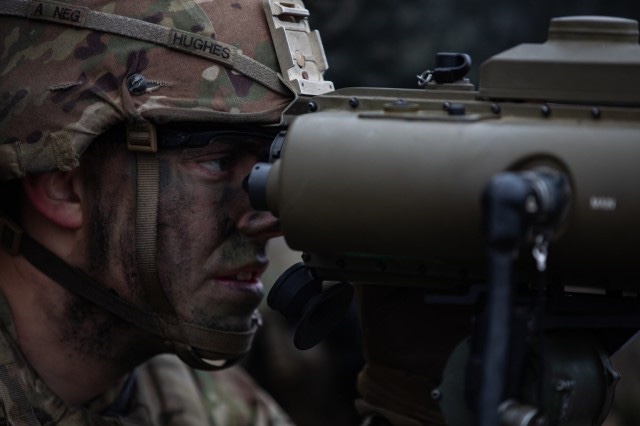
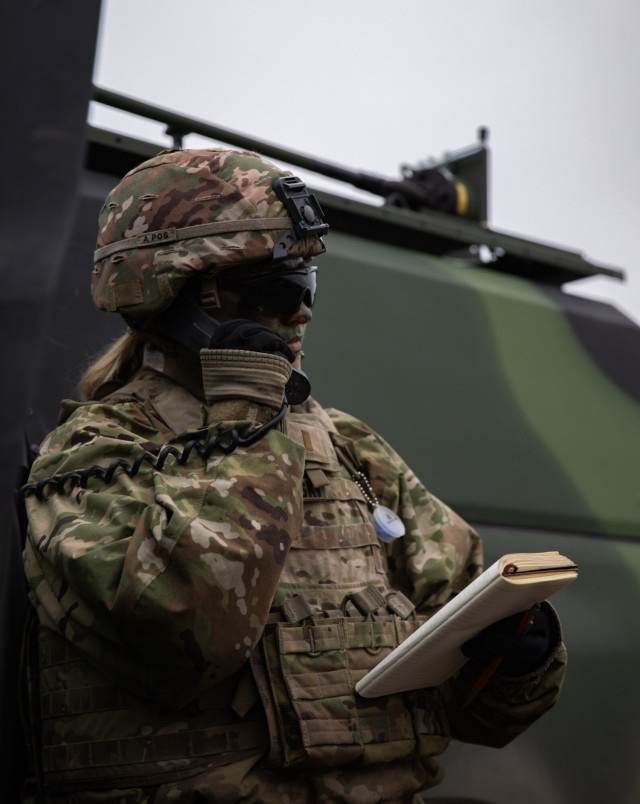
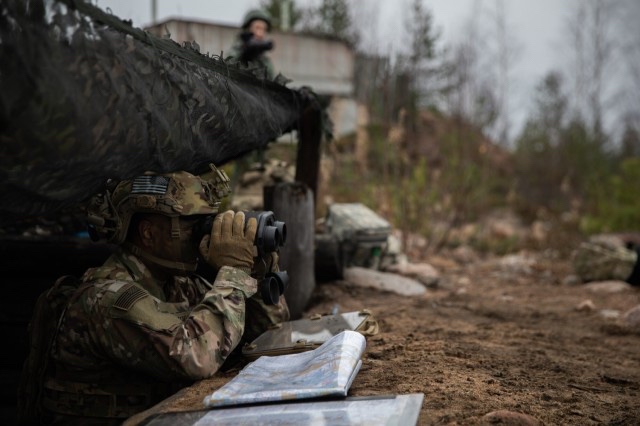
NIINISALO, Finland — From under the cover of a camouflaged observation post, U.S. Army Spc. Chelsea Phillips, a joint fire support specialist assigned to 6th Squadron, 9th Cavalry Regiment (6-9 CAV), 3rd Armored Brigade Combat Team, 1st Cavalry Division, a unit operationally assigned to the 1st Infantry Division in Europe, watches artillery rounds impact in the distance. Peering through her binoculars, Philips observes from about a kilometer away as the shells go screaming into the dirt, sending plumes of debris into the air.

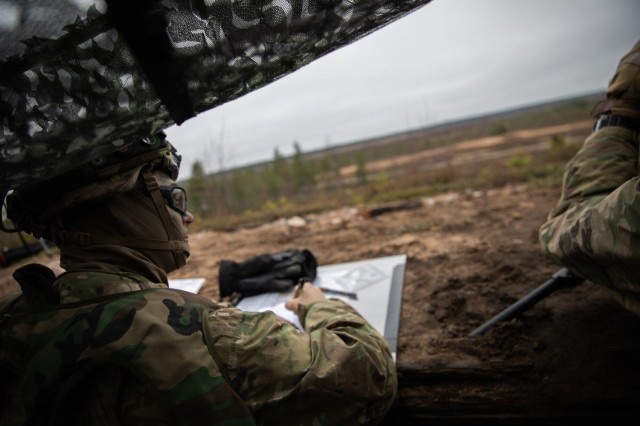
Together, Phillips and U.S. Army 2nd Lt. Hannah Slomkowski, a fire support officer with the 6-9 CAV, orchestrate moves on a chessboard. Instead of moving pieces on a tabletop, play is conducted on a much larger scale with explosive metal ordnance. For this reason, their calculations must be exact. Incorrect coordinates mean missed targets, or worse, the wrong ones.

Soldiers in joint fire support roles, also known as forward observers, play an essential role in coordinating indirect and air support fire from a vantage.

“A big part of my job as a fire support officer is understanding how maneuvers work,” said Slomkowksi. “How we plan out missions so that I can give them the best support with indirect fire.”

A typical sequence of events might go as follows; Phillips locates a target using an AN/PED-1 Lightweight Laser Designator Rangefinder, a portable target locator that gathers coordinates like a viewfinder used by golfers only far more advanced.

“Dismounting from an [M2 Bradley Fighting Vehicle], setting up observation points and calling up artillery, motors and attack aviation is my primary job,” said Phillips.

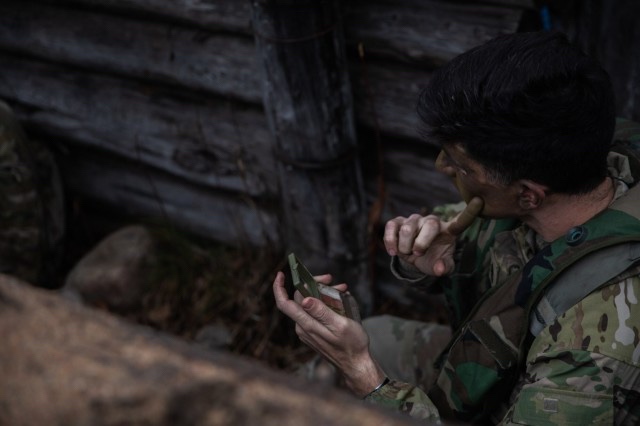
From there, Phillips will check her coordinates and relay them back to Slomkowski, who is connected by radio to a nearby artillery battery. At this point Slomkowski takes over, re-confirming the coordinates with the battery before calling for fire. There are a few pops as the shells are fired, a whistle as they fly overhead then a splash of dirt as they burst upon the earth.

Phillips checks to ensure the rounds hit their intended targets, communicates this information through the chain and the team repeats the process as needed.

“I absolutely love this job, you get a lot of leeway with how you want to paint the battlefield.” said Phillips. “ If you’re somebody that goes into the military and has this expectation of being in the firefight, operating different weapons systems and having some sort of power behind your job, then being a [forward observer] is the way to go.”

Forward observers with the 6-9 CAV corresponded with Finnish artillery batteries and mortar crews during exercise Hammer 22, a two week training operation conducted in Niinisalo, Finland during the month of November. Their effort developed communication between the two forces allowing Finnish soldiers to familiarize themselves with the protocol used by the United States and its NATO Allies and partners.

“It was a really great opportunity because we got to call up Finnish artillery and motors,” said Phillips. “They’ve learned how we transcribe our fire missions so it was very cool to be able to teach them on the observation post the ways that we operate.”

U.S. Soldiers participated in the exercise alongside soldiers of Finland’s Armored Brigade, Pori Brigade, Karelia Brigade, Uti Jaeger Regiment and its Army Headquarters and Logistics Department of the Defense Forces.

“These past two weeks I have learned more about my job than in the past eight months,” said Slomkowksi. “Without working with the Finnish I would have never had this opportunity to get these reps, this is extremely crucial for us to be better at what we do.”

By SPC Charles Leitner