Celebrate 20 years of the TLR-1

Archive for the ‘Guest Post’ Category

From the “AFSOC We Have” to the “AFSOC We Need”

Wednesday, October 12th, 2022

HURLBURT FIELD, Fla. —  

HURLBURT FIELD, Fla. – This month, Air Force Special Operations Command, AFSOC, is transitioning the way Air Force Special Operations Forces, AFSOF, present to the joint force. 

Following September 11, 2001, AFSOC’s force presentation focused heavily on providing crisis response capabilities and countering violent extremist organizations, or CVEO, through the Joint Special Operations Air Component, or JSOAC, deployment model.

This model, while historically successful in conducting crisis response and countering violent extremist organizations during more enduring operations, does not provide the necessary attributes required to succeed in the new operational environment.
 
AFSOC’s focus on C-VEO and crisis response has evolved to also include campaigning in the gray zone, employing SOF-peculiar capabilities, and developing and advancing relations with our international partners and allies.


“While the JSOAC model was effective for conducting command and control, or C2, of SOF air assets in recurring fixed deployment locations, the JSOAC was manned through an individual augmentee approach that didn’t properly allow commanders and staff to train, certify and deploy specifically for their deployed mission,” said Maj. Gen. Wolfe Davidson, AFSOC deputy commander. “The JSOAC was not trained or equipped to conduct the joint warfighting functions necessary for effective and adequate mission command. We had to take a look at how we were presenting forces and ask ourselves, ‘Does this look right?’ And if it doesn’t, what does?”
 
Enter the Special Operations Task Group, or SOTG.

“This change in how we present forces is transformative and drastically enhances AFSOC’s ability to present options to compete with and deter our adversaries below the threshold of armed conflict and add more strategic options for our nation’s leaders,” said Davidson.

Adhering to the U.S. Special Operations Command Comprehensive review, as well as Air Force Chief of Staff Gen. CQ Brown Jr.’s, “Accelerate Change or Lose” priorities, these squadron-based, task-focused groups take a significantly different approach than their JSOAC predecessors in a variety of ways.
 

While deployed, the JSOAC previously provided impromptu support on an “as needed basis.” The SOTG, unlike the JSOAC, will instead offer forces designed uniquely for each mission.
 
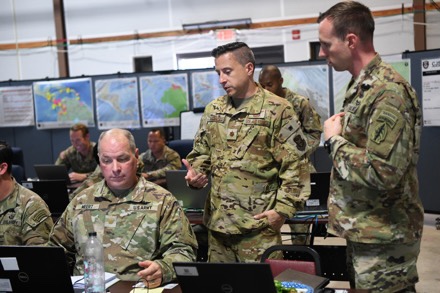
Additionally, the JSOACs provided operational staffs who relied on spontaneous manning that didn’t train or prepare teams for deployments whereas the SOTGs are tactical units that are manned through the force generation cycle, meaning Air Commandos are training together as they prepare for deployments.

“This new construct will allow us to not only accurately articulate our forces but will also enable us to deliberately develop a more credible, capable, and precise force with these purpose-built teams.” said Lt. Col. James Caldwell, AFSOC C2 Implementation Planning Team lead. “Airmen and their families will have much more predictability regarding deployments and the training that’s required before deploying.”

This predictability is due to the design of force generation model, which consists of four, 150-day phases – individual training, unit training, collective training and validation, and the deployment phase. Commanders will also have more deliberate oversight on deployment preparations which ultimately will increase mission success and drive down the risk to mission.

In addition to this predictability, this new structure of force presentation will enable commanders to more effectively accomplish mission command, which is key as the operational environment continues to shift.

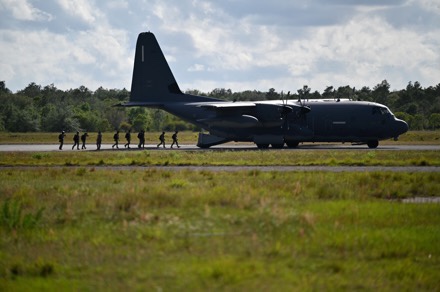
The SOTG at its core, will be a squadron-based, O-5-led unit that will focus primarily on integrating multi-domain SOF air power into joint operations. Once forward, the SOTG will command flight-based echelons called Special Operations Task Units, or SOTUs. Each SOTU will have a unique capability tailored to that AORs requirement. These units may offer but are not limited to AC-130J, MC-130H, Special Tactics, U-28 or even agile combat support.

“This restructure will bring us in alignment with how all other SOF tactical units present forces,” said Lt. Col. Shawnee Williams, AFSOC C2 Implementation Planning Team lead. “It also ensures that AFSOFs unique multi-domain contributions give the Joint SOF community a competitive advantage.

With the first SOTG set to replace a JSOAC this month, the offerings of SOTG capabilities will likely evolve, as they’re structured to support Theater Special Operations Command’s tailored needs in their respective area of responsibilities.

Air Force Special Operations Command Public Affairs

Army of 2030

Tuesday, October 11th, 2022

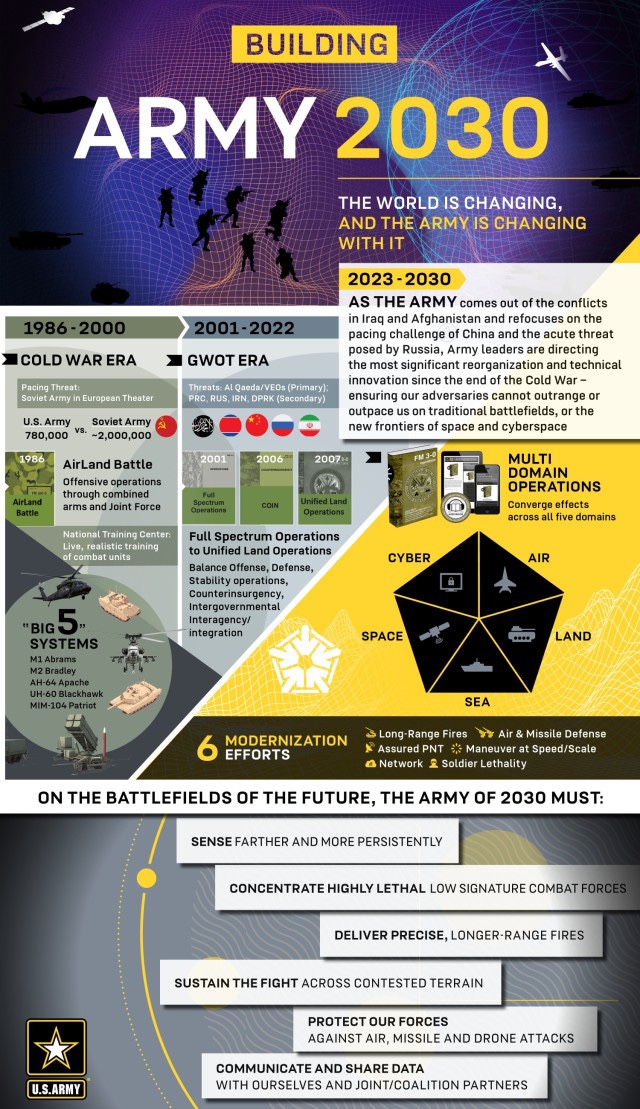
WASHINGTON — As the Army comes out of the conflicts in Iraq and Afghanistan and refocuses on the pacing challenge of China and the acute threat posed by Russia, Army leaders are directing the most significant reorganization and technical innovation since the end of the Cold War — ensuring our adversaries cannot outrange or outpace us on traditional battlefields, or the new frontiers of space and cyberspace. The world is changing, and the Army is changing with it. On the battlefields of the future, the Army of 2030 must:

Acquire sensors to see more, farther and more persistently than our enemies.

Concentrate highly lethal, low-signature combat forces rapidly from dispersed locations to overwhelm adversaries at a place and time of our choosing.

Deliver precise, longer-range fires as part of the Joint Force to strike deep targets and massing enemy forces.

Protect our forces from air, missile and drone attacks.

Be secure from enemy cyber and electronic attacks in order to reliably communicate and share data with ourselves, sister services and coalition partners.

Ensure we can sustain the fight across contested terrain and over time.

To meet the evolving threat, the Army is undergoing a once-in-a-generation transformation to develop the capability to converge effects on land, in the air, sea, space and cyberspace. This transformation includes investment in our people, reorganization of our forces, the development of new equipment, and the adoption of new concepts on how to fight that allow the Army to maintain superiority over any potential adversary.

People: The U.S. Army’s Military Advantage

More than any other area, the U.S. Army relies on cohesive teams that are highly trained, disciplined and fit to fight and win. To maintain a quality force, we must transform the way we recruit, train, educate and prepare America’s sons and daughters for an increasingly complex battlefield. The Army is building a 21st century, data-driven personnel management system to transform how we identify, develop and manage the talent that is the bedrock of our military advantage. Instead of the industrial age system of assigning people to jobs based on a few factors, the Army of 2030 will look at skills, education, experiences and personal attributes to match individuals with positions to which they can best contribute.[1] The Army is also investing in programs and education to improve how leaders identify their own strengths and weaknesses and to allow their organizations and their people to thrive.[2] The Army of 2030 will harness advances in virtual reality and simulations technology to train in more realistic environments at lower cost and with reduced risk to our forces. With the investments we are making, the Army will train Soldiers in simulated environments, where they can interact with and prevail against limitless threats and scenarios, enhancing preparedness from the smallest unit to the largest formation. The Army of 2030 will improve upon our longstanding commitment to the Soldiers who serve, not only with gratitude for their sacrifices, but with investments in their future. In addition to investments in advanced education, comprehensive health and fitness, and development of skills that will benefit them for life, the Army is transforming the way we protect Soldiers, civilians and families from harmful behaviors. The Army is leading the charge to develop prevention efforts for suicide, sexual crimes and extremism while strengthening our support systems to care for those affected.

Transforming How We Organize

To remain the dominant land force on battlefields of 2030, the Army is changing the way it organizes, equips and fights. After two decades of focusing on brigades rotating in and out of Iraq and Afghanistan, the Army is shifting its organizational focus to larger formations that are more capable of working with our sister services, allies and partners around the globe. Theater armies, corps and divisions will gain the personnel, organizations and equipment they need to disrupt and defeat an adversary’s ability to achieve their objectives. These organizational investments are multiplied by leveraging advances in commercial data analytics to improve the speed and accuracy of leader decision-making. Our study and analysis of recent conflicts, exercises, simulations and training indicate that brigade commanders must fully focus on winning the close fight. To allow front-line leaders to concentrate on the close fight, division and corps commanders will have the responsibility and capability to visualize the larger picture. Divisions and corps must be able to employ and allocate the growing array of lethal and non-lethal weapons to attack an enemy across all domains.

Evolving How We Fight

As the Army refocuses from conflict in the Middle East to focus on near-peer challenges, we must adapt to changes in technology and enemy capability and rethink how we deter our adversaries from using force to achieve their objectives. We know that forward positioned ground forces — able to converge effects from land, air, sea, space and cyberspace — complicate our adversaries’ decision-making, disrupt their actions, and assure our allies and partners. Whether in the Pacific or Europe, control of key nodes in the land domain will be required to win in large-scale combat.

The Army of 2030 must equip its forces with new and different capabilities. Many current systems are enduring capabilities developed during the Cold War. To defeat our adversaries on the modern battlefield, the Army is developing newer and more-advanced equipment, and is incorporating cutting-edge technologies to enable us to win on the battlefields of the future.

We are developing a network of connected unmanned and manned sensors that will enable us to see more, farther and more persistently than our enemies.[3]

We will deliver faster, more-survivable fighting vehicles, including unmanned robotic systems able to deliver more firepower.[4]

We will deploy new missiles that are able to travel at hypersonic speeds, increasing the range and ability to avoid traditional air-defense systems.[5]

We will harness the potential of high-energy lasers and microwaves for mobile short-range air-defense systems.[6]

We are innovating, through experiments like Project Convergence, to transform the Army into a data-centric force where commanders at all levels have the information they need to make decisions.

Finally, we are transforming how we sustain the fight by rethinking how the Army provides logistics and sustainment support with lighter and more climate-resilient vehicles and headquarters.[7]

Modernizing for an Uncertain Future

As we transform for the future fight, we are also setting the Army on a sustainable strategic path — one that balances the generational investments we are making to prepare for the future fight with the realities of our fiscal environment. The nation depends on the U.S. Army to respond to a broad range of missions at home and abroad. We must modernize sustainably, maintaining readiness now, while transforming at a pace informed by available resources. This will require hard choices about the pace of modernization and the risk we assume in order to chart a long-term course to integrate new capabilities while maintaining our ability to respond to crises.

Rarely in the Army’s history have we seen changes this significant. As we transform to meet an uncertain future, we must adapt how we recruit and retain talent, how we organize and how we fight to ensure that the Army of 2030 is ready to win when the nation calls. Winning matters.

DOWNLOAD: Army of 2030 Information Paper

DOWNLOAD: Army of 2030 Infographic

By U.S. Army
???????????????

[1] The Integrated Personnel and Pay System – Army (IPPS-A) will become the Army’s total personnel management system. The update pending release in early FY23 will provide the capability for all components of the Army to manage talent and career development.

[2] The Commander Assessment Program (CAP) assesses senior leaders’ ability to lead the Army’s most important organizations. The program was initiated in 2019 and has steadily expanded each year, with an anticipated permanent facility and staff stationed at Fort Knox in FY24. Project Athena provides junior leaders feedback about the skills, capabilities and tendencies they possess as they progress through their careers. The assessment tool is used for officers, warrant officers and noncommissioned officers at each step of their professional military education.

[3] Unmanned Aerial Vehicles have demonstrated in Ukraine the importance of persistent sensors. The Army is investing in systems like the Future Tactical Unmanned Aircraft System (FTUAS), Future Unmanned Aircraft System (FUAS)-Air Launched Effects (ALE), and High Accuracy Detection and Exploitation System (HADES).

[4] The Army will start fielding Armored Multi-Purpose Vehicles (AMPV) in early 2023. The Army recently awarded a contract to field Mobile Protected Firepower (MPF), which will provide infantry units with armored firepower. We are experimenting with Robotic Combat Vehicle technology, with the goal of delivering initial capability by 2030.

[5] The Army is developing four long-range fires systems: Precision Strike Missile (PrSM), Extended Range Cannon (ERCA), Long-Range Hypersonic Weapon (LRHW), and Mid-Range Capability (MRC).

[6] The Army is developing 50-kW high-energy lasers for Maneuver-Short Range Air Defense (M-SHORAD DE) and Indirect Fire Protection Capability (IFPC-DE). The Army Rapid Capabilities and Critical Technologies Office is experimenting with a 300-kW high-energy laser.

[7] The Army is modernizing our watercraft fleet to provide heavy and light versions to enable the execution of contested logistics in the Pacific. The Army is experimenting with hybrid combat vehicles and alternative power for deployed forces to reduce the demand for fuel.

8 Rounds, 2 Minutes: See the GMP Scorpion Mortar System at AUSA

Monday, October 10th, 2022

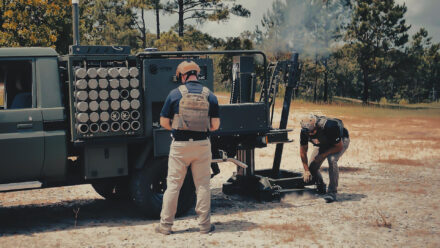
ALCON: Global Military Products, Inc., a subsidiary of Global Ordnance, LLC, will be showcasing the SCORPION 81mm/120mm Mortar System at the Association of the 2022 United States Army Conference.

This year’s AUSA Conference will be 10-12 October in Washington, D.C.

Global Military Products will be at Booth 2243.

So, what is the Scorpion Mortar System designed for?

Take a watch, then read on.

SPEED, MOBILITY and FIREPOWER

It’s an essential battlefield combination that equates to survivability, all in one package revolutionizing the art of mortar tactics.

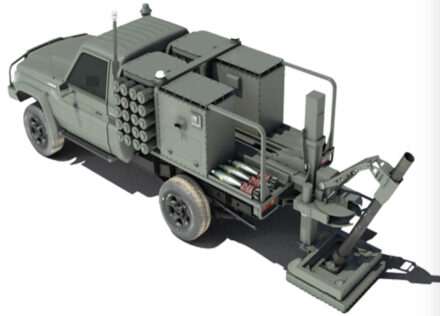
The Scorpion features:

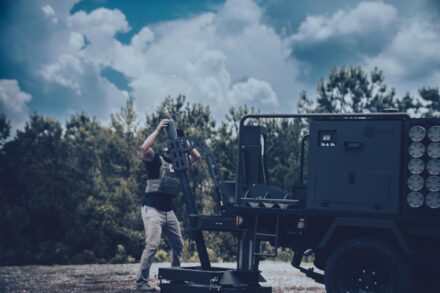
  • Featuring fastest ”SHOOT & SCOOT” in the world – 8 rounds in 2 minutes – from stop to go
  • 81mm OR 120mm (interchangeable)
  • Eliminates recoil effect on a vehicle
  • Fully Digital Fire Control System (FCS) knows its location as well as assigned targets, executes ballistic calculation automatically for multiple munition types – “just wait for the green light”
  • Touch Screen (iPad) FCS can be operated from inside the cab and/or from outside the vehicle
  • Lightweight – can be deployed by helicopter or other aircraft
  • Revolutionary “Non-Seating Base Plate” designed to NOT dig into ground
  • Pre-program up to 1,000 targets before you leave HQ

Specifications

• Vehicle: Toyota Landcruiser (although platform agnostic; 2+ ton vehicles)

• Length    18’ 4”

• Width      6’ 8”

• Height:   6’ 9”

Vehicle weight: 4,500 lbs or 2,050kg

Scorpion weight: 2,600 lbs or 1,200kg

Total weight: 7,100 lbs or 3,250kg (not including barrel &ammo)

• Magazine: 40/72 round capacity (120mm/81mm)

Fully Digital Fire Control:

• Electro-mechanical aiming/re-aiming in 3-5 seconds

• Zonal firing/multiple round + simultaneous impact

Performance

Rate of Fire: 12 rds in 1st min, then 4 rds/min

Range: 6,500m (81mm) or 8,000m (120mm)

Accuracy: < 2 mils

Learn more at global-ordnance.com.

Find Global Ordnance this weekend at  Triggrcon 2022 from Rainier Arms and UN12.

Global Ordnance, LLC and it’s subsidiary Global Military Products, Inc., specializes in systems integration, engineering, and program management for DoD weapons and ammunition programs, and the sourcing, logistics and delivery of standard and non-standard weapon systems, ammunition, and energetics to the U.S. Government and our allies.

Redesigned with Marine Feedback in Mind, New PTU is out for Testing

Monday, October 10th, 2022

?

MARINE CORPS BASE QUANTICO, Va. —

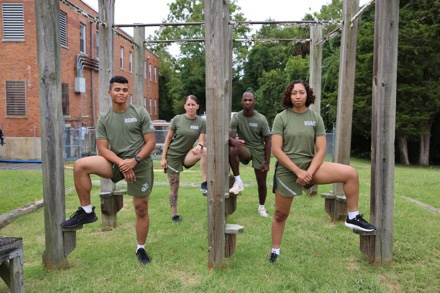
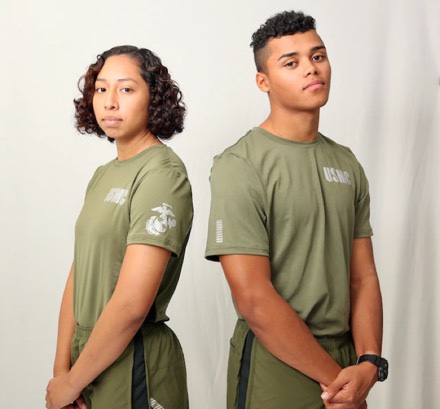
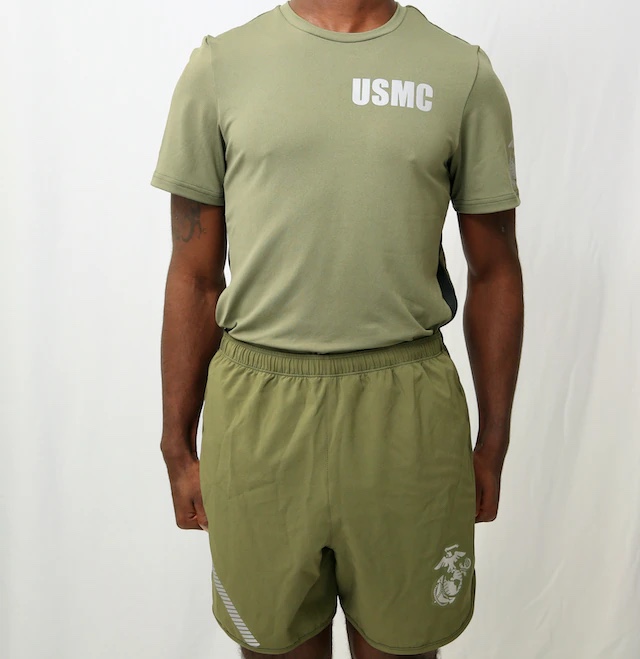
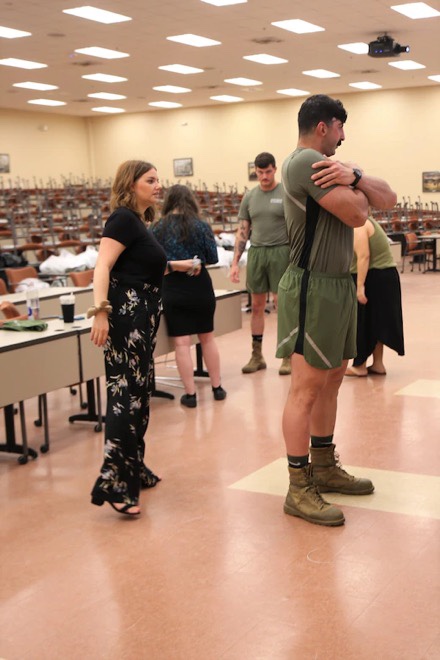
Last year, Marine Corps Systems Command received a requirement from the Marine Corps Uniform Board to redesign – and ultimately modernize – the Corps’ green-on-green physical training uniforms by incorporating industry trends to achieve better form, fit and function.

Although the initial prototype incorporated many innovations like anti-microbial technology, moisture-wicking, fast-drying fabrics and reflective elements, many Marines were unsatisfied with the new design and asked for some changes.

After last year’s successful limited user evaluation, MCSC’s Product Manager Clothing and Equipment team is back with a new and improved PT uniform prototype.

While the beloved “silkies” unfortunately will not be making a comeback, Kristine Bealmear, the PT uniform project officer with MCSC’s clothing and equipment team, feels confident that Marines will like the revised uniforms.

“I think they’re going to like them a lot better than the previous prototypes. I think the women are going to be a lot happier,” she said with a smile.

After all, it was the input of approximately 350 leathernecks that drove this round’s creative process.  

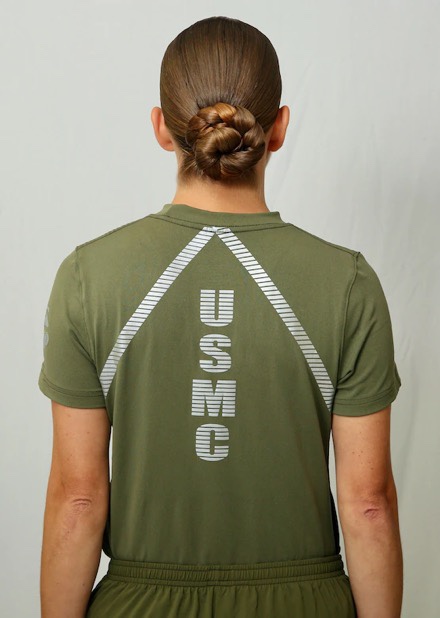
“The results from last year’s [limited user evaluation] were clear. The material was heavy. The shorts were long. The reflective material was restrictive. And so, we just kind of took all of that information and we went from there,” Bealmear explained. “The Marines are the ones that have to wear this uniform so it’s in our best interest to listen to what they have to say.”

Now, the PT uniform’s shorts are shorter and down to a 5-inch inseam. The PT uniform’s shirt material is lighter and the reflective striping down the back is thinner – a change that will allow Marines to remain cool and flexible as they exercise.           

“If you look at the new PT uniform, it does have a shorter inseam, which is more in line with what we see in industry. Industry trends come and go, so we look at every design detail individually and decide what we should apply today that could still be relevant to the Corps years from now,” said Emily Madden, a clothing designer supporting MCSC from the U.S. Army Combat Capabilities Development Command Soldier Center.

One of the most exciting changes, however, is the shift away from gender-neutral sizing. 

“We found that gender-neutral sizing does not work well for our women Marines,” Bealmear explained. “With the last prototype, for example, we found that if the shirt fit them well across the bust line, it was too big in the neck. Same with the shorts – if they fit in the waist, they were probably tight across the hip line.”

“And so, we took all of that test data, a lot of pictures, a lot of feedback, and we made the necessary changes. Gender neutrality in design is a thing of the past.”

“I think it’s really important to make sure that all Marines have the proper fitting uniform for what their mission may require, in regards to fit, form and function,” Madden added.

But the design team was driven by more than just user feedback; they were also guided by industry best practices with innovation in fabric and design.

“We really leaned on industry to better understand manufacturing techniques and design details at a reasonable price point, but we also worked closely with our service partners from the Air Force, Space Force and Navy to better understand fabrics and material weights,” Madden explained. “Ultimately, we tried to leverage industry while still accommodating what a Marine could need or want.”

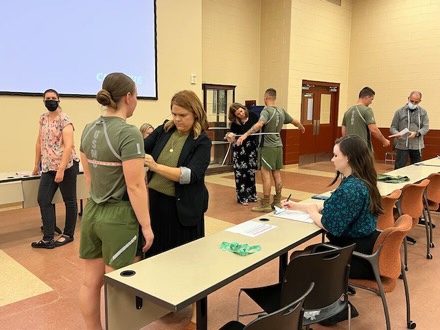
The new PT uniform isn’t ready for distribution across the Corps quite yet, though. MCSC’s clothing and equipment team is in the midst of conducting another user evaluation to solicit Marines’ feedback on the redesigned uniform. During the current evaluation, which started in September and runs for 30 days through October, the team issued PT uniforms to approximately 350 Marines, who were asked to wear and evaluate the new uniforms while they PT.

Afterward, the team will survey all evaluation participants in order to collect data related to the uniform’s form, fit, function and comfort. Participants will also take part in group discussions about their wear experience.

Ultimately, the team will take the results of the survey, group discussions and the initial fit assessment to determine any necessary changes to the redesigned PT uniform prototype. This rigorous process ensures the product is ready for use by Marines across the country.   

“I ask them to ‘use it and abuse it,’ as I like to say, because we really need that durability feedback from them,” Bealmear explained. “After the 30-day trial is done, we’ll go on to evaluating the results and make the necessary changes.”

“We think the new PT uniform accommodates fit, form and function of both male and female Marines. There will always be tweaks that we can find or improve upon, but we think we’re headed in the right direction,” she added.

Johannes Schmidt, MCSC Office Public Affairs and Communication

Photos by Ashley Calingo, Tonya Smith and Johannes Schmidt

SCUBAPRO Sunday – The Untold Story of the USS Cole Salvage Divers

Sunday, October 9th, 2022

Salvage divers of the USS Cole, the untold story of the Navy Divers who recovered fallen, help save the ship.
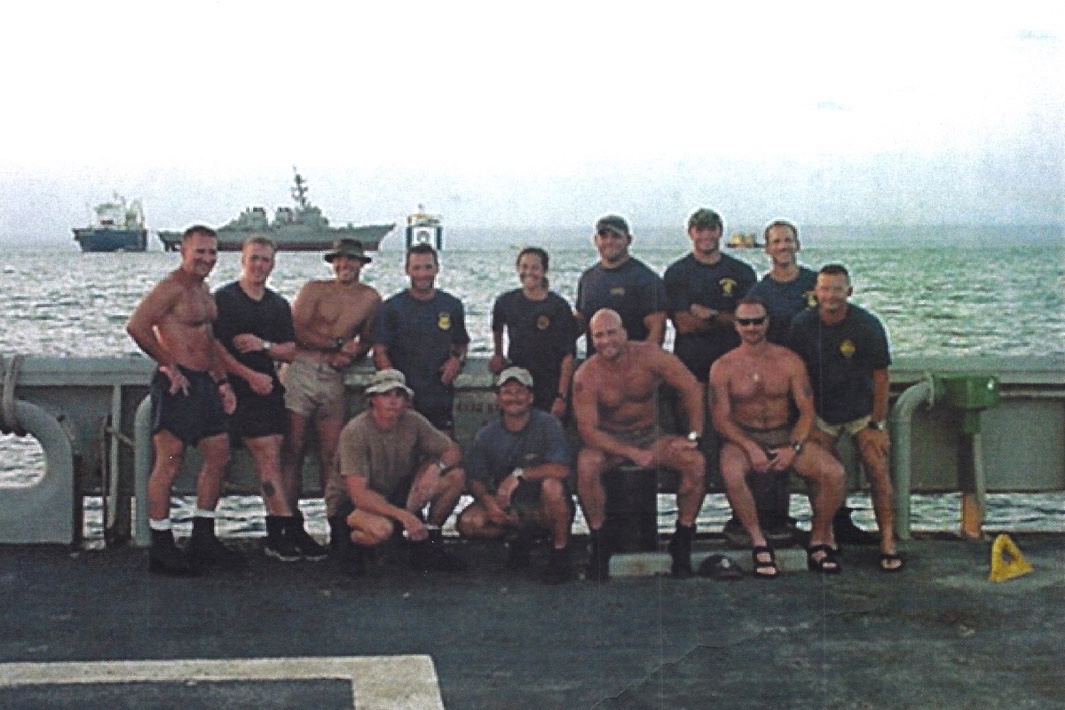

Detachment Alpha of Mobile Diving and Salvage Unit 2 aboard the USNS Catawba with the USS Cole and the MV Blue Marlin in the background. Photo courtesy of Mike Shields.

On the morning of Oct. 13, 2000, Chief Warrant Officer Frank Perna and his team of US Navy divers were sipping cappuccinos at an open-air coffee shop, enjoying a beautiful Italian morning in the Port of Bari, when the distinct ringtone of Perna’s cell phone cut the casual banter and light mood.

The divers, deployed with Detachment Alpha of Mobile Diving and Salvage Unit 2 aboard the USNS Mohawk, turned their attention to their officer in charge as he picked up the phone and listened intently. Mike Shields, now a retired master chief master diver, could tell the call was serious.

“I understand,” Perna said into the phone before hanging up. “We will be ready.”

Less than 24 hours earlier, the USS Cole, a US Navy guided-missile destroyer, was docked in Yemen’s Aden harbor for a planned refueling when al Qaeda suicide bombers in a small boat packed with at least 400 pounds of explosives steered their craft into the Cole’s left side. The blast ripped a 1,600-square-foot hole in its hull, killing 17 American sailors and wounding 39.
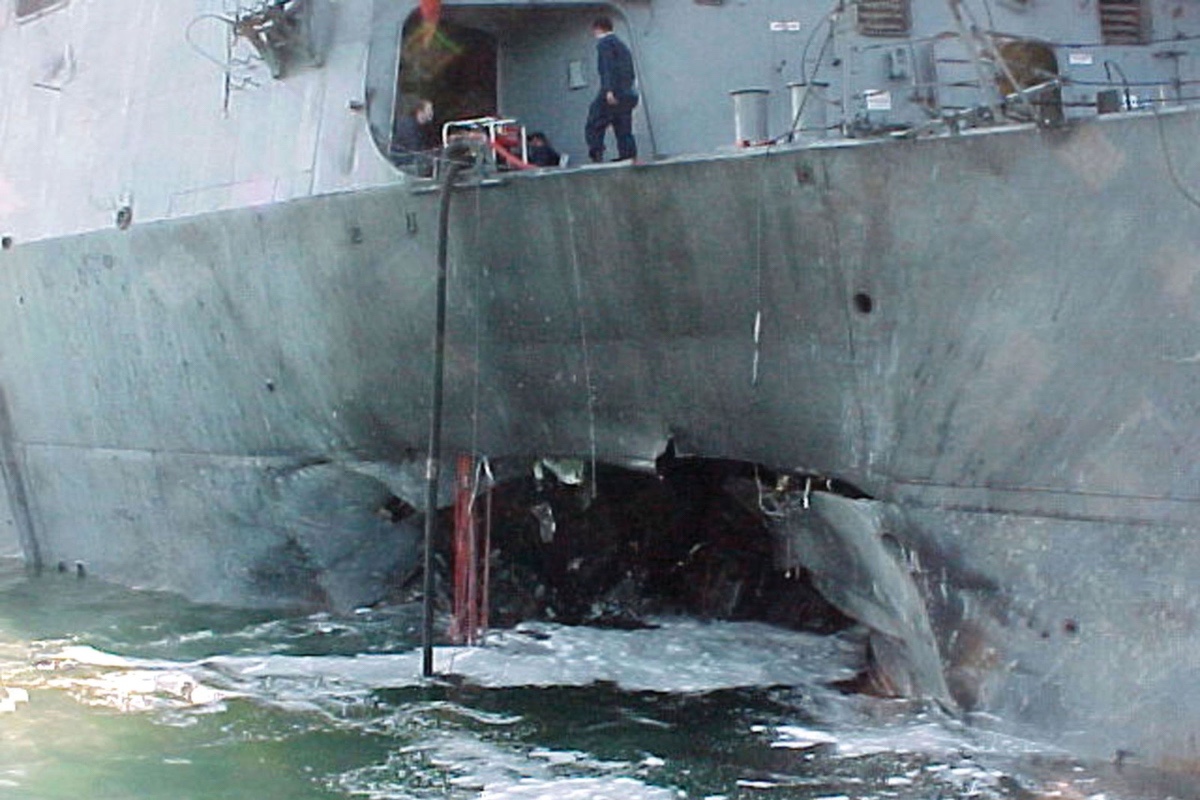

Aqueous Film Forming Foam flame retardant floats on top of the water, preventing any fuel from igniting near the damaged left-side hull of the USS Cole in October 2000. Photo courtesy of Mike Shields.

A skilled diver with extensive experience in underwater salvage and recovery operations, Perna had worked on several high-profile dive operations. He participated in salvage and recovery operations for Trans World Airlines Flight 800 and the USS Arthur W. Radford after its collision at sea with a Saudi Arabian container vessel.

Perna looked up at his team, who stared back with anticipation.

“The USS Cole was damaged from an explosion while in port,” he told them. “We are going to Yemen to assist the crew in recovery and salvage of the ship.”

The 12 men who composed Detachment Alpha launched into planning and preparing for a daunting mission: They would locate missing sailors, assist in stabilizing the ship, recover evidence, and perform structural inspections of the Cole after a terrorist attack.

“We immediately started pulling resources and gear to support several different diving and salvage scenarios,” Shields told Coffee or Die Magazine recently. “Because we were going to be somewhat isolated in Yemen, we knew everything we brought had to serve several purposes.”


The USS Cole (DDG-67) is towed by the Navy tug vessel USNS Catawba to a staging point in the Yemeni harbor of Aden to await transportation by the Norwegian-owned, semi-submersible heavy-lift ship MV Blue Marlin. US Marine Corps photo by Sgt. Don L. Maes.

The next day, the hand-picked team of Navy divers landed in Yemen with all the necessary dive systems to support the numerous planned and unplanned tasks of diving into and under a critically damaged ship. They loaded their gear onto two flatbed trucks and departed the airport with a sketchy Yemeni military escort. As they passed through several military checkpoints, Perna and his team began to feel the gravity of the situation.

When they arrived at the port, most of the team went to work setting up gear and readying a dive site near the ship while Perna and his senior leaders went to assess the damage. The sight shocked them. The ship was blackened by the explosion, listing slightly to the left, and without electrical power. The only light was from the green glow of the pier lights.

“Our first glimpse of the ship that night will be forever fixed in our minds,” Perna told Coffee or Die.

As Shields took in the damage and saw the Cole’s battle-weary crew members sleeping on mattresses scattered randomly on the ship’s weather decks, his shock turned into determination.
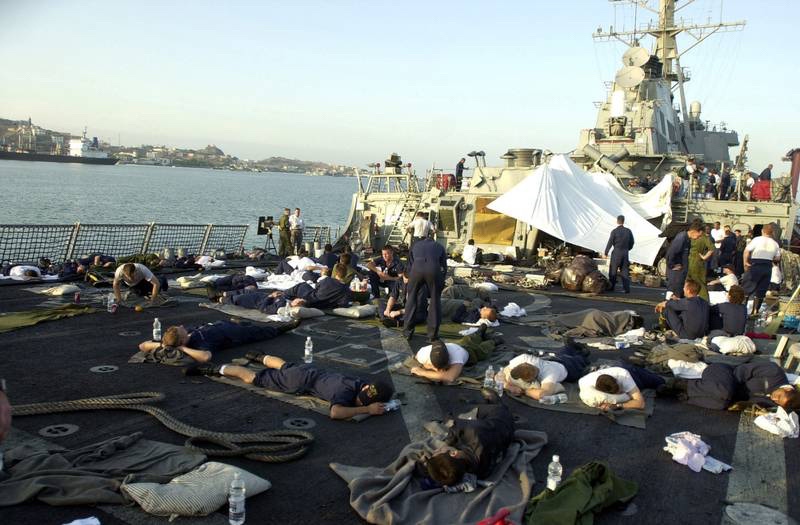

Sailors from the USS Cole rest on the helicopter deck in Yemen, Oct. 13, 2000, the day after a suicide bomber attacked the ship in the port of Aden, Yemen. US Navy photo by Jim Watson.

“Get in the water,” he thought. “Get the Cole back.”

On the morning of Oct. 15, 2000, the divers began the first phase of their mission. Several sailors were still missing in the flooded spaces below, and the men of Alpha Detachment had to get them out and repair or salvage what they could as soon as possible.

With flooding in the ship still posing a significant threat to electrical and engineering spaces, time was not on Alpha’s side. They determined which areas of the ship to search, identified a centralized location to set up a dive station, and planned how to safely enter the spaces they needed to reach. They boarded the Cole, set up gear, and began diving from inside the flooded spaces.

With the utmost care and respect, the Navy divers recovered missing Cole sailors. When a sailor was recovered, the divers paused their work to observe a moment of silence and honor the dead. They draped a flag over each fallen soul and escorted them down the pier to be taken back home.

“It’s a very heavy feeling in your heart to see one of your own covered in the flag,” Perna said. “It’s hard to check your emotions and refocus attention back to the task at hand, but you’ve got to push it back down because we’re doing a dangerous job.”


Gunner’s mate Petty Officer 2nd Class Don Schappert prepares to enter the lower levels of the flooded engine room assisted by hull maintenance technician Petty Officer 2nd Class Brett Husbeck. Photo courtesy of Mike Shields.

In addition to recovering the fallen, Alpha had to stop the flooding into the only engine room that was still operational. Reaching the damaged area required navigating through 50 feet of razor-sharp mangled steel, reduced visibility, and a thick layer of engine fuel building on the surface of the water. To get in and out of the water, the Navy divers had to travel through a layer of oil that they worried might catch fire if something sparked. The team deployed a fire retardant over the surface as a preventive measure.

Shields, who was familiar with the layout of the Cole from conducting routine maintenance on the ship the previous year, was one of two divers who suited up, went below the surface through an auxiliary shaft, and made their way slowly to the engine room. They couldn’t see anything and kept bumping into loose gear and debris floating around the spaces.

Making things even worse, the divers’ life-giving tether lines of air, communication, and light power — their “umbilicals” — were constantly hanging up or snagging on unknown obstructions. With every valuable foot gained, the divers had to stop to free themselves.

“We were blindly feeling around for landmarks that would take us to where we thought the flooding was coming from,” Shields recalled.

Using memories of what the engine room would have looked like, Shields and his dive buddy felt around and found landmarks to orient themselves by, eventually finding the cause of the flooding. They filled it with a 3-inch braided ship’s mooring line covered in a thick layer of electrical putty.

“We filled in the crack and effectively stopped all flooding,” Shields said.

Stopping the flooding saved the ship from sinking and prevented what could have been a total loss.
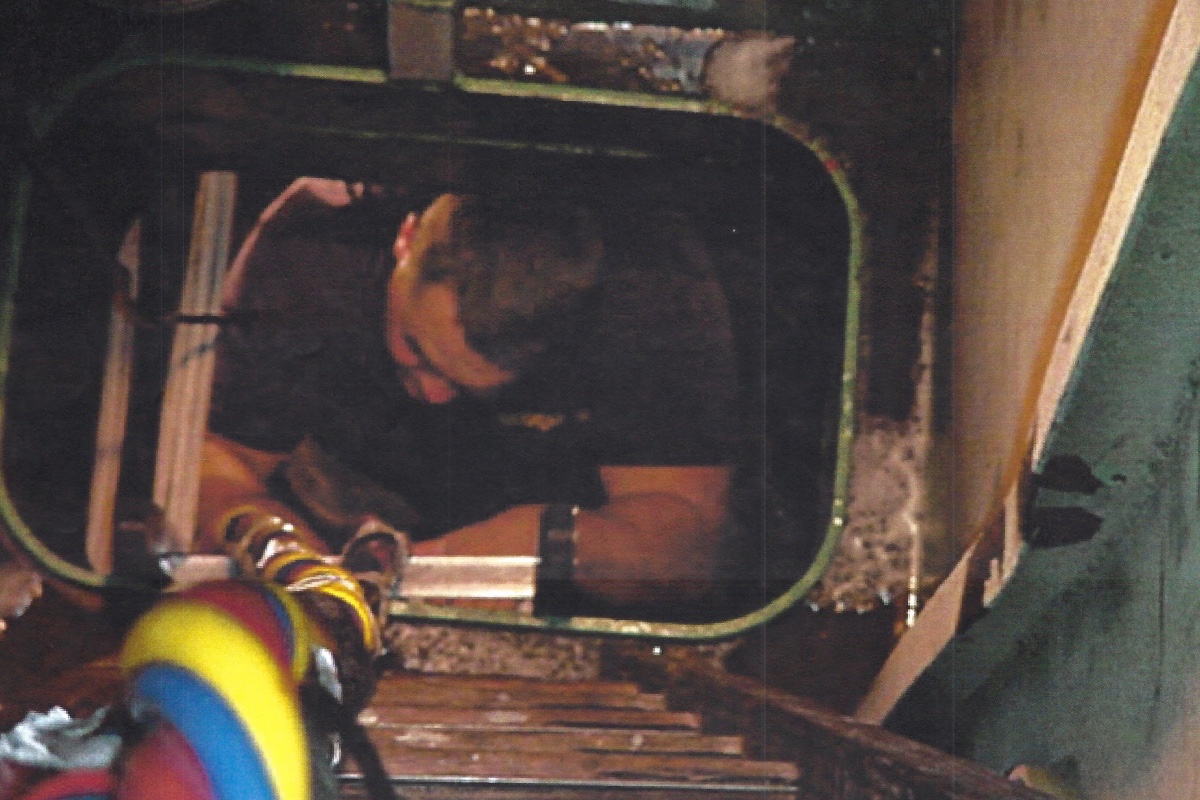

Mike Shields descends into a flooded engine room through a ventilation shaft on the USS Cole in October 2000. Photo courtesy of Mike Shields.

The next day, the Cole’s diesel generator stopped running, and members of the dive team had to locate and secure the damaged piping and reroute pressure through alternate channels back to the generators. Navigating underwater in the damaged area again proved challenging. Bulkheads were blown inward, all non-watertight doors had broken from their hinges, filing cabinets lay scattered across the deck, and visibility was reduced to less than 3 inches.

The Navy divers spent a lot of time rerouting valves controlling pressure, fuel, oil, or air to their secondary and tertiary systems to help offset the ship’s left-side listing. With the major flooding stopped and the Cole stable, the team focused on reviewing and assessing the massive opening the blast had ripped in the left side of the ship’s hull.

“It was nothing less than devastating,” Perna said. “The most disturbing sight was the extensive damage inside the ship. The blast from the explosion had torn 30-35 feet into the center of the ship.”

The explosion was so powerful that the deck had blown upward and fused onto the bulkhead where an office once sat. Crew members who’d been eating on the mess decks reported that the blast’s power created a visible wave that traveled across the deck.

The divers created a staging area just aft of the blast area on the Cole’s left side so they could easily access the outside space and assist the FBI and several other agencies in gathering information and documenting evidence for future investigations.


Hull maintenance technician Petty Officer 2nd Class Brett Husbeck, left, and engineman Petty Officer 2nd Class Mike Shields, right, conduct dive operations in a flooded engine on the USS Cole. Photo courtesy of Mike Shields.

Outfitted with thick rubber wetsuits, dive knives, and iconic yellow Kirby Morgan MK 21 diving helmets, divers splashed into the hot Persian Gulf water and entered the blast area.

“Everything was surreal about diving on board and into a ship with an extensive hole in the side of its hull,” Perna said. “The fact that you can dive inside the ship, turn around, and see the sunlight cascading into the enormous space is beyond explanation.”

On Oct. 17, 2000, Navy divers prepared to search the flooded main engine room, which suffered extensive damage in the blast and was essentially a total loss. Confirming primary and secondary routes with engineers and the crew, Perna and his team devised a plan to move through the ship’s ventilation-shaft system to access the previously unreachable space.

Before entering the cramped shaft, divers wrapped fire hoses around their umbilicals for protection, modified their gear to slim down their profiles, and slipped into wetsuits to protect themselves from the environmental hazards of fuel, oil, and razor-blade-like steel. The divers inched their way to the main engine room, a feat Perna and Shields likened to John McClane crawling through the ventilation shafts of Nakatomi Plaza in Die Hard.
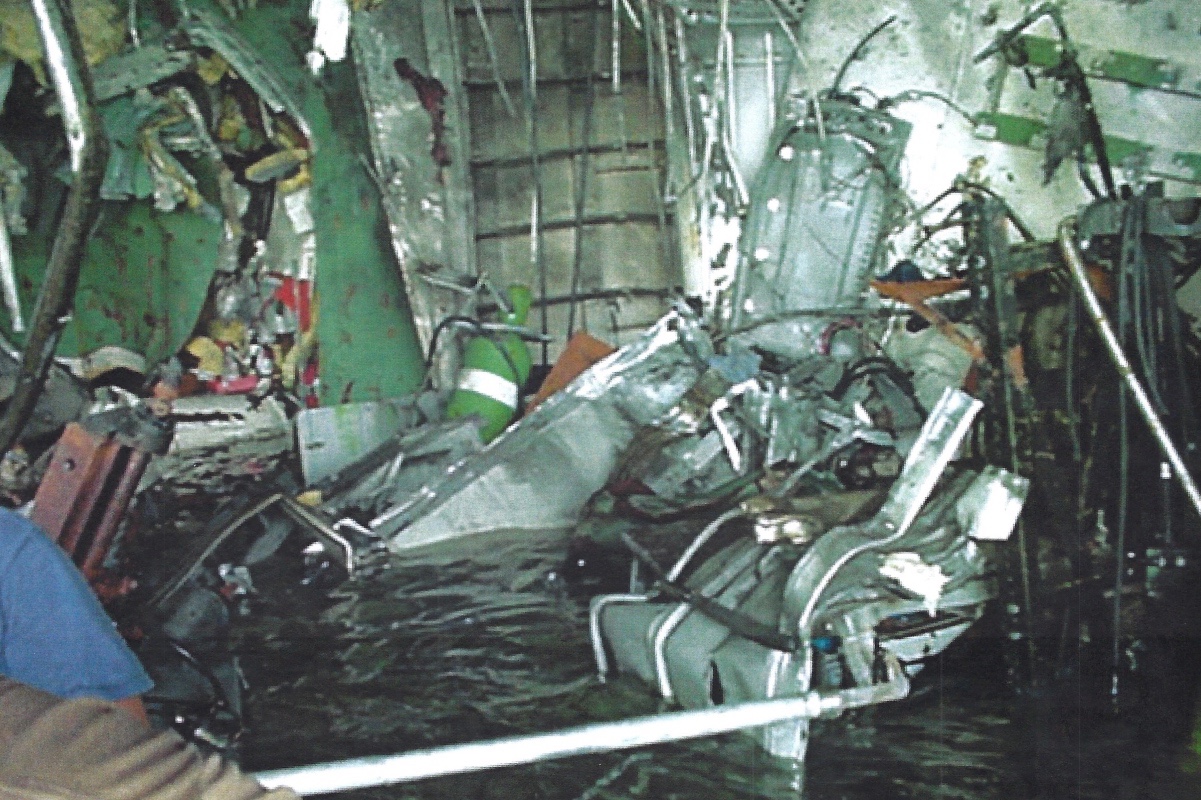

Damage to the USS Cole. Photo courtesy of Mike Shields.

Watching closed-circuit video systems, engineers from the Cole and the USS Donald Cook guided the Navy divers as they moved through sheared bulkheads, buckled decks, broken pipes, and wires that created an immense “spider web” of destruction. Metal shavings sparkled as the divers’ lights scanned the engine room.

“We could feel the change in densities between fuel and water,” Perna recalled. “Everything fouled our umbilicals in the engine room. Pieces of broken equipment fell from the overhead as we disturbed their delicate balance.”

In that unforgiving, stifling space, the men of Detachment Alpha recovered three more missing sailors.

Over the following 10 days, from Oct. 18 through Oct. 28, the Navy divers recovered personal items from the flooded spaces and sifted through the fine sand on the seafloor for anything that might have belonged to the fallen. They searched every flooded compartment, including areas deemed too dangerous to enter safely, recovering all remaining missing sailors and assisting FBI investigators in collecting evidence. The divers inspected every inch of the blast area, looking for evidence of the explosive device. The FBI was keenly interested in anything that might help its investigation to identify the terrorists or the composition of the bomb.
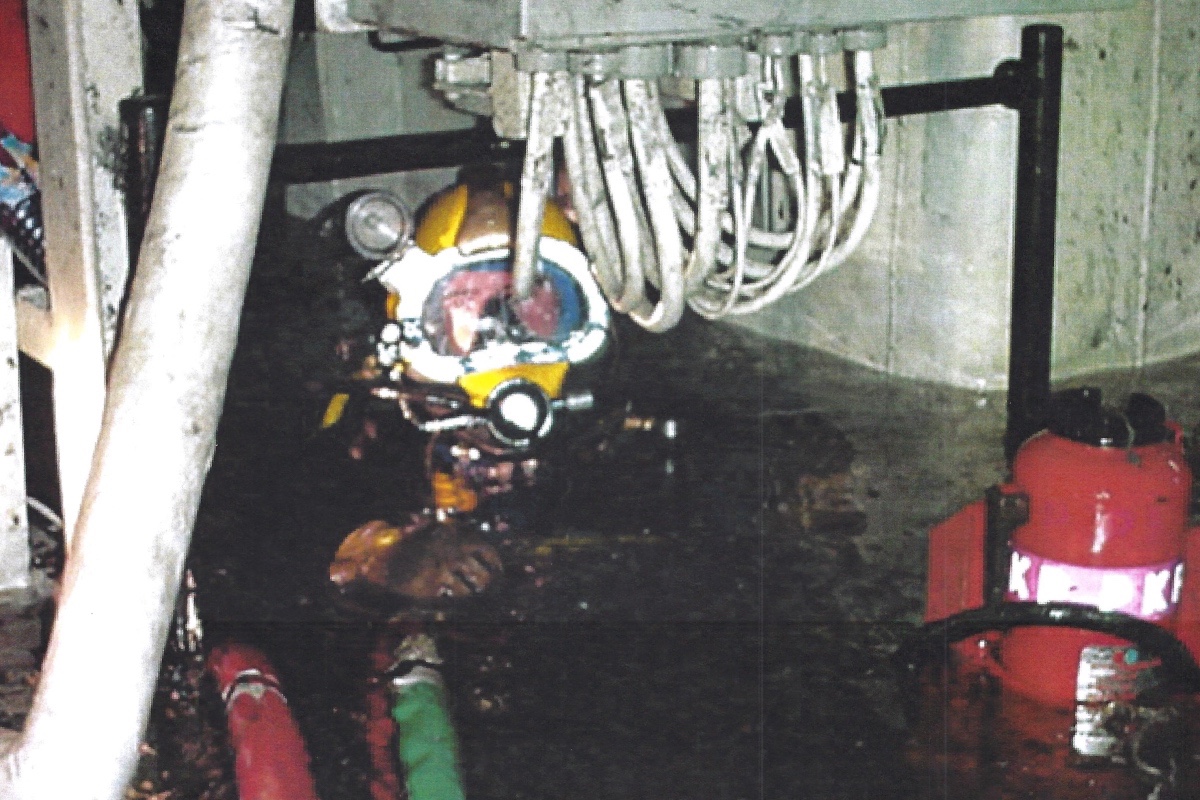

A diver descends a ladder in the flooded engine room. Photo courtesy of Mike Shields.

The Navy divers also worked to mend damaged areas of the Cole and helped prepare the ship for its journey back to the United States. They relieved pressure in the main structural supports by drilling holes at the ends of the significant cracks, alleviating stress and preventing the damage from spreading. Once the necessary repairs were made, the team prepped the ship for a journey out to sea.

The challenge was to keep the ship from listing over to the left side. The Cole’s crew worried that the repairs made to stop the flooding might be damaged once in the open ocean.

“We had the idea to hedge our bets and have some contingencies in place if something happened,” Shields said.


The USS Cole is towed from the port of Aden, Yemen. Photo courtesy of the US Navy.

They ran several hydraulic pumps to the critical spaces and had discharge lines over the side in case a space started to fill with water.

On Oct. 29, the USS Cole slowly moved away from the pier with a small crew aboard to monitor the ship. Supported by tugboats and a tow line from the USNS Catawba, the Cole made the journey from the coast of Yemen to the MV Blue Marlin, a 700-foot-long Norwegian heavy-lift transport ship 23 miles out at sea.

When the Cole reached the Blue Marlin, the Blue Marlin partially submerged its lower deck and floated it under the damaged Cole. Once in place, the ship slowly rose to the surface, gently lifting the Cole from the ocean and resting the mighty ship on the Blue Marlin’s deck.
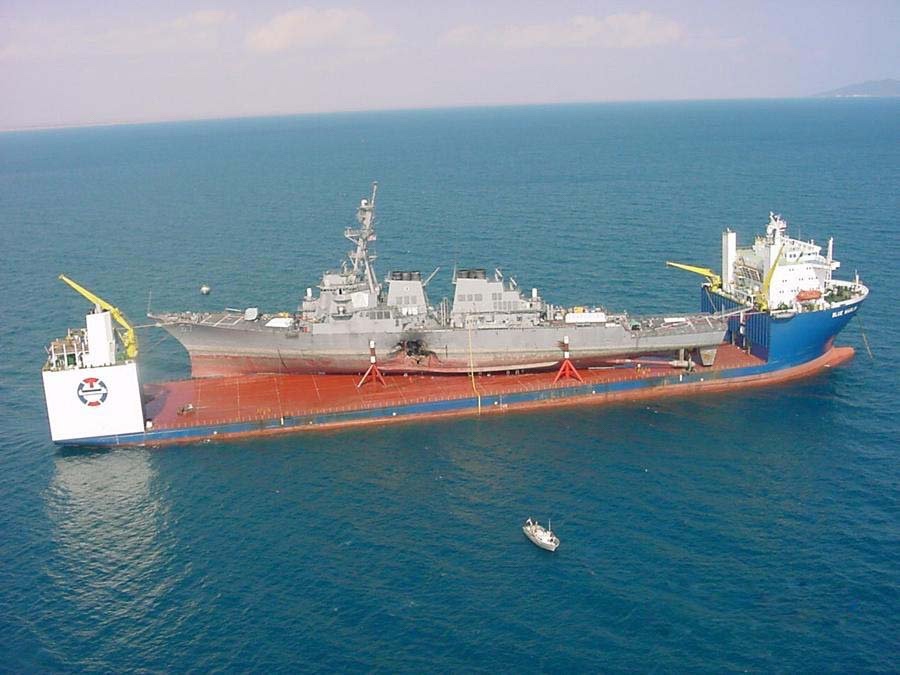

The MV Blue Marlin transports the USS Cole from Yemen following the attack on the ship in 2000. Photo courtesy of the US Navy.

With the Cole on the Blue Marlin, Shields and his divers checked the ship for flooding once more and found that their work had held. Shields gave the thumbs-up to higher, climbed the side railing, and dove into the ocean, swimming back to his team on the Catawba.

The entire docking evolution took nearly 24 hours to complete. With the Cole securely aboard the Blue Marlin’s deck, they made the trip back to the United States.

The Navy divers’ contributions were instrumental, Perna said. In a small amount of time, the team got the diesel generator back online, rerouted the ship’s air system, set up and operated emergency dewatering equipment, and provided air recharging service to the FBI and explosive ordnance disposal divers.
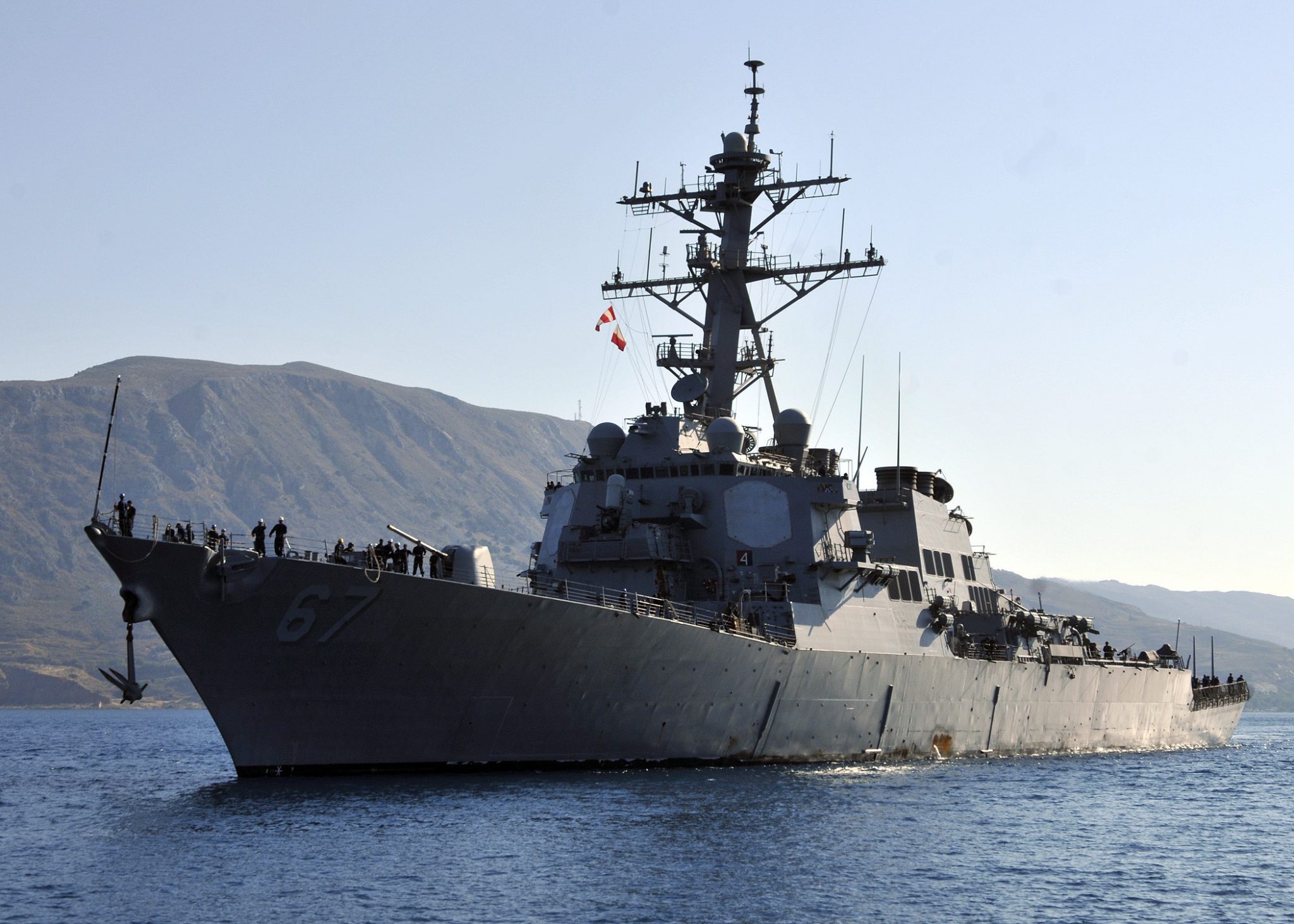

The guided-missile destroyer USS Cole arrives for a scheduled port visit to Souda Bay, Greece, July 19, 2012. The Cole, home-ported at Naval Station Norfolk, is on a scheduled deployment and is operating in the US 6th Fleet area of responsibility. US Navy photo by Paul Farley.

“No one person can accomplish them alone,” Perna said. “I was grateful to have such a fine and experienced diving and salvage team. I am indebted to and extremely proud of the divers in Detachment Alpha who made it all possible.”

The Detachment Alpha divers safely conducted 37 dives with more than 76 hours of subsurface work during the Cole operation. The ship was fully restored to service within 18 months of the attack in Yemen. The men of Detachment Alpha played a vital role in the operation that ensured the USS Cole’s ability to sail freely today.
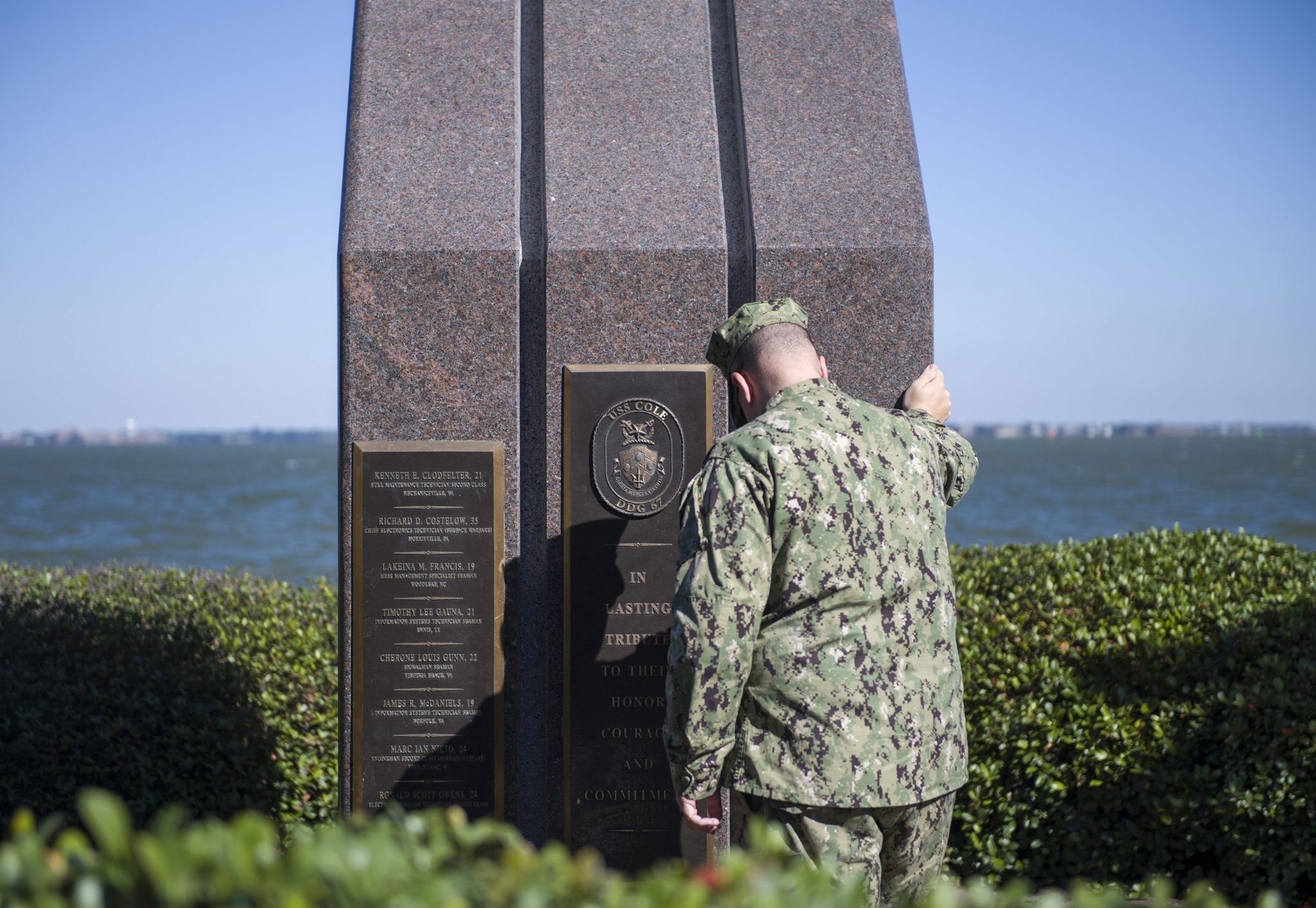

A US sailor visits the USS Cole Memorial on the 18th anniversary of the terrorist attack on the ship. Seventeen sailors were killed, and another 39 were wounded in the attack. US Navy photo by Mass Communication Specialist 2nd Class Justin Wolpert.

The Men of Detachment Alpha: 

CWO3 Frank Perna

ENCS (MDV/SG) Lyle Becker

BMC (SW/DV) David Hunter

ETC (SG/DV) Terry Breaux

HMC (DV) Don Adams

HT2 (DV) Don Husbeck

GM2 (SS/DV) Roger Ziliak

STG2 (SW/DV) Donald Schappert

IS3 (DV) Greg Sutherland

EN2 (DV) Mike Shields

BM2 (DV) Mike Allison

GM3 (DV) Sean Baker

This is reposted with permission from Jayme Pastoric.

Air Force Introduces New, Foundational Ready Airman Training Program

Sunday, October 9th, 2022

ARLINGTON, Va. (AFNS) —  

The Air Force announced plans to transition foundational training for all Airmen beginning Oct. 1 ensuring they have the necessary skillsets to survive and operate during contingencies both at home station and deployed, including remote and contested environments. 
 
Ready Airman Training will prepare Airmen to develop and demonstrate the mindset required to support the Air Force Force Generation, or AFFORGEN, deployment model. 
 
“The vision for how Airmen train and deploy embraces an emerging culture of support maintaining and building readiness across the AFFORGEN phases,” said Air Force Chief of Staff Gen. CQ Brown, Jr. “We must challenge the status quo to prepare our Airmen for operating in environments far more complex than we have in the past.” 
 
Aligned with the Oct. 1 implementation of AFFORGEN, Airmen will begin receiving tailored training spread throughout the 18-month Reset, Prepare and Ready phases of the AFFORGEN cycle. Unit commanders may adjust the number of training events required based on an Airman’s level of preparedness and the deployment phase they are entering. 
 
Previous deployment training, which at a minimum consisted of Basic Airman Readiness and Basic Deployment Readiness, was accomplished as just-in-time training, once notified of a deployment, and consisted of approximately 30 hours of training. 
 
In March, a team of 70 experts gathered in San Antonio for a Ready Airman Training Design Sprint where they identified 12 focus areas, designated as Ready Training Areas, with specific desired learning objectives necessary for Airmen to deploy faster while simultaneously increasing overall expertise. 
 
Ready Training Areas include: Law of War; Survival, Evasion, Resistance and Escape; Small Arms; Integrated Defense; Active Threat Response; Chemical, Biological, Radiological and Nuclear Training; Explosive Ordnance Hazard; Tactical Combat Casualty Care All Service Members Course; Comprehensive Airman Fitness; Cross Cultural Communications; Information Environment Awareness; and Basic Communications. 
 
The Ready Training Area associated training events will be spread over the entire AFFORGEN cycle incrementally over the next two years. The total estimated training hours required over the course of the two-year cycle – four years for Guard and Reserve – depend on whether the Airman is considered inexperienced (40 hours), experienced (24 hours) or staff (15 hours). 
 
“Ready Airman Training serves as the continuum of combat learning for all Airmen while being adaptable to each individual Airman’s experience level and allowing commanders the flexibility to tailor training for specific operating environments,” said Maj. Gen. Albert Miller, Air Force Training and Readiness director. 
 
Cross-functional training requirements and training packages for commanders were developed using validation methods that will present an Airman prepared to execute missions based on emerging operational timelines. Additionally, Ready Airman Training increases flexibility for commanders at all levels to tailor training requirements to their Airmen. 
 
“This is the model and method needed to compete and deter where the adversary’s tactics and techniques have evolved in an effort to match ours,” said Chief Master Sgt. of the Air Force JoAnne S. Bass. “Ready Airman Training is how we, as an Air Force, continue to outpace our strategic competitors and win the high-end fight.” 
 
Specific training objectives for Ready Training Areas are available on the AEF Online and AFFORGEN Connect websites. Major commands are responsible for tracking and reporting readiness annually through myLearning.

Secretary of the Air Force Public Affairs

Win or Die: Air Mobility Command Commander Presents Mobility Manifesto

Saturday, October 8th, 2022

NATIONAL HARBOR, Md. (AFNS) —  

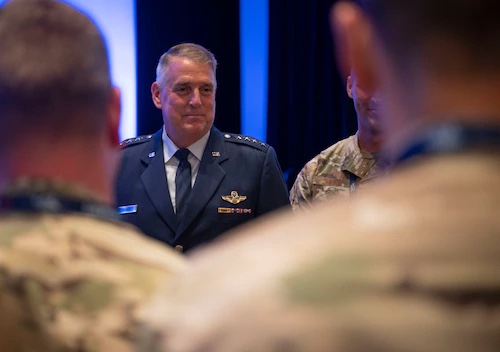
Gen. Mike Minihan, commander of Air Mobility Command, presented his case for the state of air mobility to a packed audience of Airmen at the 2022 Air, Space and Cyber Conference, Sept. 21.

His problem statement was direct, if provocative: the joint force is not as ready as it thinks it is, and the time to act is now.

“Nobody is going to care what our plans are for five to 10 years if we lose tomorrow,” Minihan said. “Our toys, our training, our desires are meaningless unless we maneuver them to unfair advantage and unrepentant lethality.”

During the 40-minute talk, Minihan laid out the role of the mobility air forces in projecting, connecting, maneuvering and sustaining the joint force. He cited both historical and recent examples, including AMC’s role in Operation Allies Refuge, that showed the need to rapidly employ lessons learned and strategically invest in mobility.

In doing so, he highlighted four critical gaps AMC has focused on closing to be ready for a pacing challenge: command and control, navigation, maneuvering under fire, and tempo.

He left no ambiguity about the urgency of the challenge faced.

“If we don’t have our act together, nobody wins,” he said. “They are tailor-making an air force to kill you. Not ‘you’ hypothetically … you. Look in the mirror.”

Similarly, he left no doubt about America’s resolve to face challenges now, even with work still to do.

“We have to make the best of what we have,” Minihan said. “If [my intelligence team] were to walk in my office tomorrow and say ‘[an adversary is] getting ready to go,’ what am I going to do now? I’m going to take roll of who we’ve got, we’re going to take roll of the toys we have, and we’re going.”

He also presented the challenges of geography through the lens of his joint experience in the Pacific, which AMC is preparing for on the road to Exercise Mobility Guardian 2023, set to take place next year within the Indo-Pacific region.

“There’s just too much water and too much distance for anyone else to deliver mobility at pace, at speed, and at scale like we do,” Minihan said. “I’m not interested in being the best Air Force on the planet. I’m interested in being the most lethal force the world has ever known. Mobility Guardian will be the crown jewel where we rehearse the winning scheme of maneuver.”

To get after the problem he presented, Minihan cited the need for a Mobility Manifesto, which he described as a public declaration of intentions, opinions and objectives of mobility as an organization. He argued the document is needed to best position mobility Airmen and their tools to present a scheme of maneuver for the joint force to win.

“Lethality matters most, and I’m coming at you like an Airman,” Minihan said. “This is about us and about our culture – it’s about Airmen. We’ve been here before. You will get zero sympathy from me about having to do big things quickly and about the significant challenges that exist.”

The presentation was a preview of the manifesto document that will be made available to mobility Airmen publicly at the end of October.

Over the last year, AMC has taken a deliberate approach to rapidly prepare for a high-end fight with a pacing challenger. Operations, activities and investments have all been focused on extracting maximum value out of existing capabilities and exploring how the mobility air forces can address gaps across communication, survivability and agility.

“In order to generate the tempo required to win, I’d rather check things out now,” he said. “Victory language comes into sharper contrast – the stakes are incredibly high.”

Minihan had words of advice for the audience: “Generate your courage, point the pointy end at the scary place, and execute.”

He concluded the discussion by putting the challenge ahead in contrast with Air Force Chief of Staff Gen. CQ Brown, Jr.’s readiness charge.

“When he says accelerate change or lose, we say we win or die.”

By Air Mobility Command Public Affairs

Photo by TSgt Zachary Boyer

FirstSpear Friday Focus: Wool ACM 100

Friday, October 7th, 2022

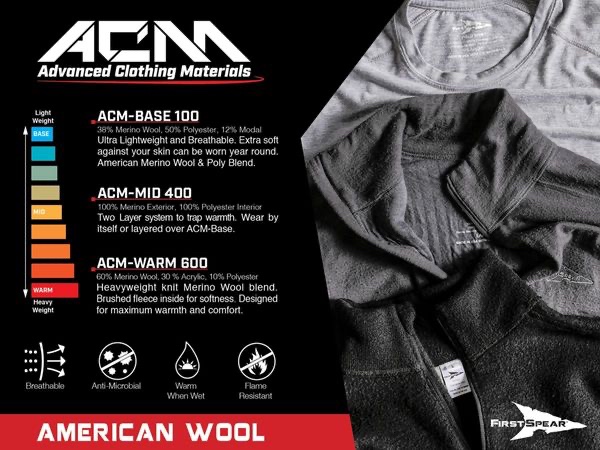
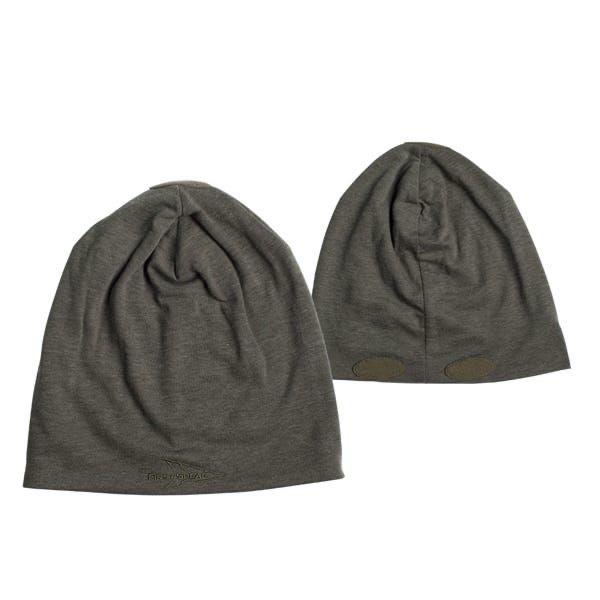
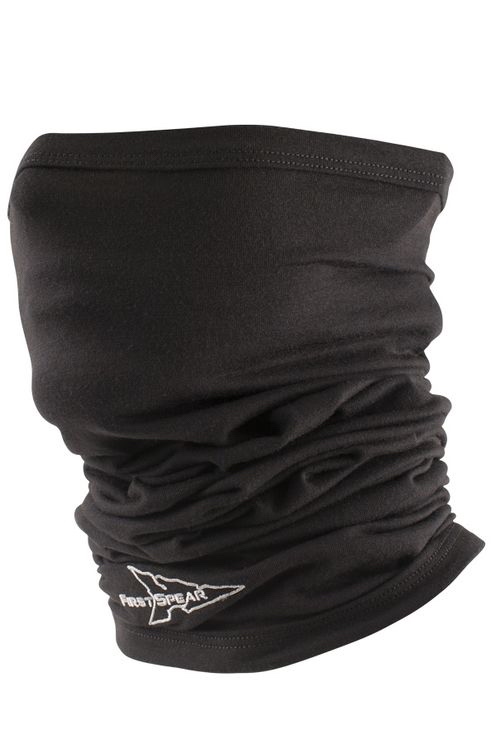
As temperatures begin to drop, check out FirstSpear’s Advanced Clothing Material Wool lineup. This week we’re featuring ACM-Base 100 layer.

• Warm Merino Wool
• Wicks away moisture
• Low profile pile
• Lightweight

The FS Beanie will keep your dome warm, wick away moisture, and has just enough extra material to double up over your ears when the temperatures drop. It is constructed with flat seams for a great fit under helmets. There is also low profile pile in key areas to attach IFF. Experience light high-performance Merino.

Built with a tight, open mesh design for breathability, the Neckie is a tube that can be worn as a turtleneck, hat or even a hasty balaclava. The mesh design aids in preventing your goggles from fogging up when you wear it over your mouth. Low profile pile attachment points in key areas let you put on IFF as required. With a variety of uses and extremely lightweight, the Neckie is something you don’t want to go outside the wire without.

The Hooded Field Shirt is a generously cut lightweight garment built for long-term comfort on extended adventures or daily wear on the job. This shirt is made from ACM Base 100 wool and offers a generous cut, a large hood, low profile cuffs, and thumb holes. Leveraging the naturally occurring performance benefits of wool, the Hooded Field Shirt is a technically advanced package blending comfort, performance, and fit. Use it as a hooded base layer or wear it all on its own. Either way, don’t leave home without it! Made in the USA.

Visit FirstSpear to find all the gear and apparel for America’s Warfighter.