FirstSpear TV

Archive for the ‘Guest Post’ Category

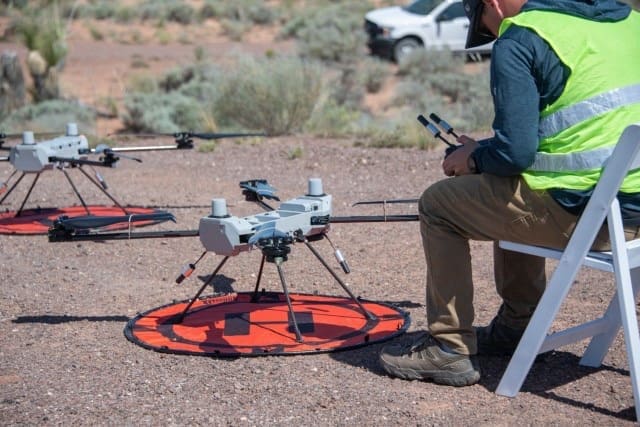
21st Air Task Force Sharpens Drone Capabilities with sUAS Training

Wednesday, July 30th, 2025

DYESS AIR FORCE, Texas —  

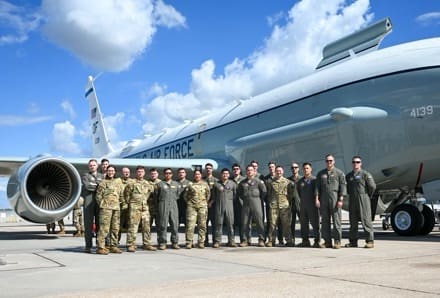
Eight Airmen assigned to the 21st Combat Air Base Squadron, part of the 21st Air Task Force, completed small Unmanned Aircraft System (sUAS) training at Joint Base Charleston, South Carolina, July 14-18, enhancing their technological capabilities and operational readiness ahead of their upcoming deployment.

Hosted by the 628th Civil Engineer Squadron sUAS program office, the weeklong training course prepared Airmen for practical integration of drone technology in support of operational planning and force protection. Training scenarios included search-and-rescue operations, dense forested terrain navigation, and nighttime reconnaissance using thermal imaging—simulating environments where sUAS platforms act as low-cost, high-value force multipliers.  

“I have a new appreciation for how critical sUAS technology is for the future fight,” said Tech. Sgt. Hunter Pryor, 7th Civil Engineer Squadron and 21st CABS station chief. “Now our team has several members, all from different career backgrounds, that can employ it effectively, which gives us a lot more flexibility in a contested environment.”

Upon completion of the training, each Airman received certification as a sUAS operator—a capability developed outside of their primary career field. Their newly acquired capabilities support broader sustainment and warfighting functions that will be tested throughout multiple exercises and training events.

“This kind of training is the Mission Ready Airmen idea in reality,” said Col. Thomas Walsh, 21st ATF commander. “Smaller, multi-disciplinary teams, using technology like sUAS, additive manufacturing and AI will be able to solve more problems faster and with less resources in contested areas. We are training how we expect to fight.”

The training aligns with Department of Defense guidance under the recent “Unleashing U.S. Military Drone Dominance” directive, which calls for all combat units to integrate uncrewed aerial systems into force-on-force training by 2027 and equips every squadron with low-cost, expendable drones by the end of 2026.

“Our adversaries have a head start in small UAS, but we will perform a technological leapfrog and establish small UAS domain dominance by the end of 2027,” said the Honorable Pete Hegseth, U.S. Secretary of Defense. “We will accomplish this urgent goal by combining the nation’s best qualities, including risk-taking.”

By integrating sUAS operations into traditional mission frameworks, the 21st ATF is pioneering new tactics, techniques, and procedures that will inform future Air Force operations. As one of only three Pacific Air Forces-aligned air task forces, the 21st ATF is postured to lead the Department of the Air Force’s shift toward Agile Combat Employment, consistently training to operate in contested and austere environments across the Indo-Pacific.

By 7th Bomb Wing Public Affairs

7th Bomb Wing Public Affairs

NGA and XVIII Airborne Corps Successfully Tests New AI Tool

Tuesday, July 29th, 2025

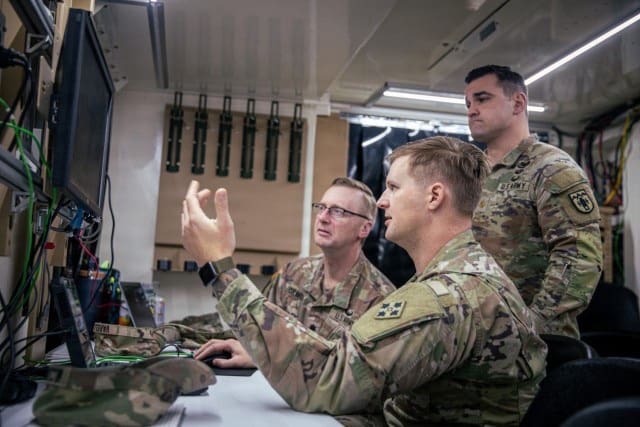
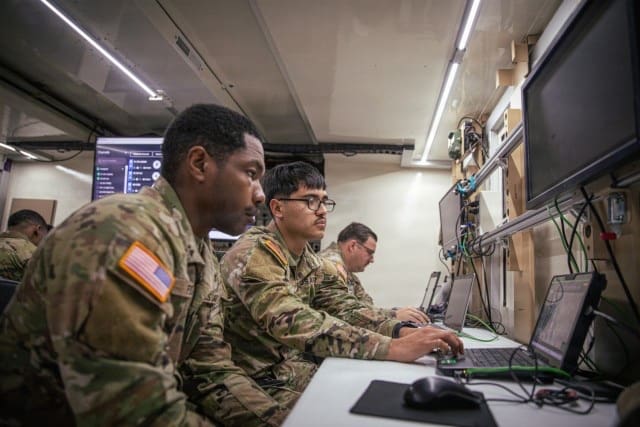
Members of the National Geospatial-Intelligence Agency’s Warfighter Support Office, the U.S. Army’s XVIII Airborne Corps, a national lab and a technology company tested artificial intelligence capabilities near Fort Bragg, North Carolina, May 5-8.

The team tested a prototype capability known as the GEOINT AI/ML Based Light-Edge Resilient system, or GAMBLER. It is a set of mission-focused AI capabilities aimed at directly supporting warfighters in the field. The system uses unclassified video and still images from tactical sources and rapidly identifies, locates and catalogues detected objects. GAMBLER can then disseminate the data to handheld devices and to upper networks for situational awareness.  

“One of those problems we are working on is moving the ability to make AI models in the field that are integrated into the warfighters collection, processing and dissemination paths … especially in communication challenged environments,” said NGA’s Warfighter Support Office director.

During the testing, the team performed multiple test objectives, including data and scenario collection, real time model construction, processing of detections and distribution to multiple systems.

“GAMBLER is designed be operated by the warfighter,” said the office’s chief engineer. “It’s about pairing the capabilities of GEOINT, machine learning, AI and mesh networks to reduce the amount of time it takes to identify important objects and quickly pass that tactical situational awareness along to where a decision can be made or action taken.”

It enhances the warfighters use of AI and GEOINT at the tactical edge to support any number of military missions, he added.

Also, the team designed scenarios in which personnel were moving around a village training area and tunnel system with backpacks, weapons and bags to determine illegal or illicit activity by individuals, for potential use for security missions.

GAMBLER is designed to support users in denied, degraded, intermittent and latent environments. To do this, GAMBLER supports multiple communications paths.

The agency’s Warfighter Support Office team tested this capability during the exercise. 

With support from service members at Fort Bragg and Fort Huachuca, Arizona, the team tested new software that allows detections and image tiles to be sent over different frequencies for long distances.

The team successfully distributed image detections via portable radios to locations across the United States.

Another significant objective was to test the performance of the GAMBLER software on low-cost, small-form-factor hardware.

Without adapting the software or models, the smaller system performed very well compared to the larger original system. These modifications drastically reduce the GAMBLER footprint, and uses much less power.

The lessons learned, test measurements and improvements are already being designed and implemented for the next version of GAMBLER.

Via Geospatial-Intelligence Agency’s Warfighter Support Office

DEVCOM CBC Assists in Showcasing Autonomous Decontamination at MSPIX 2025

Monday, July 28th, 2025

Aberdeen Proving Ground, MD – The U.S. Army Combat Capabilities Command Chemical Biological Center (DEVCOM CBC) attended this year’s Maneuver Support & Protection Integration eXperiments (MSPIX) to showcase its newest autonomous decontamination capabilities.

Held in Ft. Leonard Wood, Missouri, MSPIX provides the opportunity and space for emerging technologies and capabilities to be evaluated in a simulated battle environment with an emphasis on hands-on Soldier interaction, allowing direct feedback on future technology to improve the tools warfighters can use to stay ready and lethal. MSPIX is just one example of the various Advanced Technology Demonstrations (ATDs) that scientists and Soldiers alike attend to become familiarized with and further refine upcoming prototypes.

During this year’s event, which took place from May 5 to 16, DEVCOM CBC demonstrated its Autonomous Biological Critical Area Disinfection (ABCAD) system, which enables Soldiers and other end-users to remotely control an ATV-sized, 8-wheel vehicle equipped with applicators and tanks housing various liquid decontamination formulas. Matt Reber, a mechanical engineer from the Center’s Product Design and Development division, marked his second year attending MSPIX by training participating Soldiers and facilitating their further feedback into the next iteration of the system.

“We anticipate the use of this technology to be at places like airstrips, shipyards – any large area with a high volume of ground to cover for decon,” said Reber. “Our goal at this event was to train Soldiers before letting them loose with the equipment. The aim was to be mostly hands-off so that they can use the system armed only with some basic instructions to test how streamlined and user-friendly the system is.”

Soldiers were able to drive around the simulated battlefield, spraying water as a substitute for the decontamination formula to illustrate the large area capable. According to Reber, the main goal is not just to put this in their hands but to leverage the feedback they receive from the Soldiers during post-experiment Q&A sessions and questionnaires further to refine the end product into a mission-oriented capability.

“Knowing what Soldiers liked and didn’t like gives us the correct jumping-off point for when we return to the lab,” said Reber. “Their recommendations help us get closer to making this as autonomous as possible. Our end goal is to get Soldiers out of the field. Decon work can be hot, dirty and just an overall dangerous work environment.”

The ABCAD is designed and run in partnership with DEVCOM’s Ground Vehicle Systems Center (GVSC). While CBC dials in the autonomous applicator, GVSC further refines its 8-wheeled transport, as well as the respective software and hardware. As the project begins to attend more scheduled ATDs, GVSC and CBC collaborate every two to three months for weeklong tests that make additional tweaks to the system.

This year’s MSPIX is the first that the ABCAD system has attended, marking an important steppingstone for the technology. It provides the ever-crucial Soldier feedback that will hone this technology into a more warfighter-focused prototype.

“We don’t get a lot of time to interface with Soldiers,” said Reber. “Sometimes, I’ll work on a project from start to finish without interacting with the end-user at all. But, if what we’re making is going to end up in the Soldier’s hand at some point in time, then it only makes sense for us to test, train and learn from these guys. In the end, they’re the ones that know what is needed to win the fight.”

Story by Parker Martin,

U.S. Army Combat Capabilities Development Command Chemical Biological Center

USAG Rheinland-Pfalz Partners with Polizei, Air Force to Test UAS Response Readiness

Sunday, July 27th, 2025

MIESAU, Germany – U.S. Army Garrison Rheinland-Pfalz teamed up with the U.S. Air Force 569th U.S. Forces Police Squadron and 86th Security Forces Squadron from Ramstein Air Base and German Polizei July 16 to test its counter-unmanned aircraft systems (cUAS) capabilities and interagency communication networks in a realistic drone threat training exercise.

During the exercise, operators from the U.S. Air Forces in Europe and Africa’s Combat Training School flew a DJI Phantom 4 drone over USAG Rheinland-Pfalz’ installation near Miesau to simulate a drone threat, testing the operational capabilities of systems and processes currently in place, said Emily Roemer, an antiterrorism officer with USAG Rheinland-Pfalz Directorate of Plans, Training, Mobilization and Security and the lead planner for this exercise.

The DJI Phantom 4 is a commercially-available small UAS, making it ideal for this type of training, Roemer said.

Staff Sgt. Michael Sopha, noncommissioned officer in charge of cUAS for the 569th USFPS, said the Air Force’s primary role in the exercise was to respond alongside USAG Rheinland-Pfalz in the joint environment, using the most current available cUAS technology to detect and disrupt small UAS in the exercise area.

Systems that were tested included small UAS detectors, signal disruptors and signal hijackers that protect friendly assets and render enemy systems ineffective, Sopha said.

“This exercise showed the importance of a joint force working together to combat small UAS threats. Our procedures are sound,” he said. “Future small UAS capabilities will be far greater, supporting the need for alternative systems to combat them on a large scale.”

Roemer stressed the importance of seamless communication between law enforcement teams from the garrison, the Air Force and the local community.

“Host nation response during a real-world event is critical,” Roemer said. “The Army likes to train how we fight, so we knew getting host nation participation for this exercise was a must.”

USAG Rheinland-Pfalz police chief DJ Diallo noted that working in partnership with German Polizei gives the garrison access to a wider network of security resources, ensuring a robust, resilient security posture.

“The lines between civilian and military airspace are increasingly blurred, demanding seamless information sharing and coordinated responses,” Diallo said. “Without robust international cooperation between Polizei and USAG Rheinland-Pfalz DES, we risk critical gaps in our ability to detect, deter, and respond to drone-related threats.”

He added that the garrison, Polizei and Air Force security forces routinely collaborate to improve response capabilities in the local area, leveraging the unique skills and authorities of each service through training exercises and a secure communication platform for real-time information sharing.

Roemer noted that planning the counter-UAS training event with so many joint partners was not without challenges.

“Ensuring that the exercise injects were realistic and involved all the joint partners was probably the biggest challenge,” Roemer said. “All the joint partners exhibited enthusiasm and eagerness to participate, which shows we have built positive relationships and shared trust between all parties.”

As part of the Army Transformation Initiative, the U.S. Army is investing in technologies including artificial intelligence, autonomy and counter-drone systems to outpace future threats faced at USAG Rheinland-Pfalz installations. Continuous transformation ensures the Army can deliver trained, cohesive and lethal teams to meet future challenges in complex operational environments like this one.

U.S. Army Garrison Rheinland-Pfalz advances the Department of Defense mission to achieve peace through strength as we serve, support and secure the total force community, enabling power projection for the European Theater.

By Jennifer Whitaker

Magazine Depth Wins Wars: The Future of NATO’s Arsenal

Saturday, July 26th, 2025

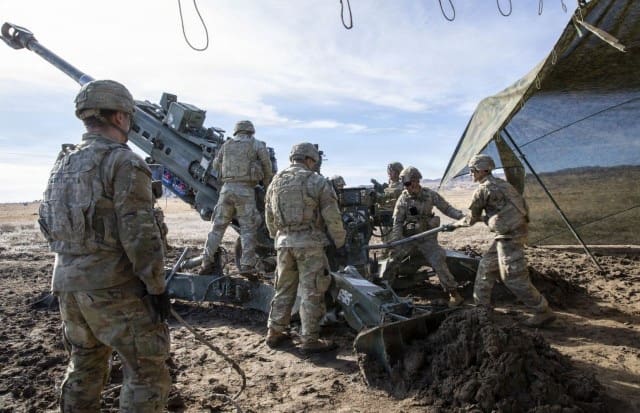
WIESBADEN, Germany – A strong defense isn’t solely about the quantity of weapons stockpiled, but the ability to adapt and rapidly produce what’s needed, experts asserted at the LANDEURO 2025 conference today. A panel discussion focused on the critical need for broadened production within NATO to secure global supply chains, enhance interoperability, and bolster strategic flexibility.

The conversation centered on lessons learned from the ongoing war in Ukraine, where sustained ammunition supplies and the ability to quickly repair and replace equipment have proven vital. Panelists emphasized the necessity of “magazine depth” – maintaining sufficient reserves – alongside collaborative production of munitions, repair parts, and entire weapon systems.

Panelists stressed that maintaining readiness requires a holistic approach, encompassing not only weapons systems and ammunition, but also a robust sustainment infrastructure. This includes ensuring sufficient repair parts, subassemblies and critical components are readily available. Experts agreed that the capacity and capabilities of the defense industrial complex are foundational to achieving this “magazine depth” and are a critical pillar for both deterring adversaries and winning conflicts – not just regionally, but globally. Furthermore, they noted that current economic and geopolitical conditions present an unprecedented opportunity to develop, expand, and scale the defense industrial complex, creating irreversible momentum for future security.

U.S. Army (Ret.) Gen. Edward Daly described his vision of the defense industrial complex in 2030.

“It’s an ecosystem that’s modern, globally responsive, interoperable, and produces capabilities and technologically advanced products at scale to support not only the commercial sector, but the military as well,” said Daly.

Lt. Gen. Miles Brown, deputy commanding general of U.S. Army Futures Command, highlighted the core goals of the Army Transformation Initiative (ATI) and the planned consolidation of the U.S. Army Training and Doctrine Command and U.S. Army Futures Command into the new Army Transformation and Training Command.

“This isn’t about bringing the family back together,” said Brown. “We’re building a 21st-century command – data-centric, collaborative, lean, agile, and adaptive. The whole point of the ATI is to take the opportunity we have now, with the national will and commitment to excellence, and to move out quickly, not to study for two or three years before we get after it.”

He emphasized that the ATI aims to fundamentally change how the Army operates, focusing on speed and innovation.

Ultimately, the panelists agreed that a modernized and adaptable defense industrial base, coupled with a streamlined and innovative command structure, is crucial for ensuring NATO’s readiness for prolonged conflicts and addressing the evolving landscape of global security threats. Investing in these areas, they said, will deliver a decisive strategic advantage for the alliance’s future arsenal.

See video remarks here.

By Aaron Smith

SparkX Teams with Army Soldiers on Open-Source Drone Project

Saturday, July 26th, 2025

JOINT BASE ANDREWS, Md. – A small team of technicians at Joint Base Andrews is helping shape the future of battlefield innovation, one 3D-printed drone at a time.

The Andrews SparkX Cell Innovation and Idea Center partnered with the U.S. Army’s 1st Multi-Domain Task Force from Joint Base Lewis-McChord, Wash., to redesign Project SPECTRE (Small Printable-Engineered-Composites Tailorable Remote-Effect), an experimental effort to create rapidly deployable, customizable, small, unmanned aircraft systems.

The result of Project SPECTE was Blackbird, a fully open-source, government-owned drone platform that cut development costs by more than $1 million.

According to SparkX technicians, the Blackbird can be 3D-printed and assembled in 36 hours for about $200, offering a low-cost, modular sUAS solution for training and operational use in the field.

“Working within the government always provides an opportunity for quicker development that often times faces less roadblocks and is more cost-effective than the standard acquisition processes,” said a Soldier with the 1st MDTF.

With no formal aerospace engineering training, the SparkX technicians reverse-engineered a new platform from scratch. They developed an original airframe that met operational goals while avoiding intellectual property conflicts with the Army’s previous partner.

“It was what we envisioned the plane to look like,” recalled Staff Sgt. Stefan N. Sobiech, a former SparkX technician who is now stationed at Osan Air Base, Republic of Korea. “I oversaw creation of the wings, and I sought inspiration from the most efficient planes I could find.”

The project went through more than 10 variations, but Sobiech said the team kept pressing and learning from their mistakes.

“I don’t think there was ever an obstacle that we didn’t think we could work no past it,” he said. “We always went back at it from a different angle or researched how others got past a similar issue.”

The final design includes two propeller-driven motors, a wingspan of more than six feet and weighed approximately nine pounds. Its modular design features a push-to-connect fuselage and a customizable internal equipment tray, allowing for rapid swaps of mission-specific gear and easy to assembly in the field with no specialized tools.

In November, the team was invited to fly the drone during Titan Hoplite, a joint exercise hosted by the Air Force’s Task Force 99 at Shaw Air Force Base, S.C. The SparkX technicians showcased their airframe alongside other advanced sUAS technologies, drawing interest from units across the Department of Defense.

Sobiech said the team conducted a 30-second shakedown flight before heading to Shaw, where the Blackbird flew for more than two minutes during Titan Hoplite demonstration.

The drone unfortunately crashed after flying out of range of the hobby-grade motors and avionics.

Although, Sobiech was unable to attend the event, he mentioned receiving texts and video footage from observers of the successful flight.

“I was ecstatic! To see it sustaining flight, for that length of time, was an amazing feeling,” he said.

Earl Bagwell, Spark X director, said the Titan Hoplite demonstration sparked interest from several organizations in the Army and Air Force that wanted to get involved.

Bagwell released the 3D files as an open source to allow other units to 3D-print the components and integrate their own avionics and motors.

“We knew this would be a sought-after capability, but instead of going through the long patent process, we decided to open source it,” Bagwell said. “Whoever needs it can have it—because we need to innovate and move faster.”

The Air Force Research Laboratory, the Army Research Laboratory, Combat Innovation Lab, Tesseract, and 2nd MDTF are among the organizations that have accessed to the Blackbird files. Together, they support operational theaters across U.S. Indo-Pacific Command, Central Command, Europe, Africa, special operations, and the Army National Guard.

The 1st MDTF successfully deployed and tested the system in various environments, implementing rapid design updates on-site to improve both their understanding of the platform and its capabilities.

“Working in the joint force allows us to consider multiple angles and employment methods that might not be considered in an Army-only environment,” said an 1st MDTF Soldier. “It also gives us access to resources and diverse skill sets not inherent within individual services.”

Story by Patrick Griffith, 316th Wing

Marine Corps Systems Command Explores Cutting-Edge Boot Designs to Enhance Warfighter Lethality

Friday, July 25th, 2025

To enhance the lethality of individual Marine warfighters, 25 School of Infantry-West instructors will spend the summer testing a new design for Marine Corps Systems Command’s (MARCORSYSCOM) Optional Boot Program.

This model, which features lighter weight materials, unique drainage ports for improved breathability, and improved ergonomics to reduce leg and back injuries, follows a similar evaluation that took place earlier this year at Camp Lejeune, N.C., where Marines with 2nd Reconnaissance Battalion tested footwear that included advanced orthotic technology.

“The entire process takes about six months,” explained Todd Towles, team lead for Clothing and Equipment, Combat Service Support Equipment (CSSE). “It’s all about determining the fit, form, function, and durability; all at a reasonable price point for the Marines.”

The Optional Boot Program ensures only the highest-performing footwear makes it to the field. The process begins with a detailed visual inspection assessing color shade consistency, proper height, weight, and overall workmanship. After passing this initial review, boots undergo four months of rigorous field testing—worn daily by active-duty Marines in demanding conditions.

“Never satisfied with the status quo, the Marine Corps always looks for ways to improve the warfighter experience,” said Force Recon Company Senior Enlisted Advisor Master Sgt. Andrew Perryman, 2nd Reconnaissance Battalion. “If a product isn’t meeting the standard then it’s cut from the inventory.”

Alongside this summer’s real-world evaluation, which will determine if the boots dry faster to allow for better foot health, lab testing further validates durability, comfort, and quality, reinforcing the Corps’ commitment to providing Marines with superior equipment designed to weather the most challenging missions.

“We see the Optional Boot Program as a way to access the best technology and give Marines more options on fit, performance, and availability on the shelves,” said Maj. Joshua Foster, project officer for CSSE. “We need a diverse set of vendors to ensure we can sustain the fleet’s needs—that has been a serious challenge based on supply chain and quality issues over the last several years.”

The program office for Combat Support Systems (CSS) plays a crucial role in life cycle management for all clothing and individual equipment issued to Marines supporting global operations. From concept development through testing, procurement, fielding, and sustainment, this office ensures that every item meets the toughest standards for performance and durability in extreme environments. The Marine Corps’ rigorous evaluation protocols—often conducted in the most austere conditions—set a high mark.

“Our primary concern is equipping our Marines with quality gear, when they need it,” said Towles, a Marine veteran who has worked with MARCORSYSCOM for almost 20 years. “Anything less and we’re failing them.”

“Through joint clothing boards, we can share test data and lessons learned across DoD. We also seek to adopt equipment tested by the other services to save the Marine Corps on costs and evaluation time; especially when tasks or environments are common among service members. It is a great partnership,” remarked Foster.

This collaboration increases the buying power of the Marine Corps and Joint Force.

“With mission success often hinging on staying warm, dry, and mobile, the meticulous efforts of our team guarantees that Marines are equipped with top-tier gear that embodies the Corps’ unwavering commitment to excellence,” said Towles. “Certification is not permanent; we conduct frequent inspections with our Marine Corps Exchange partners to ensure Marine clothing and footwear continues to meet our standards.”

Illustrating that point, by continuing to push for quality and performance, the CSS team recently identified the delivery of deficient US-made footwear.

“Once we discovered the issue, the program office along with the boot vendor did an MCX-enterprise inspection and identified all stock not acceptable by Marine standards,” said Towles.

Nearly 25 percent of the boots were returned to manufacturers—ultimately preventing Marines from buying substandard gear.

“We were disappointed with them missing the mark, but pleased with their response,” said Towles. “Our vendors understand that the Marine Corps has high standards when it comes to our uniform items, even if the materials are part of an optional purchase. The vendors understand the Marine Corps has a high bar and they will be dropped from the program and removed from our shelves if they do not maintain quality.”

In a briefing last Spring, Col. Paul Gillikin, discussed several key factors impacting this product line such as competition, supply chain, and quality assurance.

“Over the last several years, the Marine Corps and Department of Defense has been challenged in uniforms, uniform accessories, personal protective gear, and footwear,” said Gillikin, program manager for CSS. “Starting with COVID production and supply chain issues, many of our domestic industry partners could not keep up with demand due to staffing shortfalls, access to materials, or quality.”

Gillikin, who has served as the program manager for CSS for two years, explained there have been several instances of acute and long-term issues with uniform items while his team sought new, innovative technologies to improve the performance of Marines while lowering costs.

“We have a great relationship and a lot of successes with our vendors, however, corrective actions and quality assurance problems with some have been a burden that distracts us from seeking better equipment,” he said. “The optional certification program allows us to reach both U.S. and [Trade Agreement Act] manufacturers with a low barrier to entry for vendors and low-cost testing for the Marine Corps. In the long term, an increased number of vendors leads to lower prices and greater innovation. We as a [Department of Defense] enterprise have to be sensitive to that and stimulate a diverse array of manufacturers to include domestic and TAA compliant sources. The bottom line is that the Optional Boot Program incentivizes competition and challenges vendors to actively manage their supply chains and produce the best technology at a lower cost for Marines.”

Currently, most optional boots that are approved to wear, and available for purchase, fall between $189 to $399 retail.

“When I talk with Marines around the fleet, they bring up affordability, access, and quality of materials,” said Gillikin. “It’s an important factor to Marines, and some are struggling financially. Cost is already a central metric for me, but it takes on a whole different level when you talk with younger Marines that are trying to support a family.”

To this end, CSS recently screened additional domestic and Trade Agreement Act (TAA) compliant materials.

“Competition is driving innovation,” said Gillikin. “Marines are excited to test and use the equipment! Our team does supply chain surveillance to ensure quality and supplies come from compliant countries. We are in constant communication with industry, other joint force program offices, Marine Corps stakeholders, the Defense Logistics Agency, and our partners on Capitol Hill to ensure our needs are met.”

Gillikin also said their communication efforts include potential future needs of the Marines Corps as well.

“We expect the next war to be a heavily contested environment where stockpiling and additional sources of supply will be vital,” he said. “For risk reduction, my team has war-gamed multiple scenarios for building prepositioning stockpiles using domestic and TAA manufacturers along with direct shipping TAA compliant gear straight into theater during conflict into areas such as the First Island Chain and High North. We need to keep all options on the table – competition directly supports operational effectiveness and readiness.”

For more information about the Marine Corps Systems Command’s Optional Boot Program and its certification process, visit www.marcorsyscom.marines.mil.

Story by Clinton Firstbrook 

Marine Corps Systems Command

FirstSpear Friday Focus: E+R Waist Bag

Friday, July 25th, 2025

The FirstSpear E+R WAIST BAG is a lightweight, highly functional pack built for versatility and rugged performance. Designed using advanced materials and construction techniques, it delivers maximum capability while keeping weight to a minimum.

It features a 2-point quick-detach (QD) buckle system that allows it to be worn independently or secured directly to an Assaulter’s Gun Belt or plate carrier. A low-profile G Hook offers another secure attachment option, ensuring a stable fit during movement. The pack includes four zippered pockets, making it easy to organize and access essential gear.

A shock cord on top provides a quick-access stash point for items like a tourniquet or eye protection. The waist pack also includes drainage to prevent water buildup and a removable top flap stiffener for added structure when needed. Designed to accommodate waist sizes up to 44″, the E+R Waist Pack blends modern materials with combat-proven functionality.

Whether worn solo or integrated into a larger loadout, it delivers streamlined efficiency without sacrificing durability. This is a go-to option for those who need fast access to gear in demanding environments.FirstSpear is the premier source for cutting edge-tactical gear for military, law enforcement and those who train. For more information visit First-Spear.com.