Pirata Series from OTB Boots - Coming March 2026!

Archive for the ‘Guest Post’ Category

Arctic Warriors Round Out Capability Set 21 Fielding

Monday, September 12th, 2022

JOINT BASE ELMENDORF-RICHARDSON, Alaska — All good things must come to an end. But when it comes to the Army’s capability sets, the end is only the beginning for the next iteration of advanced battlefield network technologies.

The 2nd Brigade Combat Team, 11th Airborne Division is the final unit to be fielded capability set, or CS, 21’s Integrated Tactical Network. The 2nd Brigade Combat Team joins multiple brigade combat teams across the globe to obtain Integrated Tactical Network — or ITN — capabilities, with CS21 paving the way for CS23 Stryker and CS25 Armor vehicle ITN capabilities.

In May of this year, the Army redesignated U.S. Army Alaska headquarters as the 11th Airborne Division. The two brigade combat teams in Alaska — the 1st Brigade Combat Team and the 4th Brigade Combat Team, 25th Infantry Division were redesignated as the 1st and 2nd Brigade Combat Team, 11th Airborne Division, respectively.

“Their focus will be on dismounted and Arctic mobility and capabilities of sustained operation in the Arctic [and] extreme cold weather,” said 11th Airborne Division Commander Maj. Gen. Brian Eifler.

ITN Capabilities
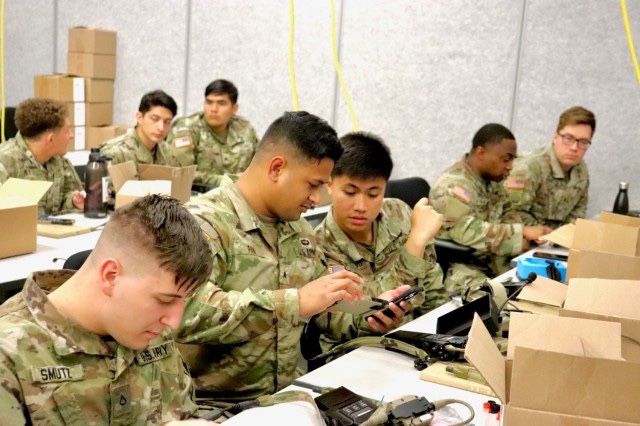
The Army’s CS21 ITN inserts commercial capabilities into the Army tactical network to provide a flexible, simplified network solution from battalion to dismounted Soldiers. Components include radios, variable height antennas, small satellite terminals and commercial phone technology.

“The ITN creates a resilient network that allows tactical commanders the ability to communicate with joint and coalition partners, provides a robust primary, alternate, contingency, and emergency plan for both line-of-sight and beyond line-of-sight, allows the battalion to operate independently of the brigade and provides situational awareness down to the platoon level,” said Jerry Harper, product manager for helicopter and multi-mission radios, under Project Manager Tactical Radios, Program Executive Office for Command, Control, Communications-Tactical.
New Equipment Fielding and Training

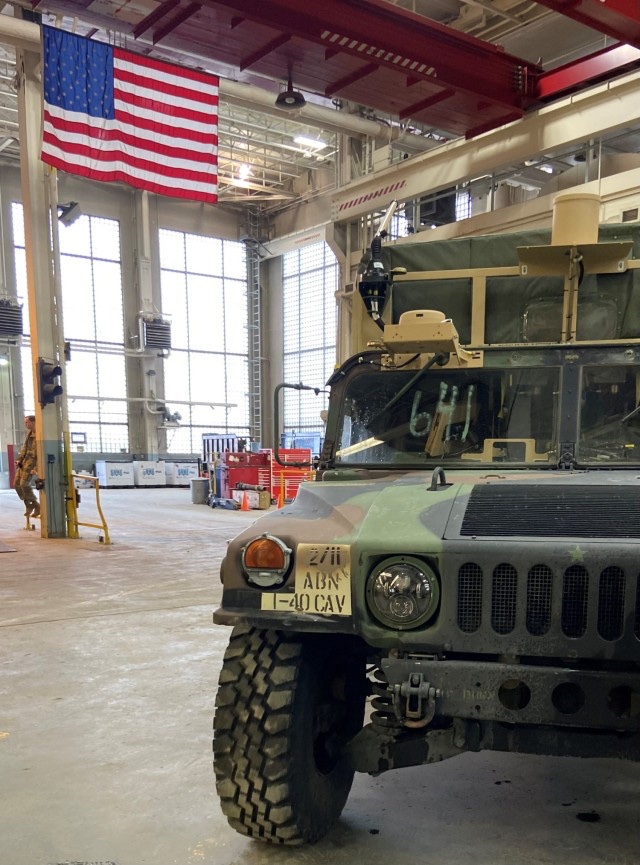
The CS21 ITN fielding to the 2/11th has consisted of both mounted and dismounted capabilities. From vehicle installs to classroom training, a hands-on approach has been critical to ensure Soldiers retain their ITN skills when they shift to an operational environment.

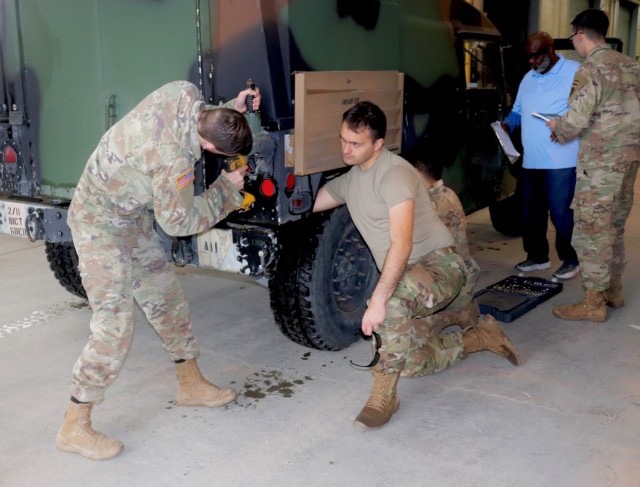
When completed this month, ITN technicians will have integrated manpack and leader radios into a combination of approximately 400 heavy, medium and light tactical vehicles.

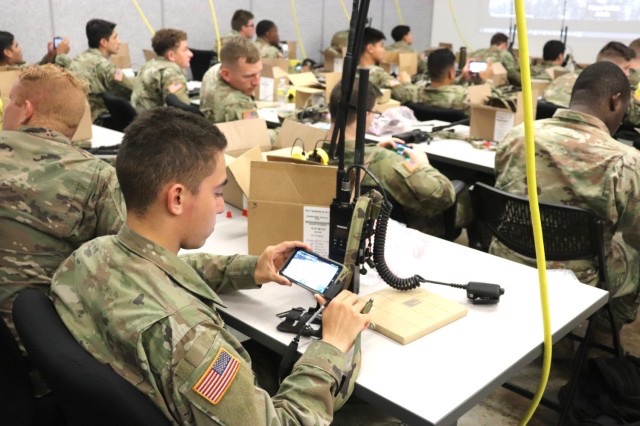
“Hands-on training is just as critical in the classroom,” Harper said. “We have set a 75 percent hands-on training goal because we know that PowerPoint alone is not sufficient.”

Demonstrating this goal, the 2/11th classrooms have been piled high with equipment for training on the multiple ITN tactical radio variants and the Nett Warrior end-user device, which when integrated into the dismounted radios, provides real-time, map-based position information location and other relevant operational information.

“From the beginning of our mission, we have encouraged the unit to send Soldiers down to the motor pool to de-install legacy equipment and observe the new installs,” said Mark Rotarius, platform Integration team lead, under Project Manager Tactical Radios. “For many of these Soldiers, this is the first time they have seen the system, and they could feel overwhelmed if they don’t put their hands on the equipment.”
CS21 Fielding Across the Force

In some instances, 2/11th Soldiers who were formerly with CS21 ITN-fielded units, including the 82nd Airborne Division, Security Force Assistance Brigades and the 173rd Airborne Brigade, provided insight on the enhancements they had seen since first operating the capability.

“I first used the ITN while I was with the 173rd Airborne,” said Staff Sgt. Jacob Ryan Hall, communications section chief for the 1-40th Cavalry, under the 2/11th. “The capability is much easier to use now, and as a cavalry unit, I’m very much looking forward to implementing the TSM waveform, which will help us create the networks our scouts need to send information back to the commander.”

The TSM commercial mesh waveform is the primary waveform used with the ITN. It requires line-of-sight and provides a multi-node relay, where every radio is a repeater for all network traffic.

The Security Force Assistance Brigades were the earliest adopters of CS21’s ITN and helped launch what is now a regular battle rhythm of fielding, training, operational exercises, and feedback to ensure frequent, iterative and modern capability improvements.

“As a former [Security Force Assistance Brigade], it’s been good to see the junior enlisted NCOs operate the radios very rapidly by the end of the course,” said Cpt. Michael McCarty, the 2/11th airborne chief of operations, responsible for the current operations and synchronization across the entire brigade. “By the end of the course, they were sending each other pictures, drawing operations graphics and sending messages to each other.”

The 82nd Airborne has been pivotal in providing feedback on the ITN capability over the past two years. In addition to using the ITN for real-time position information following jumps into the drop zone, the 82nd ITN with Nett Warrior device has also aided medics in managing Soldiers’ critical battlefield medical needs.

“I was a platoon medic with the 3rd Brigade Combat Team, 82nd Airborne Division where I first received training on the ITN equipment,” said Sgt. Elisha Eagleroad, treatment squad leader under the 2/11th, who oversees the aid station for treating patients throughout battalion.

The medics would use ITN and Nett Warrior end user device to drop location pins for casualty collection points, he said.

“It was a lot quicker to be able to get that 10-digit grid right off the phone and describe terrain and what routes or fire breaks to take,” Eagleroad said. “We were able to expedite patient evacuation because we had a more accurate description of where we were going.”
Preparing for Operations

Following the ITN training at Joint Base Elmendorf–Richardson, the unit will be participating in multiple exercises, including one in India for the bilateral Yudh Abhyas exercise, where they will test two of the ITN radio variants.

From there, the unit will participate in other platoon and company live fires events at their home station, where they will put the ITN kit through the paces in extreme cold weather environment. Leadership and technical support personnel are proactively identifying risks to operating technology under extreme environmental issues and putting mitigation plans into place.

“We train in negative 30-degree weather, which will provide a critical test for the ITN equipment,” said Chief Warrant Officer 4 Louis Mundinger. “Our plan is to wrap some of the radio batteries and make adjustments as needed with packaging.”

In March, the unit will participate in the annual Joint Pacific Multinational Readiness Center exercise in Fairbanks, which deploys coalition forces in a realistic and relevant arctic environment to help meet current and future regional crises and security needs.

Next Steps in Capability Set Fielding

As CS21’s ITN fielding comes to a close, the Army is fielding CS23’s ITN to the 2nd Cavalry Regiment Stryker unit in Germany and to the 101st Airborne Division, which is the first division-level ITN fielding. On its heels is CS25, which is currently under test and evaluation.

The strength of CS21’s ITN fielded across seven brigade combat teams has drastically enhanced brigade and below network communications, with each Soldier being the touchpoint to deploy, fight and win using these advanced technologies.

“Our young Soldiers are open to learning new technologies,” Mundinger said. “They are excited to use the new equipment, and do not want to fall back on the legacy equipment. They are ready to go.”

By Kathryn Bailey, PEO C3T Public Affairs
Michigan ANG Medics Take New Combat Casualty Care Course

Sunday, September 11th, 2022

SELFRIDGE AIR NATIONAL GUARD BASE, Mich. – Aerospace medical technicians with the 127th Medical Group, Michigan Air National Guard, took part in an innovative form of combat lifesaving training during August drill, practicing the battlefield care program replacing self-aid buddy care.

“The Air Force adopted this training to begin to give definitive care to patients early on following a trauma,” said Maj. Patrick Frank, 127th Medical Group medical administrative officer. “They found, through historical evidence, that the earlier patients receive trauma care, the higher their survivability rate will be.”

The tactical combat casualty care training teaches ways to reduce casualties in the field by improving the lifesaving skills of medical and non-medical military personnel.

The training Aug. 15-16 included classroom instruction and a field training exercise to practice applying immediate care on the battlefield. Modules for the 127th Medical Group brought experiences during recent conflicts to life to increase trauma survivability.

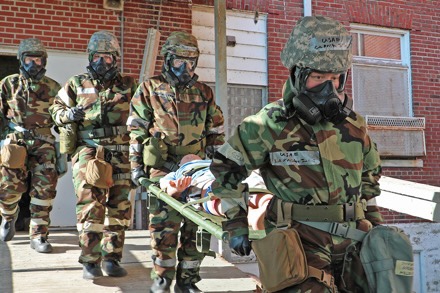
“The training scenario was that a bomb had gone off in a building, and it was determined to be a dirty bomb,” Frank said, referring to a conventional explosive containing radiological material. “The medical teams responded, suited up in [mission-oriented protective posture] gear, entered the building, assessed their patients, and were able to get them out and to a casualty collection point.”

To train service members from career fields outside the medical realm, TCCC is offered in three courses. The training at Selfridge was designed for aerospace medical technicians, pararescue and other uniformed medical providers who may deploy to support combat operations.

“We thought that this would be a great opportunity for [our medics] to be in their MOPP gear, go to the front line to get the patients out, and do the lifesaving skills that they need to do to in order to make sure that the patient is safe,” said 1st Lt. Heather Salgat, 127th Medical Group clinical nurse.

Other TCCC course offerings include “combat lifesaver,” designed for non-medical military members deployed to a combat situation, and the “all service member” course for any uniformed service member.

With the successful completion of the TCCC, participating members of the 127th Medical Group are ready to perform the trauma care techniques that can help save more lives.

“We have a lot of new individuals who just joined our unit, and them being involved in this training is exciting and better prepares them for the warfight,” Salgat said. “I am so proud of my team. Everybody jumped into it and did exactly what they needed to do.”
 

By SSgt Andrew Schumann, 127th Wing Public Affairs

STARCOM Executes First JNTC-Accredited, Largest SPACE FLAG Exercise Ever

Saturday, September 10th, 2022

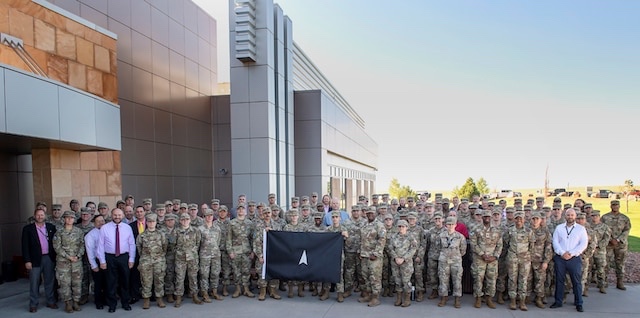
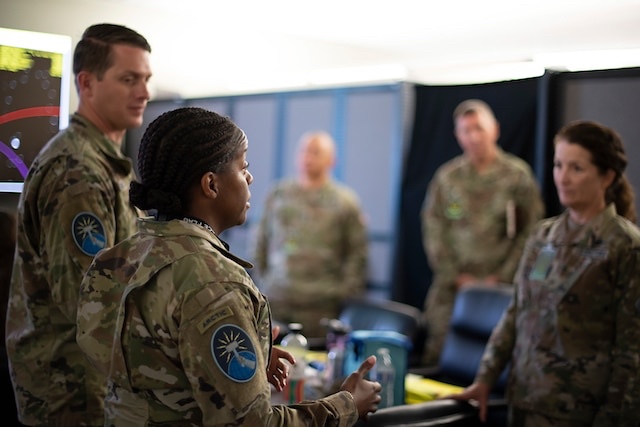
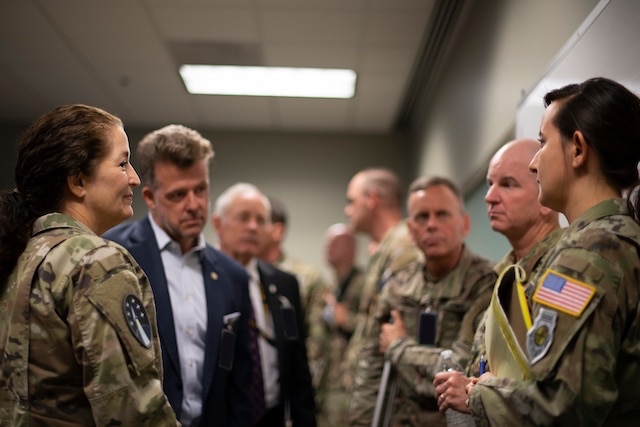
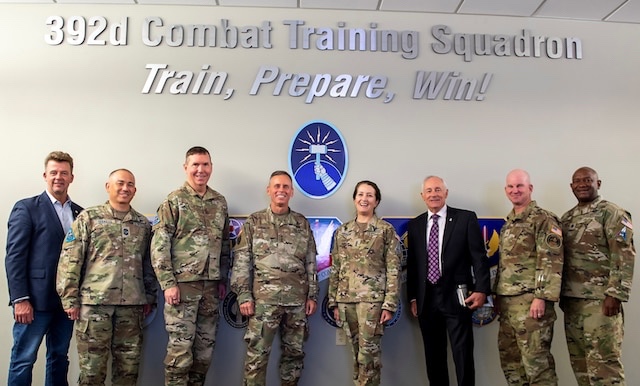
SCHRIEVER SPACE FORCE BASE, Colo. — Space Training and Readiness Command completed its first exercise iteration of SPACE FLAG (SPACE FLAG 22-3) since being accredited by the Joint Staff as a Joint National Training Capability.

SPACE FLAG is the first Department of Defense space exercise to receive JNTC-accreditation, joining the likes of the U.S. Air Force’s Red Flag and Green Flag exercises, as well as the U.S. Army’s Joint Warfighter Assessment and the U.S. Navy’s Fleet Synthetic Training.

SPACE FLAG 22-3, which ran from Aug. 8-19, was the largest iteration executed to date with approximately 120 participants from nearly a dozen U.S. Space Force Deltas, as well as members from the U.S. Air Force and the U.S. Army.

The U.S. Marine Corps’ Marine Space Support Team also imbedded members within the exercise, observing the Army’s 1st Space Brigade as part of an effort to integrate them as players in future iterations.

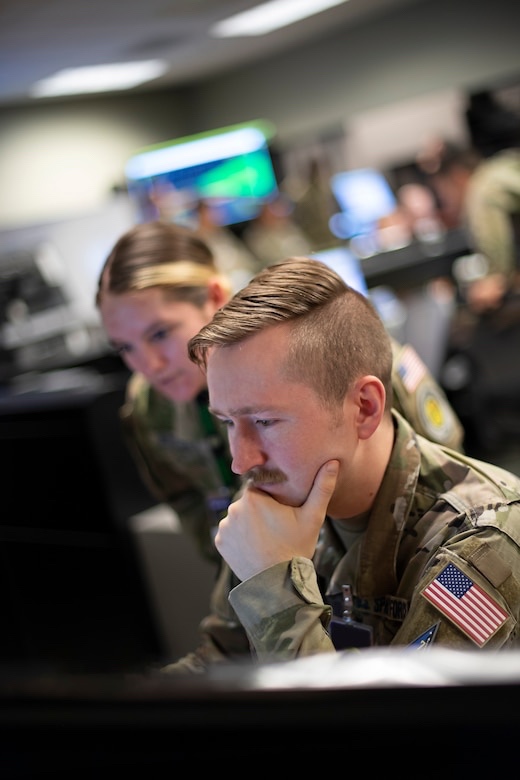
Considered a tactically-focused exercise, SPACE FLAG is designed to provide tactical space units with advanced training in a simulated contested, degraded and operationally-limited environment. The exercise is conducted using live, virtual and constructive simulations which immerse Guardians and participants into a synthetic virtual battlefield.

The 392d Combat Training Squadron’s organic BattleLab and Distributed Mission Operations Center presented a suite of simulators that allowed the training audience to exercise and refine combat tactics in space domain awareness, intelligence, warning and surveillance, navigation warfare, orbital warfare and satellite communications.

The exercise featured three vulnerability periods where combat missions were planned and then subsequently executed using high fidelity models to simulate warfighting effects.  Each vulnerability period grew in complexity, allowing the training audience to adjust and apply lessons learned in the previous period.

“I really enjoyed watching our Soldiers, Airmen, and Guardians mission plan and then prosecute the fight against realistic threats to space capabilities,” said U.S. Army Col. Donald Brooks, 1st Space Brigade commander and senior leader for SPACE FLAG’s third and most complex vulnerability period.

Building upon training objectives established in previous iterations, SPACE FLAG 22-3 presented realistic modeling that challenged players to consider complex astrodynamics while maneuvering and operating during simulated on-orbit combat engagements.

For the first time, the 5th Electronic Warfare Squadron participated in SPACE FLAG, giving space warfighters the opportunity to rehearse and visualize force packaging in ways not seen in any other exercise in the Department of Defense.

“My team spent the last six months working with tactical experts from the Army, the National Reconnaissance Office, and the Space Force to build the best exercise experience possible,” said U.S. Space Force 1st Lt. Deshawna Moore, SPACE FLAG 22-3 exercise director.  “SPACE FLAG plays a key role in ensuring space forces are ready to win should our nation call us to defend national interest in space.”

The next iteration of SPACE FLAG will occur in December, where STARCOM plans to train U.S. and Coalition space warfighters from multiple nations.

By Space Training and Readiness Command Public Affairs

Photos by Judi Tomich

FirstSpear Friday Focus: 9/11 Remembrance

Friday, September 9th, 2022

Marine Special Reaction Team Conducts Multiple Weapon Sustainment Training

Friday, September 9th, 2022

OKINAWA, Japan —

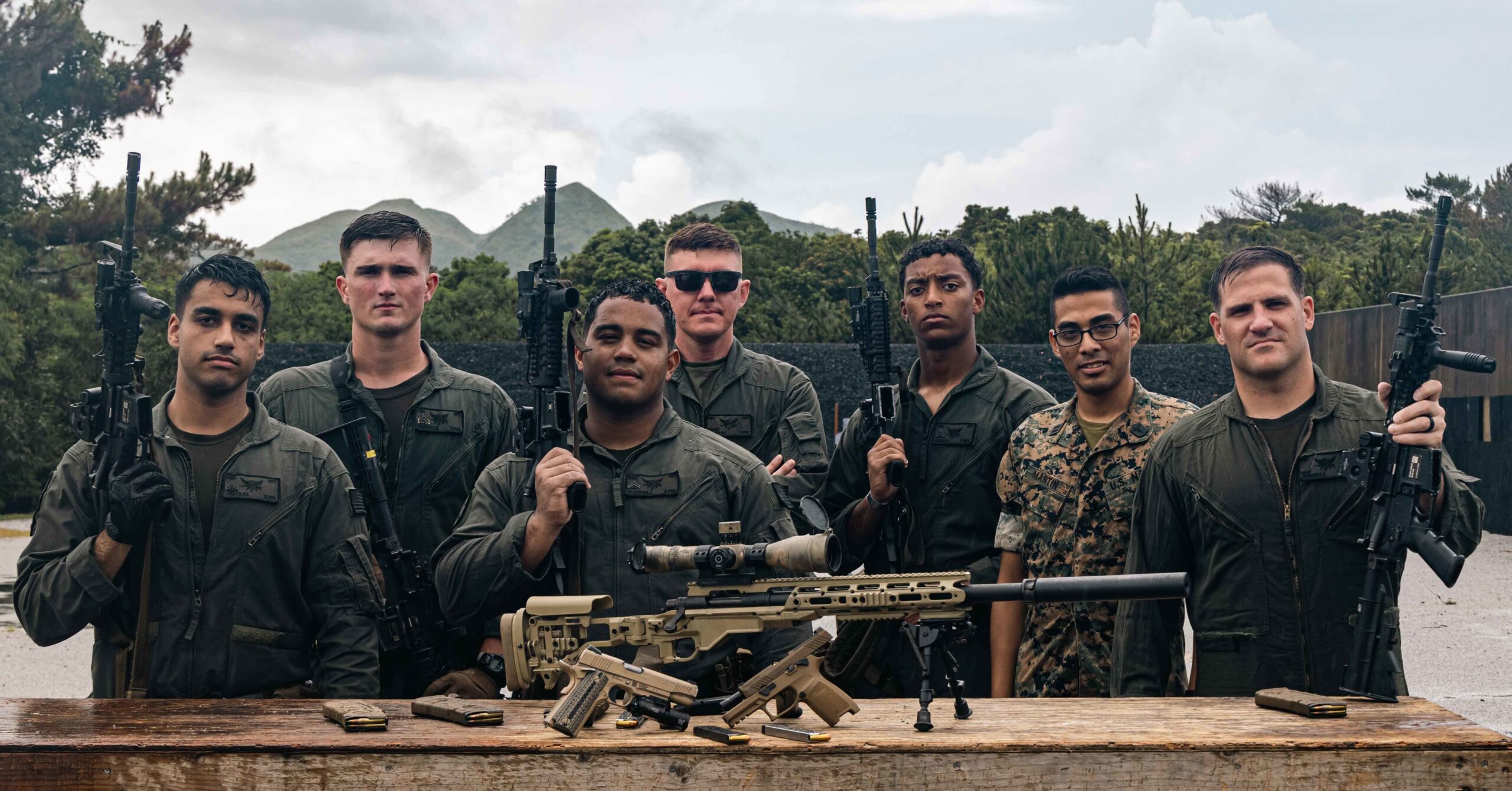
High-risk emergencies can happen anytime and require the attention of a specific group known as the Special Reaction Team, or commonly referred to as SRT.

The members of SRT are attached to the Provost Marshal’s Office and are always on standby to respond to situations such as an active shooter, hostage situations, and barricaded subjects.


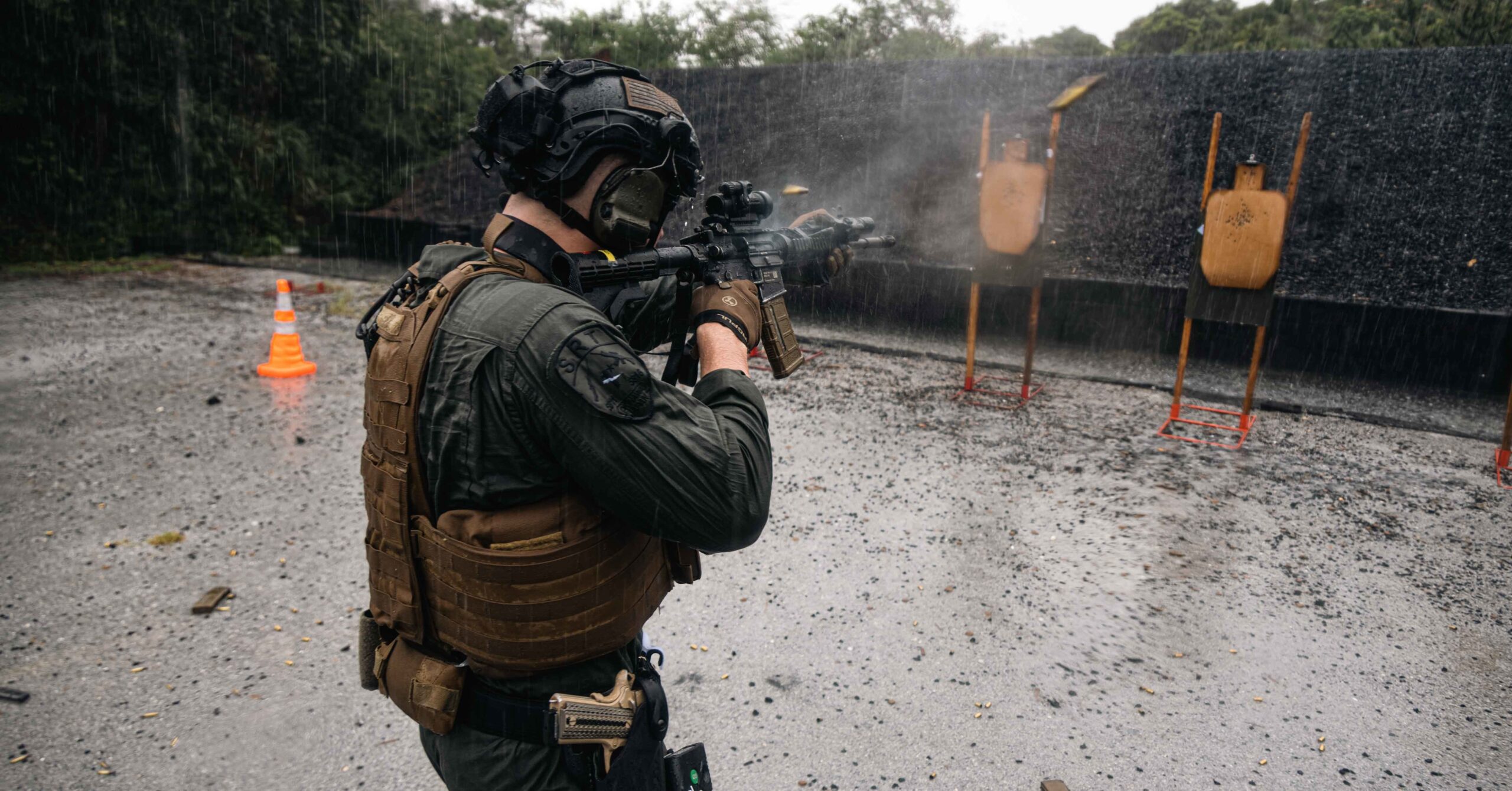
“Today, we shot from a tower structure to simulate engaging a hostile target from a sniper position. Afterward, we moved to a short range to practice static fire, multiple hostel engagements, and team movement drills,” said Gunnery Sgt. Russell Harned, team commander with SRT, Headquarters and Support Battalion, Marine Corps Installations Pacific. “We conducted a familiarization course of fire with an M40A6 rifle, Colt M45A1 Close Quarter Battle Pistol, P320-M18 pistol, and M4A1 Carbines.”


To remain proficient, SRT practices marksmanship weekly by conducting range firing and team tactics. As they continue to train, the team members have adapted to work not only with a dynamic approach but also with a psychological one.

“The way we execute the mission at hand has drastically changed,” said Harned, “We still enter structures in a dynamic style, referring to kicking down doors, but we now take into account a psychological approach, to understand what the individual inside is thinking and what we can do to help them.”

SRT works on an emergency basis. When a threat is deemed too high risk for a patrolman, SRT receives a call to neutralize the subject. Their main goal is to contain, control, and dominate a threat psychologically or physically.

“My job is to protect and save lives,” said Cpl. Dylan Diamond, a team leader with SRT, H&S Battalion, MCIPAC. “Our job as a team is to protect all service members, Status of Forces Agreement Personnel, and local nationals on base. When we arrive at a site, we resolve the situation promptly, with minimal property damage.”

Diamond explained that he sees SRT continuing to move positively by adapting to the new situations and developing new tactics to protect bases across Okinawa further. Diamond explained that they will continue to grow and work as a team, furthering their goal to contain, control, and dominate a threat psychologically or physically.

By LCpl Jonathan Beauchamp, Marine Corps Installations Pacific

Finn-Savotta to Supply New M23 Equipment Sets to the Finnish Defence Forces

Thursday, September 8th, 2022

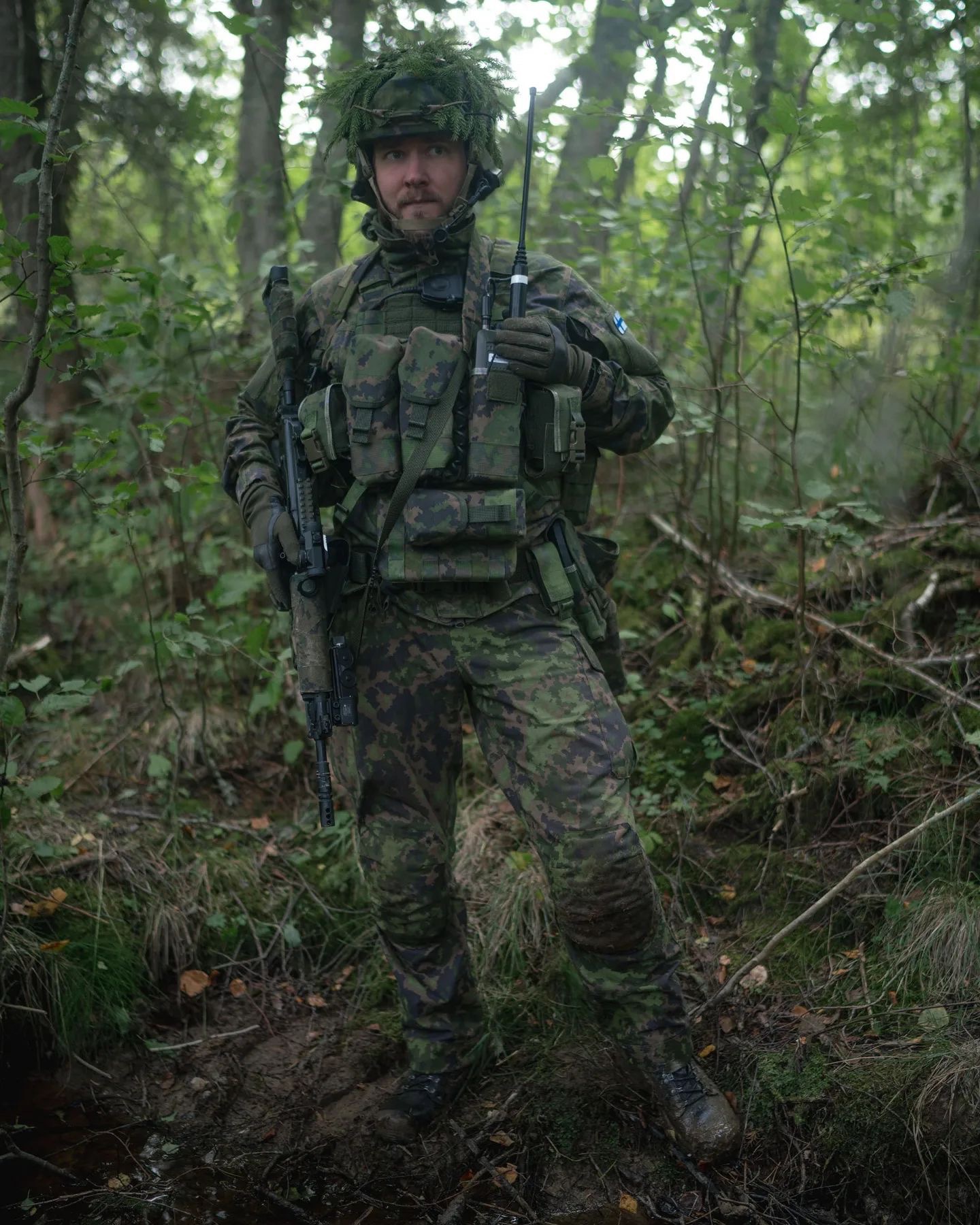
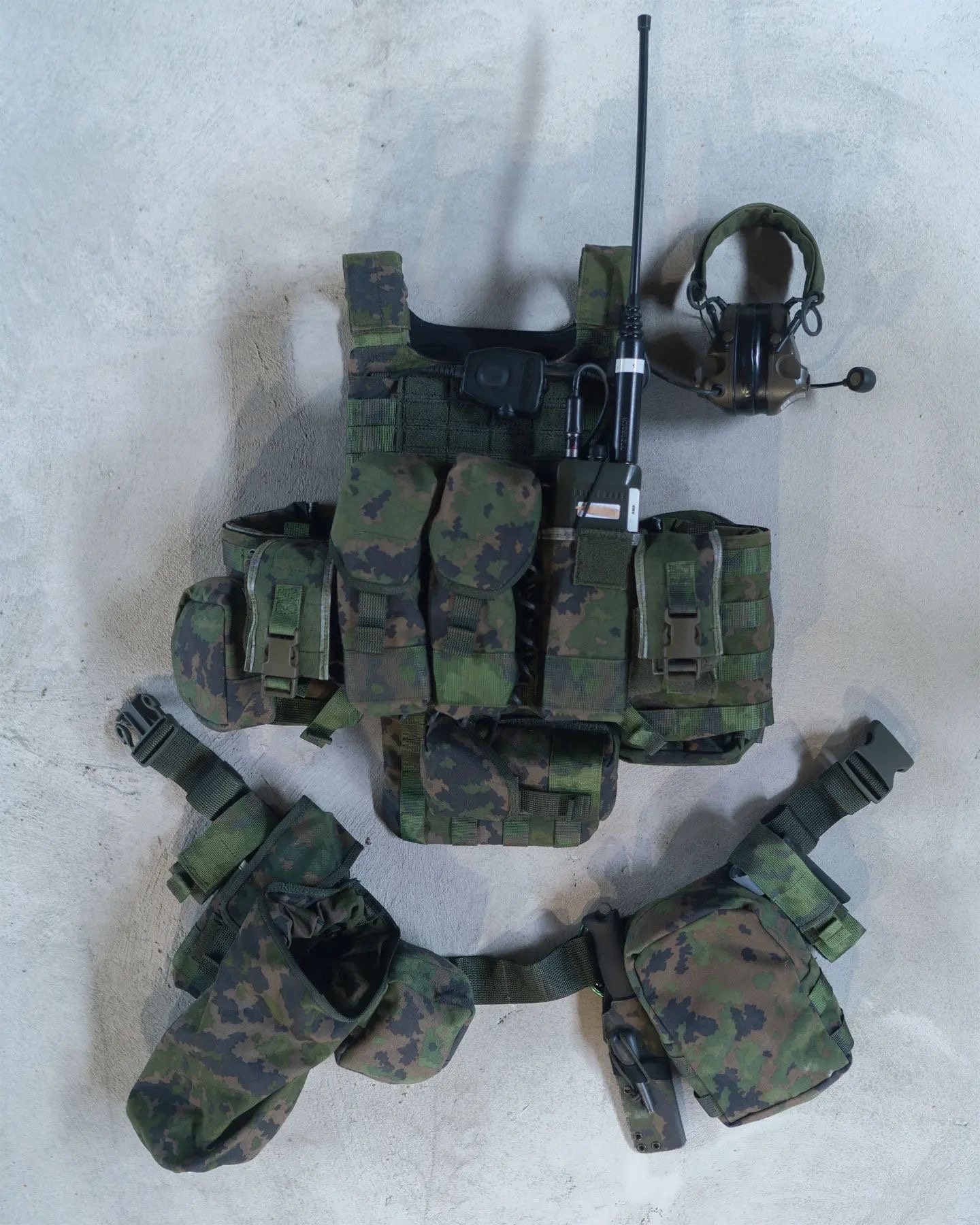
We have received a purchase order from the Finnish Defence Forces worth approx. 13 million eur for new M23 belt and pouch sets. We will also be manufacturing the textile parts for a 7 million eur procurement of M17 body armour. The body armour systems will be supplied to the FDF by Finnish body armour specialists C.P.E. Production Oy, for whom we have worked as subcontractors in the earlier procurements of the M17 system.

These projects will keep a considerable portion of our resources busy for a few years and may temporarily affect the availability of our commercial products. We are already working on expanding our production capacity to keep up with the growing demand.

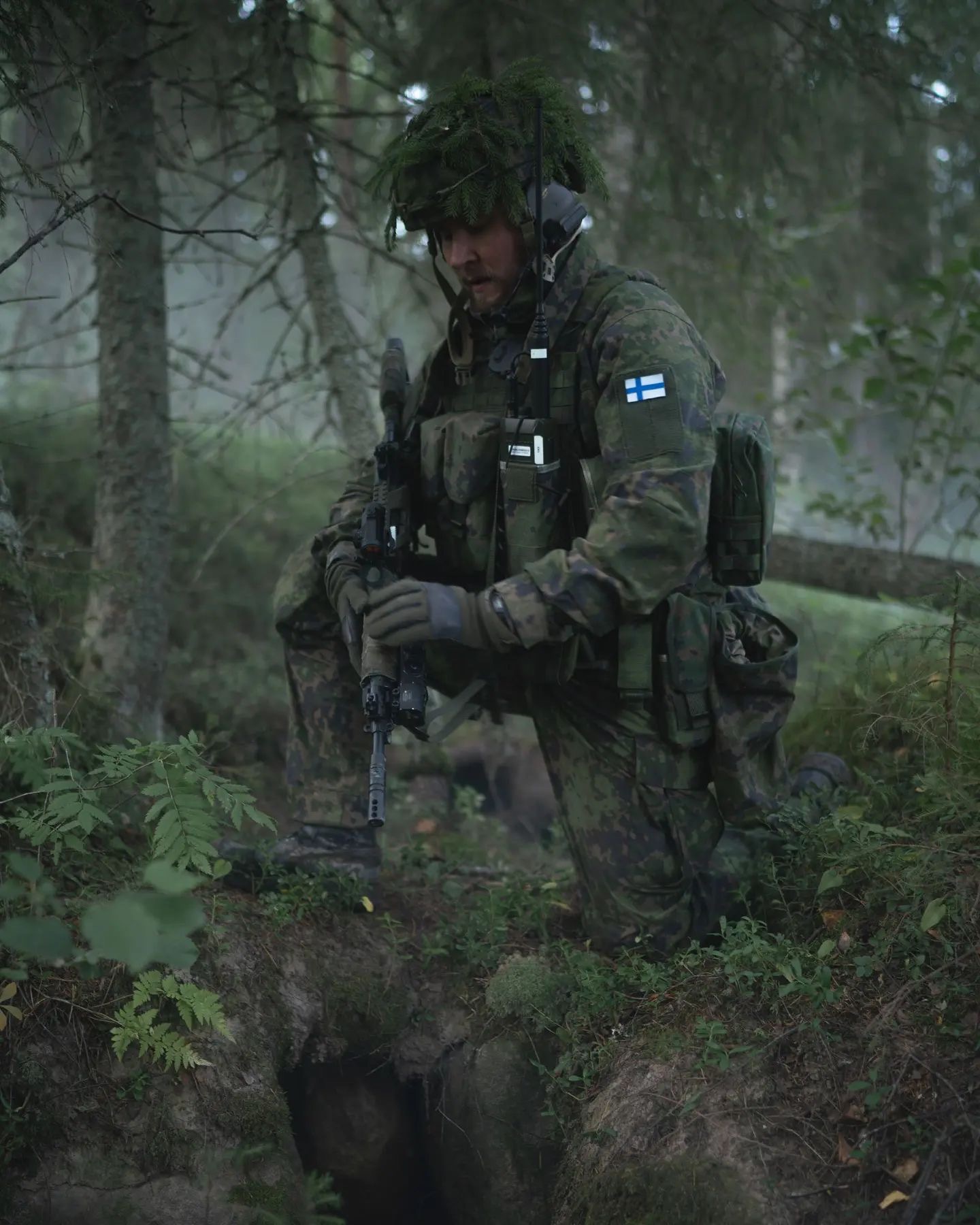
The M23 belt and pouch set is designed for soldiers using M17 body armour and other PALS compatible load carrying equipment. The set includes a PALS compatible belt, two double magazine pouches, one single magazine pouch, four utility pouches, an empty magazine dump pouch and two hand grenade pouches. All pouches are made in Finnish M05 woodland camouflage and feature both PALS and belt attachment systems.

This project will have a domestic employment impact of ca. 50 person-years, with manufacturing being done at our facilities in Finland and Estonia. The main materials used, 500D and 1000D Cordura fabrics, webbing and buckles are made in the EU, with the majority of the webbing and a few other materials used being Finnish made. These are the same high-quality materials we use in the production of our commercial products.

This project is another natural step in our decades long commitment to the Finnish Defence Forces, for whom we have since the 1960’s designed and made, tents, backpacks, the M85 and M05 series of load carrying equipment and various other equipment. It should be noted that for us the Finnish Defence Forces have always been more than just a customer. In the end we design and manufacture gear for use by our friends, family and ourselves.

www.savotta.fi

How the New Special Warfare Branch at Air Force Recruiting Service is Making a Difference

Thursday, September 8th, 2022

JOINT BASE SAN ANTONIO-RANDOLPH, Texas —

Historically, recruiting Airmen for Special Warfare career fields has been as tough as the Airmen who fill its ranks. So when Air Force Recruiting Service entered fiscal 2022, it organized a team in its Operations division here to inspire, engage and recruit future SW Airmen.

That team, called the SW branch, is reporting some progress despite headwinds that have characterized one of the toughest recruiting years in Air Force history for all career fields.

The selection process and relatively small size of the Air Force Special Warfare community compared to other career fields make members an elite class of warriors. So AFSPECWAR is lesser known compared to its counterparts in the Army, Navy and Marine Corps.

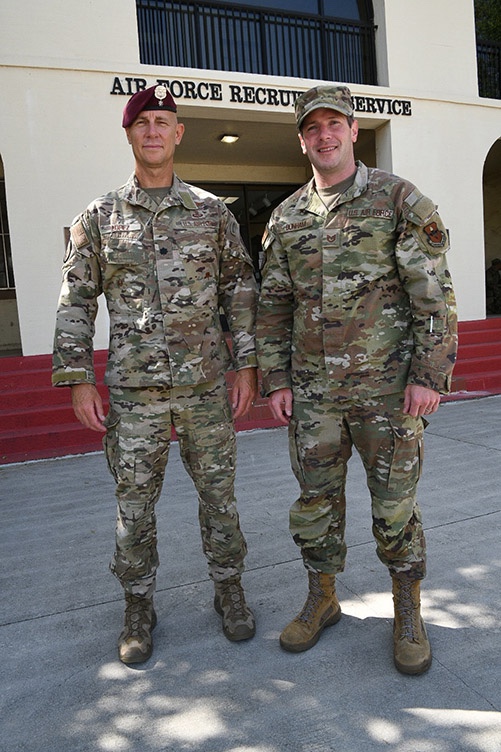
“We needed to share the story of our community, its feats of heroism and no longer be ‘quiet professionals’,” said Lt. Col. Joe Lopez, SW branch chief. The former Army Ranger and current Air Force combat rescue officer by trade, designed the 2022 plan to recruit aspiring Airmen for AFSPECWAR from within the Air Force as well as non-prior service future Airmen.

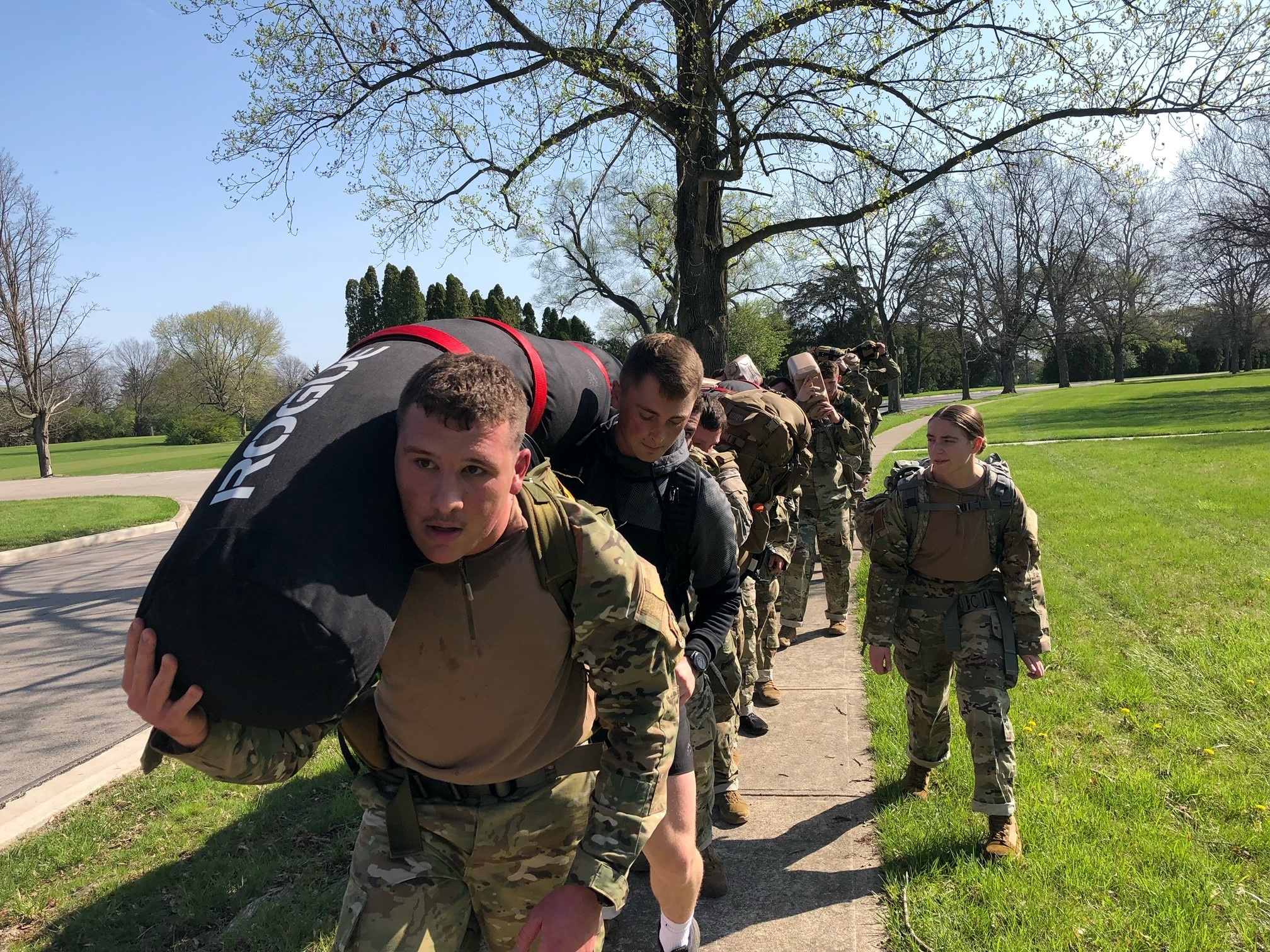
Unlike most branches at the AFRS headquarters, SW branch members visited universities and military installations where they met with all demographics while local Air Force recruiters focused on traditional recruiting methods. Overall, SW branch is searching for people with grit and determination who have the aptitude, mentality and physicality to endure the requirements of entering the SW career fields.

Those career opportunities include Combat Rescue, Special Tactics, and Tactical Air Control Party officer career fields as well as Pararescue, Combat Control, Special Reconnaissance, and Tactical Air Control Party enlisted career fields. In addition, the branch also supports recruitment for enabler Air Force Specialty Codes such as Survival, Evasion, Resistance, and Escape, along with Explosive Ordnance Disposal enlisted career fields.

Specific to enlisted career fields, qualified applicants will enter the Special Warfare Operator Enlistment vectoring program designed in 2020 to streamline the enlistment process. This begins in the pre-accession phase where recruiting development teams identify potential SW candidates and begin the process to prepare them for the rigors of the Special Warfare training pipeline and later, their designated career field.

AFRS and the AFSPECWAR community aim to create a competitive model in the SWOE “Development Pool” where interested civilians strive to be sufficiently mentally and physically fit so they can be the next AFSPECWAR operators.

Part of the need and desire to move out more aggressively than before is because the Air Force has struggled to meet its goal for enlisted and officer ranks in AFSPECWAR.

“The intent of these outreach efforts is to establish rapport with interested applicants, give them insight on how to train smartly, and expose them with introductions to some of the physical challenges that they may experience while being screened and assessed so they’re better prepared mentally to overcome adversity during those trying times,” Lopez said. “All too often, we hear ‘I didn’t know the Air Force had this capability,’ so we are working to inspire, connect, develop and recruit future candidates into AFSPECWAR before they ship to Basic Military Training.”

Lopez’s team includes veteran recruiters who are familiar with the challenges of recruiting SW Airmen. “Recruiting special warfare Airmen for the Air Force is very difficult, because most civilians have only heard about Navy SEALs and Green Berets,” said Master Sgt. Kenneth Babb, SW branch superintendent and former SW recruiting flight chief. “Few have ever heard about this very small community of elite warriors inside the Air Force. We know that there are people out there who want to serve in the military as a ground combatant and we need them to know that there are opportunities for them in the Air Force.”

Circumstances dictated the need for a new, innovative approach and plan that synchronized the worldwide effort to recruit SW Airmen.

“This is the very reason AFRS stood SW branch up and we hit the ground running,” Lopez said. “In our first year alone, we engaged with almost 1,300 cadets in 42 different Air Force ROTC detachments to recruit potential special warfare officers,”

The SW branch also visited 10 different Air Force bases and met with more than 200 Airmen to conduct in-service recruiting for enlisted Airmen and officers.

Simultaneously, Lopez and his team supported initiatives to elevate public awareness and engage new enlistees. The SW branch helped AFSPECWAR obtain trademark approval for a new logo and was involved in the Air Force’s decision-making process to increase SW initial enlistment bonuses from $15,000 to $50,000.

“Our main goal is to streamline the process from recruiting America’s highly talented applicants to enter the Air Force and begin their journey, in the hopes of becoming an AFSPECWAR Airman,” Lopez said. “We truly believe that if we can improve AFSPECWAR’s brand awareness and promote the opportunities special warfare careers offer, then recruiting will be much easier.”

SW branch members said that, overall, AFSPECWAR’s most difficult challenge is recruiting SW Open Enlistment candidates. SW recruiters are spread throughout the U.S. where they need to bring in roughly 1,000 non-prior service recruits each year.

“I was blown away by the effort a recruiter puts into shipping a SWOE candidate,” said Master Sgt. Matthew Voss, a SERE specialist assigned to the SW branch. Before Voss was assigned to AFRS, he served as a flight chief for the SERE Specialist Orientation Course at Joint Base San Antonio-Lackland’s Chapman Annex. He is the first SERE specialist assigned to AFRS.

“The Airmen of AFSPECWAR are absolutely critical when a conflict kicks off and we need to ensure that we have sufficient Airmen ready for the next conflict,” Voss said. “That all starts with recruiting.”

By Air Force Recruiting Service Public Affairs, Air Force Recruiting Service

2022 SOLGW CARBINE Series

Wednesday, September 7th, 2022

6 September 2022 – San Antonio Texas – SOLGW is pleased to announce that registration is filling for the 2022 SOLGW Carbine Series to be held at The Ranch TX on 12/13 November 2022. With 12 challenging stages competitors will shoot from 0-600 yards. All prizes are on location for distribution upon completion of the event. Match director is Jeremy Reid and runs under the USSL-URL-EMG Match.

Sign up is open now at Practiscore practiscore.com/the-sons-of-liberty-gun-works-carbine-series-2022/register

Media / Sponsor inquires – carlo@sonsoflibertygw.com