FirstSpear TV

Archive for the ‘Guest Post’ Category

US Army Approves Milestone C and Awards LRIP Contract for the Mobile Protected Firepower Program

Wednesday, July 6th, 2022

WASHINGTON — The Army announced today the award of a $1.14 billion contract to General Dynamics Land Systems, Sterling Heights, Michigan, for the production and fielding of up to 96 Mobile Protected Firepower, or MPF, vehicles. The award comes just days after the Army closed out the MPF middle-tier acquisition rapid-prototyping phase and transitioned to a major capability acquisition program with a favorable Milestone C decision — an incremental step in the Department of Defense’s acquisition process that moves into the production and deployment phase.
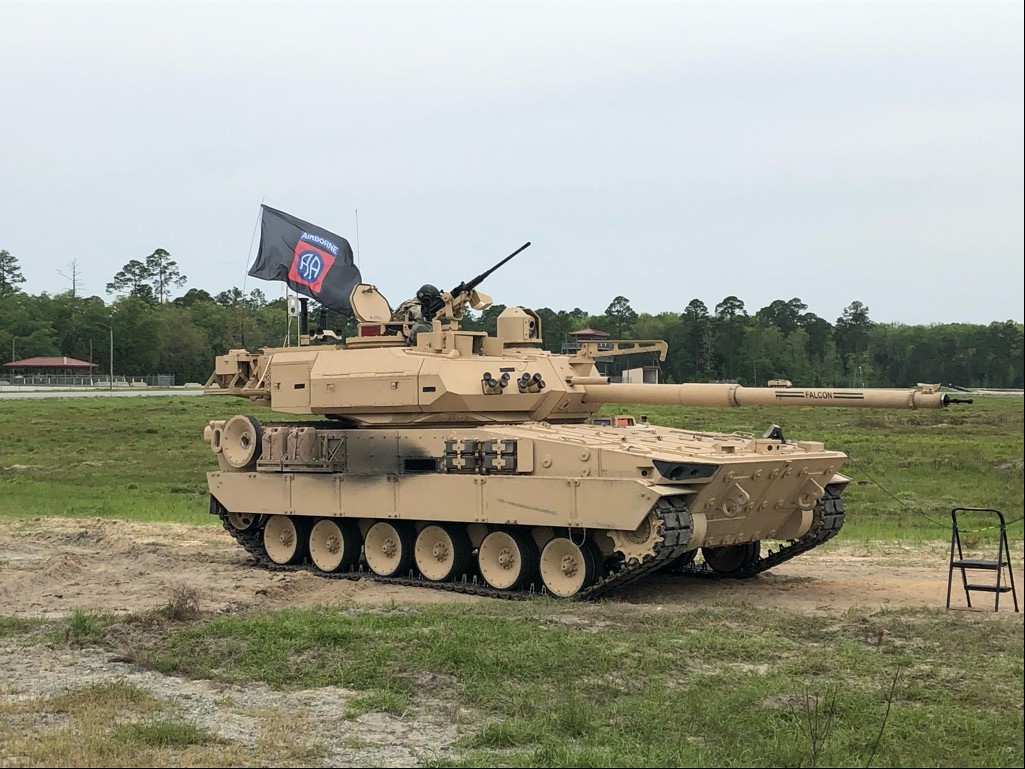
MPF will provide infantry brigades greater survivability, the ability to identify threat systems earlier and at greater distances, and will not restrict movement in off-road terrain. MPF will also allow Soldiers to move at a faster pace, protecting the assaulting force.

“The MPF program did exactly what the Army asked, which was to complete a competitive and accelerated rapid prototyping effort with Soldier touchpoints,” said Mr. Doug Bush, Assistant Secretary of the Army for Acquisition, Logistics and Technology, and the Army’s acquisition executive. “MPF is a benchmark program, as the acquisition and requirement communities worked together to complete the [middle-tier acquisition rapid-prototyping] phase and move this system into production in just under four years.”

The Milestone C decision came on schedule and was underpinned by strong support and overwhelming commitment from Army leadership.

“MPF represents a new capability for the Army, allowing our light maneuver forces to overmatch adversaries. Through multiple Soldier touchpoints, our Soldiers have operated the prototypes and provided crucial feedback to the design team, ensuring our forces will have the asset they need on the future battlefield,” said Maj. Gen. Ross Coffman, director of the Next Generation Combat Vehicles Cross Functional Team.
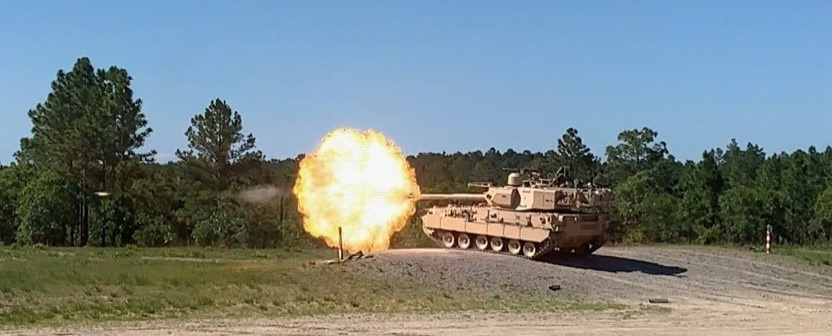
During the middle-tier acquisition rapid-prototyping phase, the Army successfully tested and evaluated 24 prototypes during a pandemic. Middle-tier acquisition authorities allow the Army to have the flexibility to get prototypes into Soldiers’ hands quickly to enable fidelity on known risks and develop informed plans moving forward.

“Congress has provided us with flexible [middle-tier acquisition] legislation that allows for accelerated prototype delivery and Soldier operational feedback, which expedites the fidelity on technical and programmatic risks to better inform program acquisition decisions,” Bush said.

The MPF will be the Army’s first new design vehicle fielded in over four decades, with first unit equipped planned for late fiscal year 2025.

“Today’s announcement sets in motion an important modernization effort for the Army. As a team we’ve worked diligently to make certain we’ve taken the right steps early on to accept risk where appropriate and move faster,” said Brig. Gen. Glenn Dean, ASA(ALT)’s program executive officer for ground combat systems. “The Army is committed to delivering the MPF capability to the infantry brigade on an accelerated schedule with incremental improvements over time.”

During the low-rate initial production phase the Army will take delivery of MPF vehicles and conduct production qualification testing to include lethality, mobility, survivability, full-up system live-fire, and reliability, Availability and maintainability testing. Additionally, an initial operational test and evaluation will also be conducted, all leading to the first unit equipped. The award of subsequent low-rate initial production vehicle options will be based on review of cost, schedule and performance metrics defined in the acquisition program baseline.

By U.S. Army Public Affairs
Happy 4th To Shooters in the UK – Seekins Precision Now Available

Monday, July 4th, 2022

SSD sponsor Edgar Brothers made this announcement today. Americans, arming the British.

We’re VERY excited about this!!

Happy 4th July!

Edgar Brothers is honoured to announce that we have agreed a partnership to distribute Seekins Precision in the UK.

Since being founded in Idaho 18 years ago, Seekins Precision has become the industry standard for precision, accuracy and quality. Offering an array of rifles whose accuracy, reliability, and durability has not just set them apart from the field, but has put them firmly on top of it! bit.ly/SeekinsPrecisionUK

Check back over the next few days as we reveal more details…

US Marines Redesignate Littoral Combat Team, Realign Combat Logistics Battalion Under Marine Littoral Regiment

Monday, July 4th, 2022

MARINE CORPS BASE HAWAII —

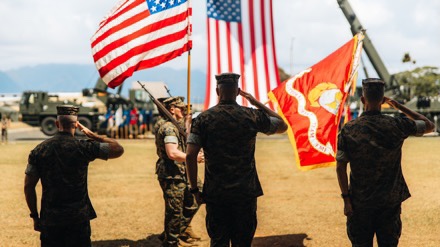
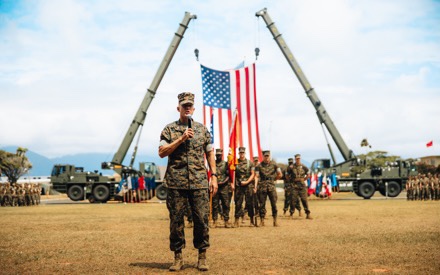
The U.S. Marine Corps redesignated 1st Battalion, 3rd Marines as the 3rd Littoral Combat Team and realigned Combat Logistics Battalion 3 under the 3rd Marine Littoral Regiment during two ceremonies held here June 23 and 24, 2022.

These actions, along with the activation of the 3rd Littoral Anti-Air Battalion in February, advance the Marine Corps’ Force Design 2030 modernization effort and mark the complete assembly of the 3rd Marine Littoral Regiment’s subordinate units. While the 3rd MLR is not envisioned to be fully operational for several years, these milestones represent substantial progress toward that end.

“This is a significant moment in Marine Corps history,” stated Col. Timothy S. Brady, commanding officer, 3rd Marine Littoral Regiment. “This transformation began two years ago when the Commandant of the Marine Corps laid out his guidance for the force of the future in Force Design 2030. Force Design 2030 is not static. We will continue to change and adapt through experimentation and training. We’ve been doing it since 1775, and nobody does it better than the United States Marines.”

The 3rd LCT will be organized, trained, and equipped to support sea control and sea denial operations in actively contested maritime spaces. The unit is purpose-built to integrate with naval platforms and units and to enable joint and allied organizations. 3rd LCT will conduct reconnaissance and counter-reconnaissance, employ and enable multi-domain fires, and establish expeditionary sites to support a naval expeditionary force’s maritime campaign across the competition continuum.

“We are ready for the future; we are ready to train. We are showing up, ready to enhance the MLR’s number one priority; warfighting.”

-LtCol Osman Sesay, commanding officer, Combat Logistics Battalion 3

The 3rd LCT is organized with a headquarters company, three infantry companies, and a medium missile battery. When fully equipped, the medium missile battery will enable the Marine Littoral Regiment to target and strike maritime targets with anti-surface fires or provide battlefield intelligence to other platforms across the joint force in support of naval objectives.

CLB-3 is organized and trained to provide tactical logistics and explosive ordnance disposal support to sustain the 3rd Marine Littoral Regiment’s operations. CLB-3 will conduct ground supply operations, ground equipment maintenance, explosive ordnance disposal, prepositioning supplies, general engineering operations, operational contract support, transporting supplies and equipment on land and from sea-based connectors, and provide health services.

“We are happy to join this new formation,” stated Lt. Col. Osman Sesay, commanding officer, Combat Logistics Battalion 3. “We are ready for the future; we are ready to train. We are showing up, ready to enhance the MLR’s number one priority: warfighting.”

The presence of 3rd MLR’s subordinate units allows for extensive training, experimentation, and wargaming. These units will continue to vigorously train, evaluate, adapt, and overcome to ensure the Marine Corps stays ready to fight on future battlefields.

“Through all of this change, one thing will always remain the same: our Warrior Ethos,” stated Col. Brady. “We are more lethal today than we have ever been in our history. We stand prepared and ready to fight now as part of the 3rd MLR and 3rd Marine Division.”

From July 1 to August 7, the 3rd MLR will participate in the Rim of the Pacific exercise, where it will conduct expeditionary advanced base operations in support of joint, allied, and partnered forces.

For additional information on the MLR, contact 1stLt Isaac Liston at Isaac.liston@usmc.mil.

Story by 1stLt Isaac Liston, 3rd Marine Division

Photos by Cpl Patrick King

SCUBAPRO Sunday – The USS Hannah

Sunday, July 3rd, 2022

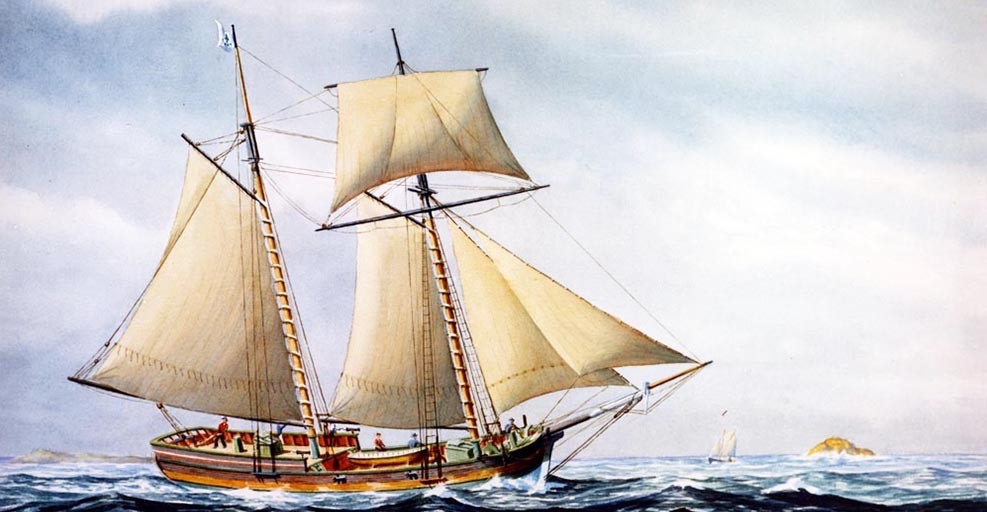
As we come up on the 4th of July, I think it is always good to remember where you came from. An army general purchased the first ship of what would become the Continental Navy. George Washington used his own money for the initial Continental Navy vessel. On April 24, 1775, he purchased a schooner and gave her the name Hannah. She was assigned the mission of capturing Royal Navy supply ships attempting to reach Boston while the city was under siege. On September 7, Hannah was successful in capturing the hostile barge, HMS Hoy.

It is believed that the schooner Hannah was the first American naval vessel to be armed during the American Revolution. Hannah is also considered the vessel that laid the foundation for the United States Navy. Hannah Glover was her owner, and she was given that name in honor of John Glover’s wife. They lived in Marblehead, Massachusetts. Most of her crew was comprised of people from the nearby town of Marblehead. General George Washington was the one who decided to put the schooner into the service of the American Army. On September 2, 1775, Washington gave Nicolson Broughton the commission to command the Hannah and ordered the ship to engage in combat operations against the British. On September 5, 1775, Hannah departed from the harbor of Beverly, Massachusetts. Still, two days later, when she was being pursued by the HMS Lively and another British vessel, she sought refuge in the harbor of Gloucester, Massachusetts. Hannah was successful in capturing the British sloop Unity after leaving Gloucester Harbor. Hannah’s brief naval career ended on October 10, 1775, when the British sloop Nautilus ran her aground under the guns of a small American fort near Beverly. This brought an end to Hannah’s service in the navy. Hannah was saved from destruction and capture following an engagement between the British ship and the townspeople supported by the fort. However, she was soon decommissioned because General Washington had found more suitable vessels for his battles. This historic schooner was said to have called both the city of Beverly and the town of Marblehead its home port at one point. Each claimed the honor of being “the Birthplace of the American Navy” from the time Hannah was in service until an old plaque was discovered in the Philadelphia Navy Yard proclaiming Marblehead to be where the United States Navy was founded. The plaque states that Marblehead was where the US Navy was established.

24 SOW Observes 10th Anniversary at Hurlburt

Sunday, July 3rd, 2022

Hurlburt Field, Fla. —  

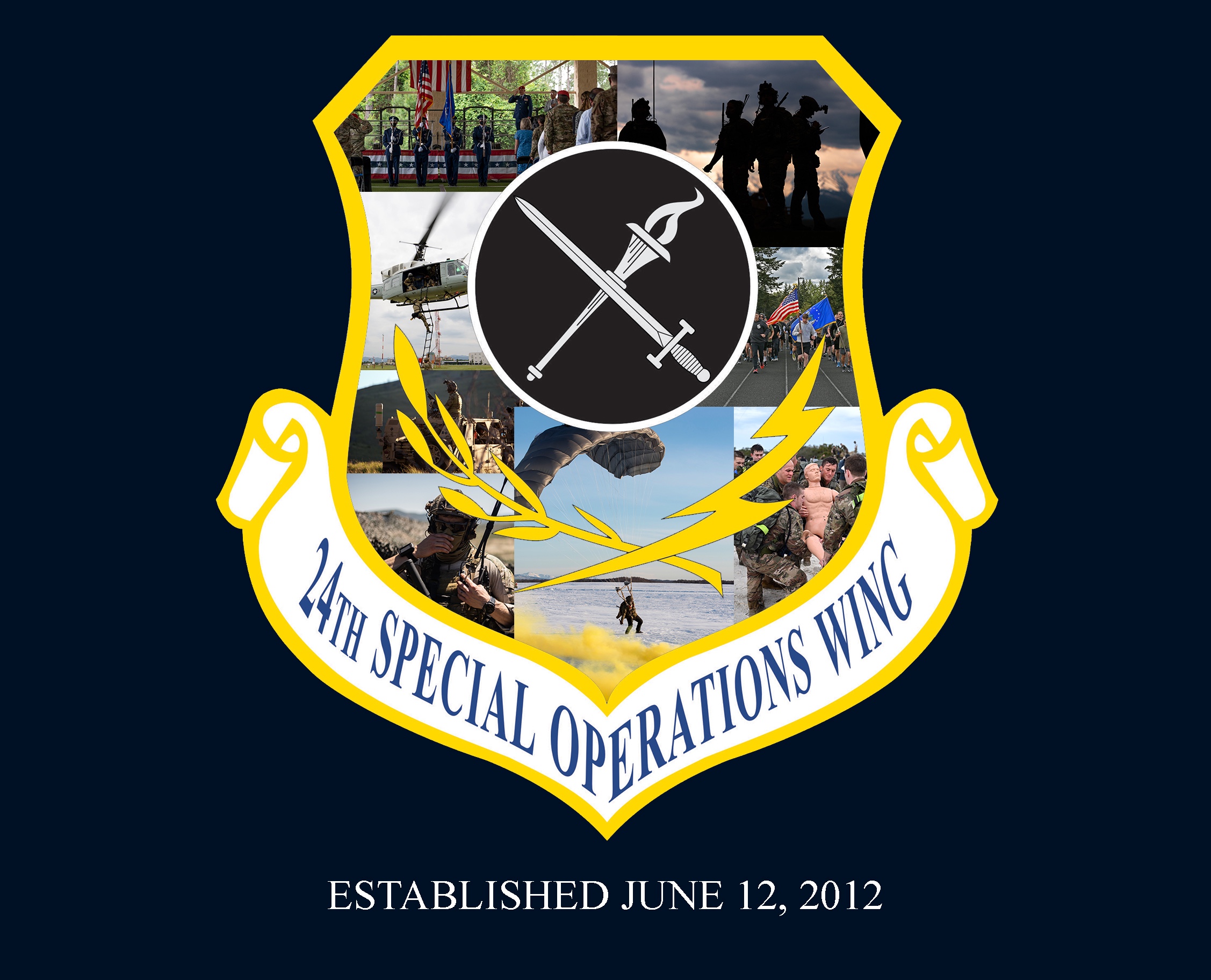
12 June marked the 10th anniversary of the 24 SOW at Hurlburt Field. The “at Hurlburt” is key here as the wing’s lineage dates back to its original establishment as the US Army Air Forces 24th Composite Wing (Special) 19 November 1942 and activation on 25 December 1942. Upon activation at Camp Olympia, Reykjavik, the wing’s first mission involved the defense of Iceland during World War II through 15 June 1944. The wing’s original weapon systems included P-38, P-39 fighter aircraft (1942-43), and P-40 and P-47 fighter aircraft (1944-44).

Prior to activation at Hurlburt in 2012, the wing is best known for its many mission areas in the Caribbean and the Panama Canal Zone where it served many years as the host unit at both Howard and Albrook Air Force Bases. Between 1946 and 1948 the wing supervised large numbers of major and minor bases and Air Force units in the Caribbean area from Puerto Rico to British Guiana. Organized again in 1967 in the Canal Zone, the wing assumed operation and maintenance responsibilities for Howard and Albrook Air Force Bases (1967-1987 and 1989-1999) and special operations mission sets that included air transport, paramilitary operations, exercise participation, civic actions in Central and South America, search and rescue missions, humanitarian operations, mercy missions, aeromedical evacuation; as well as the support of Army Special Forces, U.S. military assistance units, and training of Latin American air forces.  From activation in 1967 until mid-1972, the 24 Wing also operated the USAF Tropic Survival School at Albrook.

From 1992-1999, the wing operated as the senior USAF organization in Panama, replacing the previous command and division-level Air Force host units.  In June 1992, it began operating the only C-21, CT-43, C-27, and special mission C-130s in Air Combat Command (ACC).  The wing also provided mission command and support to multi-service units directed by United States Southern Command and United States Southern Air Force, 1992-1999. Mission areas included counternarcotics operations, aerial command and control, intra-theater airlift, security assistance, and the general defense of the Panama Canal.  During 1999, the wing conducted base closures and unit inactivations in compliance with the Panama Canal Treaty of 1977 that stipulated all U.S. military forces would depart Panama by 31 December 1999.

With the 24 SOW’s activation at Hurlburt 10 years ago, AFSOC selected the “24” from the inactive scrolls of Air Force historical units because of its long history of and close association with nearly all special operations mission areas. From the mountaintops in Afghanistan to the depths of an infamous cave in Thailand, the 24 SOW conducted operations ranging from the fiercest types of combat to the purest forms of humanitarian assistance and disaster relief.

At activation, the 24 SOW kept its awesome lineage alive and, as importantly, it inherited the history of Air Force Special Tactics. After being activated at Hurlburt Field and assigned to Air Force Special Operations Command, the wing comprised of two Special Tactics groups, a training squadron, and operational squadrons with a mission to organize, train, and equip Special Warfare Airmen for rapid global employment to enable airpower success.

Since 2012, the 24 SOW has been an integral part of every major joint operation in Afghanistan, Iraq and Syria, Africa, Europe, and Pacific theaters of operation. Special Tactics, from its beginning, has provided global access capabilities inherent to no other unit in the Air Force or its sister services – capabilities absolutely essential to effective military operations. The 24 SOW also provides unique rapid deployment, precision strike, personnel recovery, special reconnaissance and battlefield surgery capabilities. Today the wing’s primary weapon system is not an aircraft weapon system typical in most Air Force wings. Today, and since 2012, the 24 SOW’s weapon system is the men and women who provide and sustain these capabilities for AFSOC and the Joint Force.

Since its activation 10 years ago, members of the wing and its predecessor unit, the 720th Special Tactics Group, have been recognized with our nation’s highest valor awards including the Medal of Honor, 12 Air Force Crosses, 57 Silver Stars, and hundreds of Bronze Stars. This level of individual recognition makes the 24 SOW the highest decorated community in the U.S. Air Force in the modern era. On this special anniversary of the 24 SOW at Hurlburt, the wing remains a forever reverent organization and honors its members who made the ultimate sacrifice in both training and combat. Perhaps the AFSOC commander Lt Gen James Slife stated it best, “Within AFSOC – and the Air Force writ-large – no group [has] paid a greater human toll and carried a heavier deployment burden of the last two decades than AFSOC’s Special Tactics Force.”

By Charlie Newell, 24 SOW Public Affairs

President Biden to Award Four Soldiers the Medal of Honor

Saturday, July 2nd, 2022

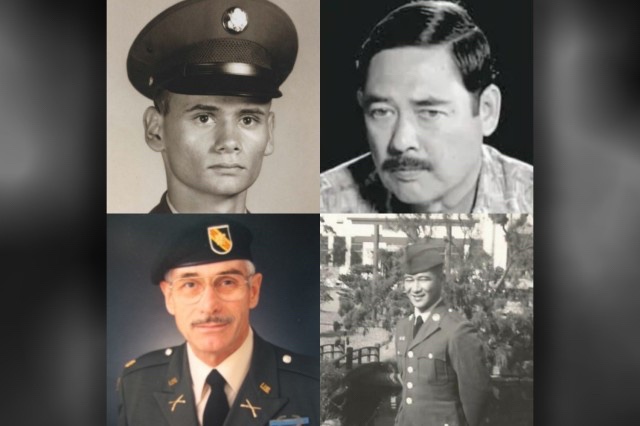
WASHINGTON — Four Vietnam War Soldiers who repeatedly put themselves in harm’s way to defend injured comrades will be awarded the Medal of Honor during a ceremony at the White House on July 5, 2022, according to the White House.

Two of the recipients, Spc. 5 Dwight Birdwell and Maj. John Duffy, rebuffed multiple enemy attacks while leading fellow Soldiers and allies to safety. Both Birdwell and Duffy sustained wounds but continued to engage the enemy.

Spc. 5 Dennis Fujii, a combat medic, refused rescue attempts after facing a wave of enemy fire, remaining on the ground to treat the wounded.

Staff Sgt. Edward Kaneshiro, an infantryman, who will receive the medal posthumously, helped rescue trapped survivors of two U.S. squads who had been ambushed by enemy forces in a Kim Son Valley village. Kaneshiro later died while continuing his service in Vietnam.

KANESHIRO

In a village near Phu Huu 2, a large North Vietnamese contingent ambushed two squads from Kaneshiro’s platoon on Dec. 1, 1966. Kaneshiro, a squad leader with Troop C, First Squadron, 9th Cavalry Regiment, 1st Cavalry Division, was scouting land east of the village at the time of the attack.

Kaneshiro directed his squad toward the sound of the fire, where enemy forces had killed his platoon leader and several other Soldiers, and had his two sister squads pinned down. Kaneshiro swiftly read the situation and realized that the fire from a machine-gun bunker and large concealed trench had to be stopped if anyone were to survive. Kaneshiro deployed his men to cover, then crawled forward, alone, to attack the enemy force.

While flattened to the ground he was somehow able to throw a grenade through the aperture of the bunker, eliminating it as a threat. Next he leapt into the trench and single-handedly worked his way down its entire 35-meter length, destroying one group of enemies with his rifle and two more enemy groups with grenades.

Kaneshiro’s assault allowed the pinned-down squads to survive and prepare their casualties for evacuation. His actions enabled the orderly extrication and reorganization of the platoon.

Kaneshiro would continue his tour in Vietnam until his passing on March 6, 1967, when he died by enemy gunshot wound at the age of 38.

BIRDWELL

On Jan. 31, 1968, a large North Vietnamese element attacked Birdwell’s unit — Troop C, 3rd Squadron, 4th Cavalry, 25th Infantry Division — at Tan Son Nhut Air Base, just outside of Saigon on the first day of what would later become known as the Tet Offensive. Birdwell’s unit bore the brunt of the initial attack, which destroyed many of the unit’s vehicles and incapacitating Birdwell’s tank commander. Under heavy small-arms fire, Birdwell moved his commander to a place of safety and slid into the commander’s hatch.

Armed with the tank’s machine gun and cannon and his M16 rifle, Birdwell fired upon the North Vietnamese. When he exhausted all of his ammunition, Birdwell dismounted and maneuvered to his squadron commander’s helicopter, which had been downed by enemy fire, and retrieved two machine guns and ammunition, with which he and a comrade suppressed the enemy. His machine gun was struck by enemy rounds and exploded, injuring his face and torso.

Birdwell refused evacuation and moved amongst the disabled vehicles and defensive positions, collecting ammunition to distribute to the remaining defenders. While under harassing fire, Birdwell led a small group of defenders past the enemy force and engaged the enemy with hand grenades, disrupting their assault until reinforcements arrived. Birdwell continued to treat wounded until he was ordered to seek medical attention.

FUJII

As a crew chief serving with the 237th Medical Detachment, 61st Medical Battalion, 67th Medical Group, Fujii engaged in rescue operations that transported injured South Vietnamese personnel over Laos and the Republic of Vietnam on Feb. 18, 1971. During a second approach to a hot landing zone, the enemy concentrated a barrage of flak at Fujii’s helicopter, causing it to crash in the conflict area, injuring Fujii.

A second helicopter was able to land and load all of his fellow downed airmen. However, Fujii was not able to board because the enemy directed fire on him. Rather than endanger the lives aboard the second helicopter, Fujii waved it off to leave the combat area. Subsequent attempts to rescue him were aborted due to the violent anti-aircraft fire. Fujii secured a radio and informed the aviators in the area that the landing zone was too hot for further evacuation attempts. Fujii remained as the lone American on the ground, treating the injuries of South Vietnam troops throughout the night and the next day.

On the night of Feb. 19, their perimeter came under assault by an enemy regiment and artillery fire. He called U.S. gunships to aid their small force in the battle. For more than 17 hours, Fujii repeatedly exposed himself to hostile fire as he left his entrenchment to observe enemy troop positions and direct air strikes against them. At times the group’s survival was so tentative that Fujii was forced to interrupt radio transmittal in order to place suppressive rifle fire on the enemy while at close quarters.

Though wounded and severely fatigued, Fujii’s actions led to the successful defense of the South Vietnamese troops and their encampment.

Then, after a helicopter was finally able to airlift him from the battle, enemy rounds pierced its hull forcing it to crash-land at a friendly camp, where Fujii would spend another two days before being evacuated.

DUFFY

During April 14-15, 1972, Duffy, part of Team 162 Military Assistance Command-Vietnam, was senior advisor to the South Vietnamese 11th Airborne Battalion at Fire Support Base Charlie in South Vietnam. In the days before, the enemy had destroyed the battalion command post, and the 11th’s commander had been killed; Duffy himself was twice wounded.

But instead of being evacuated, Duffy led a two-day defense of the surrounded FSB against a battalion-sized enemy force.

During the attack Duffy moved himself close to the enemy, to an exposed position, in order to call in air strikes. Despite being injured again after being struck by fragments from a recoilless rifle round, Duffy stayed and directed U.S. helicopter gunships onto enemy anti-aircraft and artillery positions.

After a severe, 300-artillery-round attack on the base, Duffy personally ensured the wounded troops were moved to safer positions and distributed ammunition to the remaining defenders.

That afternoon, the enemy began a ground assault on the firebase from all sides. Duffy moved from position to position to spot targets for artillery and to adjust fires. The next morning, after the 11th survived an ambush, Duffy led wounded to an evacuation area while in continual pursuit by the enemy.

By Joe Lacdan, Army News Service

FirstSpear Friday Focus: Tubes

Friday, July 1st, 2022

The Launch Everyone Has Asked For.

FirstSpear will soon launch Tubes® Rapid-Release Technology for purchase on the web. Stay tuned for more deets.

FirstSpear is in the business of providing innovative solutions to long unanswered challenges. Our Tubes® technology reaffirms that position. Quick to close and even quicker to doff, Tubes® fasteners are manufactured from lightweight high-performance polymers that exceed the strength of other molded fasteners currently used on operational equipment. Molded in signature suppressive colors and with a variety of choices for activation, this closure system can be rapidly deployed and completely reassembled in SECONDS. Tubes® technology will improve performance, enhance mission functionality, and reduce weight.

Check out FirstSpear to find all of our apparel and gear for America’s Warfighter.

Air Force Operationalizes ACE Concept, Addresses Today’s Changing Threat Environment

Friday, July 1st, 2022

ARLINGTON, Va. (AFNS) —  

The Air Force announced its vision for operating in modern, contested environments June 23, created to codify and synchronize agile combat employment tactics enterprise-wide.

Adversary threats to Air Force operations at forward bases can deny U.S. power projection, overwhelm traditional defense designs, impose prohibitive losses and lead to joint mission failure. To address these challenges, ACE shifts operations from centralized physical infrastructures to a network of smaller, dispersed locations or cluster bases.

“We must maintain the high ground, fighting from a position of advantage,” said Air Force Chief of Staff Gen. CQ Brown, Jr. “Fundamentally changing the way we generate airpower will complicate adversary planning and provide more options for our joint force and coalition commanders. Our approach to operations over the past 20 years has prioritized efficiency in an environment that is not highly contested. ACE puts the premium on effectiveness in an increasingly challenging threat environment.”

Operationalizing ACE will aid in: the codification of a repeatable and understandable process; forces that are suitably organized, trained, and equipped; theaters that are postured with the appropriate equipment, assets and host nation agreements; and robust joint service and partner nation integration and interoperability.

ACE looks somewhat different depending on the theater of operation and the types of forces involved, which necessitates a variety of approaches for the warfighter.

In Europe, it addresses what might be called the tyranny of proximity, or short threat timelines against Russian missile launches or other attacks, and an expectation that any flight operations are readily observable. The Pacific presents the tyranny of distance, or vast stretches of ocean between likely forward operating locations, with many of them in range of China’s rapidly advancing missile capabilities.

At the tactical level, the ACE playbook approaches and capabilities must enable dispersed forces to adapt and prevail despite uncertainty, using the best information available to local commanders. This will necessitate shifting between offensive and defensive operations in response to what is achievable with available connectivity and logistical support.

At the operational level for centralized command and distributed control, understanding what forces can achieve with available resources and trade-off risks becomes critical. Offensive and defensive capabilities and expertise available at each forward operating location may vary, as will available logistical support.

The ACE framework provides the Air Force the ability to develop, maintain, and share timely, accurate, and relevant mission information across dispersed forces despite adversary attempts to deny or degrade it. It also prepares leaders to make and disseminate risk-informed decisions with limited information.

“Adapting to this new paradigm shift ensures we maintain a combat-effective force,” Brown said. “Our Airmen can expect to conduct operations at a speed, scope, complexity and scale exceeding recent campaigns from distributed locations with increased survivability and enhanced effectiveness.”

In addition to streamlining tactics, developing the Airmen needed to execute core, functional and theater-specific requirements is crucial to operationalizing ACE.

The Air Force is evolving from the just-in-time expeditionary model to recognizing that any Airman, no matter where they are stationed or deployed, needs to be prepared for a world of increasing uncertainty and have the proper training to respond to any contingency.

Beginning with adjustments to foundational Ready Airmen Training requirements, Airmen will receive training more evenly spread throughout all four phases of the Air Force Force Generation cycle versus just-in-time training in advance of an expeditionary deployment.

Additionally, future training models will be adaptable to Airmen’s experience levels and need. Training multi-capable Airmen represents a shift from traditional, large force packages to a smaller footprint to provide combat support and solve problems with the resources at hand.

Those whose jobs are more directly connected to operations in general, and ACE in particular, will require more focused training on how to be multi-capable on an airfield. The exact breakout of Air Force Specialty Codes and required skills are still being determined.

The intent is to train Airmen to be more productive on discrete, wartime tasks that would reduce the number of Airmen in harm’s way in austere environments.

“The multi-capable Airman concept is not about doing more with less,” said Chief Master Sgt. of the Air Force JoAnne S. Bass. “Instead, it’s about how we deliberately train and empower our Airmen to get after future high-end fights. Our Airmen are the competitive advantage we have over any adversary, and how we prepare them for future conflict matters.”

Secretary of the Air Force Public Affairs