SIG SAUER - Never Settle

Archive for the ‘Guest Post’ Category

DEVCOM Soldier Center’s Industry Day Fosters Collaborative Partnerships

Thursday, October 20th, 2022

NATICK, Mass. – The U.S. Army Combat Capabilities Development Command Soldier Center, or DEVCOM SC, hosted the DEVCOM Soldier Center Industry Day on September 29, 2022. The event — which took place at the Residence Inn in Natick, Massachusetts — aimed to engage industry and academic partners and foster relationships that will support the Soldier Center’s mission.

“Industry Day provided the Soldier Center with an excellent opportunity to connect with potential partners and to educate them about our mission and opportunities for collaboration,” said Douglas Tamilio, director of DEVCOM SC.

DEVCOM SC is committed to discovering, developing, and advancing science and technology solutions that ensure America’s warfighters are optimized, protected, and lethal. Industry Day provided information and enabled discussions between DEVCOM SC and industry/academia through a senior leader panel, general briefings, and one-on-one exchanges on a wide variety of topics. The event also provided attendees with concrete information on how to work with the Soldier Center.

“Sustaining and fostering relationships with our industry partners and academia is extremely important for the Soldier Center, and we are very excited with the turnout for the Industry Day event we hosted,” said Richard Hornstein, deputy chief of staff for G-3/5 Operations and Plans at DEVCOM SC.


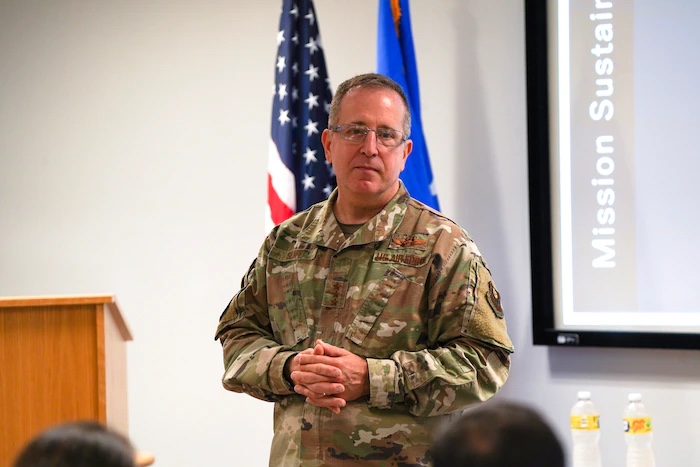
Hornstein noted that Brig. Gen. Larry Q. Burris, Jr. — the Infantry School Commandant and the Director of the Soldier Lethality Cross-Functional Team at the U.S. Army Maneuver Center of Excellence — served as the keynote speaker, addressing an audience of 107 members of industry, helping to align industry efforts with Army goals. Hornstein explained that DEVCOM SC also conducted 85 one-on-one meetings with its partners. Through 21 poster presentations, government representatives further engaged with industry representatives throughout the afternoon.


“These engagements help to inform our industry partners of our development goals and challenges as well as provide them with a venue to share ideas and capabilities they may have available to meet our needs,” said Hornstein. “They also expand and sustain relationships and provide business opportunities for both industry and academia that help us transform basic and applied research requirements into new ideas, capabilities and technologies that underpin the modernization goals of the Army, which is ultimately the mission of the DEVCOM Soldier Center.”

DEVCOM SC topics of discussion included increased Soldier protection, encompassing Arctic Soldier equipment and environmental capabilities; helmets with increased threat level protection; and eyewear with increased fragmentation protection and active anti-fog capability. Some other topics included advanced materials for ballistic protection; reduction of Soldier load; understanding and modeling of Soldier load; and Soldier/squad equipment integration. Other topics included camouflage, concealment, and deception.

Subject matter experts also provided briefings on enhanced Soldier technologies, including power generation, training and simulation technologies, small unit battle training, combat simulation, human performance technologies (wearables, biosensors, exoskeletons, human performance data management systems, assessment technologies, and measurement technologies), and Soldier/robotic interface. Soldier sustainment topics included small unit water generation, nutrient-dense rations/longer shelf-life rations, and novel solutions for re-supply to remote locations.

Michael Codega, DEVCOM SC’s chief technology officer, provided a briefing on DEVCOM SC’s Science and Technology Strategy, including Warfighter Integrated Capability & Knowledge Development, or WICKED, programs.

WICKED programs are large S&T programs focused on creating solutions to problems facing Soldiers and small units in future operating environments. Given the complexity of problems facing warfighters, potential solutions need to combine advanced technology development, applied research. and basic research.

“With such a broad mission and competition for resources, the WICKED problem/program framework is essential for Soldier Center, our partners and the Army enterprise to ensure we are focusing on those operational challenges and opportunities that will allow Soldiers to dominate in the future operating environment,” said Codega.

Burris praised the event.

“We value the various forums the Army facilitates to communicate and collaborate with the enterprise, but what sets this event apart from the rest is the focus on that which is vital to the future of the Close Combat Force,” said Burris. “Here we have interested partners in industry and academia, who are meeting with stakeholders in the Soldier enterprise face-to-face and sometimes one-on-one, to speak clearly and candidly to fully understand the requirements of the Close Combat Force. Industry and academia can take what they learn today and iterate on the problem or the potential from every angle, and we end up with the non-traditional solutions to help the Army maintain decisive and sustainable overmatch.”

By DEVCOM Soldier Center Public Affairs

Black Powder Red Earth Collected Edition

Wednesday, October 19th, 2022

The Black Powder Red Earth® Basra + Syria Hardcover Edition collects the first two BPRE Series into a single clothbound hardcover book. These are the foundational works that attracted the attention of DC Think Tank, The Atlantic Council, where series creator Jon Chang was invited to speak on the future of urban warfare, as well as select US Special Operations Forces who have added the books to their collections.

Featuring an introduction by a former Troop Commander at the Asymmetric Warfare Group, new lettering, and an expanded glossary – the collected edition is a limited to 250 hand signed and hand numbered copies by writer Jon Chang and artist Josh Taylor. Featuring over 500 pages of full color art, the book includes a dust jacket and hardback slipcase, both wrapped in full color art. 

Having been out of print for almost five years, the original BPRE series regularly sells for over $100 per copy on Amazon and Abebooks. Entirely sourced, printed and bound in the USA, this collection offers the best possible presentation of the work combining ultra-sharp Japanese digital printing and the highest quality archival paper available.

Add this book to your collection and purchase direct from _Echelon here. blackpowderredearth.com/merch_bpre_collected_edition

Learn more about Black Powder Red Earth: www.blackpowderredearth.com

New Air Force Combat Dive Badges Approved

Wednesday, October 19th, 2022

ARLINGTON, Va. (AFNS) —  

Air Force Chief of Staff Gen. CQ Brown, Jr. approved new Air Force combat dive badges and associated wear criteria for Airmen who have been wearing the Navy scuba badge.

Airmen who have graduated the Air Force Combat Dive Course are now authorized to wear the new Air Force-specific qualification badges for divers and diver supervisors as soon as they become available in Army and Air Force Exchange Service stores. 

“Air Force combat divers are essential to both combat and austere rescue situations,” said Maj. Gen. Charles Corcoran, Deputy Chief of Staff for Operations. “Having our own service-specific qualification badge accurately represents our unique capability to augment missions with any sister service component, and most importantly, highlights our member’s heroic actions to conduct rescue and retrieval operations to ensure no one gets left behind.”

The Air Force Combat Dive Course was established in January 2006 at Naval Support Activity Panama City, Florida. Prior to the establishment of the AFCDC, Air Force personnel had to attend the U.S. Army Combat Diver Qualification Course or U.S. Marine Combat Diver Course to earn combat diver qualifications.

Upon graduation, graduates were awarded the Navy Scuba qualification and badge, even though the Navy-designed badge does not accurately represent Air Force combat diver capabilities.


The Air Force Combat Diver badge is pictured. (U.S. Air Force graphic)


The Combat Dive Supervisor badge is pictured. (U.S. Air Force graphic)

“Navy scuba divers are trained for submarine and salvage diving,” said Senior Master Sgt. Christopher Uriarte, Air Force Command Dive Program manager and diver. “In contrast, U.S. Air Force combat divers are trained in the fundamentals of underwater tactical diving for insertion, extraction, and maritime rescue and recovery operations.”

These fundamentally different qualifications drove the requirement to establish a separate and distinct qualification badge for Air Force members and follows the precedent of other military branches replacing the Navy scuba badge with their own.

The new badges were developed by 350th Special Warfare Training Squadron Detachment 1 personnel. Two levels are authorized: Air Force Combat Diver, with a closed-circuit rebreather and Air Force Combat Dive Supervisor, identified by a traditional star and wreath on the badge, positioned on the rebreather.

Eligibility for wear of the respective badges is approved for graduates, both officer and enlisted, who have completed a Combat Diver or Combat Dive Supervisor course authorized in accordance with AFI 10-3504, Air Force Dive Program, paragraph 3.7.

The Air Force combat dive badges will be worn in accordance with AFI 36-2903, Dress and Personal Appearance of Air Force Personnel, guidance for wear of Miscellaneous Badges.

The textile badges are expected to be available in AAFES by the end of October 2022. The metal badges are currently in pre-production development.

Secretary of the Air Force Public Affairs

PDW Ti-Line Insulated Ramen Bowl

Tuesday, October 18th, 2022

Classic Japanese Ramen Bowl Crafted with Modern Aerospace Grade Materials

Prometheus Design Werx introduces their premium Ti-Line Insulated Ramen Bowl. Constructed with titanium, a double wall, and vacuum lined to keep food hot, longer. There are few things more satisfying than a hot bowl of noodle soup on a brisk day. And even more so, than savoring that meal while dining in the great outdoors. PDW created this unique noodle bowl for that special breed of outdoors person who is not only rough and tumble but is also equally a connoisseur on and off the grid. This ramen bowl melds the classic traditions of the East with today’s modern materials, that is lightweight, strong, durable, corrosion-proof and won’t chip or crack. Perfect for the foodie camper and overlander.

The PDW Ti-Line Insulated Ramen Bowl is available in a 45oz/1350ml size and comes packed in their signature printed Kraft cardstock box with mesh bag.

The Design and R&D Team at PDW states:

“We studied the many fine details required in the making our ramen bowl. Of the seven standard Japanese ramen bowl shapes, we choose the “Tayoudon”. This type of bowl is typically found in high end ramen shops, and “Tayoudon” literally translates as “multi-purpose bowl”. This shape of bowl is not only perfect for ramen, but also equally well suited for udon, soba, pho, to beef stew, chili and more. Making our bowl 8″ / 20.5cm in diameter and 45oz / 1350ml size and volume, means that while serving your ramen, the golden proportion of 70-80% food to volume ratio can be achieved while plating. Many of us know that well prepared meals taste best when savored in the great outdoors. The Ti-Line Insulated Ramen Bowl melds the classic traditions of the East with today’s modern materials, and perfect for the foodie camper and overlander. Live Free Eat Well Ladies and Gents. Itadakimasu!”

The PDW Ti-Line Insulated Ramen Bowl will be available for $89.00 at noon Pacific, Wednesday October 19th, 2022 via their website, prometheusdesignwerx.com.

New Vessel Class Enters Army Watercraft Fleet with Prototype Launch

Tuesday, October 18th, 2022

VANCOUVER, Wash. — The Army’s Maneuver Support Vessel (Light), or MSV(L), prototype was launched Oct. 10 at the Vigor, LLC marine fabrication facility in Vancouver. The launch is significant, as the MSV(L) represents the first of a new class of Army Watercraft.

The MSV(L) will replace the Landing Craft Mechanized-8, (LCM-8,) a Vietnam-era watercraft that is unable to transport some of today’s equipment due to the weight of modern combat vehicles. MSV(L) is a modernized landing craft that will improve the speed and effectiveness of the Army’s dynamic force repositioning.

The MSV(L) features increased payload capability; providing access within the Maritime Domain; increased speed and maneuverability to move the Army faster; and improved draft for greater geographical access.

“Launching the MSV(L) prototype, a brand-new, first-in-class vessel is a major achievement for us to celebrate,” said Col. Beth Behn, the Army’s chief of transportation. “Not only does this prototype represent the first of its kind for the Army as a digital vessel, but also, the overall team has surmounted several hurdles having to do with COVID-19-related workforce and supply-chain issues. I couldn’t be more proud of this partnership to become one step closer to providing Army Mariners the world over a truly modernized capability.”

“The MSV(L) represents the first new major watercraft system acquisition in more than 20 years representing the U.S. Army’s commitment to Army Watercraft modernization,” said Brig. Gen. Samuel L. (Luke) Peterson, the Army’s program executive officer for Combat Support and Combat Support (PEO CS&CSS.) “Our Product Manager, Army Watercraft Systems, has worked very closely with our Army enterprise partners and Vigor to ensure a successful launch. The team has done an outstanding job working through some fairly significant schedule challenges in order to get to where we are today. This launch is the direct result of the collaborative work between many dedicated professionals from both the Army and Vigor.”

The Army awarded Vigor in late 2017 a 10-year contract for the development and production of up to 36 of the new watercraft. In September 2019, Vigor and the Army laid the keel in a ceremony also held in Vancouver. The current Army Acquisition Objective is to build 13 vessels, according to Wolfgang Petermann, project manager, Transportation Systems, PEO CS&CSS. The Army’s strategy for the MSV(L) has centered on integrating mature commercial off-the-shelf subsystems into a new hull form, which takes advantage of the marine industry design innovation and competition, he added.

Army watercraft enables commanders to transport and sustain combat-configured equipment with personnel, vehicles and sustainment cargo, through fixed, degraded and austere ports, inland waterways, remote and unimproved beaches and coastlines for missions across the spectrum of military operations. The improved maneuverability and increased speed capability that the MSV(L) brings to bear will provide a better watercraft for operating in inter-coastal areas, rivers and inland waterways, and in anti-access/area-denial environments.

The length of MSV(L) is 117 feet. It will have a speed of 21 knots fully laden and 30 knots unladen. Its range will be 360 nautical miles when fully laden. Eight Army Mariners will crew the MSV(L).

Each vessel’s payload will be 82 short tons, which means it can haul one combat configured M1 Abrams tank, or two Stryker combat vehicles, or four Joint Light Tactical Vehicles, as well as multiple other payload configurations.

MSV(L) now enters builder’s trials, which are designed to finalize Vigor’s fabrication and commissioning activities. Builder’s trials are slated for completion in November. They will be followed by extended acceptance trials, led by the Army’s Product Manager, Army Watercraft Systems and the Army Test and Evaluation Command, to verify that the watercraft meets its intended requirements.

A low-rate initial production decision on the Maneuver Support Vessel (Light) is targeted for early 2023. The prototype is slated for delivery to the Army Mariner community headquartered at Joint Base Langley-Eustis in early 2024.

PEO CS&CSS is one of 12 Army Program Executive Offices reporting to the Assistant Secretary of the Army (Acquisition, Logistics & Technology.) Its military and Army civilian acquisition professionals are charged with the lifecycle management for the majority of the Army’s Engineer, Ordnance, Quartermaster, and Transportation systems, which account for roughly 20 percent of all the equipment the Army’s Active, Reserve and National Guard components use.

By Rae Higgins, U.S. Army Program Executive Office Combat Support & Combat Service Support

BCM Gunfighter History – Commanders In-Extremis Force (CIF) Assault High Cell Leader Kit

Monday, October 17th, 2022

I spent 2008-2012 as an assaulter in the Commanders In-Extremis Force, with my final years there as an Assault High Cell Leader. The CIF was tasked with direct action, hostage rescue, counter proliferation and counter terrorism actions.

Due to the nature of assaulting/fighting in an urban environment, I ran as light and as slim as possible. We trimmed our basic load down four to five M4 magazines, two initiators for interior charges, an M67 frag grenade, and, in my case, both an MBITR and PRC-117G with associated cables, PTT and antenna. It came out to 26 lbs all in, not including specialty items and tools we occasionally carried.

I had been originally issued the Eagle RBAV (Releasable Body Armor Vest), a platform I ran for three trips (one to Iraq and two in Afghanistan). During both deployments, the vest required repeated repairs. Duct tape and dental floss fixes dotted the vest where the sewing had failed. It got to the point where I began looking to find a more durable alternative that was both lighter, and less restrictive to fight in, even if I had to pay for it myself.

One of our attached Navy WMD specialists gave me a London Bridge Trading (LBT) 6094A and a set of LTC 28340 plates. Lighter and slimmer than the RBAV, the LBT 6094A came in a “shooter cut” with plate pockets that allowed me to run my M4 without fighting the vest. The LTC plates were also significantly lighter, half as thick and more capable (Level IV stand-alone) than my Army issued PPE. These plates were also size medium versus the size large I was issued due to my build. At the end of the day, the LBT and LTC package shaved pounds and inches while increasing mobility and protection.

This would be my set-up until I left the Army a few years later.

Here’s a run down, from a shooter’s perspective, of the layout and why things were positioned where they were.

Front Plate Pocket

I ran a double mag carrier on the right, and a single mag pouch on the left. The double mag pouch served a number of masters based on the mission, but typically was used for secondary exterior initiators, specialty grenades or extra M4 magazines. The remaining single magazine pouch was positioned for the most consistent and quick reloads based on positions I was most often in while working. The pouch featured a bungee strap that could be employed for retention when roping, but more often than not, I left the pouch top open.

Running no deeper than a single magazine on the front of my carrier allowed for a far better dexterity and capability when dealing with non-compliant people as well as climbing.

On the top right and left edges of the plate pocket I ran Nexus U-94A/U Push-To-Talk (PTT) activators. At the time, these were the most reliable and minimalist PTT available. The right side fed off a PRC-117G for external comms and on the left, an MBITR for team/enabler chatter. I set them on opposite sides of my body to eliminate the chance of keying the wrong radio.

Both systems fed into a Peltor dual comm headset, with the shortest cables possible to minimize excess cable management.

Cummerbunds

Right-side, I ran a M67 Frag in a High Ground frag pouch just rearward of where my belt worn Glock 19 pistol grip sat. This gave me rapid access to the frag as well as positive retention without a Fastex buckle. Fastex buckles had proven to be less than optimal for employing a grenade on mission.

Slotted into the PALs webbing just off the front plate bag, I had breacher’s tape to replace or augment any compromised charge attachment medium. Additionally, I had a QCC-CSD (Quick Cap Connector-Connector Single Delay) to replace compromised QCCs on interior breaches, and a QCC-CDI (Connector Dual Instantaneous) for replacement of dual-primed exterior charges.

On my left-side, a Paraclete triple M4/Glock magazine shingle cut down to a double shingle, was positioned with additional M4 magazines captured by bungie retention. Both pistol pouches carried initiators for interior charges as I never ran pistol reloads in combat. Set just off the front plate bag, this positioning gave me the most consistent reloads and equipment employment on mission.

Just adjacent to the rear plate bag, I ran a MBITR radio in Diamondback Tactical MBITR pouch, the most minimal/reliable radio pouch available at the time. Placed to put the antenna comfortably behind the left armpit or to provide protection for connectors when running an antenna relocator, the positioning allowed me to access and rapidly manipulate both dials and channels from memory. This also allowed me to remove the radio from the pouch without disconnecting all the attachments to troubleshoot the system. A lesson learned the hard way.

Finally, I rigged some 550 cord loops to create improvised cable management channels that reduced the odds of snags or other potential breakages in the routed comms wires. These loops also allowed the cables enough slack to move freely during movement and fighting.

Rear Plate Bag

Managing comms with unilateral assets + enablers, partner forces, and air assets across multiple objectives simultaneously required a second radio that could talk to a wide spectrum of receivers. To this end, I ran the PRC-117G manpack radio in a Tactical Tailor pouch (not pictured) and controlled the radio with a Keypad Display Unit (KDU) velcro mounted to my right shoulder (which I had also affixed with loop). Despite being mounted on my back, I was able to still access both the radio’s battery compartment as well as troubleshoot issues without pulling the 117 from the pouch.

Shoulder Straps

One of the first mods I made to the 6094 was to dump the shoulder strap pads. With the minimal weight, the discomfort was negligible, and I was able to further reduce bulk. Adding Velcro loop to both shoulders created a mounting surface for the aforementioned KDU, that was positioned high enough to not interfere with the rifle stock nor was it a snag hazard.

Today, I would relocate the KDU centerline along the top edge of the front plate bag, but there was no interface available in-country at the time.

I ran a host of other equipment, to include medical pouches, tourniquets, a Glock 19, and more on my belt, but this vest was set up based on years of combat experience and training. Every inch of it was informed by experiences, both positive and hard learned.

– Commanders In-Extremis Force (CIF) Assaulter

New Armored Multi-Purpose Vehicle Shows Its Stuff at the Army’s Cold Regions Test Center

Monday, October 17th, 2022

YUMA PROVING GROUND, Ariz. — Soldiers depend on armored vehicles for mobility in combat situations.

This past winter, a high impact, multi-month evaluation at U.S. Army Cold Regions Test Center in Alaska helped ensure the Army’s latest armored personnel carrier — the Armored Multi-Purpose Vehcicle, or APMV — works even in the world’s coldest environments.

The AMPV’s five variants — a general purpose vehicle, mission command vehicle, mortar carrier, medical evacuation and medical treatment vehicles — have nearly 80% more interior volume than the M113 armored personnel carrier, and significantly more power, survivability and maneuverability. The cooling and electrical systems are also more robust to accommodate both existing and future upgrades. It boasts the same powertrain and suspension system as the Bradley Fighting Vehicle and M109A7 self-propelled howitzer, which eases maintenance and logistics challenges for all three vehicles in the field.

Though the weather this past winter at CRTC didn’t reach the jaw-dropping low temperatures that are typical, the variation didn’t faze the testers.

“Extreme cold comes in windows, and it’s normally a scramble to try to get things into those windows,” said Stephan Krueger, test officer.

The coldest times still saw the mercury plunge below minus 35 degrees Fahrenheit, and the crew had much to do. The AMPV accumulated hundreds of miles on CRTC’s punishing road courses and undertook braking and acceleration tests at CRTC’s automotive test track. Further, the engine was subjected to cold starts in temperatures well below zero, oftentimes after having cold air blown on its engine from tubular fans to ensure a maximum of frigidness. The testers drove the vehicle for more than 1,000 miles across primary and secondary roads and cross-country trails.

“Normally when it is extremely cold, we prioritize cold starts,” said Krueger. “If it is extremely cold and we aren’t doing cold starts, I like to try to get a lot of durability miles in. Cross country is the slowest and takes the most time — the majority of our effort is getting those miles.”

A portion of the test involved a Soldier touchpoint where active-duty service members used the vehicle in the extreme cold.

“The Soldiers that participated were from a Stryker brigade,” said Hannah Henry, test coordinator. “The AMPV is fairly similar to it, so we wanted to get their feedback.”

The touchpoint utilized the medical evacuation variant of the AMPV.

“Their main focus was the ability to get patients into and out of the vehicle,” said Henry. “How slippery does the ramp get? Can you operate the medical equipment in the cold? They rode as patients in the vehicle and rated how they felt as the vehicle moved along.”

The AMPV has undergone extensive testing at all three of U.S. Army Yuma Proving Ground’s natural environment test centers — Yuma Test Center in Arizona; Cold Regions Test Center at Fort Greely, Alaska; and, most recently, at Tropic Regions Test Center in the jungle of Panama.

By Mark Schauer

SCUBAPRO Sunday – Gunners Mate First Class Ingram WWI  

Sunday, October 16th, 2022

Gunners Mate First Class GM1 Osmond Kelly Ingram of Pratt City, Alabama, was the first enlisted man to die in World War I. On 15 October 1917, the 30-year-old seaman was serving aboard the Navy destroyer USS Cassin DD-43, which was sunk by a German submarine U-61. For his bravery that day, Ingram would be awarded the Medal of Honor. He would also be the first enlisted man to have a ship named after him.

Osmond Ingram was born in Oneonta, Blount County, Alabama, on 7 August 1887, to Naomi [Bettie] and Robert Ingram. His father was a Confederate Army soldier and Methodist Episcopal priest. Before Robert’s death in 1897, the family relocated to Pratt City, Jefferson County, Alabama. After becoming 16 years old in 1903, Kelly, as he was known, decided to join the Navy. On 24 November 1903, he enlisted in the United States Navy with his mother’s permission. He left the Navy after five years to join the Pratt City Fire Department. He spent five years as a firefighter before reenlisting in the Navy. As a Gunner’s Mate in the Gunnery Department, he was assigned to the USS Cassin. When the United States entered the war on 6 April 1917, Ingram was still aboard the USS Cassin. His ship was part of a Navy armada going to France and England to safeguard American commercial ships transporting merchandise.

The USS Cassin was patrolling off the coast of Ireland on 15 October 1917 when she came in contact with the German submarine U-61, which fired a torpedo. Ingram was the first person on board the destroyer to notice the torpedo heading straight for the ship’s stern. When Ingram realized the depth charges were kept in the stern, he dashed to the back of the ship and began releasing them to lessen the blast’s impact. Before the torpedo hit, he had detonated many of the depth charges. Ingram was thrown overboard from the explosion, and Cassin’s rudder was severely damaged. The warship was able to return to port for repairs. Ingram’s death was the lone fatality. His remains were never found.

In 1920, Secretary of the Navy Josephus Daniels wrote to his mother, notifying her of the decision to award Ingram the Medal of Honor posthumously:

“For extraordinary heroism in the presence of the enemy on the occasion of the torpedoing of the Cassin, on 15 October 1917. While the Cassin was searching for the submarine, Ingram sighted the torpedo coming and, realizing that it might strike the ship aft in the vicinity of the depth charges, ran aft with the intention of releasing the depth charges before the torpedo could reach the Cassin. The torpedo struck the ship before he could accomplish his purpose, and Ingram was killed by the explosion. The depth charges exploded immediately afterward. His life was sacrificed in an attempt to save the ship and his shipmates, as the damage to the ship would have been much less if he had been able to release the depth charges.”

After Congress established the Military and Naval Insurance Act in 1918, his mother became the first beneficiary of money for dependents of soldiers and sailors. The USS Osmond Ingram DD-255, a destroyer, was commissioned in June 1919 in his honor. It was the first navy ship to be named after an Enlisted sailor. The ship was one of the ships anchored at Pearl Harbor on 7 December, 1941.